trekroner church: a space of organic curves
The newly completed Trekroner Church in Roskilde, Denmark, by Rørbæk og Møller Arkitekter, pushes the boundaries of religious architecture. Its organic curves, achieved through a pioneering on-site concrete casting method using over two hundred molds, demonstrate the church‘s commitment to innovative design. From the outset, the architects prioritized collaboration with artists, fostering a true dialogue between art and architecture. This is evident in the continuous flow of the pentagonal floor tiles, crafted from German blue clay, onto the ceiling. Here, function meets form as the ceiling, made from recycled aluminum panels cut with water jets, reflects light while absorbing sound, creating an atmosphere that is calm and contemplative.
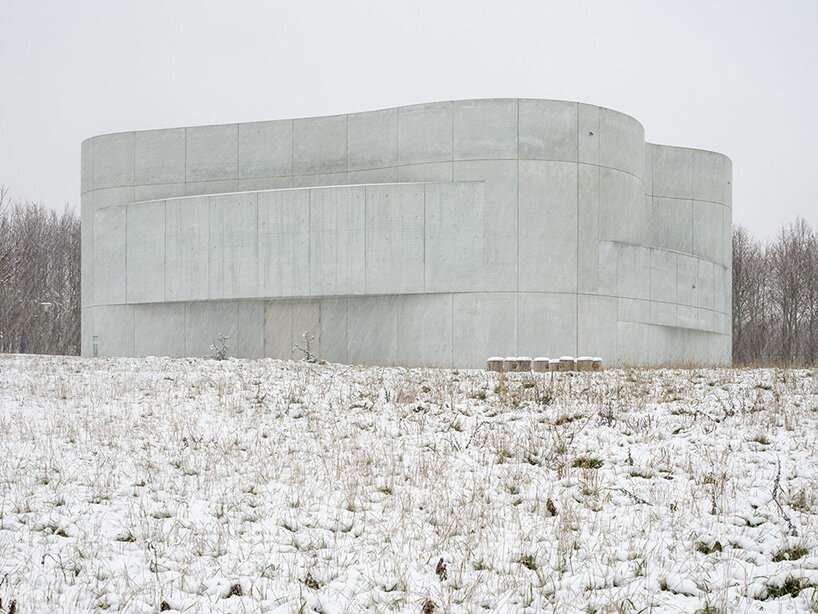 images © Adam Mørk
a ‘connection to the heavens’ in denmark
A skylight winds around the perimeter of Rørbæk og Møller Arkitekter’s Trekroner Church, bathing the interior in soft natural light. The architects introduce this element to serve the dual purpose of illumination and symbolism. The skylight evokes a ‘connection to the heavens,’ further emphasized by the perforated cross designed by artist Henrik Plenge Jakobsen, whose design subtly incorporates the Northern Cross star constellation to integrate art into the architectural fabric. The church also features contributions from artists Alexander Tovborg and Lea Porsager, including oak altars and a baptismal font crafted from South African sodalite.
The interior materials themselves form a curated symphony. Ash wood wall cladding, benches, and the meticulously crafted altar, all crafted by skilled carpenters, complement the pale yellow floor tiles. This thoughtful selection creates a space that is both visually stunning and spiritually uplifting.
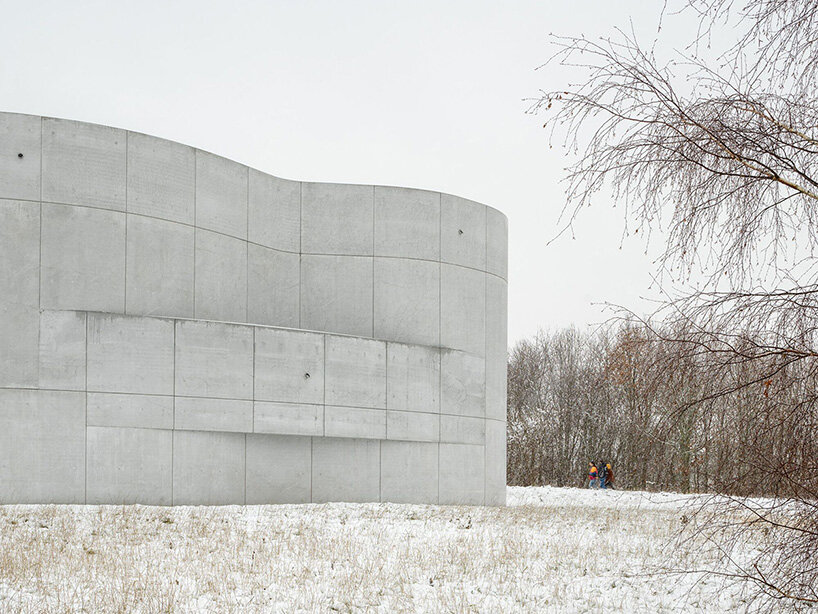
Denmark’s Trekroner Church redefines religious space with its modern architecture
intricate patterning among minimalist interiors
Jakobsen’s groundbreaking floor design draws inspiration from a new type of pentagon discovered by mathematicians at the University of Washington. These pentagonal tiles, laid in a specific pattern, brings an intricate level of detail to the otherwise austere architecture. Meanwhile, this patterning is said to encourage a meditative state among visitors. Thus, Trekroner Church exemplifies how modern design can coexist with tradition and artistic vision. Here, laying a tile floor becomes a continuation of a millenia-old tradition, demonstrating how contemporary architecture can create functional and spiritually enriching spaces.
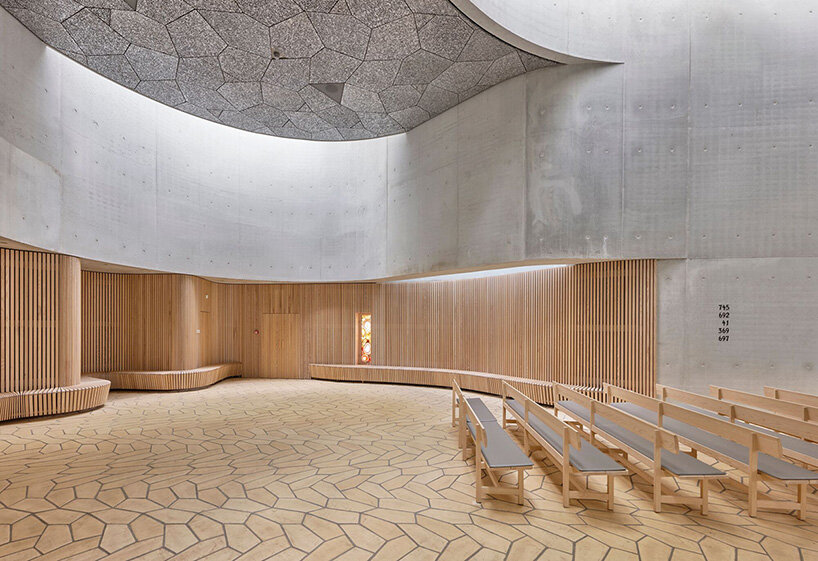
organic curves achieved through concrete casting methods show a commitment to design
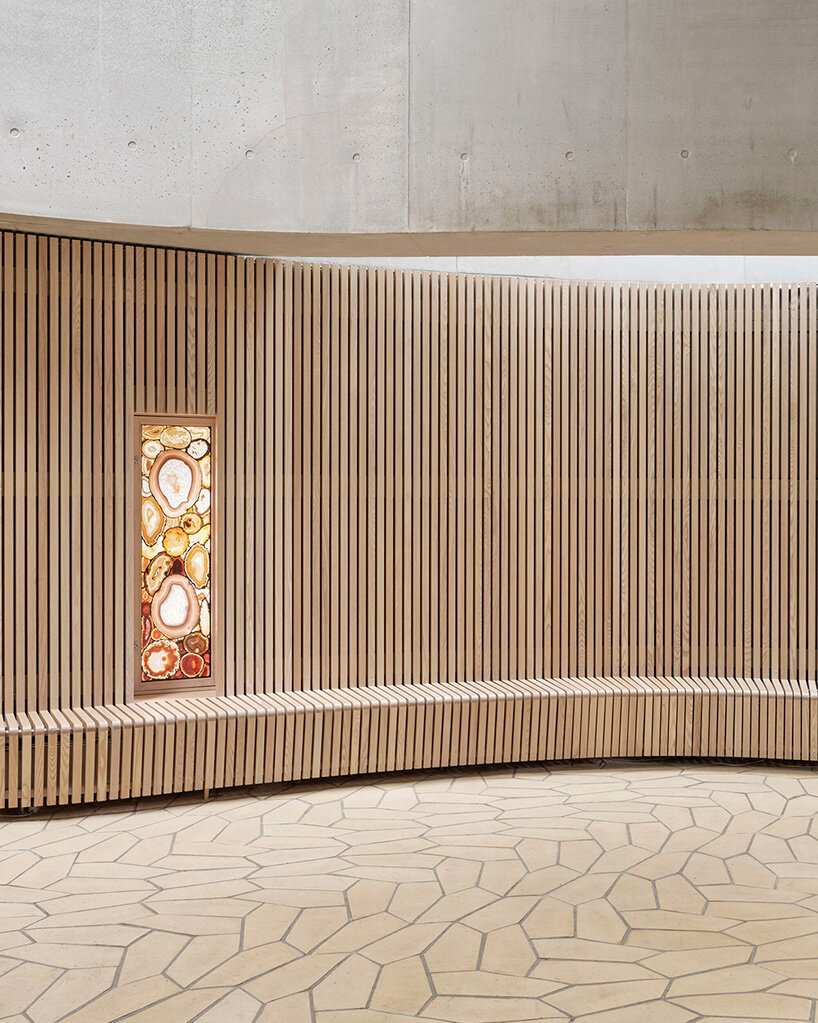
the interiors blend art and architecture with artist collaborations
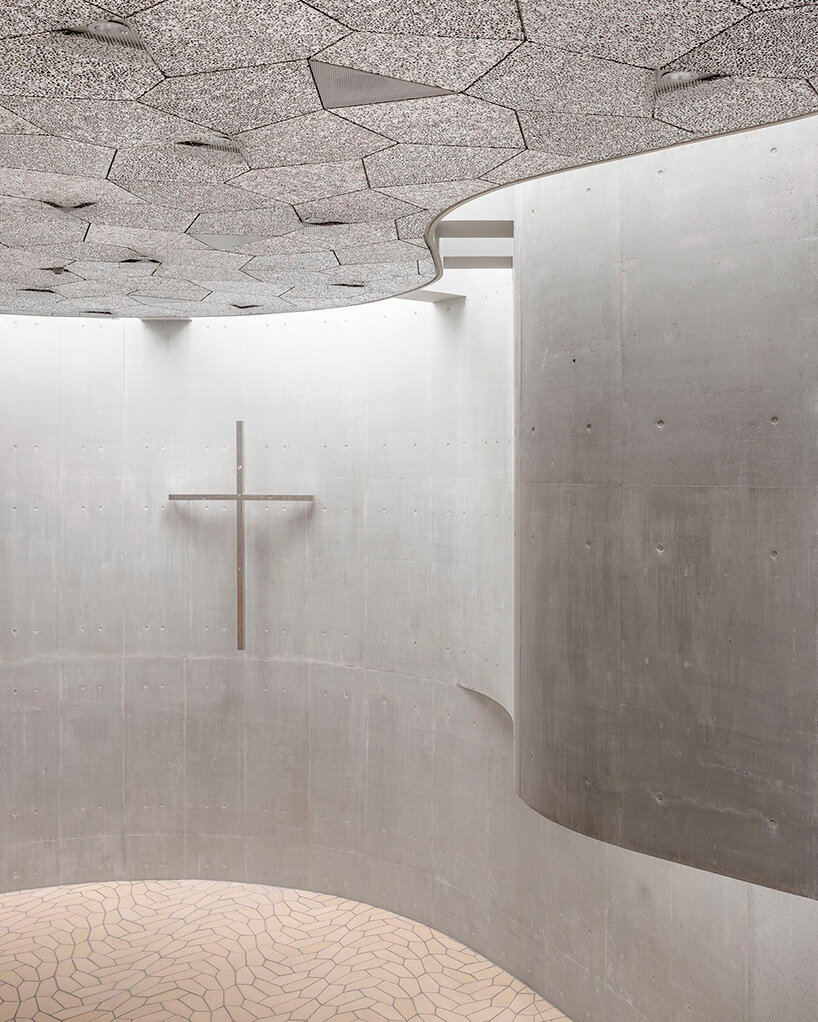
pentagonal floor tiles flow onto the ceiling, crafted from recycled aluminum for light and sound control
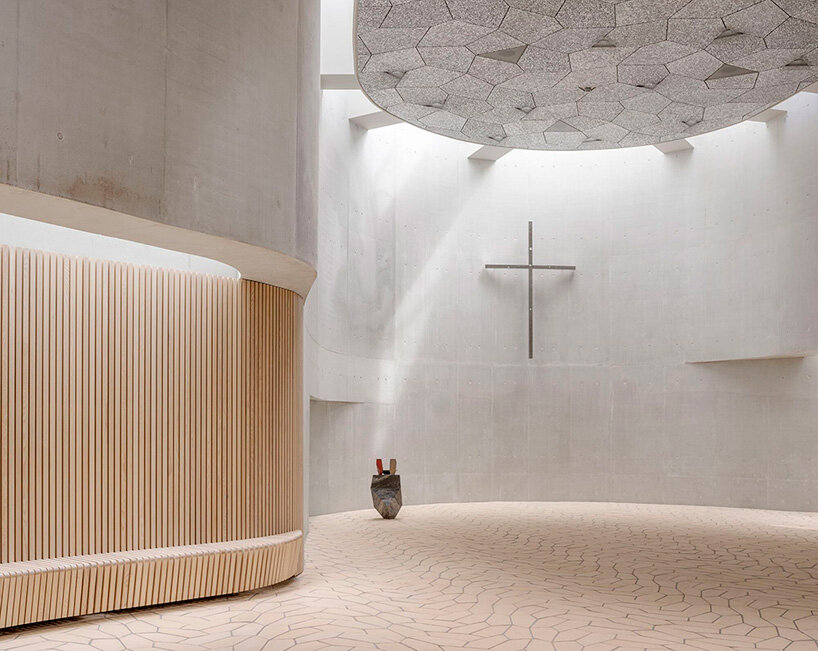
a skylight encircling the church bathes the space in natural light, symbolizing a connection to the heavens