|

Visit Taliesin West, Frank Lloyd Wright’s “Desert Laboratory” Nestled in Arizona

Taliesin West by Frank Lloyd WrightTaliesin West by Frank Lloyd Wright

Photo: Frank Lloyd Wright Foundation

Nestled in the foothills of the McDowell Mountains in the Sonoran Desert sits an architectural gem designed by Frank Lloyd Wright. Known as Taliesin West, the pioneering architect saw it as his desert laboratory. There, he and his apprentices lived and worked while continuing to design innovative structures that followed Wright’s principle of organic architecture.

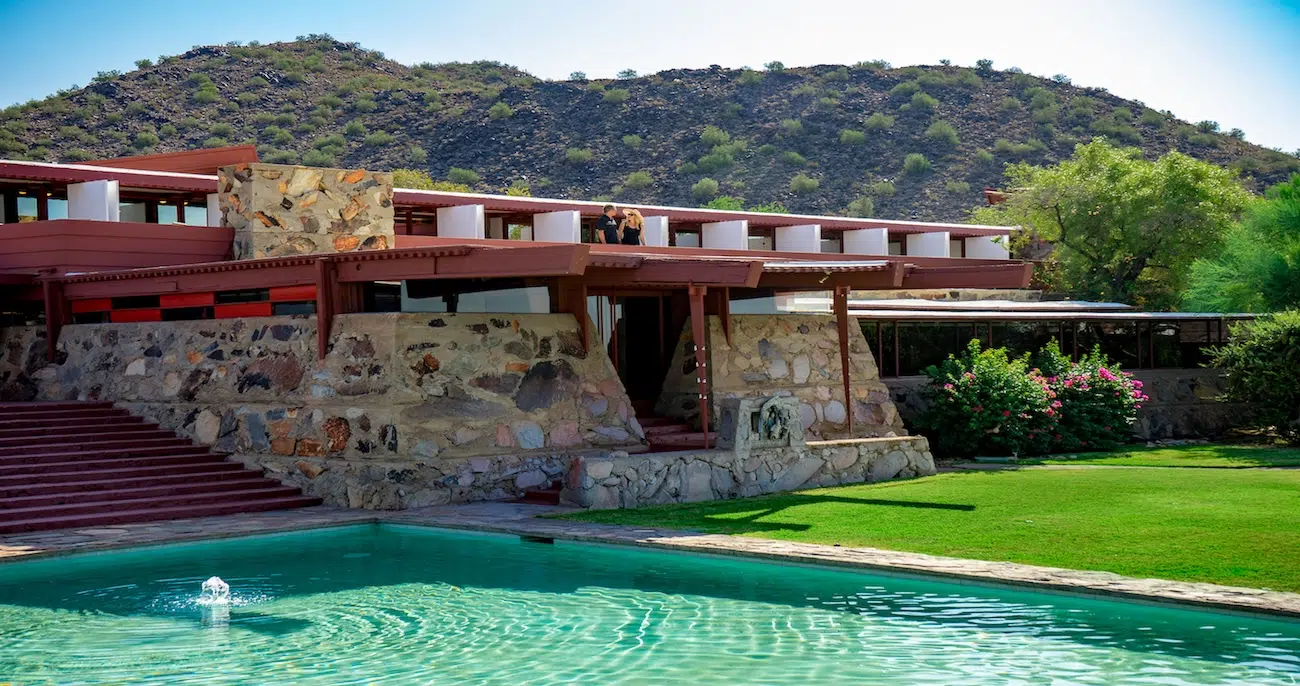
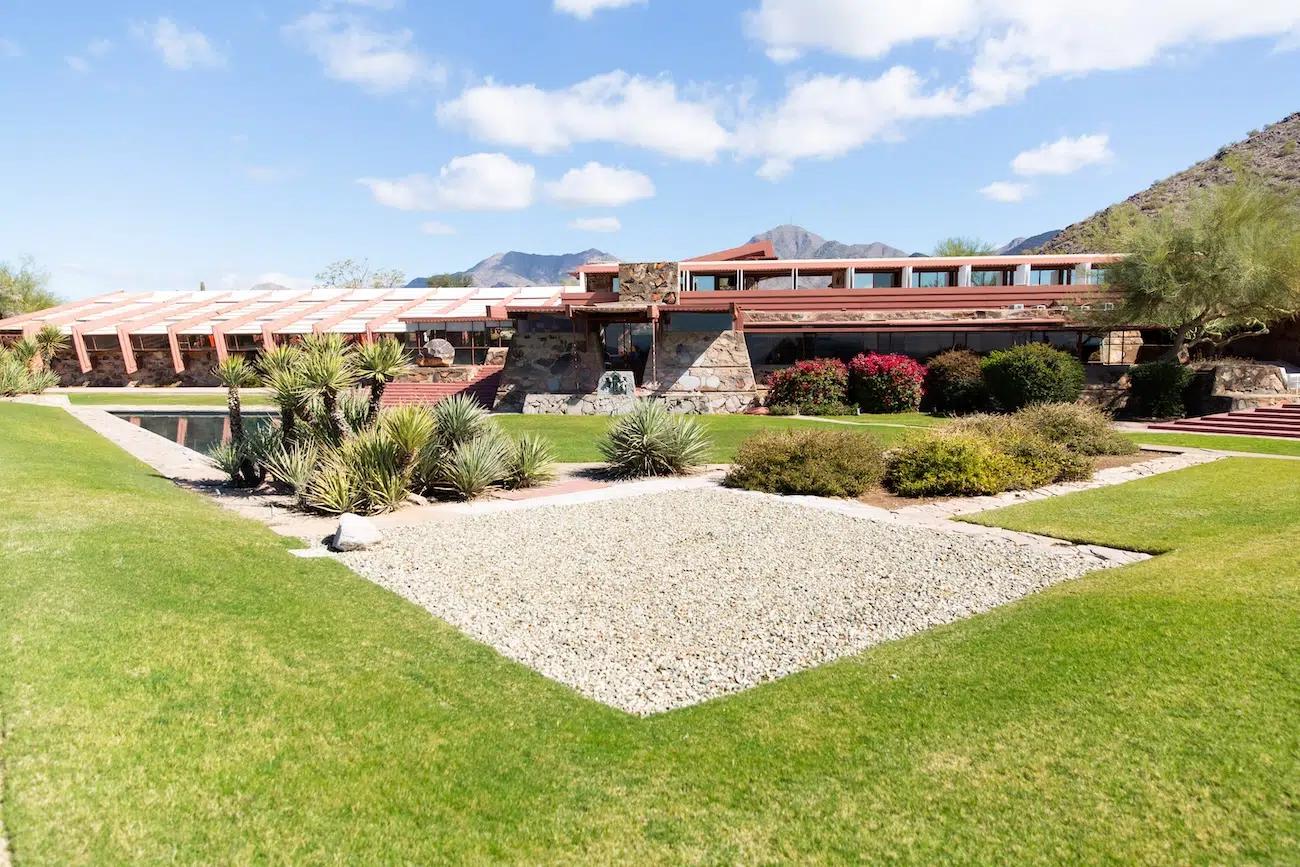
It’s not easy to define organic architecture. Wright said that while it’s a style, it’s also a way of thinking and feeling. Essentially, the building should enhance the site and the structure look natural within its setting. Taliesin West, located near Scottsdale, Arizona, exemplifies this idea. Its exterior is clad in “desert masonry,” made up of local rock set and bound by a mixture of cement and desert sand. As a result, it takes on a rocky exterior that mimics the surrounding mountainous landscape. But it doesn’t completely blend in; redwood beams accent the masonry for a stunning effect.

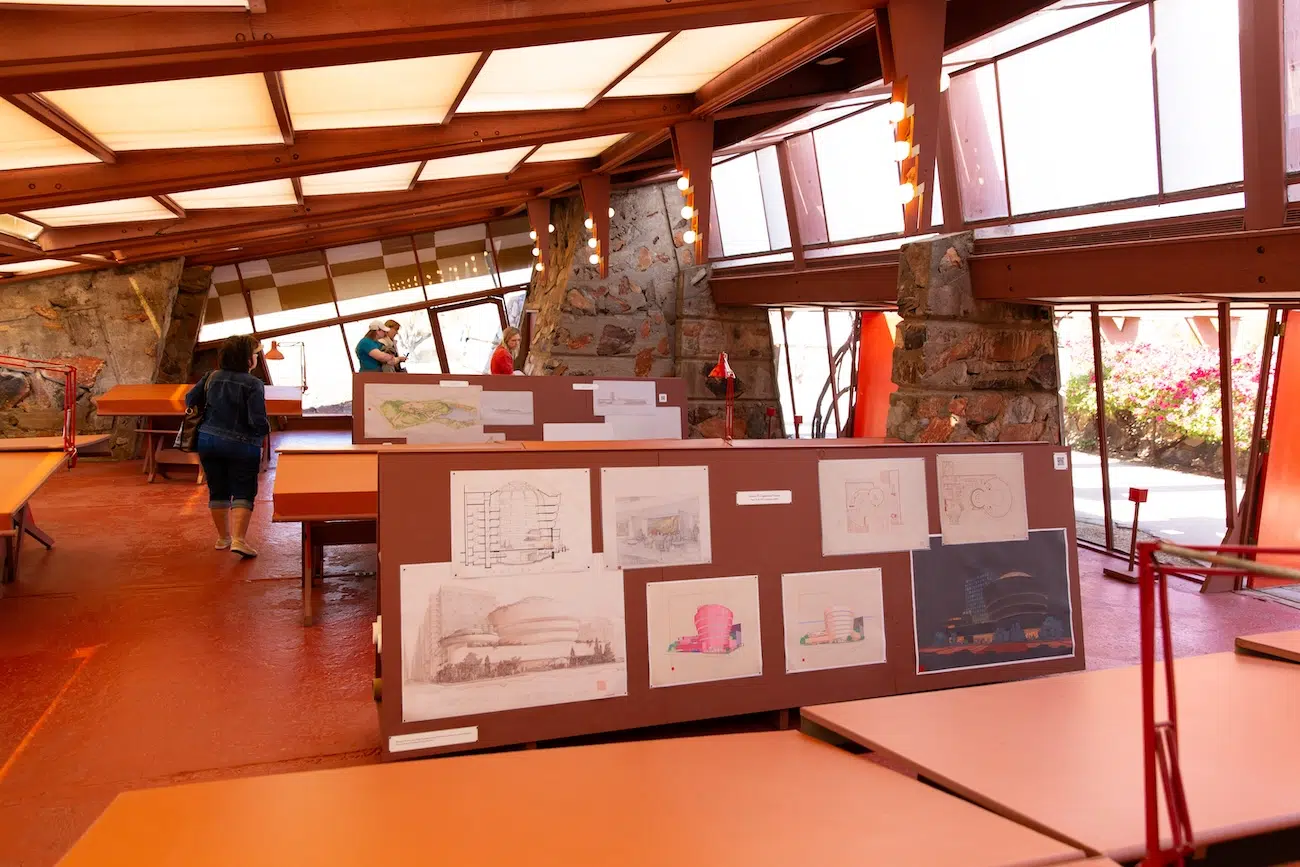
Taliesin West was first constructed in 1937, and Wright continued to expand and alter the building to eventually include a drafting studio, three theaters, a workshop, dining facilities, residences for apprentices and staff, and Wright’s office and living quarters. He would spend his winters at Taliesin West until his death in 1959.

Taliesin West is now a UNESCO World Heritage site and a National Historic Landmark. Visiting is open to the public, allowing us all to appreciate how Wright’s vision blends architectural design with the beauty of the natural landscape. The site offers a variety of tours, including self-guided, a behind-the-scenes look, and a special “Shelters in the Desert” guided outing.

Eugene Kim, co-founder and editor-in-chief of My Modern Met, had the opportunity to visit Taliesin West. “I’ve long admired Frank Lloyd Wright as an architect, especially with his exquisite contributions of Fallingwater and the Guggenheim New York,” he shares.

“It was an honor to visit one of his homes and studios in Taliesin West and interview Niki Stewart, vice president, chief learning & engagement officer of the Frank Lloyd Wright Foundation,” Kim continues. “Niki is a natural educator and provided excellent insights into the mind of Frank Lloyd Wright, and I especially appreciated the concept of organic architecture and building around your specific environment. A big thanks to Niki and the Frank Lloyd Wright Foundation for their warm hospitality of My Modern Met.”

Visit the Taliesin West website to learn more and plan your trip.

Nestled in the foothills of the McDowell Mountains sits an architectural gem designed by Frank Lloyd Wright.
Frank Lloyd Wright's Taliesin West Frank Lloyd Wright's Taliesin West

Photo: Eugene Kim / My Modern Met

Taliesin West by Frank Lloyd WrightTaliesin West by Frank Lloyd Wright

Daytime exterior of Taliesin West. (Photo: Foskett Creative Courtesy of the Frank Lloyd Wright Foundation)
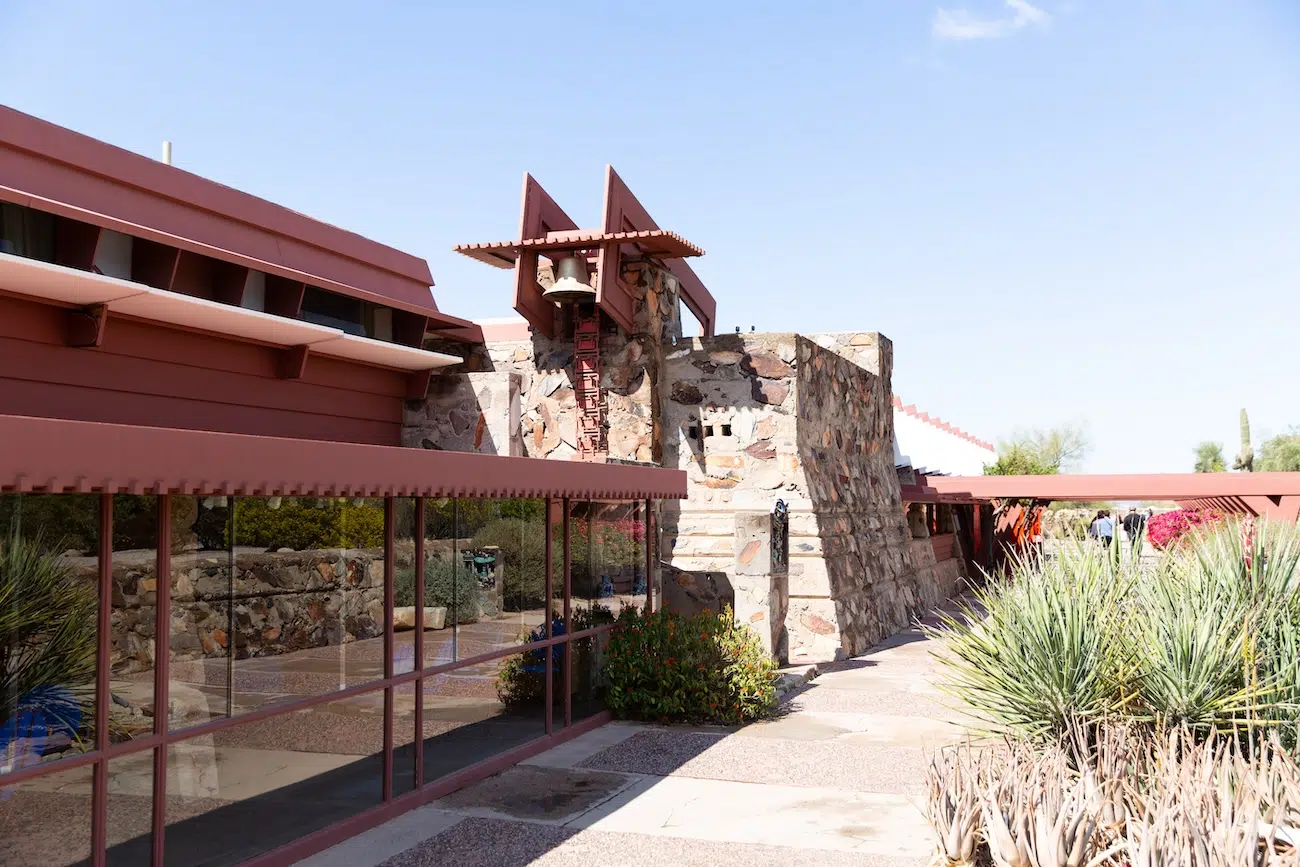
Frank Lloyd Wright's Taliesin West Frank Lloyd Wright's Taliesin West

Photo: Eugene Kim / My Modern Met

Known as Taliesin West, the pioneering architect saw it as his desert laboratory.
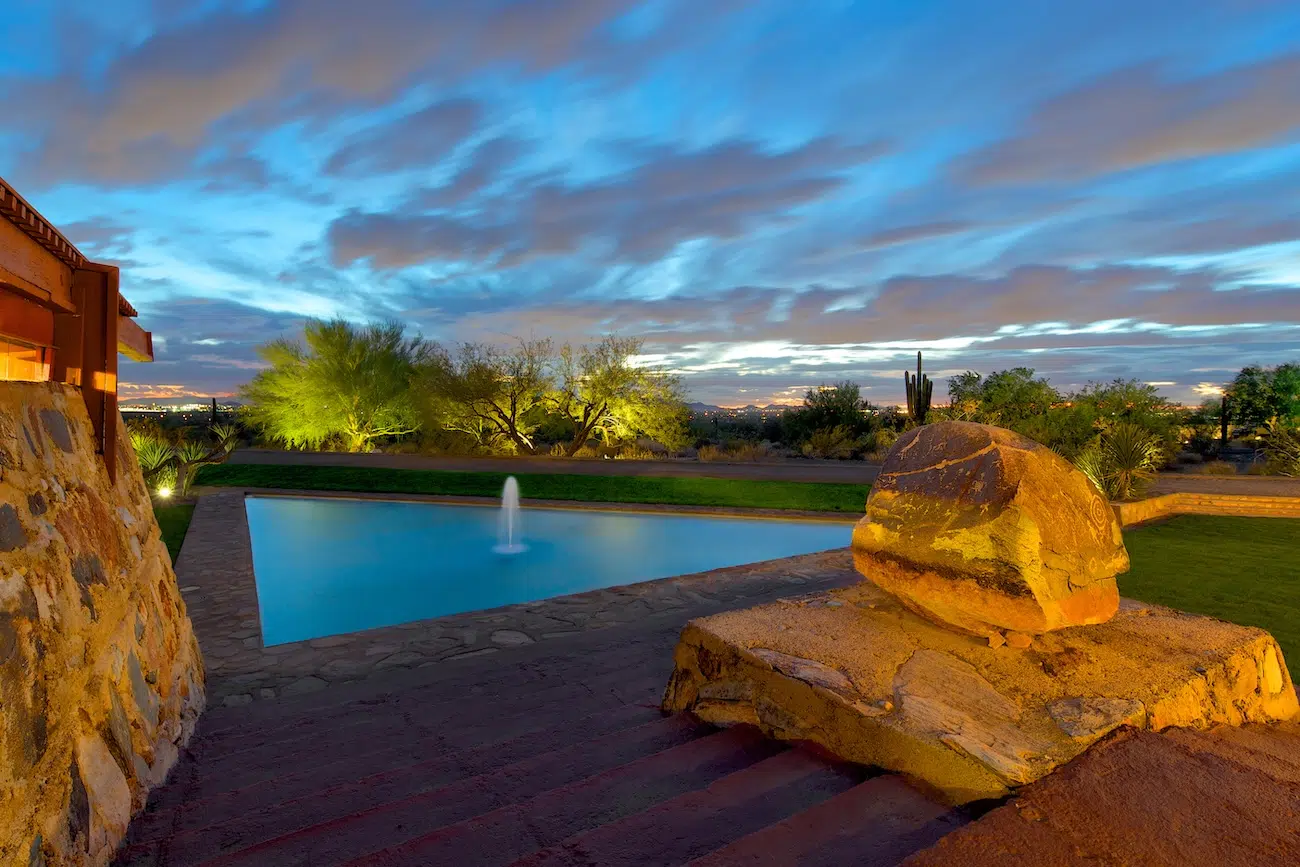
Taliesin West by Frank Lloyd WrightTaliesin West by Frank Lloyd Wright

Photo: Andrew Pielage

Located near Scottsdale, Arizona, Taliesin West was first constructed in 1937 and expanded to include a drafting studio, three theaters, a workshop, and more.

Taliesin West by Frank Lloyd WrightTaliesin West by Frank Lloyd Wright

Taliesin West Interior. (Photo: Andrew Pielage © Frank Lloyd Wright Foundation)
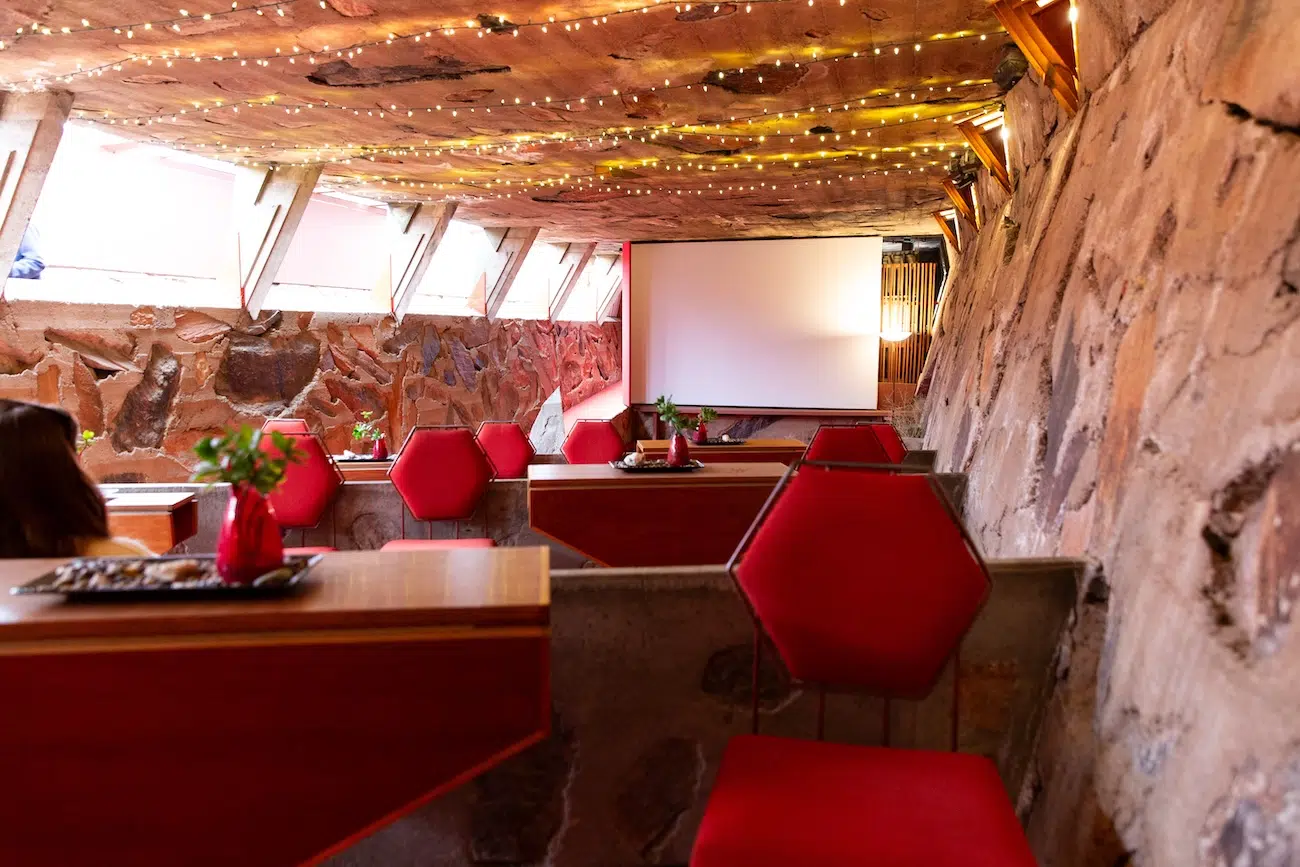
Frank Lloyd Wright's Taliesin West Frank Lloyd Wright's Taliesin West

Photo: Eugene Kim / My Modern Met

Frank Lloyd Wright's Taliesin West Frank Lloyd Wright's Taliesin West

Photo: Eugene Kim / My Modern Met

Frank Lloyd Wright's Taliesin West Frank Lloyd Wright's Taliesin West

Photo: Eugene Kim / My Modern Met

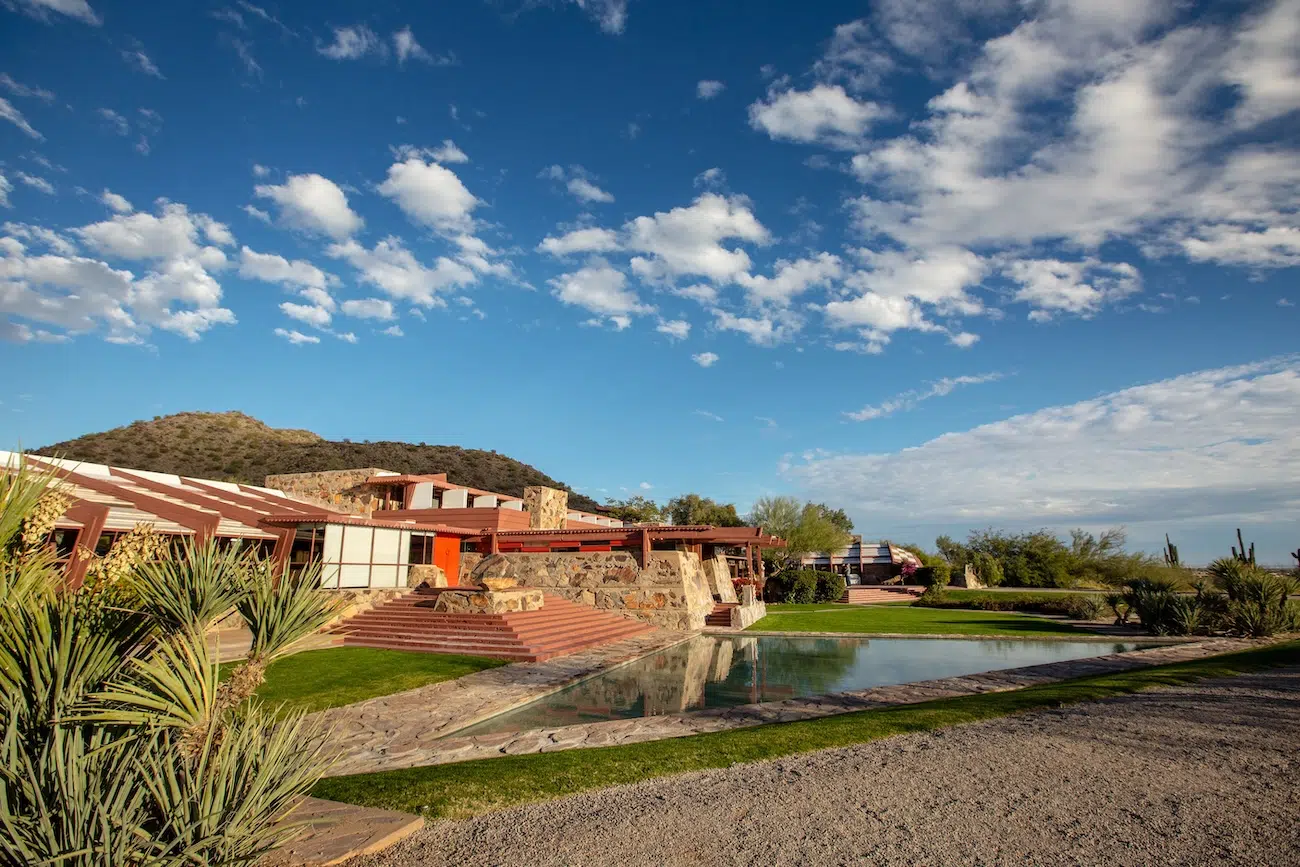
Visiting Taliesin West is open to the public, allowing us all to appreciate how Wright’s vision blends architectural design with the beauty of the natural landscape.
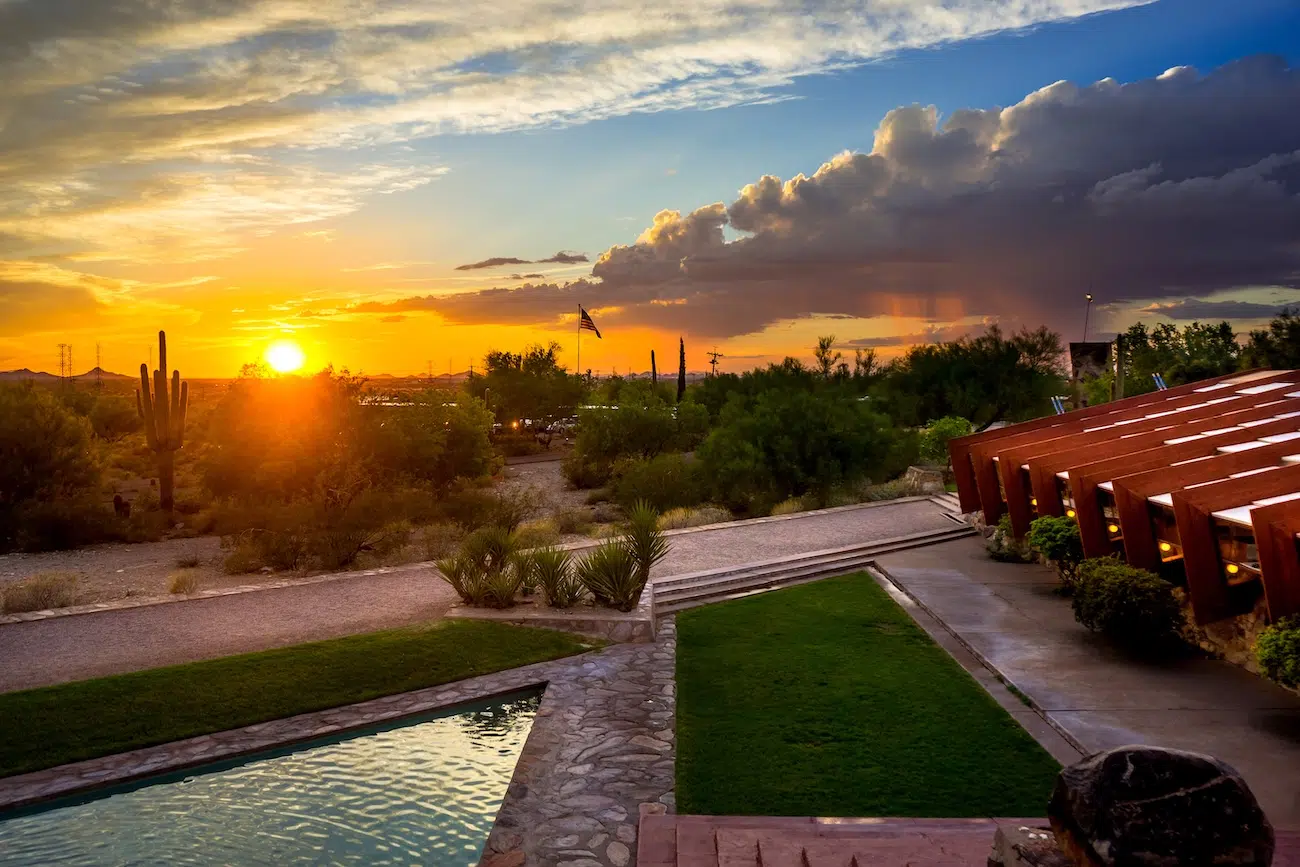
Taliesin West by Frank Lloyd WrightTaliesin West by Frank Lloyd Wright

Sunset at Taliesin West. (Photo: Foskett Creative Courtesy of the Frank Lloyd Wright Foundation)

To learn more about Taliesin West, check out My Modern Met’s interview with Niki Stewart, Vice President, Chief Learning & Engagement Officer of the Frank Lloyd Wright Foundation.

Taliesin West: Website

My Modern Met granted permission to feature photos by Visit Phoenix.

Related Articles:

My Modern Met’s Art + Culture Guide to Phoenix

Frank Lloyd Wright Foundation Launches Cruise To Set Sail Across All 5 Great Lakes

Organic Beauty of Frank Lloyd Wright’s Fallingwater Celebrated in New Coffee Table Book

Explore the Grounds of Tirranna, a House Designed by Frank Lloyd Wright, in This Video Tour

Similar Posts

  • Miner Road

    The clients are a couple of environmental scientists who, along with their two sons, relocated from the Oakland Hills to the warmer climate of Orinda. Their commitment to sustainability, including a request for net-zero energy performance annually, was evident in their thinking throughout the design process. A three-bedroom program began as a remodel of a 1954 ranch house at the foot of a hill next to a seasonal creek.  After finding the existing structure and soils to be unsuitable, the direction settled on reusing the existing footprint under the shade of a Valley Oak that had grown up close to the original house. The surviving portion of the original house is the fireplace which was wrapped in concrete and utilized for structural support. This made additional grading unnecessary and allowed the new house to maintain the same intimate relation to the old oak.  The family desired an open living layout that connected directly to the landscape. A mezzanine plan evolved with a double height family space nested with a master bedroom and study stacked above the kitchen and nook. A screened pacing deck for long phone calls shades the upper level from afternoon summer sun. Downstairs, secondary bedrooms along an extendable hallway, wrap an outdoor dining area situated between the kitchen and family room.  Construction materials and methods were considered in balance between first and lifecycle costs. The Corten steel rain screen for the exterior skin and interior wood were chosen to take advantage of zero annual maintenance cost and a shotcrete foundation allowed formwork to be repurposed for wood framing.  Single use material selections such as the Corten steel and shotcrete foundation reduced complexity in detailing and labor costs allowing a larger portion of the budget to be reallocated for upgraded mechanical, insulation, and glazing systems. The same attitude for interior finishes produced acoustically insulated, unfinished oak ceilings and walls. The sum total of the limited and landscape-driven materials presents a relaxed and quiet built environment that allows the senses to focus on the natural environment. A haptic connection to the rhythms of our planet is evident.  A 14-gauge Corten rain screen provides a no-maintenance skin. High levels of insulation and glazing efficiency reduce heating and cooling loads. An 8.1kW photovoltaic system provides on-site renewable energy and produced more electrical energy than the house used the first year. Rainwater is collected via a waterfall from the roof at the end of the hallway. Buried tanks store water for use in toilets and laundry. Greywater is collected separately and reused for irrigation. Electronically commutated motors and variable speed heat pumps are used to further limit energy use and control heating and cooling. An energy recovery ventilator is used to provide fresh air.