|

Audio Museum in Seoul Rewrites What a Museum Can Be Through the Experience of Sound

In Seoul’s bustling Gangnam district, a new cultural landmark invites visitors to experience sound in an entirely different way. The Audeum Audio Museum, designed by Kengo Kuma & Associates, challenges traditional museum conventions by placing sound at the center of the experience. Rather than focusing solely on what visitors see, the museum encourages them to listen, feel, and slow down.

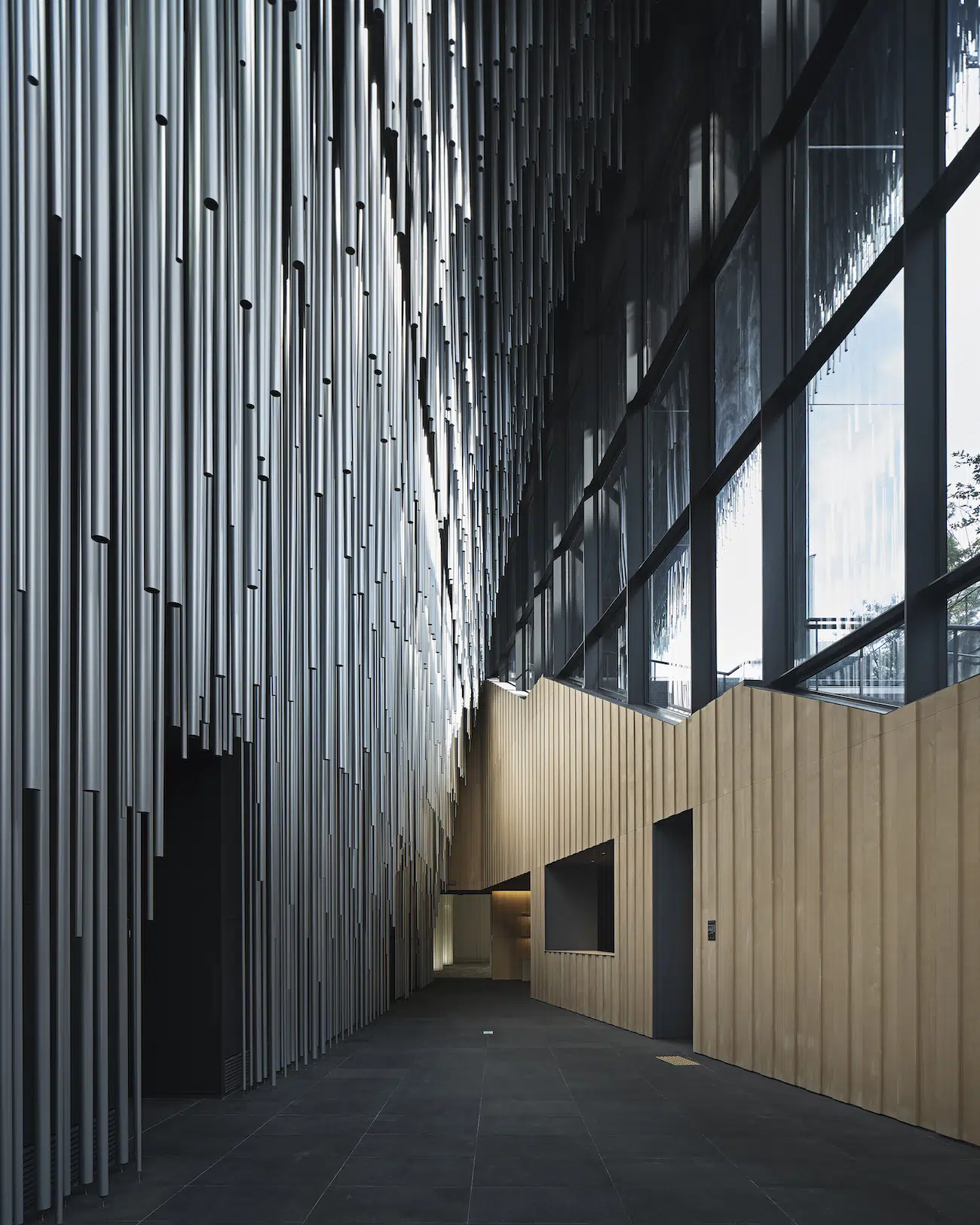
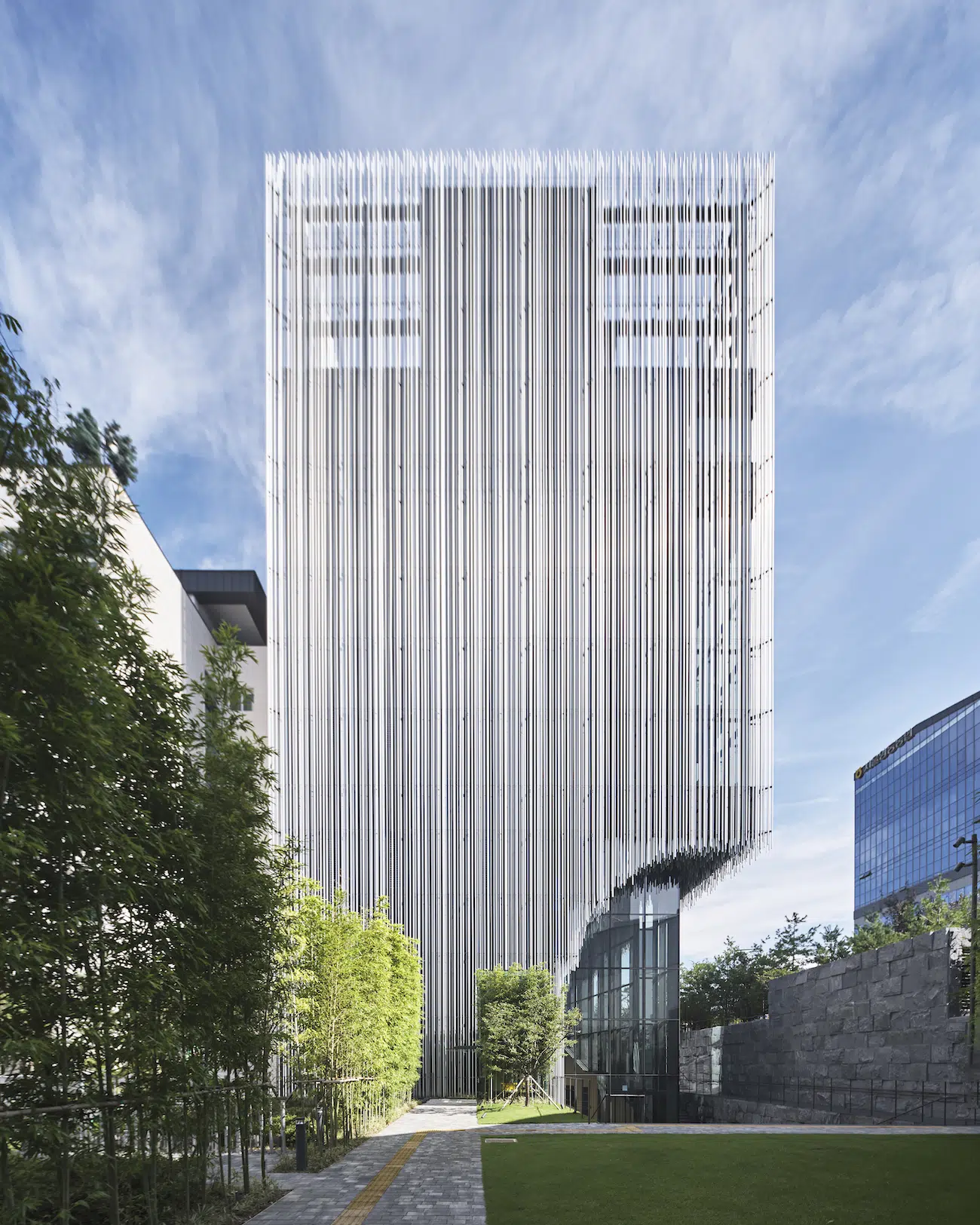
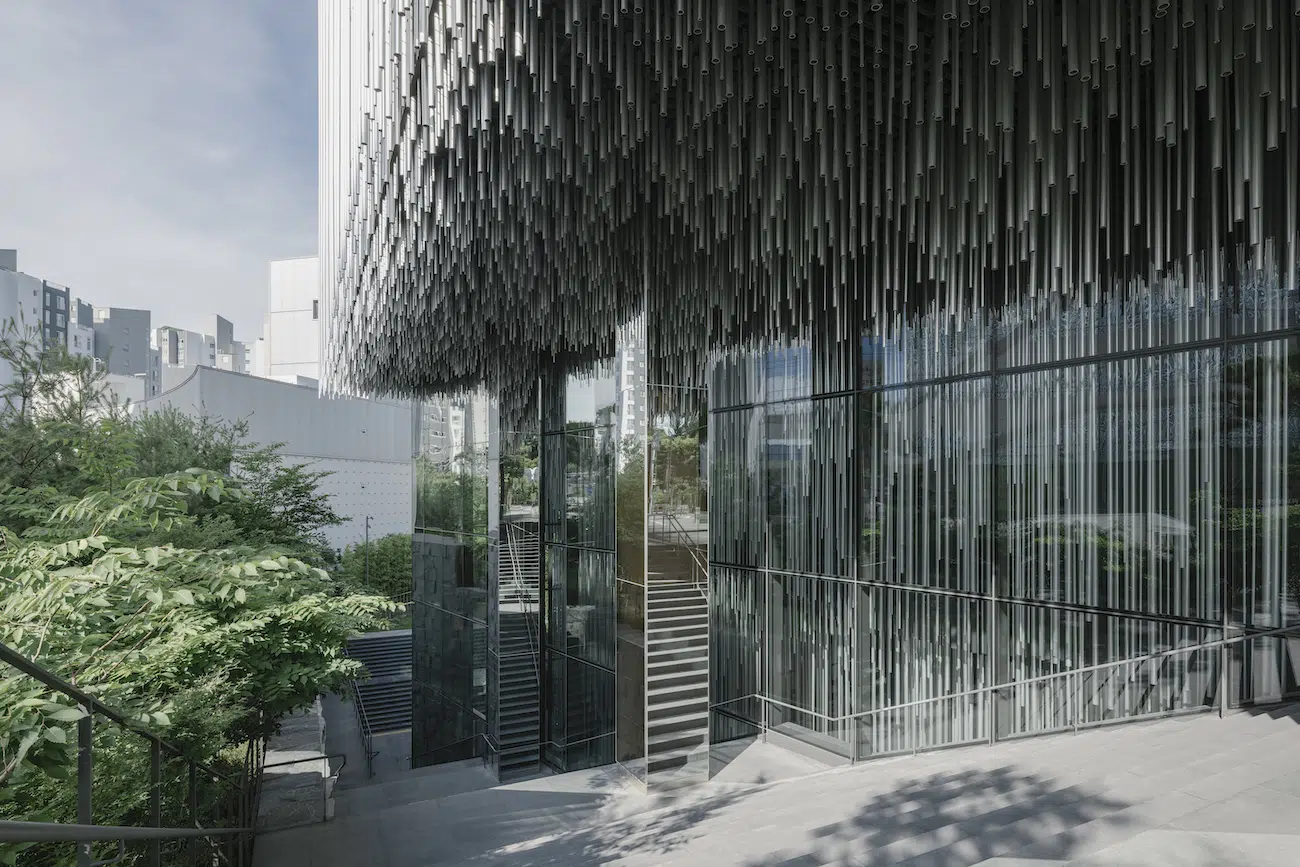
From the outside, Audeum already hints at what awaits within. The building’s façade features 20,000 vertical aluminum pipes that reflect sunlight throughout the day. As a result, light and shadow shift constantly across the surface. This movement gives the structure a dynamic presence that responds to its surroundings.

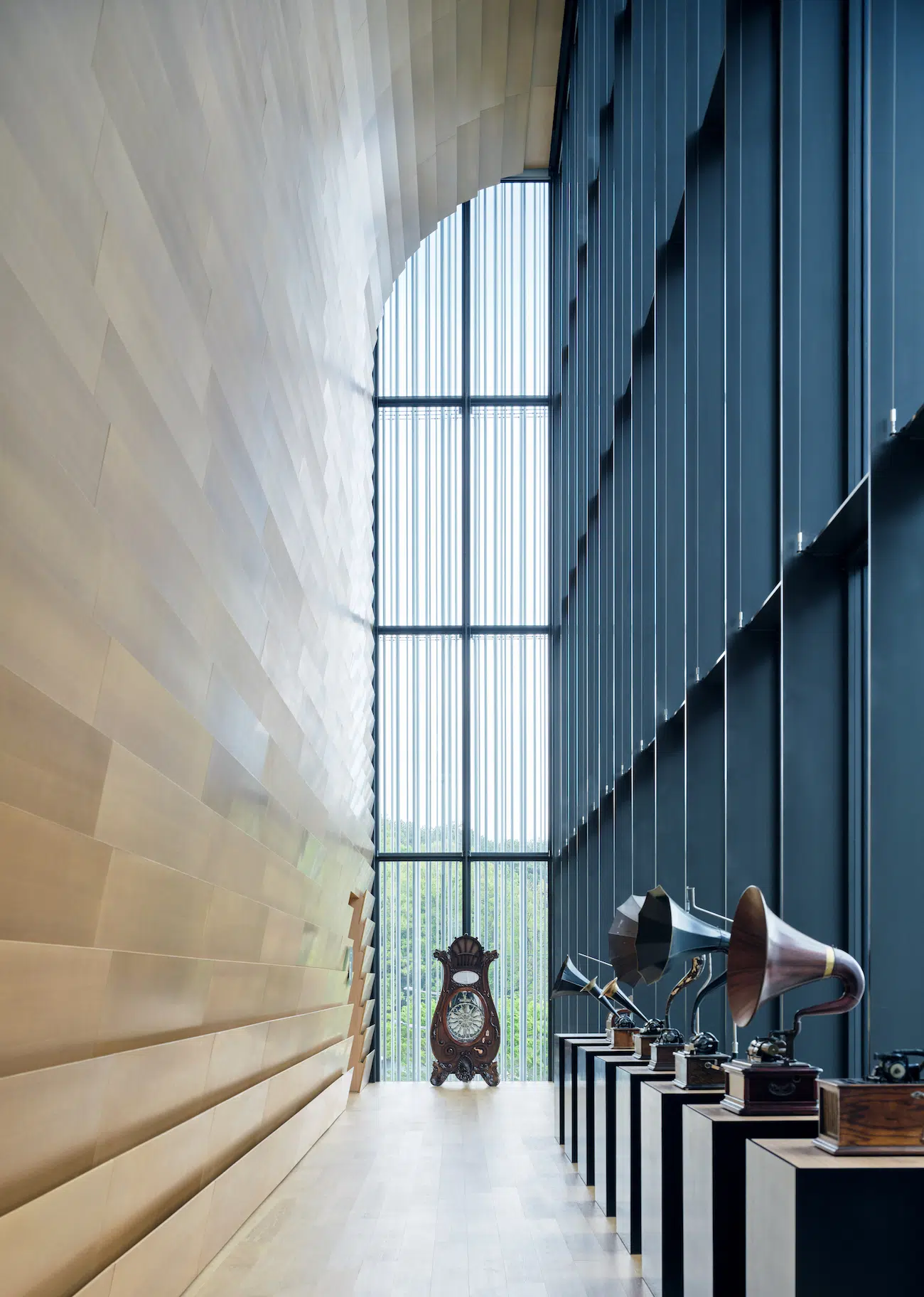
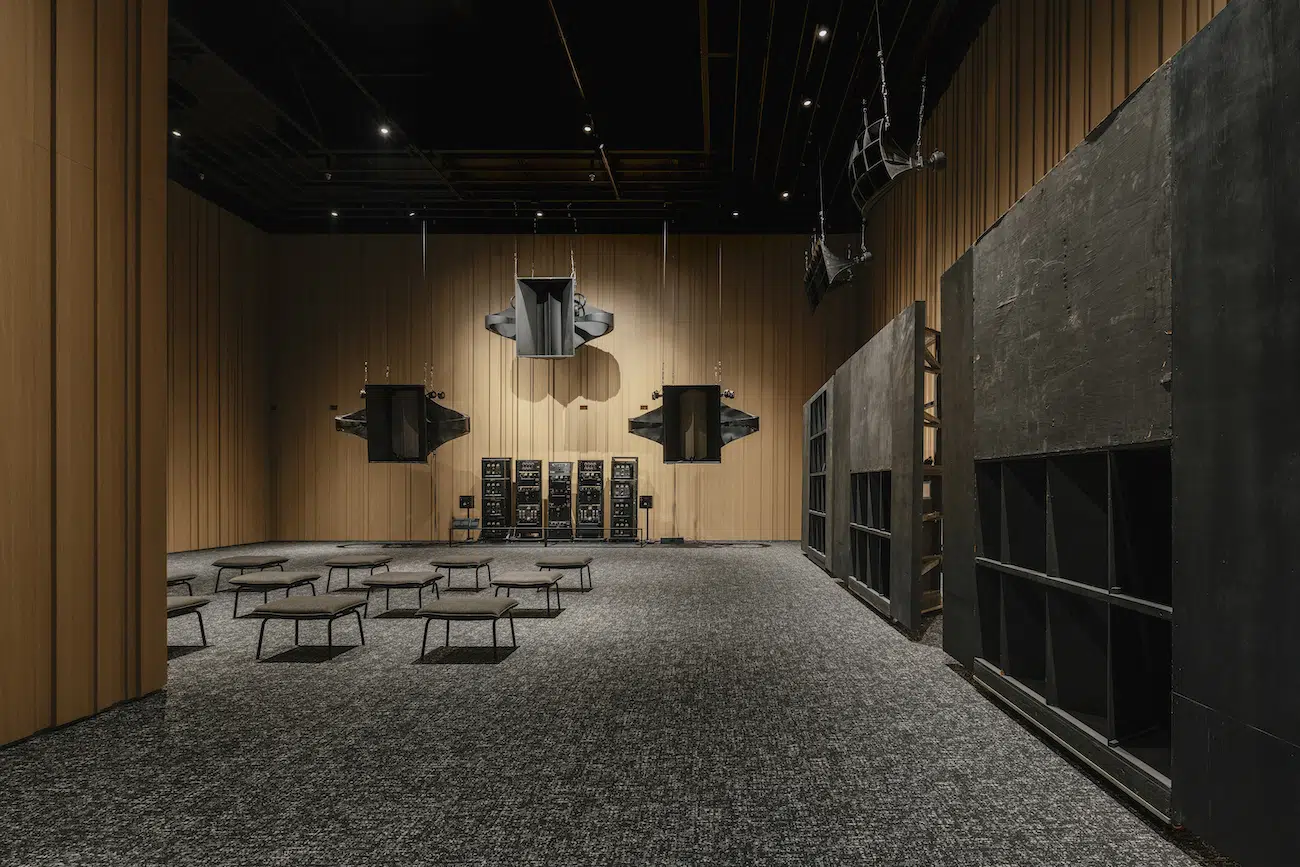
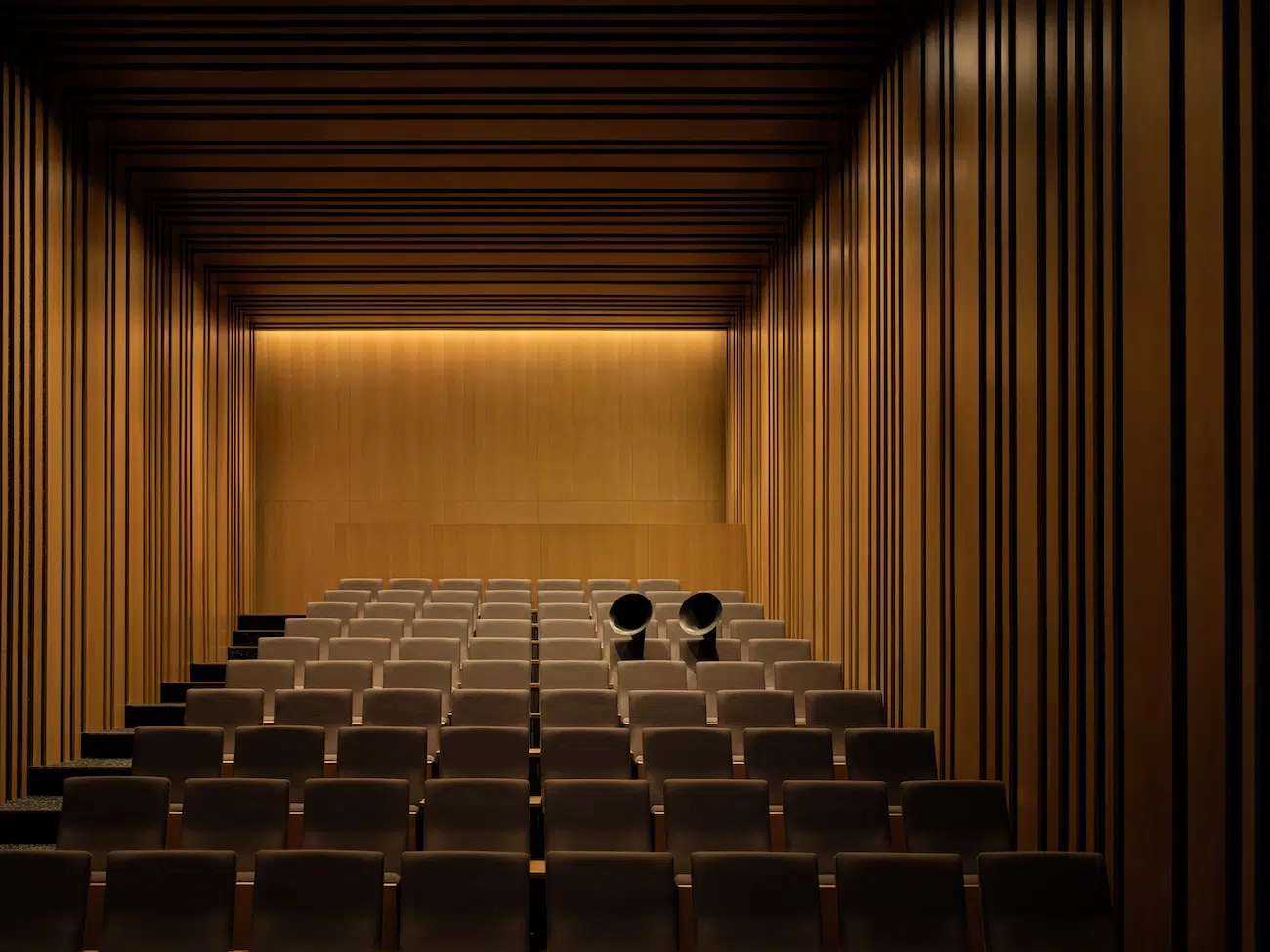
Once inside, the atmosphere changes immediately. Warm wooden surfaces replace the metallic exterior and create a sense of calm. The architects used a wood drape technique that softens the material while improving acoustics. Because of this, the interior feels both intimate and immersive. Visitors become more aware of sound, texture, and space as they move through the galleries.

Beyond its architecture, Audeum also houses an extensive collection of audio equipment. The museum traces roughly 150 years of sound technology, beginning with early phonographs and continuing through mid-century hi-fi systems. Instead of presenting these objects as static artifacts, the museum allows them to be heard. Consequently, visitors gain a deeper understanding of how sound recording and playback have evolved.

At the same time, Audeum prioritizes experience over instruction. Rather than overwhelming visitors with text, the museum invites exploration through listening. Sound fills the rooms and resonates through the wood-lined spaces. This approach transforms each gallery into a place of reflection rather than observation.

Unsurprisingly, the museum has attracted international recognition. In 2025, Prix Versailles named Audeum one of the World’s Most Beautiful Museums and awarded it the Special Prize for Interior Design. The honor highlights the building’s ability to balance innovation with sensory engagement.

Ultimately, Audeum demonstrates how museums can move beyond display. By treating sound as both subject and medium, it offers a rare opportunity to reconnect with the senses. In doing so, it reminds visitors that listening can be just as powerful as seeing.

Wrapped in thousands of aluminum pipes, the Audeum Audio Museum announces its focus on sound before visitors ever step inside.

Audeum Audio Musem SeoulAudeum Audio Musem Seoul

Inside, warm wood surfaces and carefully tuned acoustics transform historic audio equipment into an immersive listening experience.
Audeum Audio Musem SeoulAudeum Audio Musem Seoul

By centering sound as both subject and medium, Audeum ultimately reimagines what a contemporary museum can be.
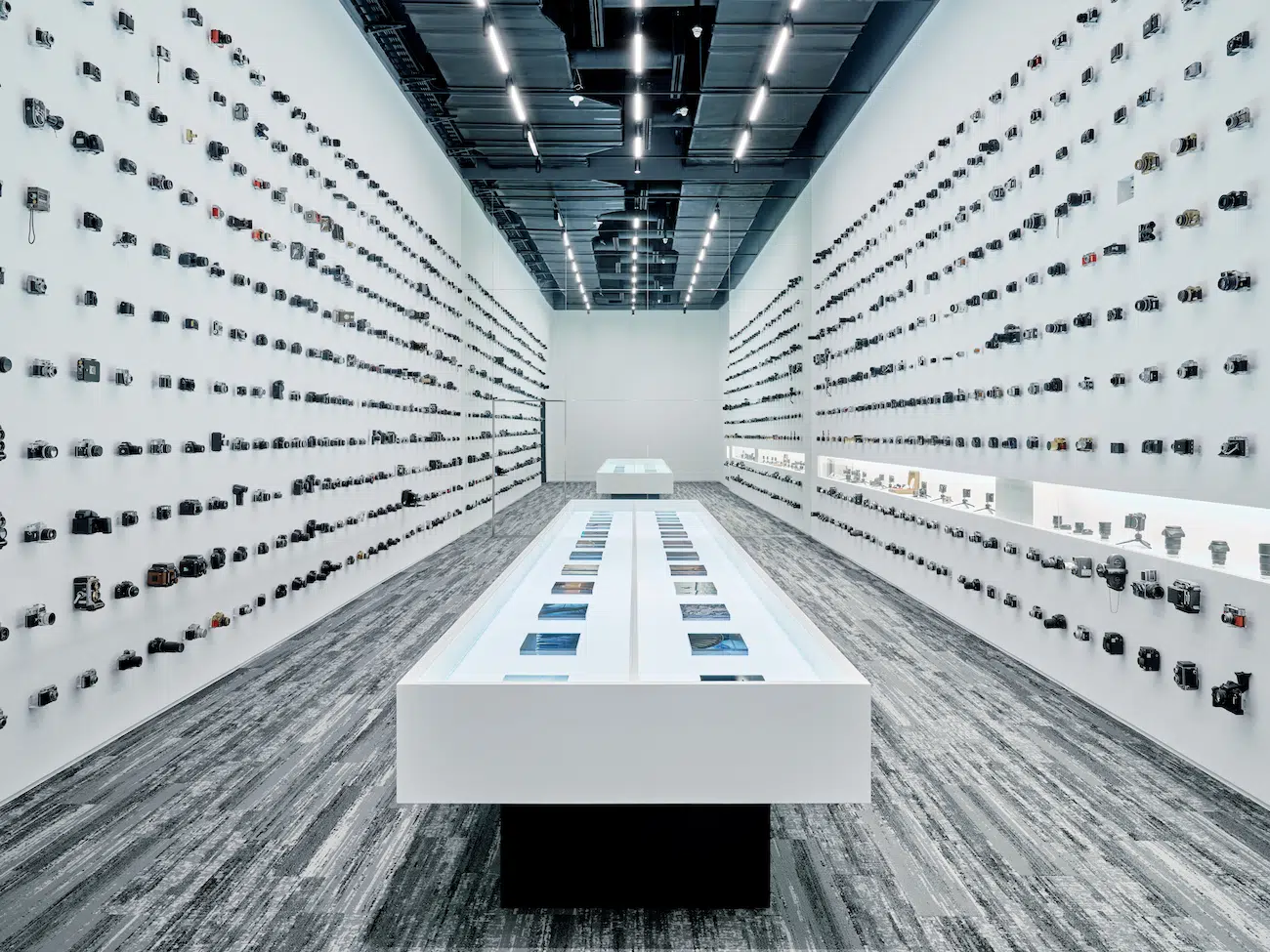
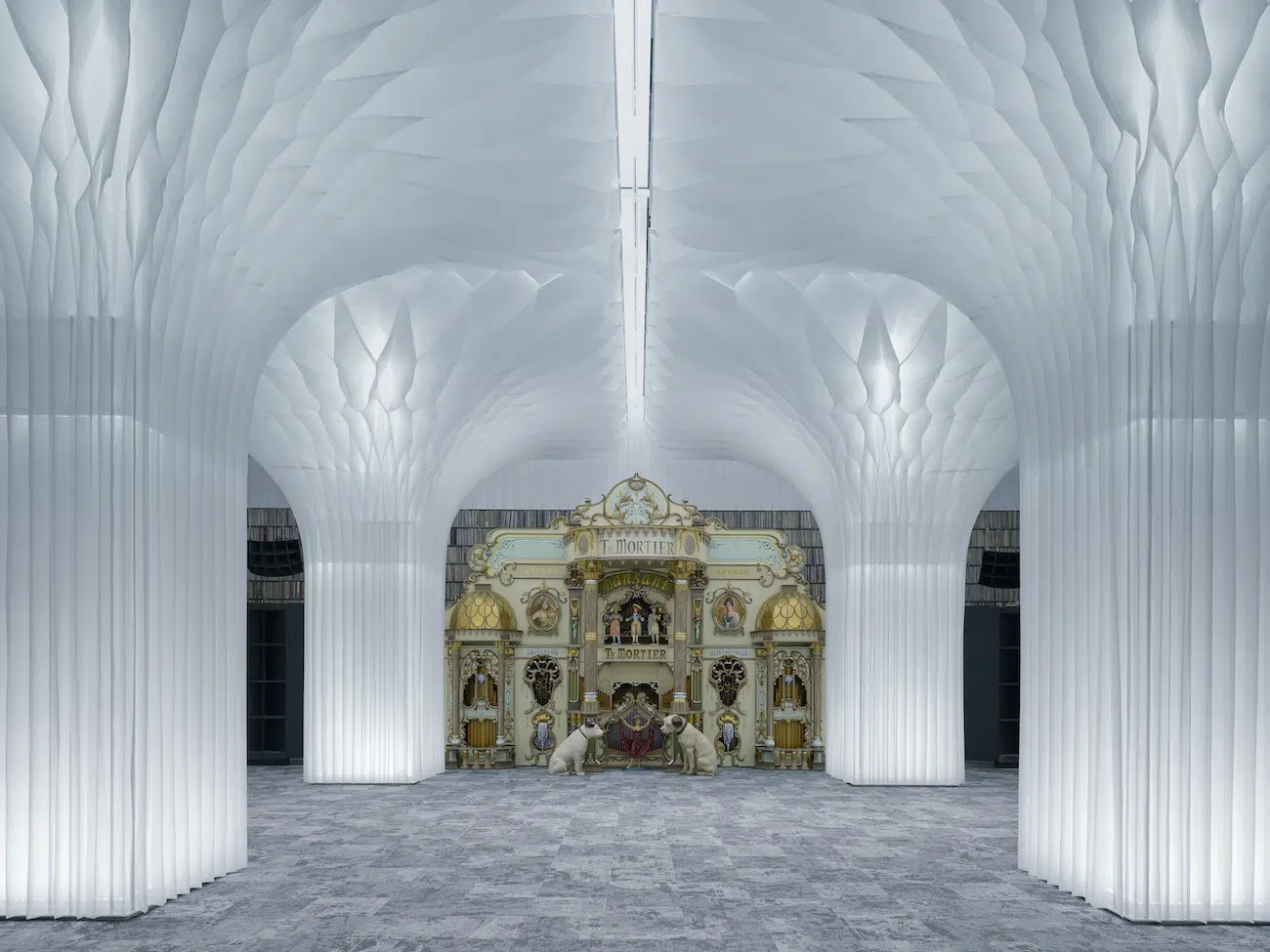
Audeum Audio Musem SeoulAudeum Audio Musem Seoul

Audeum: Website | Instagram

My Modern Met granted permission to feature photos by Audeum. 

Related Articles:

BIG’s Pavilion Design of a Contemporary Art Museum in China Will Soon Open Its Doors

Hangzhou’s Upcoming Art Museum Meanders Across Waterfront Like a Flowing River

Explore an Early Look at the New Museum’s Breathtaking Expansion, Opening in Early 2026

Elegant Design To Transform a Historic Home Into a Museum Dedicated to Jadidism

Similar Posts

  • Maullin Lodge

    This lodge is a 120m2 house located in a rural scene in a southern region of Chile. The brief was to design a house with two bedrooms and two bathrooms with a main shared space, interpreting an old small traditional southern Chilean dwelling. The challenge of the proposal was to get that traditional southern look, which implies very opaque facades, but with a full translucent side where the landscape and light can get inside the building, creating its own private world. The house is placed between a forest of native trees, giving its back to the main street. So, the house is oriented to the north and west to get the most of sunlight, which this south down is much appreciated. The concept of the design is organized based on 3 contrast between old and new:
    1- Removing non-structural walls and floors: the main structural shape and volume are maintained the same as the old traditional house, but the interior is liberated from any non-structural dividing element, which helped to create a clean and continuous space.
    2- Concentrating the apertures: The main source of light is the north façade, keeping the other free opaque as a traditional southern house would have, so the proportion of void and mass was not lost.
    3- Material contrast: Big floor to ceiling windows in contrast to recycled traditional timber shingles, an evident contrast between old and new. The distribution of the house is developed in an almost square plan, divided into three volumes:
    The main one has the public areas of the house: kitchen, dining room, sitting room and mezzanine.
    The east one, the widest, has sleeping rooms and bathrooms with the main access of the house.
    And the west one is 1.5m wide acting as a corridor and informal dining room adjacent to the public areas of the main volume. The mezzanine is an opportunity to use the roof space, with a lot of light and natural heating, having control over the main space.

  • Miner Road

    The clients are a couple of environmental scientists who, along with their two sons, relocated from the Oakland Hills to the warmer climate of Orinda. Their commitment to sustainability, including a request for net-zero energy performance annually, was evident in their thinking throughout the design process. A three-bedroom program began as a remodel of a 1954 ranch house at the foot of a hill next to a seasonal creek.  After finding the existing structure and soils to be unsuitable, the direction settled on reusing the existing footprint under the shade of a Valley Oak that had grown up close to the original house. The surviving portion of the original house is the fireplace which was wrapped in concrete and utilized for structural support. This made additional grading unnecessary and allowed the new house to maintain the same intimate relation to the old oak.  The family desired an open living layout that connected directly to the landscape. A mezzanine plan evolved with a double height family space nested with a master bedroom and study stacked above the kitchen and nook. A screened pacing deck for long phone calls shades the upper level from afternoon summer sun. Downstairs, secondary bedrooms along an extendable hallway, wrap an outdoor dining area situated between the kitchen and family room.  Construction materials and methods were considered in balance between first and lifecycle costs. The Corten steel rain screen for the exterior skin and interior wood were chosen to take advantage of zero annual maintenance cost and a shotcrete foundation allowed formwork to be repurposed for wood framing.  Single use material selections such as the Corten steel and shotcrete foundation reduced complexity in detailing and labor costs allowing a larger portion of the budget to be reallocated for upgraded mechanical, insulation, and glazing systems. The same attitude for interior finishes produced acoustically insulated, unfinished oak ceilings and walls. The sum total of the limited and landscape-driven materials presents a relaxed and quiet built environment that allows the senses to focus on the natural environment. A haptic connection to the rhythms of our planet is evident.  A 14-gauge Corten rain screen provides a no-maintenance skin. High levels of insulation and glazing efficiency reduce heating and cooling loads. An 8.1kW photovoltaic system provides on-site renewable energy and produced more electrical energy than the house used the first year. Rainwater is collected via a waterfall from the roof at the end of the hallway. Buried tanks store water for use in toilets and laundry. Greywater is collected separately and reused for irrigation. Electronically commutated motors and variable speed heat pumps are used to further limit energy use and control heating and cooling. An energy recovery ventilator is used to provide fresh air.