A Historic Craftsman Compound in L.A. Lists for $2.5M

A landmarked main residence and cottage in Mount Washington offer a woodsy retreat from the city.
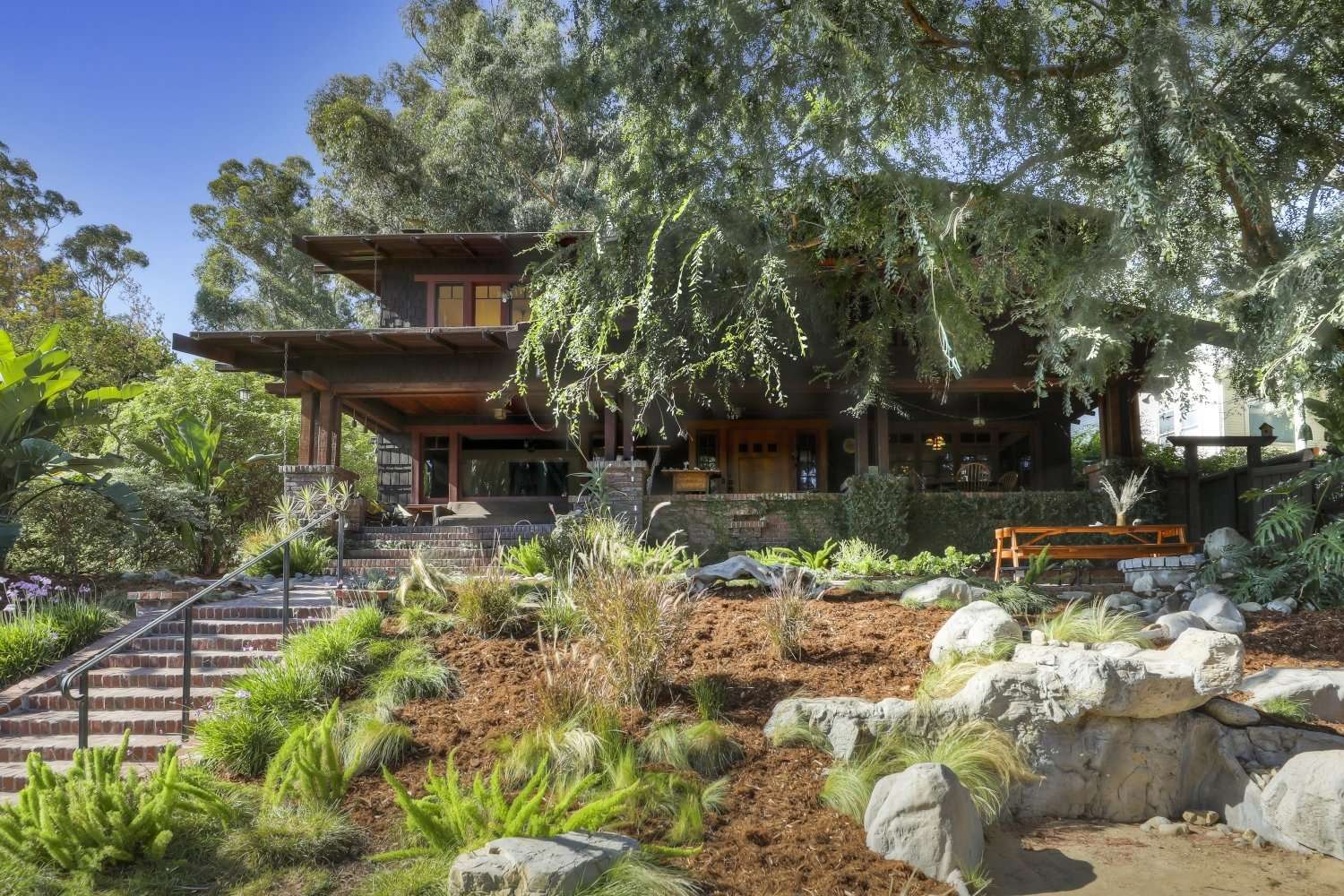
A Los Angeles Cultural Monument, the Treehaven property in Mount Washington has housed over half a dozen families since a small cottage was first built on the grounds in 1908. A larger house was added in 1915, creating a multigenerational refuge underneath a sprawling canopy of cedar, elm, eucalyptus, and palm trees.

A Los Angeles Cultural Monument, the Treehaven property in Mount Washington has housed over half a dozen families since a small cottage was first built on the grounds in 1908. A larger house was added in 1915, creating a multigenerational refuge underneath a sprawling canopy of cedar, elm, eucalyptus, and palm trees.

Sited at the rear of a .30-acre lot, both the 1908 guest house and 1905 main residence are surrounded by dense greenery. A four-car garage is tucked into the hillside.

Sited at the rear of a .30-acre lot, both the 1908 guest house and 1905 main residence are surrounded by dense greenery. A four-car garage is tucked into the hillside.

Photo courtesy of Compass

A series of stairs ascend from the street to the main entrance, connecting to a spacious front garden and terrace as well. Views from the top extend across the Arroyo Seco and toward Ernest E. Debs Park in Montecito Heights.

A series of stairs ascend from the street to the main entrance, connecting to a spacious front garden and terrace as well. Views from the top extend across the Arroyo Seco and toward Ernest E. Debs Park in Montecito Heights.

Photo courtesy of Compass

While historic records do not list an architect, it is believed the 1915 Craftsman-style main residence was designed by Guy V. Colf, who also built the home and was known to serve dual roles on other projects. The 1908 cottage was built by the original property owner, Charles E. Bent, to serve as an artist studio and city retreat. While generations of families have since left their mark on Treehaven, the home’s history reveals itself through the many charming and original details.

Guy Vincent Colf, builder and believed architect of the main house, drew this rendering before its construction. The 4,200-square-foot structure was designed in the American Craftsman style, with a shingled exterior, low-pitched roof, and broad front porch.

Guy Vincent Colf, builder and believed architect of the main house, drew this rendering before its construction. The 4,200-square-foot structure was designed in the American Craftsman style, with a shingled exterior, low-pitched roof, and broad front porch. 

Photo courtesy of Compass

See the full story on Dwell.com: A Historic Craftsman Compound in L.A. Lists for $2.5M

Similar Posts

  • The Invisible Order of Daily Life

    This is an old apartment with 40 years of history. The designer rotated the original axis and redesigned the structure in order to integrate the confusing flow line. There was only a single side of light in this space, after the rearrangement, the three sides of light, air and natural were introduced into the space giving the old house a new look. The designer tried to expose the original beams in the open space and colored the lowest beams with grey, which goes with the façade, so as to weaken the protruding beams. Also showing the natural beauty of the original structure within the space. On the other hand, there is no over-decorated design in the bedroom and the other rooms, only using the simple point-line-plan structure and non-chromatic to create a balanced picture. On the flow line planning, the designer integrated the main entrances of five rooms into one hallway. Using spray painting, wallpaper, secret doors, and sliding doors on the aisle space, which used to be confusing at the first place, to hide the appearance but also maintain its function. The design enlarged the space and made it return to the original strength and essence.

  • Big Barn

    North of San Francisco, in Glen Ellen, a less populated part of the Napa wine country, the culture has been based on agriculture and was named for an original winery.  Jack London made this his permanent home here in the early 1900s. Drawn by the land, London believed in the redemptive qualities of rural life. Less than an hour from the City, rolling hills covered with groves of oak trees surround the downtown. The strong agricultural history has affected the built environment here with many examples of barn like houses that are confusingly morphed between the two vocabularies. On the existing footprint of a 1950’s ranch house, this family getaway evolved in response to a request for a retreat from their urban lifestyle. The atmosphere of a tack barn renovated into a bunk house on site inspired thoughts of a larger barn like typology for this main house of 3,900 square feet. The request from the client was to build in a consistent way within the rolling hills dappled with agricultural buildings. A simple, rectangular, two-story form emerged with an asymmetrical gabled roof. The shorter side of the roof faces the southwest sun and reduces heat gain to the structure. Fenestration is limited to this exposure as well and is organized like thin full height ventilation shutters that reference traditional barn building. The entry, a larger version of the vertical slit elements is recessed for shading. The fireplace and chimney, foreign to the barn typology, is displaced from the structure with glazed joints. The east side is more open to the view and morning sun. A continuous, building-sized assembly of steel sash glazing includes large sliding doors that pocket into the adjacent wall and open the kitchen to the rear terrace.  The upper zone of the main space is void of windows and reminds one of the empty shell-like spaces of barns. A large vertical wood shutter located on the southeast gable end is aligned axially with an internal access through the plan on both levels. When open at both ends, prevailing breezes flow through the mass cooling it naturally. In order to leave the hillside intact and avoid grading, the form is excavated into the site uphill and cantilevered over it downhill. A steel grated bridge connects the upper sleeping level with the hillside and tack barn above. A minimal material pallet of reclaimed redwood, corrugated Corten steel and black steel sash windows combined with integral gutters, and lack of overhangs further the minimal feeling of the construction. Inside the singular materiality is continued via California Oak for floors wall and ceilings. Radiantly heated floors and minimal cooling provided only at sleeping areas, coupled with enhanced glazing, insulation and mechanical system efficiencies mitigate energy use. PROJECT TEAM Architecture : Faulkner Architects Contractor: Redhorse Constructors Civil Engineer: Adobe Associates Structural Engineer: CFBR Structural Group Mechanical Engineer: Sugarpine Engineering Electrical Engineer: Sugarpine Engineering Geotechnical Engineer: NV5 Landscape: Michael Boucher Landscape Architecture Lighting: Ken Fulk Interior designer: Ken Fulk Theatrical/AV: SoundVision Pool Engineer: Terracon Pool Consultant: Blue Revolution Construction Project Manager: Walker Construction Management Special Inspections: PJC & Associates CALGreen: Gilleran Energy Management Irrigation Design: Dickson & Associates Arborist: Bartlett Trees PHOTOGRAPHY Joe Fletcher Photography