A Tree From the Farnsworth House Is Being Spun Into Historic Housewares

Local Midwest woodworkers are carving out a new life for the sugar maple that witnessed the home’s entire history.

In 2013, after countless storms, harsh winters, and more than one lightning strike, the tree next to the Mies van der Rohe–designed Farnsworth House reached the end of its life, making it a hazard to the architectural landmark. Thus it was chopped down limb by limb in the spring of that year, and its 60-year tenure as the home’s rooted companion came to an end.

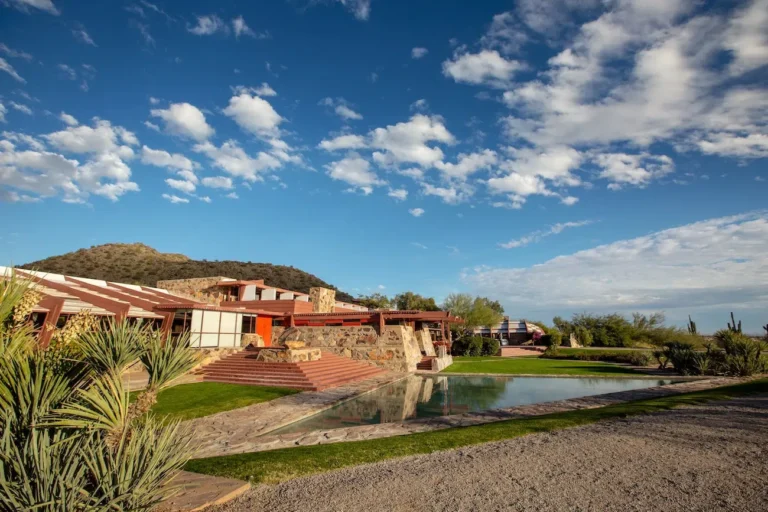
The Farnsworth House in Plano, Illinois, was designed by Ludwig Mies van der Rohe as a retreat for client Dr. Edith Farnsworth.

Instead of turning the tree into kindling, the Farnsworth House committee tapped local artisan woodworkers to preserve it. Mike Jarvi spun a series of seven bowls from a chunk of the tree, and with encouragement from the now-deceased John Bryan—a pillar in Illinois and a figure central to the preservation of Farnsworth House—donated them back to the organization. Several rest inside the Farnsworth House Visitor Center, while two were auctioned to raise funds for ongoing preservation efforts.  

Mike Jarvi spun a section of the tree into seven bowls that he donated back to the Farnsworth House to keep or auction. A handful can be seen at the home’s visitor center in Plano, Illinois.

Mike Jarvi spun a section of the tree into seven bowls that he donated back to the Farnsworth House to keep or auction. A handful can be seen at the home’s visitor center in Plano, Illinois.

Courtesy of Farnsworth House

In a chance encounter at a show in Chicago last year, the Farnsworth House’s head of marketing met another woodworker, Kory Helgens of Spring Run Design Company. Kory specializes in turning fallen trees into hand-carved canoe paddles, charcuterie boards, spoons, and many other objects. With each piece he emphasizes the wood’s story—where it came from, and how it took its final form. He did the same with Farnsworth House’s hearty maple, crafting one-of-a-kind pieces engrained with the legacy of the site.

About the same time that the Farnsworth House’s maple was cut down, Kory Helgen’s family farm was ravaged by a summer storm that knocked over 63 trees. Kory took it as a sign, and left the corporate world for woodworking. His hand-carved, one-of-a-kind goods give the Farnsworth House’s sugar maple a second run.

About the same time that the Farnsworth House’s maple was cut down, Kory Helgen’s Iowa family farm was ravaged by a summer storm that knocked over 63 trees.  Kory took it as a sign, and left the corporate world for woodworking. His hand-carved, one-of-a-kind goods give the Farnsworth House’s sugar maple a second run.

Courtesy of Kory Helgen

See the full story on Dwell.com: A Tree From the Farnsworth House Is Being Spun Into Historic Housewares
Similar Posts

  • Cottage Design Inspiration for the Minimalist

    Everyone loves a good escape, especially at a time when daily life has been defined by quarantining. A cozy home away from the city has never been more appealing. Today’s post is dedicated to cottage design. If you’ve heard the term “cottagecore”, you know that romanticizing life in the country has never been more popular. […]

    You’re reading Cottage Design Inspiration for the Minimalist, originally posted on Decoist. If you enjoyed this post, be sure to follow Decoist on Twitter, Facebook and Pinterest.

  • Ravoli Drive Residence

    Sited on a site slightly under an acre in the heart of the Pacific Palisades area of Los Angeles, the site for this estate residence descends over thirty feet from top to bottom. Narrow at the street and widening toward the rear, the building was designed to appear as a very private single story structure from the street and expand as the house moves into the site. At just under 14,000 sq. ft. the house was conceived of as a California Modernist Estate the building utilizes the site slope and widening to create a wing typology each reaching into the site to capture garden spaces, set up views and account for service amenities. Designed for peak privacy to the street, there are a series of site walls and fencing that define the property edge. After passing through the gate, the entry to the house is through a descending Entry Garden with water feature with a view through the house to the slopes of Will Rodgers State Park beyond. Shaped as a modified T, the wings of the house extend into the landscape creating separate wings dedicated to the elaborate programming of the building. Containing formal spaces for Entry, Living and Dining the house also offers a large entertainment style kitchen, Large Family Room, Library, 16 person Theater, Wine Cellar, Gym with Spa Bath including Sauna and Steam Room, secondary winter closets, dedicated two bedroom Guest House as well as six bedrooms including a Master Suite over 1,500 square feet with his and hers baths and closets as well as a garage for seven plus additional carport parking for three. All of this is balanced with a series of large exterior decks, patios and pool all wrapping around the stately eighty-foot tall Eucalyptus tree, which served as the aesthetic basis for the materiality of the building. Balancing the solidity of the extensive board form concrete walls is an expansive use of glass and the warmth of stained wood siding throughout the building. The remainder of the building is wrapped in integral colored steel troweled stucco. This palette is based on the colors and tones of the tree that is the center of the garden. Passing materials from the interior to the exterior, doors disappearing into internal pockets and flooring extending onto the decks and patios all help to create a seamless relationship for the interior to the exterior, house to land. This relationship realizes a full use of the site for its entire acre site.

  • Villa Hulliger

    The Triangle House The characteristic of the narrow, steep hillside plot is its tapering, triangular shape. The view sweeps far and wide over an extensive, natural landscape towards the valley. The layout of the stretched building follows the property line. Surrounded by small residential streets, the building is closed to the hill side, thus forming its back. Here the visitor enters the house on the ground floor, which is the middle level of three, consisting mostly of an airy and spacious area, which is the center of family life. Cooking, eating and living are combined here, zoned only by a freestanding fireplace. This all-round glazed room is sun-drenched all day and opens out to a directly adjacent pool and terrace providing a beautiful view of the surrounding nature. At the tip of the house there is a small workplace, which, like a look-out, opens out to the front of the house. Viewing it from the outside, this narrow side of the building appears like a tower, which proudly stands out as if it is aware of its imposing effect. In contrast, the long side of the house facing the valley is inviting, open and wide. It is remarkable to note how the facade is bent at various points and the building view is accentuated by these carefully folded planes. The basement of the house is accessed from this side. One enters a very generously planned garage, which is tucked away into the ground. A gym is situated towards the west and a family wardrobe towards the east, through which you reach the stairs that take you directly to the ground floor. The private areas, which are located on the first floor, are also completely glazed and offer a spectacular view, bordered by mountains on the horizon. The parents’ bedroom open out onto an exclusive terrace.