An Architect Revives a Dreary, Prefab A-Frame Cabin in the Hamptons for $300K

Architect Edgar Papazian turns a 1965 kit-of-parts cabin in Sag Harbor into a full-time home for his family.
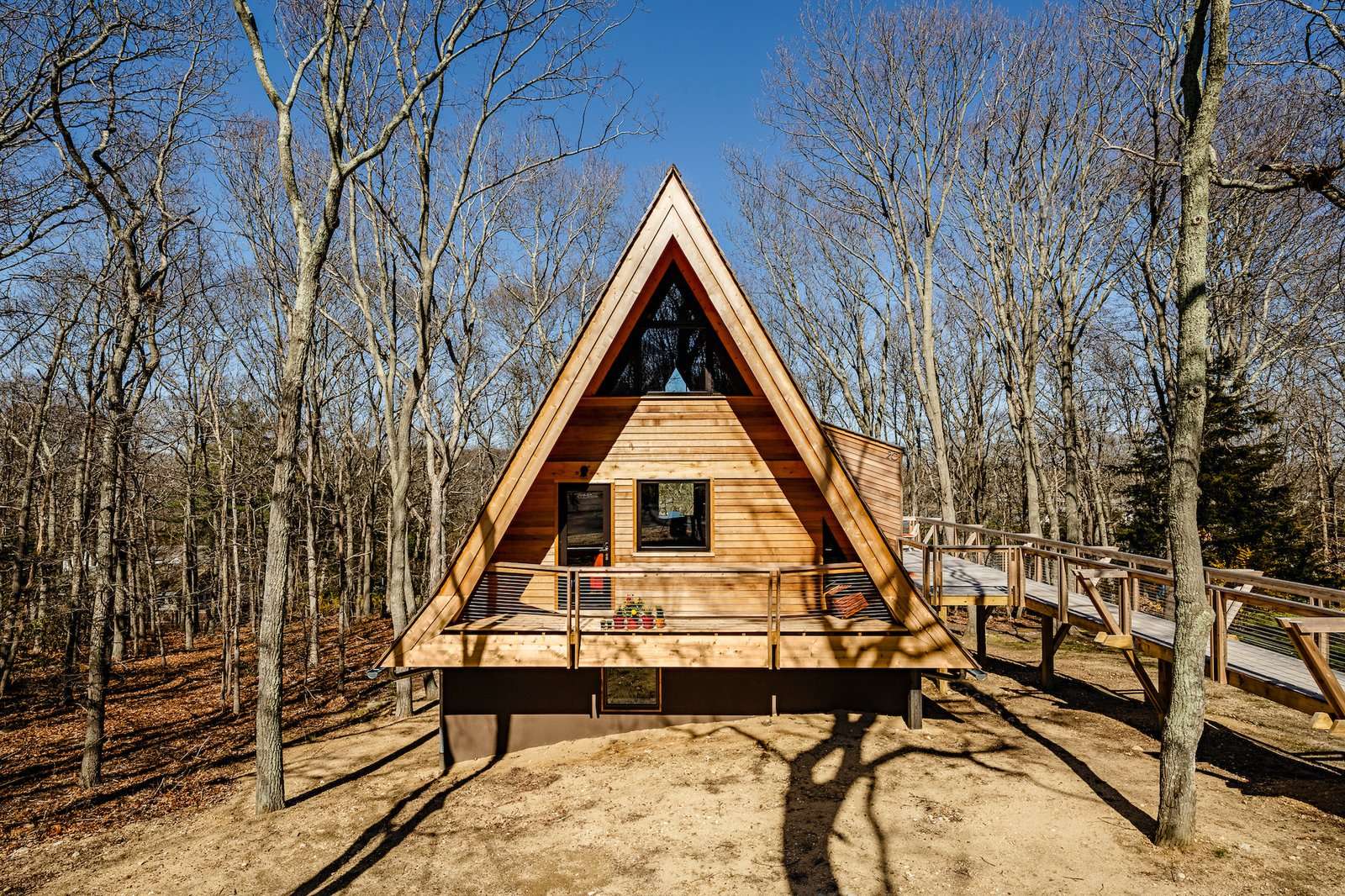
The triangular form of the 1,189-square-foot A-frame cabin, which sits in a small forest of oak trees on Long Island, has been emphasized as part of the renovation.

Architect Edgar Papazian and his wife, Michelle, weren’t immediately sure how to make the dilapidated A-frame cabin they’d purchased in Sag Harbor, Long Island, more comfortable for their family of four.  “When we purchased the cheapest house in the zip code, it was simply shelter after a tumultuous period,” says Edgar. “As we lived in it over the next year, I was able to examine the carcass of the thing we had bought and gradually figure out how it could work better for us.”

The triangular form of the 1,189-square-foot A-frame cabin, which sits in a small forest of oak trees on Long Island, has been emphasized as part of the renovation.

The triangular form of the 1,189-square-foot A-frame cabin, which sits in a small forest of oak trees on Long Island, has been emphasized as part of the renovation.

Lincoln Barbour

Before the renovation, the non-winterized cabin—which was fancifully described by the real estate listing as a

Before the renovation, the non-winterized cabin—which was fancifully described by the real estate listing as a “chalet”—had been used as a summer vacation home. The renovation needed to make it suitable for a full-time residence to house architect Edgar Papazian, his wife Michelle, and their two young daughters.

Lincoln Barbour

“The ease in having yourself as a client is offset by the limitations you impose on yourself financially and emotionally,” says Edgar. “Your own home is a place created as an extension of your identity, but it also has to fulfill practical functions—and I found I had to edit myself mercilessly. We also happen to live in a place where construction is very expensive, which made this build incredibly challenging and nerve-wracking.”

The lower

The lower “basement” level sits beneath the main level of the home and is accessible from doors at the rear, and from an internal stair. The original deck was replaced by one that visually extends the new entry footbridge around the home.

Lincoln Barbour

See the full story on Dwell.com: An Architect Revives a Dreary, Prefab A-Frame Cabin in the Hamptons for $300K
Related stories:

  • A Canadian Family Thrives in a Charming, Farmhouse-Style Tiny Home
  • My House: A Wellness Blogger Carves Out a Soothing Retreat in Austin
  • A Green-Roofed Maine Home Rises Above a Limited Footprint

Similar Posts

  • Mercer Modern

    Mercer Modern is a midcentury home located on a hillside on a 15,539 SF lot in Mercer Island, WA overlooking Lake Washington. The original house had great bones but was disconnected from the outdoors. Wittman Estes wanted to give the family a way to live outside and connect with their Southern California roots. Originally built in 1969, the post and beam structure had fallen into disrepair, and had a layout that was out of sync with the casual modern lifestyle for a young family with two children. The owner is Melanie Owen, a fashion designer with a keen interest in interior design and outdoor living. Originally from Southern California, her design sensibilities were rooted in SoCal surfer culture and the casual and open vibes of beach living. Both Melanie and her husband, Matt, work in fashion and clothing and have deep interests in texture, materiality, and a spaces with a comfortable lived-in feeling. Ms. Owen’s roots in Southern California brought a love for bright, light tones, and simple open spaces. Together with the architect, this vibe was mixed with Pacific Northwest traditions of wood tones and highly crafted built-in furniture. The goal was to create spaces that had both the qualities of Southern California modernism with a warmer, high quality carpentry that the Puget Sound region is known for. The outdoor deck has a ipe decking and built in seating. Cedar slat walls screen the neighboring houses while allowing the sunlight to filter through the screens. The kitchen was reconfigured to orient to the outdoors encourage an easy connection between the living room, dining room, and outdoor space. A concrete and glass stair connect the upper terrace to the garden and landscape. “We sought to connect the spaces in so the family could be relaxed and cruise barefoot going indoors and out”, says Wittman. The breezy and lightweight feeling of the material palette encourages the family to step outside and connect with the sunlight and views over Lake Washington and towards the downtown Seattle skyline. Project Credits Architect: Wittman Estes Design Team: Matt Wittman AIA LEED AP, Jody Estes, Hayley Snider Structural Engineer: Josh Welch Engineering Builder: Ian Jones, Treebird Construction Photography: Rafael Soldi