|

blå station introduces P.Y.R. chair by david ericsson as a manifesto for originality

Blå Station defends originality against low-cost imitations

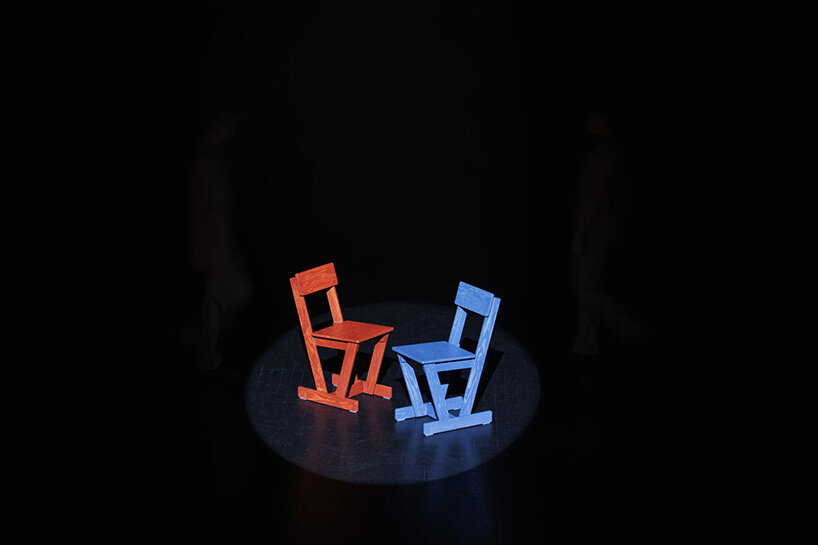
In an era where imitation thrives and price dictates value, Blå Station introduces P.Y.R.—short for Protect Your Rights—a chair by David Ericsson that challenges the boundaries of intellectual property and creative ownership. Unveiled at Stockholm Furniture Fair 2025, the design questions whether an idea, reduced to its essence and easy to replicate, can still be protected or if it should be free for all.

Blå Station’s Johan Lindau, CEO and design manager, envisions a world where originality is not overshadowed by low-cost imitations. ‘We don’t want that nowadays,’ he asserts. ‘In this world, our obvious choice is – the original,’ Johan Lindau highlights, advocating for a future where consumers recognize and choose the original over copies. P.Y.R challenges the notion that cheaper equals better, instead emphasizing the unseen investment behind design, the years of research, material selection, and technical refinement.
blå station introduces P.Y.R. chair by david ericsson as a manifesto for originality
images courtesy of Blå Station

Can a simple, easily replicated design still be protected?

The rise of fast consumption and algorithm-driven trends has diminished the gap between innovation and replication. While consumers seek uniqueness, the market favors mass production, rewarding knockoffs that arrive quicker and cheaper. The Swedish brand Blå Station confronts this paradox, arguing that prioritizing price over quality leads to a downward spiral where even the imitators eventually fall victim to replication.

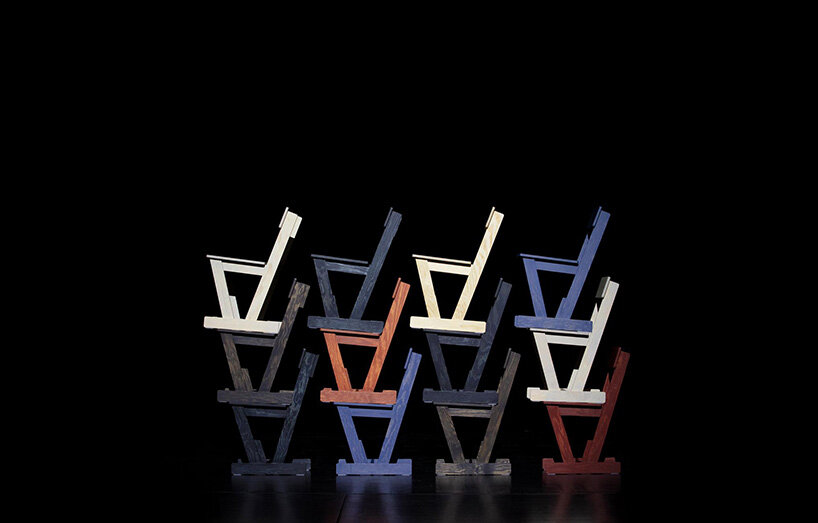
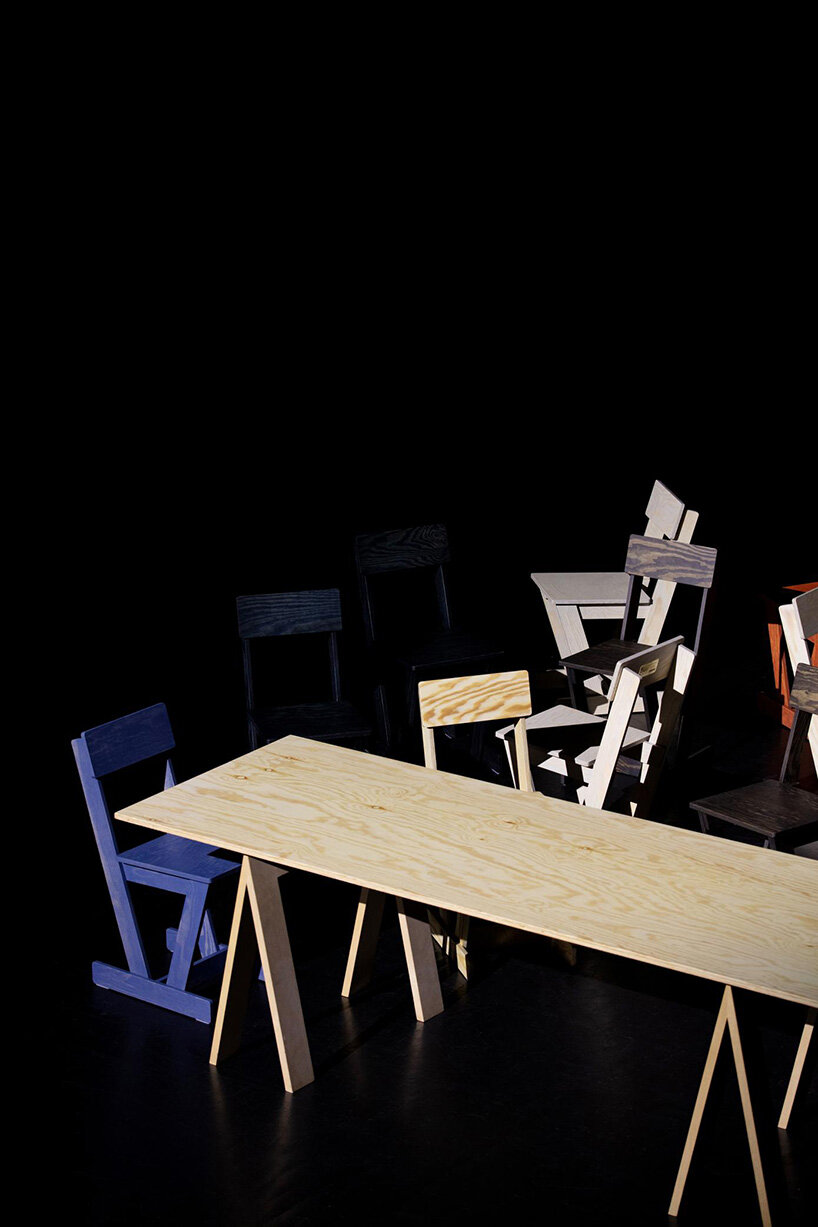
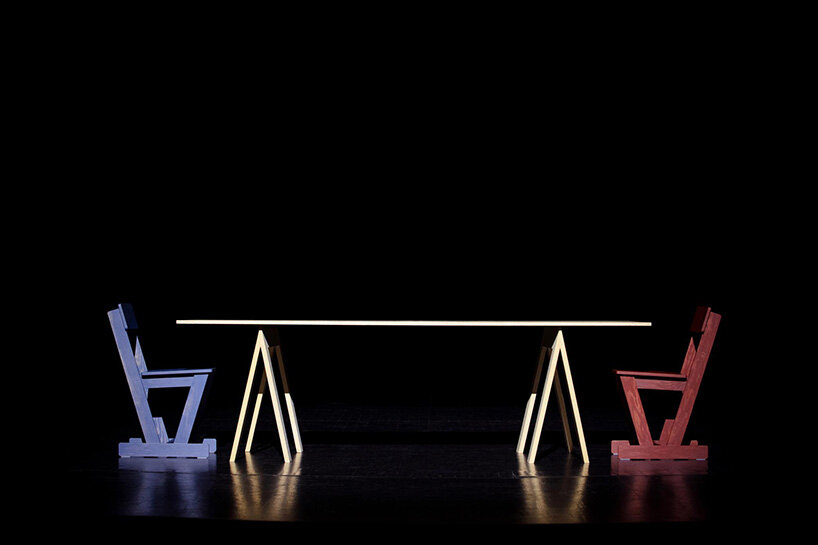
The intersecting planes of the chair, its cantilevered elements, and raw materiality aim to balance between stability and sculptural form. Made from sustainably sourced EU wood and available in multiple colors, P.Y.R.’s wide stance and intersecting beams provide a solid foundation, while the subtle tilt of the seat adds an unexpected sense of comfort to its rigid geometry.

P.Y.R. questions whether design protection can still hold weight in a world where ‘almost the same’ has become acceptable. With this launch, Blå Station presents its new product, igniting a debate on the future of intellectual property and urging designers, consumers, and legislators to reconsider the value of the original.
blå station introduces P.Y.R. chair by david ericsson as a manifesto for originality
P.Y.R. stands for Protect Your Rights
blå station introduces P.Y.R. chair by david ericsson as a manifesto for originality
the chair by David Ericsson challenges the boundaries of intellectual property and creative ownership
blå station introduces P.Y.R. chair by david ericsson as a manifesto for originality
unveiled at Stockholm Furniture Fair 2025

Similar Posts

  • Hillside Sanctuary

    The owner of this property came to Hoedemaker Pfeiffer looking for a personal retreat inspired by a home lost to fire decades earlier in the hills of Appalachia. The firm’s task was not to recreate that home but rather to give its spirit new form in the Pacific Northwest. Taking inspiration from its remote site in the San Juan Islands, our team envisioned a series of simple stone volumes. From that concept emerged the main house and a guest house, each responding to its own unique location on the site. Together they provide friends and family with comfortable accommodation while offering a sanctuary for the owner at the main home. Taking full advantage of sweeping views of Puget Sound, the main home is sited on a small plateau high on top of a steeply-sloping hillside. With a view on one side and a road on the other, the site suggested a stone plinth and stone wall to form the base and rear of the house. A pair of stone fireplace volumes support the concept, rising together to form the boundaries of a central stone staircase that separates the main level into public and private realms. Atop the low stone base then perches a light-filled wood structure. Its simple shed roof tips low in front to protect from the summer sun while offering space for a photovoltaic array above. Winter light in turn penetrates deep into the main living spaces through a wall of glass running continuously across building’s south elevation. The relative height difference between this wood pavilion and that of the adjacent stone volume also allows consistent north light to flood into the primary living spaces via a series of clerestory windows, which release warm air high on the leeward side of the structure. The site for the guest house came with more significant technical challenges. The concept begins with a stone tower set near the center of the small circular parcel. Rising high above steeply-sloping grade, it acts as a three-dimensional datum through which feature program elements are allowed to puncture. The main entry offers ease of access to the project’s public spaces through a simple, full-height opening cut into the stone volume’s north elevation. The stair, comprised of a concrete base below large casement windows, allows natural light to fill the main stairway as it leads guests toward the bedrooms located at the home’s lower level. Opposite the entry, the view deck extends from the great room, cantilevering far above grade. The dining room, finally, was conceived as a three-sided glass object floating in a forest of trees. Two steel beams carry its entire weight and extend deep into the floor system. To enhance the concept, our team preserved trees only a few feet from the dining room by developing custom retaining walls capable of avoiding critical root zones. Project Team: Hoedemaker Pfeiffer (Architecture) ​Schuchart Dow​ (Contractor ​Randy Allworth, Allworth Design​ (Landscape Architect) ​Malsam Tsang​ (Structural Engineer) ​LPD Engineering​ (Civil Engineer) Nelson Geotechnical Associates, Inc. (Geotechnical Engineer) Island Tree Doctor (Arborist) ​Kevin Scott​ (Photographer)