House plants add beauty and life to a room (literally)! Throw in their air-purifying properties, and it’s hard to find a reason not to jump on the greenery bandwagon. Cultivating plants indoors takes some practice, but luckily there are plenty of common house plants that are hardy, low-maintenance, and able to thrive away from the outdoor sun.
In fact, when it comes to extremes in weather, indoor plants have it made, thanks to a cozy habitat where they’re shielded from the elements. Curious about the best types of house plants for your interior? Keep reading to learn more about popular selections, basic care tips, and even a few convincing faux plant suggestions that are absolutely no-maintenance!
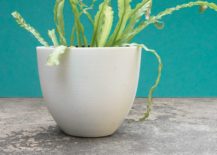
Succulents
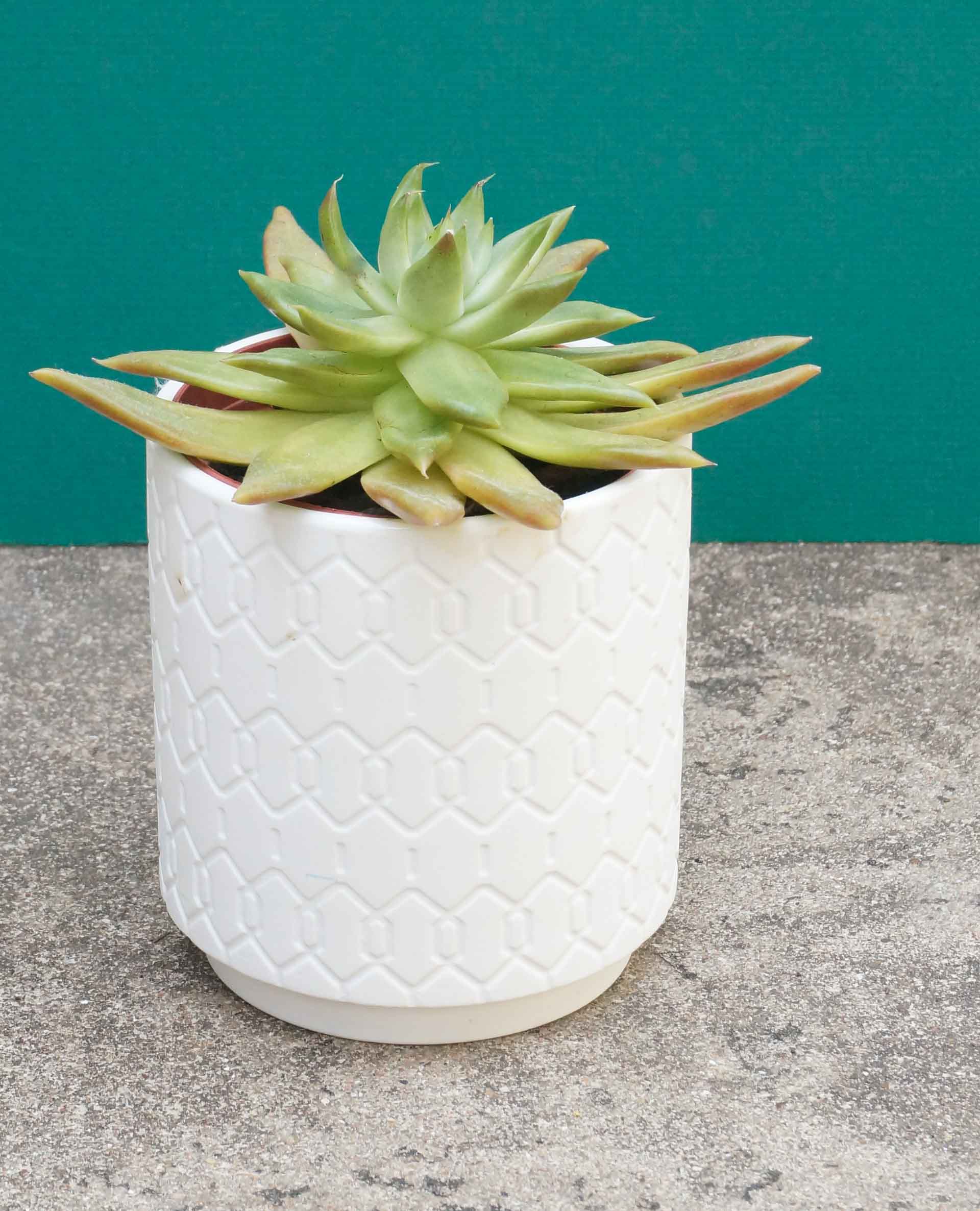
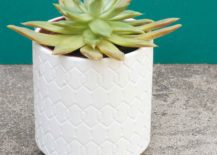
A true favorite with design lovers, succulents thrive in light-filled rooms. These common house plants don’t enjoy being over-watered, so a pot with good drainage is key. There are many different varieties, each one more interesting to look at than the next! Many people claim that succulents are impossible to kill, but they’re not foolproof. Remember that part about not over-watering them?! One good rule of thumb is to make sure the soil isn’t moist before you bust out the watering can. Above we see an echeveria selection in a pot from CB2’s 3-Piece White Loom Planter Set. [photo by Kate Simmons]
Another reason to love succulents is their variation in size, form and color. You can find good options for the smallest of planters, and you can also combine succulents in fun arrangements, creating beautiful centerpieces and focal points. If you haven’t had luck in the succulent arena, these plants are so perfect looking, they almost look unreal. Which is why you can easily go faux and nobody will be the wiser!
ZZ Plant
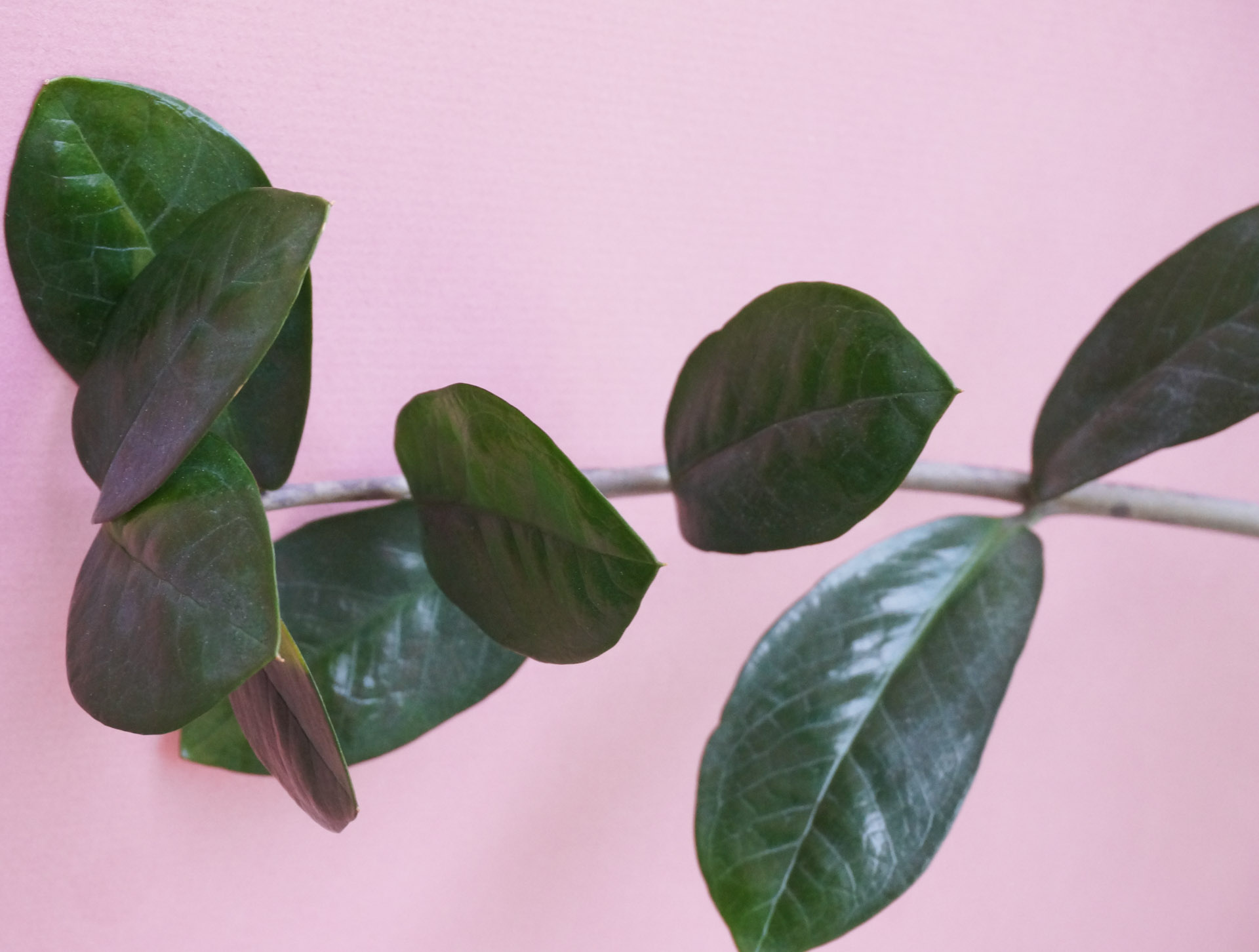
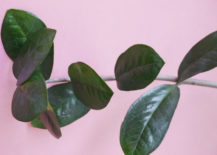
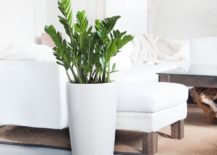
Curious about the ZZ plant‘s unusual name? It’s short for Zamioculcas zamifolia! With waxy green leaves that look too perfect to be real, this plant makes a big statement. Direct sunlight is not recommended for the ZZ plant, and the brighter the room it inhabits, the more you may need to water it. Just make sure the top layer of the soil dries out in between waterings.
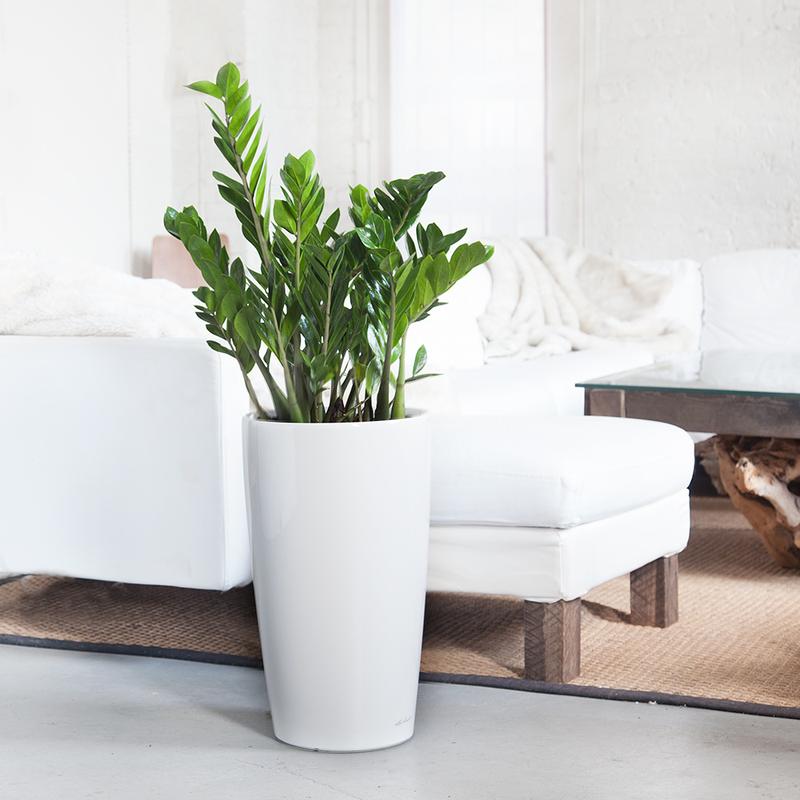
The ZZ plant is a common house plant that is known for its ability to thrive in a variety of light levels (though moderate light is ideal) and even handle a bit of neglect. If you’re someone who insists you don’t have a green thumb, this plant is a great place to start! Above we see a beautiful selection from My City Plants, the top online plant shop in New York City. Check out all of their ZZ plant offerings here. We’ll highlight a few of their other plants below.
Ferns
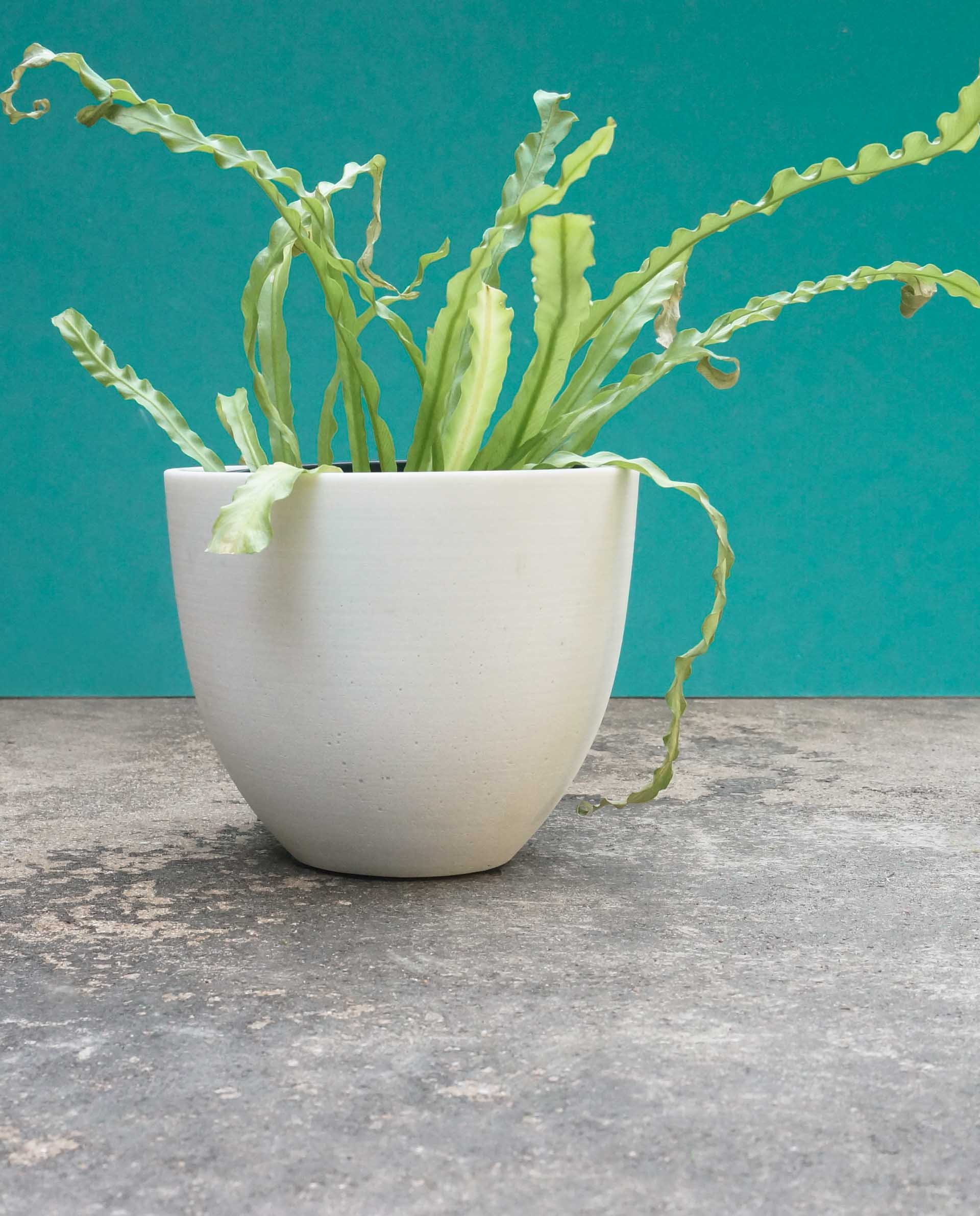
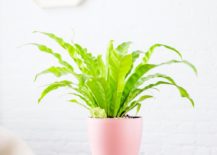
Ferns are moisture-loving plants known for their interesting leaves and long history (they could be found in prehistoric forests)! Many design lovers enjoy placing ferns in powder rooms, sometimes even in the shower, where humidity provides a helpful boost. Above we see a Bird’s Nest Fern. Don’t look too closely at the leaves, as they’re beginning to dry out. Keeping these plants hydrated is important! Unlike other plants featured in today’s post, ferns need consistently moist soil, so avoid letting it dry out between waterings. [photo by Kate Simmons]
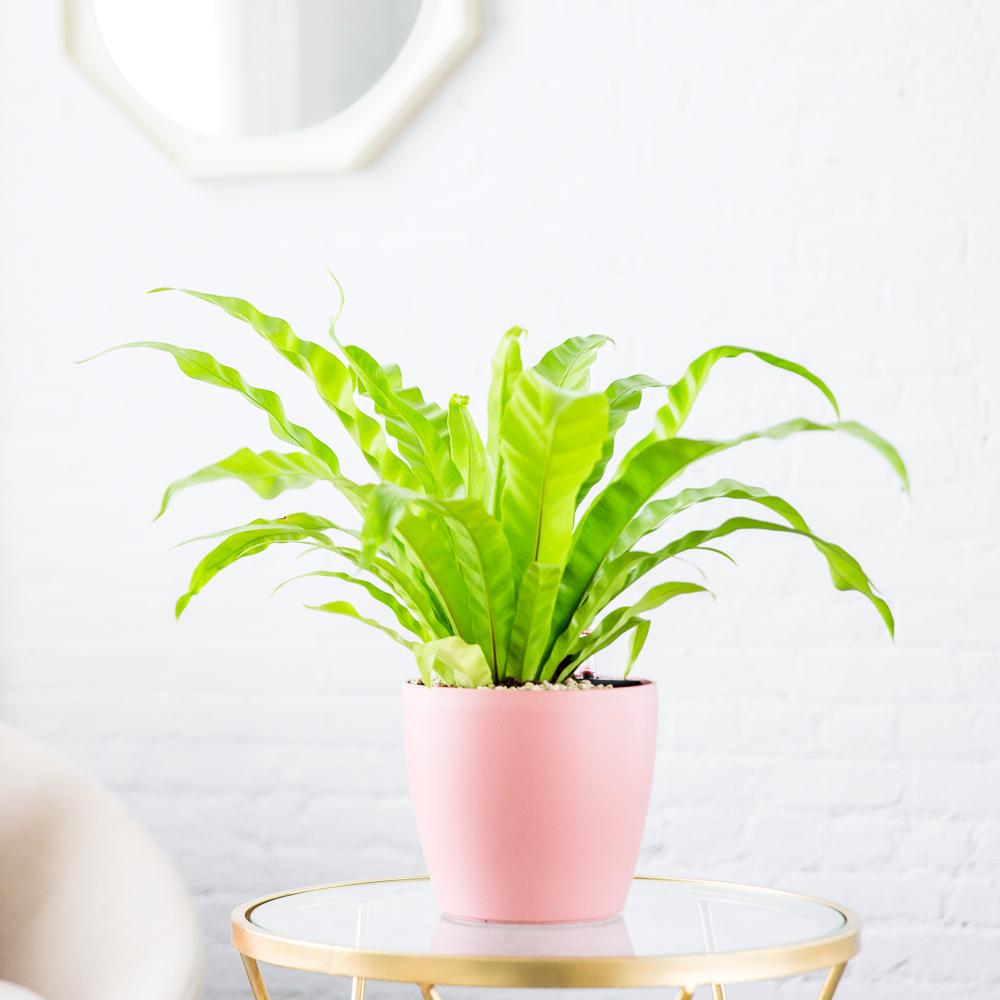
Above we see another beauty from My City Plants, also a Bird’s Nest Fern. Additional fern varieties include button fern, maidenhair fern and Boston fern, which is often seen in hanging baskets with long fronds cascading over the sides.
Pothos
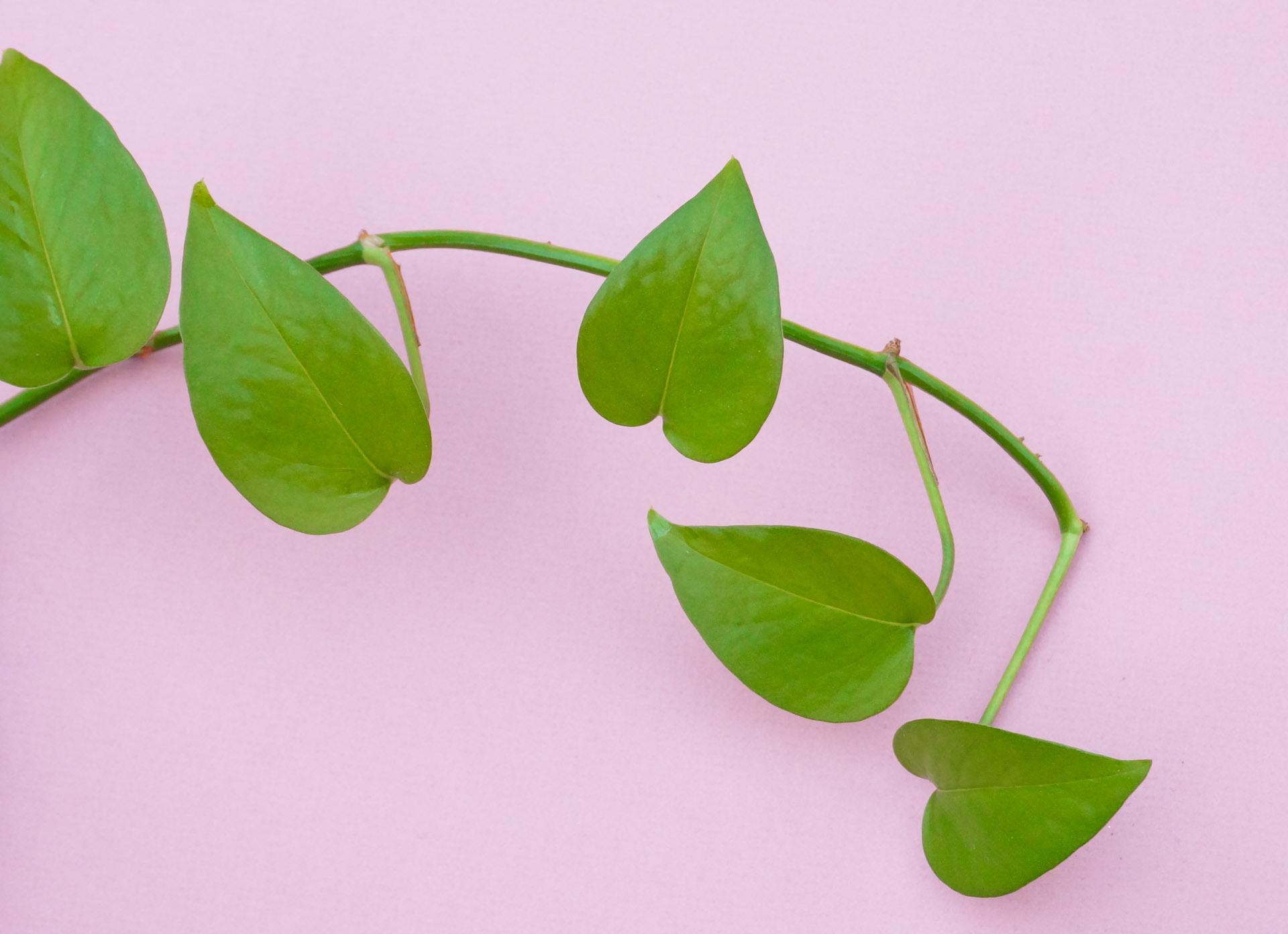
When it comes to common house plants, it’s hard to get hardier than pothos! This air purifying plant does well in a range of lighting situations, and it can even handle environments where residents sometimes forget to water it. In fact, it’s good to let pothos dry out between soakings. Also, note that direct light is not recommended.
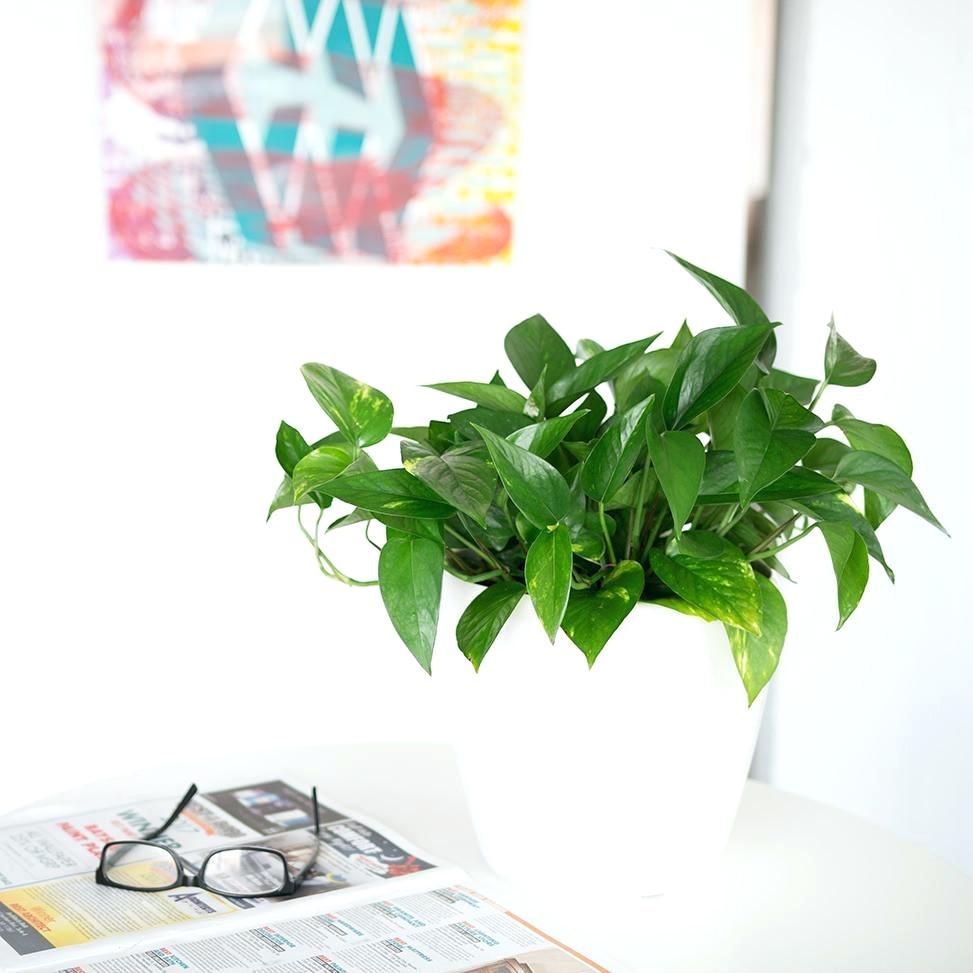
One signature trait of pothos is its ability to cascade over the containers that hold it. The leaves of this beauty above (from My City Plants) should be tumbling over that white planter in no time! Which is another reason pothos is popular with design lovers in a hanging basket capacity.
Snake Plant
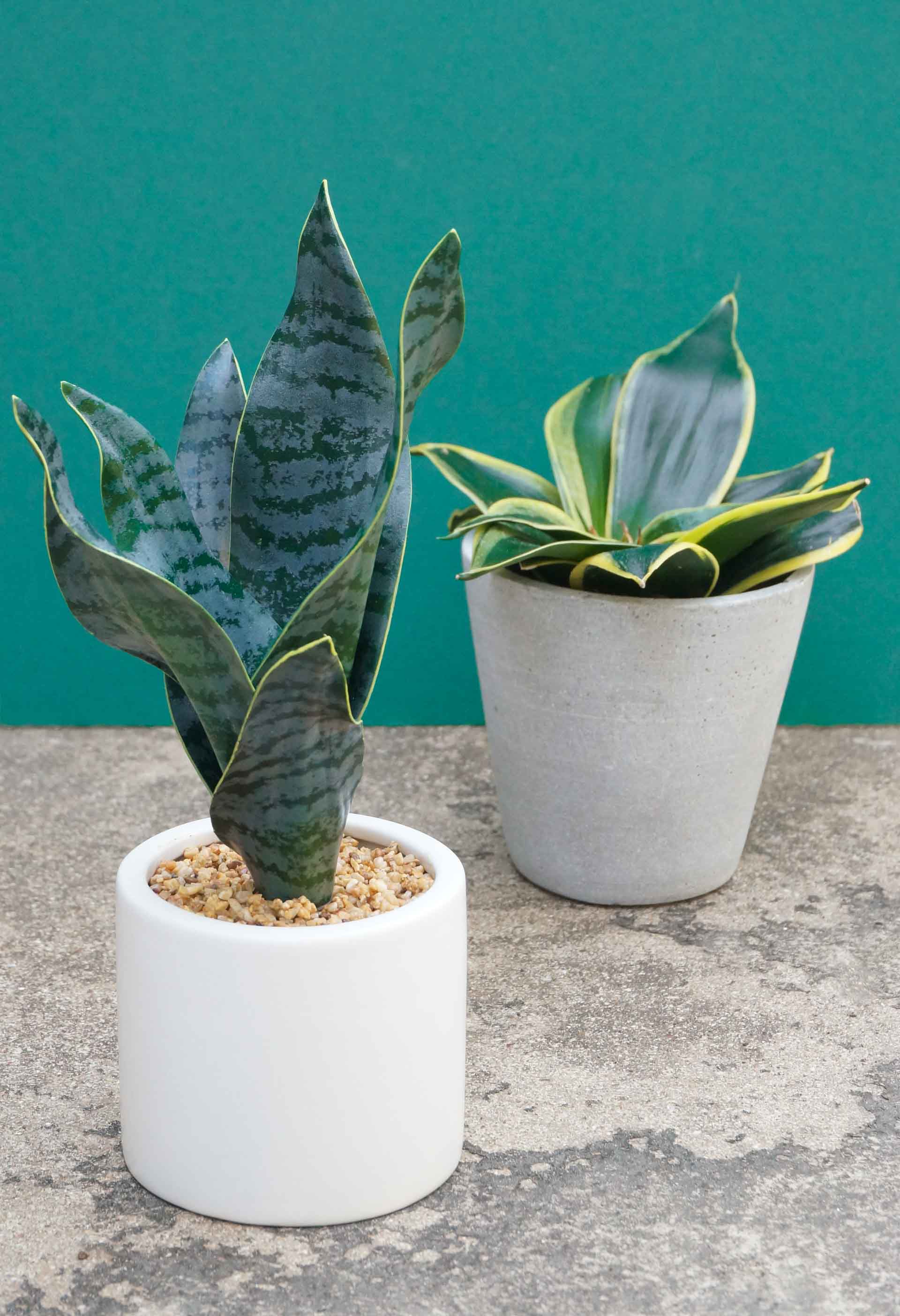
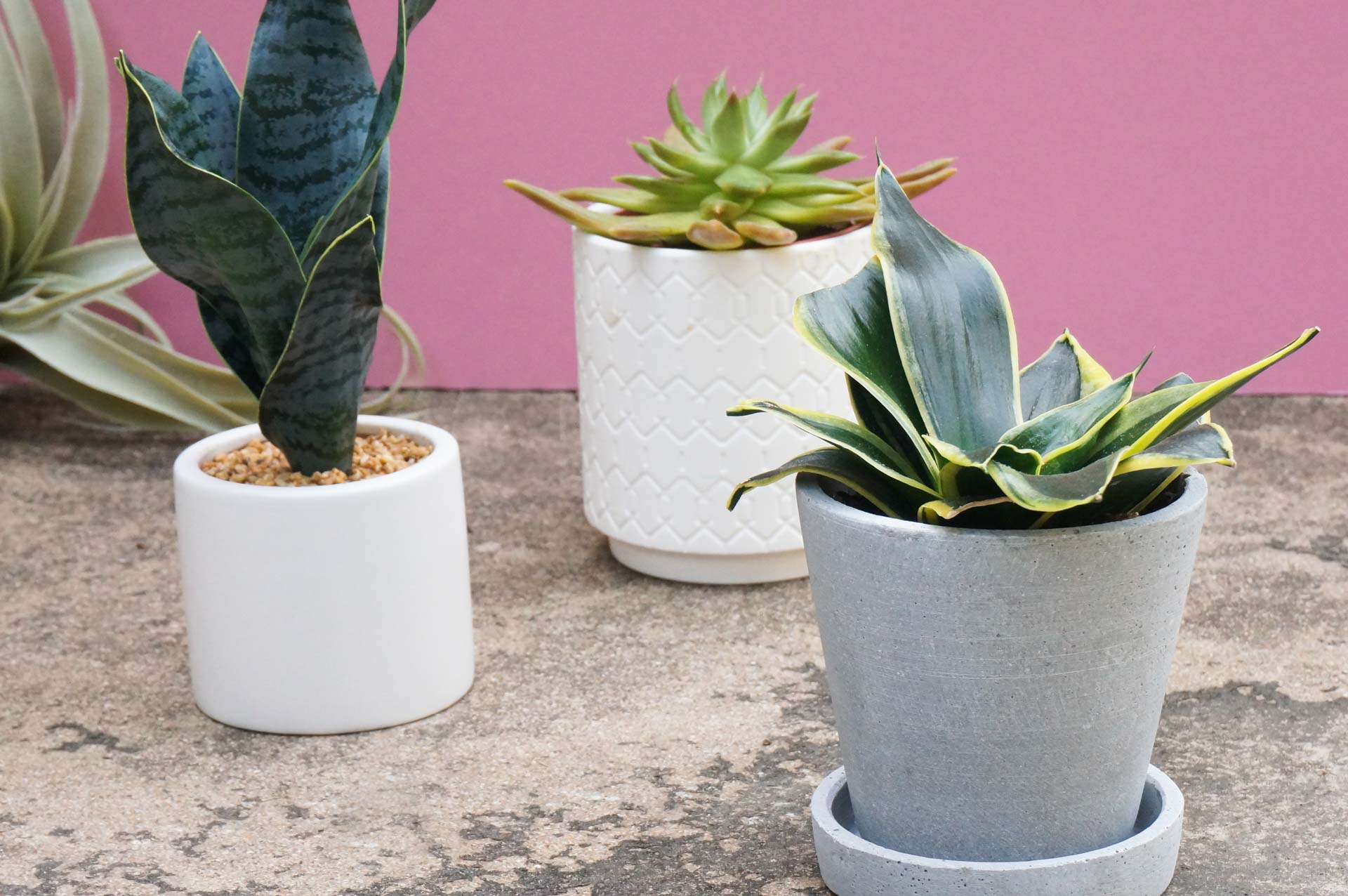
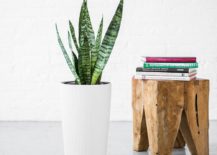
Snake plants are often seen in large planters in commercial spaces, from shopping malls and hotel lobbies to your favorite restaurants. Arranged in a row in a long planter, they can create mini walls and dividers. Sometimes referred to as the next best thing to plastic plants, snake plants are also a great option for going faux. In fact, the plant in the white pot above is a faux snake plant from Target. Not bad for $7.99! [photo by Kate Simmons]
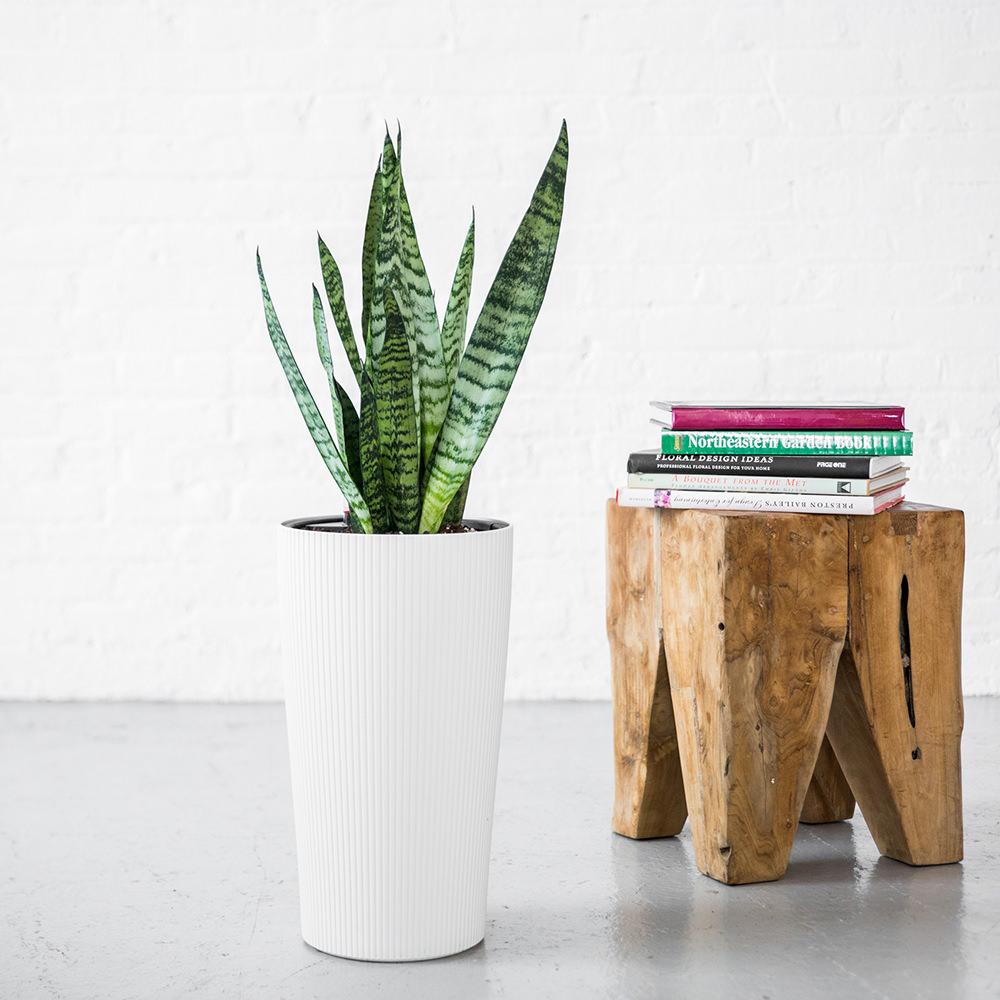
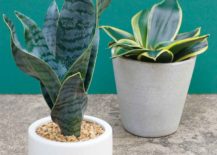
Like several of today’s featured house plants, snake plants do best when you let the soil dry out between waterings. They can also handle a range of lighting situations. Different varieties will feature different colors and markings on the leaves, from yellow-lined green leaves to the “striped” appearance of the leaves above in another fab find from (you guessed it) My City Plants. Note how the planter above is perfect for a floor display. It also has a built-in sub-irrigation system!
Air Plants
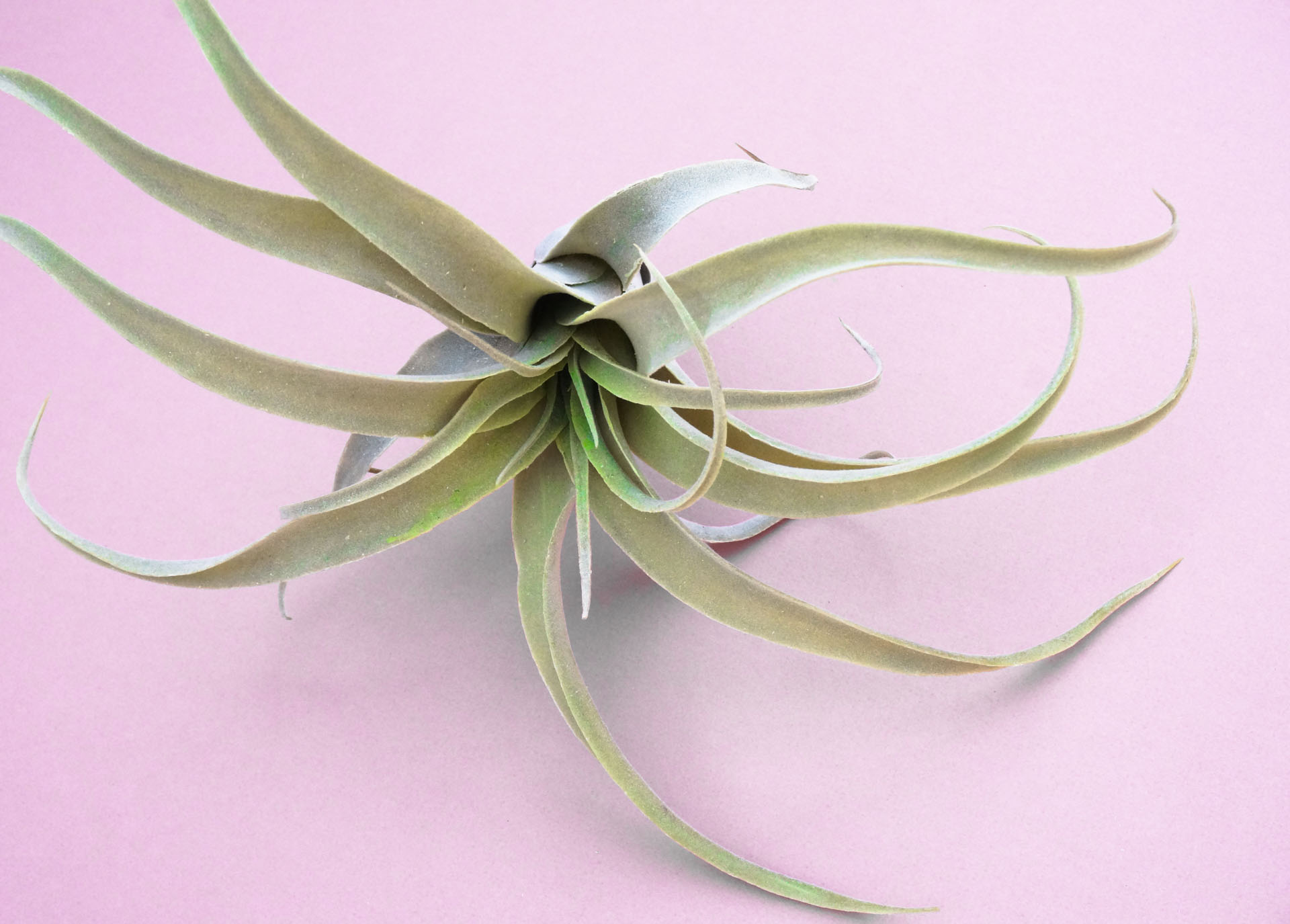
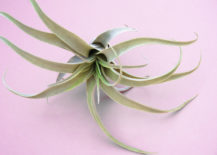
Despite their to-the-point name, air plants do in fact need more than air to survive. However, because they don’t require soil, the display possibilities are endless! Terrariums, glass globes and decorative bowls are all popular container choices. Air plants love bright light, and as a general rule, they thrive when soaked in water one or more times a week. Misting in between soakings can also be helpful. For more details, check out our post on How to Care for Air Plants.
Now that you’ve learned about some of today’s most popular and common house plants, are you ready to become an indoor gardener? We at Decoist wish you well as you choose the best plants for your interior! Don’t forget to display them with pride…
You’re reading Common House Plants with Staying Power and Style, originally posted on Decoist. If you enjoyed this post, be sure to follow Decoist on Twitter, Facebook and Pinterest.


