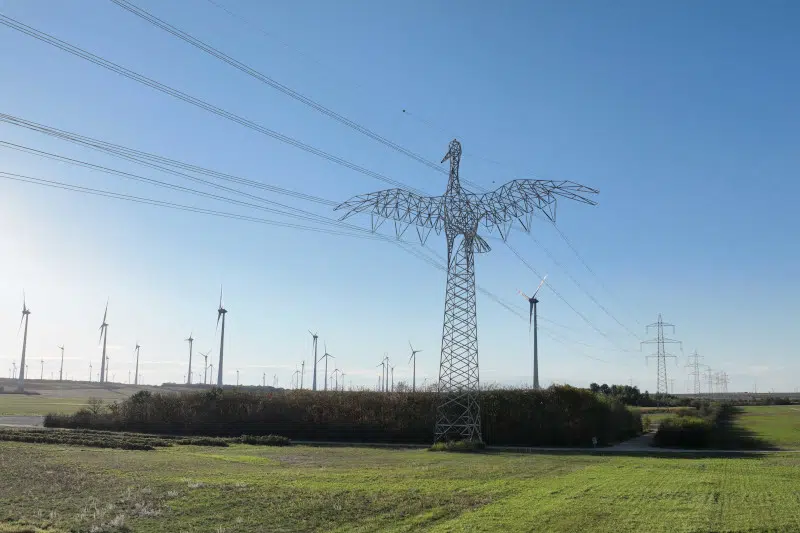
If you’ve ever gone on a road trip, you’ve probably encountered towering power structures made of steel. Known as electricity pylons (or transmission towers), these typically latticed structures support high-voltage overhead power lines, helping transport electricity around. While key to help cities running, their design often contrasts with that of the surrounding landscape. In an effort to improve their design, the Austrian Power Grid has reimagined pylons as massive animal sculptures.
Named Austrian Power Giants, the first two prototypes of these animal-shaped pylons depict a stork and a stag. The former is a tribute to the annual migration of these birds to western state of Burgenland, and the latter symbolizes the forests on the foothills of the Alps. The aim is to have Austria’s nine states represented by a power giant. In turn, the company hopes these sculptures will increase public acceptance of grid expansion projects.
“By transforming functional structures into regional landmarks, the Austrian Power Giants seek to promote sustainable infrastructure, strengthen local identity, and enhance business and tourism potentials across the country,” writes the Austrian Power Grid.
The two prototypes have already been pre-tested for structural stability and high-voltage performance. To make them a reality, the Austrian Power Grid teamed up with construction company BauCon and designer Roland Kaufmann of GP designpartners. The idea has caught attention beyond Austria, earning a Red Dot Award for concept design in the Electrification and Decarbonization category.
Despite the innovation behind these design concepts, there is no concrete implementation currently planned. In the meantime, you can view the miniature models for these sculptures at the Red Dot Museum in Singapore until October 2026.
The Austrian Power Grid has reimagined pylons as massive animal sculptures, each one a representation of nature’s “power giants.”
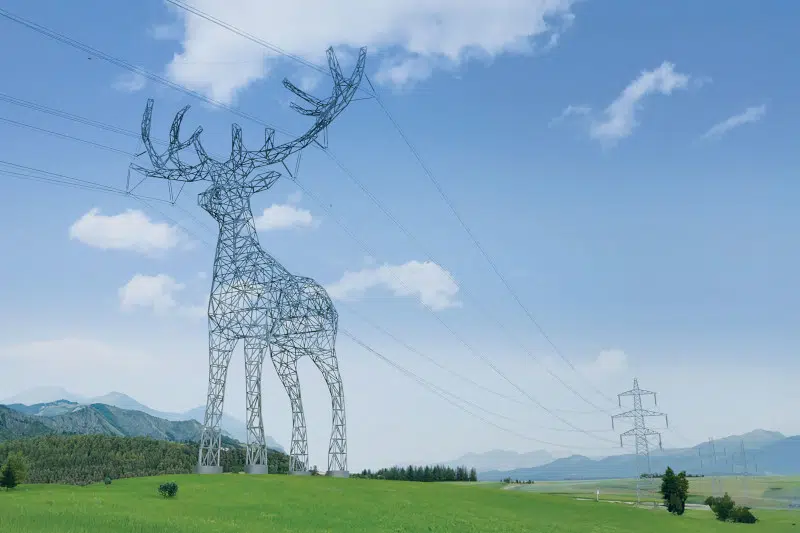
Named Austrian Power Giants, the first two prototypes of these animal-shaped pylons depict a stork and a stag.
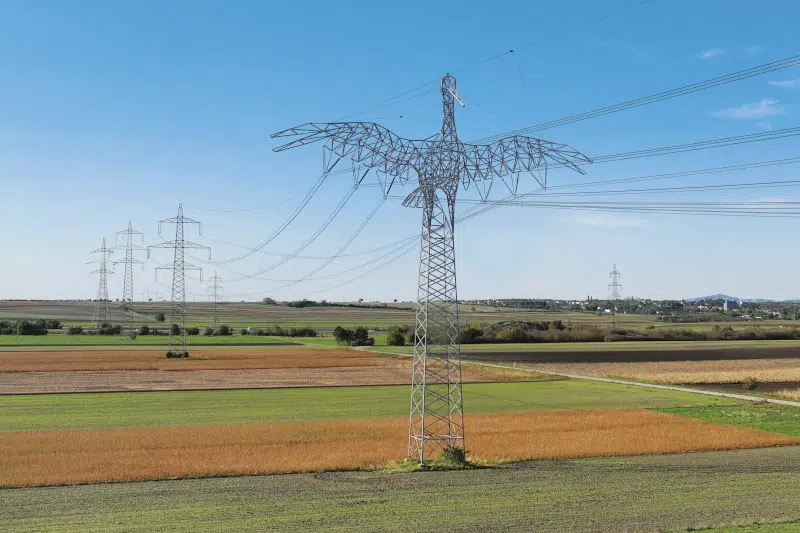
The aim is to have Austria’s nine states represented by a power giant.
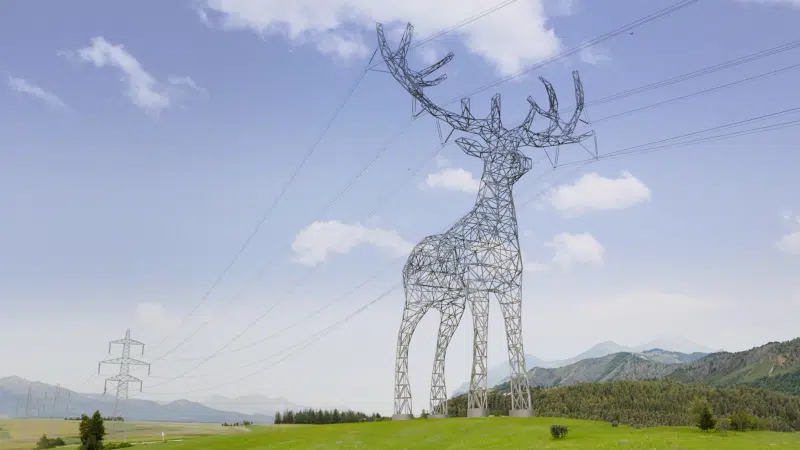
In turn, the company hopes these sculptures will increase public acceptance of grid expansion projects.
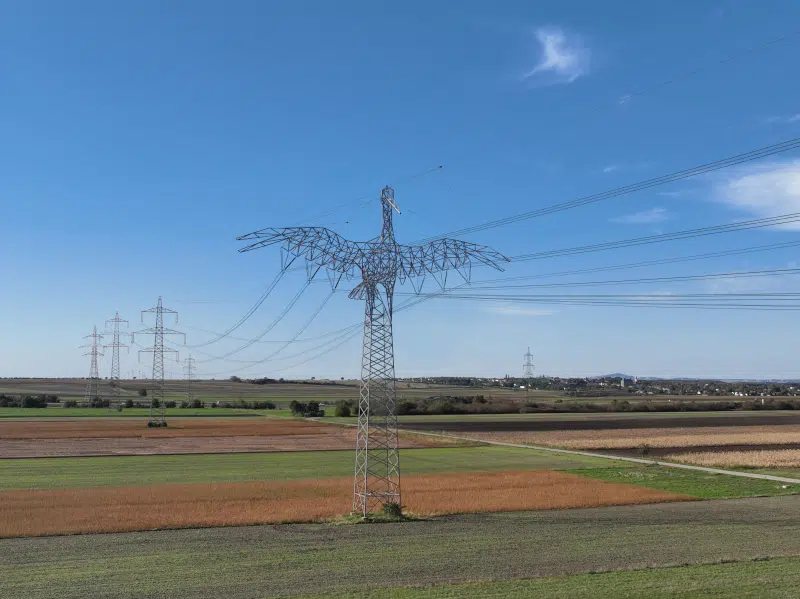
Austrian Power Grid: Website
Sources: Power lines shaped as animal sculptures supply electricity across Austria
All images via Austrian Power Grid and Red Dot Awards.
Related Articles:
Over 7,000 Steel Panels Line Façade of Europe’s Largest Solar Power Plant in Turkish Desert
Artist Duo Shoot 10,000 Volts of Electricity Through a Pieces of Wood To Create Their Striking Designs
Artist Transforms Ordinary Sheets of Paper Into Awe-Inspiring Animal Sculptures
Artist Transforms Discarded Horseshoes Into Dynamic Animal Sculptures