|

feminist artistic legacy finds form in porcelain-clad spanish residence by viruta lab

Viruta Lab honors spanish feminist art in residential project

Interior architecture and design studio Viruta Lab, led by David Puerta and María Daroz, introduces Casa Gesso, a residential project in Valencia, Spain, that aims to honor the artistic legacy of the pioneer in Spanish feminist art, Ángela García Codoñer. The house features a facade of bone-colored porcelain tiles, inspired by traditional washhouses.

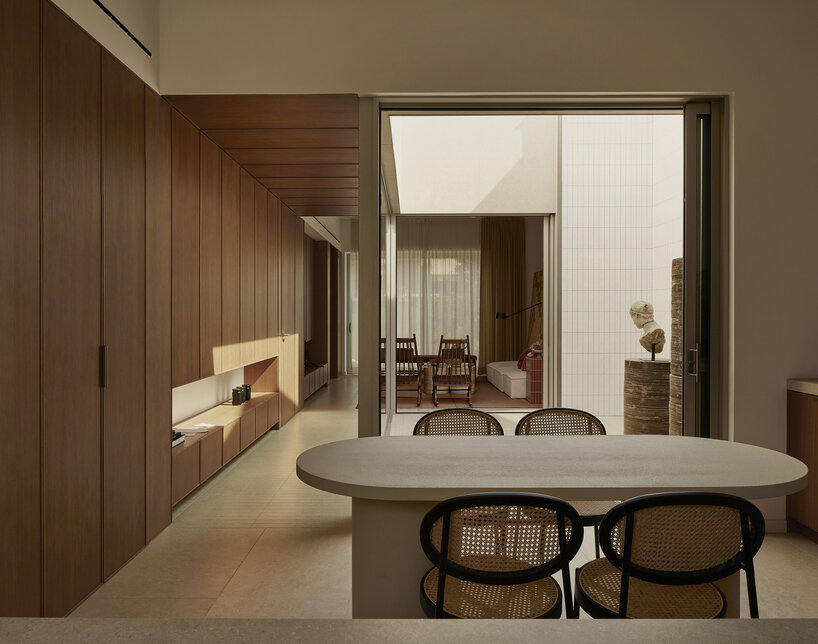
The residence is divided into two distinct sections. The communal day zone spans one and a half stories, while a taller, two-story volume houses private spaces such as bedrooms and bathrooms. These areas are linked by a staircase incorporated into a linear oak cabinetry feature. At the heart of the house lies an interior courtyard, clad in vertically arranged porcelain tiles, which acts as a light well and a source of natural ventilation. Uniform porcelain tile flooring and vertical slit windows throughout the structure contribute to a consistent visual rhythm, while textures and proportions foster a serene atmosphere. A combination of diffused LED lighting and sculptural fixtures lends the interiors a welcoming glow.
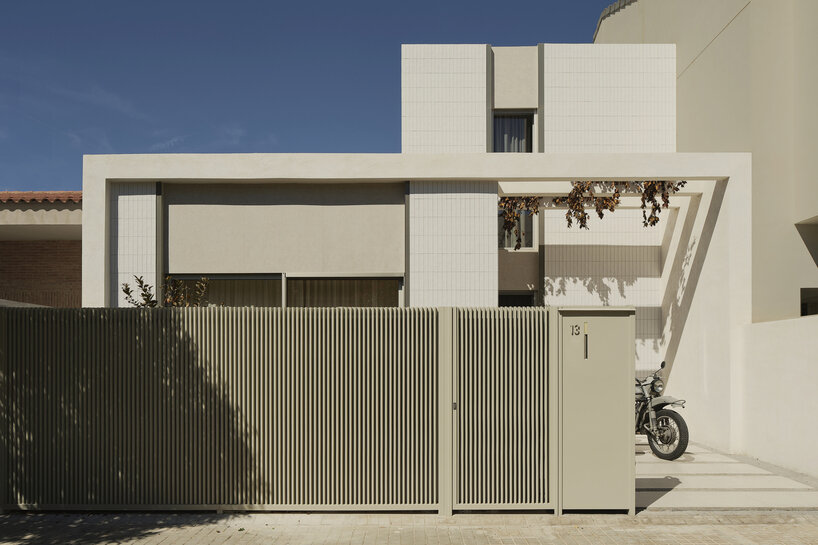
feminist artistic legacy finds form in porcelain-clad spanish residence by viruta lab
all images by David Zarzoso, courtesy of Viruta Lab

Casa Gesso features themes of Ángela García Codoñer’s work

The Valencia-based team of Viruta Lab takes cues from the work of the 1970s Spanish visual artist Ángela García Codoñer, weaving her feminist themes into the fabric of Casa Gesso. In the living area, the influence of her Morfologías series (1973) is evident in the fluid forms that question traditional depictions of the female body, inviting reflection on gender and identity. The master bedroom nods to her Misses series (1974–1975), incorporating a tweed headboard inspired by Chanel to reflect themes of societal aesthetics and the performative aspects of femininity. Using a dramatic, stage-like spotlight instead of conventional bedside lighting underscores this idea of performance.

The Labores series (1975–1977), which delves into domestic crafts and their cultural significance, informs the design of the living room with elements such as travertine marble coffee tables and a sculptural micro-cement dining table. Upholstery in terracotta and neutral tones creates a tactile warmth and custom pieces, from handmade rocking chairs to intricately crafted rugs, further celebrate the artisanal qualities central to García Codoñer’s work.
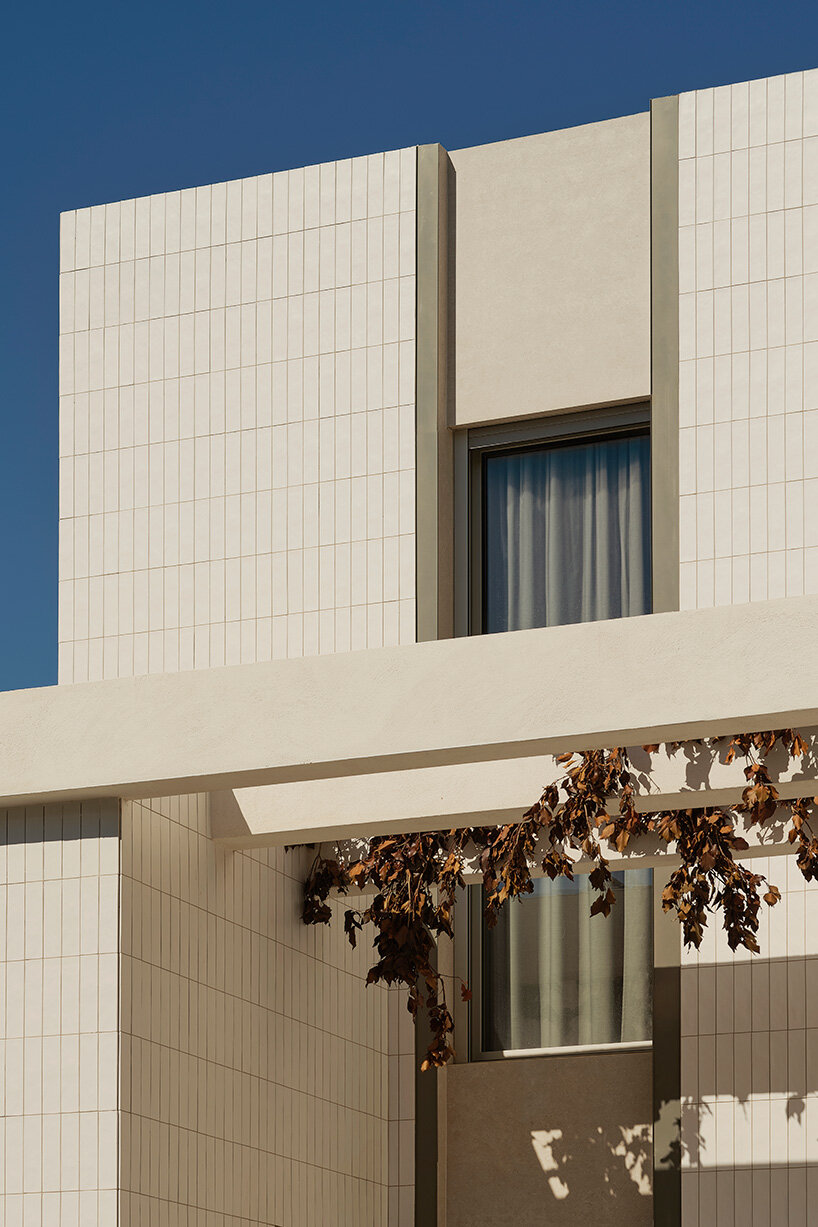
feminist artistic legacy finds form in porcelain-clad spanish residence by viruta lab
honoring the artistic legacy of the pioneer in Spanish feminist art, Ángela García Codoñer
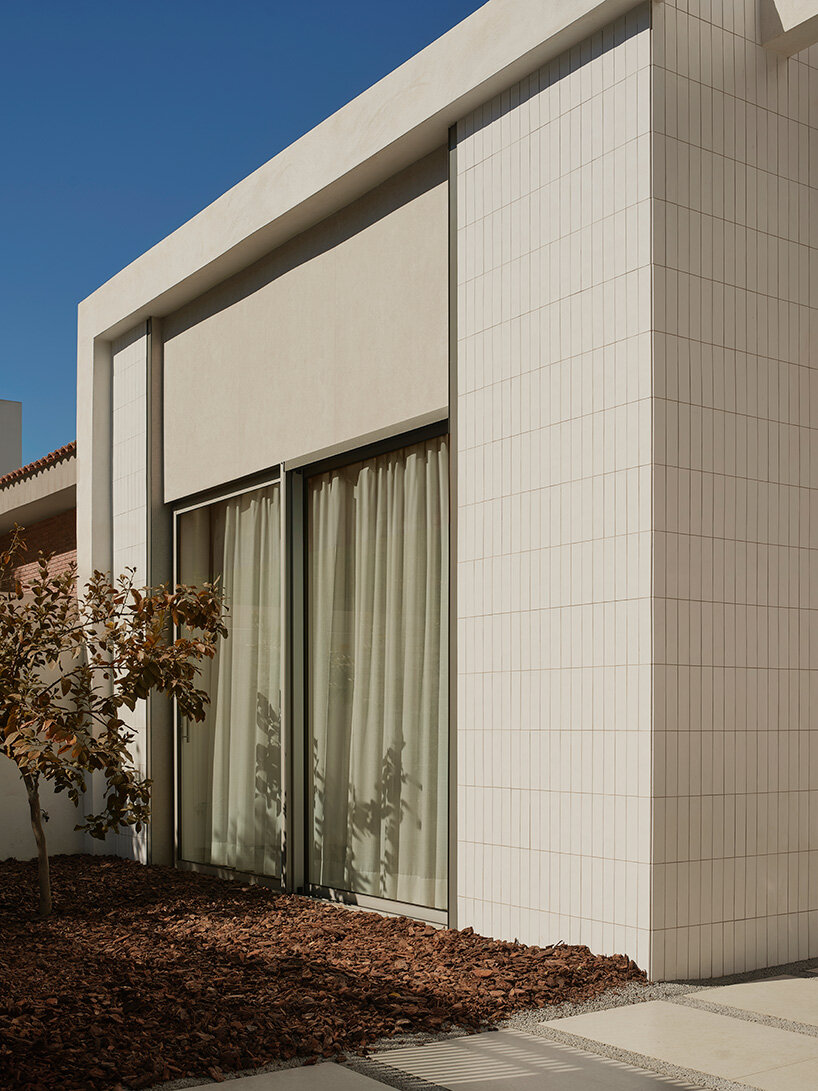
feminist artistic legacy finds form in porcelain-clad spanish residence by viruta lab
inspired by traditional washhouses, the house features a facade of bone-colored porcelain tiles
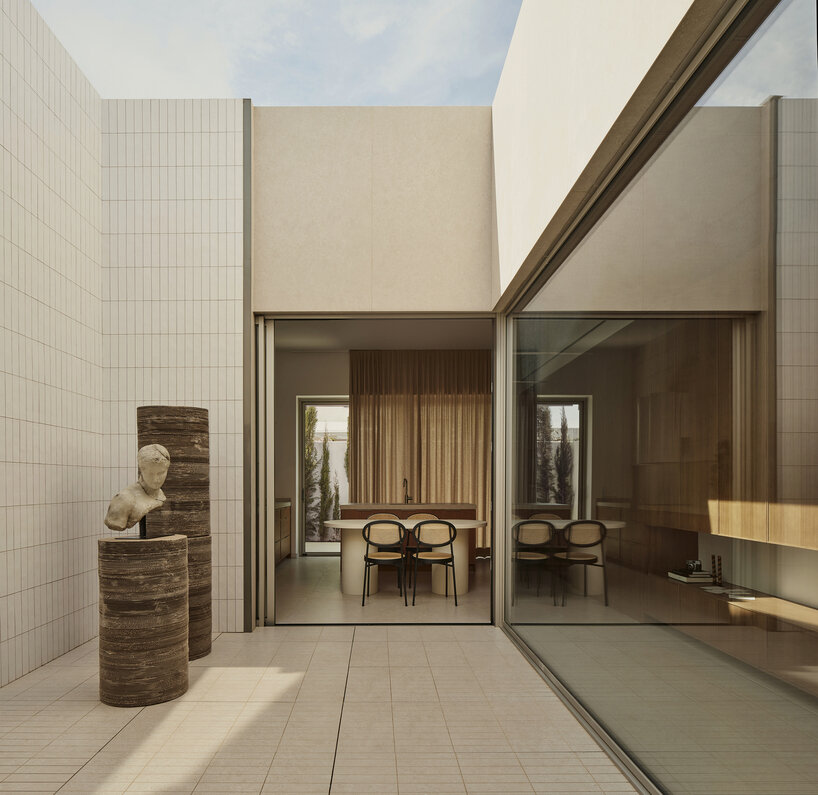
feminist artistic legacy finds form in porcelain-clad spanish residence by viruta lab
the residence is divided into two distinct sections
feminist artistic legacy finds form in porcelain-clad spanish residence by viruta lab
the communal day zone spans one and a half stories

Similar Posts

  • Jungle Keva

    Situated in Tulum, this small boutique hotel rises between the trees, in which the main concept consisted in preserving 70% of the existing vegetation in order to build around it. By achieving this, every space of the project is always in relation to its natural surroundings. The hotel has five 50m2 lodges, formed by a double height room, a mezzanine or “tapanco”, a terrace and an indoor-outdoor bathroom. At the back of the lot the social areas are located, with a dining space and yoga pavilion hanging in cantilever over the pool. The main idea of this water element is to be extruded from the ground in between the vegetation. For this reason, two old zapote trees were preserved, which look as they were rising from the pool itself. All the project is composed by local materials, as well as low maintenance and natural textures, which provide a warm atmosphere to the buildings. A particular finish found on the walls is “chukum”, a Mayan stucco characteristic of the region, which uses a tree resin to give its distinctive color, appearance and durability. The objective was to use materials that age with dignity, so that with the passing of time the architecture acquires character and a deeper sense of belonging. The different volumes of the complex are scattered along the lot, between the trees and stone paths, which provide a sensation of being in a small village in the Mayan jungle. Throughout the design process there was a search for pure forms and natural materials that could blend with the surrounding context. In a sense, Jungle Keva is like an abstraction or simplification of vernacular architecture, easy to read, simple and with a social, natural and economic conscience.

  • Lady

    Architecture and interior design studio idea:list designed a classy, sophisticated and feminine apartment in Slovenia’s capital Ljubljana. Delicate design together with feminine lines of selected functional pieces, contrasts with pragmatically designed furniture suggests an aesthetic choice that clearly defines the identity of its user – a timeless Lady. The client wanted to keep her 62 sqm apartment bright, seemingly warm and simply shaped, with some addition of blue which she adores so much. That is why the architects sought conceptual inspiration from the period of Bauhaus and many times overlooked Elieen Gray’s interiors. With its clean lines and functionality her pieces were nevertheless designed with comfort in mind in addition to a great deal of feminine elegance and glamour. The interior was designed by carefully playing with volumes and voids according to their function while dematerializing them and maximizing their use. As such the design is consistent through the whole apartment – each full element is useful and intended for a specific purpose and each void is formed with the knowledge that it can soon be filled. The latter basically functions on its own, but if the owner fills it with objects such as paintings, statues or some useful pieces such as fashion accessories and dresses, the objects are placed in a functional frame or compositional context and do not act foreign. At the beginning the architects from idea:list studio rearranged the kitchen in the living space from an L shape design into two parallel lines that gave them additional storage space. The kitchen island formed as a volume that rests on a long storage bench that connects the kitchen part and the dining space and with its reduced lateness opens up the room and lets light seep through. This new orientation of the kitchen and consequently also the dining part enables circular visual communication between the latter two and the living room, perfectly fitting into its user’s living habits. Perfect counterbalance to an elegant kitchen in two shades of blue lies in furniture covered with oak veneer. Consequently this volumes combined with different colours and materials form a starting point upon which other spaces are designed. The latter is manifested in different functions of assembled volumes and colours. The work area and guestbed are represented in the cabinet as voids and are highlighted by wooden lines that visually continue in theform of a bench throughthe hallway and into the living space where they manifest as a cabinet under the television. The empty frame in the bedroom lets light pass through to the wardrobe while still dividing the sleeping part from the dressing room and in addition serving as a hanger and a place for a rotating mirror. Clean minimalistic lines are complimented by rounded shapes as details that make the space more elegant and sophisticated. This shows best with the shapes of mirrors in this apartment which have a dual function – for examplethe mirror in the bedroomthat simultaneously serves as storage space for jewellery likewise the mirror in the hallway (together with the blue lining) also serves as a cover for the installation cabinets, as a shelf for hanging keys and finally it acts as an introduction to the aesthetics of the apartment (and its owner) to every visitor. The luxurious deep blue velvet on the rounded upholstered backs of benches and beds adds a desired elegance to the space, while carefully selected fabrics in curtains and cushions further enrich it with different textures and delicate contrasts. PROJECT INFO
    Interior Design: idea:list studio
    Design Team: Urša Kres, Tina Begović, Urban Pahor
    Location: Ljubljana, Slovenia
    Photography: Blaž Gutman