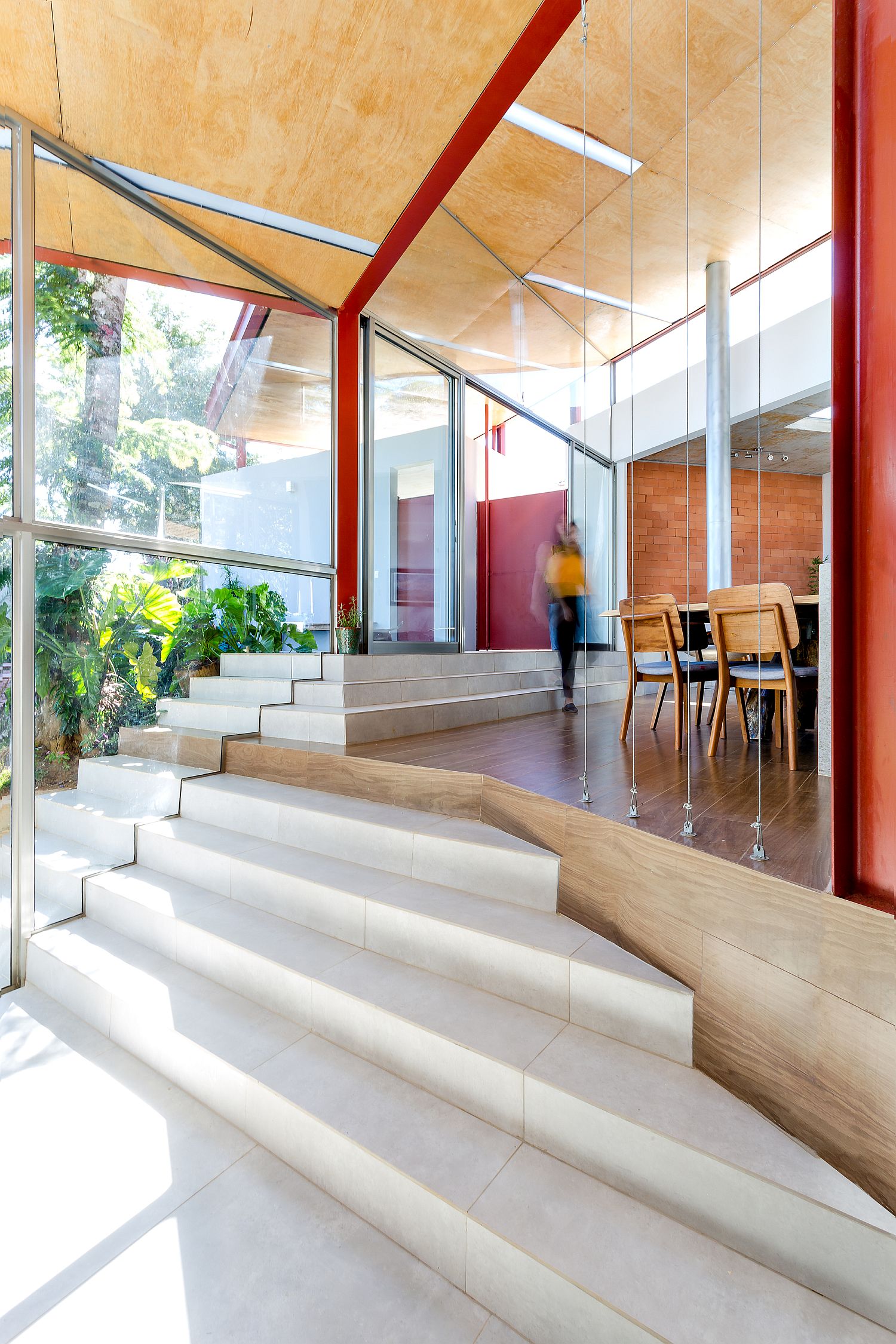
Greenery, Unique Dimensions and Angular Charm Shape the House Between Trees

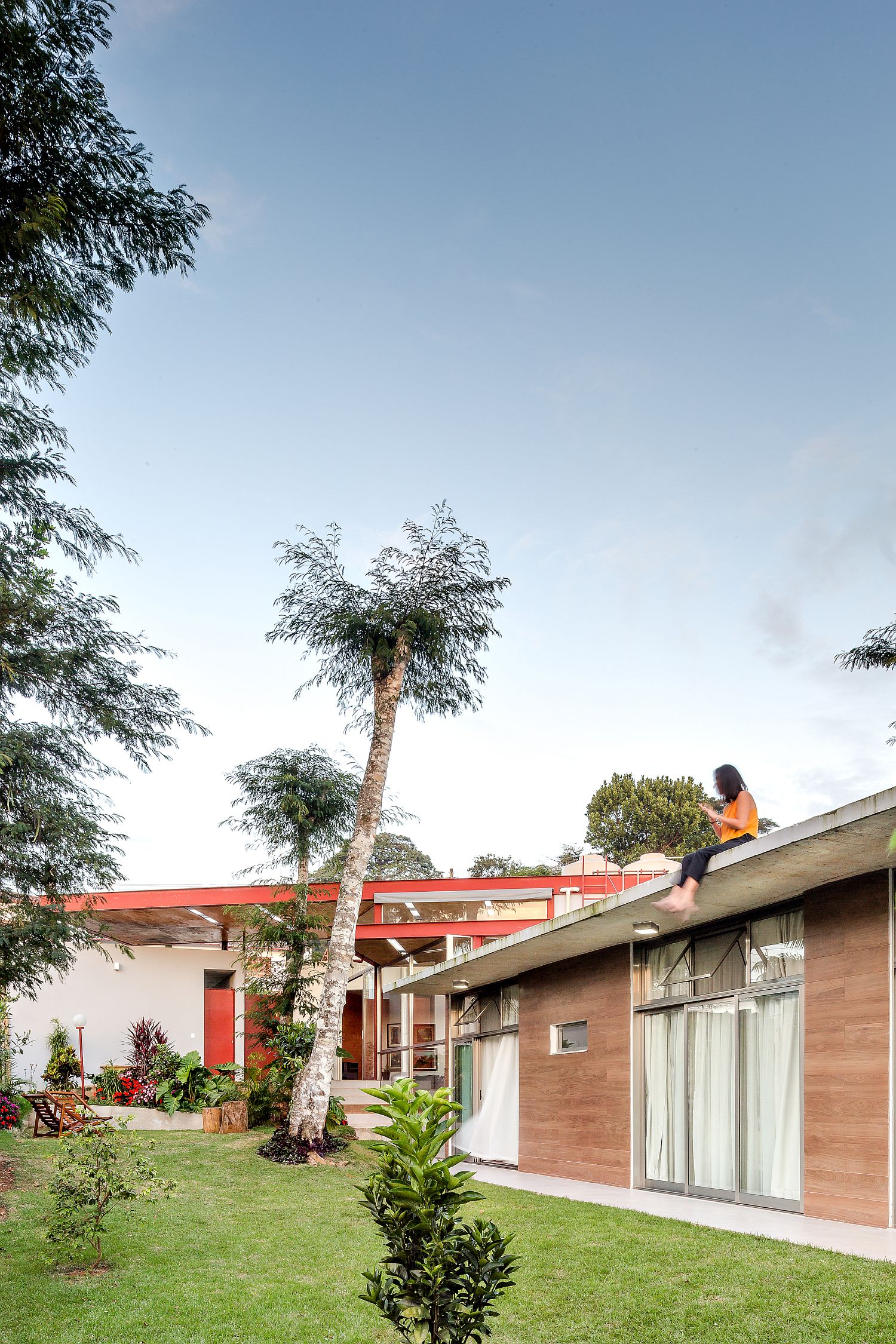
When it comes to unusual design that moves away from the mundane and gives homeowners a fresh perspective on spatial rearrangement, the House Between Trees in Brazil comes up trumps. Designed by Ateliê de Arquitetura Líquida, the design of the house has been largely influenced by the unique lot its sits in, giving it a geometric charm of its own! This along with two rotating blind blocks and volumes with smart angulation ensure that those inside can enjoy the best of nature while also experiencing complete privacy.
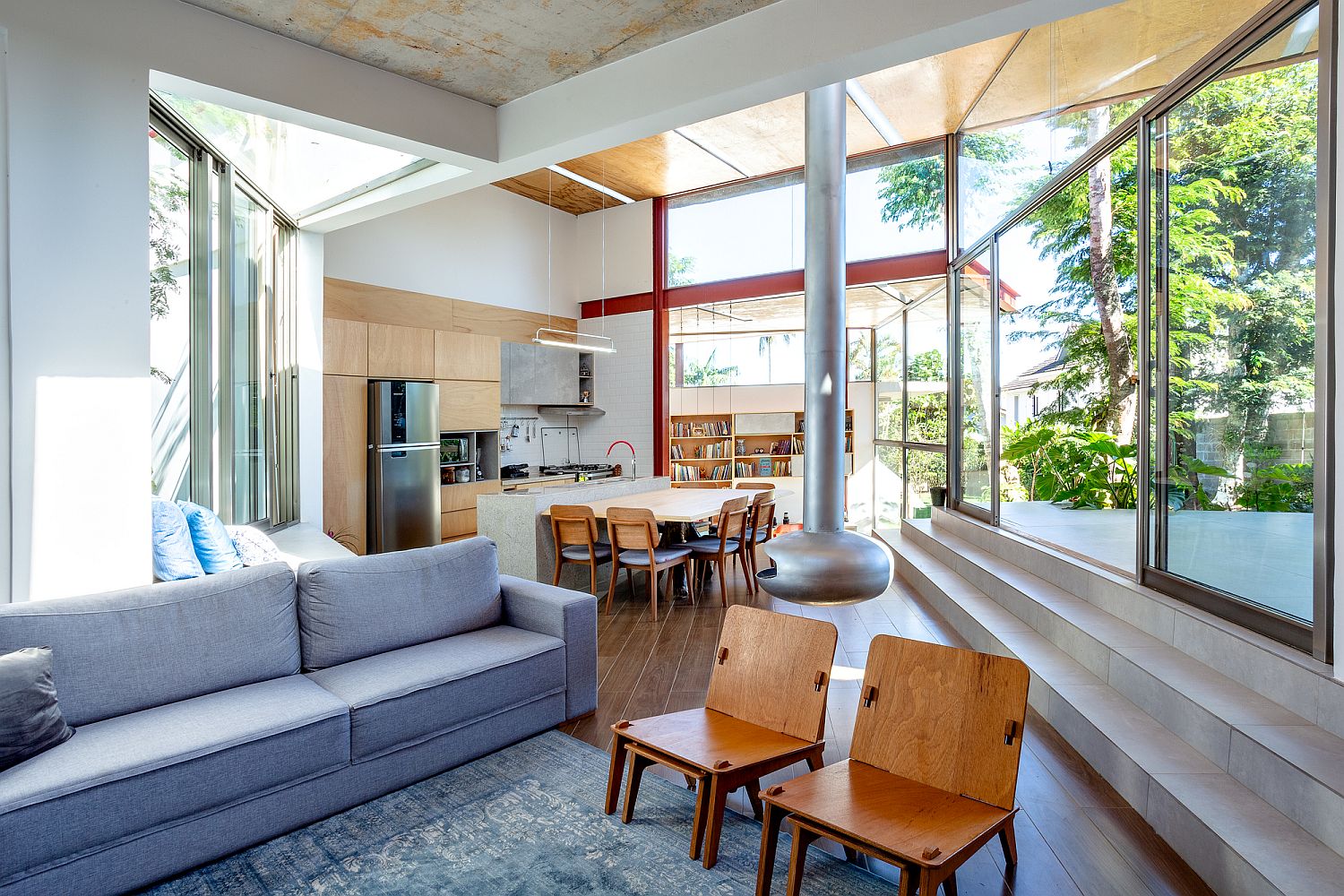
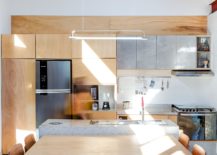
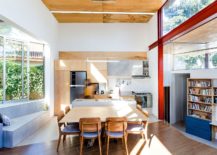
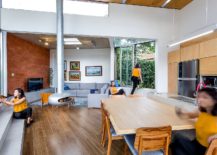
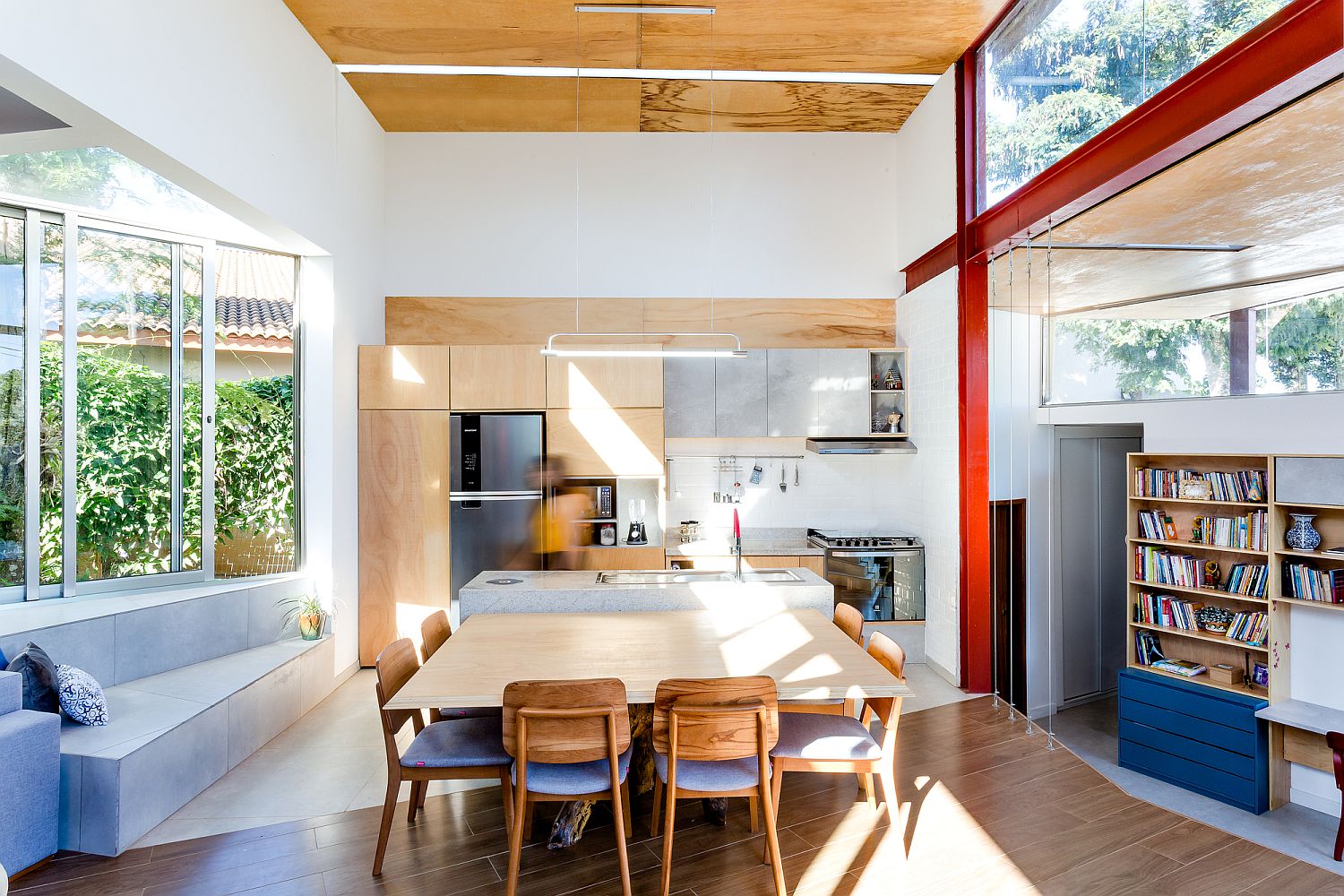
Open dining area, kitchen and living room of the House Between Trees

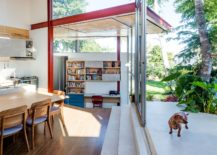
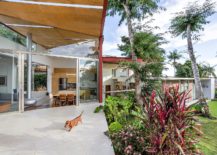
A spacious and smart platform-style balcony welcomes everyone at this house and it is this platform that leads into the open plan living area, kitchen and dining space. Sliding glass doors connect the kitchen and dining area with the generous backyard outside. The garage, living area and the backyard flow into one another in a seamless fashion and with changing seasons, the colors of the entry and the living area itself constantly change. The naturally uneven site creates three distinct living zones with the private bedrooms being relegated to the rear section.

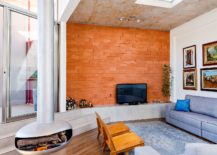
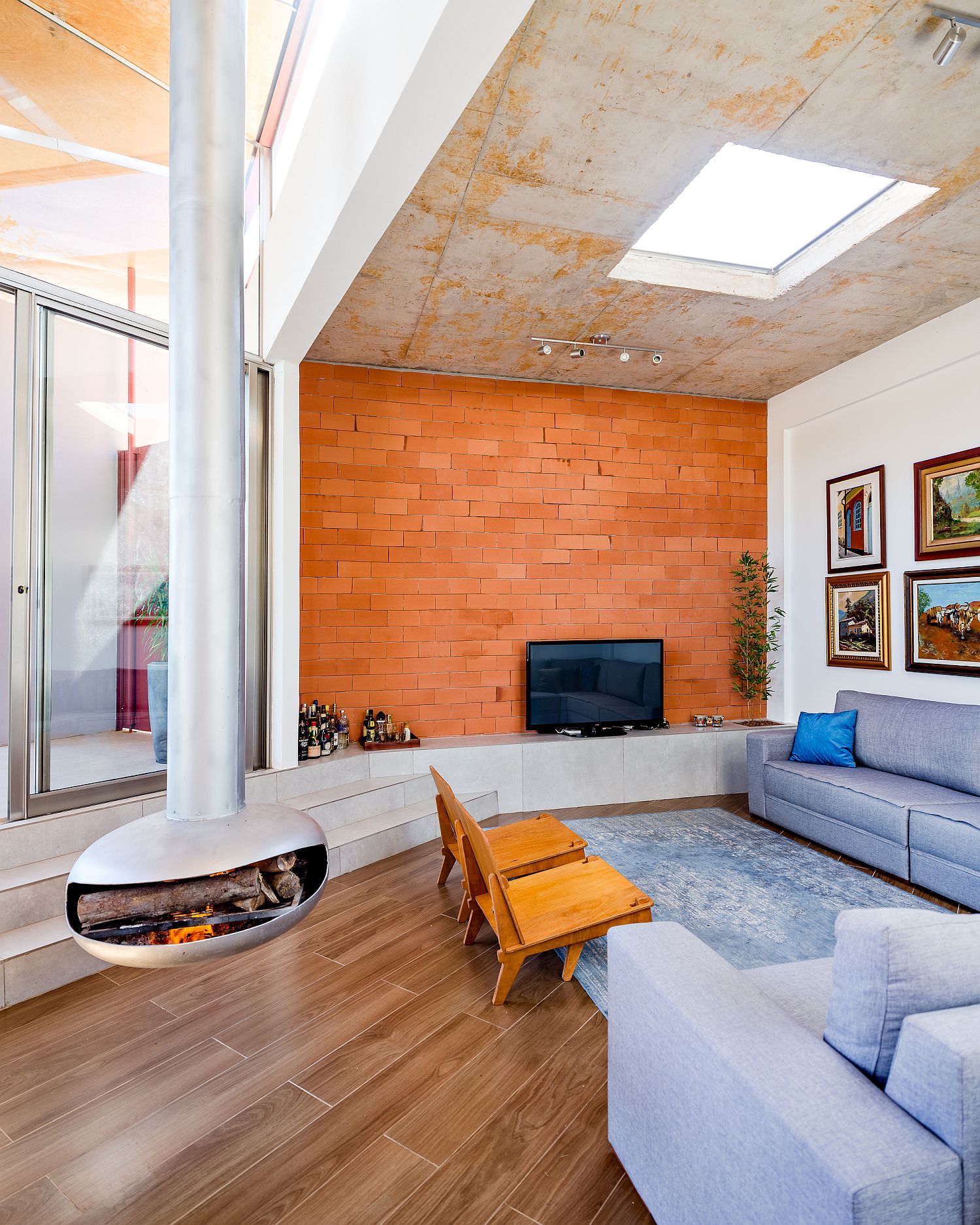
Smart textural contrast, accent hues in the form of red and blue pops along with a skylight ensure that there is plenty to admire inside this contemporary home. [Photography: Bruno Meneghitti]
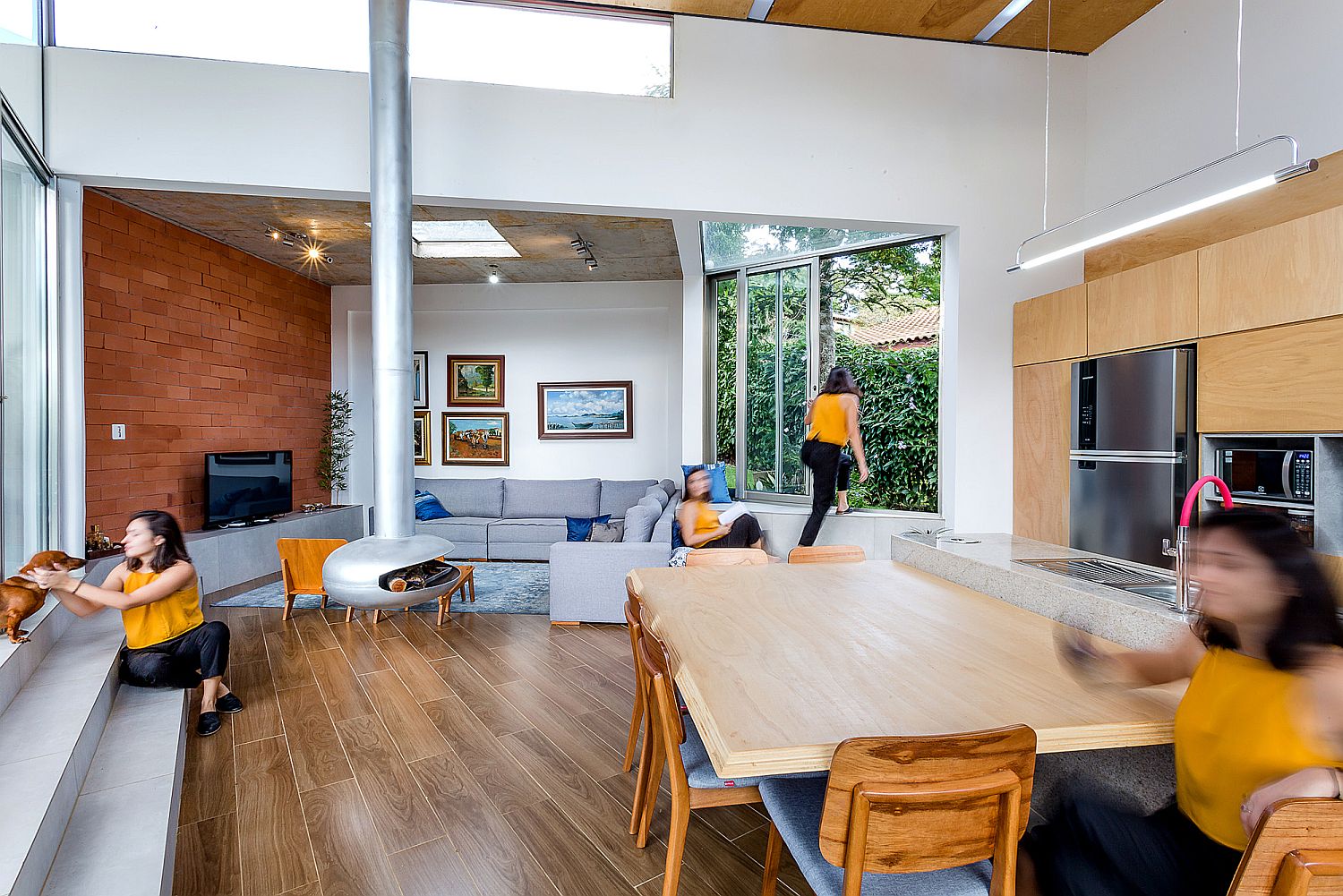
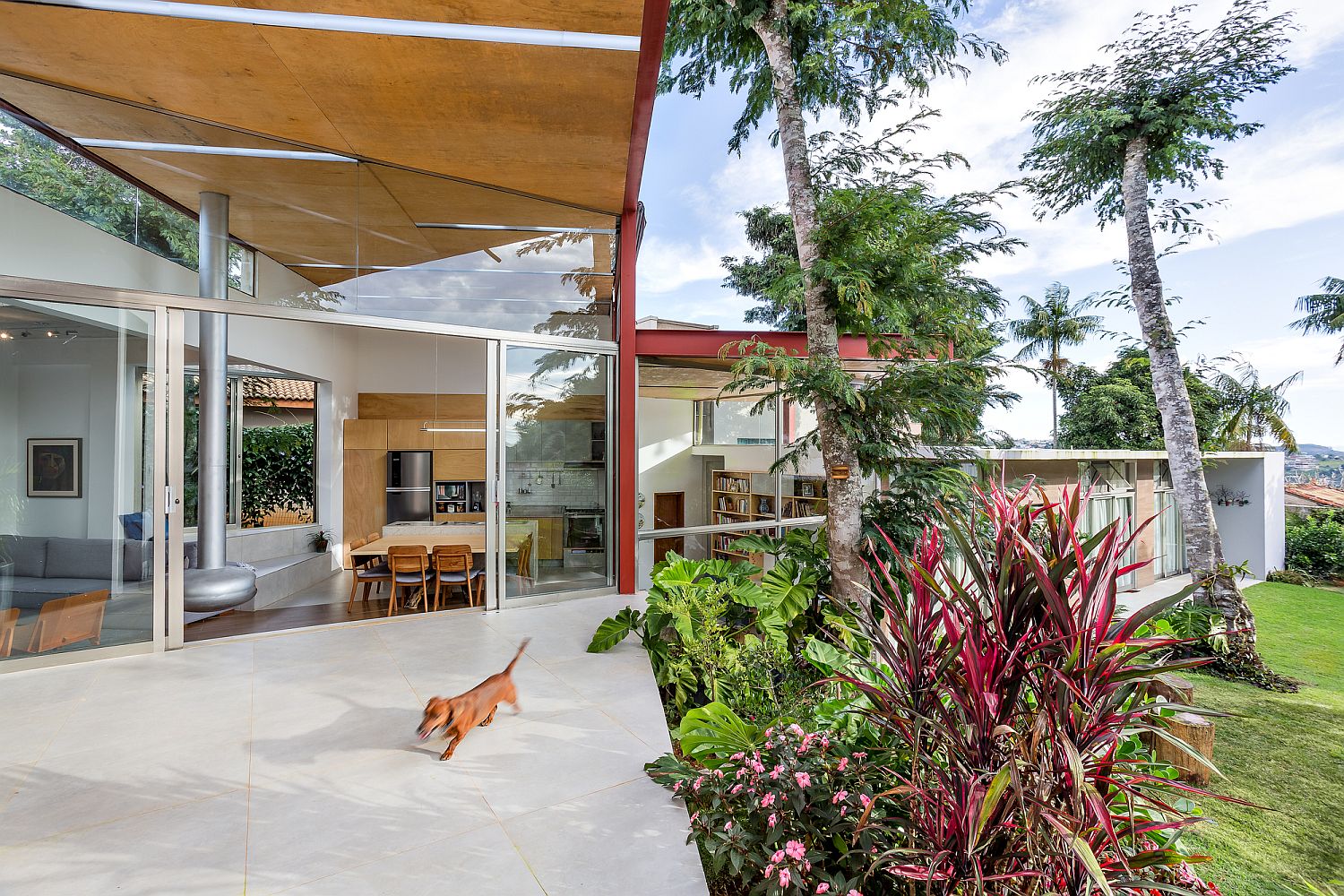
Living area of the house opens up into the spacious balcony at the entrance
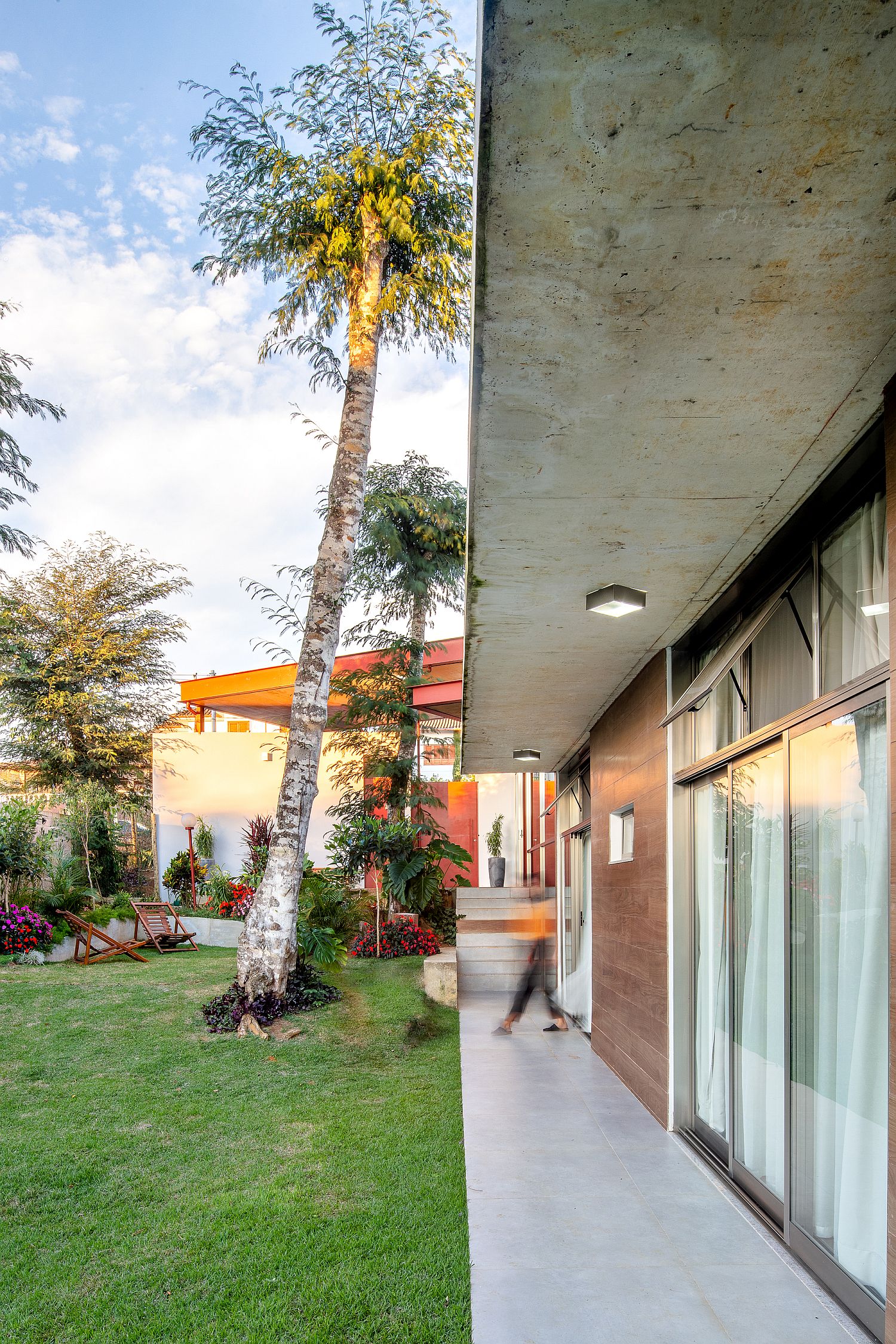
Natural landscape outside feels like an extension of the living area
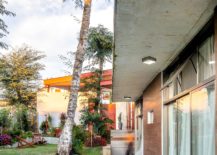
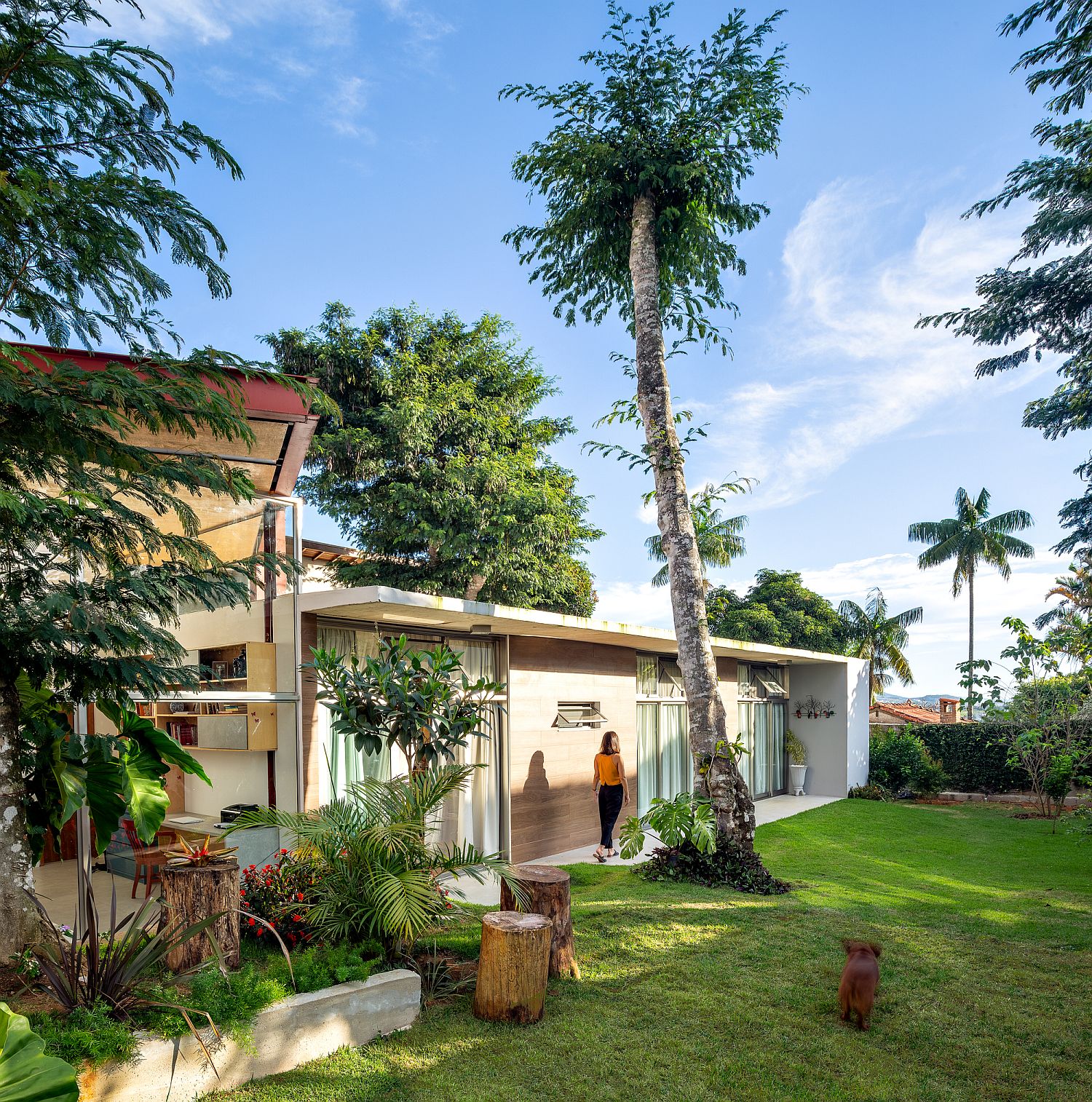
Outdoor area of the House Between Trees
Red and blue accents add color to the neutral interior
Sliding doors along with drapes offer a sense of privacy

All the spaces of the house were thought for living together; in the living room the architecture itself functions as an integrating space, the bleachers in the kitchen and the access steps, for example, can be places where people can accommodate; always connected with the inside and with nature on the outside. The house is not closed to the outside by the absence of windows to the street but tries to preserve its essence in its interior.
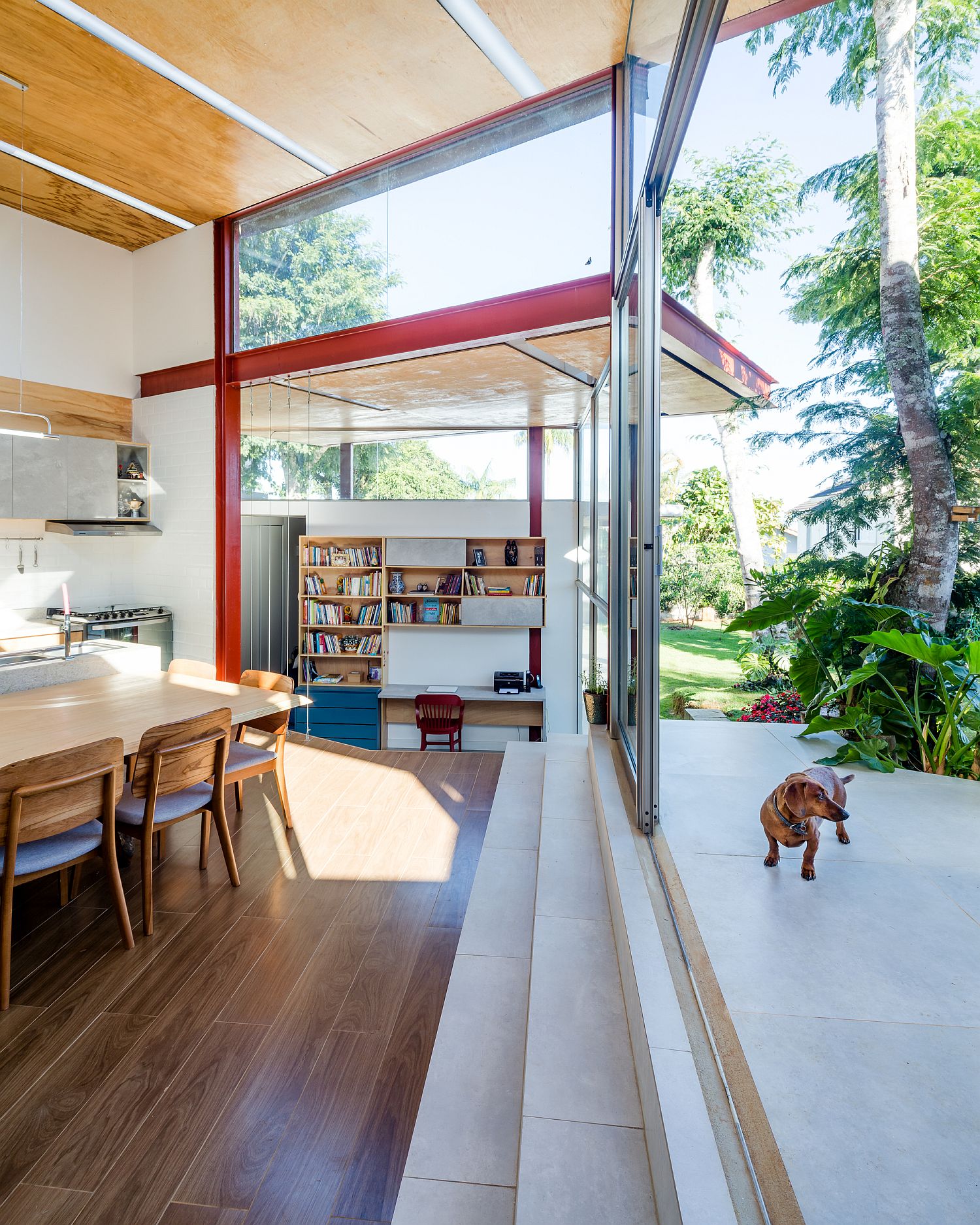
Smart use of sliding glass doors connects the living area with the deck
Tiled accent wall for the living area with skylight above
Creative use of outdoor space at the modern Brazilian home
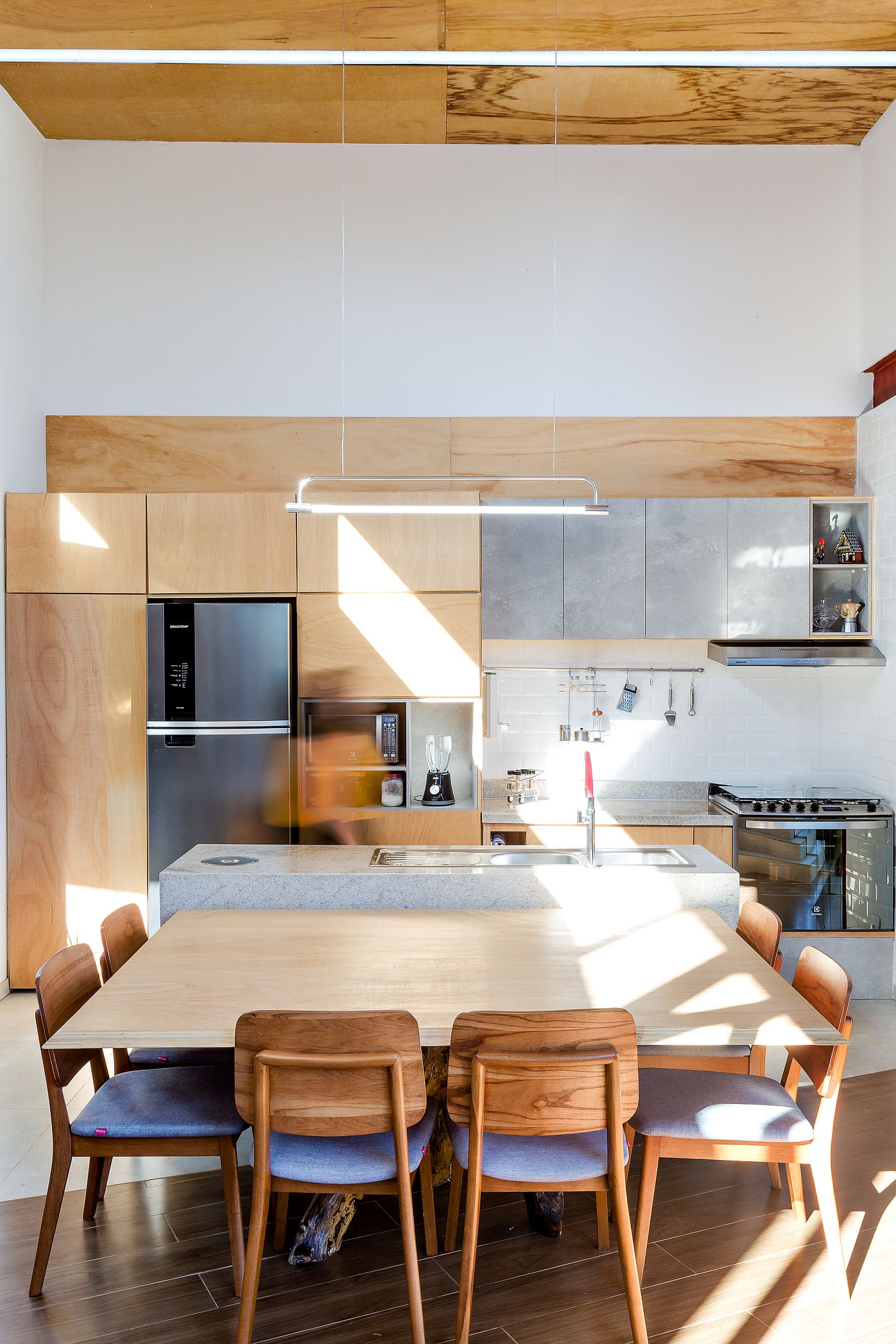
Gorgeous modern wood and white dining area of the Brazilian house
Large balcony connected visually with the living room welcomes guests here

You’re reading Greenery, Unique Dimensions and Angular Charm Shape the House Between Trees, originally posted on Decoist. If you enjoyed this post, be sure to follow Decoist on Twitter, Facebook and Pinterest.

Similar Posts

  • The Palisades Residence

    An entrepreneur and family with a passion for healthy living requested a large home on their dramatically sloping 2-acre site. They specifically wanted an informal layout that could be woven into the topography of the property. Wanting to enjoy as much of the site as possible, the client requested the inclusion of steps and landscape pathways to allow for access to more distant parts of the steep site. Situated on a promontory jutting into the canyon below, the hillside retreat boasts multiple vistas of the surrounding canyon and the Pacific Ocean beyond. Since covenants, conditions, and restrictions associated with the property allowed for only a single story above street level, many of the home’s rooms are located on a lower level which daylights onto the downslope side of the house. This modest massing arrangement allows for neighboring properties to see over the roof of the home. In three distinct locations, landscaped topography “fingers” heighten one’s awareness of the natural hillside. Bridges span over these fingers, enhancing and extending the natural graded areas deep into the heart of the home. The design solution offers new perspectives for experiencing the owner’s prized views while providing a glimpse of the topography as it stood before the house was set upon it. Meticulous craftsmanship and authentic building materials are recurring themes best exemplified by the widespread use of board-formed concrete walls, white oak shiplap wall cladding, and painted galvanized steel doors and windows. A datum of wall elevations was carefully laid out to align the joints of the seemingly random board-formed concrete with the adjacent wood boards that come in 3″, 4″, 5″, and 6″ widths. Floors, ceilings, steps, lighting, speakers, keypad controls, and outlets were all carefully placed so that no element ever interrupts a joint in the boards.