|

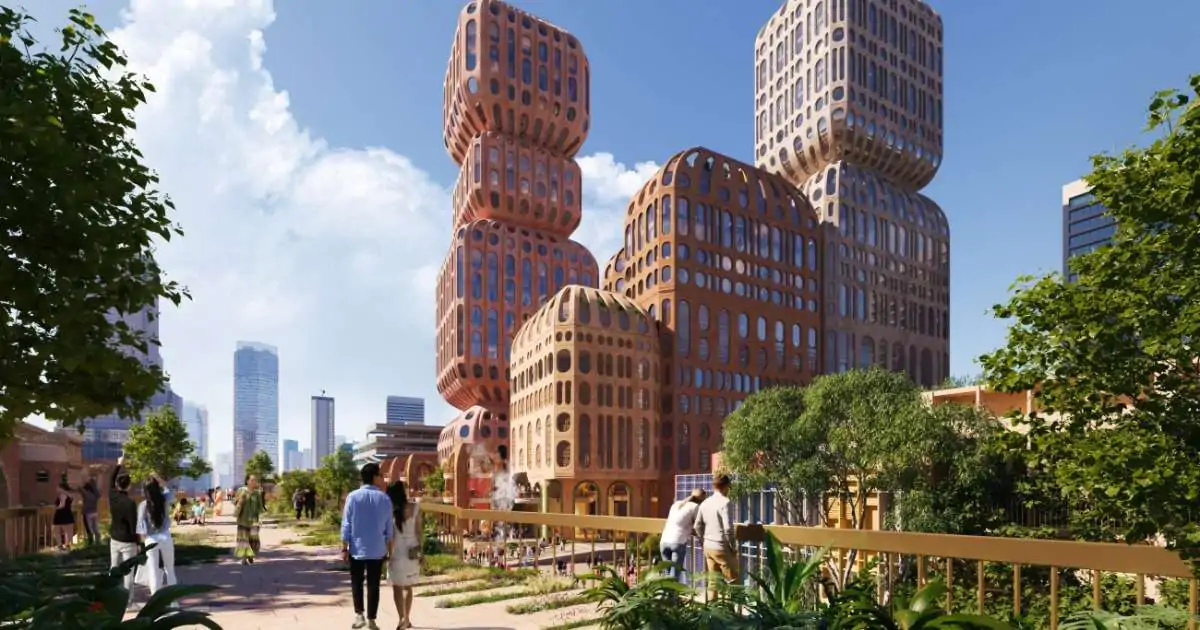
Heatherwick’s Debut Thai Design Is Inspired by the Country’s Traditional Lanterns

Jessica Stewart is a Staff Editor and Digital Media Specialist for My Modern Met, as well as a curator and art historian. Since 2020, she is also one of the co-hosts of the My Modern Met Top Artist Podcast. She earned her MA in Renaissance Studies from University College London and now lives in Rome, Italy. She cultivated expertise in street art which led to the purchase of her photographic archive by the Treccani Italian Encyclopedia in 2014. When she’s not spending time with her three dogs, she also manages the studio of a successful street artist. In 2013, she authored the book “Street Art Stories Roma” and most recently contributed to “Crossroads: A Glimpse Into the Life of Alice Pasquini.” You can follow her adventures online at @romephotoblog.

Similar Posts

  • Stylish Ways To Incorporate Scandinavian Design In Your Home

    There’s a reason that Scandinavian interiors have caught the eye of design enthusiasts around the globe. The modernist principles developed by Nordic architects and designers nearly 100 years ago in the early 20th century have stood the test of time. That’s because Scandinavian interiors intentionally look beyond contemporary fashion or trends and focus on humanism, […]

    You’re reading Stylish Ways To Incorporate Scandinavian Design In Your Home, originally posted on Decoist. If you enjoyed this post, be sure to follow Decoist on Twitter, Facebook and Pinterest.

  • Add/Subtract House

    The Add/Subtract House is derived from the stereotomic operation of subtracting from and adding to a solid volume to enable specific programmatic relationships and daylight conditions. Sited on a typical 50’x150’ single-family residential lot in Austin, Texas, the design questions the standard house massing and arrangement by stretching along the length of the lot. Rather than single the dichotomy of front yard and backyard, the design establishes smaller courtyards, hardscapes and softscapes at various scales to relate to individual rooms. The external material palette (standing seam metal, tongue & groove wood paneling, and stucco) is applied to reinforce the distribution of individual program elements. Each material is composed into folding planes which capture space and define zones throughout the house. Every room in the house benefits from natural light from at least two sides as daylight is modulated throughout, offsetting the need for electric light during daylight hours and allowing occupants to more directly track seasonal and daily patterns.