Keep Your Home Corona-Free: How Long Does the Virus Survive on Surfaces

The Coronavirus pandemic has become a global problem that is rapidly wrecking havoc with lives of more and more people with each passing day. Entire nations are now in lockdown and everyone’s life is effect in one way or another. If you thought that you would be immune to this airborne viral infection, then that would be a huge mistake to make. Without creating a panic, it is safe to say that the last few weeks have shown that almost no one is immune to the effects of Coronavirus, no matter which corner of the globe they sit in. Personal hygiene and social distancing are currently our only weapons against this deadly virus with the hope of a vaccine at least a year away!

Novel Coronavirus can last on surfaces from hours to days [Image Credit: cdc]

We do not claim to be experts in the medical field, but research in the last few months has brought out vital information regarding how long the virus can survive both in air and on different surfaces. Top scientists now say that preliminary data shows Corona virus can stay alive in air from anywhere between 30 minutes to 3 hours depending on specific conditions. More concerning though, the virus can stay alive on surfaces like plastic and stainless steel for as long as 72 hours at times, while it can even be alive on cardboard for a good 24 hours.
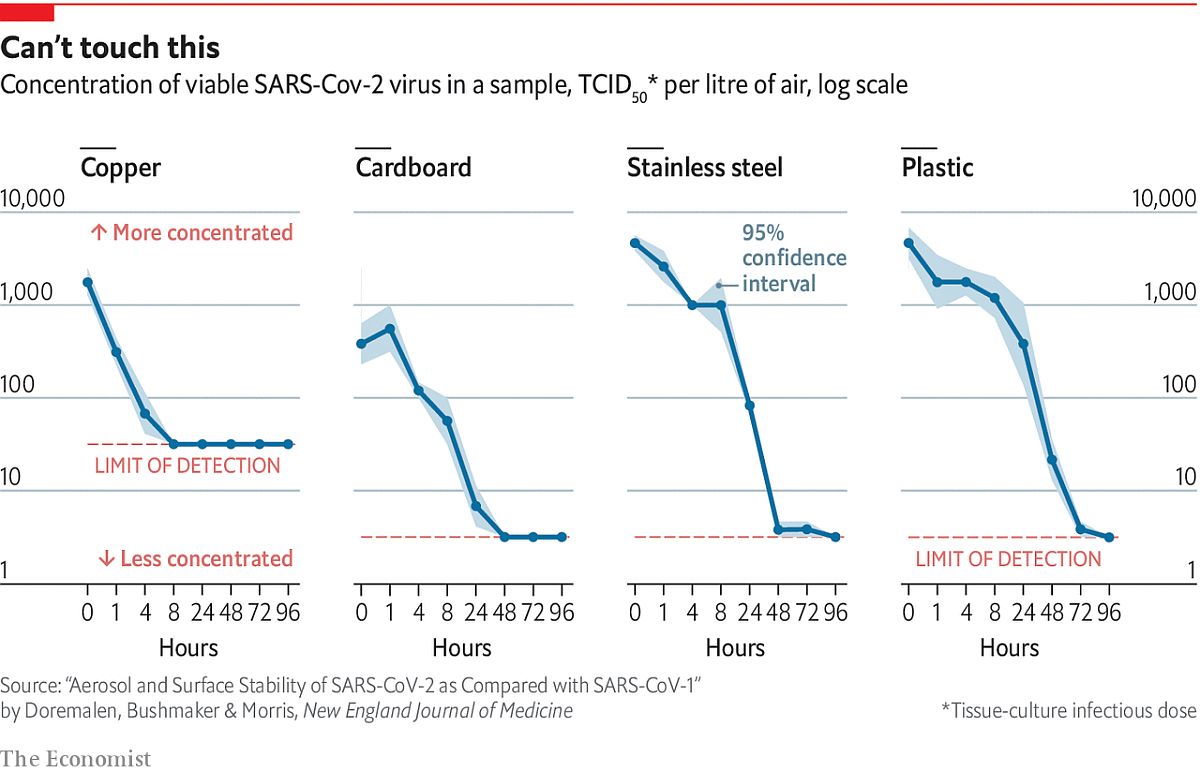
Graph showcasing studies testing how long Coronavirus remains stable on different surfaces [Image Credit: Economist]

Surprisingly though, copper is one surfaces on which it would not survive for more than 4 hours. More pertinently, the information tells you how vigilant you need to be as you go about your daily chores and how you need to avoid contact with surfaces outside your home as much as possible.
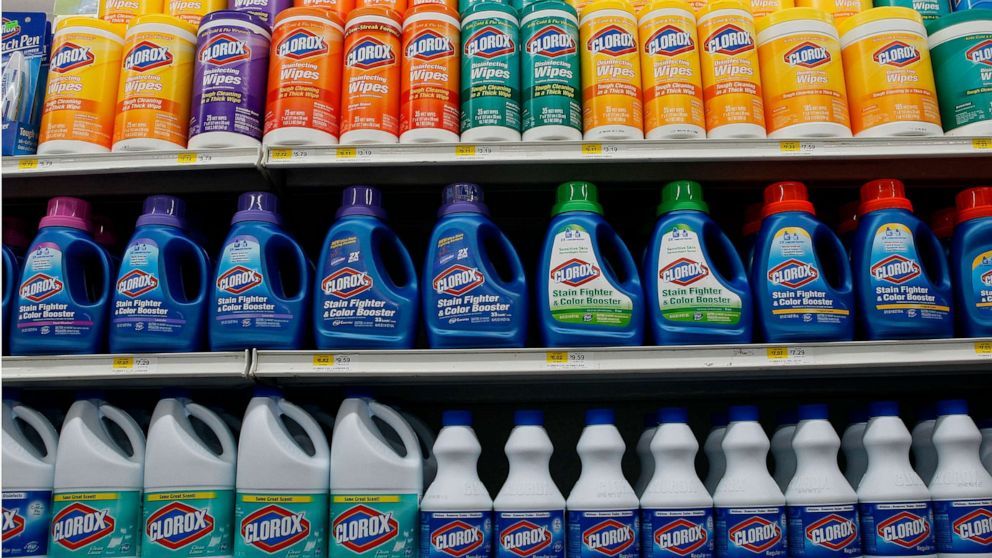
Common household cleaning products can kill Corona virus on surfaces

For a safer home, just cleaning with your usual array of household cleaning supplies is more than enough to kill the virus on any surface out there. Everything from cleaning agents having 5% hydrogen peroxide to those with alcohol or sodium hypochlorite should almost instantly kill the virus on pretty much any of the usual surfaces in your house. Combine this with washing and sanitizing your hands regularly and social distancing and you should be safe and healthy.

We wish you well and hope all of us together can see past these terrible times by doing the simple things right and staying vigilant. And if we can help with this in any little way by passing on useful, authentic information that makes your home healthier and virus-free then as always, we would be happy to do so!

You’re reading Keep Your Home Corona-Free: How Long Does the Virus Survive on Surfaces, originally posted on Decoist. If you enjoyed this post, be sure to follow Decoist on Twitter, Facebook and Pinterest.

Similar Posts

  • Embracing Color of the Year: 20 Lovely Bathroom Vanities in Blue

    It is the year of blue and that makes our life a whole lot easier indeed! Blue as a color does not really need any special ‘lift’ and homeowners are inherently happy to use it in various rooms and across styles all year long. It is a color that is ‘perennially in trend’ and having […]

    You’re reading Embracing Color of the Year: 20 Lovely Bathroom Vanities in Blue, originally posted on Decoist. If you enjoyed this post, be sure to follow Decoist on Twitter, Facebook and Pinterest.

  • Westwood House

    Located in the Blue Ridge Mountains of Asheville NC with distant north views of Mt Spivey and a narrow sloping lot, this wedge-shaped home is a response to site. We took into careful consideration a variety of site-specific inputs including views, sun orientation, prevailing winds, privacy, and natural cooling/heating techniques among others. The result is a functional, energy efficient home with a distinctive exterior shape and warm light filled interior spaces. The home’s dominant shed roof maximizes solar orientation for photovoltaic panels while also allowing for a double-height central atrium to flood the core of the house with natural light and exhaust hot air on hot summer days. The introduction of natural light into the core of the house reduces the need for artificial lighting on cloudy days, while the chimney effect created by opening large operable skylights at the top of the atrium reduces HVAC loads by bringing cool air up from the basement. This central atrium is an example of how a design feature can multitask –it brings natural light deep into the core of the house, it cools the house using the chimney effect, and it provides a place to grow plants which filter interior air. It also allowed us to minimize the street facing windows for privacy while still maintaining a light filled interior. Anchoring the bottom of the atrium are four large arched openings and a Spanish terracotta tile floor. The tile floor is a durable surface good for watering plants and for heavy foot traffic. A keyhole opening marks the boundary between private and public sides of the house while two of the arched openings frame an intimate eating nook and entry foyer with walls covered in locally milled southern yellow pine. The last arch has steps spilling out into a sunken living room and kitchen area with access to a back deck. Locally milled cypress, a naturally rot resistant wood, covers the exterior and anchors the strong geometry of the house to the site. In the end, our desire for functionality created something more than just an energy efficient home. The interior took on an unexpected bohemian feel; one that originated from a desire for light and functionality, but resulted in warm soft interior spaces that were comfortable and welcoming.