Frank Gehry with a building model in 2010. (Photo: Forgemind ArchiMedia via Wikimedia Commons, CC 2.0)
Pioneering architect Frank Gehry died at his home in Santa Monica, Calif., on December 5, 2025, at the age of 96. His death followed a brief respiratory illness, according to his chief of staff, Meaghan Lloyd.
Throughout his decades-long career, Gehry designed some of the world’s most striking and unexpected buildings, including the Walt Disney Concert Hall in Los Angeles, the New World Center in Miami, the Fondation Louis Vuitton in Paris, and Berlin’s DZ Bank Building. The architect is perhaps best known, however, for the Guggenheim Museum in Bilbao, Spain, an exuberant, sculptural building clad entirely in titanium. Once it opened in 1997, the museum gained international recognition, cementing Gehry’s reputation not just as an innovator but as a wholly original architect on the global scene. The building even sparked the so-called “Bilbao effect,” coined by journalist Robert Hughes in 2001 to describe how Gehry’s architecture transformed the Spanish city and led to its urban revitalization.
Ever since establishing his practice in Los Angeles in 1962, Gehry consistently incorporated dynamic, extravagant forms and silhouettes across his projects. He first attracted popularity within architectural circles for his 1978 house in Santa Monica, a modest, wood-frame Cape Cod bungalow from the 1920s that he deconstructed and later enveloped with exposed plywood, corrugated metal, and chain link. The result was surprising yet singular, depicting a home seemingly in the middle of an explosion, where incongruous textures, shapes, and influences coalesced amid the rubble. His Santa Monica home established Gehry as a leading voice within avant-garde architecture, blurring the boundaries between art and function.
About 10 years later, in 1989, Gehry received the Pritzker Architecture Prize, the field’s most prestigious honor, after completing the Vitra Design Museum in Weil am Rhein, Germany. At the time, he was the sixth American to receive the accolade. Throughout his life, he was also awarded the Royal Institute of British Architects Gold Medal, the National Medal of the Arts, the Americans for the Arts Lifetime Achievement Award, the Presidential Medal of Freedom, and the Companion of the Order of Canada.
“I approach each building as a sculptural object, a spatial container, a space with light and air, a response to context and appropriateness of feeling and spirit,” Gehry once remarked. “To this container, this sculpture, the user brings his baggage, his program, and interacts with it to accommodate his needs. If he can’t do that, I’ve failed.”
Born Ephraim Owen Goldberg on February 28, 1929, in Toronto, Canada, Gehry and his family eventually moved to Los Angeles in the mid-1940s. Following a stint in the Army, he enrolled at the University of Southern California, where he initially studied ceramics before being introduced to architecture by a teacher. It was also around this time that Gehry changed his name at the suggestion of Anita Snyder, his first wife, in an effort to avoid antisemitism. He continued his studies at the Harvard Graduate School of Design for a master’s degree in city planning.
“You go into architecture to make the world a better place,” Gehry said in 2012. “A better place to live, to work, whatever. You don’t go into it as an ego trip.”
Gehry is survived by his wife, Berta Isabel Aguilera, and three of his children. The Gehry-designed Guggenheim Museum in Abu Dhabi, originally proposed in 2006, is slated to be completed in 2026 after several delays.
Pioneering architect Frank Gehry, whose sculptural, dynamic buildings radiated with exuberance, died on December 5, 2025, at 96.
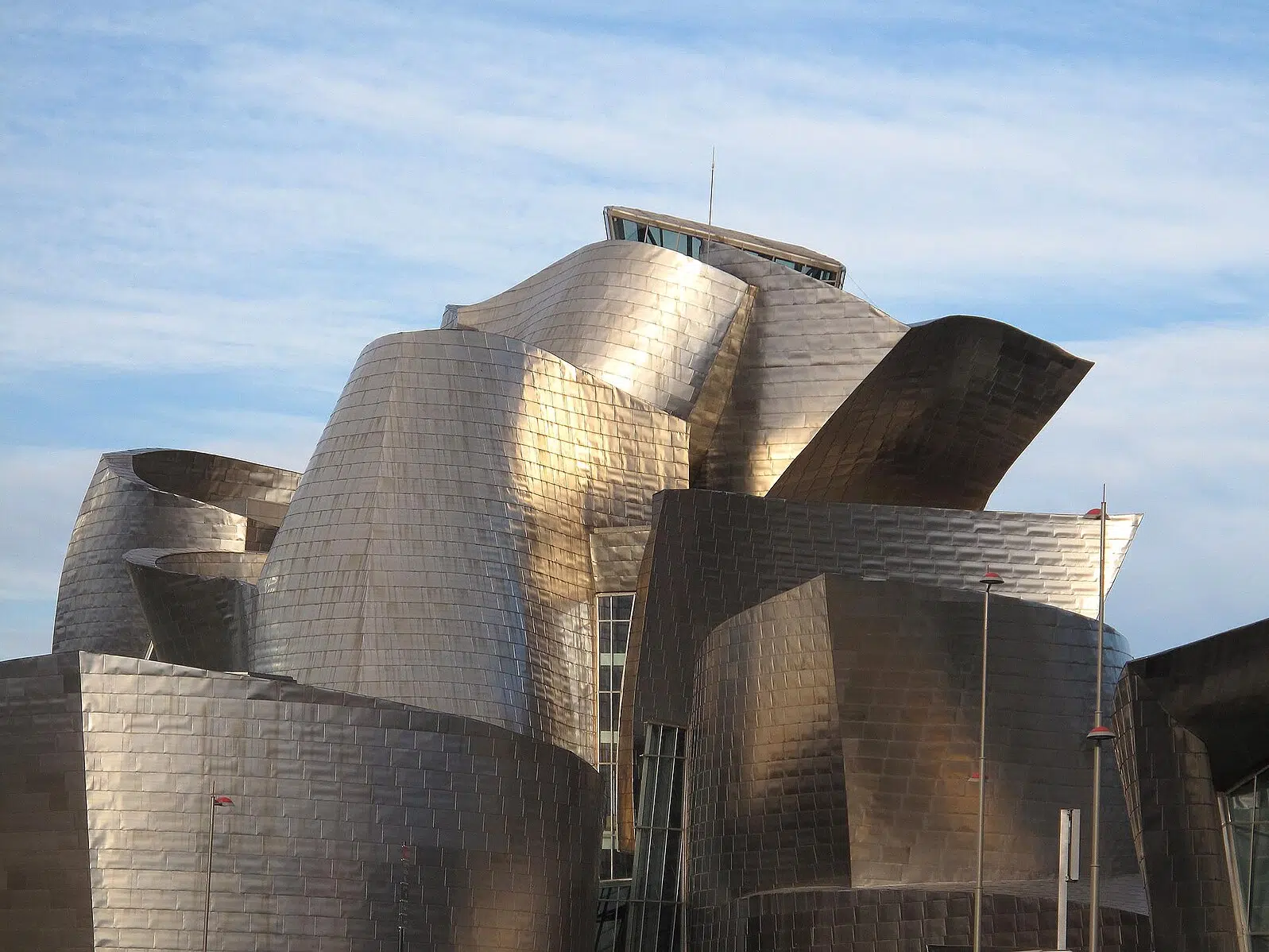
Guggenheim Museum Bilbao in November 2011. (Photo: Kamahele via Wikimedia Commons, CC 3.0 Germany)
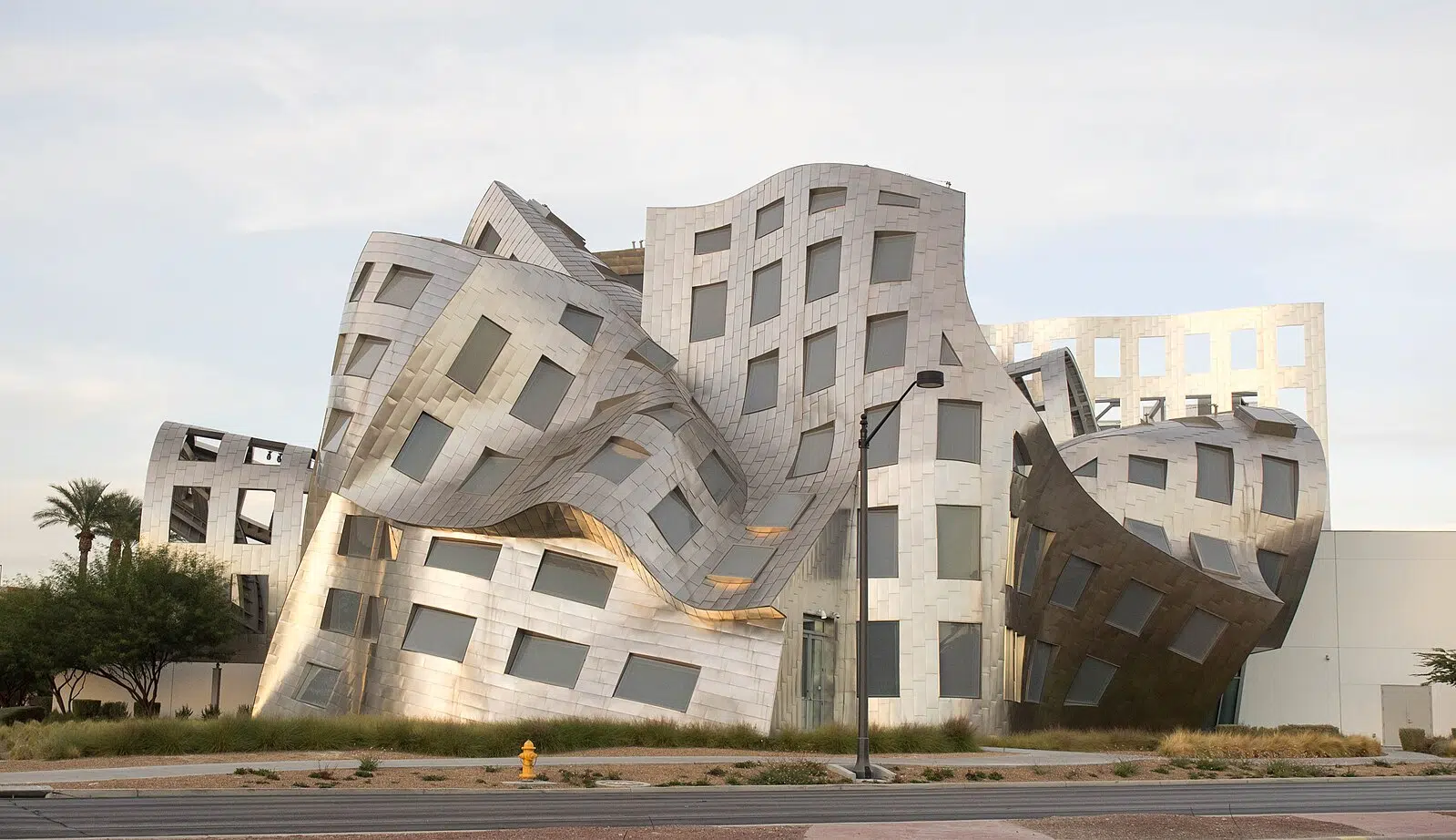
Lou Ruvo Center for Brain Health in Las Vegas, NV. (Photo: Monster4711 via Wikimedia Commons, GNU Free Documentation License)

The InterActiveCorp headquarters building in New York, NY, in February 2009. (Photo via Wikimedia Commons, GNU Free Documentation License)

The Dancing House in Prague, Czech Republic. (Photo: Dino Quinzani via Wikimedia Commons, CC 2.0)
Sources: Frank Gehry, the most celebrated architect of his time, dies at 96; Frank Gehry, whose designs defied gravity and convention, dies at 96; Frank Gehry, Titan of Architecture, Is Dead at 96; Legendary Architect Frank Gehry Has Died at the Age of 96
Related Articles:
RIP Jane Goodall: Revered Primatologist and Conservationist Dead at 91
RIP Diane Keaton: Oscar-Winning ‘Annie Hall’ Actor Dies at 79
RIP Susan Stamberg: Legendary “Founding Mother” of NPR Who Championed Art and Culture