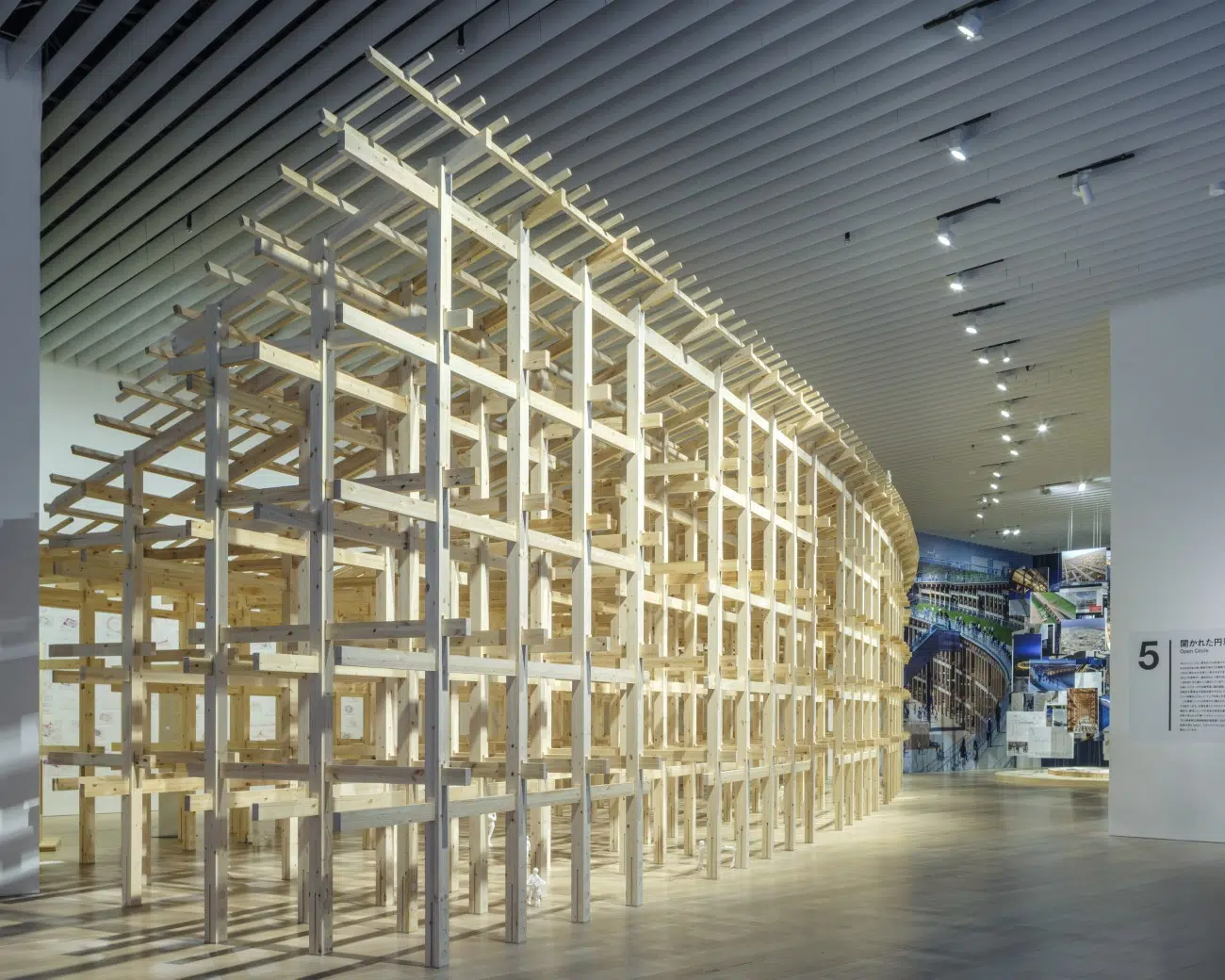
Section 5: Open Circle, Installation view: The Architecture of Sou Fujimoto: Primordial Future Forest, Mori Art Museum, Tokyo, 2025
(Photo: Yashiro Tetsuya, courtesy: Mori Art Museum, Tokyo)
The incredible architecture of Sou Fujimoto is being celebrated with an exhibition at Tokyo’s Mori Art Museum. Sou Fujimoto: Primordial Future Forest is the Japanese architect’s first major exhibition. Split into eight sections, the survey is an innovative architecture exhibition that not only includes the usual scale models, plans, and photographs, but also includes large-scale replicas to transport visitors inside Fujimoto’s creative concepts.
Most recently known for The Grand Ring, the masterplan centerpiece of the Osaka 2025 World Expo, the Hokkaido-born architect was a relative unknown when he burst onto the scene in 2000. Coming in second in the international design competition for the Aomori Museum of Art was a stepping stone to in and out of Japan. Now, with studios in Tokyo, Paris, and Shenzhen, Fujimoto is an international force known for his “primitive future” design philosophy.
The exhibition’s title is a nod to the thickly wooded landscape of Hokkaido, which marked Fujimoto’s youth. The concept of the forest, and its primordial nature, is key to Fujimoto’s designs. “One of the roles of an architect is to create places that weave together relationships between people and between people and nature,” says the architect. “For me, such a place is like a ‘future forest’ where natural and human-made blend together.”
Eugene Kim, My Modern Met Co-Founder and Editor-in-Chief, had the opportunity to visit the exhibition while in Tokyo. “I felt fortunate to personally experience Sou Fujimoto: Primordial Future Forest,” he shares. “What makes Fujimoto’s architecture extraordinary is the layers of thought and imagination behind each creation. When you look closely at his structures, you can feel the consideration in every line and shape, the balance of light and shadow, the rhythm of flow and movement. Ultimately, it’s a seamless dialogue between form and function—turning ideas that seem possible only in dreams into reality, and reminding us how much more interesting the world becomes through curiosity and wonder.”
On view until November 9, 2025, Sou Fujimoto: Primordial Future Forest is a fascinating look at how one architect is shaping our future through design.
The incredible architecture of Sou Fujimoto is celebrated with an exhibition at Tokyo’s Mori Art Museum.
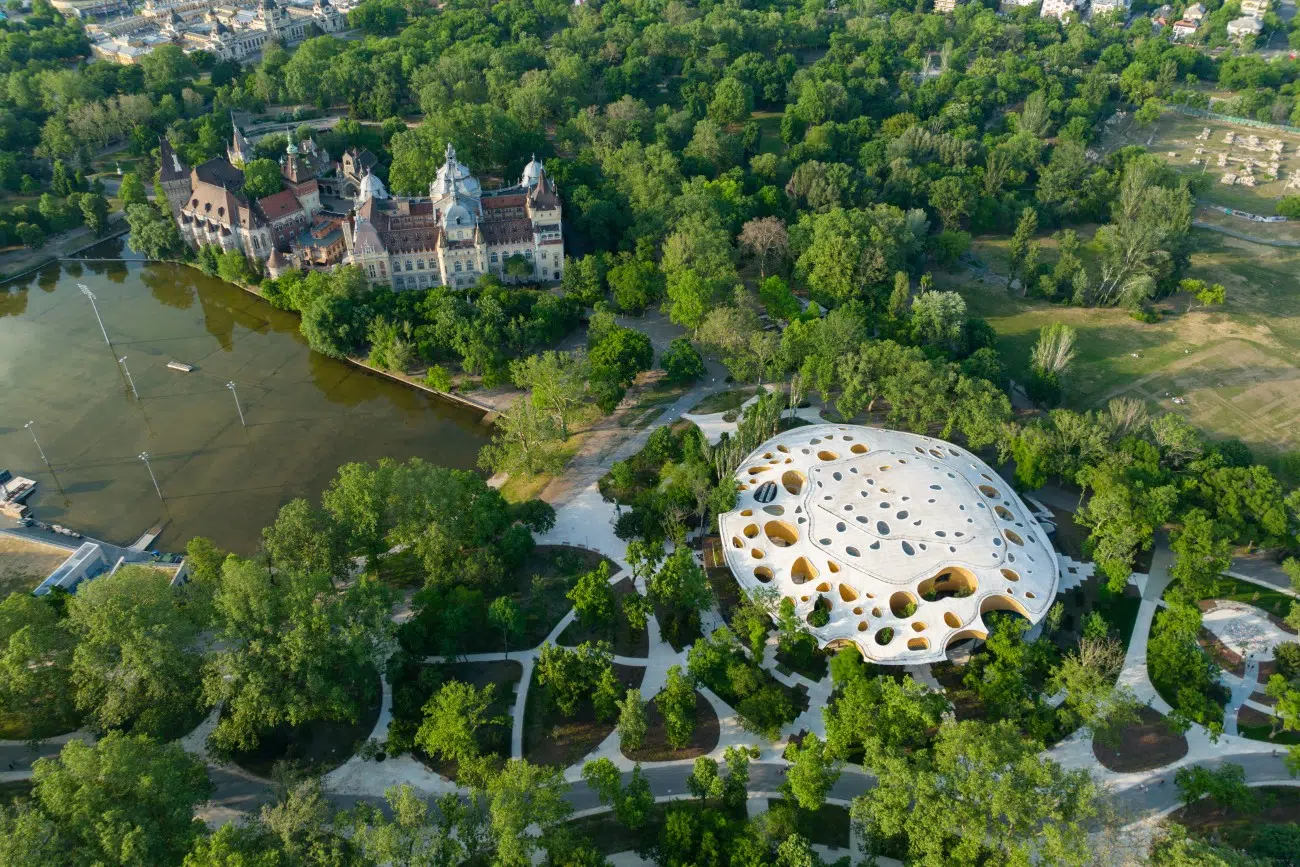
House of Music Hungary (exterior), 2021, Budapest (Photo: Iwan Baan)
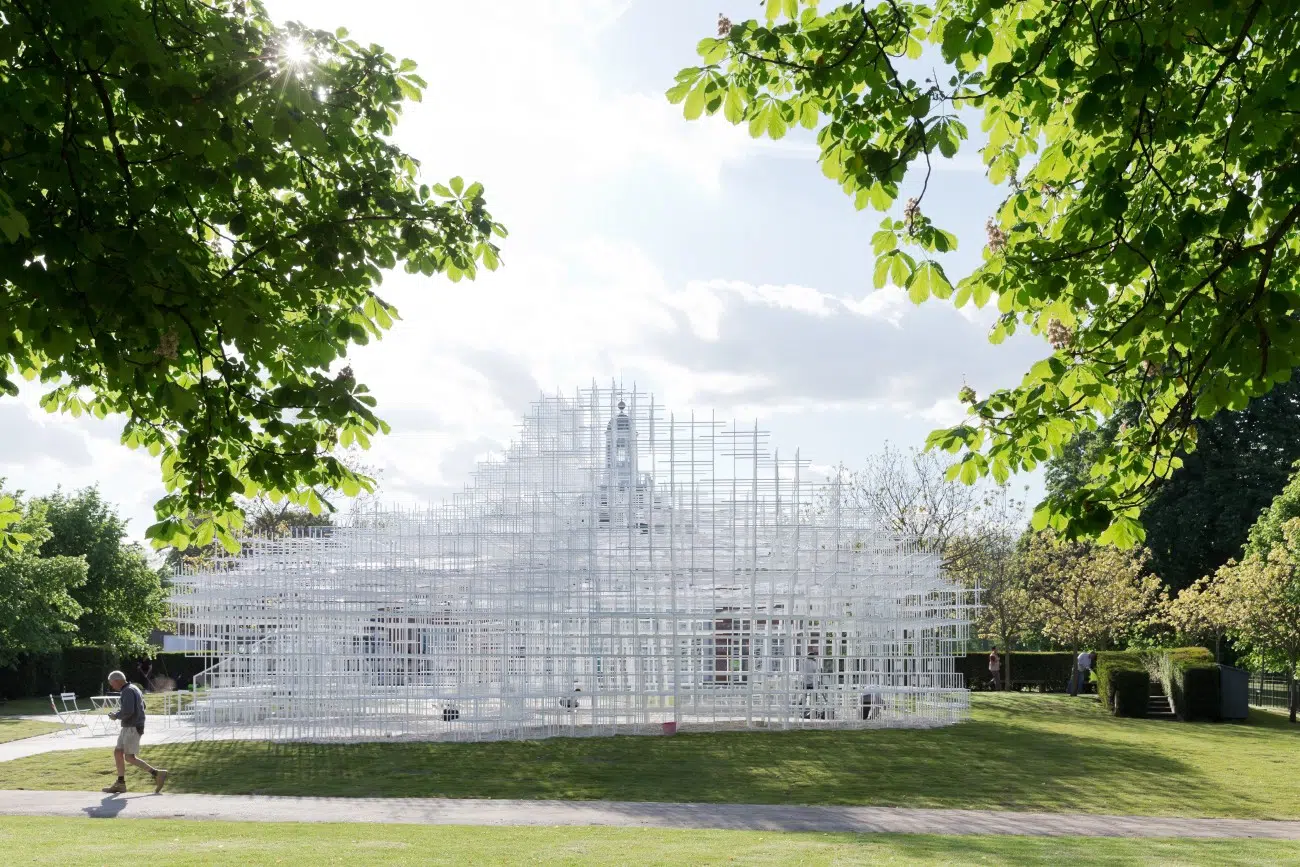
Serpentine Gallery Pavilion, 2013, London (Photo: Iwan Baan)
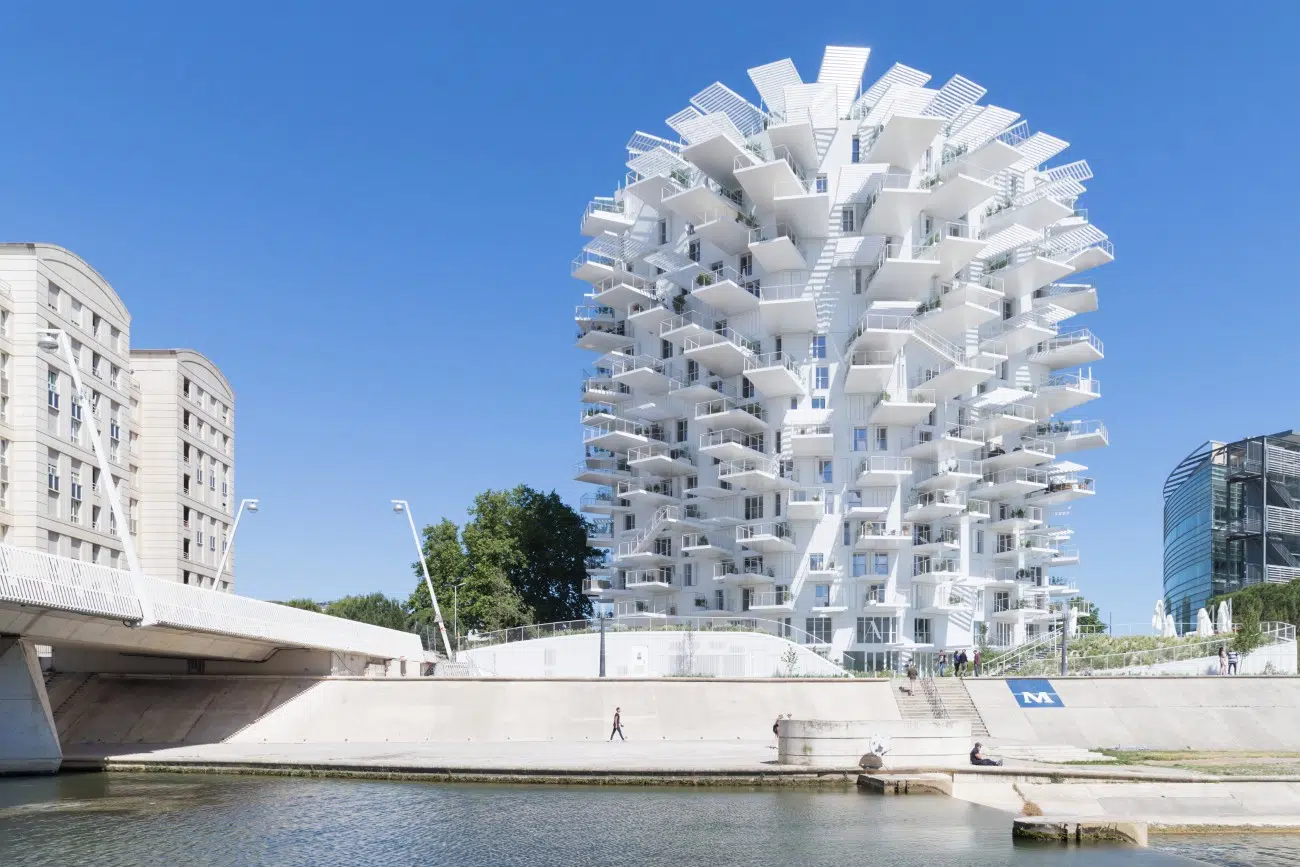
L’Arbre Blanc (The White Tree), 2019, Montpellier, France (Photo: Iwan Baan)
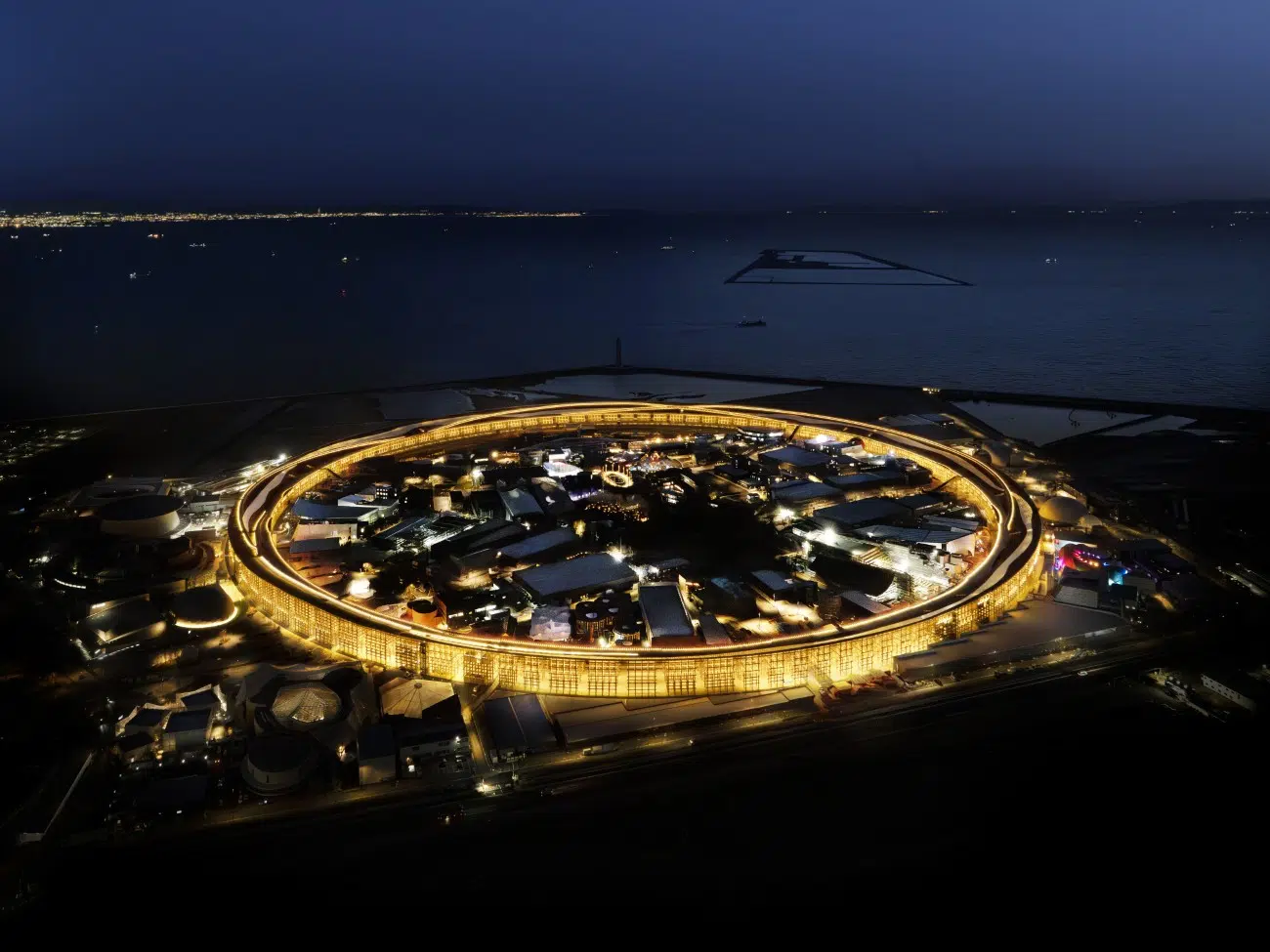
The Grand Ring for Expo 2025 Osaka, Kansai, Japan, 2025 (Photo courtesy: Japan Association for the 2025 World Exposition)
Spanning three decades, the work is divided into eight sections, guided by his design philosophy of “primitive future.”
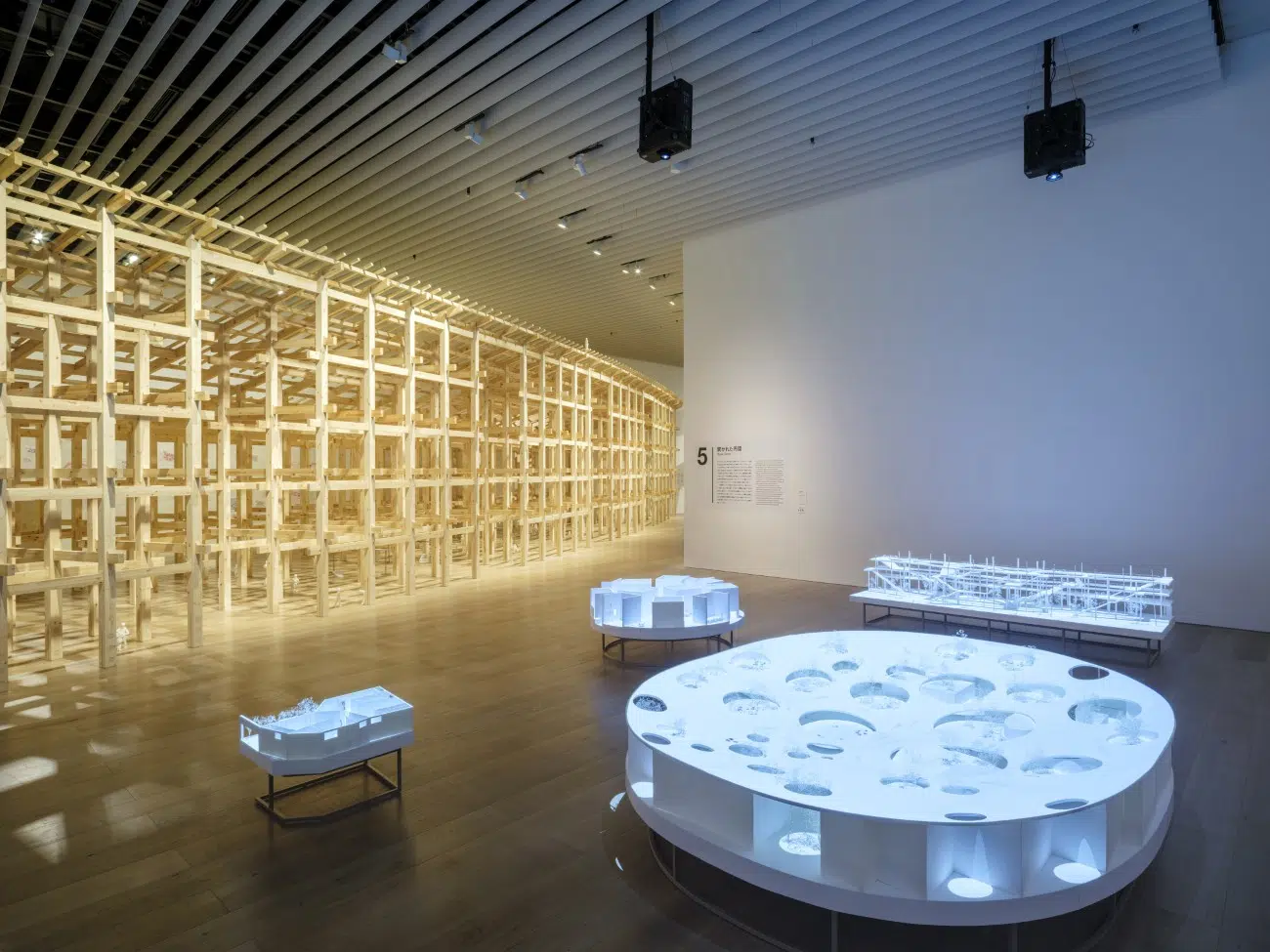
Installation view: The Architecture of Sou Fujimoto: Primordial Future Forest, Mori Art Museum, Tokyo, 2025 (Photo: Yashiro Tetsuya, courtesy: Mori Art Museum, Tokyo)
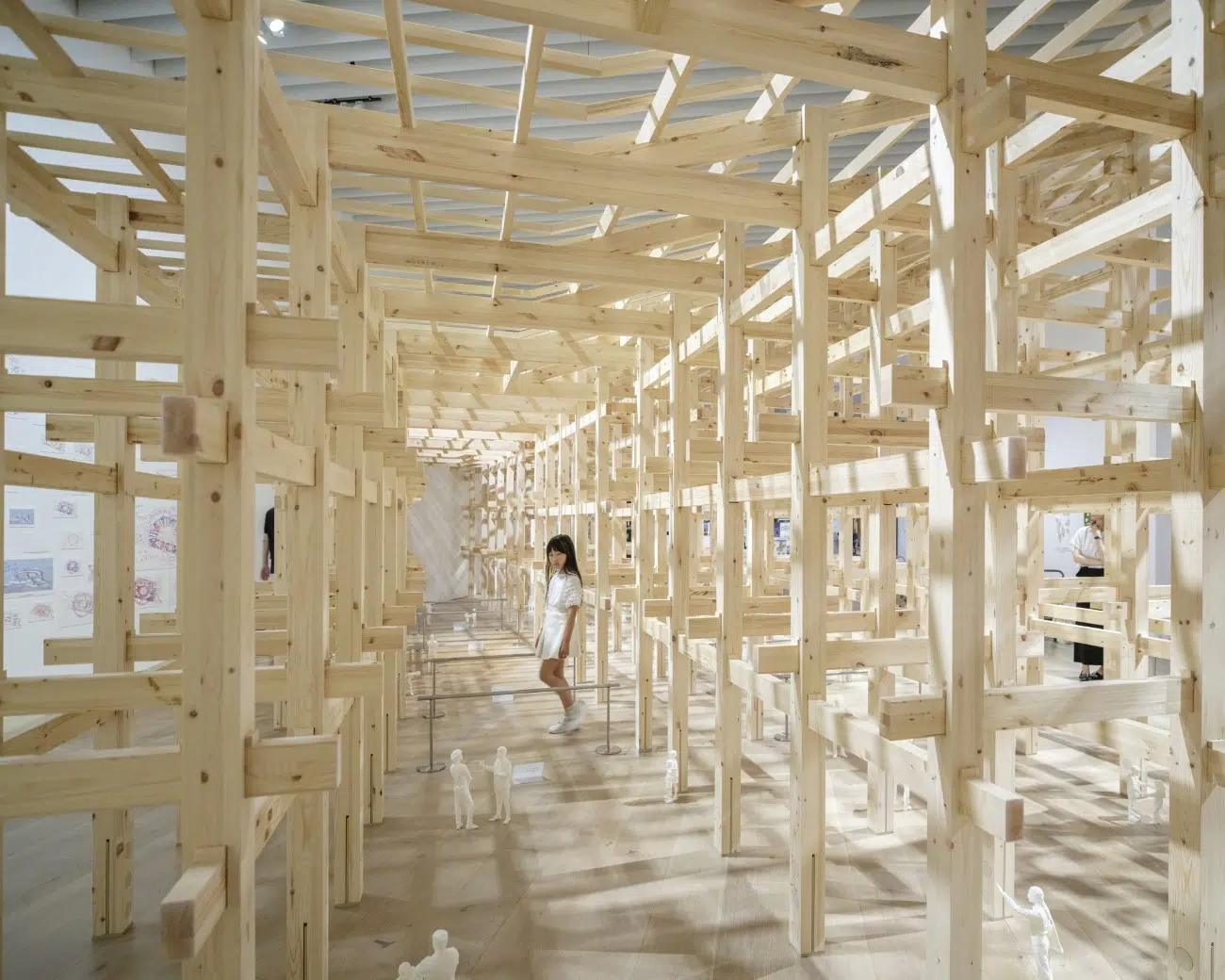
The Grand Ring for Expo 2025 Osaka, Kansai 1:5 scale model, 2025, Installation view: The Architecture of Sou Fujimoto: Primordial Future Forest, Mori Art Museum, Tokyo, 2025 (Photo: Yashiro Tetsuya, courtesy: Mori Art Museum, Tokyo)
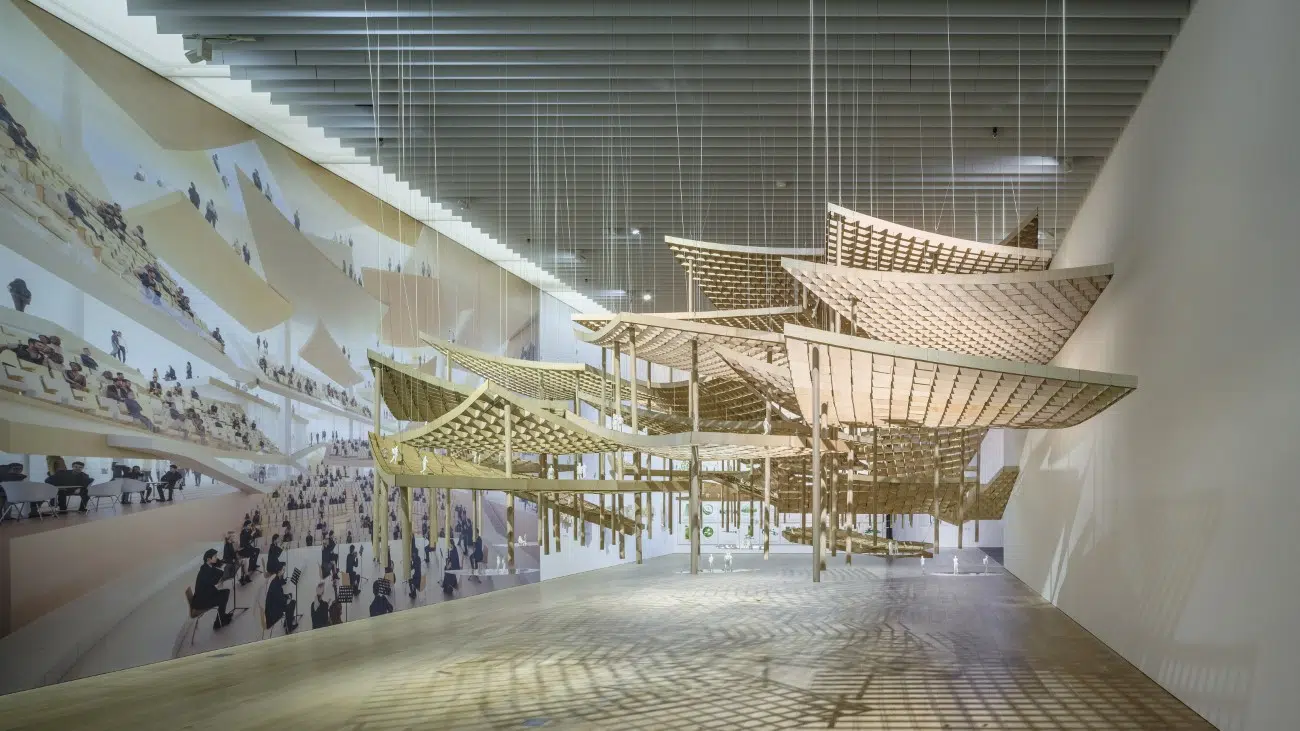
Section 7: A Forest / Many Forests, Installation view: The Architecture of Sou Fujimoto: Primordial Future Forest, Mori Art Museum, Tokyo, 2025 (Photo: Yashiro, courtesy: Mori Art Museum, Tokyo)
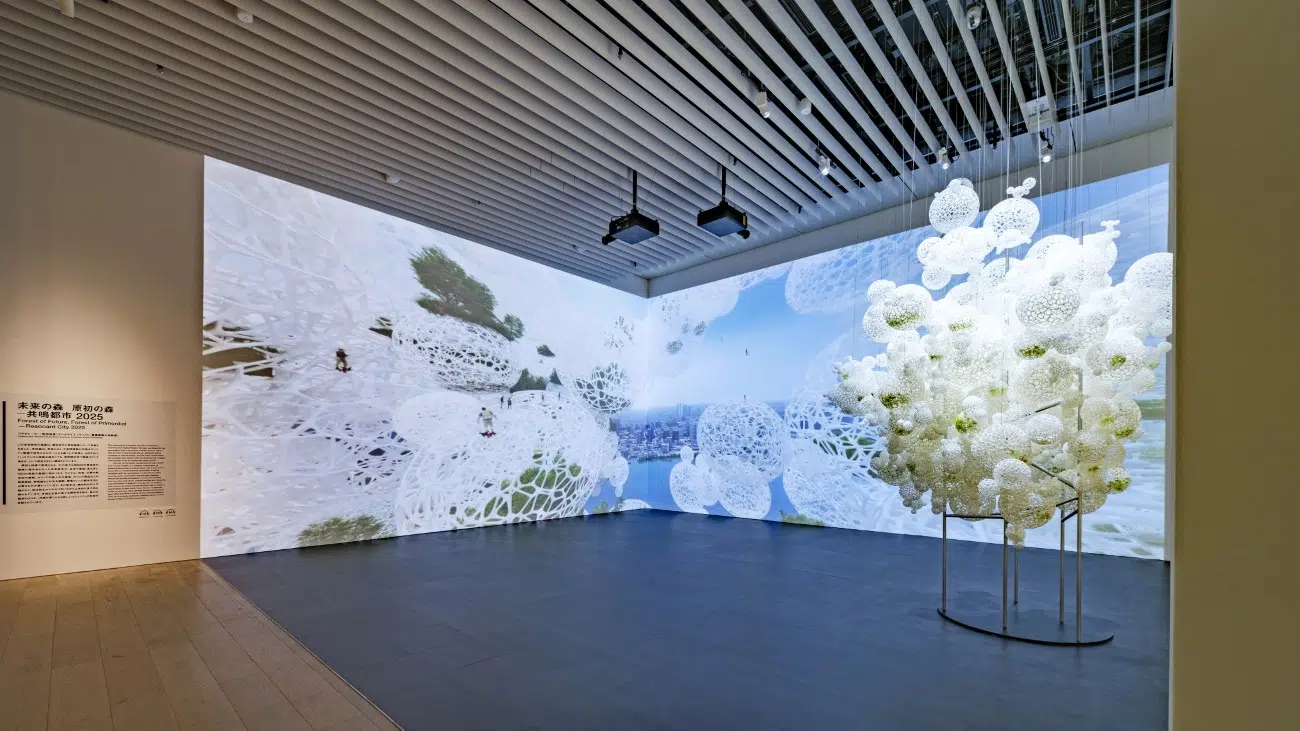
Section 8: Forest of Future, Forest of Primordial – Resonant City 2025, Installation view: The Architecture of Sou Fujimoto: Primordial Future Forest, Mori Art Museum, Tokyo, 2025 (Photo: Yashiro Tetsuya, courtesy: Mori Art Museum, Tokyo)
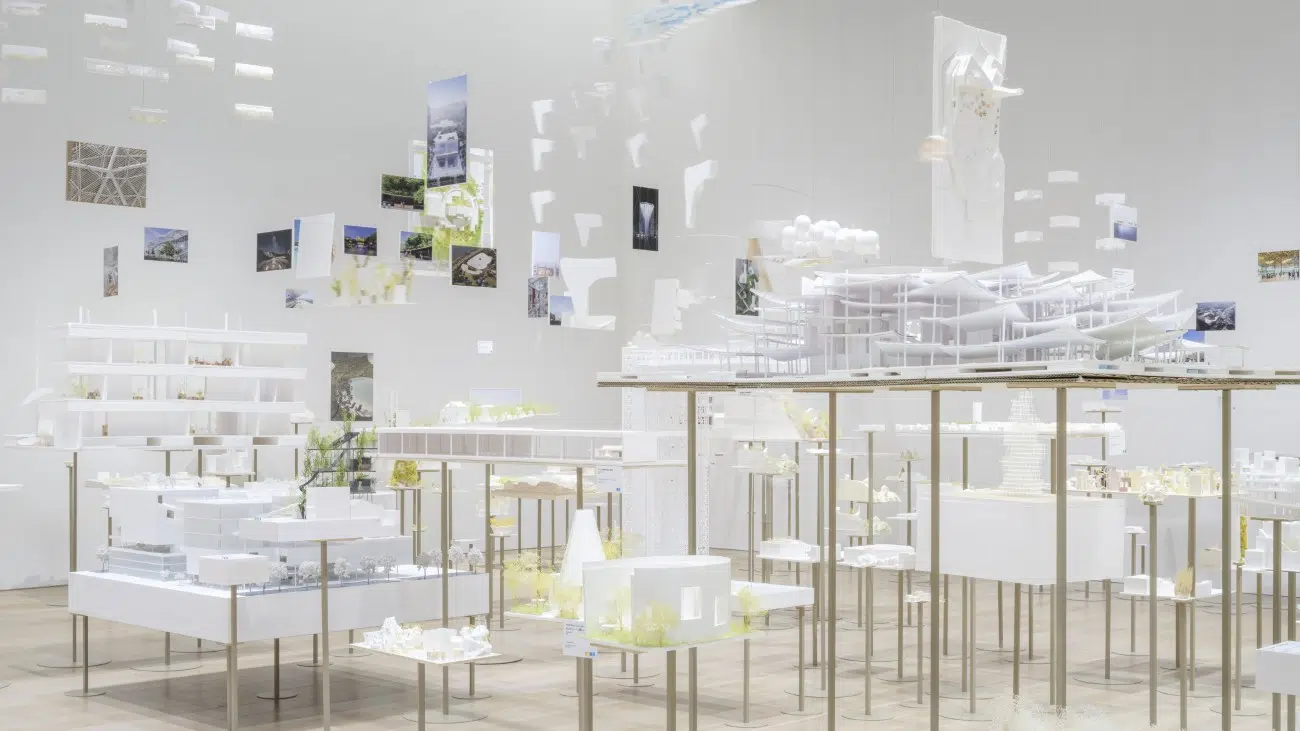
Installation view: The Architecture of Sou Fujimoto: Primordial Future Forest, Mori Art Museum, Tokyo, 2025 (Photo: Yashiro Tetsuya, courtesy: Mori Art Museum, Tokyo)