Bali Bamboo Jungle House is a Wanderlust Dream Retreat

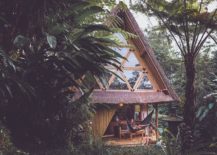
There are few occasions when you feel like packing your bags and taking the next flight to a destination as soon as you see the image of an amazing getaway. The Bamboo House in Bali is one such amazing setting that is eco-friendly, sustainable, and ensures that you get the best possible views of the river next to it and the jungle beyond. The best part about it is undoubtedly the use of bamboo as the sole construction material; making the structure ever greener!
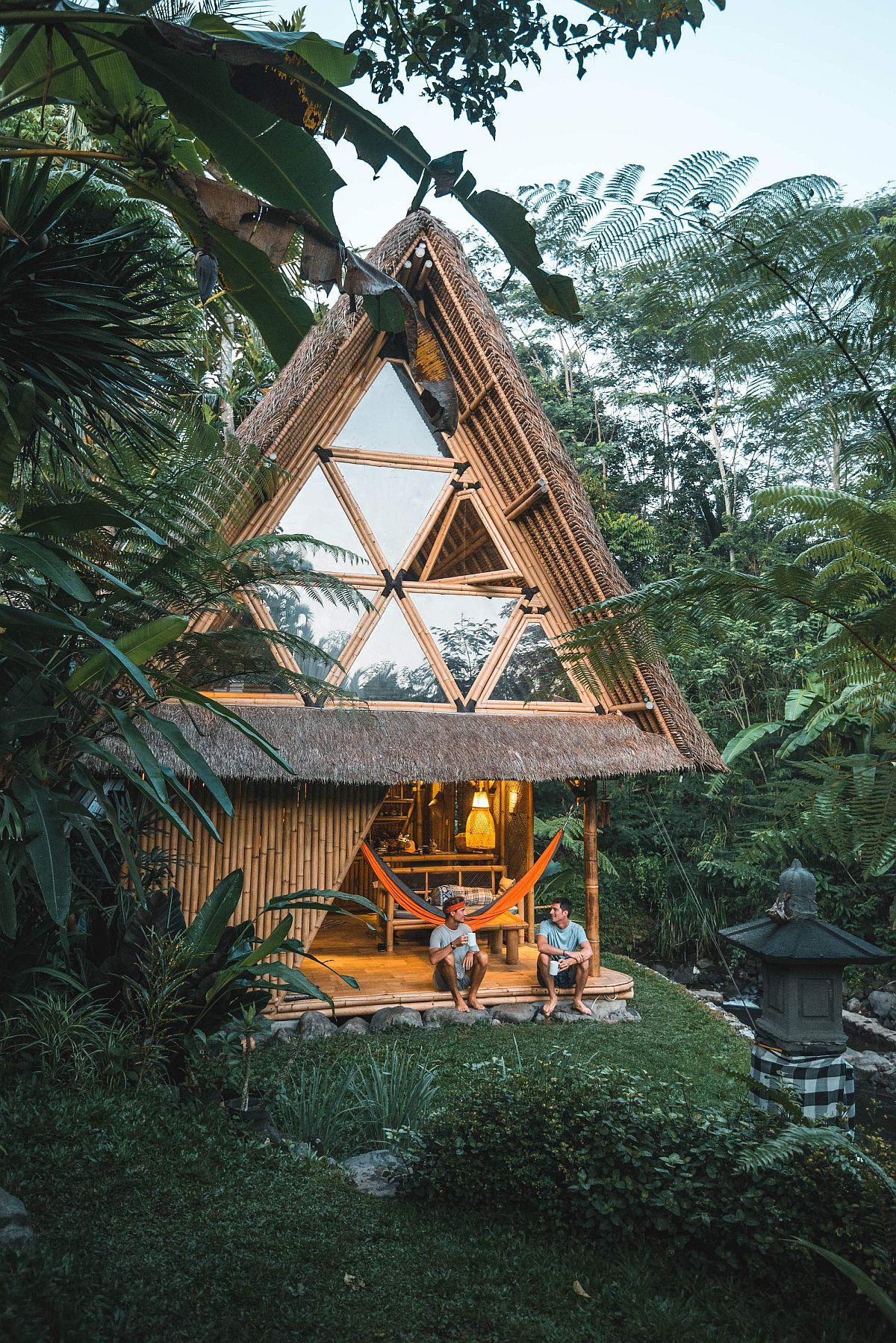
Stunning bamboo structure Hideout Bali connects you with nature once again


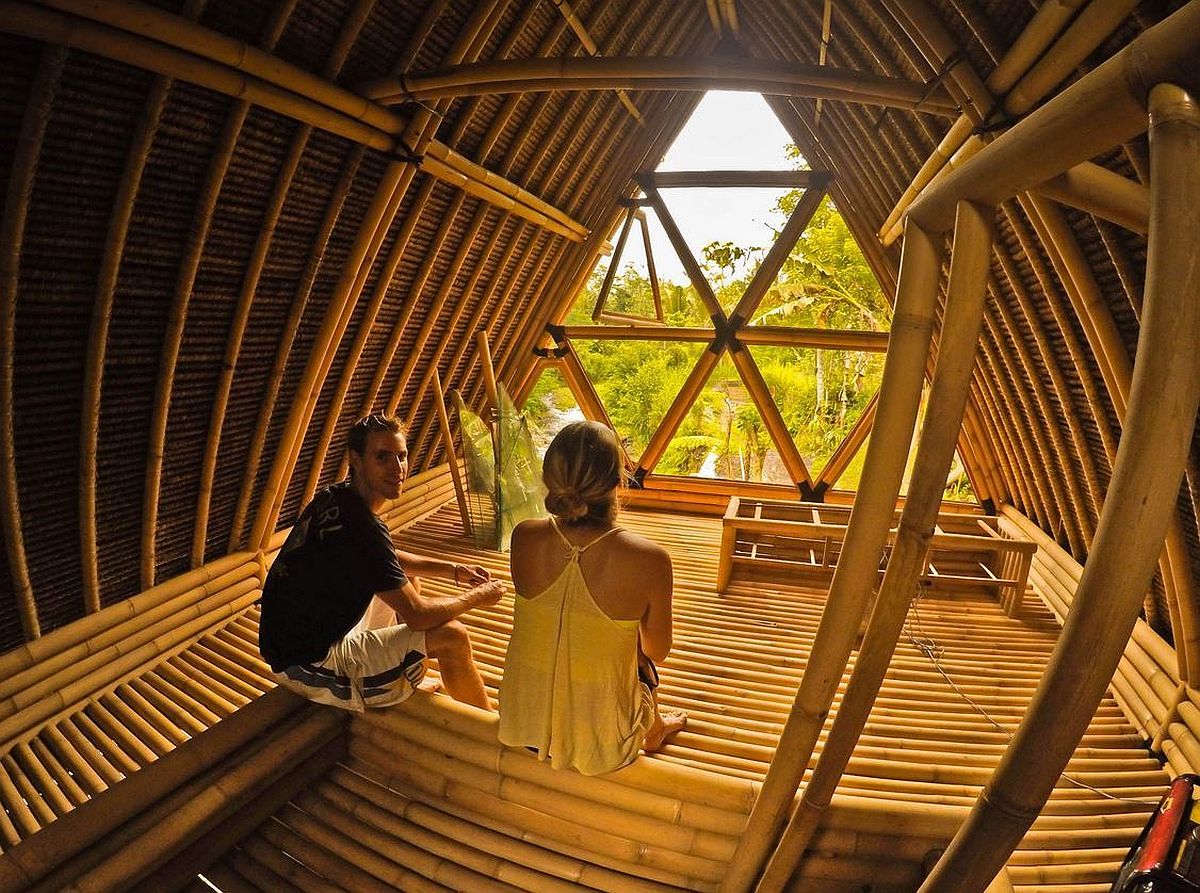
Designed by Jarmil Lhoták + Alena Fibichová, the Hideoutmoves away from low-quality building materials and uses exclusive bamboo of high standard derived from local mountains in Karangasem. This special, locally sourced bamboo has low-sugar content and high strength, making it perfect for construction of eco-friendly buildings. The Hideout stands tall and towers above the normal jungle landscape and acts as a perch that offers bird’s eyeview of the scenery outside.

RELATED: Villa Pecatu Bali: Exotic Blend of Natural Beauty and Modern Comfort
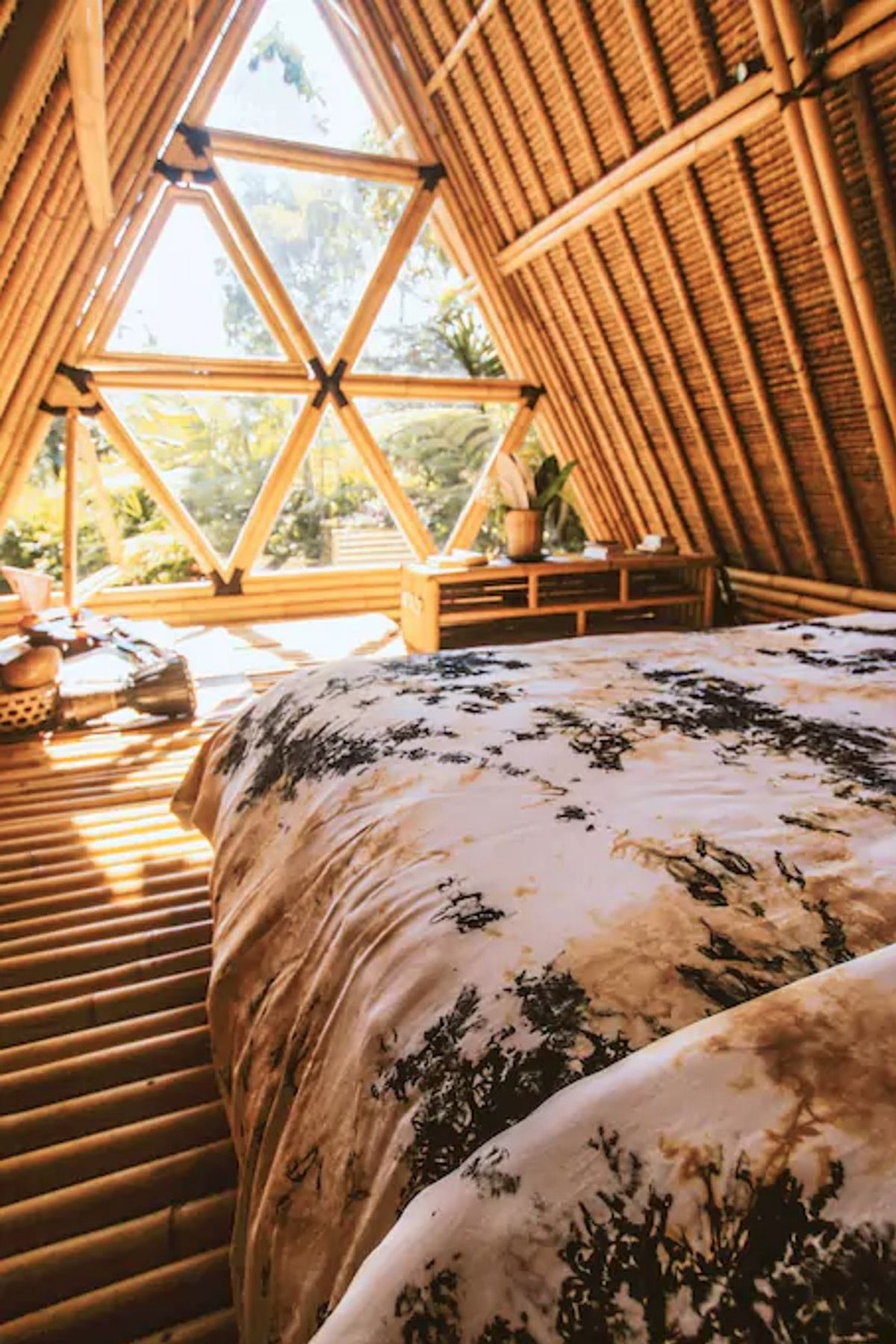
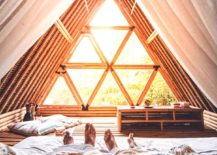
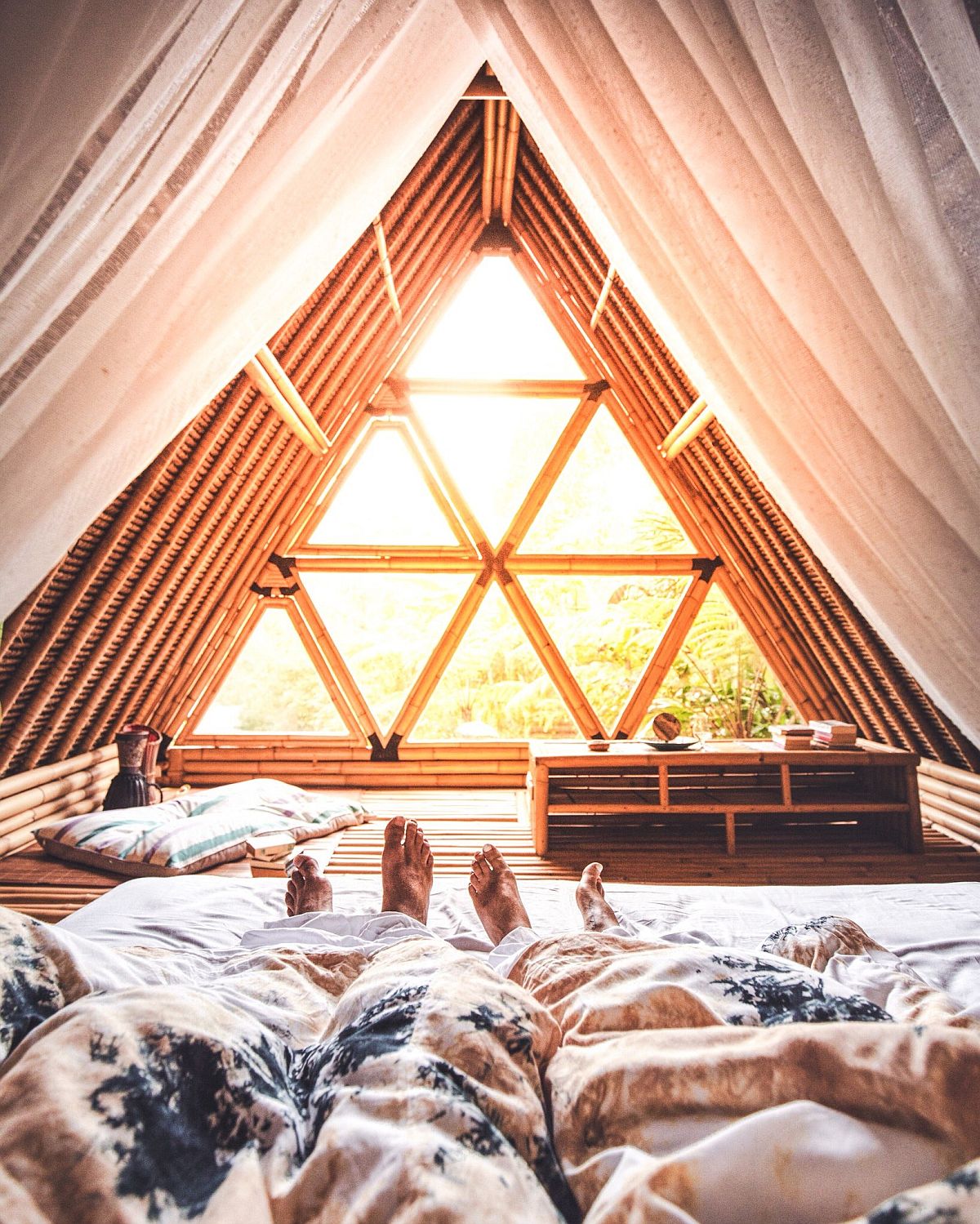
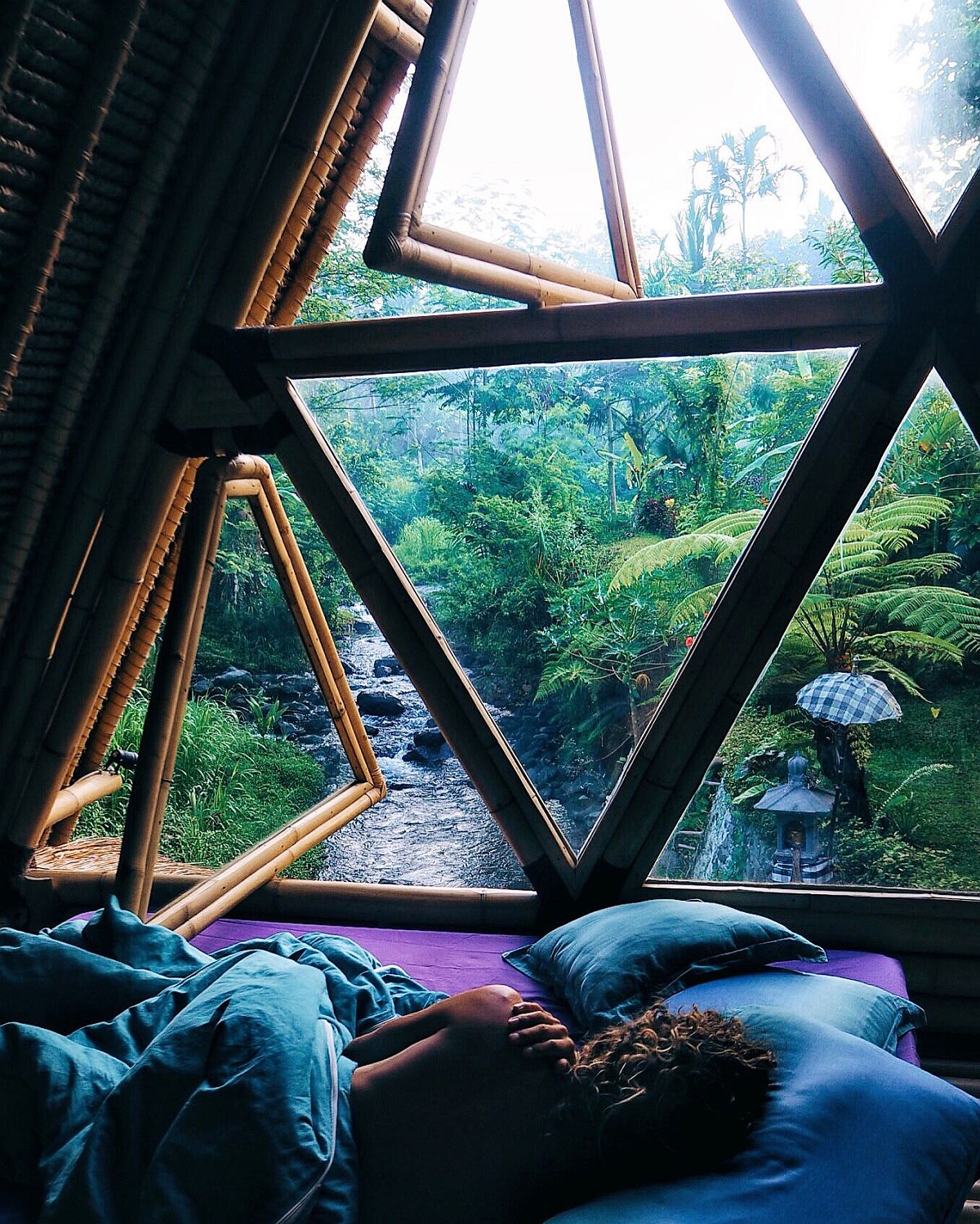
Light finds its way inside the bedroom of the Hideout
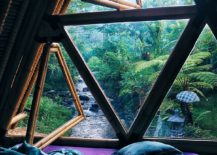
Triangular windows bring light into the bamboo Hideout
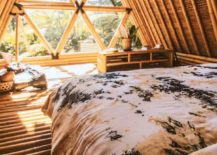
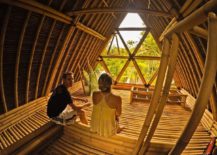
All-bamboo interior and design of the Hideout
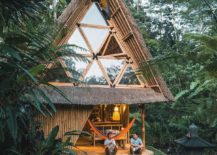
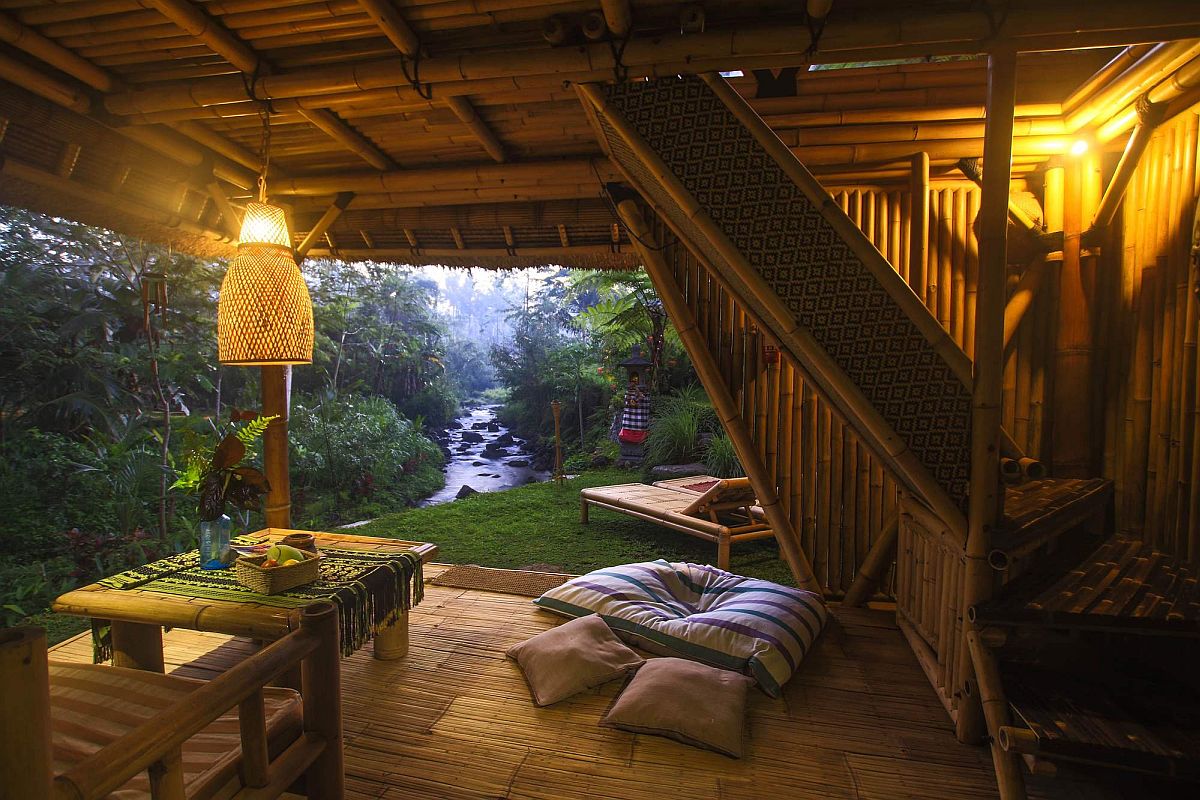
Amazing view of Bali jungles from the mesmerizing bamboo hut

Bali already has some outstanding getaways, but few compare to the sheer natural beuaty of this hideout and everything that it offers in terms of serenity. There is an outside shower in the garden here and a bedroom on the top level with triangular windows comes as a result of the vernacular A-shaped roof used for the design. A perfect escape surrounded by breathtaking scenery! [Photography: Sasha Juliard, Valentino Luis, Jordan Hammond, Emily Hutchinson, Reis Junk]

RELATED: Magical Mountain Views Greet You at this Guest House in Santa Lucia Preserve!
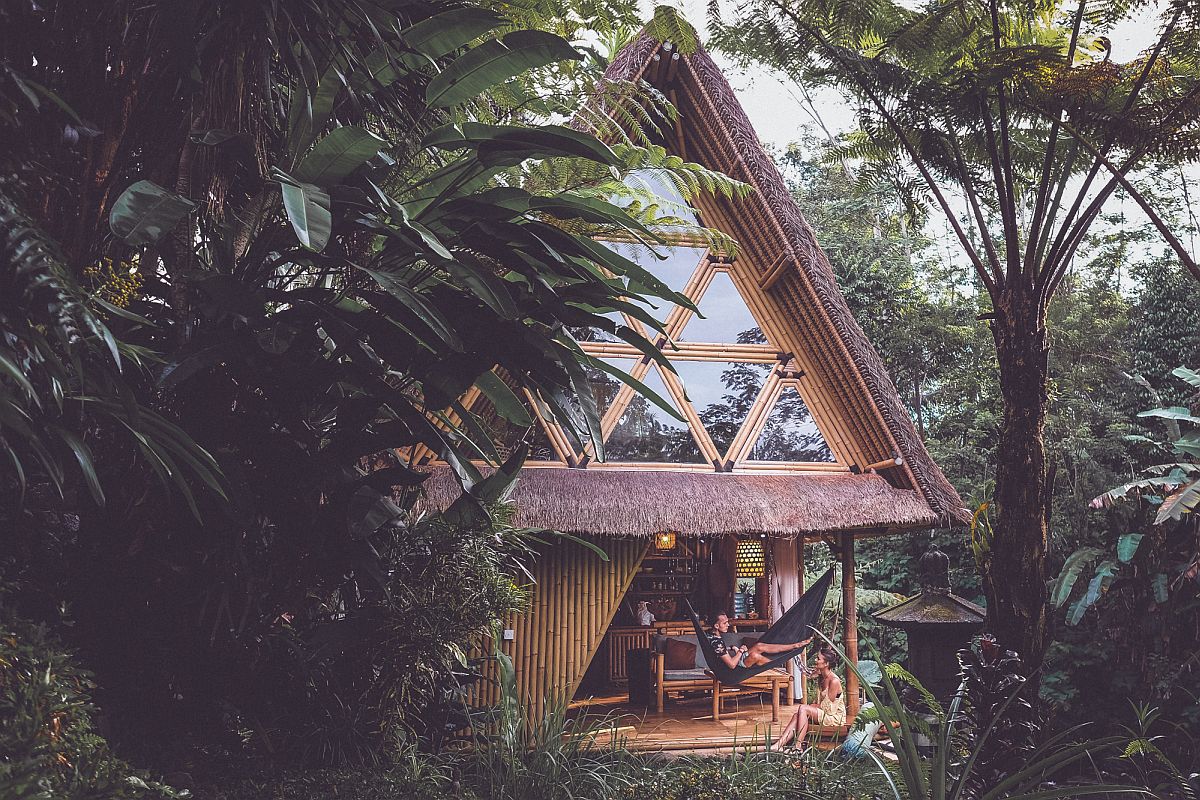
Eco-friendly bamboo house on the edge of jungles of Bali
Extraordinary views of the Bali jungle from the bedroom of the hideout
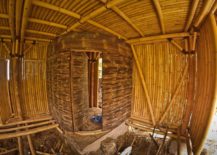
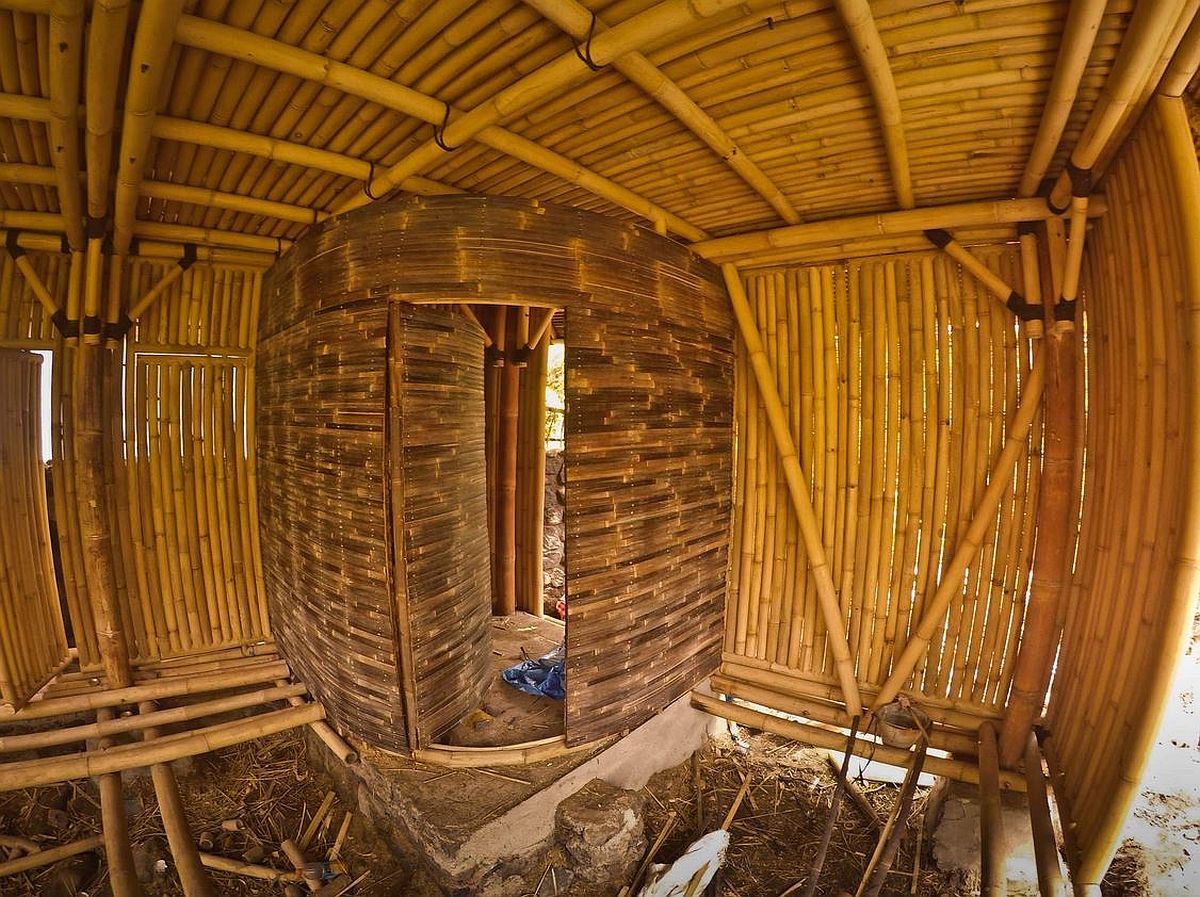
Look inside the construction process of the bamboo house
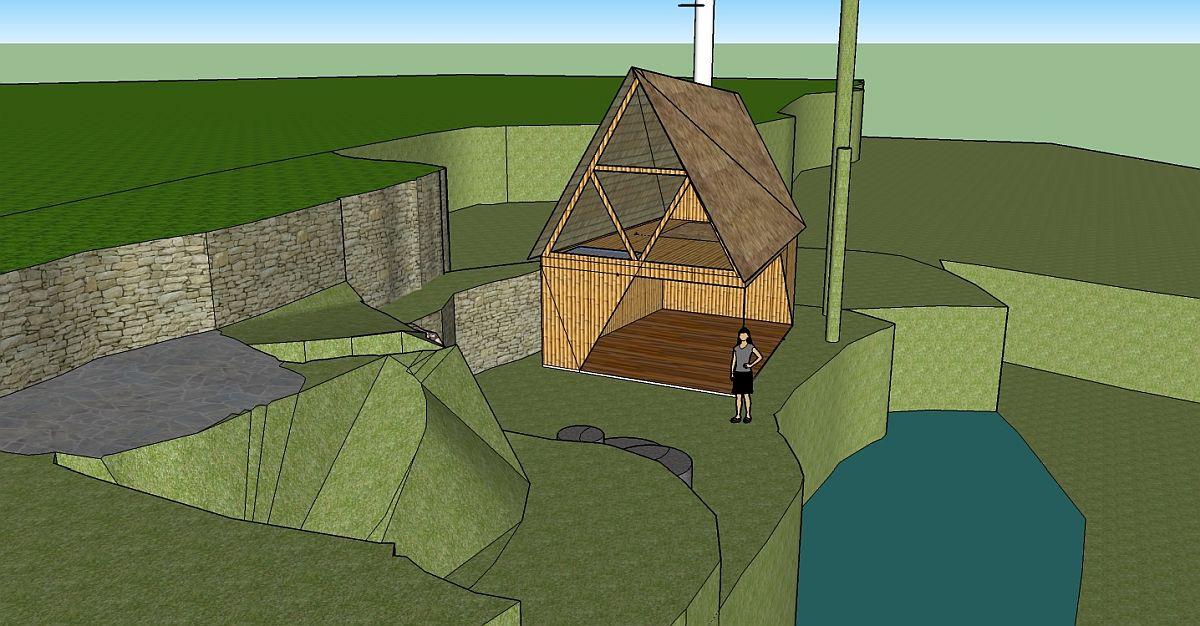
Sketch of the bamboo house on the edge of the jungle

You’re reading Bali Bamboo Jungle House is a Wanderlust Dream Retreat, originally posted on Decoist. If you enjoyed this post, be sure to follow Decoist on Twitter, Facebook and Pinterest.

Similar Posts

  • Greenery, Unique Dimensions and Angular Charm Shape the House Between Trees

    When it comes to unusual design that moves away from the mundane and gives homeowners a fresh perspective on spatial rearrangement, the House Between Trees in Brazil comes up trumps. Designed by Ateliê de Arquitetura Líquida, the design of the house has been largely influenced by the unique lot its sits in, giving it a […]

    You’re reading Greenery, Unique Dimensions and Angular Charm Shape the House Between Trees, originally posted on Decoist. If you enjoyed this post, be sure to follow Decoist on Twitter, Facebook and Pinterest.

  • Miner Road

    The clients are a couple of environmental scientists who, along with their two sons, relocated from the Oakland Hills to the warmer climate of Orinda. Their commitment to sustainability, including a request for net-zero energy performance annually, was evident in their thinking throughout the design process. A three-bedroom program began as a remodel of a 1954 ranch house at the foot of a hill next to a seasonal creek.  After finding the existing structure and soils to be unsuitable, the direction settled on reusing the existing footprint under the shade of a Valley Oak that had grown up close to the original house. The surviving portion of the original house is the fireplace which was wrapped in concrete and utilized for structural support. This made additional grading unnecessary and allowed the new house to maintain the same intimate relation to the old oak.  The family desired an open living layout that connected directly to the landscape. A mezzanine plan evolved with a double height family space nested with a master bedroom and study stacked above the kitchen and nook. A screened pacing deck for long phone calls shades the upper level from afternoon summer sun. Downstairs, secondary bedrooms along an extendable hallway, wrap an outdoor dining area situated between the kitchen and family room.  Construction materials and methods were considered in balance between first and lifecycle costs. The Corten steel rain screen for the exterior skin and interior wood were chosen to take advantage of zero annual maintenance cost and a shotcrete foundation allowed formwork to be repurposed for wood framing.  Single use material selections such as the Corten steel and shotcrete foundation reduced complexity in detailing and labor costs allowing a larger portion of the budget to be reallocated for upgraded mechanical, insulation, and glazing systems. The same attitude for interior finishes produced acoustically insulated, unfinished oak ceilings and walls. The sum total of the limited and landscape-driven materials presents a relaxed and quiet built environment that allows the senses to focus on the natural environment. A haptic connection to the rhythms of our planet is evident.  A 14-gauge Corten rain screen provides a no-maintenance skin. High levels of insulation and glazing efficiency reduce heating and cooling loads. An 8.1kW photovoltaic system provides on-site renewable energy and produced more electrical energy than the house used the first year. Rainwater is collected via a waterfall from the roof at the end of the hallway. Buried tanks store water for use in toilets and laundry. Greywater is collected separately and reused for irrigation. Electronically commutated motors and variable speed heat pumps are used to further limit energy use and control heating and cooling. An energy recovery ventilator is used to provide fresh air.