|

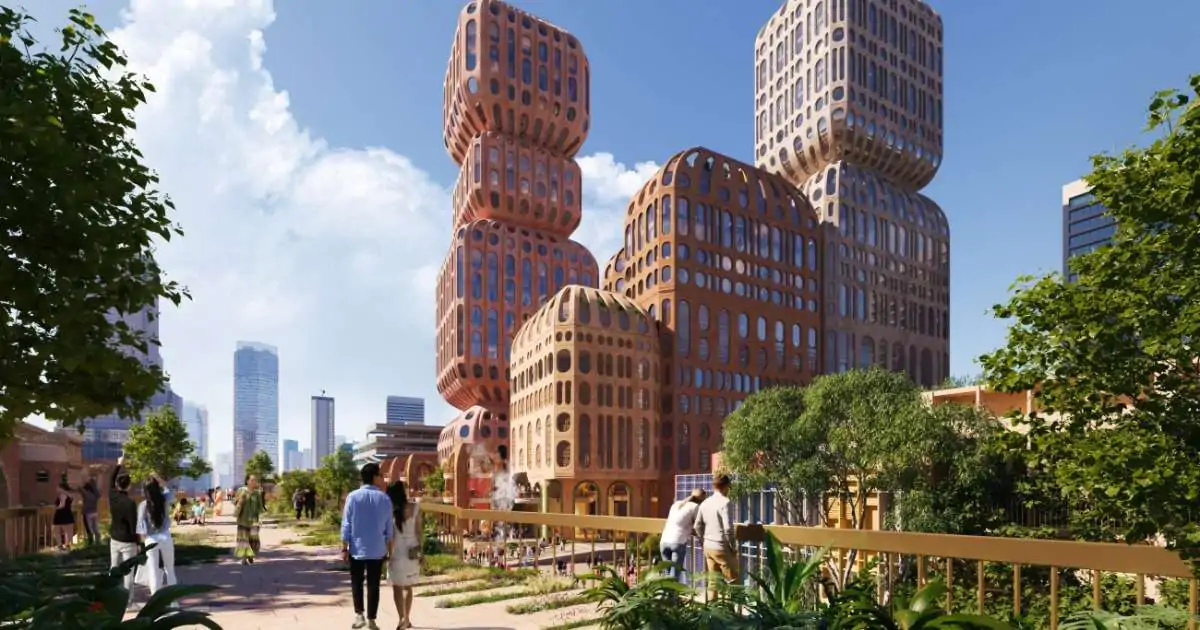
Heatherwick’s Debut Thai Design Is Inspired by the Country’s Traditional Lanterns

Jessica Stewart is a Staff Editor and Digital Media Specialist for My Modern Met, as well as a curator and art historian. Since 2020, she is also one of the co-hosts of the My Modern Met Top Artist Podcast. She earned her MA in Renaissance Studies from University College London and now lives in Rome, Italy. She cultivated expertise in street art which led to the purchase of her photographic archive by the Treccani Italian Encyclopedia in 2014. When she’s not spending time with her three dogs, she also manages the studio of a successful street artist. In 2013, she authored the book “Street Art Stories Roma” and most recently contributed to “Crossroads: A Glimpse Into the Life of Alice Pasquini.” You can follow her adventures online at @romephotoblog.

Similar Posts

  • SO House

    REVEALING THE EVIDENCE Confrontation with the reality of these ruins was always a confrontation seeped in memories. Memories
    of a place where the raw matter it is constituted of – the rock, the valley and the mountain – shows evident expression, provoking a game of fine balance between place, matter, light and shadow. We found light that dripped down the stone walls defining spaces separated only by rows of stacked rock. In each fissure, in each wrinkle, a soft balance between light and shadow. Standing before this scenery, the exercise consisted in finding the most natural way to connect ruins and spaces, simultaneously defining future possibilities for links between the interior and the exterior. Where decisions were concerned, we chose to rehabilitate pre-existing volumes and introduce a new connecting element. The answer is given by the almost immediate decision to join together the pre-existing elements. This
    gesture, deeply connected to the terrain along the pendente – connects the two sections facing west,
    forming an exterior courtyard adorned with a centenary olive tree. This project builds a space that runs through the ruins, uniting them and revealing the obvious functional relationship between the house’s programmatic areas, simultaneously differentiating the possibilities for inhabiting the exterior space. It expresses its temporality through the antagonism of matter in its relationship with pre-existing elements.