|

Pharrell Williams x NIGO Announce ‘Japa Valley’ With Giant KAWS Sculpture at the Center

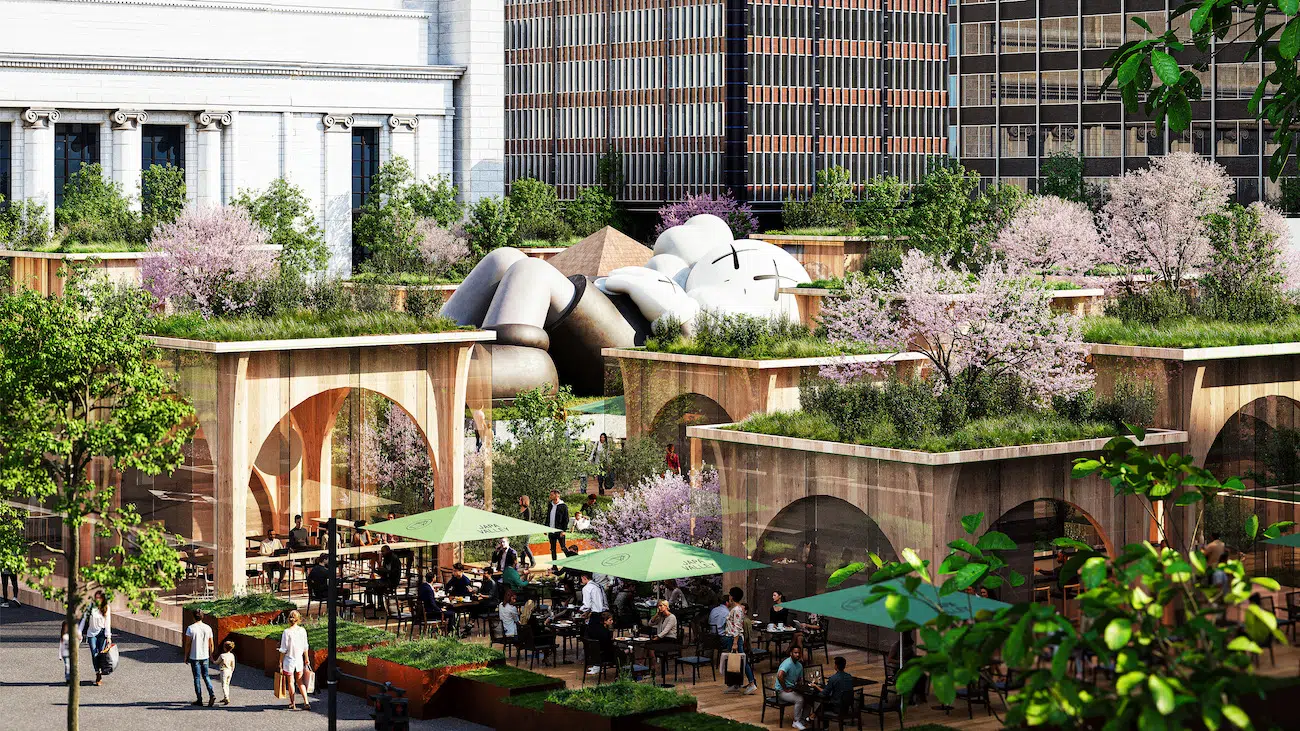
Exterior daytime render of Japa Valley TokyoExterior daytime render of Japa Valley Tokyo

California’s Napa Valley is home to hundreds of sprawling, hillside vineyards, many renowned for their world-class wines. Across the Pacific, Japan is taking note—but not without incorporating a twist. In 2027, Japa Valley will launch in Tokyo, serving as the latest joint venture between Pharrell Williams and NIGO in partnership with Not A Hotel.

As its name suggests, Japa Valley takes inspiration from its Californian counterpart, emphasizing hospitality alongside a range of artistic experiences. The 1-hectare campus will unsurprisingly swap Californian wine for Japanese craft sake brews, but it will also be informed by a rotating cast of fashion, food, and design pop-ups, offering visitors a distinct glimpse into contemporary Japanese culture. Recent concept renderings showcase an urban oasis organized into a fluid, maze-like layout, peppered with elegant, timber-clad pavilions crowned by plants, trees, and other greenery. The complex’s interiors are equally lush, boasting arched, floor-to-ceiling windows through which sunlight can seamlessly filter.

At Japa Valley’s heart will be a monumental sculpture by KAWS, depicting his iconic Companion character in a reclining pose. The piece anchors not only the entire site, but its overall atmosphere. Just as KAWS’ skeletal figure has kicked back to relax in a plush meadow, visitors are meant to rest as well, savoring the meditative yet bustling environment around them. This sculpture marks the second time that Not A Hotel has tapped KAWS for a project; last year, the New York-based artist curated artworks for the NIGO House in Chiba.

Even with its star-studded cast of collaborators, Japa Valley is explicitly designed to be ephemeral. The project will be nestled in Yurakucho Park, which Mitsubishi Estate is currently developing in front of Yurakucho Station as a temporary space before it commences construction on a new major building complex in the area. Japa Valley’s emphasis on seasonal programming only enhances that impermanence, challenging visitors to engage with pop-ups in more unconventional and unexpected ways.

Beyond this, the project is undeniably a labor of love. For two decades, Williams and NIGO have joined forces for a variety of creative and professional pursuits, with Japa Valley being the “culmination” of that partnership.

Japa Valley translates a “shared vision for cultural fusion into a physical space,” the project’s website reads. “[It] proposes a new way to weave art into the fabric of daily life. It reimagines the tourism model through the lens of craftsmanship.”

To stay updated about the project, visit Japa Valley’s website.

Slated to open in Tokyo in 2027, Japa Valley will host a rotating cast of fashion, art, and food pop-ups, with a special emphasis on sake.
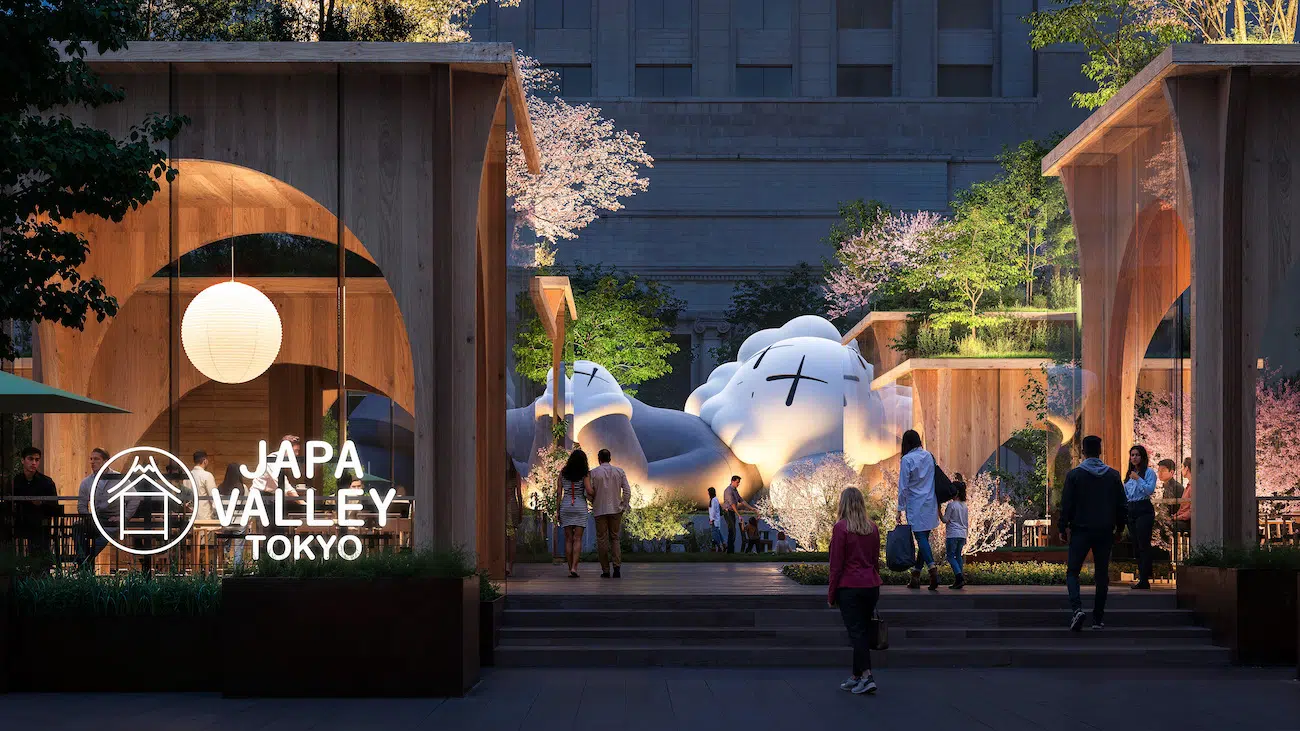
Exterior evening render of Japa Valley TokyoExterior evening render of Japa Valley Tokyo

It is the latest joint venture between Pharrell Williams and NIGO in partnership with Not A Hotel.
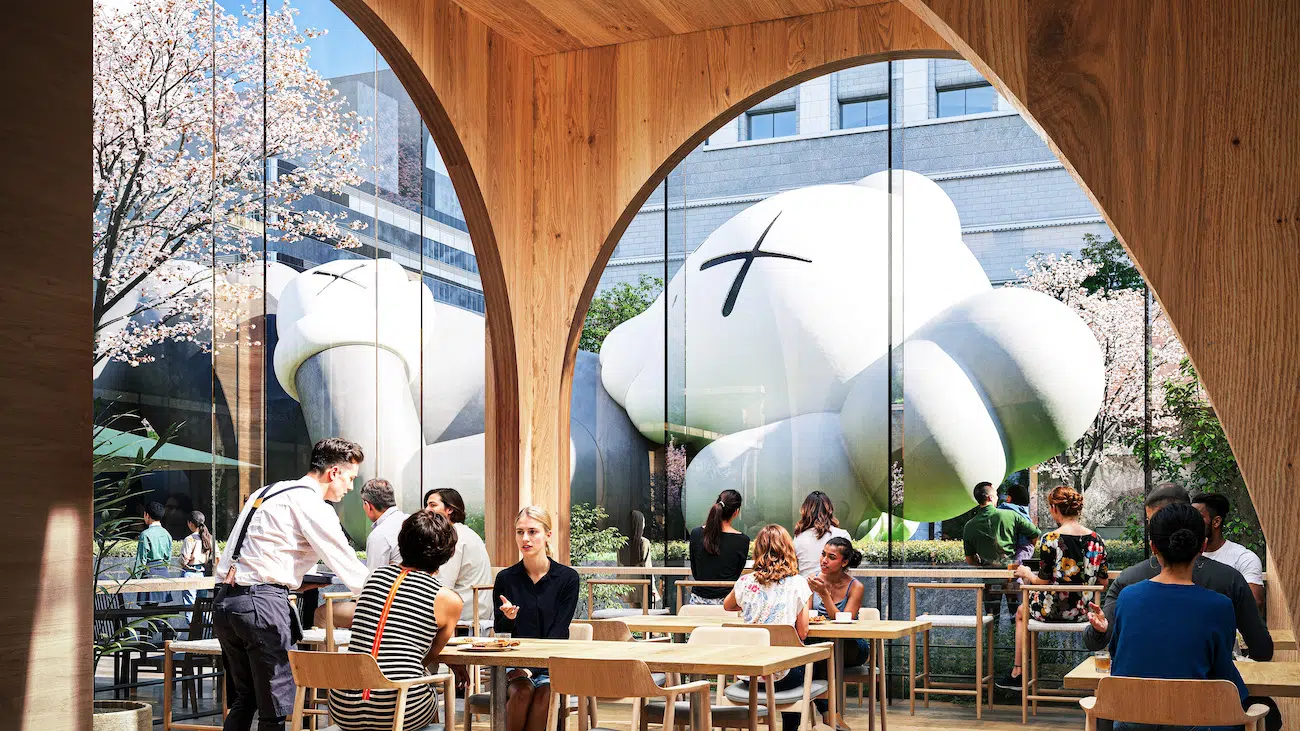
Interior render of Japa Valley TokyoInterior render of Japa Valley Tokyo

At the center of Japa Valley will be a monumental sculpture by KAWS, depicting his iconic Companion character in a reclining pose.

Promotional asset for Japa Valley TokyoPromotional asset for Japa Valley Tokyo

Japa Valley: Website | Instagram

All images via Not A Hotel.

Sources: NIGO, Pharrell Williams and NOT A HOTEL Team Up for JAPA VALLEY TOKYO; Pharrell Williams and Nigo to open massive lifestyle hub in Tokyo inspired by Napa Valley; pharrell williams & NIGO partner with NOT A HOTEL on ‘japa valley tokyo’, launching in 2027

Related Articles:

LEGO Opens Immersive ‘Superpowers Studios’ in Paris Allowing Visitors To Touch and Play with Art

Elegant Pop-Up Installation Merges Flowers and Industrial Aesthetics

This Colorful Multi-Sensory Installation Invites You To Imagine a Better Future

Similar Posts

  • Casa Haras

    1. How did you land the project and what was the brief? Initially the customers were looking for a house with volumetry that would hide the roofs, but the regulation of the condominium did not allow the use of flat slabs, nor a built-in roof. It would be our first house with apparent roofs. The required needs program and the size of the plot had the exact proportion for what we believed to be ideal for a single-storey house with plenty of open space for outside living, and so we did.
    Haras house came up as a pavilion installation consisting of 3 volumes: two parallels, with NE-SW orientation and a third perpendicular connecting with NW-SE orientation, as an “H”. The idea was based on the desire to have the central leisure area in the other spaces of the house, and with the proposed implantation, we were able to create two outdoor living areas: a main one with a deck and a swimming pool and a secondary area with a spa, a water mirror and a bonfire separated by the perpendicular volume and visually connected by the transparency of the sliding glass doors. 2. What was significant about the site? The land chosen within a stall in the interior of São Paulo, concentrated a number of positive aspects for the design of the project: views, large plot, solar orientation, generous setbacks, high soil permeability, no outside walls. 3. What was the overall design goal? The simple volume and purity of the gable roof in all 3 blocks of the house ended up contributing significantly to the harmony of the whole and to the desired country house aspect, which was further strengthened by the use of natural materials such as the stone coating on the gables of the walls and the use of the wood in the panels of doors and slatted of the facade. 4. What was the color pallet? The project explores in exterior areas the colors of natural materials such as the wood used in the slats of the whole facade of the house, the roof, also wood but with a shade of gray and stone walls. The contrast is quite striking with some internal areas, where the walls and white lining create a neutral and minimalist space. 5. What was particularly challenging? The main challenge of the project was to create a contemporary home using sloped roofs, in a minimalist architecture using natural materials. This challenge sought to coherently insert the project in the place that was built, a condominium in a stable – called “Haras” in Portuguese which gives the name of the house, with an air of farm in the interior of São Paulo- Brazil, a refuge for the tranquility at the weekends. 6. How does this project compare to other projects you have completed? This project differs from others for being a single-story house in a large terrain and with natural landscape around it. The fact that the house is single-story provided a widespread deployment in the land that generated direct relations of all the environments with the outdoor areas landscaped, which increased the sensation of the built space and strengthened the use of the external areas as a continuity of the built environment. 7. Could you please go into detail about a few pieces of furniture,including why these were selected? The pieces of furniture were selected especially for each room, proposing an integrating of the spaces. The sofa in the living room, for example, integrate both spaces, the fireplace and the outside gardens. The mix of materials is certainly a charm in this project. In the dinning room, the wood dinning table signed by the Brazilian designer Theo Egami contrasts with the metal chairs feet by Fernando Jaeger. 8. Could you please go into detail about a few fixtures, including whythese were selected? The lighting is mostly made by points of indirect light, creating a more intimate look in the house. In the social central pavilion, spots were used facing the wood lining, creating a light effect on the wood. Some interesting pieces have been used in specific spaces, such as in the kitchen, hanging with the exposed wiring that run through the wall and ceiling until they reach the bench and lavatory point, where the architects used hydraulic copper pieces to create a luminaire exclusively to the project. 9. What did you intend to impart with the rooms and how are theydifferent from each other? The flat distribution of the house program gives all rooms and environments a sense of continuity beyond the limit built, since all have direct visual relation through glazed sliding doors with more than 1150 m² of free ground and high permeability index of the ground, have secured a generous area for landscaping that embraces the house by the front, side and back indents, and advance through the central core. The differences between the rooms are related to the user, 1 double suite fully integrated with the bathroom, which has a glazed shower facing the bedroom. There are two other similar suites, also with double beds, but to receive guests in the house and finally the children’s room, a suite that has two large beds that can be shared.