inflatable rooms to mimic dream states
Penique Productions builds environments that feel as though they have slipped out of sleep and settled, temporarily, inside existing architecture. The Barcelona-founded collective works with air, plastic, and light to remake familiar rooms into sealed, glowing interiors where scale softens and edges lose their authority. Thus, their inflatable and interactive installations sit somewhere between architecture and atmosphere.
The group turns the volume of a room into something that can be felt, pressed against, and inhabited with a heightened awareness of the body.
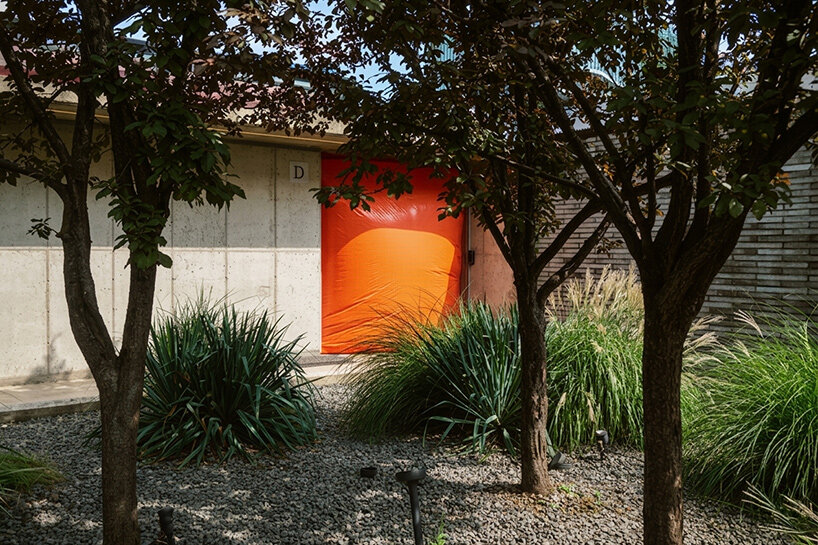
Juhwangsaeg, Seoul, 2025. image courtesy Penique Productions
Inflated interiors and shifting perception
Across its transformative projects, the approach by Penique Productions remains consistent. The team inserts a thin membrane into a building which is then inflated until it meets walls, columns, and ceilings. The original structure remains present as a faint outline, visible through layers of translucent material, while the new interior establishes its own logic of pressure, color, and light.
Movement becomes slower and more deliberate. Sound is dampened, and surfaces respond softly to contact. What emerges is an environment in constant negotiation between the rigidity of architecture and the instability of air.
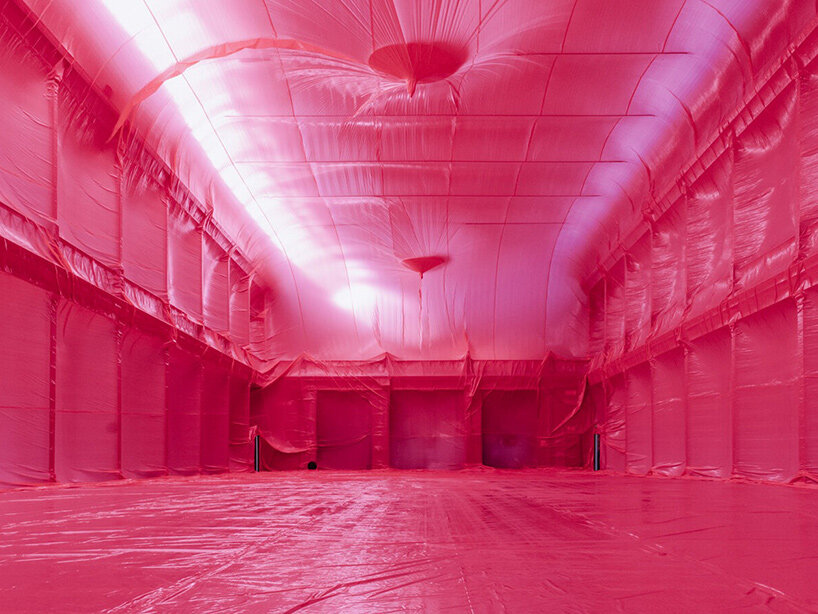
MATRIA, Melbourne, 2015. image courtesy Penique Productions
Color as structure
Penique Prroductions makes use of color as a primary spatial tool. With MATRIA (see here), installed within Melbourne’s Royal Exhibition Building, a saturated pink fills the entire hall, dissolving the building’s historic detailing into a continuous field. The columns remain legible as silhouettes, yet their material weight is replaced by a diffuse glow. Visitors move through a volume that reads less as a room and more as a thickened atmosphere, where light is filtered and redistributed through the inflated skin.
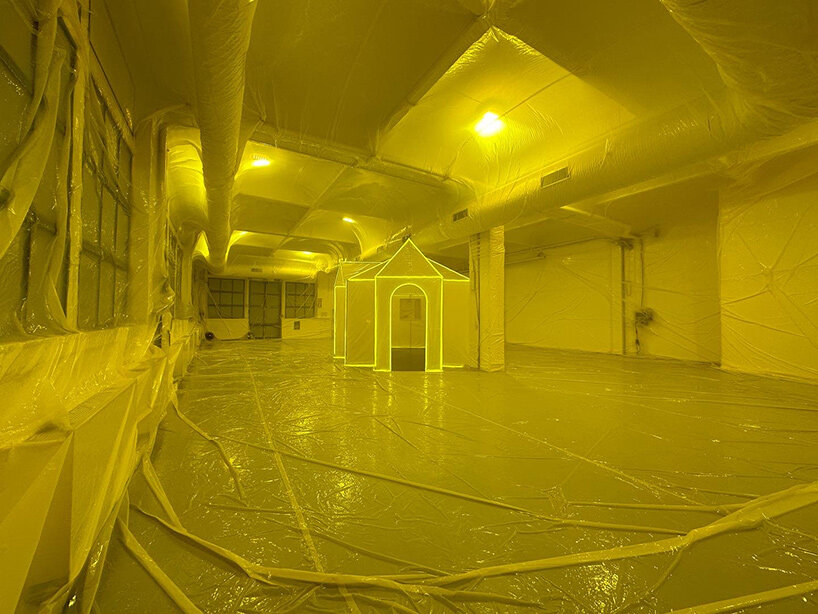
Giallo 368, Milan, 2023. image courtesy Penique Productions
A similar strategy appears in Giallo 368, where a dense orange shifts perception toward warmth and enclosure. The installation wraps seating, floors, and vertical surfaces in the same material, creating continuity between elements that would usually be distinct. The effect is physical. The air inside carries a slight pressure, the plastic holds a sheen that reflects and absorbs light unevenly, and the body registers the environment through temperature, acoustics, and proximity.
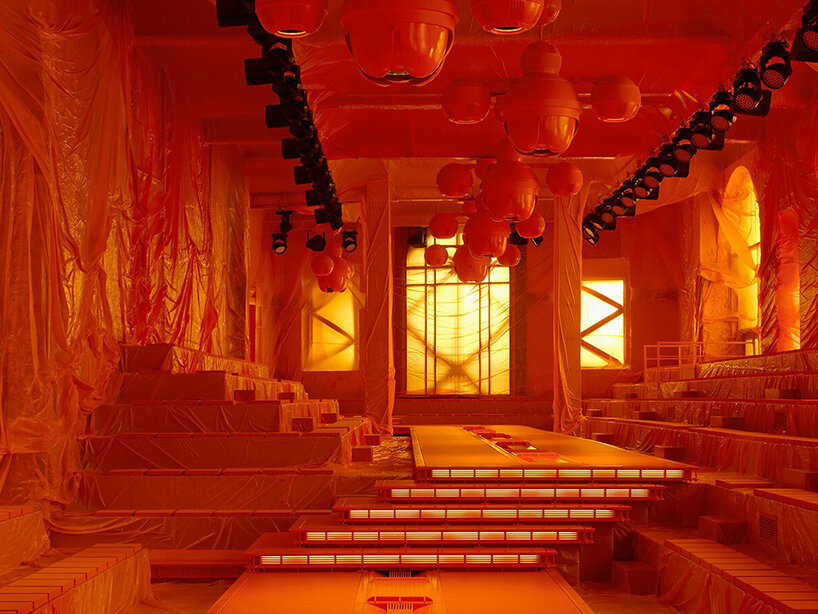
Louis Vuitton runway, Paris, 2024. image courtesy Louis Vuitton
Penique Productions often works inside buildings with strong identities, allowing those identities to remain visible while shifting how they are experienced. For the Louis Vuitton Spring Summer 2024 runway in Paris, the collective developed an inflated environment that hovered above and around the show space, echoing the logic of a hot air balloon. The runway becomes part of a larger volume, where overhead forms gather and release light, and the audience sits within a space that feels suspended.
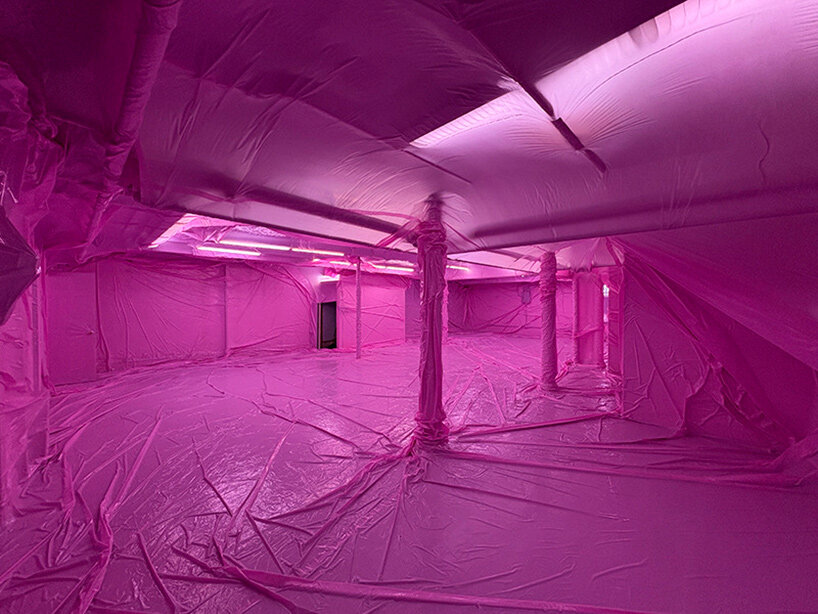
Basement, New York, 2025. image courtesy Penique Productions
Temporary worlds within permanent shells
These projects rely on a precise understanding of construction and logistics. The membranes are cut, welded, and installed with attention to airflow, pressure points, and safety. Openings are controlled, and circulation is guided through seams and thresholds in the material. Despite their softness, the environments are carefully engineered, balancing fragility with resilience over the duration of their use.
What remains after each installation is dismantled is the memory of a space that moved. The buildings return to their original state, yet the experience lingers as a shift in how volume, light, and enclosure can be understood. Penique Productions works in this interval between permanence and disappearance, where architecture holds steady and the air inside it becomes active.