Daylesford Hill House is a minimalist residence located in Daylesford, Australia, designed by Telha Clarke. The most telling decision here is what the house refuses to do. On an elevated north-facing site adjoining Wombat Hill Botanic Gardens, the obvious move would be to perform for the street, to announce arrival through scale and gesture. Telha Clarke does the opposite. Charred timber and native planting recede into the landscape, and the architectural language borrows from regional shed and rural forms rather than the inflated vocabulary of the contemporary Australian home. The result reads as a deliberate withholding. What the street denies, the interior eventually returns.
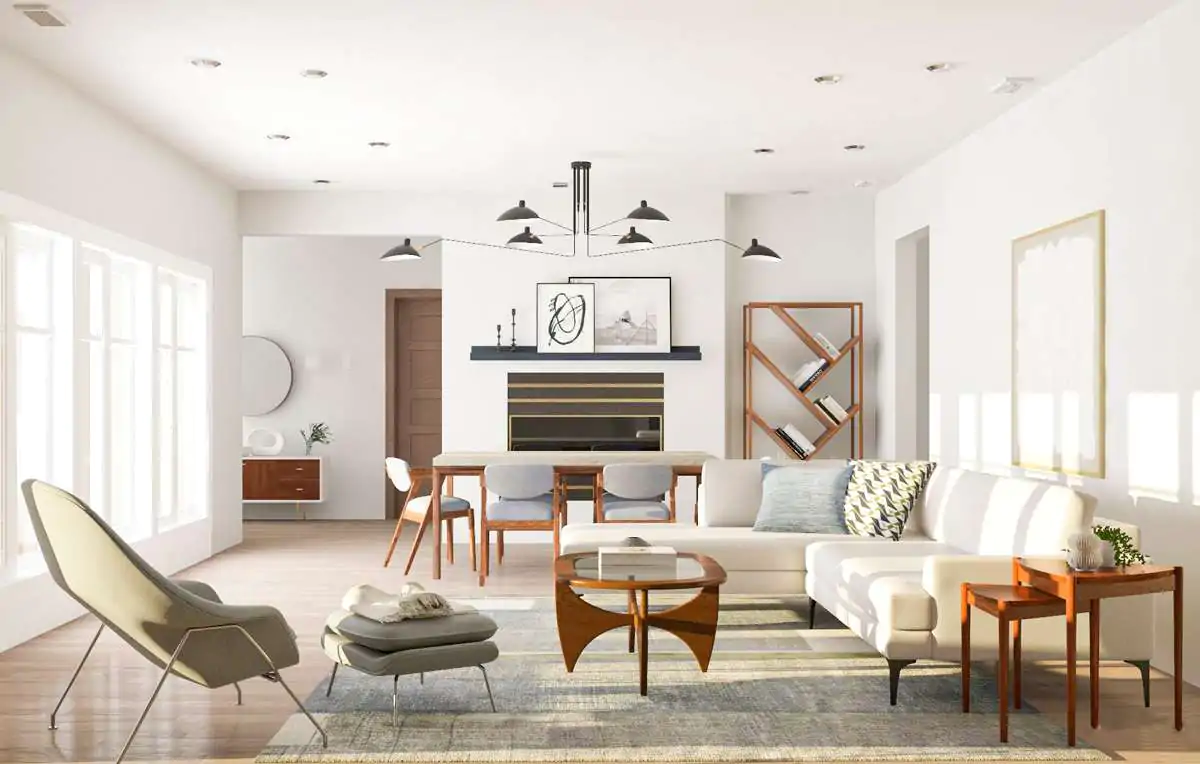
That tension between exterior reticence and interior generosity organizes the entire experience. Entry comes through a deep recessed threshold and a dark front door, a compression point that marks the passage from public to private the way a vestibule in a Roman house separated the world from the household. Fifteen steps in, the building releases its logic. A sequence of stepped volumes unfolds downward following the fall of the site, each one sunken and turned inward around a central courtyard. The choreography is precise: nine steps reach the kitchen, the social and operational heart, which opens directly onto the courtyard; two more steps drop to the dining space, which functions as a hinge; four steps below that, the living area settles into a sunken lounge, sheltered and quiet, a deliberate counterpoint to the activity above.
This section-driven approach is the project’s real intelligence. Rather than dividing rooms with walls on a single plane, the house uses changes in level to calibrate intimacy and energy. The conversation pit, a device that peaked in mid-century domestic architecture and has been quietly returning, finds a contemporary justification here. The drop into the lounge is not nostalgia. It is climate logic and social logic working together, sinking the most private space into the ground for thermal stability while signaling a shift in tempo through the body rather than through signage.
Artwork featured includes Kim Barter Mona Lisa, year unknown, David Larwill, Frenzy, 2002, and Cassie Hansen Public Art; Divided Public Opinion, 2022.