|

alpine’s alpenglow hypercar to run on hydrogen in endurance track race for the first time

alpine’s alpenglow hypercar set to race

Ahead of the six Hours of Spa-Francorchamps endurance track race in Belgium, Alpine is set to reveal the very first dynamic version of its hypercar, Alpenglow. Running on a hydrogen-powered internal combustion engine, Alpine’s Alpenglow is expected to be on the track at the Spa-Francorchamps race on May 11th, 2024, one day after the unveiling of its dynamic version and updated model design. Alpenglow offers a glimpse into the future of Alpine design in motorsport, as well as for future series production models of its hypercars, with its hydrogen-powered internal combustion engine aiming to improve its driving ‘tenfold,’ as described by the motorsport company.
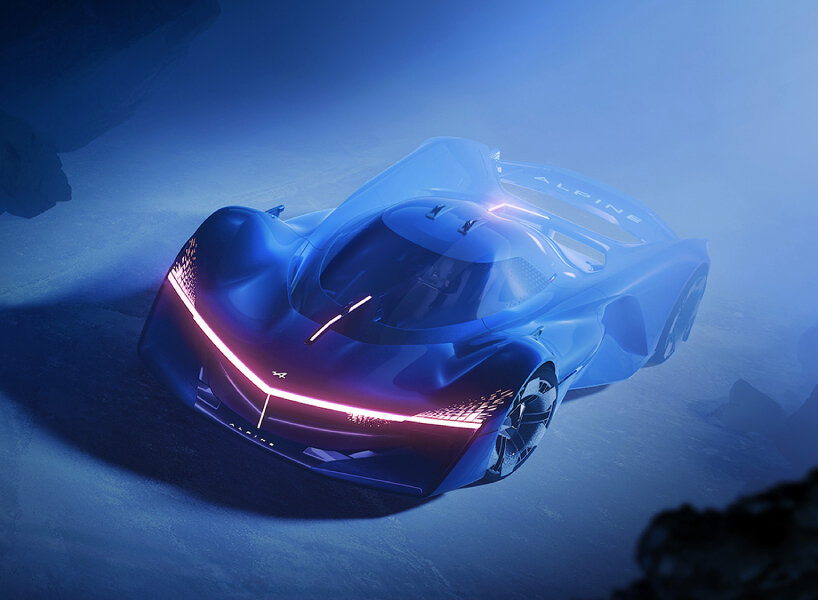
alpine alpenglow hydrogen hypercar
images courtesy of Renault Group and Alpine Cars

Hypercar emitting blue hydrogen vapor

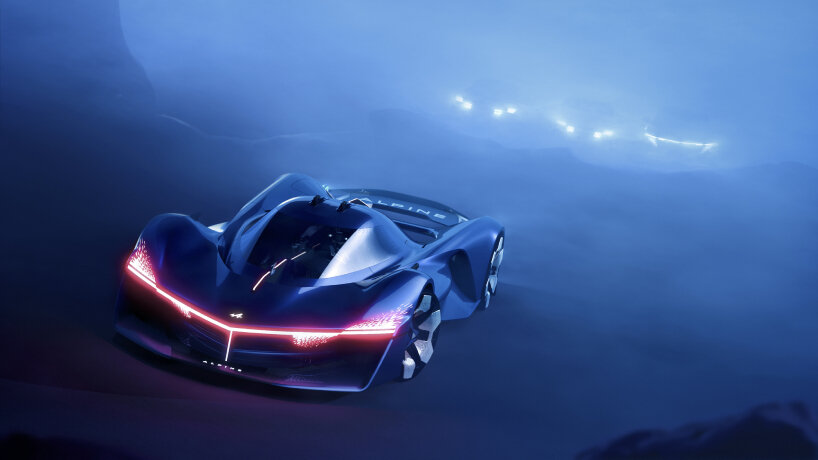
Alpine first introduced Alpenglow as a concept hypercar at the end of the Paris Motor Show 2022. This year, the hydrogen-powered vehicle is having its first endurance track race where visitors may be able to see Alpenglow’s signature light, starting with the streaks of red light at the front that extend to the rear. Blue is the primary color of the hydrogen hypercar, from the exterior down to the water vapor that the vehicle emits as it speeds away. Look at the front, and a shower of stars formed by triangular lights emerges from the four headlights, nodding to Alpine’s signature. Behind the hydrogen hypercar, Alpenglow’s blue-tinted lights remind viewers of its clean fuel too.
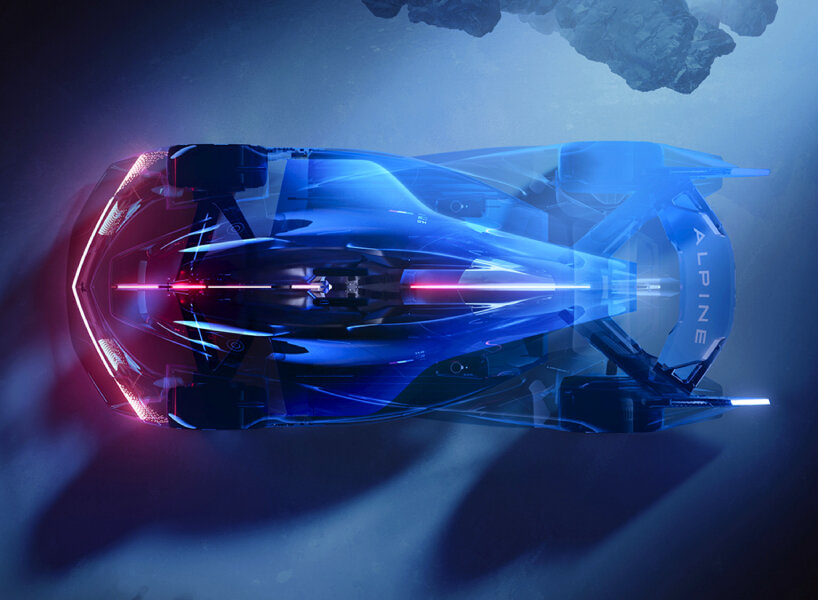
alpine alpenglow hydrogen hypercar
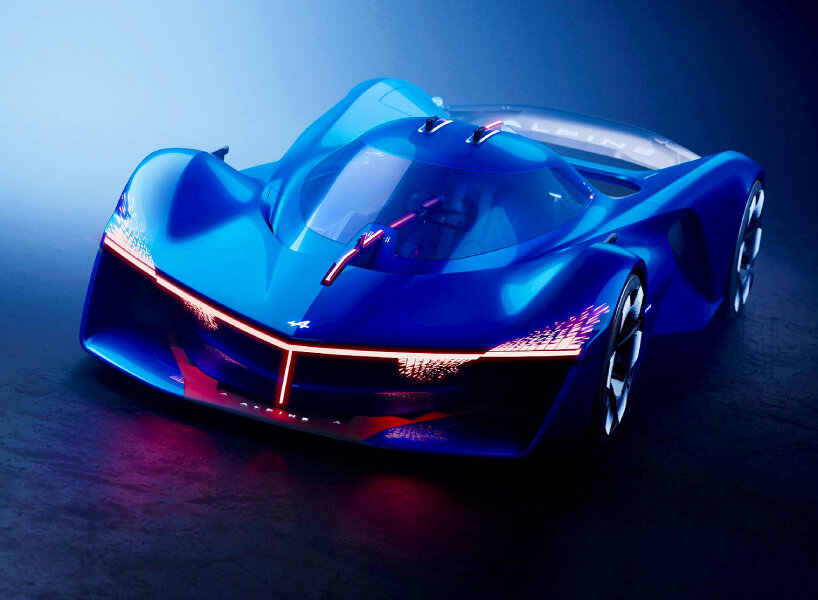
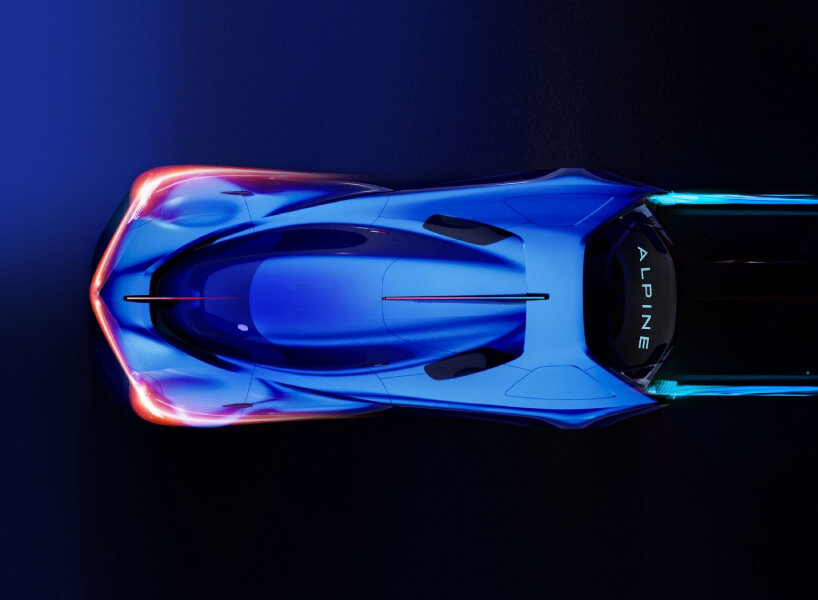
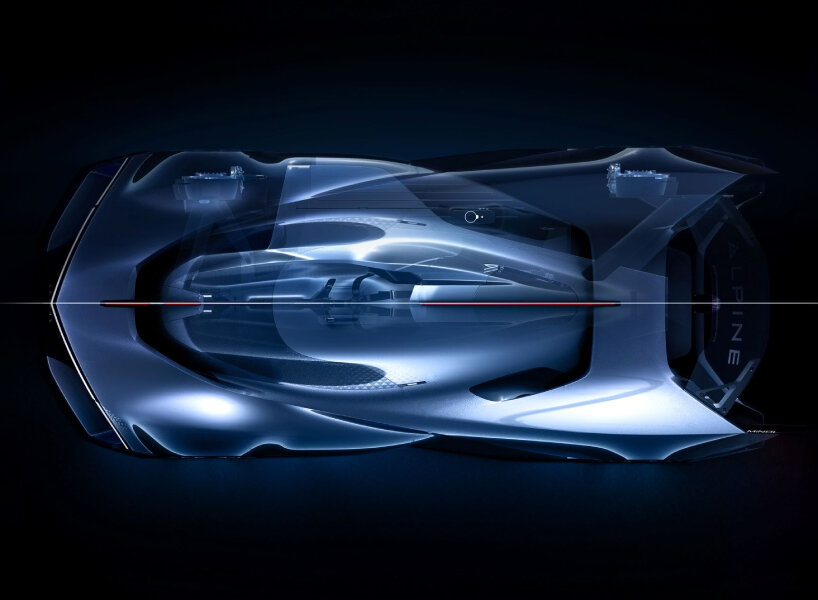
view from above

Overtake button for extra boost

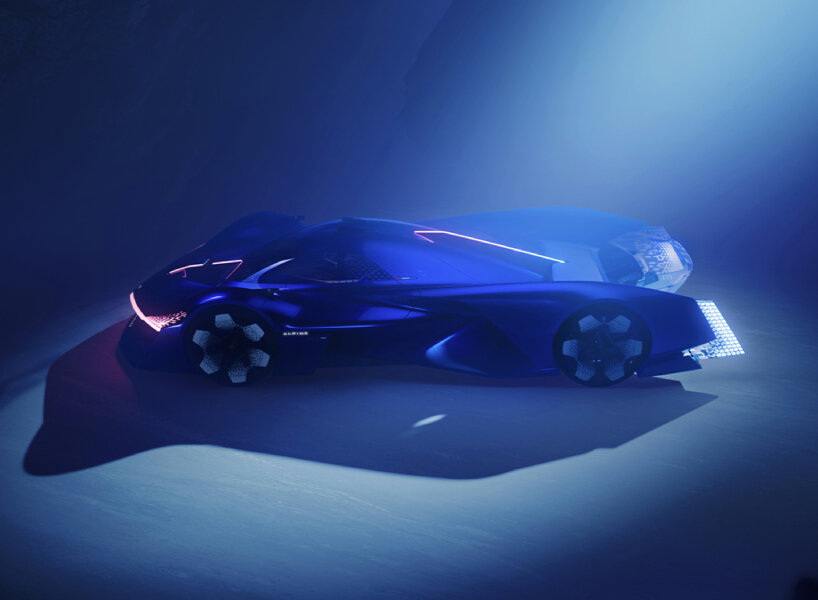
The single-seater Alpenglow is surrounded by two 700-bar cylindrical hydrogen reservoirs located on each side of the teardrop-shaped cockpit, which is colored blue and see-through. Inside, the steering wheel is reminiscent of the ones used for endurance and Formula 1 racing. Its geometric shape has two transparent selectors, with the controls ranging from Track Control to Regenerative Braking. There’s also an Overtake button for when the driver needs an extra boost as they drive. The hydrogen hypercar is dubbed lightweight by Alpine given its partly recycled carbon fiber parts and material usage. Its wheels have rims made entirely out of a transparent material too, and a triangle located in the middle of the rims features hydrogen too.
alpine alpenglow hydrogen hypercar
side view featuring rims made entirely out of a transparent material

The design of Alpine’s Alpenglow helps its aerodynamic performance, starting with its accentuated V-shape at the front and the bold line on the side for the air intake, which creates an aerodynamic tunnel. Lengthy tapered rear wings are said to further optimize the hydrogen hypercar’s aerodynamics, and this particular design is also an homage to Alpine’s A220 endurance model from the late 1960s. Since the two hydrogen tanks are on the side, they form a curvy silhouette that makes Alpenglow muscular and sculpted. As of publishing the story, Alpine has yet to reveal the final updated design of Alpenglow, ahead of the hydrogen hypercar’s real-life model on May 10th, 2024.
alpine alpenglow hydrogen hypercar
Alpine’s Alpenglow hypercar to run on hydrogen for the first time in an endurance race
alpine alpenglow hydrogen hypercar
the hypercar emits blue hydrogen vapor as it speeds away
alpine alpenglow hydrogen hypercar
a shower of stars formed by triangular lights emerges from the four headlights
alpine alpenglow hydrogen hypercar
view of the blue-tinted and see-through driver seat

Similar Posts

  • Kahua Kuili Residence

    The Kahua Kuili residence is a modern interpretation of the classic Hawai’i summer camp. In keeping with the firm’s design philosophy, the warm yet spacious retreat was designed with longevity in mind. Kahua Kuili incorporates centuries-old indigenous design elements paired with contemporary attitudes to create a residence that will remain relevant for generations to come. Located within the dry portion of the Kona Coast at the base of the large cinder cone Pu’u Kuili, the property offers expansive views of the Pacific Ocean and Kua Bay as well as mountain views of Hualalai. Previously the site of a working ranch, the transition to residence became an opportunity to return the majority of the landscape to its natural state: a mix of lava and bunch grasses. Inspired by traditional Hawaiian architecture, the 5,590-square-foot residence is composed of multiple structures that simultaneously provide privacy through their scattered arrangement and community through the open spaces between them. The camp-like retreat’s focal point is the main hale (Hawaiian for house), which provides a central gathering place for family and friends. The main hale opens to ocean views and the central, protected courtyard, enabling activity to flow easily between indoor and outdoor space, including to the adjacent pool and tiki bar. The bar/lounge area spills over into the pool, complete with multiple lounge chairs and breathtaking ocean views. A barbecue/luau area allows for gatherings of family and friends who can picnic under the comfort and shade of a magnificent kiawe tree. Deep roof overhangs define the transition between inside and outside and offer shelter from sun and rain. Outdoor spaces link the separate structures—guest quarters, studio, wash house, garage—to one another. The use of simple, durable materials, such as board-formed concrete, western red cedar, large sliding doors, operable wood ventilation louvers, and rope lashing help reinforce the camp-like aesthetic. Western red cedar was selected for its resistance to termites and dry rot as well as for the beautiful way it patinas with age. Natural stone cowboy walls surrounding the property help create a sense of privacy from nearby houses. The interiors, by Marion Philpotts, were designed in a comfortable, contemporary aesthetic with bright colors and retro elements that tie into the modern theme of the structure. The expansive cedar-clad kitchen features a breakfast bar, dining table, and state-of-the-art appliances. Tall ceilings, large windows, and grand sliding doors that open to the courtyard contribute to the casual ease of the house. Intimate spaces, which include cozy reading nooks and relaxing sitting areas, are scattered throughout the home. Kahua Kuili is the quintessential destination for relaxation, where one can unwind comfortably and in style, all while enjoying the natural climate and landscape of Hawaii. Project team
    Architect: Walker Warner Architects
    Interior Designer: Philpotts Interiors
    Landscape: David Y. Tamura Associates
    Builder: Maryl Construction
    Photography: Matthew Millman

  • Tunnel House: Brutalist Design Meets Green Contemporary Charm at this Brazilian Home

    Minimalism is an integral part of Brazilian design and concrete an essential component of this narrative. Combining brutalist design with contemporary minimalism and a whole lot of green, the Tunnel House designed by Consuelo Jorge Arquitetos offers the best of both worlds. Overall design of the house feels simple, clean and modern with wooden shutters […]

    You’re reading Tunnel House: Brutalist Design Meets Green Contemporary Charm at this Brazilian Home, originally posted on Decoist. If you enjoyed this post, be sure to follow Decoist on Twitter, Facebook and Pinterest.