|

cantilevered glass walkway by archermit hovers 130 meters over tibet’s canyon

archermit Suspends ‘Heavenly Road’ Over Canyon in tibet

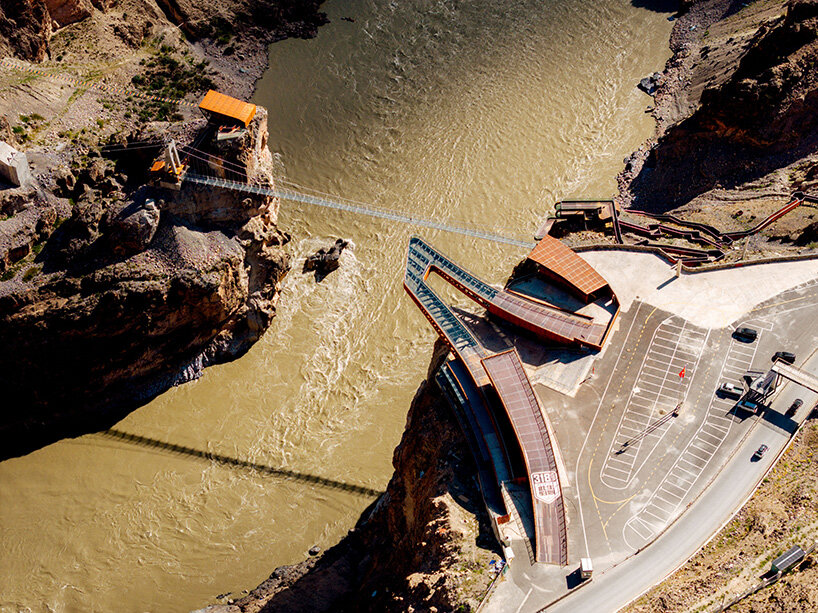
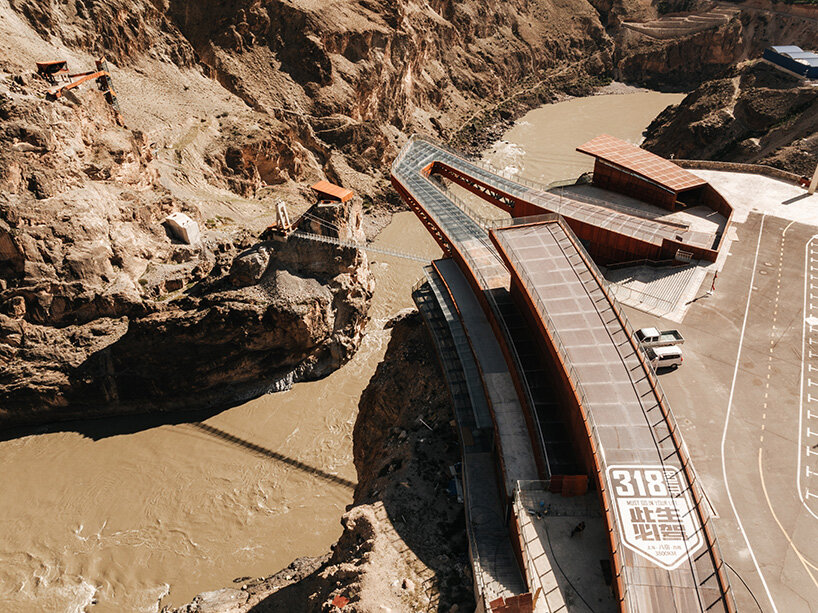
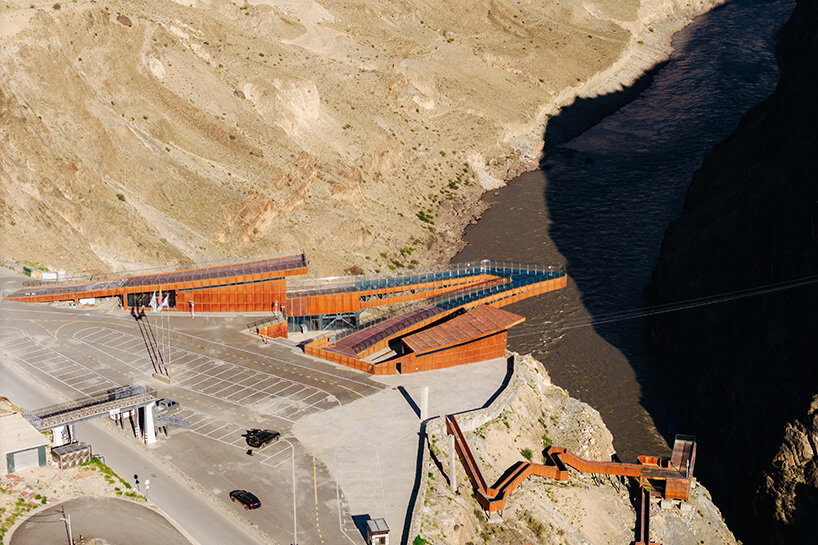
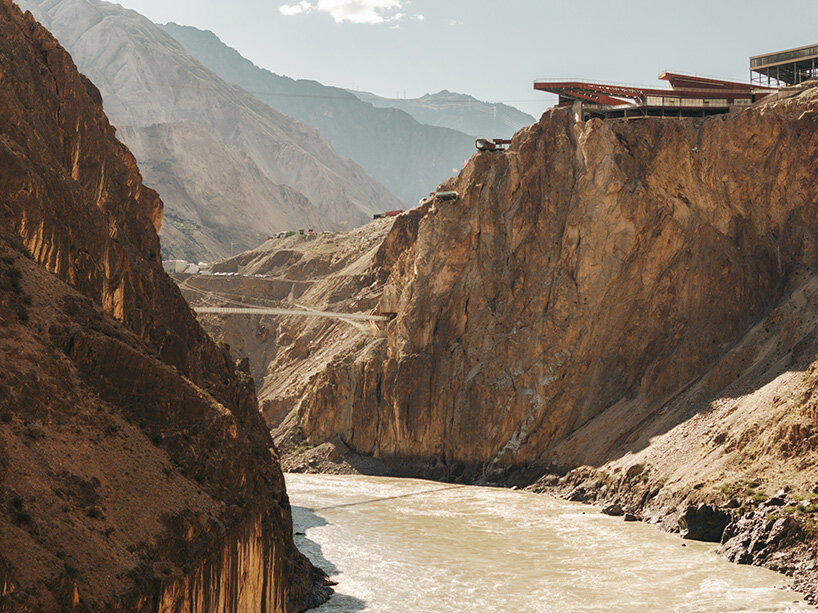
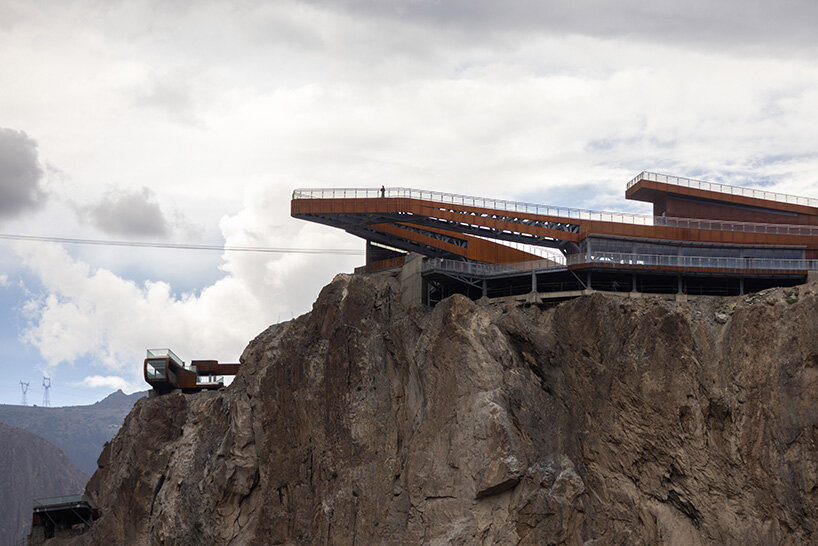
Archermit presents the Nujiang River 72 Turns Canyon Scenic Area in Tibet, an infrastructure that translates the peril and grandeur of the Sichuan–Tibet Highway into a visitor experience. Completed after six years of high-altitude construction, the project is located in Buze Village, Baxoi County, along the G318 Highway. It centers on a dramatic glass viewing platform cantilevered 37 meters from a cliff face above the Nujiang Grand Canyon, echoing the legendary hairpin bends of the ‘devil’s road’, the 72 turns of Nujiang.

The main structure of the project reimagines the infamous road’s serpentine layout as a walkable loop suspended 130 meters over the canyon. Its floor of ultra-clear laminated glass offers views into the abyss, while the red weathering steel cladding references Tibetan cultural colors and mirrors the rugged textures of the landscape. This precarious position transforms the driving ordeal of the 72 turns into a ‘heavenly road’ in the air that demands visitors measure danger with their own bodies.
cantilevered glass walkway by archermit hovers 130 meters over tibet's canyon
images by Arch-exist, unless stated otherwise

Channeling the highway’s construction legacy

The Chengdu-based team of Archermit suspends a glass bridge 50 meters above the Nujiang River, recalling the old steel bridge once feared by truck drivers and guarded for single-file crossings. Other installations include a zip line, the ‘thrilling steps’ bridge, and a 666-step ladder carved into the cliffs that reinterpret the methods and hardships of the highway’s builders, who in the 1950s faced landslides, hand-built cableways, and unstable geology with limited tools. 

Constructing the site itself became an act of endurance. Perched at 2,800 meters, the canyon offered little flat ground, narrow roads, frequent rockfalls, and relentless valley winds. Machinery longer than 13 meters could not be delivered, forcing the Chinese architects to develop customized drill bits to cut through the canyon’s variable rock layers. Thirty-nine piles for the viewing platform’s foundations were drilled manually, with workers secured by ropes as they chipped away rock 25 meters deep. Steel components were divided into 46 transportable sections and lifted across the river by a system of temporary cableways, echoing the highway’s original construction methods.

The project positions itself as a new waypoint on G318, China’s scenic avenue to Lhasa, adding to nearby landmarks such as Ranwu Lake and Laigu Glacier. 
cantilevered glass walkway by archermit hovers 130 meters over tibet's canyon
Archermit presents the Nujiang River 72 Turns Canyon Scenic Area in Tibet
cantilevered glass walkway by archermit hovers 130 meters over tibet's canyon
the infrastructure translates the peril and grandeur of the Sichuan–Tibet Highway into a visitor experience
cantilevered glass walkway by archermit hovers 130 meters over tibet's canyon
completed after six years of high-altitude construction
cantilevered glass walkway by archermit hovers 130 meters over tibet's canyon
a glass viewing platform cantilevers 37 meters from a cliff face | image by Chill Shine

Similar Posts

  • Home Indulgence: Luxury Bathroom Features to Turn Your Home into a Spa

    Staying home for prolonged periods of time can be difficult for every one of us. Of course, you can make it a whole lot easier with a house that exactly meet your needs and also wraps you in a bit of luxury! When it comes to productivity and functionality, it is smart home workstations and […]

    You’re reading Home Indulgence: Luxury Bathroom Features to Turn Your Home into a Spa, originally posted on Decoist. If you enjoyed this post, be sure to follow Decoist on Twitter, Facebook and Pinterest.

  • Award-Winning Sustainable Design In Stunning Washington State Residence

    Located in Bainbridge Island, Washington, this spectacular residence overlooks the Puget Sound and the Seattle skyline from lofty Yeomalt Bluff. A jewel of sustainable design, the Platinum House earned the first LEED Platinum certification in the state, outside of the City of Seattle. Coates Design Seattle Architects filled the Platinum House’s 2,500 sqft with innovative […]

    You’re reading Award-Winning Sustainable Design In Stunning Washington State Residence, originally posted on Decoist. If you enjoyed this post, be sure to follow Decoist on Twitter, Facebook and Pinterest.

  • Add/Subtract House

    The Add/Subtract House is derived from the stereotomic operation of subtracting from and adding to a solid volume to enable specific programmatic relationships and daylight conditions. Sited on a typical 50’x150’ single-family residential lot in Austin, Texas, the design questions the standard house massing and arrangement by stretching along the length of the lot. Rather than single the dichotomy of front yard and backyard, the design establishes smaller courtyards, hardscapes and softscapes at various scales to relate to individual rooms. The external material palette (standing seam metal, tongue & groove wood paneling, and stucco) is applied to reinforce the distribution of individual program elements. Each material is composed into folding planes which capture space and define zones throughout the house. Every room in the house benefits from natural light from at least two sides as daylight is modulated throughout, offsetting the need for electric light during daylight hours and allowing occupants to more directly track seasonal and daily patterns.