designboom explores osaka art & design 2024
The second edition of Osaka Art & Design is in full swing, transforming the bustling city into a vast showcase spanning nearly 50 public art venues. Under the theme Expanding Resonance, the festival fosters interaction and collaboration among creatives from Japan and around the world. It celebrates open expressions of beliefs, liberation from constraints, and a spirit of solidarity. During our visit to the vibrant event, designboom delved into various locations and the creative worlds they reveal, from Maki Takato’s inflatable Hopeful Monsters, and a colossal tree installation on the ceiling of a Umeda concourse to the dynamic neon light exhibition in the living room of the W Osaka hotel. Read more below to discover the projects that caught our eye.
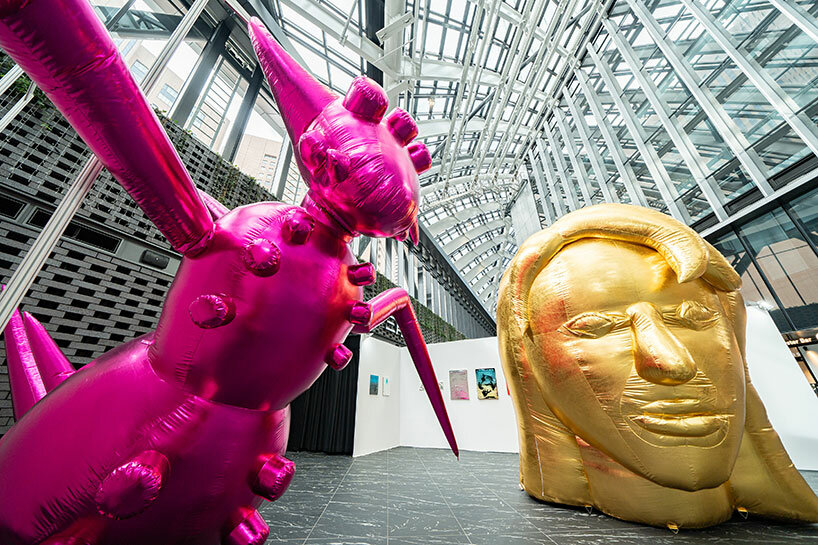
Hopeful Monsters by Maki Takato | image courtesy of Osaka Art & Design
Ray Kudo presents ‘VAPID’ at W Osaka
Emerging artist Ray Kudo (find more here) presents his exhibition, VAPID, in the living room of the W Osaka luxury hotel (find more here). This exhibition features a series of neon light installations centered around the color black. The inspiration for VAPID comes from stories about Osaka merchants during the Edo period (1603-1867), when luxury was banned, and clothing was strictly regulated. These fashion-savvy merchants would line their kimonos with rich, sumptuous designs and prints, and Kudo captures their playful spirit in his vibrant neon artworks.
W Osaka is designed by Tadao Ando with the concept of an adult playground. The building’s minimalist black exterior contrasts with its opulent, colorful interior, which is filled with artistic designs and decorations inspired by Japanese culture and the four seasons.
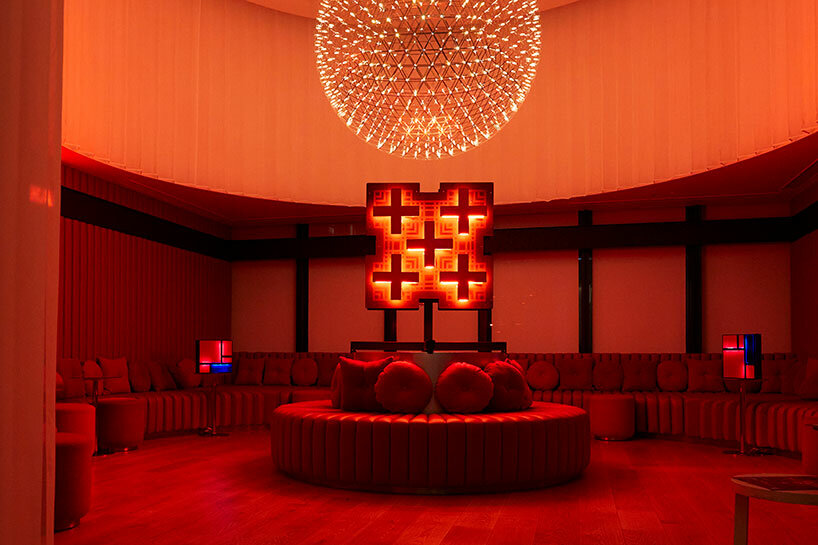
VAPID by Ray Kudo at W Osaka | image courtesy of Osaka Art & Design
Inflatable hopeful monsters by Maki Takato
Visual artist Maki Takato (find more here) has created a series of intriguing inflatable objects, including a colossal gold face inspired by the artist herself and a pink and red insect hybrid monster, which are currently on display at Nankai Namba Station in Osaka. The Air Sculpture Series features fabric balloons that change shape with the air, animated by internal sensors that respond to their environment, bringing these monsters to life. This dynamic installation encourages viewers to become aware of their own physicality and engage in self-reflection.
The installation delves into the boundaries between human and non-human, nature and technology, and physical and non-physical entities from a mythological and ethnological viewpoint. The central piece, Hopeful Monster, explores the question: ‘What forms might life take when infused into the dissonance within everyday scenes?’ Historically, the Japanese personified emotions like discomfort and fear, along with inexplicable phenomena, into Yokai—pop culture characters—sharing them within their communities to foster empathy. Takato’s work updates the theme of Yokai for the modern era, depicting the myth of a woman transforming into a new life form with designs reminiscent of spiders and ants.
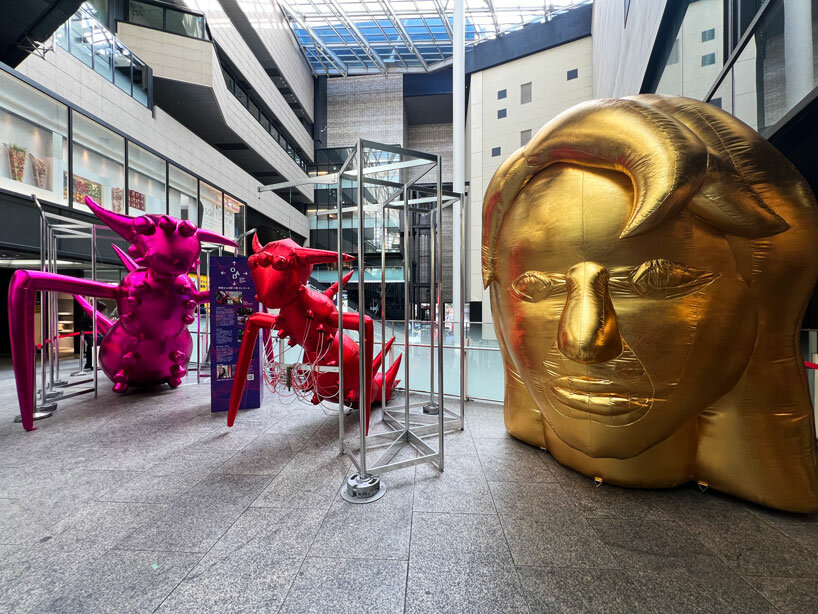
Hopeful Monsters by Maki Takato | image © designboom
immersive textile installation ‘Nuno Nuno’ by we+
The immersive installation Nuno Nuno at the Takashimaya Osaka Store showcases the expressive textiles of the Sudo-led company NUNO (find more here). Designed by Reiko Sudo, renowned for her innovative textile creations, and the contemporary design studio we+ (find more here), this installation fills the space with textile cubes of different patterns, textures and hues. The exhibition highlights four key production areas in NUNO’s collections—Kurume, Tsuruoka, Kyoto, and Kiryu—expressing the dynamic energy of modern Osaka. Featuring textiles related to light, such as ‘kira kira’ (sparkling) and ‘suke suke’ (translucent), the installation reflects the city’s vibrant future.
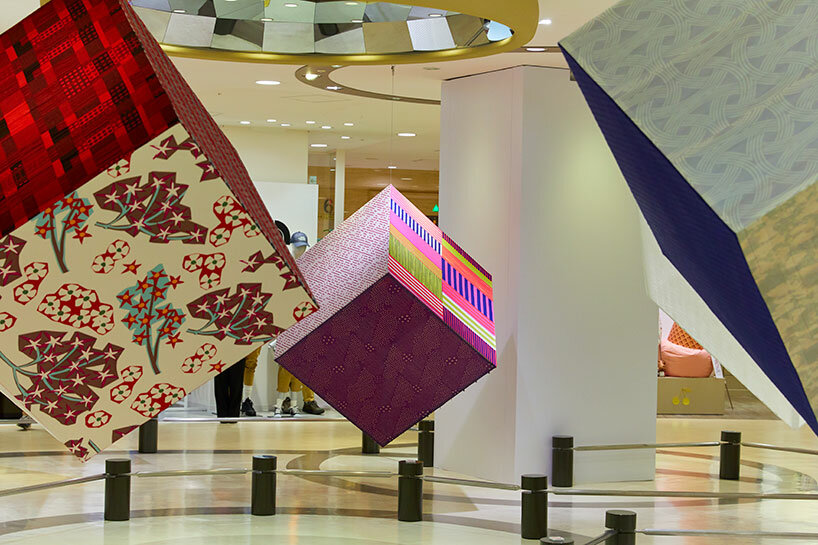
the Nuno Nuno installation at the Takashimaya Osaka Store | image courtesy of Osaka Art & Design
the final chapter of Kota Mochizuki’s Green Seed installation
GREEN SEED is a large, time-limited greenery installation exhibited on the ceiling of a concourse in Umeda, a bustling area in Osaka. The concept envisions a lush world emerging in the middle of a big city in early summer, with a wide variety of plants thriving together. These vibrant plants symbolize human-nature coexistence and hope for the future. Since its inception in 2022, this annual early-summer project has captivated passers-by. In its third year, the Final Chapter, the Seed will grow into a Big Tree, marking the project’s culmination.
Covering the entire ceiling of the 9-meter-tall and 16.5-meter-wide concourse, this year’s installation features the roots of a large tree. The roots, holding the soil, represent the embrace of people’s dreams and hopes. The Final Chapter of this installation is supervised by Kota Mochizuki (find more here), a flower artist who focuses on eco-friendly approaches, with the 2024 installation including artificial flowers made from recycled plastic bottles.