floating oculus installation shimmers in shifting chromatic light above brooklyn’s streets

Atelier Sisu presents Splendour at The Other Art Fair Brooklyn

Atelier Sisu, led by Renzo B. Larriviere and Zara Pasfield, presents Splendour as the centerpiece of The Other Art Fair Brooklyn, NY. The installation continues the studio’s exploration of ‘art-chitecture,’ a practice that merges the principles of art and architecture through immersive, site-responsive structures.

Splendour takes the form of a large floating oculus, composed of inflatable oval segments suspended in the air. The surface is clad in dichroic material, which refracts and reflects light differently depending on the time of day and angle of view. As sunlight shifts, the sculpture’s color spectrum transitions from cool iridescence to warm tones, creating a shifting chromatic environment that evolves with its surroundings.

floating oculus installation shimmers in shifting chromatic light above brooklyn's streets
all images courtesy of Atelier Sisu

suspended Oculus installation explores light and material

By evening, integrated lighting transforms the installation into a luminous structure that interacts with the ambient urban context. The work by Sydney-based design studio Atelier Sisu examines how light, color, and material can define spatial perception, emphasizing the changing relationship between the natural and built environments. Through its optical and structural composition, Splendour situates itself between sculpture and architecture, inviting viewers to engage with light as both material and experience.

floating oculus installation shimmers in shifting chromatic light above brooklyn's streets
Splendour by Atelier Sisu anchors The Other Art Fair Brooklyn
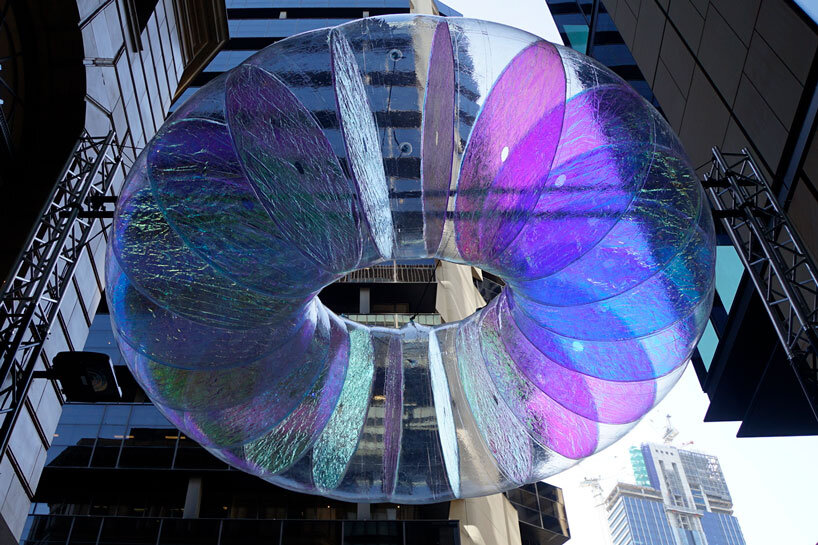
floating oculus installation shimmers in shifting chromatic light above brooklyn's streets
a floating oculus installation explores the interplay of light and material
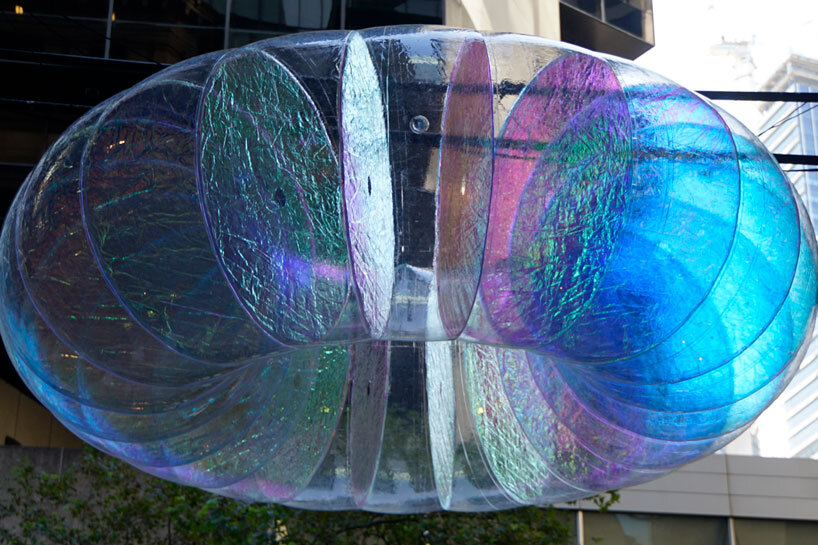
floating oculus installation shimmers in shifting chromatic light above brooklyn's streets
oval segments suspended in air form the structure’s core geometry

Similar Posts

  • Westwood House

    Located in the Blue Ridge Mountains of Asheville NC with distant north views of Mt Spivey and a narrow sloping lot, this wedge-shaped home is a response to site. We took into careful consideration a variety of site-specific inputs including views, sun orientation, prevailing winds, privacy, and natural cooling/heating techniques among others. The result is a functional, energy efficient home with a distinctive exterior shape and warm light filled interior spaces. The home’s dominant shed roof maximizes solar orientation for photovoltaic panels while also allowing for a double-height central atrium to flood the core of the house with natural light and exhaust hot air on hot summer days. The introduction of natural light into the core of the house reduces the need for artificial lighting on cloudy days, while the chimney effect created by opening large operable skylights at the top of the atrium reduces HVAC loads by bringing cool air up from the basement. This central atrium is an example of how a design feature can multitask –it brings natural light deep into the core of the house, it cools the house using the chimney effect, and it provides a place to grow plants which filter interior air. It also allowed us to minimize the street facing windows for privacy while still maintaining a light filled interior. Anchoring the bottom of the atrium are four large arched openings and a Spanish terracotta tile floor. The tile floor is a durable surface good for watering plants and for heavy foot traffic. A keyhole opening marks the boundary between private and public sides of the house while two of the arched openings frame an intimate eating nook and entry foyer with walls covered in locally milled southern yellow pine. The last arch has steps spilling out into a sunken living room and kitchen area with access to a back deck. Locally milled cypress, a naturally rot resistant wood, covers the exterior and anchors the strong geometry of the house to the site. In the end, our desire for functionality created something more than just an energy efficient home. The interior took on an unexpected bohemian feel; one that originated from a desire for light and functionality, but resulted in warm soft interior spaces that were comfortable and welcoming.

  • The Invisible Order of Daily Life

    This is an old apartment with 40 years of history. The designer rotated the original axis and redesigned the structure in order to integrate the confusing flow line. There was only a single side of light in this space, after the rearrangement, the three sides of light, air and natural were introduced into the space giving the old house a new look. The designer tried to expose the original beams in the open space and colored the lowest beams with grey, which goes with the façade, so as to weaken the protruding beams. Also showing the natural beauty of the original structure within the space. On the other hand, there is no over-decorated design in the bedroom and the other rooms, only using the simple point-line-plan structure and non-chromatic to create a balanced picture. On the flow line planning, the designer integrated the main entrances of five rooms into one hallway. Using spray painting, wallpaper, secret doors, and sliding doors on the aisle space, which used to be confusing at the first place, to hide the appearance but also maintain its function. The design enlarged the space and made it return to the original strength and essence.