Gallery Residence

This project was a full renovation of a 1970’s ranch house. The original house was chopped into multiple small, disconnected spaces. In the nineties a large and awkwardly placed addition was built to capitalize on the lake view. FORWARD was tasked with trying to navigate the constraints of the existing condition along with negotiating the desires of the artist clients, one of whom wanted a contemporary minimal interior while the other, a collector, was more interested in the distinct rooms of the turn-of-the-century houses. The finished house is a series of discreet rooms that are continuously linked. The entry space acts as a gallery and has been widened to create a clear relationship to the addition. What had been the original house has now been divided into kitchen, a combined living/dining room, and an office/guest bedroom. In the bedroom wing, a new master was created out of two smaller existing bedrooms. The house acts as a container for the owner's collections. It is contemporary, minimal and spatially open, but at the same time affords the distinction of traditional rooms.

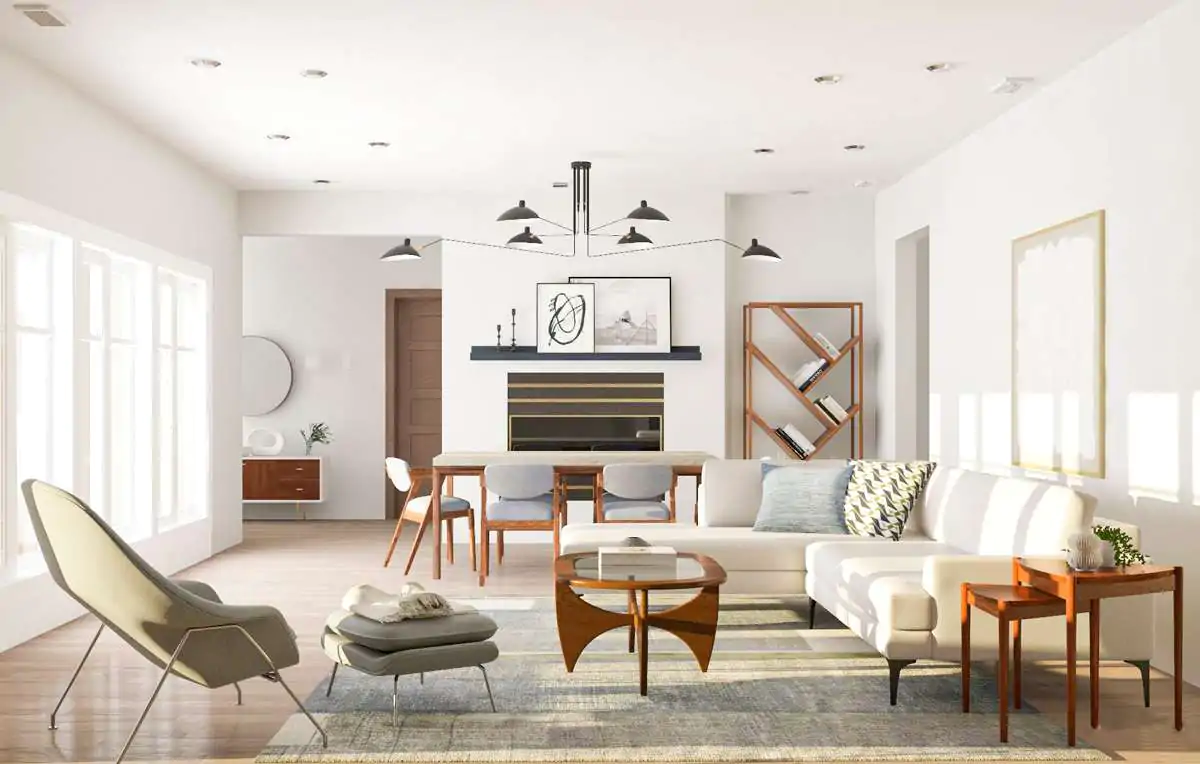
Front entry and living area.
Living/dining area and kitchen.
Dining area with view to kitchen.

See more on Dwell.com: Gallery Residence – Weatherby Lake, Missouri

Homes near Weatherby Lake, Missouri

  • BauLinder Haus
  • Modern Lodge
  • The Neon Flamingo

Similar Posts

  • Jungle Keva

    Situated in Tulum, this small boutique hotel rises between the trees, in which the main concept consisted in preserving 70% of the existing vegetation in order to build around it. By achieving this, every space of the project is always in relation to its natural surroundings. The hotel has five 50m2 lodges, formed by a double height room, a mezzanine or “tapanco”, a terrace and an indoor-outdoor bathroom. At the back of the lot the social areas are located, with a dining space and yoga pavilion hanging in cantilever over the pool. The main idea of this water element is to be extruded from the ground in between the vegetation. For this reason, two old zapote trees were preserved, which look as they were rising from the pool itself. All the project is composed by local materials, as well as low maintenance and natural textures, which provide a warm atmosphere to the buildings. A particular finish found on the walls is “chukum”, a Mayan stucco characteristic of the region, which uses a tree resin to give its distinctive color, appearance and durability. The objective was to use materials that age with dignity, so that with the passing of time the architecture acquires character and a deeper sense of belonging. The different volumes of the complex are scattered along the lot, between the trees and stone paths, which provide a sensation of being in a small village in the Mayan jungle. Throughout the design process there was a search for pure forms and natural materials that could blend with the surrounding context. In a sense, Jungle Keva is like an abstraction or simplification of vernacular architecture, easy to read, simple and with a social, natural and economic conscience.