|

Hangzhou’s Upcoming Art Museum Meanders Across Waterfront Like a Flowing River

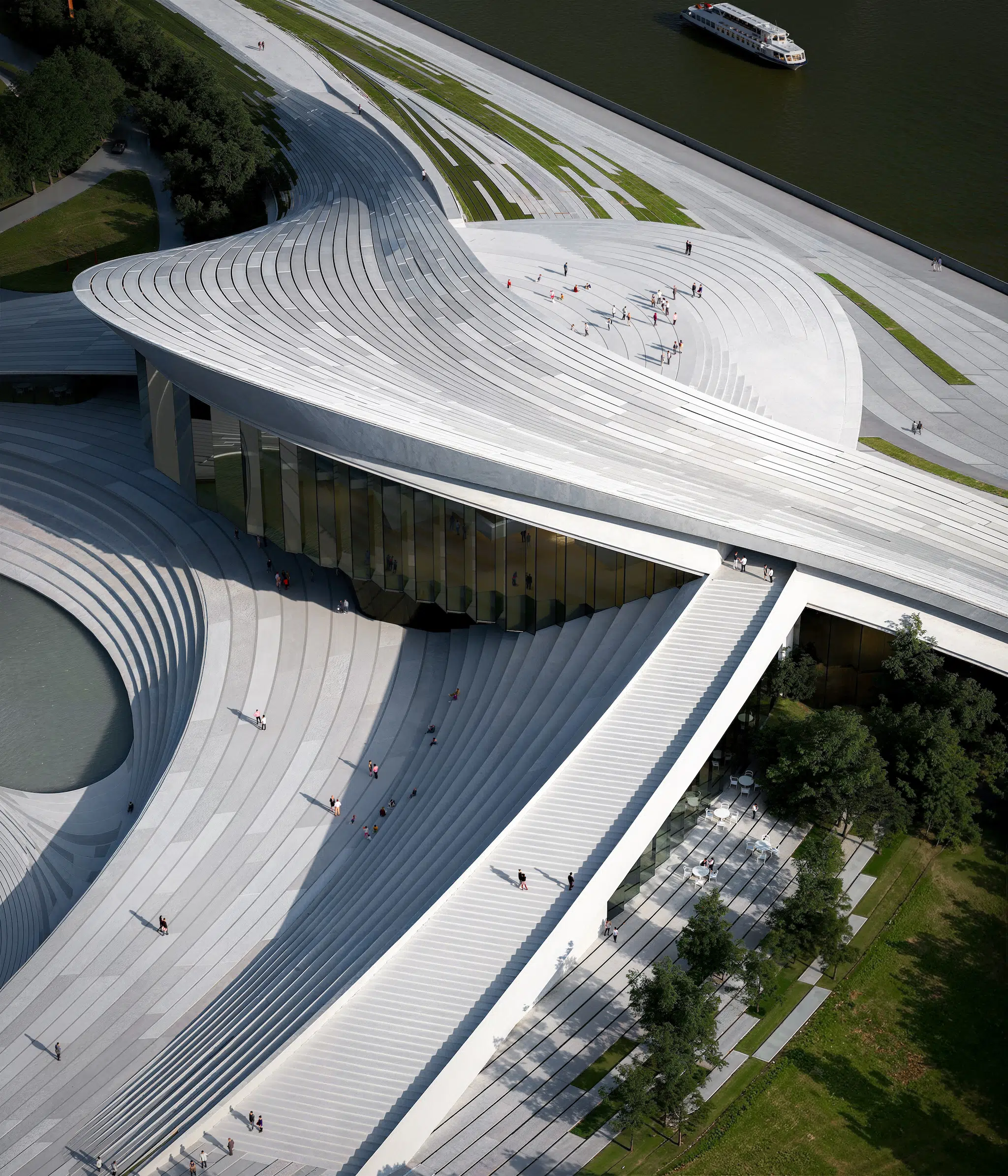
Exterior view of Snøhetta’s design for the Hangzhou Qiantang Bay Art Museum in ChinaExterior view of Snøhetta’s design for the Hangzhou Qiantang Bay Art Museum in China

Photo: ATCHAIN and Snøhetta

Nestled beside the Qiantang River in Hangzhou are a series of ambitious downtown developments. These new buildings snake along the river, offering stunning views of the nearby waterways. In the coming years, yet another structure will join this budding skyline: the Hangzhou Qiantang Bay Art Museum. Spearheading the museum’s design is Snøhetta, the Oslo-based architecture firm behind such renowned projects as the Oslo Opera House, Egypt’s Bibliotheca Alexandrina, and Times Square’s 2017 transformation.

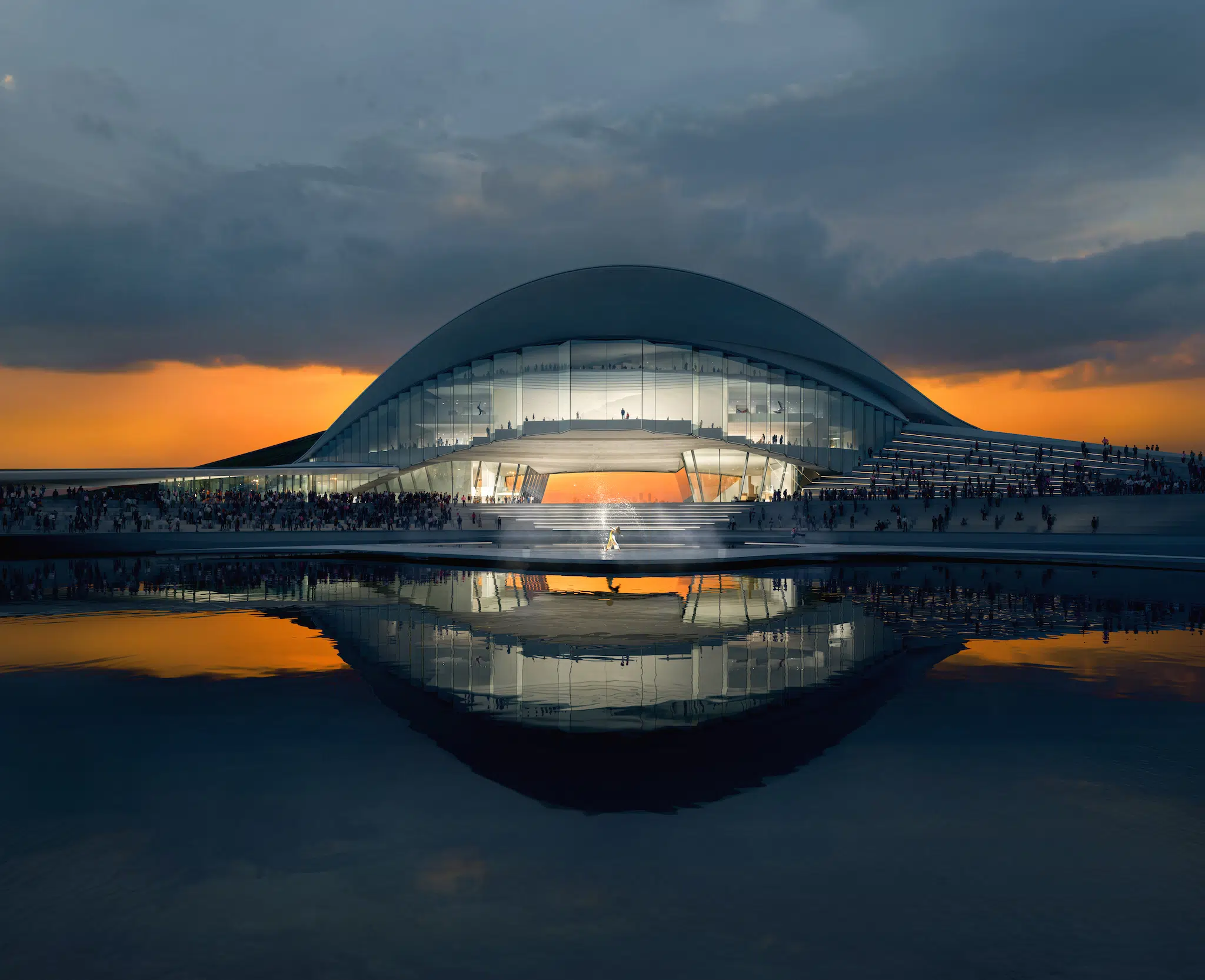
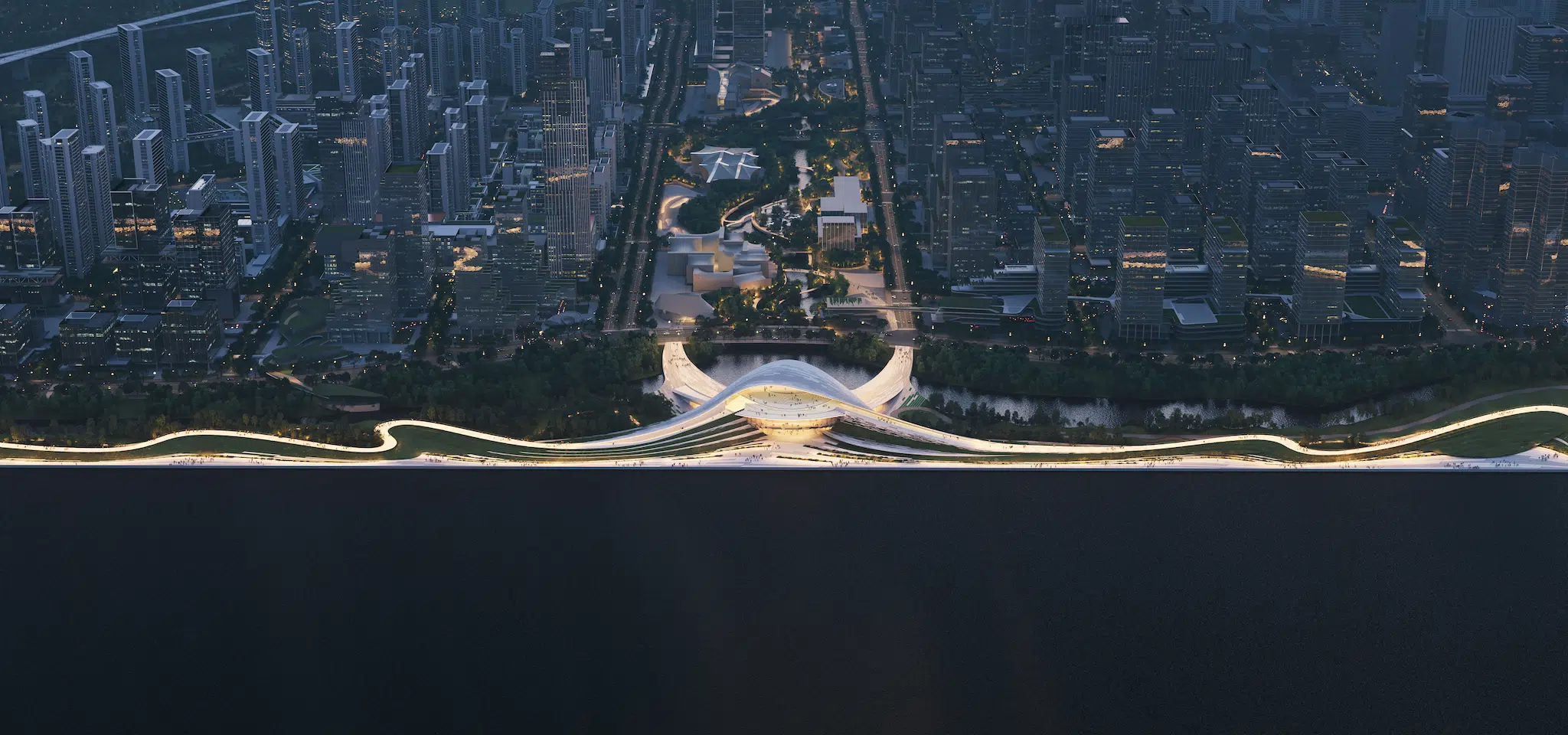
Per renderings recently released by Snøhetta, the Qiantang Bay Art Museum will be radically informed by its natural environment. The museum’s architecture takes most of its inspiration from the Qiantang River, reinterpreting its meandering path through a rhythmic silhouette, sleek arches, and organic forms. At the heart of the design are two wave-like volumes, woven together into circulation routes that connect at a central node. Perched directly above is a lush rooftop terrace, where visitors can indulge in the waterfront vista ahead of them.

At 18,000 square meters (about 194,000 square feet), the museum is effectively organized into two sections, each joined by fluid walkways that cut through the surrounding landscape. To the north, leisurely promenades twist through the riverscape, ultimately leading to the rooftop skyline. To the east, bridge-like paths seamlessly guide visitors from an urban to a cultural setting, while a central gateway positioned at the museum’s ground level further solidifies this threshold motif. In other words, this gate serves as both a spatial and symbolic gesture, where passing beneath it mimics the transition into nature, creativity, and beauty.

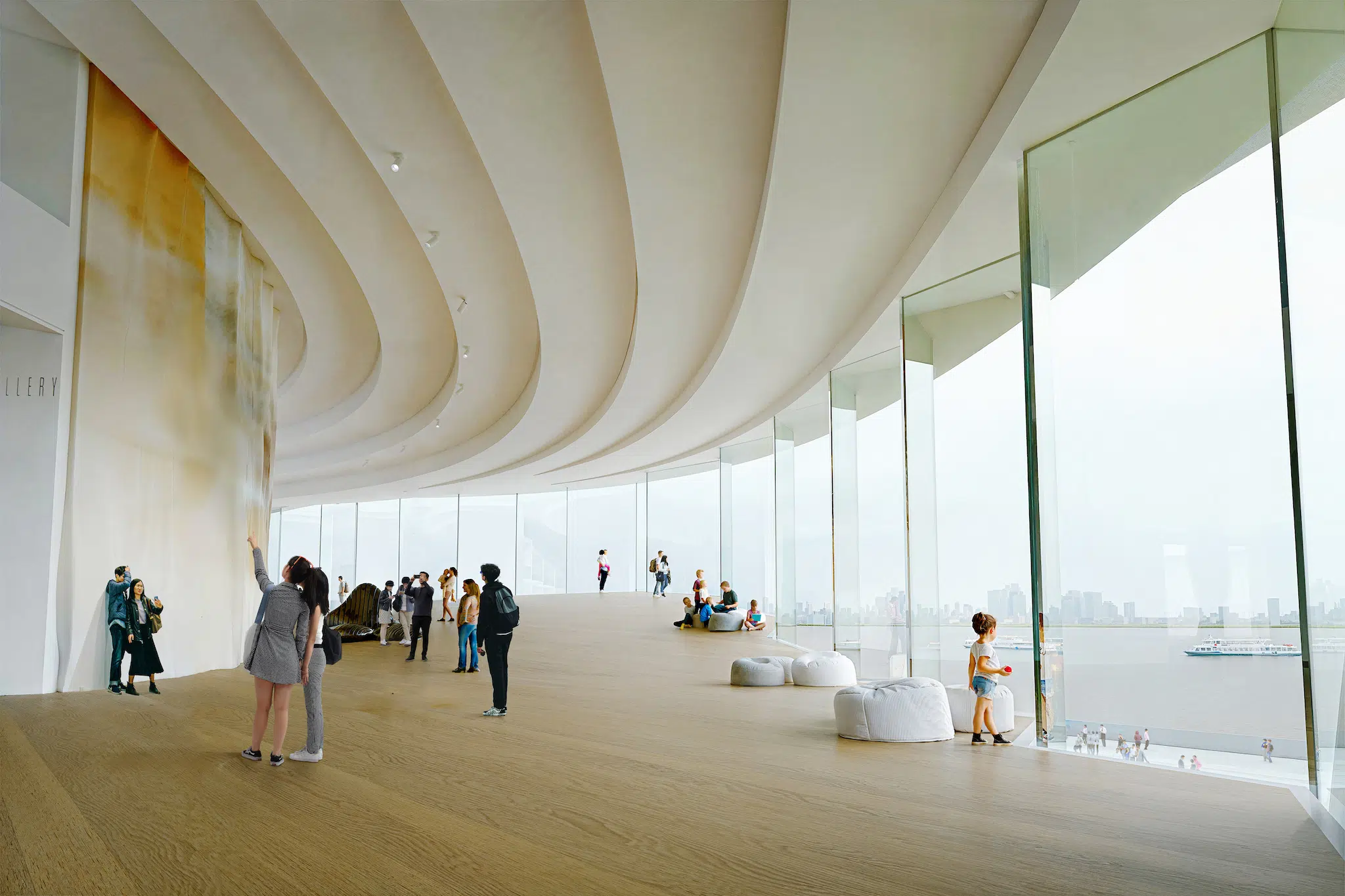
Taken in its entirety, Snøhetta’s vision for the Qiantang Bay Art Museum is highly sculptural, coexisting rather than competing with the Qiantang River. Inside, this philosophy continues, expressed through generous public spaces for social, educational, and communal gathering.

“[Our] design captures the essence of the site’s distinctive context, utilizing architecture and landscape as a bridge to seamlessly connect nature and city,” Snøhetta explains. “With [this museum], we aim to ignite a spark for arts and creativity that pays homage to the city’s iconic Qiantang River.”

Snøhetta only recently won the competition to craft the centerpiece art museum for the Qiantang Bay Future Headquarters, so it has yet to announce a construction timeline. To stay updated on the project’s progress, visit Snøhetta’s website and follow the firm on Instagram.

Snøhetta has won the competition to design the Qiantang Bay Art Museum in Hangzhou, China, nestled beside the meandering Qiantang River.
Exterior view of Snøhetta’s design for the Hangzhou Qiantang Bay Art Museum in ChinaExterior view of Snøhetta’s design for the Hangzhou Qiantang Bay Art Museum in China

Photo: ATCHAIN and Snøhetta

Exterior view of Snøhetta’s design for the Hangzhou Qiantang Bay Art Museum in ChinaExterior view of Snøhetta’s design for the Hangzhou Qiantang Bay Art Museum in China

Photo: ATCHAIN and Snøhetta

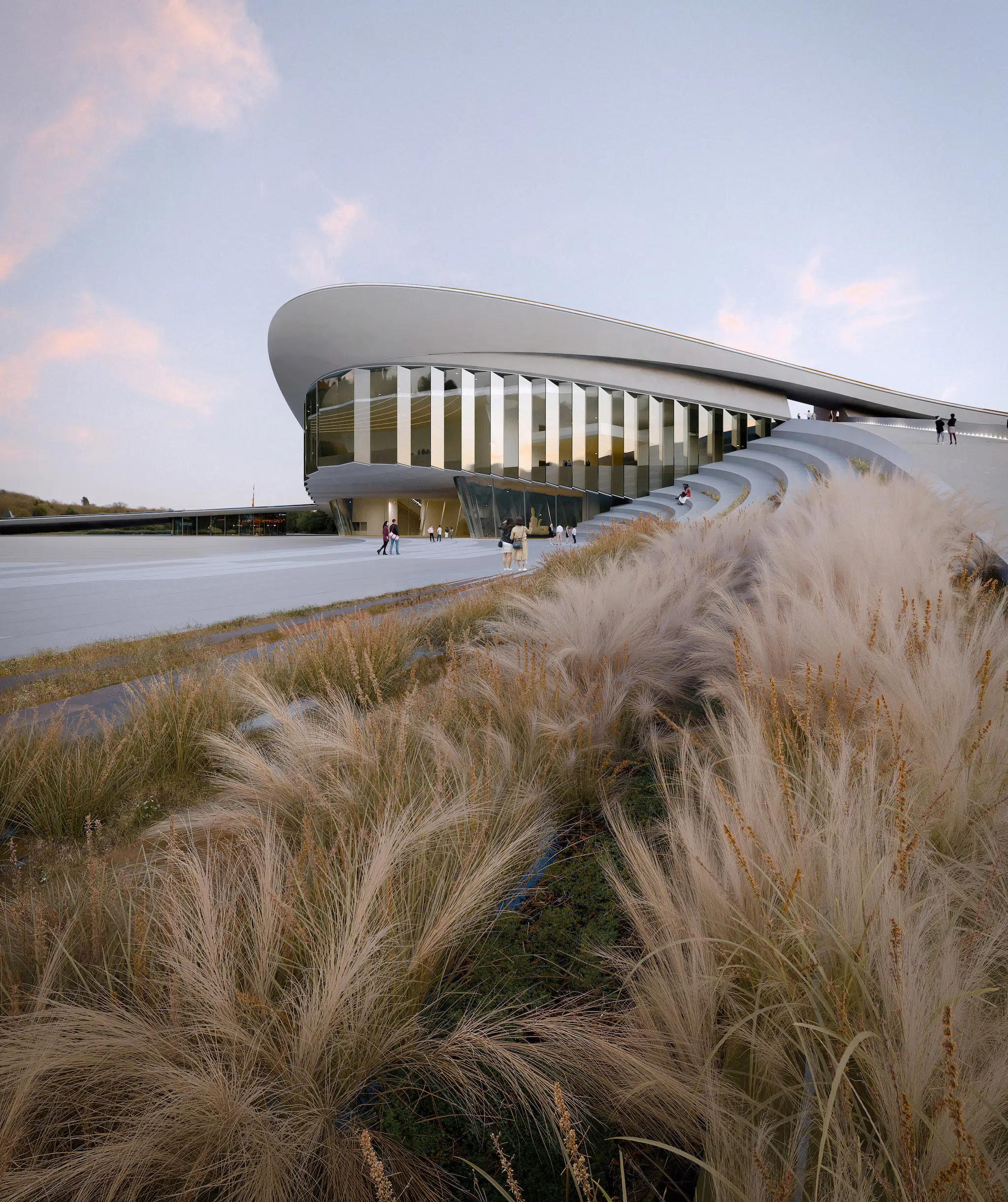
Given its stunning waterfront location, the Qiantang Bay Art Museum is heavily inspired by organic forms, sleek arches, twisting pathways, and bridge-like motifs.
Exterior view of Snøhetta’s design for the Hangzhou Qiantang Bay Art Museum in ChinaExterior view of Snøhetta’s design for the Hangzhou Qiantang Bay Art Museum in China

Photo: ATCHAIN and Snøhetta

Interior view of Snøhetta’s design for the Hangzhou Qiantang Bay Art Museum in ChinaInterior view of Snøhetta’s design for the Hangzhou Qiantang Bay Art Museum in China

Photo: ATCHAIN and Snøhetta

Exterior view of Snøhetta’s design for the Hangzhou Qiantang Bay Art Museum in ChinaExterior view of Snøhetta’s design for the Hangzhou Qiantang Bay Art Museum in China

Photo: ATCHAIN and Snøhetta

Snøhetta: Website | Instagram

My Modern Met granted permission to feature photos by Snøhetta.

Related Articles:

Shanghai’s Dynamic Grand Opera House Resembles an Unfolding Fan

MAD Unveils Giant Graceful ‘Chinese Paper Umbrella’ at the 2025 Venice Architecture Biennale

Taiwan High Rise Celebrates “Out of the Box” Thinking With Overhanging Cubes

Similar Posts

  • The Sanctuary

    The clients of The Sanctuary, recent empty-nesters planning ahead to retirement, hoped to downsize and simplify in the design of their new Palo Alto home. When the clients purchased the property, an old wooden fence across the front yard and original house closed off the site from the street. Behind this rough and aged presentation however was an urban refuge of lush vegetation throughout the deep lot. This sense of discovery served as the original inspiration for the design of the house and directed both architect and client to its culmination. The proximity of the downtown Palo Alto area by foot and bike was fundamental to the clients’ decision to purchase this lot, and their belief in building to a higher density in an urban setting lead to the inclusion of a second story apartment. The couple fell in love with the overgrown garden and its obvious potential, approaching Ground Studio Landscape to help them enhance the landscape; retaining scenes of serenity and surprise while creating more of a cohesive and modern feel. Through their collaboration with Ground Studio Landscape, the clients connected with our firm, bringing with them a desire to design a long-lasting modern house that fit comfortably into the surrounding neighborhood while featuring its unique and charming landscape. The house is sited quietly behind the large heritage oak tree with its canopy stretching across the generously sized front yard. After passing under its branches, guests are lead through a series of courtyards and view gardens that weave through the undulating footprint of the building. Each interior space is paired with its own landscape moment, allowing the architecture and landscape to flow into each other. The structure floats on piers, allowing the building to participate in dialogue with the trees on site while protecting the root areas. The floor plate projects beyond the building envelope and dissolves into balconies to blur the sense of indoor/outdoor while at the same time lifting the building up from the ground. Even the driveway is constructed out of floating concrete structural slabs supported on piers to minimize the impact on the heritage oak tree. By expanding the living area to spill into the outdoor spaces, our teams provided ample room for the clients to entertain their ever expanding family. Three pavilions span the depth of the lot. The thoughtfully placed second story apartment is designed for rentals. Below, board-formed concrete walls serve as organizing elements in the main residence which separate private from public areas. Diffused natural light streams into the space throughout the day, working gently with the clean material palette of concrete and Alaskan yellow cedar. The Sanctuary was constructed as a modern house that allows the landscape to speak first. The design features its many hidden courtyards, inviting guests to experience the same sense of wonder that first drew our clients to this urban oasis.

  • House HSBW

    House HSBW is a minimalist residence located in Heidelberg, Germany, designed by Simon Kochhan in collaboration…