Here Are the World’s Most Visited Museums in 2025—Some Might Surprise You

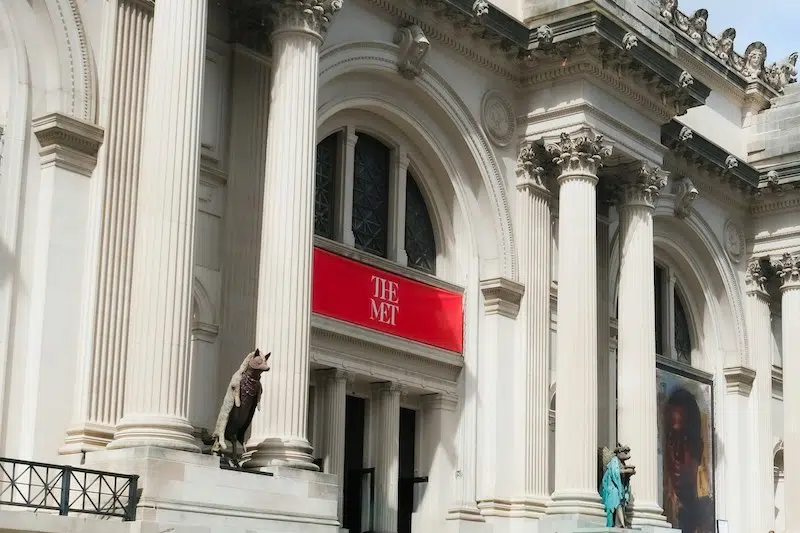
Metropolitan Museum of ArtMetropolitan Museum of Art

Metropolitan Museum of Art (Photo: ubeyonroad via Unsplash)

The latest rankings of the world’s most visited museums in 2025 show a clear shift in global cultural influence. While the Louvre Museum in Paris remains firmly in the top spot, institutions across Asia are rapidly rising, new museums are drawing massive crowds, and audience expectations are reshaping what a museum visit looks like today.

In an annual visitor-numbers survey compiled by The Art Newspaper, the figures show that the Louvre continues to lead with around 9 million visitors, reinforcing its status as a cultural landmark. Coming in second place with 6.9 million visitors is the Vatican Museums in Vatican City. But beyond these familiar frontrunners, the data reveals an evolving museum landscape.

The Museo Nacional de Antropología in Mexico City, for instance, had 5 million visitors in 2025—a 36% increase over its 2024 patronage. A larger trend that can be gleaned from this data is that museums across Asia are climbing the rankings, reshaping the geography of global culture. Leading this shift is the National Museum of Korea in Seoul, which is third overall with 6.5 million visitors in 2025. This is a more than 70% increase from 2024, when the museum had about 3.8 million visitors. The Art Newspaper points out that other branches of the National Museum throughout Korea have also experienced a significant increase in attendance. They theorize that worldwide interest in Korean culture may be a contributing factor.

Another Asian museum within the top 10 and doing better than the prior year is the Shanghai Museum East. It debuted in 2024 with 4.2 million visitors but has gained more foot traffic in 2025 with about 4.5 million visitors. Other major state-funded institutions also continue to expand their reach through large-scale exhibitions and free admission policies. Japan is seeing similar momentum. The Tokyo National Museum (2.58 million visitors) and new contemporary spaces like teamLab Planets TOKYO (2.52 million visitors) are benefiting from both domestic tourism and international interest.

Even as Asia rises, major Western institutions remain deeply influential. The British Museum (6.4 million visitors) and the Metropolitan Museum of Art (5.9 million visitors) continue to rank among the most visited globally, drawing millions with their encyclopedic collections and blockbuster exhibitions.

The 2025 rankings point to a broader expansion of the global museum landscape. Institutions are no longer defined solely by their collections, but by how effectively they engage increasingly diverse and mobile audiences. As museums continue to evolve the distinction between destination, experience, and cultural institution, it becomes less fixed. The world’s most visited museums are not just preserving history—they are actively shaping how it is encountered.

You can see the full list of the world’s 100 most visited museums compiled on Airtable.

A list of the world’s 100 most visited museums in 2025 was unveiled and the Louvre came in first with around 9 million visitors.
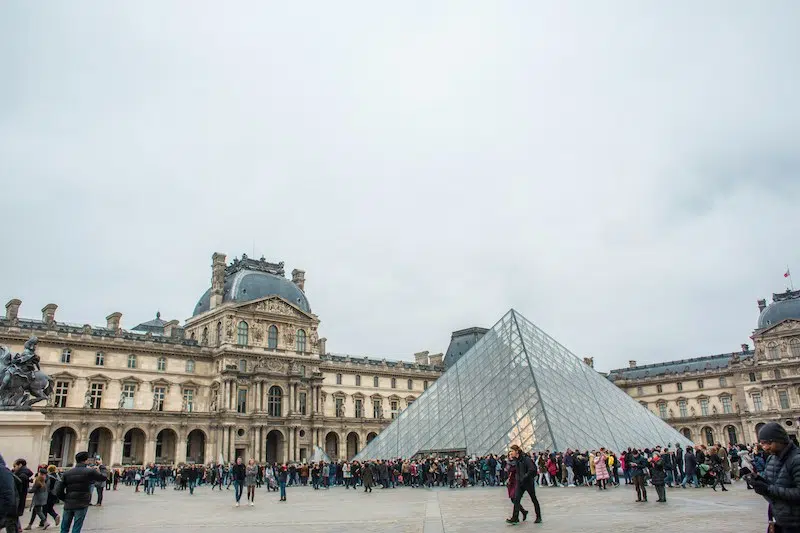
Louvre MuseumLouvre Museum

Louvre Museum (Photo: Courtney Cook via Unsplash)

The Vatican Museums came in second, welcoming 6.9 million visitors.
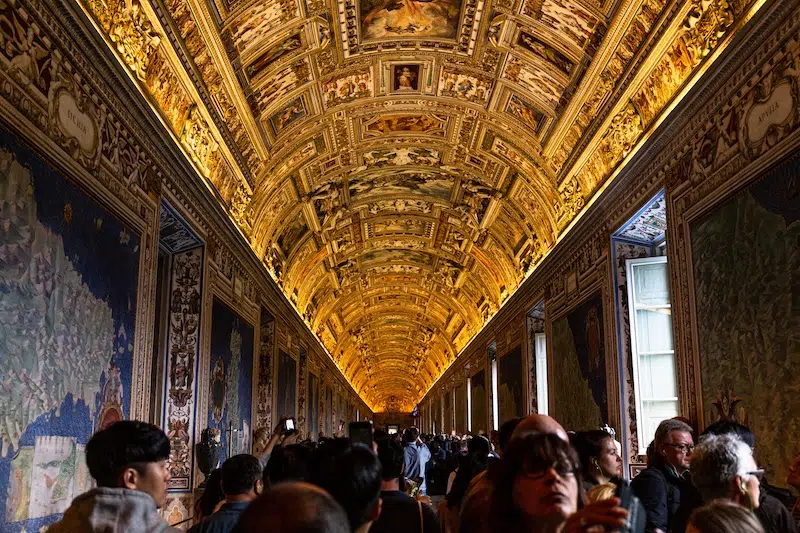
Crowd of tourists walking through the Vatican MuseumsCrowd of tourists walking through the Vatican Museums

Crowd of tourists walking through the Vatican Museums (Photo: IgorVetushko/Depositphotos)

The National Museum of Korea in Seoul came in third with 6.5 million visitors, up by more than 70% from the previous year.

A wide-angle view captures the impressive front facade of the National Museum of Korea, highlighting its distinctive square opening, a modern architectural marvel amidst Seoul's skyline.A wide-angle view captures the impressive front facade of the National Museum of Korea, highlighting its distinctive square opening, a modern architectural marvel amidst Seoul's skyline.

National Museum of Korea (Photo: [email protected]/Depositphotos)

The British Museum was close behind with 6.4 million visitors.
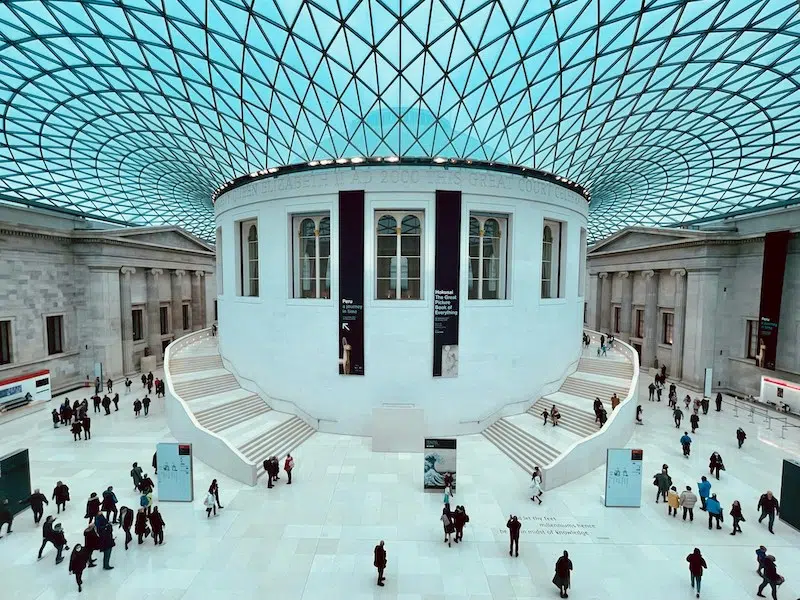
The British Museum InteriorThe British Museum Interior

The British Museum (Photo: Rabih Ramadan via Unsplash)

And the Metropolitan Museum of Art rounded out the top 5 with about 5.9 million visitors.
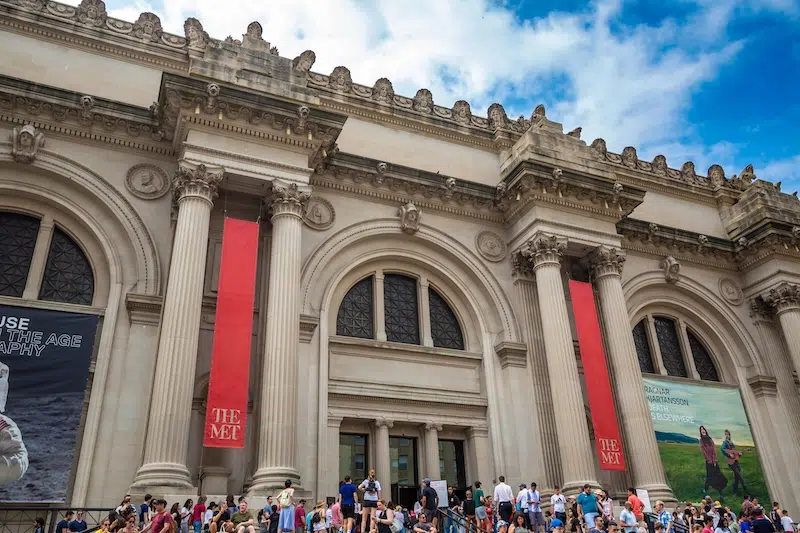
The Metropolitan Museum of Art in New York City, NYThe Metropolitan Museum of Art in New York City, NY

The Metropolitan Museum of Art (Photo: bloodua/Depositphotos)

Sources: Exclusive | The world’s 100 most visited art museums in 2025: new venues a big hit with visitors

Related Articles:

This Is the Best City for Art and History Museums in the World (And It’s Not in Europe or the U.S.)

Brooklyn Museum To Host Stunning Selection of Modernist Masterpieces This Fall

BIG’s Pavilion Design of a Contemporary Art Museum in China Will Soon Open Its Doors

Laser-Cut Cube Immerses Visitors in Light and Pattern at the Seattle Asian Art Museum

Similar Posts

  • L7 Home

    Architects: Augusto Fernández Mas (K+A Diseño),
    Mauricio Miranda (MM Desarrollos),
    Mariel Esquivel and Cesar Cardoso. Construction: K+A Diseño Main Purveyors: MicMac, Solesdi y Venster. Interior decoration: TAI Arquitectura de Interiores Photography: Onnis Luque The linear black cabin was designed by the collaboration between Augusto Fernández Mas and Mauricio Miranda as a country house for a client with three specific demands: simple layout, low maintenance, and living quarters and public areas in one floor. RA.L7 is located within Rancho Avandaro Country Club in the outskirts of Valle de Bravo, an hour and a halve drive from Mexico City. It is a project that portrays a strong character form the outside but at the same time invites passersby to enter. In the inside, it offers a warm cabin like feeling that through its simplicity and windows facing the golf course, guides the view to the outside. The lower concrete volume ads a sense of solidity and stability to the house, and its layout divided by a garage open on both sides provides an invitation to enter. [
    The project uses the topography of the terrain to its advantage, thus generating two volumes: the upper one which encloses the living and general public areas and the bottom one encompassing the garage, technical and service areas. The outside materials are Japanese style burnt wood (Shou-sugi-ban), Canadian darkened wood, concrete, and ceramic tiles (roof) that in turn evidence the simple lines of the design. The choice of materials demands close to null maintenance.
    The west façade, which faces the street, has dark wood symmetric divisions over the main interior hallway, creating privacy at an angle and almost unrestricted view when perpendicular to them. The purpose is to allow light into the house and permit the views to the equestrian club on the other side of the street while maintaining limited exposure to passersby’s. The east façade faces the golf course, thus there is an honest openness through all glass façade with sliding window doors and complemented with a glass-roofed terrace. In attention to the requested simplicity in the layout, the linear internal distribution has four rooms laid in a sequential manner culminating with living—room, dining-room and kitchen. One dramatic hallways communicates all areas in a straight line, adding to the simplicity of the design layout. With over 650 square meters of inside space, only one internal staircase was employed to communicate with the service areas and garage. There are two accesses to the house without stairs for the owner to comfortably access. In total, the terrain is 2,200 square meters of which ___ square meters were used for the house.
    There is a comforting feeling of warmth inside, but the same time opens up to go and enjoy the outside. It is to be lived inside wanting to be outside and, once outside, feeling invited to be protected inside. The linear and simple geometry of the house is soothed by the layout of the wood beams on the ceiling and the elegant and at the same time rough aspect of the wood floor and wood paneling on the walls. RA.L7 house is one of two recent projects done by the collaboration of Augusto Fernandez and Mauricio Miranda in Rancho Avandaro. Augusto Fernandez, through its K+A Diseño firm, is an active architect and constructor in Valle de Bravo with several country homes competed in the last years. Photography is by Onnis Luque.

  • The New Old

    It all started with a pendant light found in an exhibition in Paris. Named the New Old Light, it mixes eastern and western styles, old and modern aesthetics and encapsulated a lot of the ideals for a young Taiwanese American couple as they started their new home. This concept of the New Old extended beyond the light and became a central tenet to the renovation once the couple moved back to this space as a family with twins. The project was a small renovation of a kitchen and living room in a 1,000-square-foot condo to accommodate the family. The renovation included new floors, lighting, kitchen cabinetry, custom millwork and ceramic dinnerware for the space. The kitchen island design was inspired by Donald Judd’s library table. It had to provide adequate storage for the kitchen as well as function as an eating/work space at times. In addition, the island was constructed so that the storage volume could be removed from the bookcase legs and table top, for future use as a counter-height table. Sliding doors are constructed with hidden sliding hardware, and the design was inspired by traditional Shoji screens. Ceramic dinnerware was custom created for the kitchen space.