Hewn House: Classic Cabin-Style Exterior Meets Functional Modern Panache

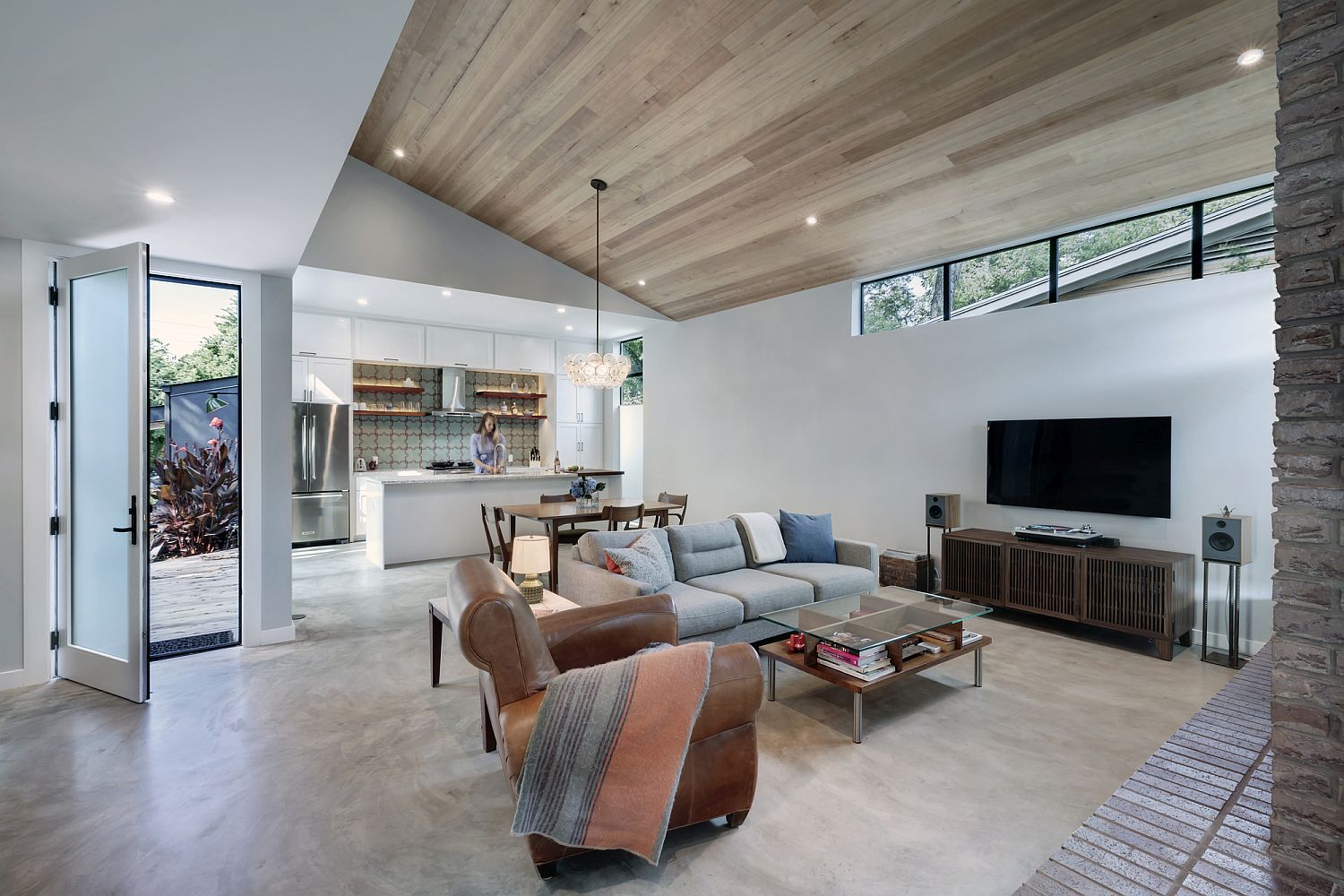
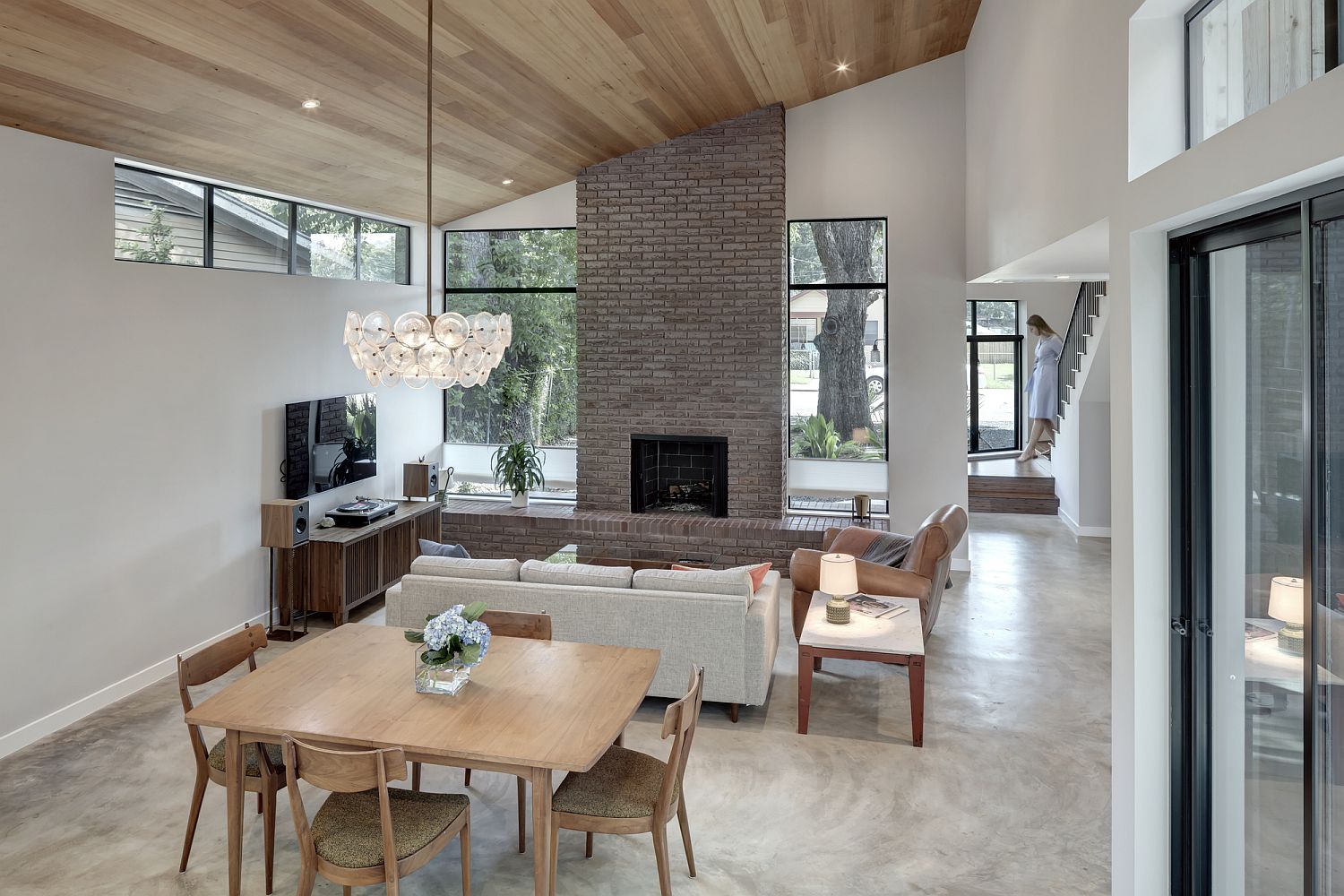
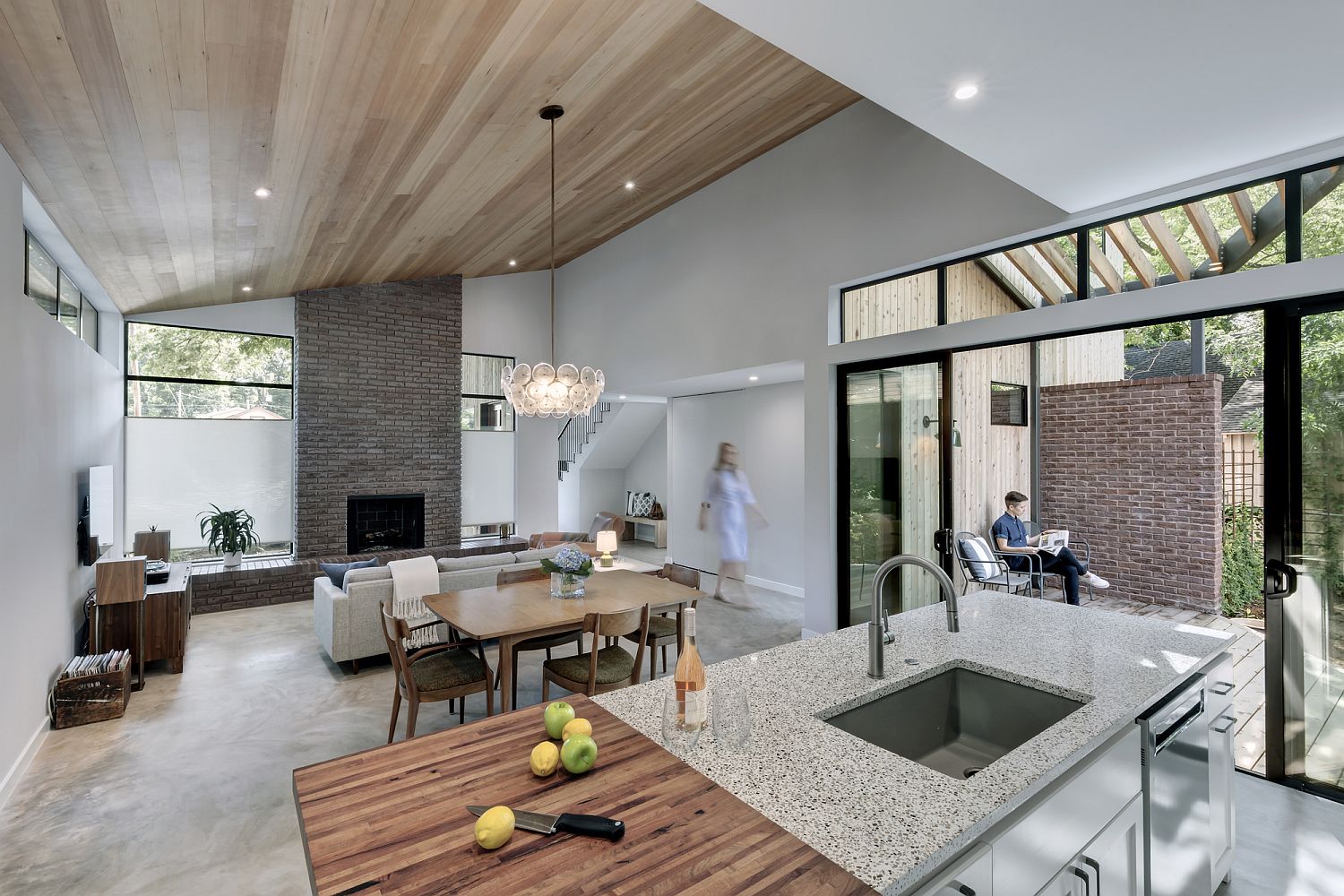
A cabin-style home that feels modern and elegant, the Hewn House designed by Matt Fajkus Architecture in Austin combines the best of both worlds. The home on the outside has a warm wooden exterior with gable roof while the interior is much more modern and spacious. One of the striking features of the interior is a fireplace clad in brick that sits at its heart and becomes the visual focal point. A slanting wooden roof adds warmth to an open living area that also contains the kitchen and the dining area. The blend of rustic and modern in the home presents a beautiful world of contrasts that blur traditional indoor-outdoor boundaries.
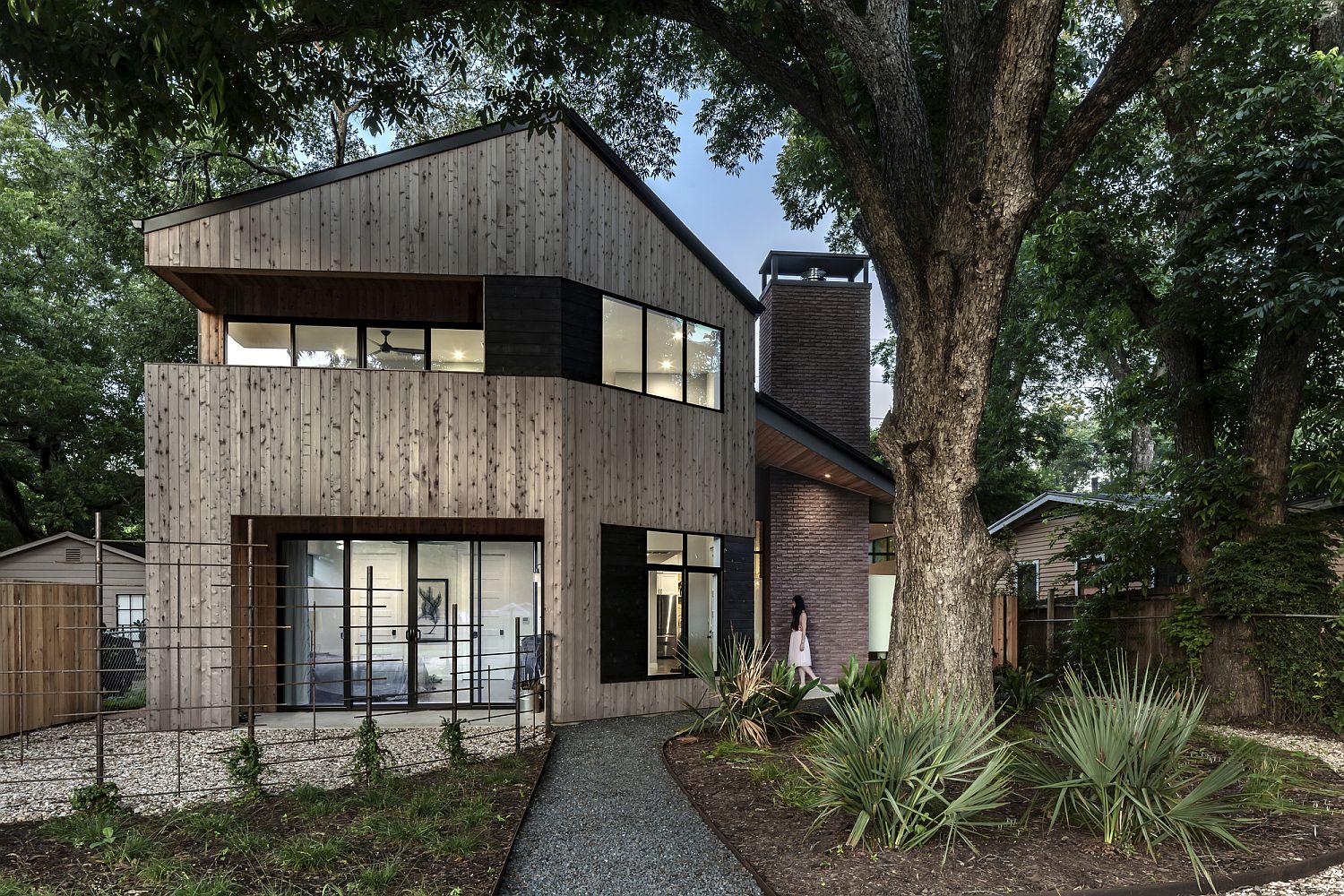
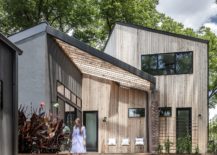
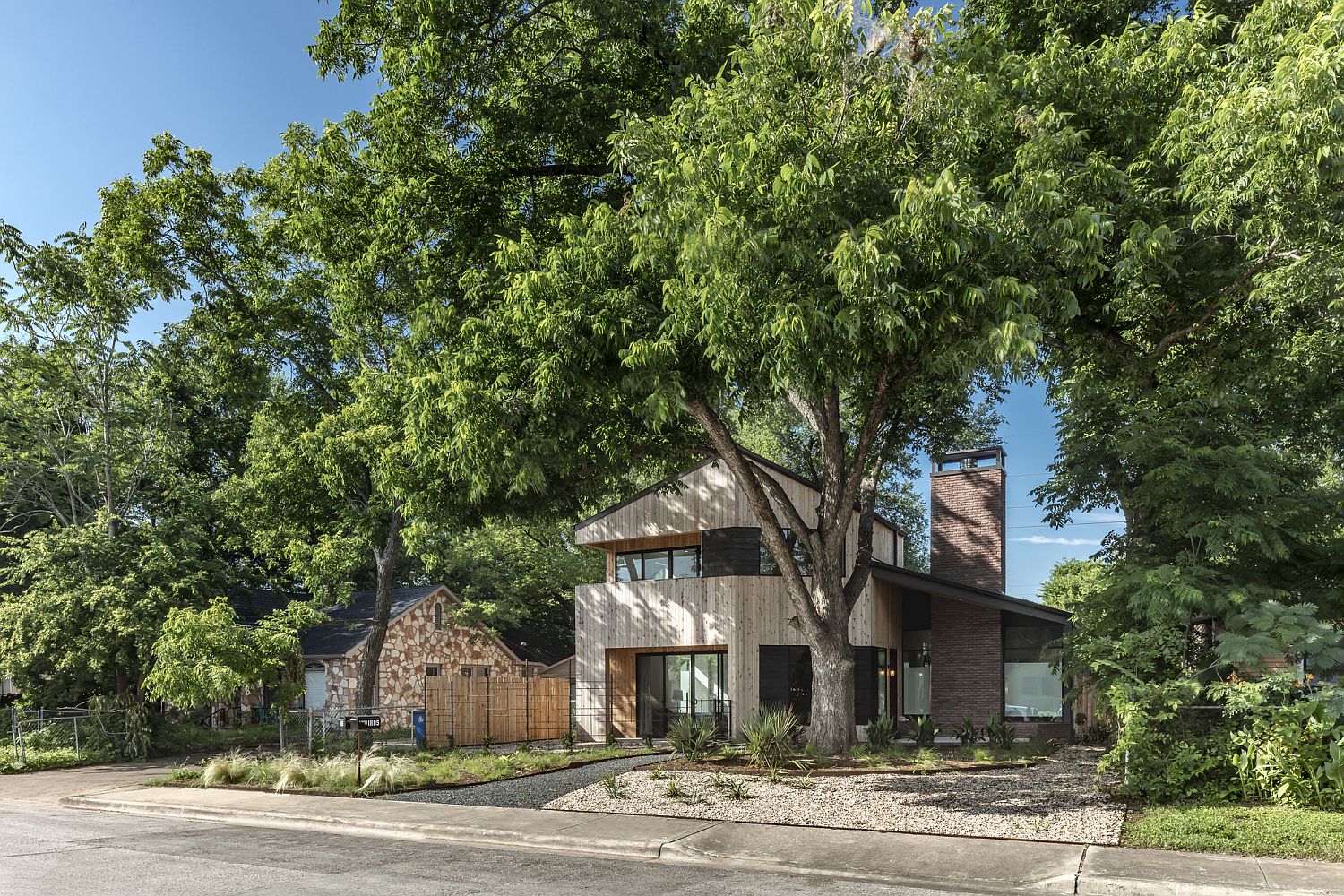
Beautiful cedar elm exterior of the Hewn House feels warm and inviting

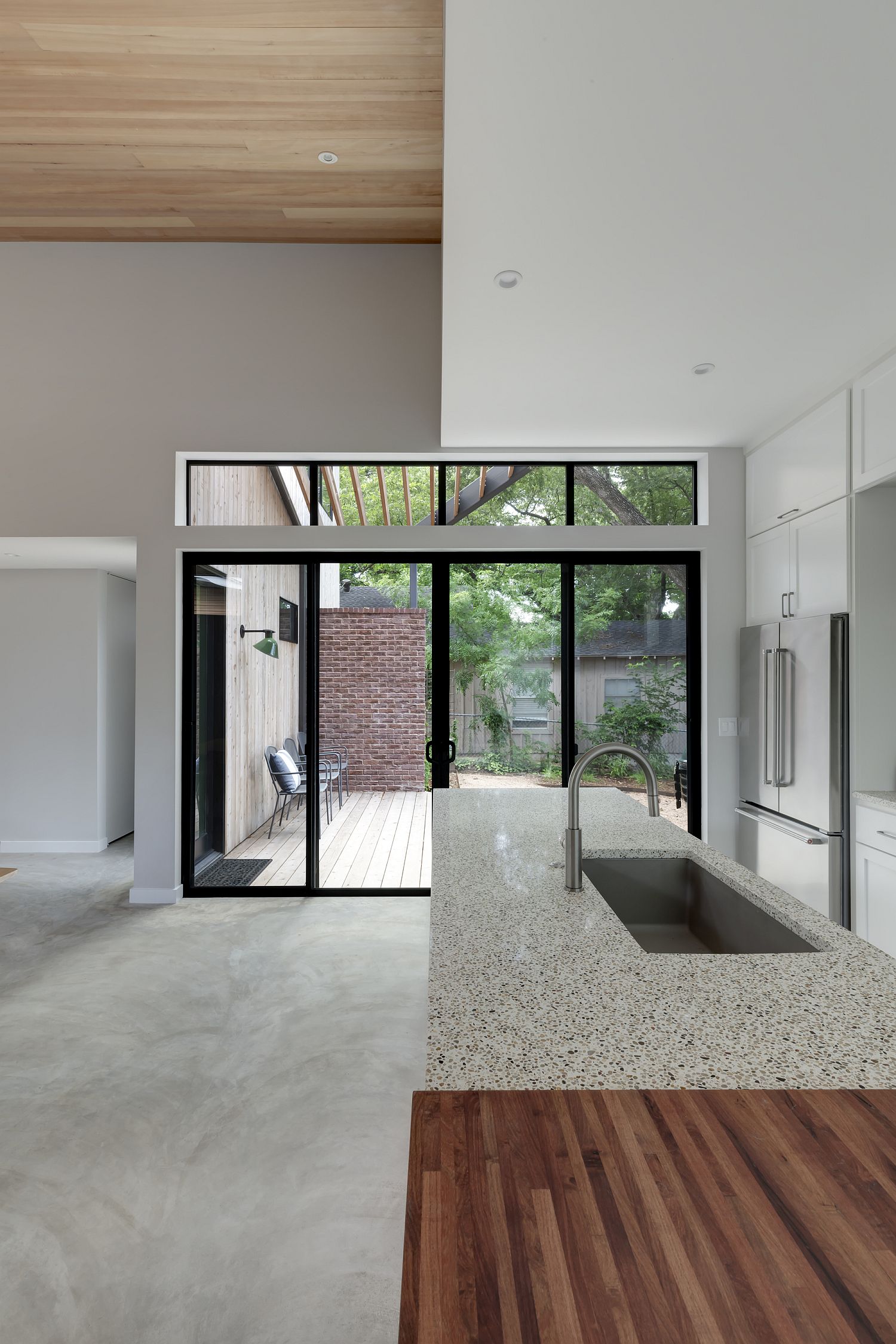
It is the trees outside that shape the overall contours of the house and the greenery on the lot shapes its final form. The living area has been extended outdoors using a series of patios and decks and this creates a social zone that is light-filled and cheerful. A large cedar elm tree is the focal point of the outdoors and every space flows into the next with ease. Sliding glass doors coupled with ceiling windows ensure that every room feels well-ventilated and elegant. A perfect urban home inspired by timeless rural element. [Photography: Charles Davis Smith]

RELATED: Inimitable Rose House in Melbourne Combines the Classic with the Modern
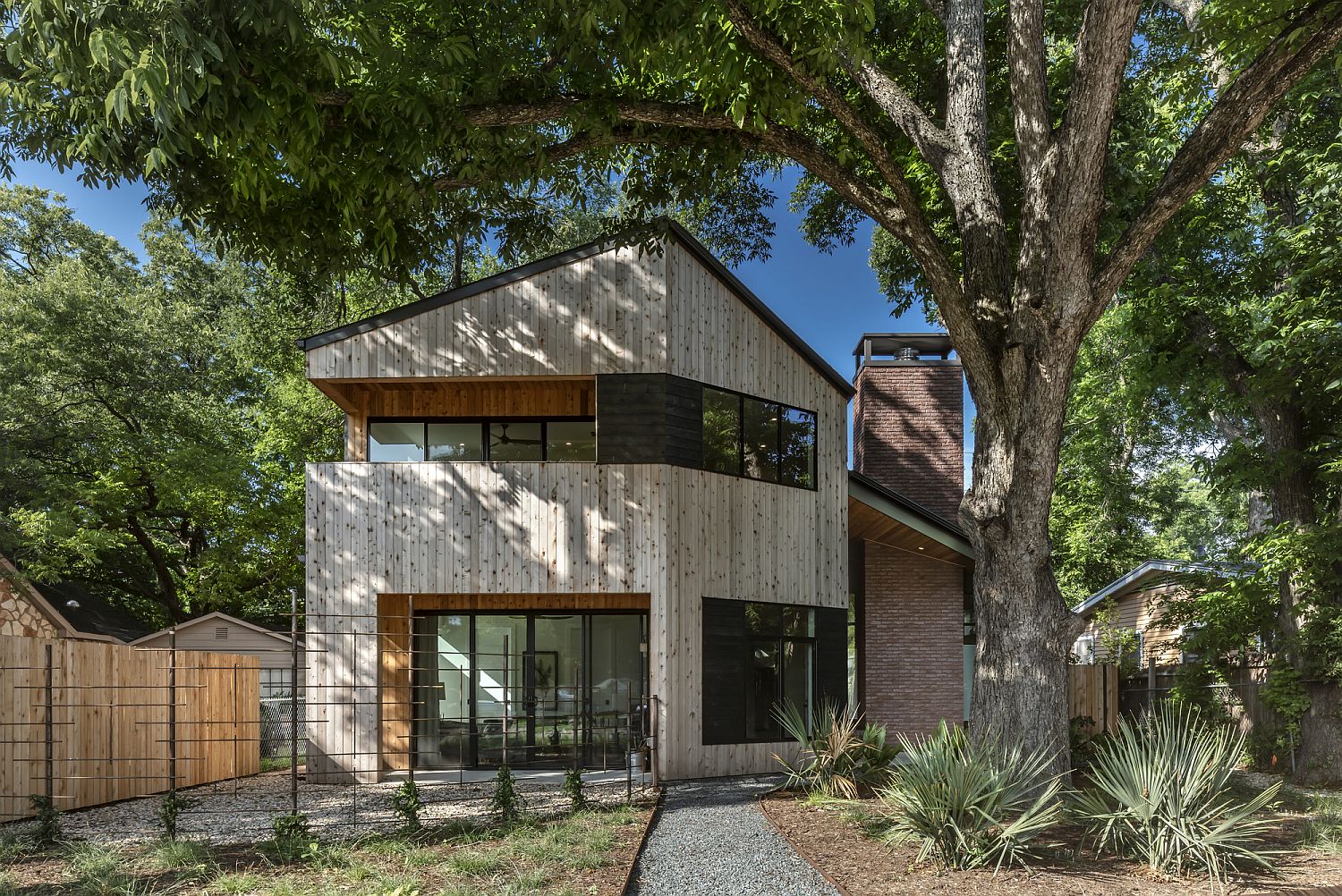
Fabulous wood facade of the house feels smart and stylish
Gable roof and wood exterior give the home a modern cabin look
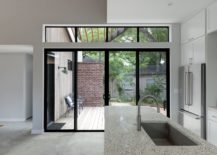
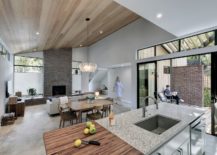
Kitchen and dining room of the house connected with the living area

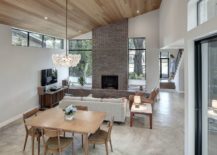
Open plan living area with lovely fireplace and gable roof
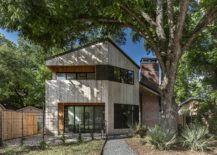
Street facade of the Hewn House in Austin designed by Matt Fajkus Architecture

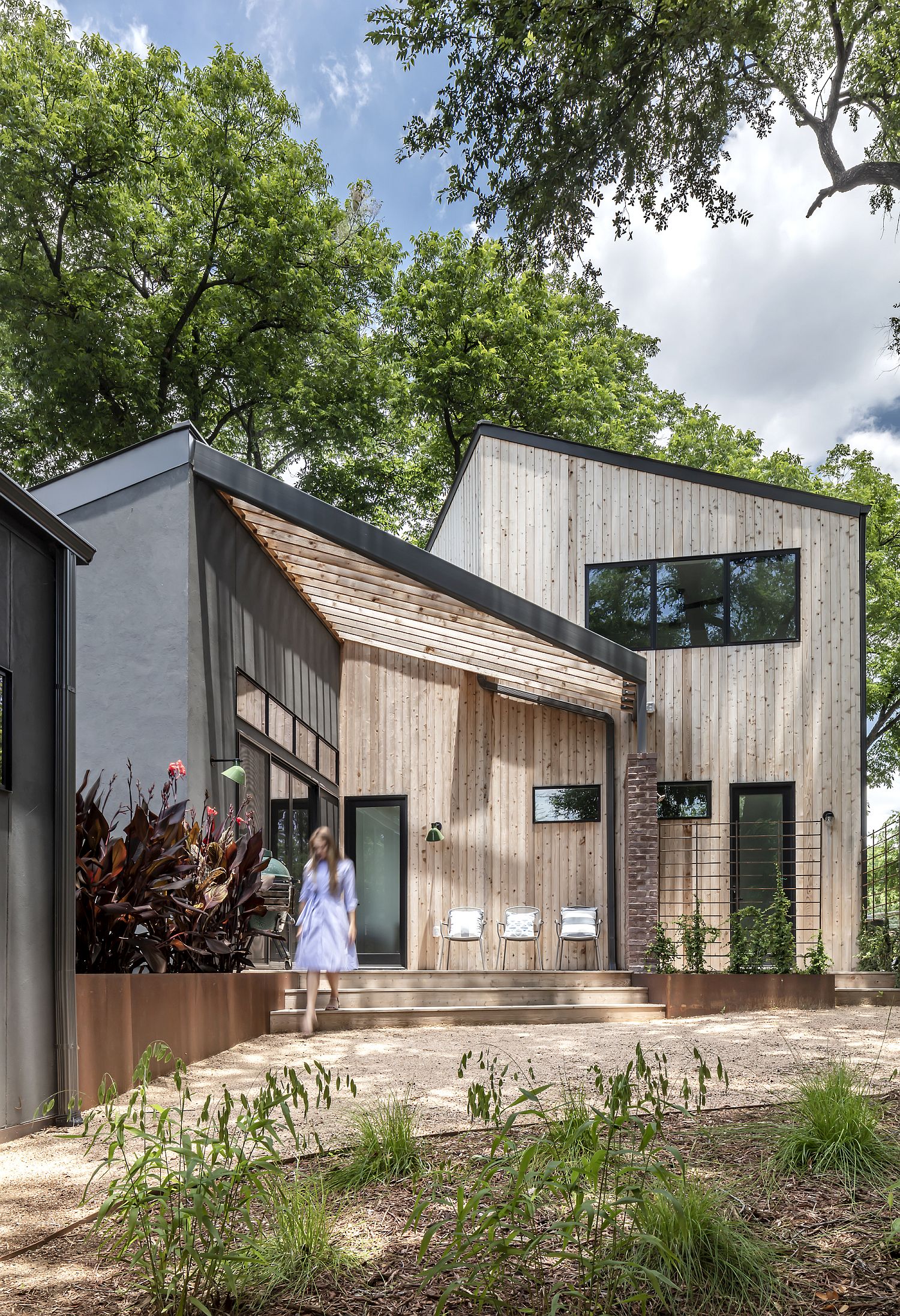
The iron spot bricks with an earthy, reddish tone around the fireplace cast a new material interest both inside and outside. The gable roof is clad with a standing seam to reinforced the clean-lined and faceted form. Furthermore, a dark gray shade of stucco contrasts and complements the warmth of the cedar with its coolness.

RELATED: Classic Ski Cabin Design Meets Contemporary Luxury At The Crow’s Nest
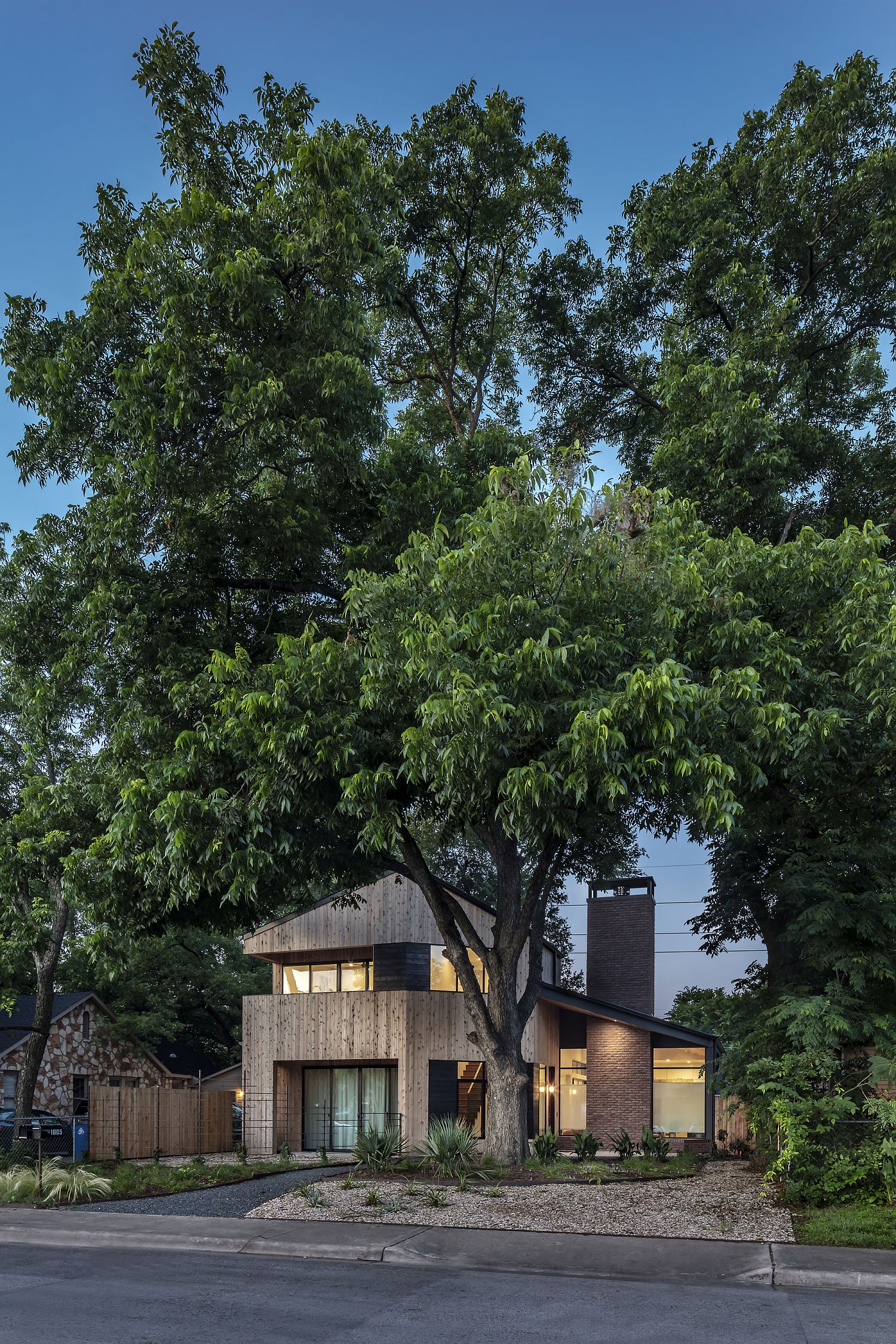
Trees around the house shape its facade and overall appeal
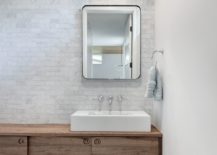
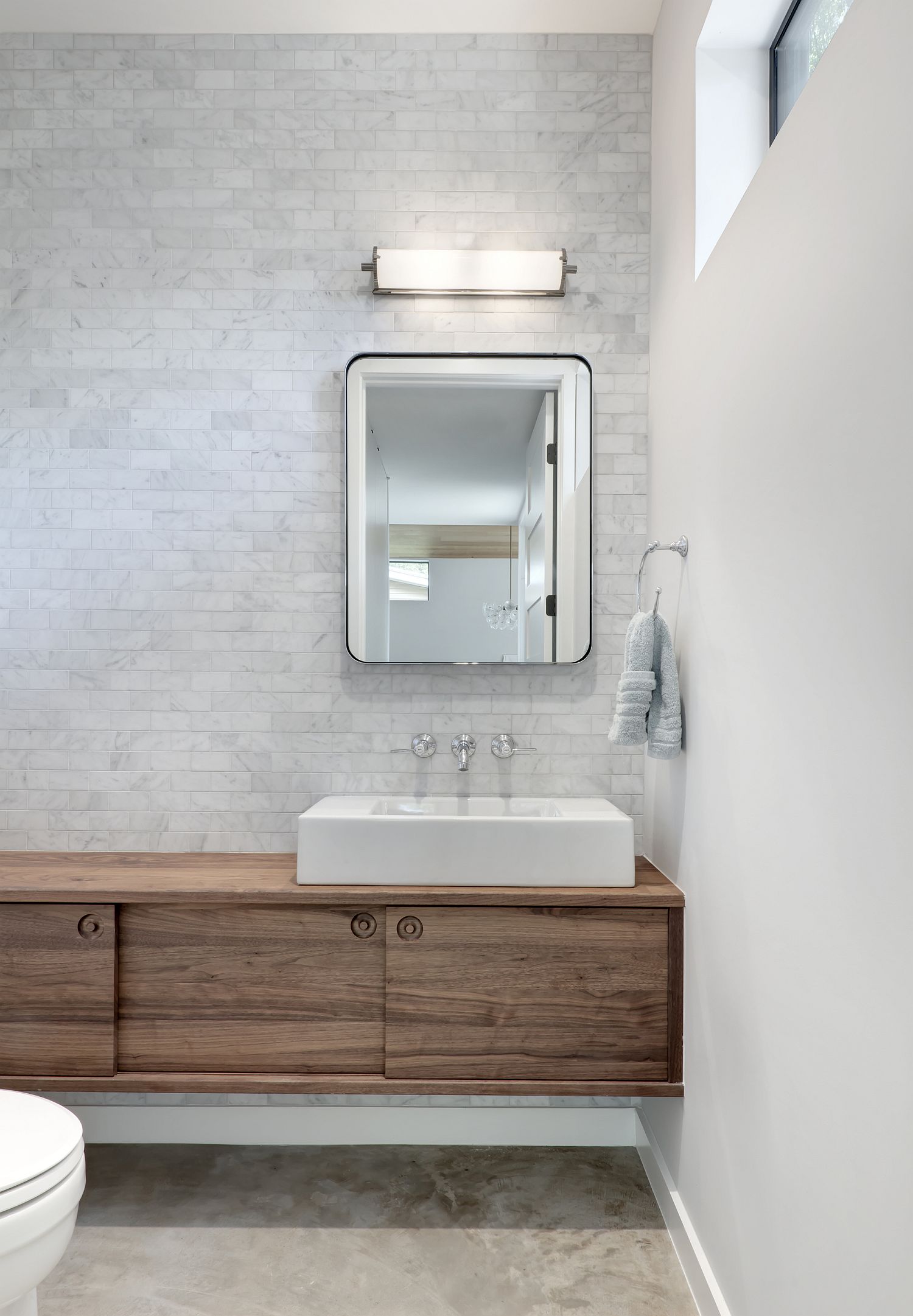
White modern bathroom with contemporary style and a floating wood vanity
Brick fireplace adds reddish hue to the living room with gable wood ceiling
Dark gray stucco gives modernity to the exterior of the house
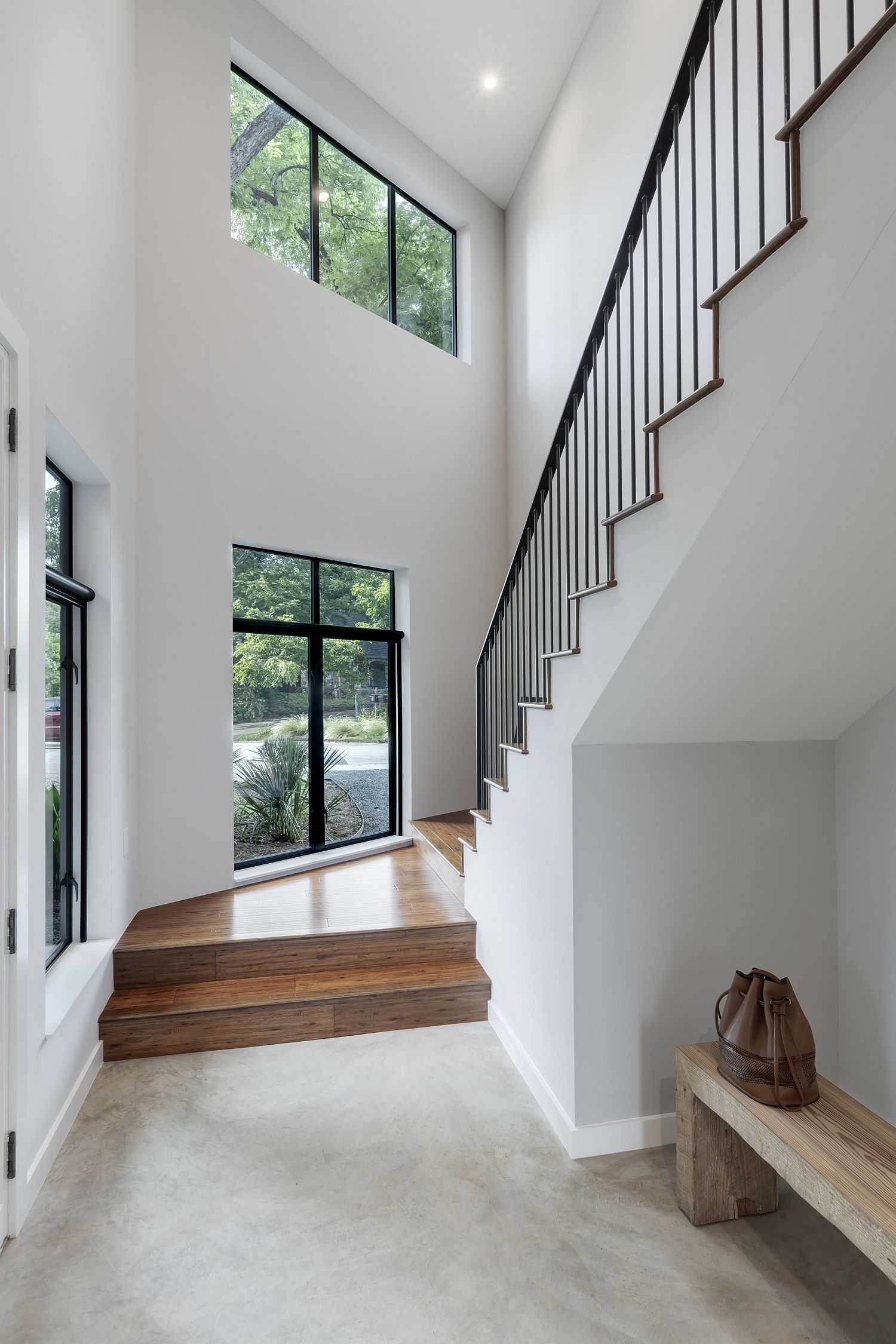
Entry room of the Hewn House in white
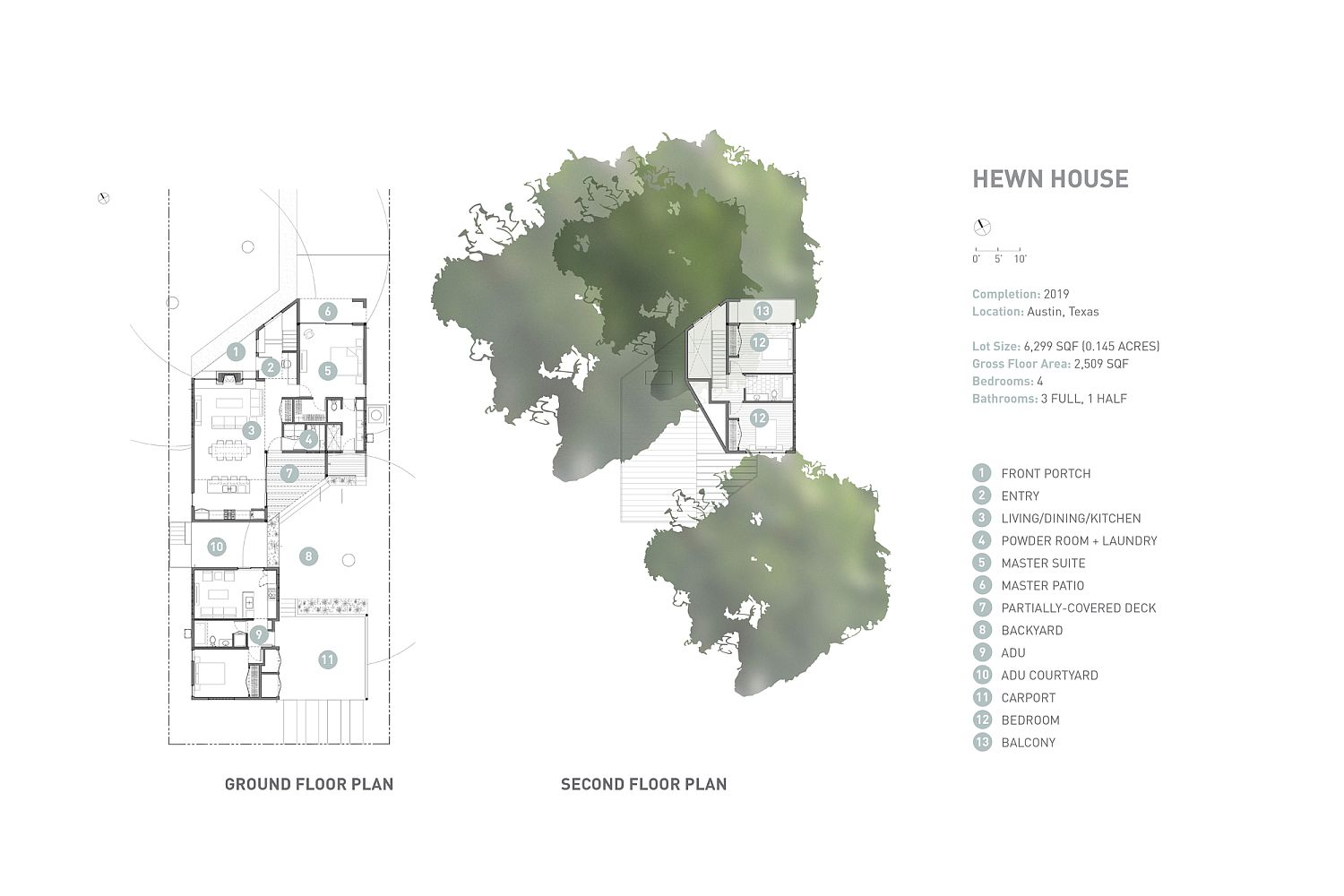
Floor plan of the Hewn House

You’re reading Hewn House: Classic Cabin-Style Exterior Meets Functional Modern Panache, originally posted on Decoist. If you enjoyed this post, be sure to follow Decoist on Twitter, Facebook and Pinterest.

Similar Posts

  • L7 Home

    Architects: Augusto Fernández Mas (K+A Diseño),
    Mauricio Miranda (MM Desarrollos),
    Mariel Esquivel and Cesar Cardoso. Construction: K+A Diseño Main Purveyors: MicMac, Solesdi y Venster. Interior decoration: TAI Arquitectura de Interiores Photography: Onnis Luque The linear black cabin was designed by the collaboration between Augusto Fernández Mas and Mauricio Miranda as a country house for a client with three specific demands: simple layout, low maintenance, and living quarters and public areas in one floor. RA.L7 is located within Rancho Avandaro Country Club in the outskirts of Valle de Bravo, an hour and a halve drive from Mexico City. It is a project that portrays a strong character form the outside but at the same time invites passersby to enter. In the inside, it offers a warm cabin like feeling that through its simplicity and windows facing the golf course, guides the view to the outside. The lower concrete volume ads a sense of solidity and stability to the house, and its layout divided by a garage open on both sides provides an invitation to enter. [
    The project uses the topography of the terrain to its advantage, thus generating two volumes: the upper one which encloses the living and general public areas and the bottom one encompassing the garage, technical and service areas. The outside materials are Japanese style burnt wood (Shou-sugi-ban), Canadian darkened wood, concrete, and ceramic tiles (roof) that in turn evidence the simple lines of the design. The choice of materials demands close to null maintenance.
    The west façade, which faces the street, has dark wood symmetric divisions over the main interior hallway, creating privacy at an angle and almost unrestricted view when perpendicular to them. The purpose is to allow light into the house and permit the views to the equestrian club on the other side of the street while maintaining limited exposure to passersby’s. The east façade faces the golf course, thus there is an honest openness through all glass façade with sliding window doors and complemented with a glass-roofed terrace. In attention to the requested simplicity in the layout, the linear internal distribution has four rooms laid in a sequential manner culminating with living—room, dining-room and kitchen. One dramatic hallways communicates all areas in a straight line, adding to the simplicity of the design layout. With over 650 square meters of inside space, only one internal staircase was employed to communicate with the service areas and garage. There are two accesses to the house without stairs for the owner to comfortably access. In total, the terrain is 2,200 square meters of which ___ square meters were used for the house.
    There is a comforting feeling of warmth inside, but the same time opens up to go and enjoy the outside. It is to be lived inside wanting to be outside and, once outside, feeling invited to be protected inside. The linear and simple geometry of the house is soothed by the layout of the wood beams on the ceiling and the elegant and at the same time rough aspect of the wood floor and wood paneling on the walls. RA.L7 house is one of two recent projects done by the collaboration of Augusto Fernandez and Mauricio Miranda in Rancho Avandaro. Augusto Fernandez, through its K+A Diseño firm, is an active architect and constructor in Valle de Bravo with several country homes competed in the last years. Photography is by Onnis Luque.