|

Istanbul’s Iconic Hagia Sophia Undergoing Biggest Renovation in Its 1,500-Year History

Hagia Sophia renovationHagia Sophia renovation

Photo: rognar/Depositphotos

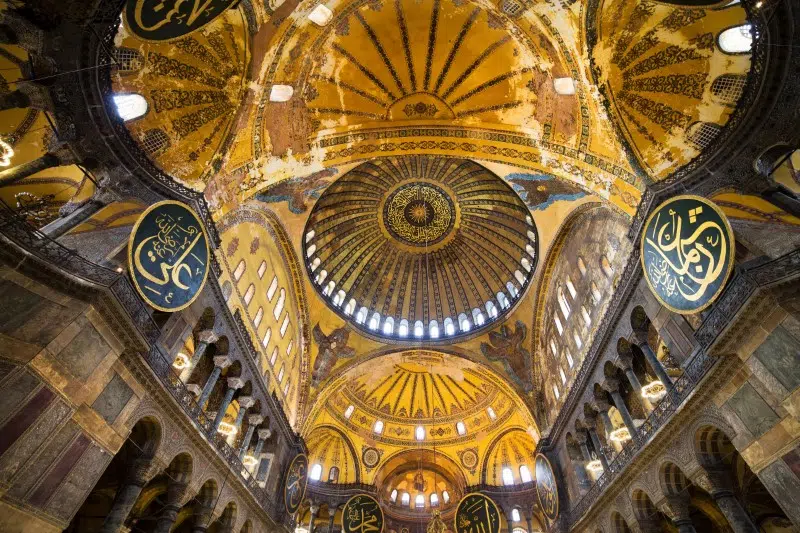
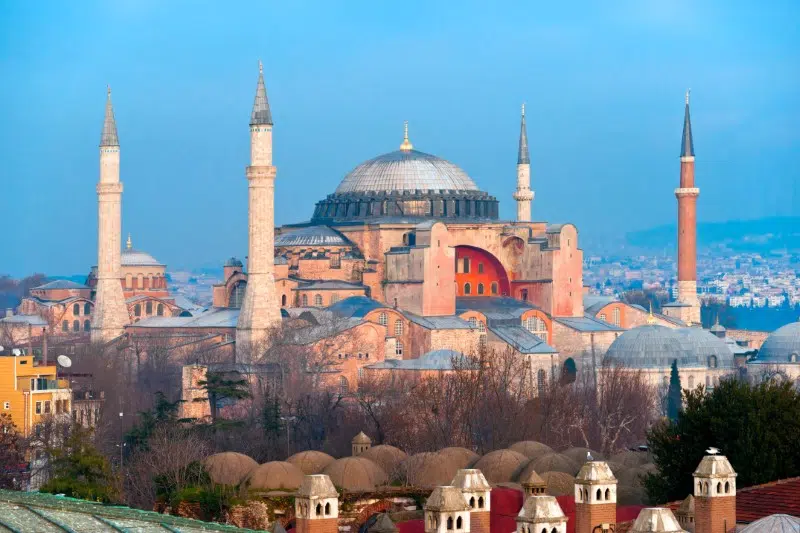
Istanbul’s iconic Hagia Sophia is getting a makeover with a major renovation to its domes. The Turkish government announced the work in April, with experts stating that it’s one of the largest repair projects in the nearly 1,500-year-old history of the site.

The aim of the restoration is not only to reinforce the domes, but to protect them from earthquakes. In Istanbul alone, there are two fault lines, and a 6.2-magnitude earthquake hit the city in April. With memories of 2023’s disastrous earthquake in southeastern Turkey fresh in everyone’s minds, there is an urgency to ensure this piece of cultural heritage is secure.

To begin, the dome’s lead cover will be lifted, allowing experts to identify the fragile areas that require intervention. In particular, they will evaluate the main cupola and its joints between the semi-domes that flank it. Led by architect Hasan Fırat Diker, a team of architects, engineers, and art historians will work together to determine the best course of action. In addition to the dome, the team will also evaluate the four supporting pillars and the surrounding ground support.

“This may be one of the greatest restorations of the current period in Turkey,” Diker recently told The Guardian.

One of Istanbul’s most visited monuments, the UNESCO World Heritage site has multiple layers of history, starting its life as a cathedral before becoming a mosque in 1453. Mustafa Kemal Atatürk, the founder of the modern Republic of Turkey, transformed it into a museum during his presidency. It stayed that way for over 65 years until Turkey’s current president, Tayyip Erdogan, turned it back into a mosque in 2000.

“These reconstructions over different periods created layers of buildup on the dome’s surface … we know at the moment it’s not a perfect sphere due to the multiple interventions,” says Diker. “The problem is not the dome itself but what is holding it up—for now. But when we uncover it we will better see the cracks.”

While scaffolding will soon be erected, there are not expected to be any interruptions to visits. The Hagia Sophia will remain open for all to enjoy throughout the restoration, which has no set timetable for completion due to its complexity.

The Hagia Sophia is undergoing a major renovation of its domes to reinforce and protect them from earthquakes.
Hagia Sophia ExteriorHagia Sophia Exterior

Photo: masterlu/Depositphotos

Source: Hagia Sophia restoration to protect 1,500-year-old Unesco ‘masterpiece’

Related Articles:

My Modern Met’s Art + Culture Guide to Istanbul

5 Extravagant Buildings That Showcase the Drama of Byzantine Architecture

10 Incredible Mosques of the World Celebrating the Grandeur of Islamic Architecture

Similar Posts

  • Lipan House

    This single family 2,800 sf house located in West Austin is composed of two refined, minimalist stone-and-glass boxes connected by a glass bridge. The main body of the house sits on the crest of the hill, with the living space opening to a linear pool and exterior deck that captures the surrounding Hill Country views. The bridge links to a studio office that extends into the wooded hillside leading to the creek below.

  • L7 Home

    Architects: Augusto Fernández Mas (K+A Diseño),
    Mauricio Miranda (MM Desarrollos),
    Mariel Esquivel and Cesar Cardoso. Construction: K+A Diseño Main Purveyors: MicMac, Solesdi y Venster. Interior decoration: TAI Arquitectura de Interiores Photography: Onnis Luque The linear black cabin was designed by the collaboration between Augusto Fernández Mas and Mauricio Miranda as a country house for a client with three specific demands: simple layout, low maintenance, and living quarters and public areas in one floor. RA.L7 is located within Rancho Avandaro Country Club in the outskirts of Valle de Bravo, an hour and a halve drive from Mexico City. It is a project that portrays a strong character form the outside but at the same time invites passersby to enter. In the inside, it offers a warm cabin like feeling that through its simplicity and windows facing the golf course, guides the view to the outside. The lower concrete volume ads a sense of solidity and stability to the house, and its layout divided by a garage open on both sides provides an invitation to enter. [
    The project uses the topography of the terrain to its advantage, thus generating two volumes: the upper one which encloses the living and general public areas and the bottom one encompassing the garage, technical and service areas. The outside materials are Japanese style burnt wood (Shou-sugi-ban), Canadian darkened wood, concrete, and ceramic tiles (roof) that in turn evidence the simple lines of the design. The choice of materials demands close to null maintenance.
    The west façade, which faces the street, has dark wood symmetric divisions over the main interior hallway, creating privacy at an angle and almost unrestricted view when perpendicular to them. The purpose is to allow light into the house and permit the views to the equestrian club on the other side of the street while maintaining limited exposure to passersby’s. The east façade faces the golf course, thus there is an honest openness through all glass façade with sliding window doors and complemented with a glass-roofed terrace. In attention to the requested simplicity in the layout, the linear internal distribution has four rooms laid in a sequential manner culminating with living—room, dining-room and kitchen. One dramatic hallways communicates all areas in a straight line, adding to the simplicity of the design layout. With over 650 square meters of inside space, only one internal staircase was employed to communicate with the service areas and garage. There are two accesses to the house without stairs for the owner to comfortably access. In total, the terrain is 2,200 square meters of which ___ square meters were used for the house.
    There is a comforting feeling of warmth inside, but the same time opens up to go and enjoy the outside. It is to be lived inside wanting to be outside and, once outside, feeling invited to be protected inside. The linear and simple geometry of the house is soothed by the layout of the wood beams on the ceiling and the elegant and at the same time rough aspect of the wood floor and wood paneling on the walls. RA.L7 house is one of two recent projects done by the collaboration of Augusto Fernandez and Mauricio Miranda in Rancho Avandaro. Augusto Fernandez, through its K+A Diseño firm, is an active architect and constructor in Valle de Bravo with several country homes competed in the last years. Photography is by Onnis Luque.