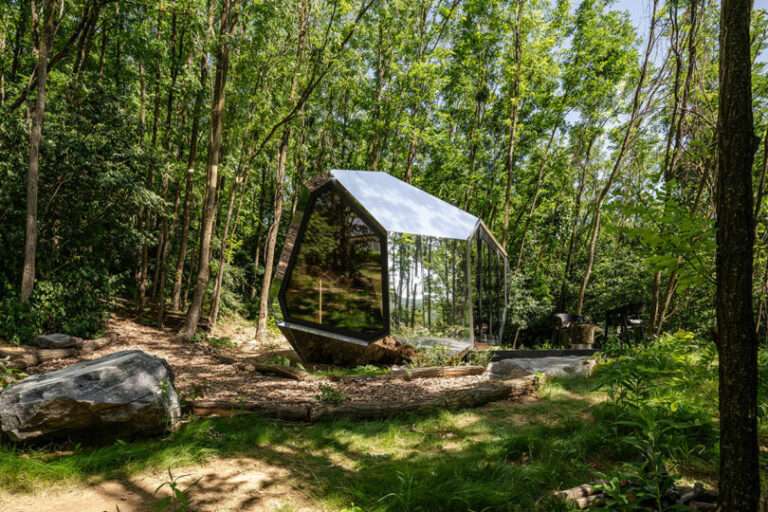
Simple, Silent, and Perfect | Casa Calma

Nestled between a pine forest and the beach, Casa Calma lives up to its name — a serene retreat that blends architecture with nature. Designed by Araja Studio, this minimalist home is defined by four main elements: two horizontal slabs forming the floor and roof, and two vertical walls that enclose the space. The sand-toned material palette, along with white stucco, glass, wood, and aluminum, creates a soft visual harmony that complements the surrounding landscape.

Strategically placed openings invite natural light and cross-ventilation, while the layout gently follows the slope of the land. Inside, the clean geometry serves as a blank canvas for personal expression. Outside, the garden gradually integrates with the structure, softening its rigid lines over time.

Casa Calma isn’t just a house — it’s a quiet statement of restraint, simplicity, and deep respect for its environment. A perfect example of modern architecture embracing stillness and clarity.

Credits:

Architect: Araja Studio
Location: Almada, Portugal
Year: 200 sqm
Year: 2023
Photographer: Fernando Guerra | FG+SG
Similar Posts

  • Big Barn

    North of San Francisco, in Glen Ellen, a less populated part of the Napa wine country, the culture has been based on agriculture and was named for an original winery.  Jack London made this his permanent home here in the early 1900s. Drawn by the land, London believed in the redemptive qualities of rural life. Less than an hour from the City, rolling hills covered with groves of oak trees surround the downtown. The strong agricultural history has affected the built environment here with many examples of barn like houses that are confusingly morphed between the two vocabularies. On the existing footprint of a 1950’s ranch house, this family getaway evolved in response to a request for a retreat from their urban lifestyle. The atmosphere of a tack barn renovated into a bunk house on site inspired thoughts of a larger barn like typology for this main house of 3,900 square feet. The request from the client was to build in a consistent way within the rolling hills dappled with agricultural buildings. A simple, rectangular, two-story form emerged with an asymmetrical gabled roof. The shorter side of the roof faces the southwest sun and reduces heat gain to the structure. Fenestration is limited to this exposure as well and is organized like thin full height ventilation shutters that reference traditional barn building. The entry, a larger version of the vertical slit elements is recessed for shading. The fireplace and chimney, foreign to the barn typology, is displaced from the structure with glazed joints. The east side is more open to the view and morning sun. A continuous, building-sized assembly of steel sash glazing includes large sliding doors that pocket into the adjacent wall and open the kitchen to the rear terrace.  The upper zone of the main space is void of windows and reminds one of the empty shell-like spaces of barns. A large vertical wood shutter located on the southeast gable end is aligned axially with an internal access through the plan on both levels. When open at both ends, prevailing breezes flow through the mass cooling it naturally. In order to leave the hillside intact and avoid grading, the form is excavated into the site uphill and cantilevered over it downhill. A steel grated bridge connects the upper sleeping level with the hillside and tack barn above. A minimal material pallet of reclaimed redwood, corrugated Corten steel and black steel sash windows combined with integral gutters, and lack of overhangs further the minimal feeling of the construction. Inside the singular materiality is continued via California Oak for floors wall and ceilings. Radiantly heated floors and minimal cooling provided only at sleeping areas, coupled with enhanced glazing, insulation and mechanical system efficiencies mitigate energy use. PROJECT TEAM Architecture : Faulkner Architects Contractor: Redhorse Constructors Civil Engineer: Adobe Associates Structural Engineer: CFBR Structural Group Mechanical Engineer: Sugarpine Engineering Electrical Engineer: Sugarpine Engineering Geotechnical Engineer: NV5 Landscape: Michael Boucher Landscape Architecture Lighting: Ken Fulk Interior designer: Ken Fulk Theatrical/AV: SoundVision Pool Engineer: Terracon Pool Consultant: Blue Revolution Construction Project Manager: Walker Construction Management Special Inspections: PJC & Associates CALGreen: Gilleran Energy Management Irrigation Design: Dickson & Associates Arborist: Bartlett Trees PHOTOGRAPHY Joe Fletcher Photography