Sustainable Modern Home in New Zealand with Gabled Roof and Captivating views

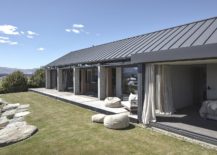
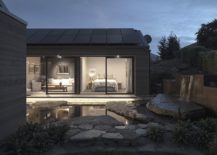
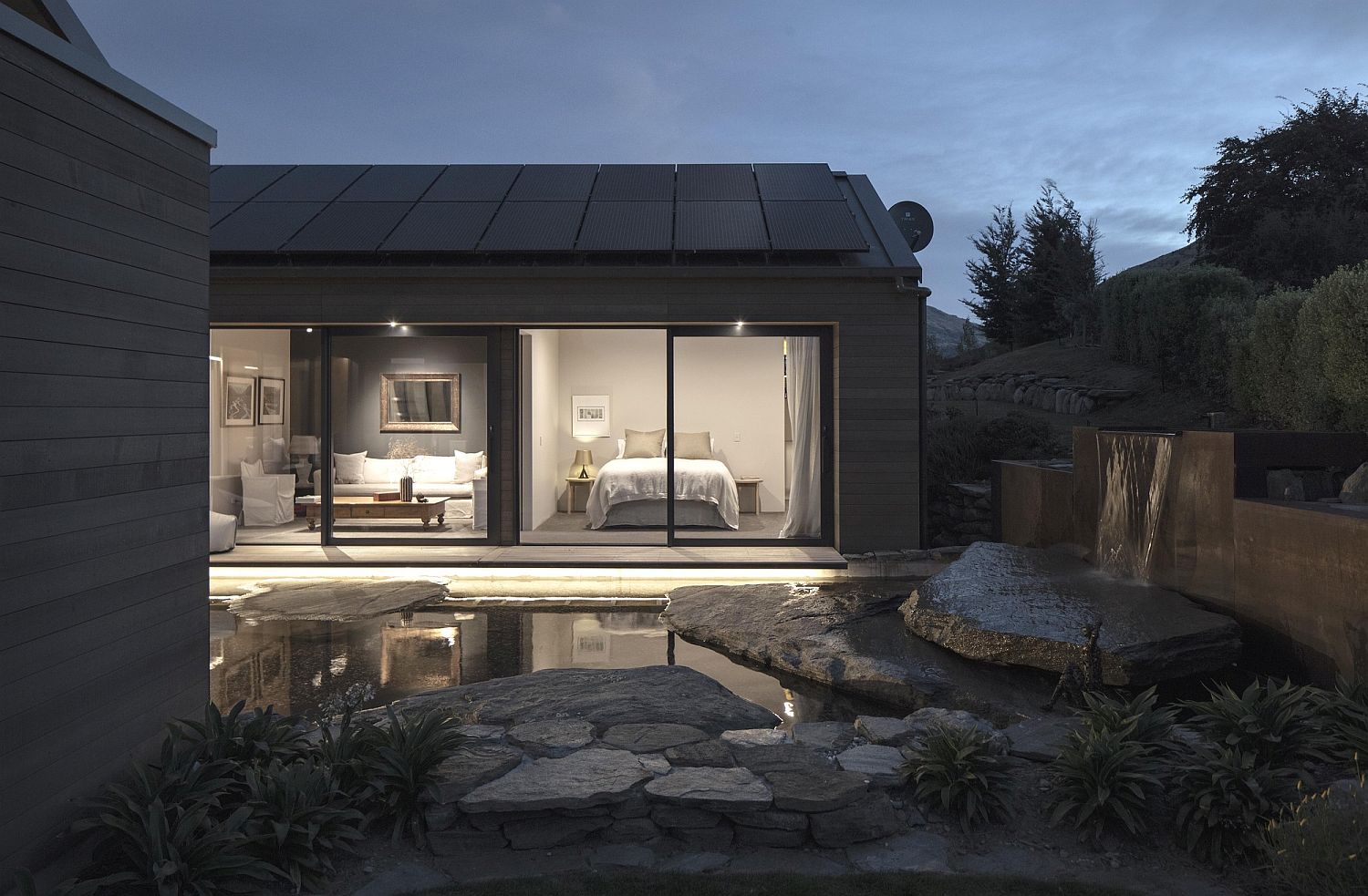
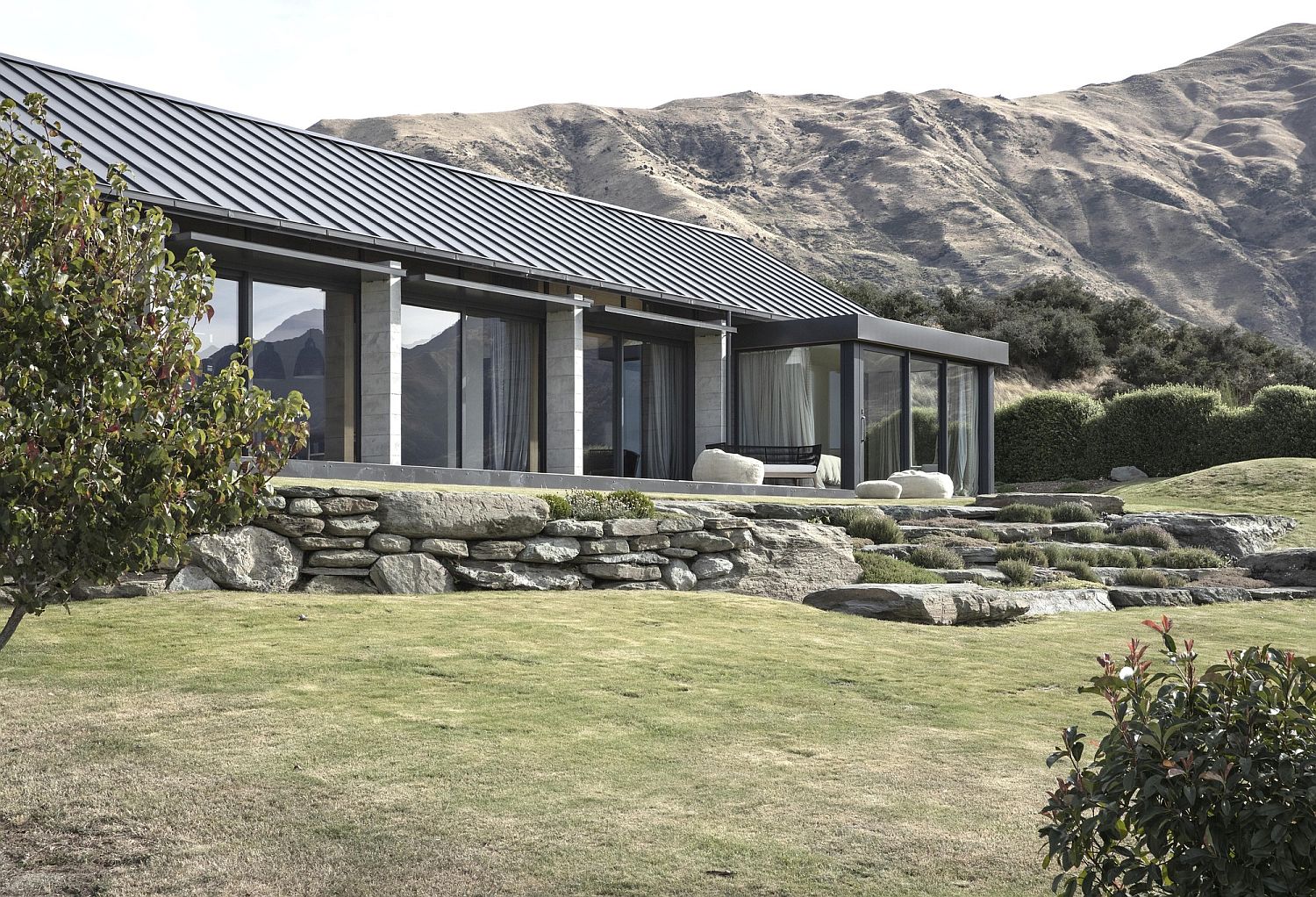
New Zealand is a country where the landscape around the house steals the show more often than not. But the Wanaka House designed by Three Sixty Architectu manages to holds its own with a design that includes a couple of gable roofs and an interior that puts the focus firmly on the view outside. The house is draped in smoked carbon stained timber with corten steel panels making it a unique and elegant structure with durability. Thermomass panels around the house improve insulation and ensure that the interior remains warm even during winter months that are rough in this region of the world.
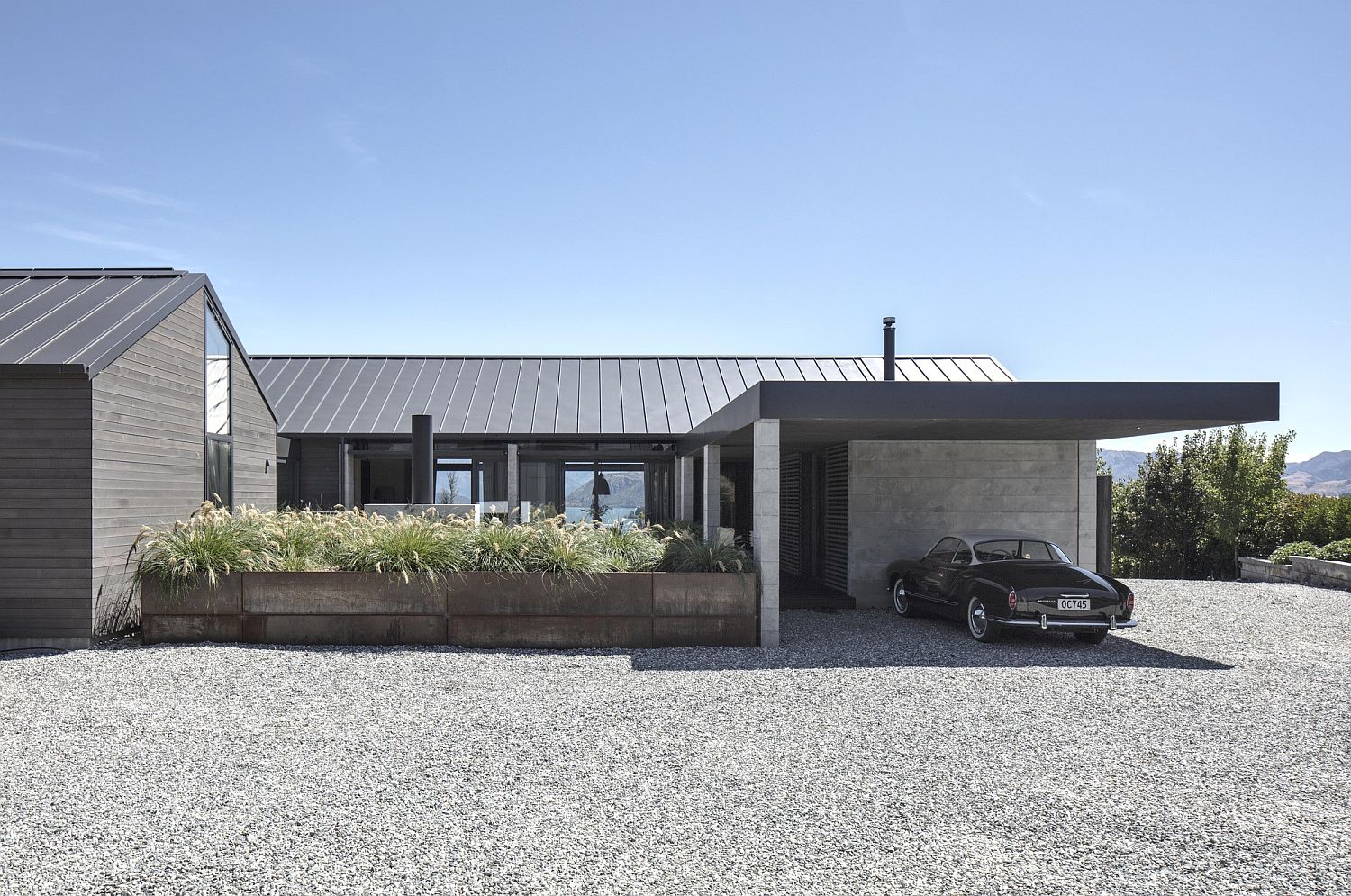
Thermomass panels, Corten steel and smoked carbon stained timber exterior of the New Zealand house


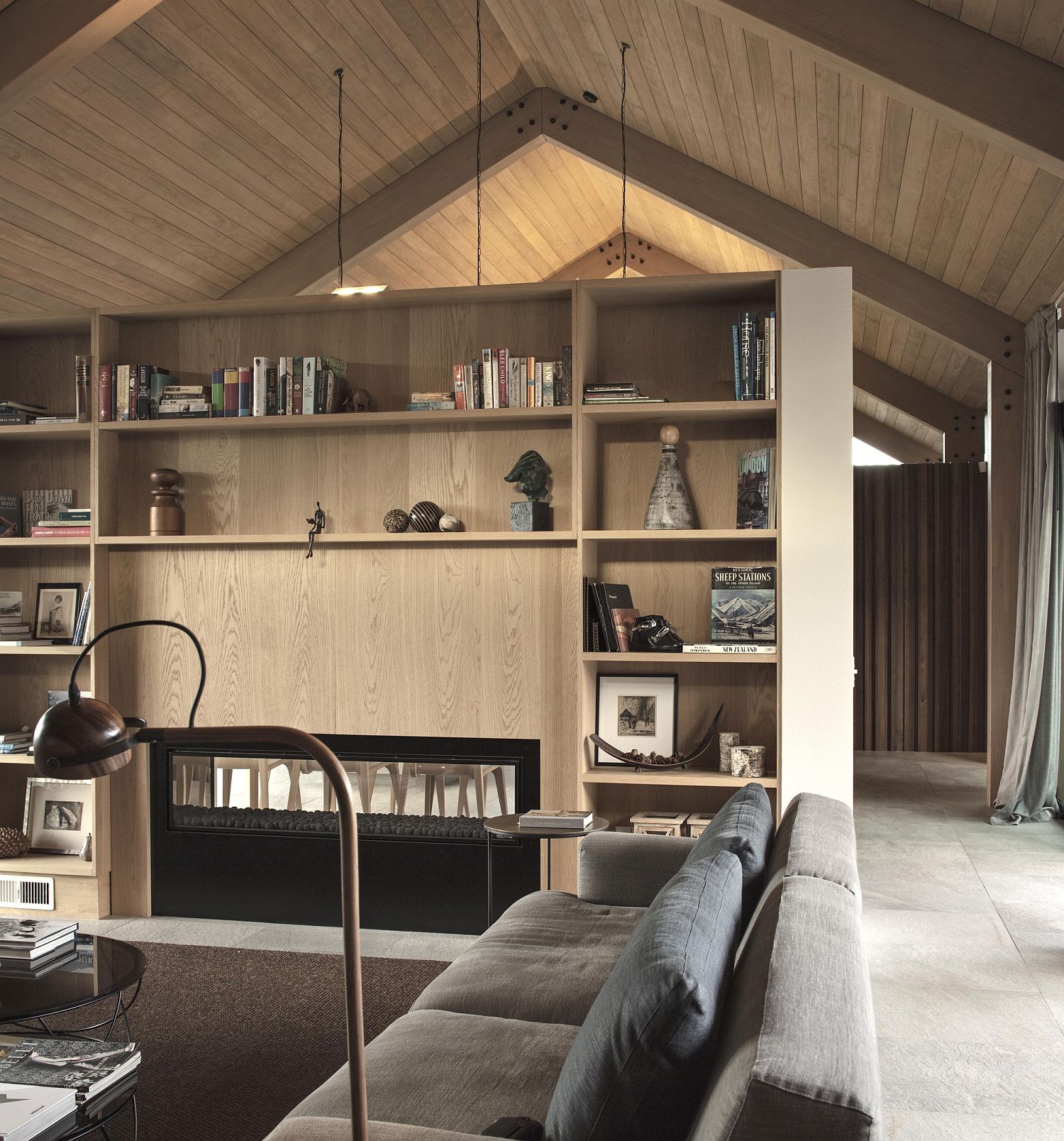
Living and dining areas of the house share a double-sided fireplace while the open plan living area flows into the landscape outside. Décor inside the house is simple and minimal with gray, white and wood shaping almost the entire house. A glass link connects one wing of the house with the other and transition between different spaces is all too seamless. Photovoltaic panels, geothermal energy and other sustainable sources power a home that feels organic, smart and inviting across all seasons. [Photography: Simon Devitt]

RELATED: Mountain Range Home in New Zealand Captivates with Undulating Rooftop
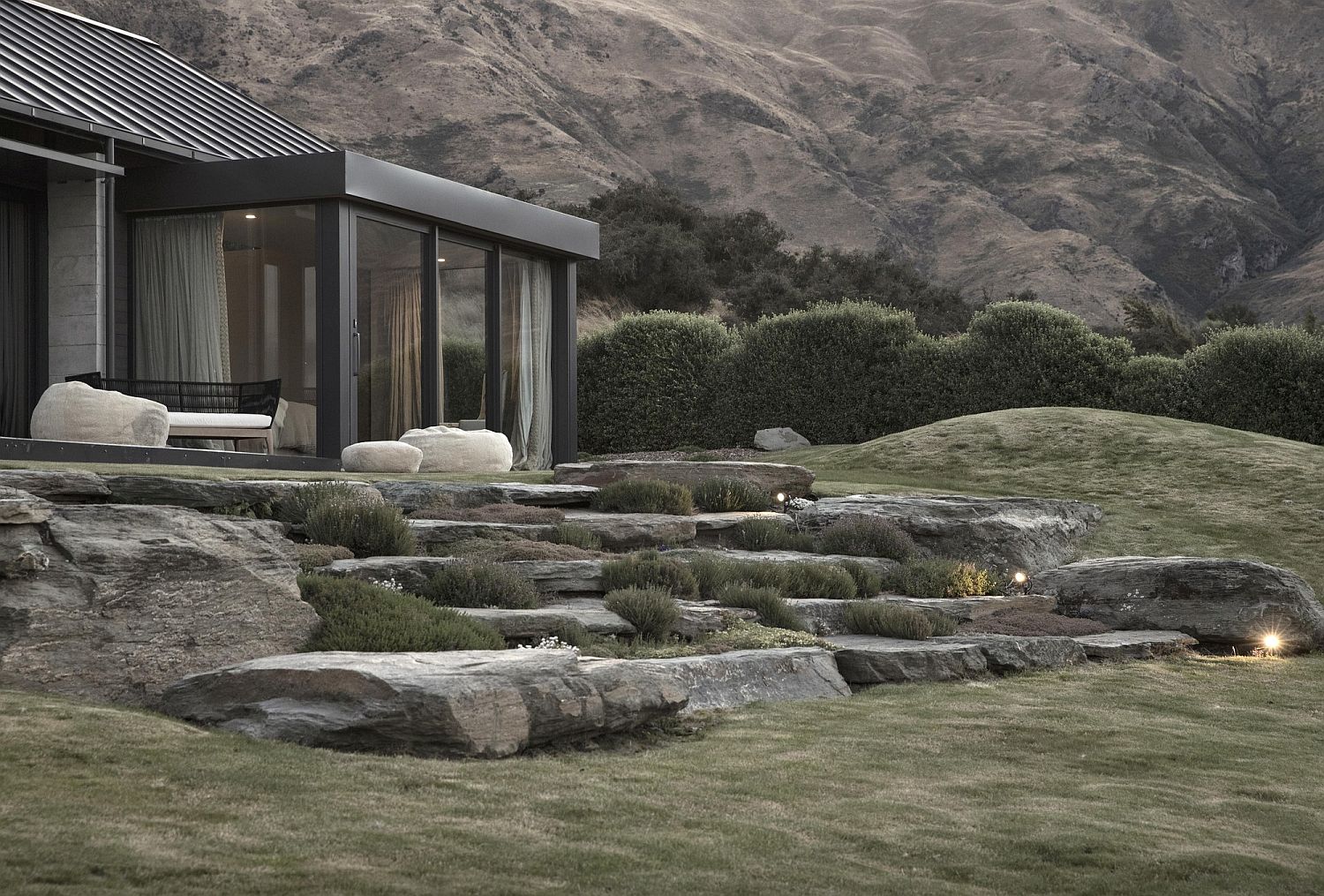
Sustainable house in New Zealand with glass walls and gabled roof
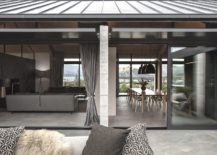
Beautiful landscape outside the home becomes a part of the interior
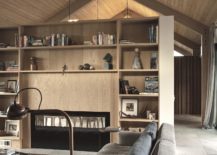
Bookshelves anchor the living room while adding color and accent features
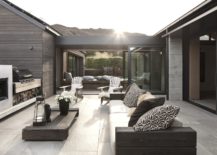
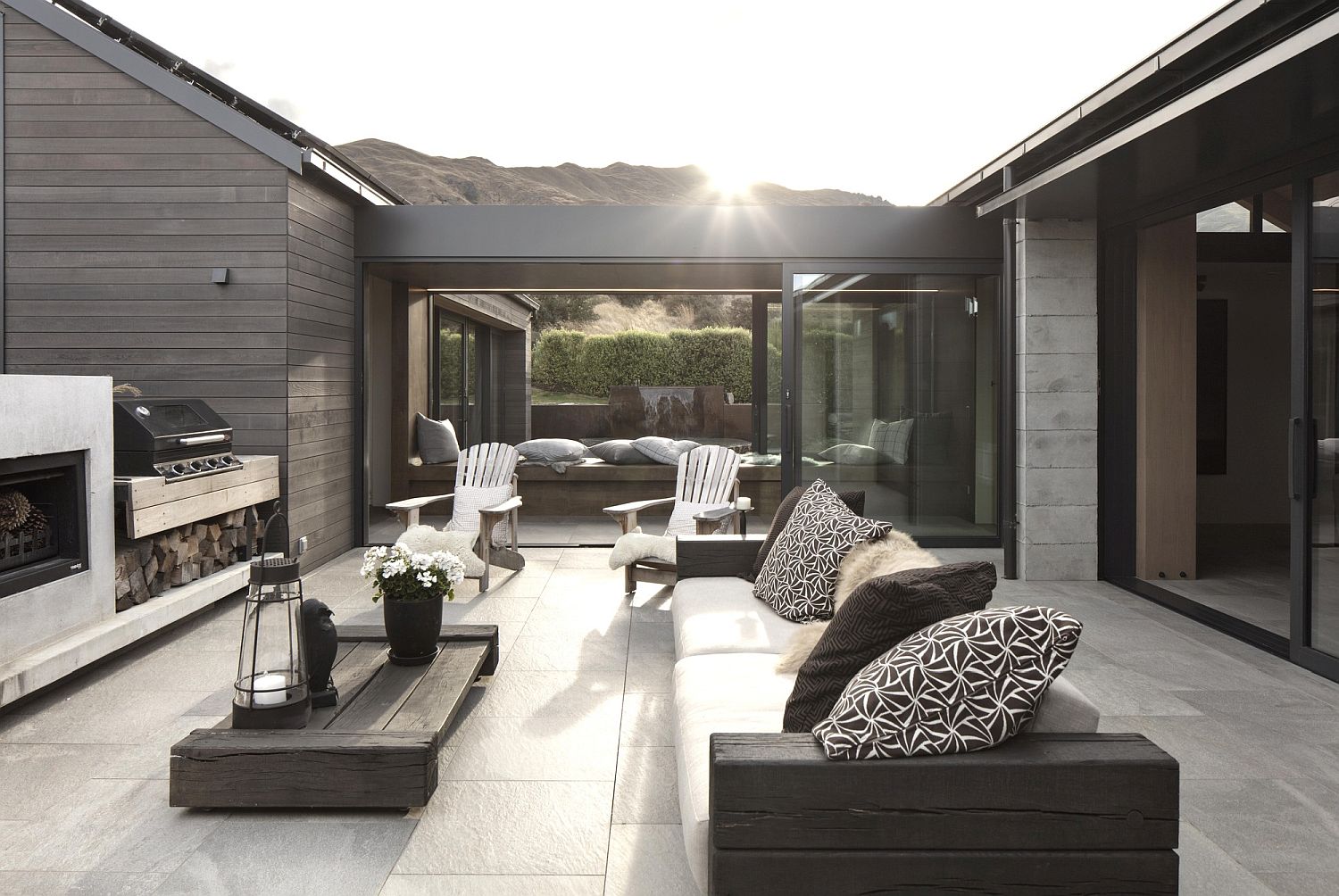
Central courtyard of the house with a comfortable sitting area
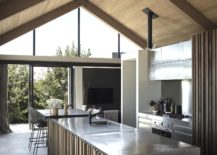
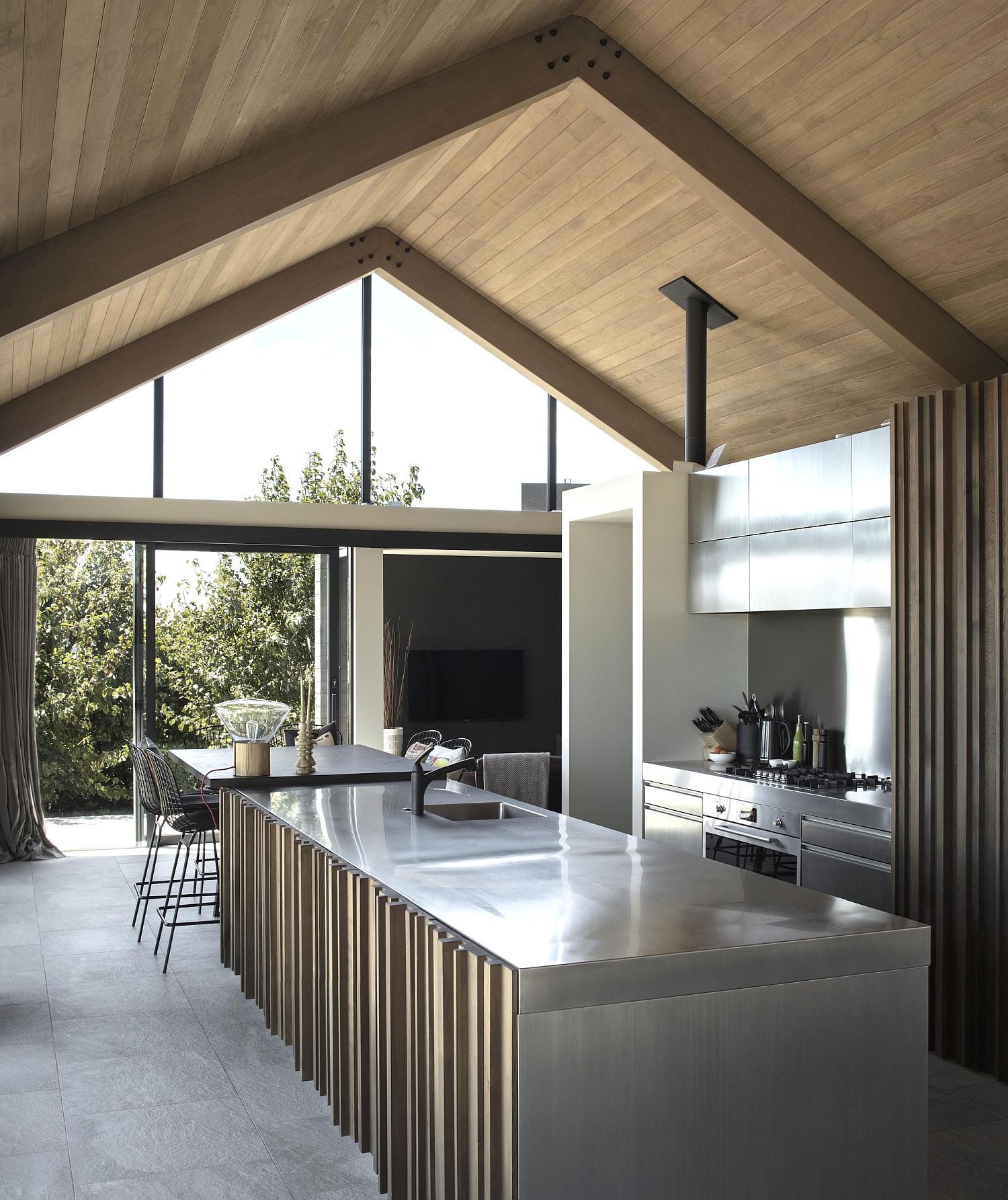
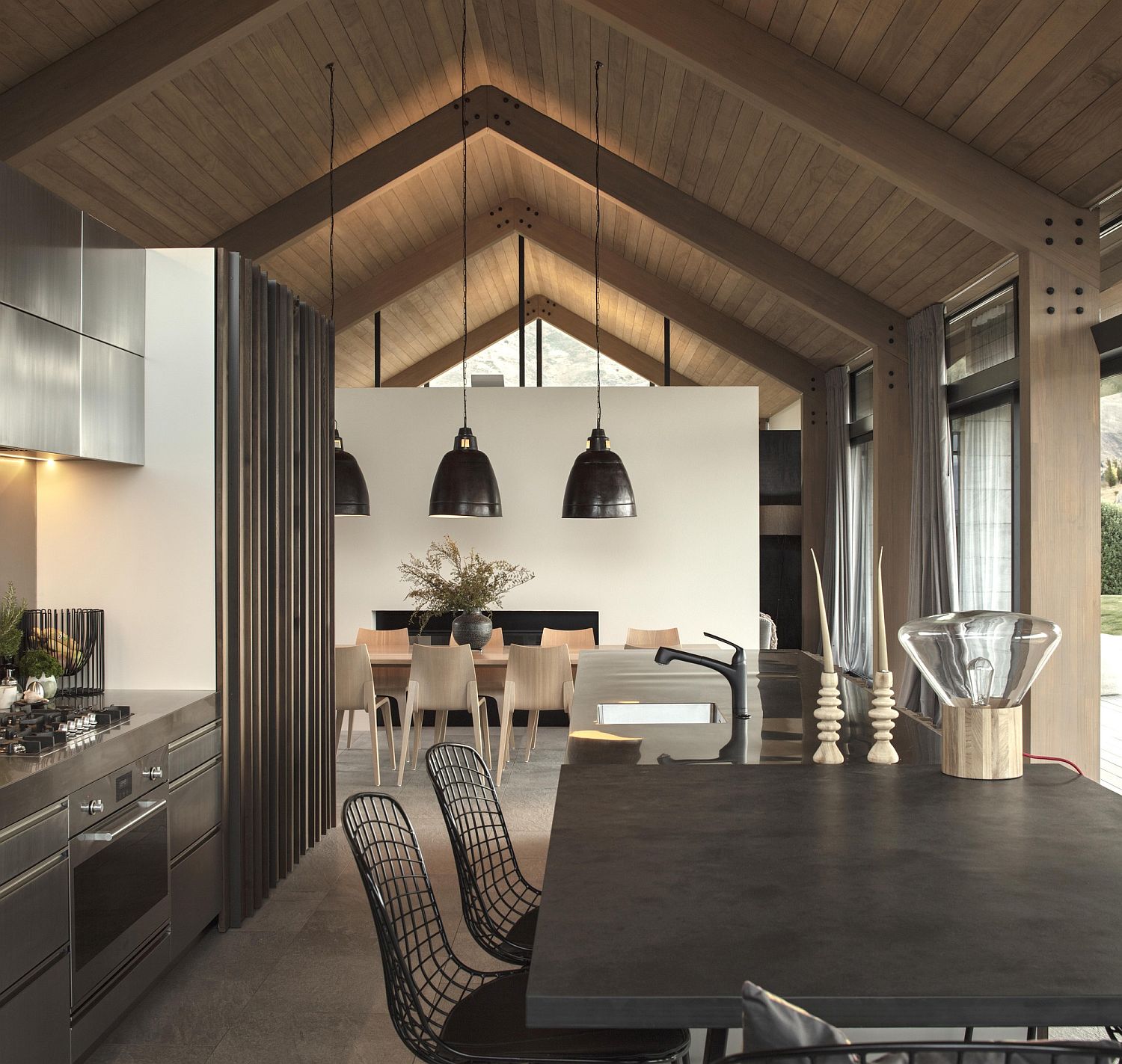
Gray interior of the kitchen with gabled roof and glass walls that bring light inside

A combined inslab heating and hot water heat pump system are powered by 5kWh of discretely placed photovoltaic panels. Appropriate use and positioning of Thermomass concrete, and large glazed openings allow for natural heating and cooling as much as possible, allowing the house to run at a very low cost.

RELATED: House D: Japanese Home with an Eccentric Gabled Roof and Unique Floor Plan
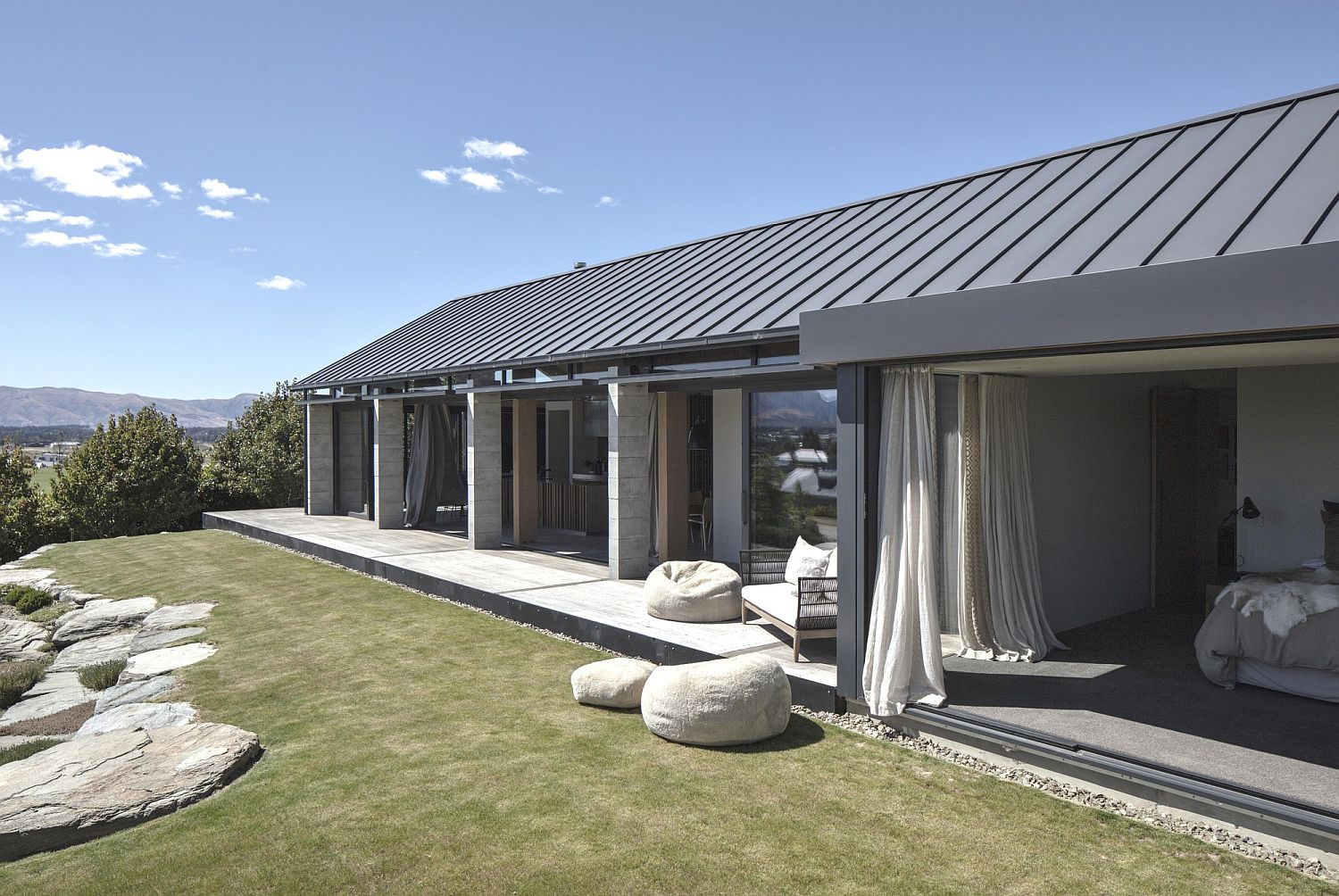
Open design of the house connected to the landscape outside
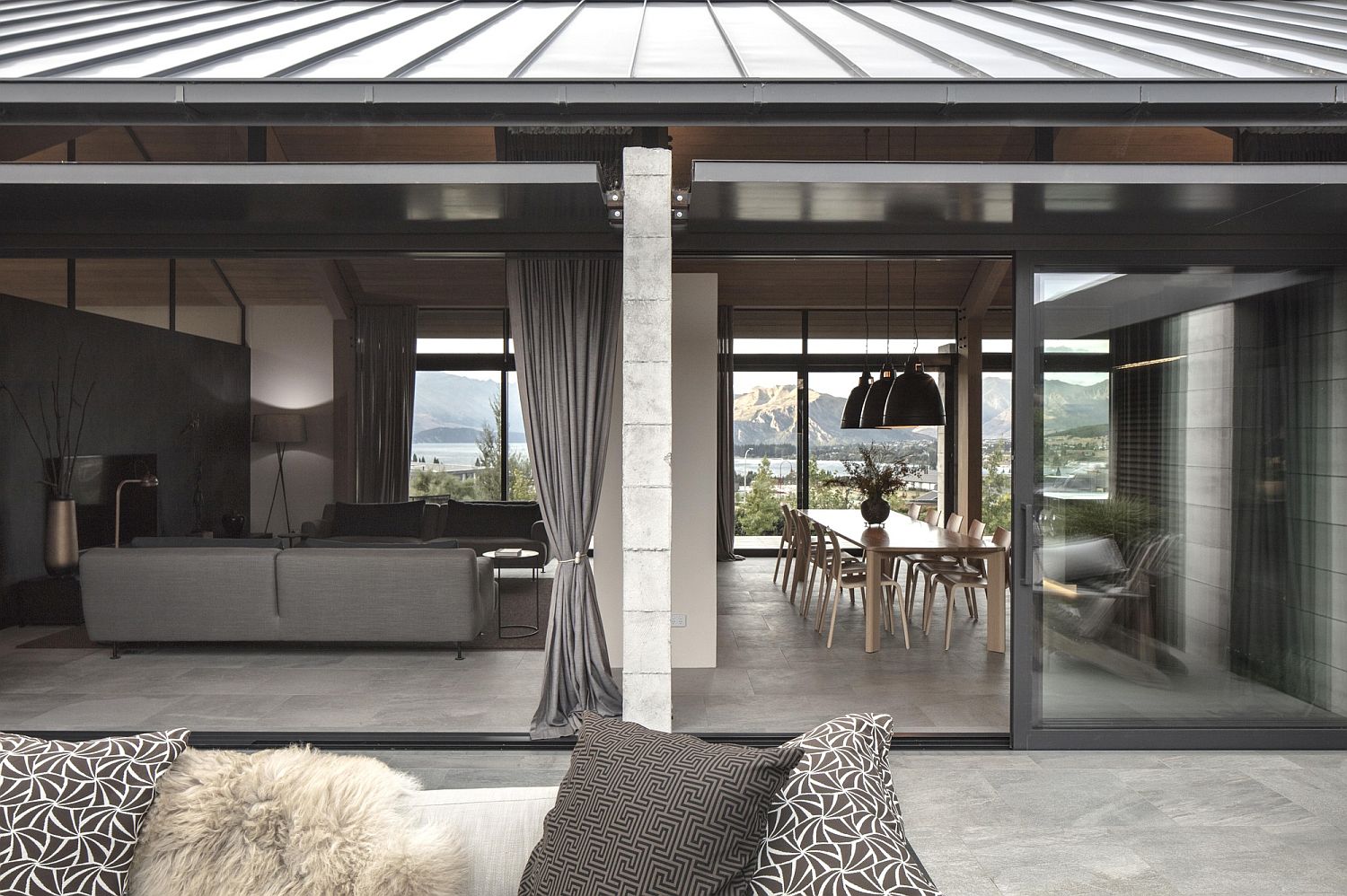
Open plan living area of the house with dining room and kitchen next to it
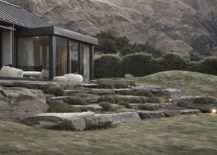
Outdoor spaces around the Wanaka House
Oversized pendants in black accentuate the gabled roof of the house
Series of floor-to-ceiling glass panels connect the interior with the world outside
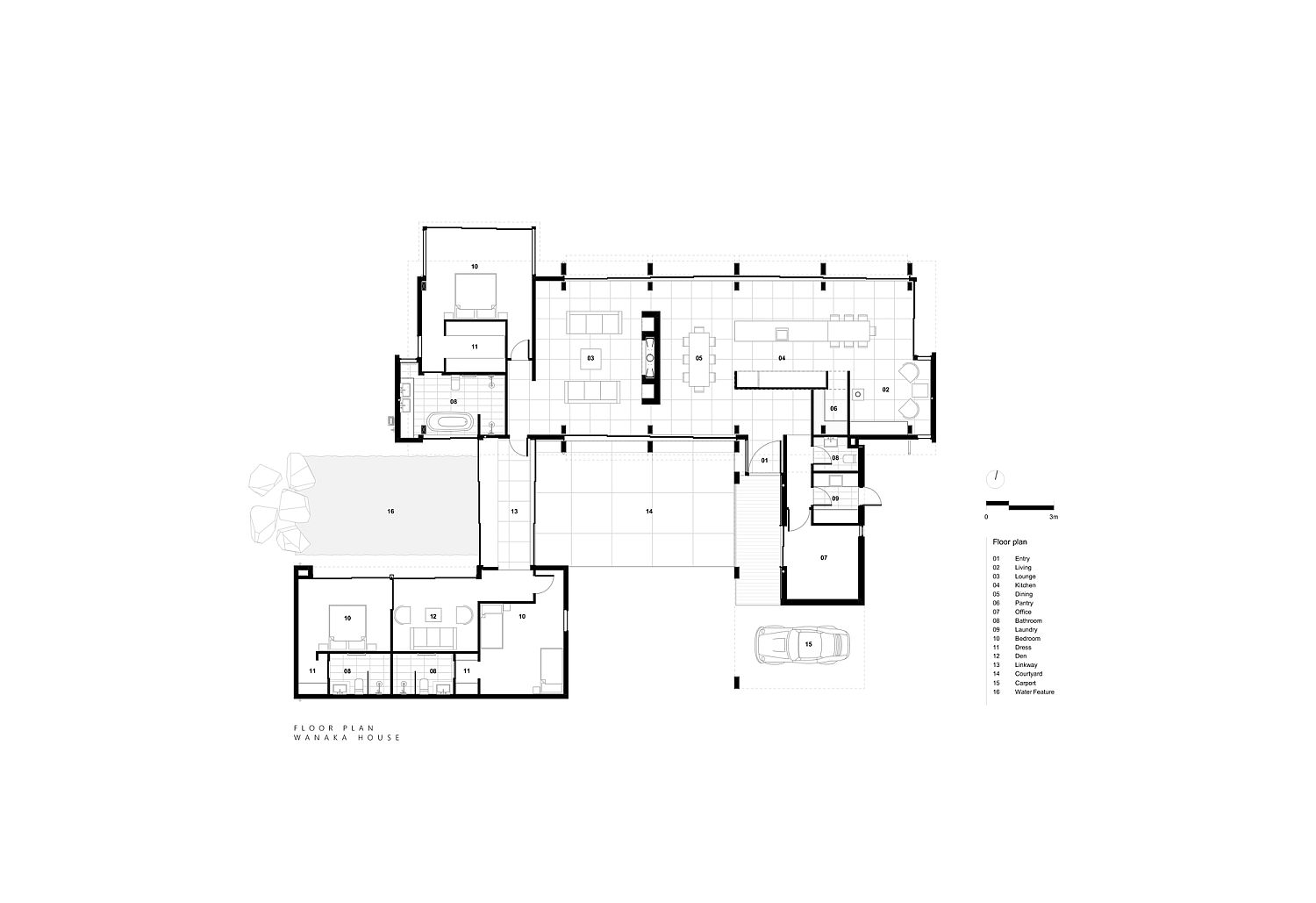
Floor plan of Wanaka House in New Zealand

You’re reading Sustainable Modern Home in New Zealand with Gabled Roof and Captivating views, originally posted on Decoist. If you enjoyed this post, be sure to follow Decoist on Twitter, Facebook and Pinterest.

Similar Posts

  • 25 Top Tips and Tricks For Organizing Your Garage

    When it comes to organizing our home and making it much more efficient, the garage is one of the last places that you think about instantly. It is generally a space that is left to accumulate stuff and over the years, everything that you do not need ‘immediately’ is just tucked away into the garage […]

    You’re reading 25 Top Tips and Tricks For Organizing Your Garage, originally posted on Decoist. If you enjoyed this post, be sure to follow Decoist on Twitter, Facebook and Pinterest.

  • Big Barn

    North of San Francisco, in Glen Ellen, a less populated part of the Napa wine country, the culture has been based on agriculture and was named for an original winery.  Jack London made this his permanent home here in the early 1900s. Drawn by the land, London believed in the redemptive qualities of rural life. Less than an hour from the City, rolling hills covered with groves of oak trees surround the downtown. The strong agricultural history has affected the built environment here with many examples of barn like houses that are confusingly morphed between the two vocabularies. On the existing footprint of a 1950’s ranch house, this family getaway evolved in response to a request for a retreat from their urban lifestyle. The atmosphere of a tack barn renovated into a bunk house on site inspired thoughts of a larger barn like typology for this main house of 3,900 square feet. The request from the client was to build in a consistent way within the rolling hills dappled with agricultural buildings. A simple, rectangular, two-story form emerged with an asymmetrical gabled roof. The shorter side of the roof faces the southwest sun and reduces heat gain to the structure. Fenestration is limited to this exposure as well and is organized like thin full height ventilation shutters that reference traditional barn building. The entry, a larger version of the vertical slit elements is recessed for shading. The fireplace and chimney, foreign to the barn typology, is displaced from the structure with glazed joints. The east side is more open to the view and morning sun. A continuous, building-sized assembly of steel sash glazing includes large sliding doors that pocket into the adjacent wall and open the kitchen to the rear terrace.  The upper zone of the main space is void of windows and reminds one of the empty shell-like spaces of barns. A large vertical wood shutter located on the southeast gable end is aligned axially with an internal access through the plan on both levels. When open at both ends, prevailing breezes flow through the mass cooling it naturally. In order to leave the hillside intact and avoid grading, the form is excavated into the site uphill and cantilevered over it downhill. A steel grated bridge connects the upper sleeping level with the hillside and tack barn above. A minimal material pallet of reclaimed redwood, corrugated Corten steel and black steel sash windows combined with integral gutters, and lack of overhangs further the minimal feeling of the construction. Inside the singular materiality is continued via California Oak for floors wall and ceilings. Radiantly heated floors and minimal cooling provided only at sleeping areas, coupled with enhanced glazing, insulation and mechanical system efficiencies mitigate energy use. PROJECT TEAM Architecture : Faulkner Architects Contractor: Redhorse Constructors Civil Engineer: Adobe Associates Structural Engineer: CFBR Structural Group Mechanical Engineer: Sugarpine Engineering Electrical Engineer: Sugarpine Engineering Geotechnical Engineer: NV5 Landscape: Michael Boucher Landscape Architecture Lighting: Ken Fulk Interior designer: Ken Fulk Theatrical/AV: SoundVision Pool Engineer: Terracon Pool Consultant: Blue Revolution Construction Project Manager: Walker Construction Management Special Inspections: PJC & Associates CALGreen: Gilleran Energy Management Irrigation Design: Dickson & Associates Arborist: Bartlett Trees PHOTOGRAPHY Joe Fletcher Photography