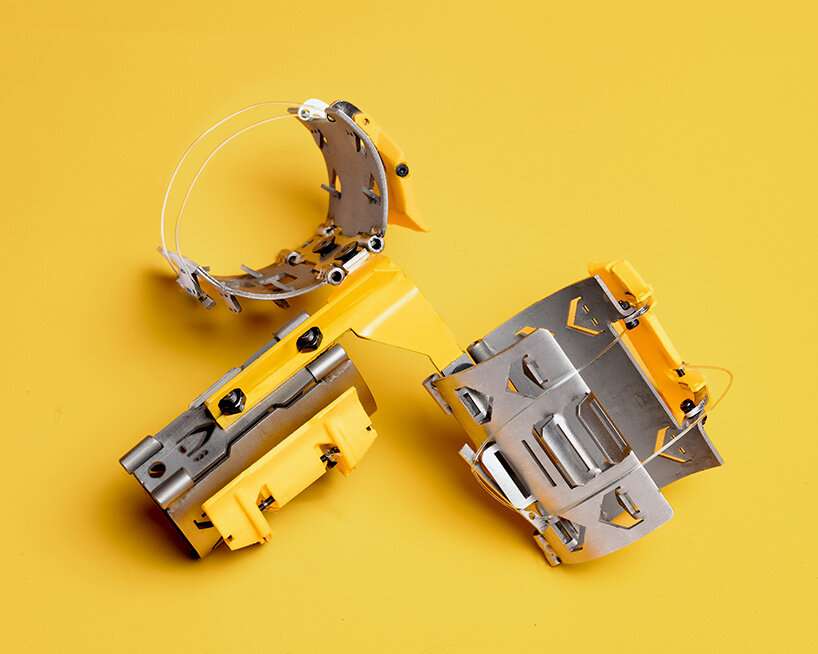
a joint that adapts to variation instead of standardizing it
Omnibite by Eugenio Costa begins in the moment where a branch is cut, held, and turned in the hand before anything is assembled. The project proposes a shift in self-building that moves construction back to the moment of gathering material, where wood is still irregular, unprocessed, and open to interpretation, introducing a three-axis joint with a quick-locking system that connects raw branches without screws, allowing natural elements to become structure with minimal preparation.
Rather than standardizing material, the joint accepts variation thanks to its geometry, which adapts to different diameters and angles, holding each branch in place through a system of clamps and interlocking plates. The bright, mechanical components contrast with the organic surface of the wood, making the act of connection visible and direct. In this way, the joint does not hide construction but frames it as an ongoing negotiation between precision and irregularity.
all images by Eugenio Costa
Eugenio Costa’s omnibite builds from landscape to structure
As branches accumulate, they begin to define a frame. A chair emerges, its proportions guided as much by available material as by intention. The system translates scattered fragments into inhabitable form, where each connection stabilizes a larger configuration.
The project is grounded in research into local wood species found in Lombardy, treating the surrounding landscape as both resource and knowledge base. Each type of wood carries distinct structural properties, influencing how it can be selected and used. By focusing on what is immediately available, Omnibite suggests that construction does not begin in the workshop, but in the act of recognizing potential within a specific environment.
Milan-based product designer Eugenio Costa turns making into something less about assembling predefined parts and more about engaging with material as it is found. Omnibite lingers in the interval before construction is fixed, where a branch is selected, tested, and understood.
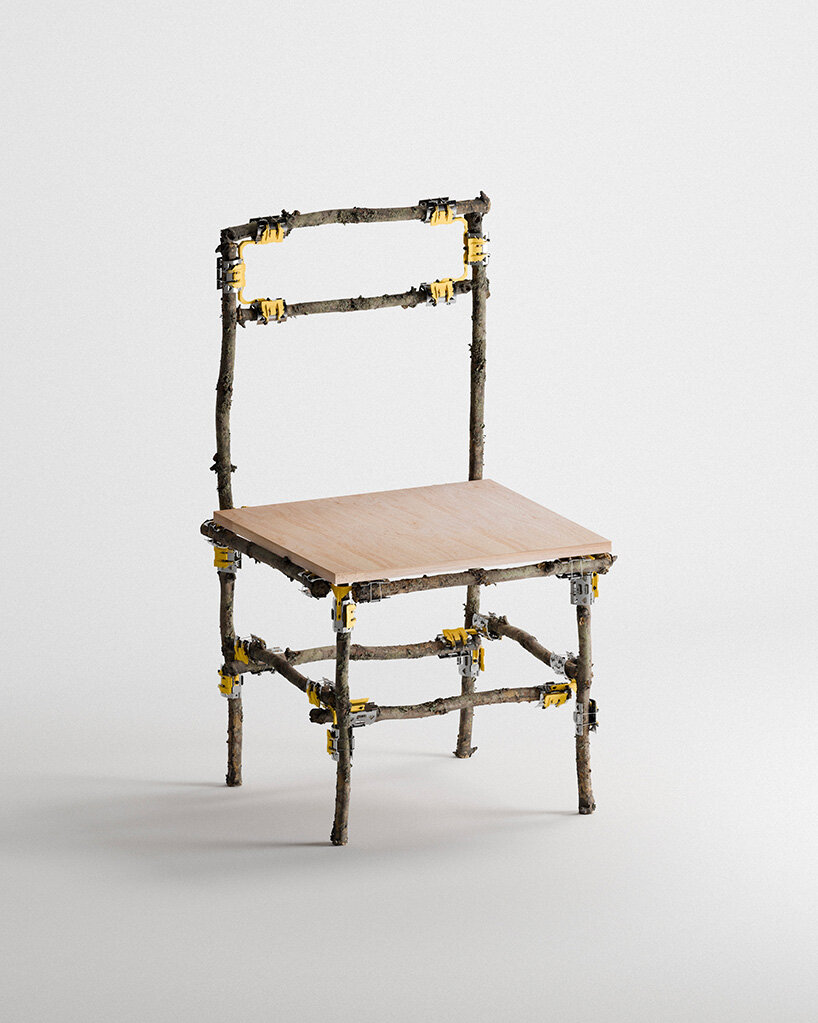
irregular wood elements are held in place through adjustable clamps and interlocking plates
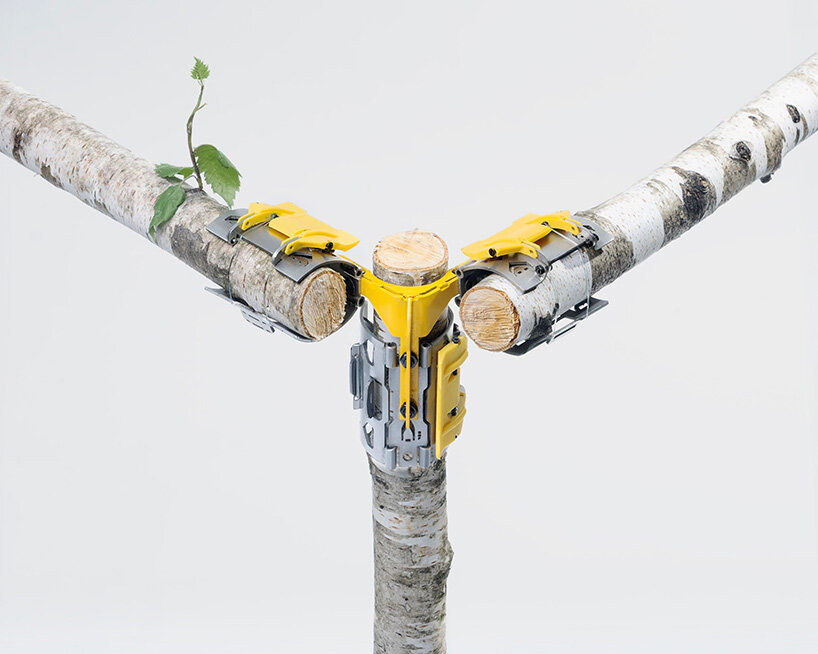
three-axis joint connects raw branches without screws through a quick-locking system
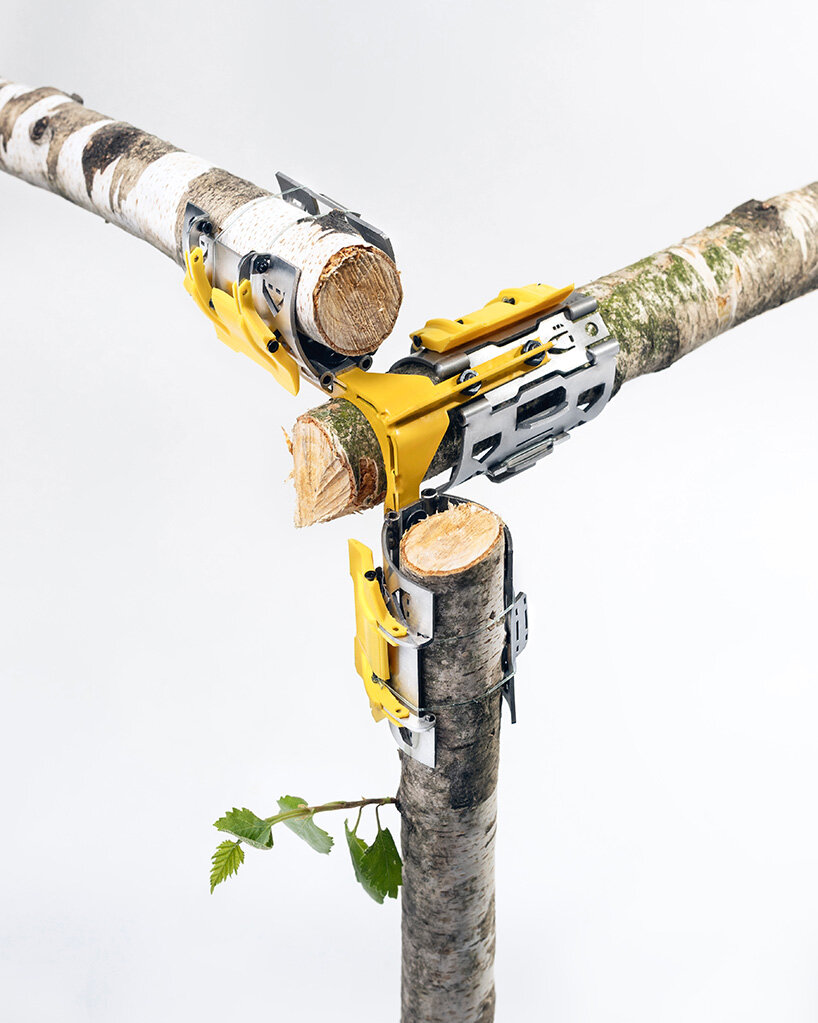
the joint operates across three axes, stabilizing connections at multiple angles