Villa Tonden: Modern Dutch Cabin in the Woods Brings Modernity to Classic Form

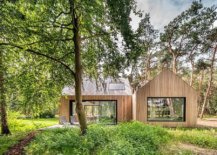
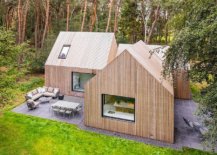
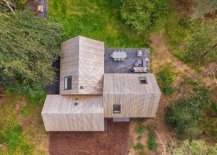
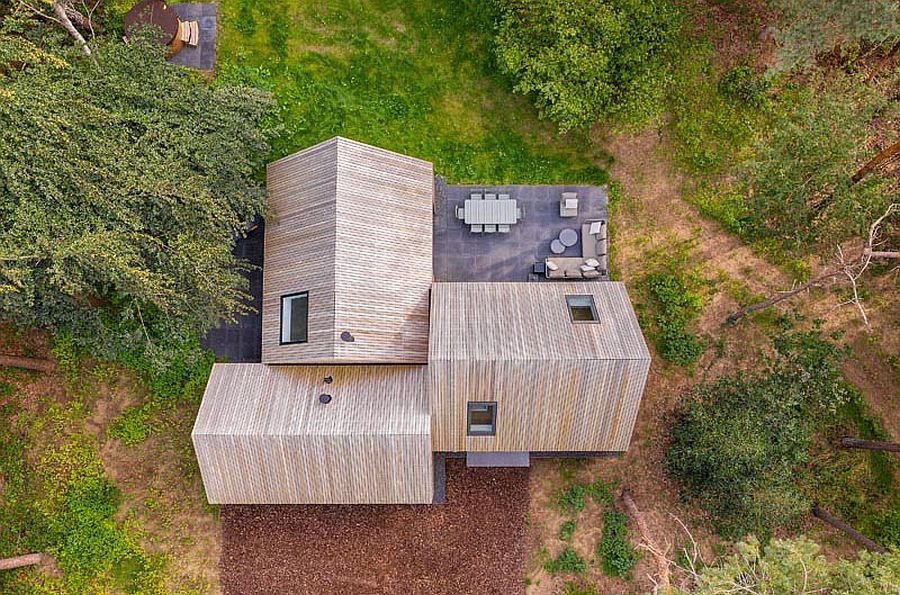
A beautiful vacation home that takes you away from all the rush and surrounds you with greenery, Villa Tonden in Netherlands by HofmanDujardin brings modern comfort to vernacular design that is all too common in this region of the world. This lovely holiday retreat was designed as an amalgamation of three individual units with traditional cabin form giving way to contemporary and a light-filled interior. With wood on the outside and modern finishes on the inside, one sees a perfect balance of different texture and elements. Large glass windows and sliding glass doors bring ample light into the open plan living area, bedrooms and even the bathroom. The world here seems like one large, woodsy setting!
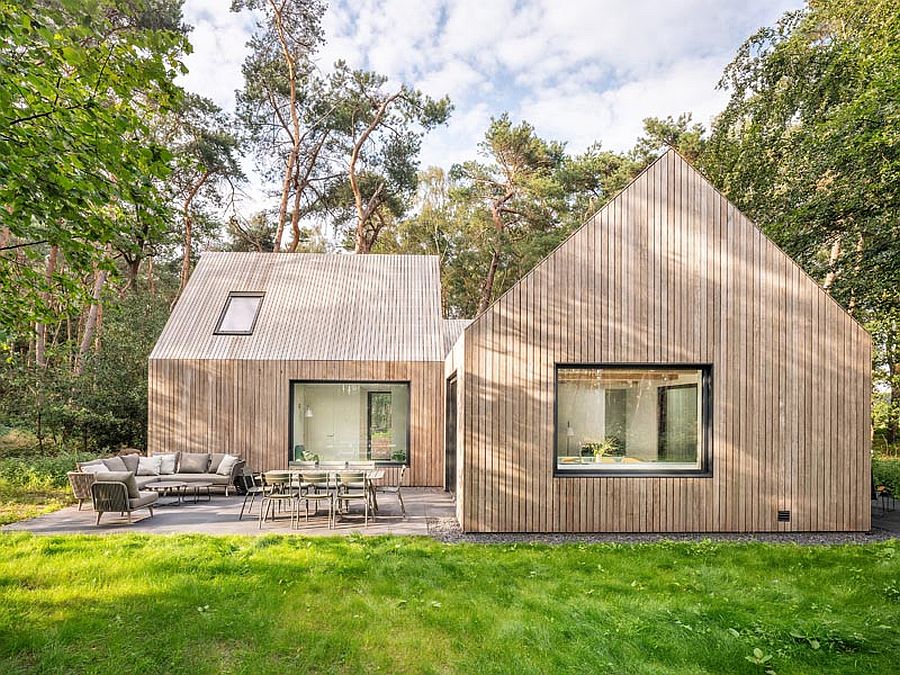
Modern cabin in the woods in Netherlands combines three different units into one


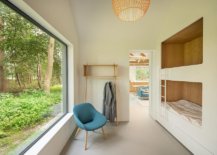
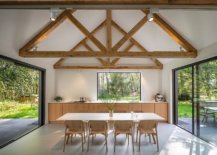
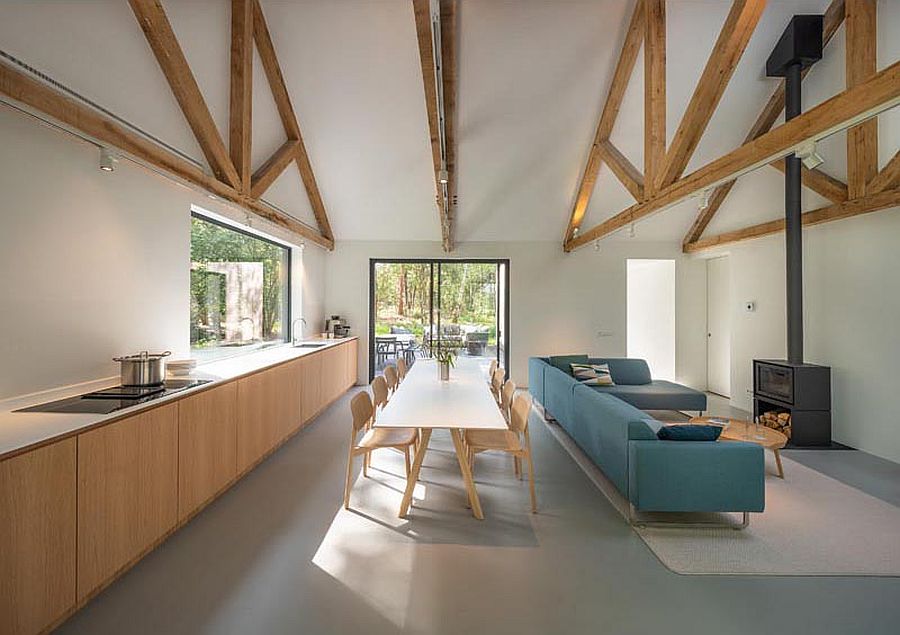
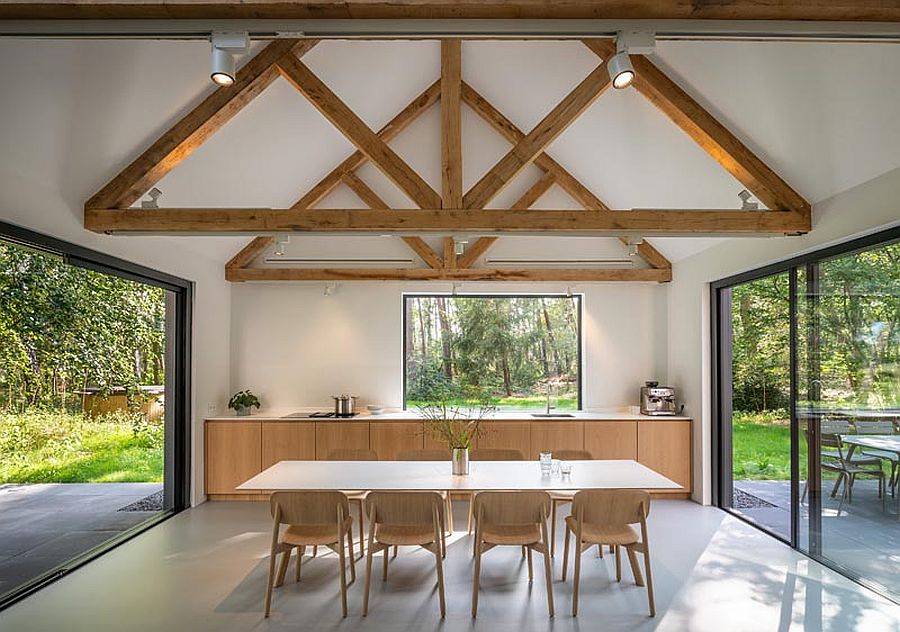
In the open plan living area, one sees the kitchen, dining space and the small living area occupying the same larger ‘unit’ and wooden beams that offers structural support also bring visually exciting pattern. A large couch in blue and a wooden dining table take up most of the space in here with the kitchen workstation in the backdrop. Custom window seats and bunk beds are used to save wherever possible even as a modest outdoor area allows residents to enjoy quiet evenings as they take in the sights and sounds of surrounding forest.
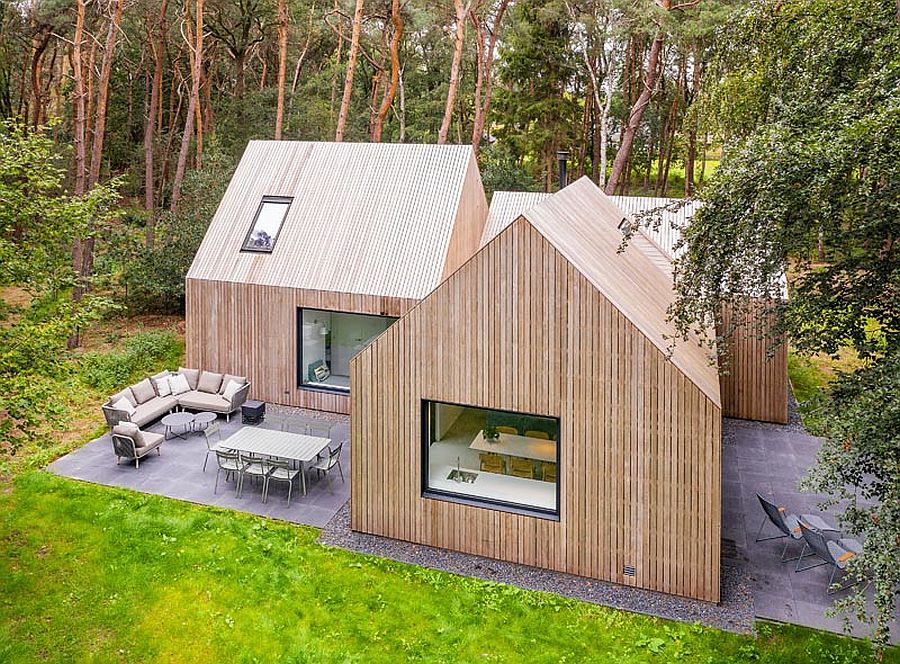
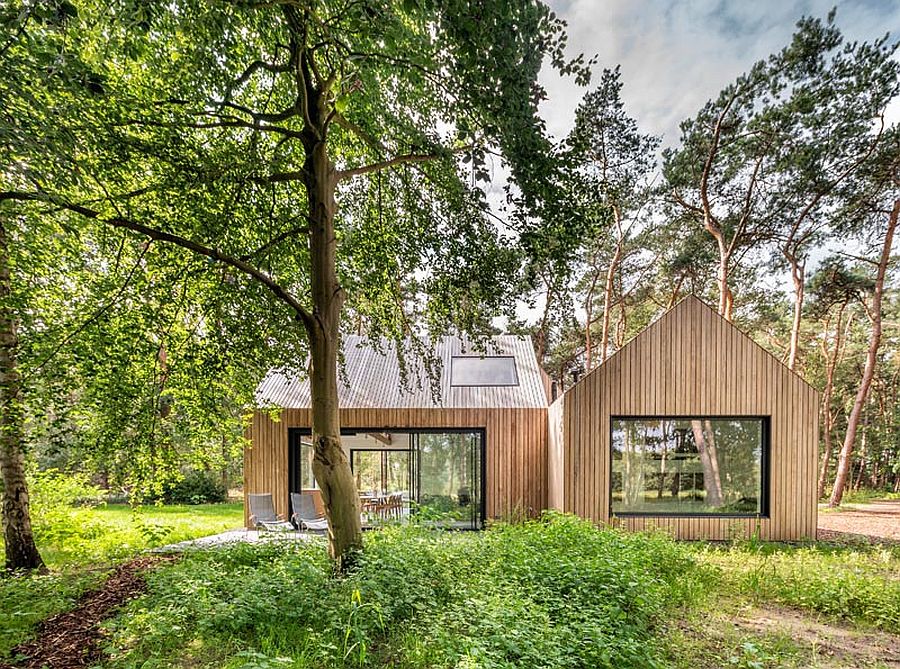
Classic form of the traditional cabin combined with modern aesthetics to create a wonderful escape
Gorgeous natural canopy around the cabin adds to the charm of the escape
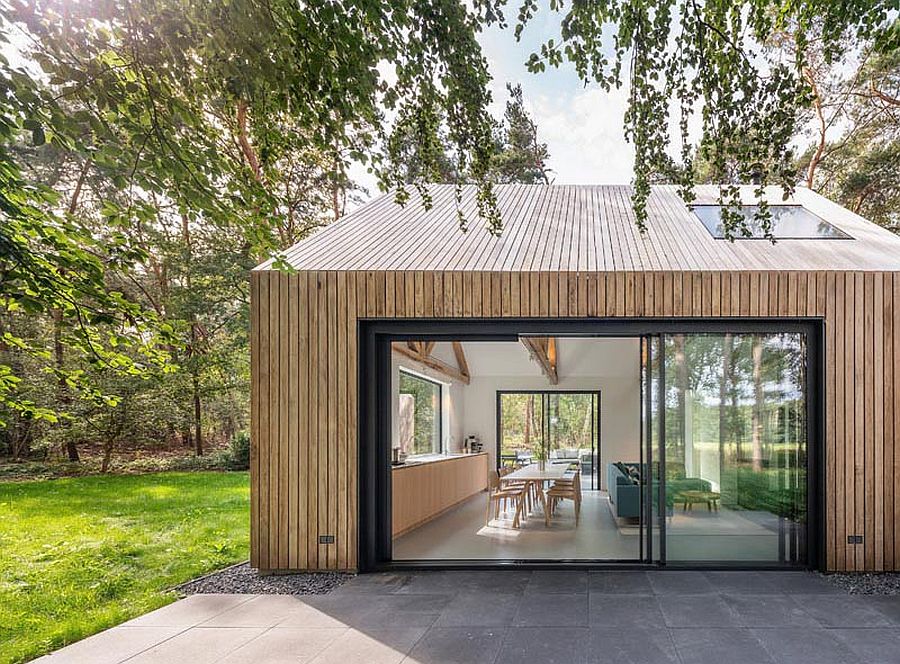
Living room, kitchen and dining area of the cabin with connectivity to the outdoors
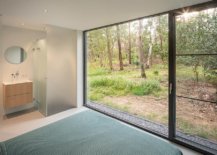
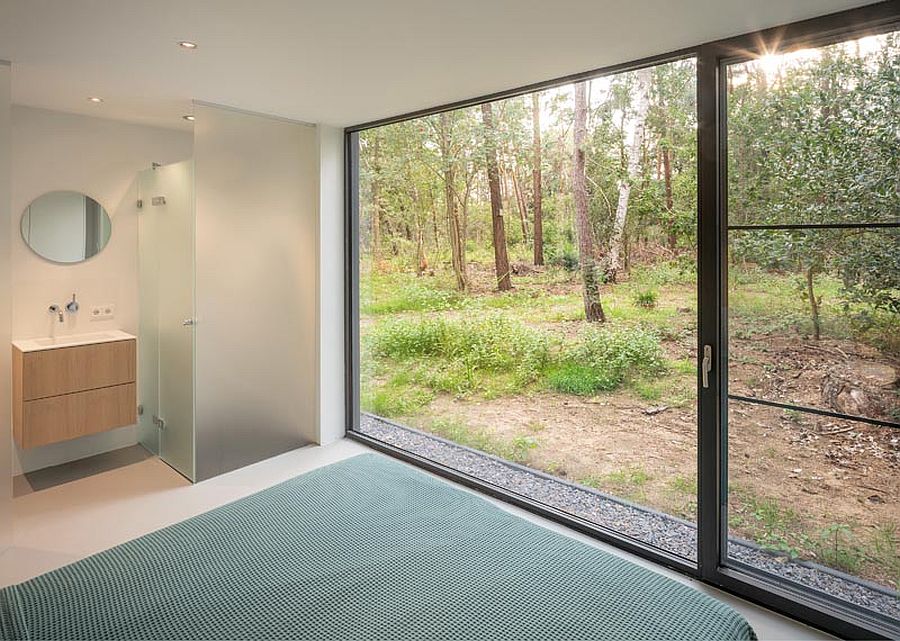
Main bedroom of the house with sliding glass doors that lead into the woods
Sliding glass doors connect the interior of the cabin with the view outside
View of Villa Tonden by HofmanDujardin in Netherlands

The refuge offers a perfect escape where you can get away from constant big city rush and enjoy the charm of nature once again. You can do so without being constrained by usual walls that take away from connectivity with the outdoors! [Photography: Matthijs van Roon]
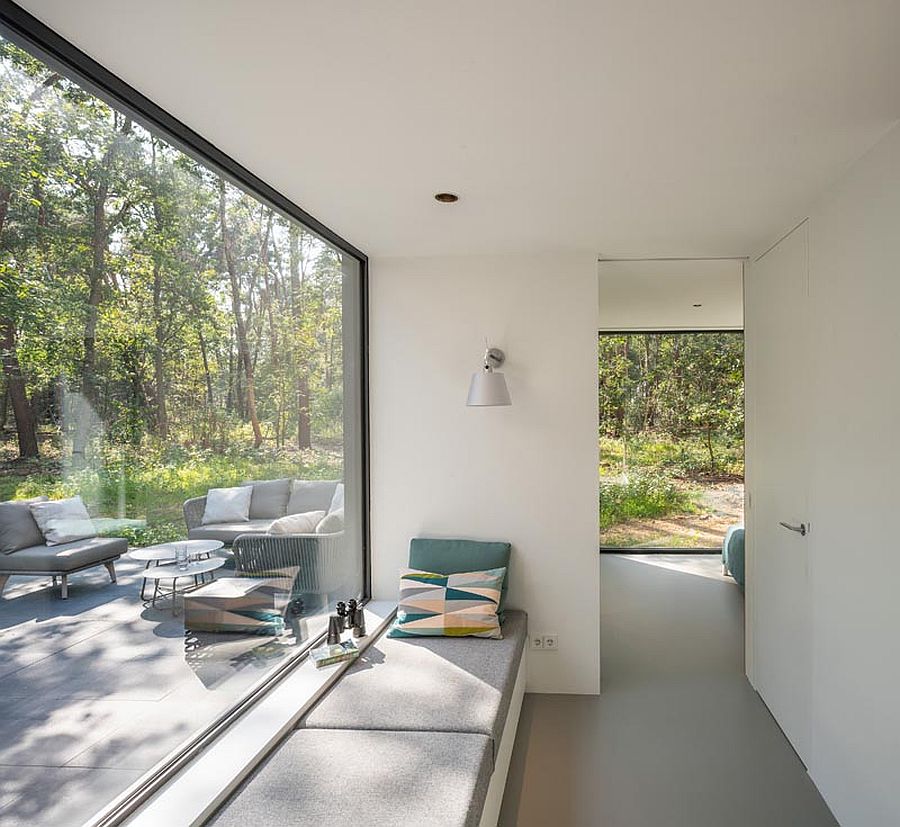
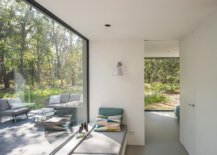
Window seat next to the large window allows those inside to enjoy the green landscape outside
Wooden ceiling beams add support to the structure while offering textural contrast to the interior
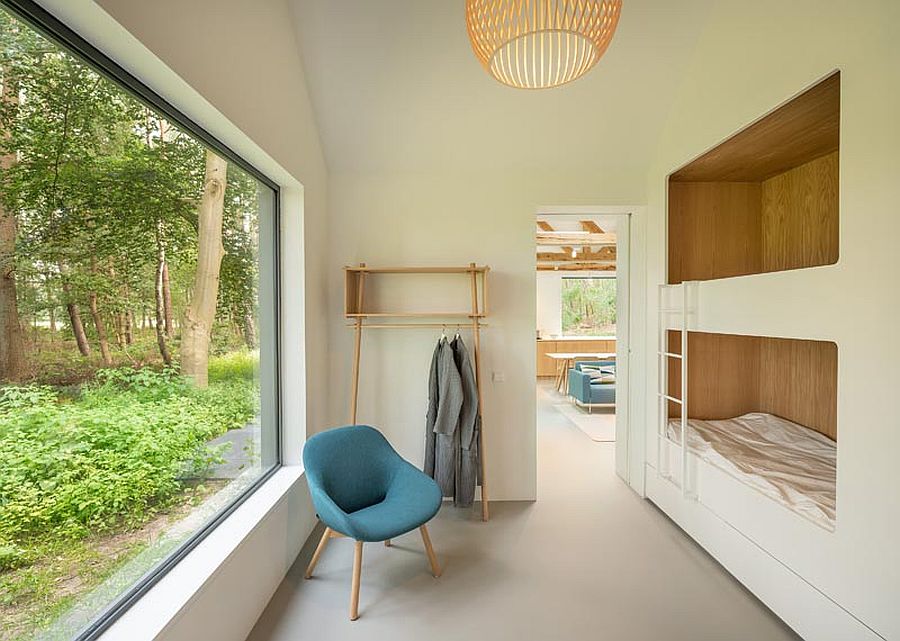
Bunk beds with large picture window on the opposite side offer lovely view of the outdoors
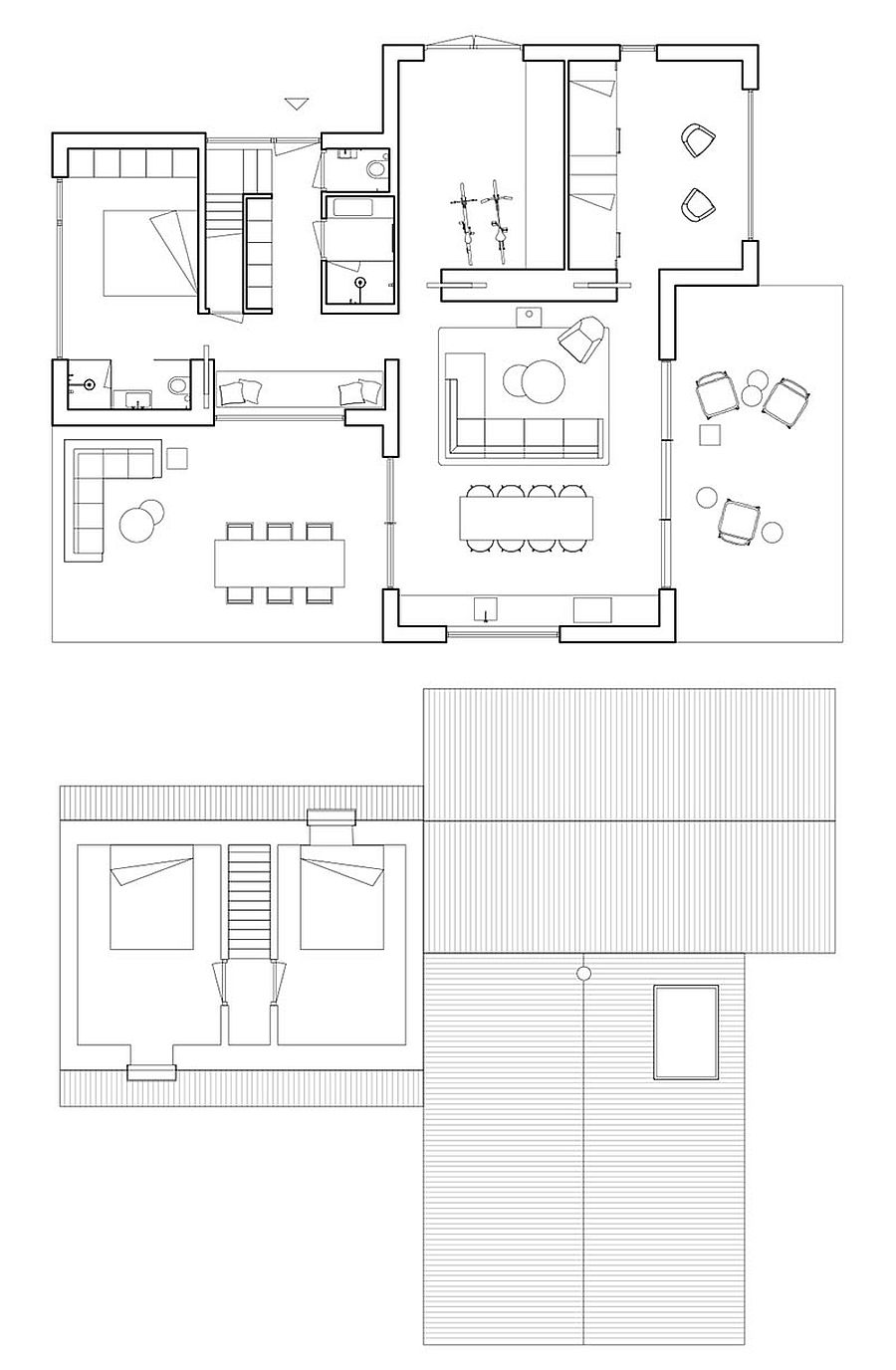
Floor plan of Villa Tonden by HofmanDujardin in Netherlands

You’re reading Villa Tonden: Modern Dutch Cabin in the Woods Brings Modernity to Classic Form, originally posted on Decoist. If you enjoyed this post, be sure to follow Decoist on Twitter, Facebook and Pinterest.

Similar Posts

  • Lirio 7

    Located in a quiet street in one of the most emblematic neighborhoods in Mexico City, this project is an intervention that has its roots on the understanding of the urban and social dynamics in Mexico City. Lirio 7 has an interesting history; as an Art Déco building, originally housed public baths during the 30s, then in the 50s became a sanatorium, and before its abandonment, it was the headquarters of a security company. Considering this conditions, we took advantage from an abandoned building without any recognized heritage value by local authorities, to restore it and offer a specific model of housing that recovers the historical value of Santa María La Ribera neighborhood. The design process is based on the concept of a central patio and its perimeter circulation, which was adapted into a new layout to create 12 new apartments where the main corridor becomes part of the home. In this type of buildings, this circulation is a public place and the challenge on making it private leads to define an enclosure that plays with the visuals. The dwellings are arranged around the patio, orienting their view to it, which is considered as a place of introspection, not so much as circulation. Concrete elements of different heights acts as planters, dampen the sound of the water from the recovered fountain and support the discourse of circulations, interposing themselves to the visuals, again to guide and give privacy to the user. Each of the houses therefore has ventilation and daylight entrance. The first and second floors have a greater free height, typical of the original construction moment, allowing a greater volume of use of spaces. The third level, from the 50s as well as the new structures implemented on deck, maintain a standard height more like that the required by current construction regulations. A perforated concrete prism, outstands from the patio’s façade, creating a visual contrast without stealing it protagonism. With a different materiality and density from the rest of the project, this volume patches the view from the outside, creating a light and shadows game towards the last apartment, and allows the user to enjoy the views.