|

Zaha Hadid Architects Designs Cultural Center With Roof That Rises and Falls Like a River

Shaoxing Culture and Art Center by Zaha Hadid Architects with cloudsShaoxing Culture and Art Center by Zaha Hadid Architects with clouds

At this point, it’s safe to say that Zaha Hadid Architects (ZHA) stands as one of the world’s most innovative architecture firms. For years, ZHA has spearheaded sweeping, ambitious, and at times unexpected projects, encompassing everything from a decadent Roman hotel to a futuristic science fiction museum. Amid ongoing construction for its 46-story Shenzhen Institute of Financial Technology tower, the firm will be now returning to China for yet another project. This time, though, ZHA is tackling something a little more performance-based.

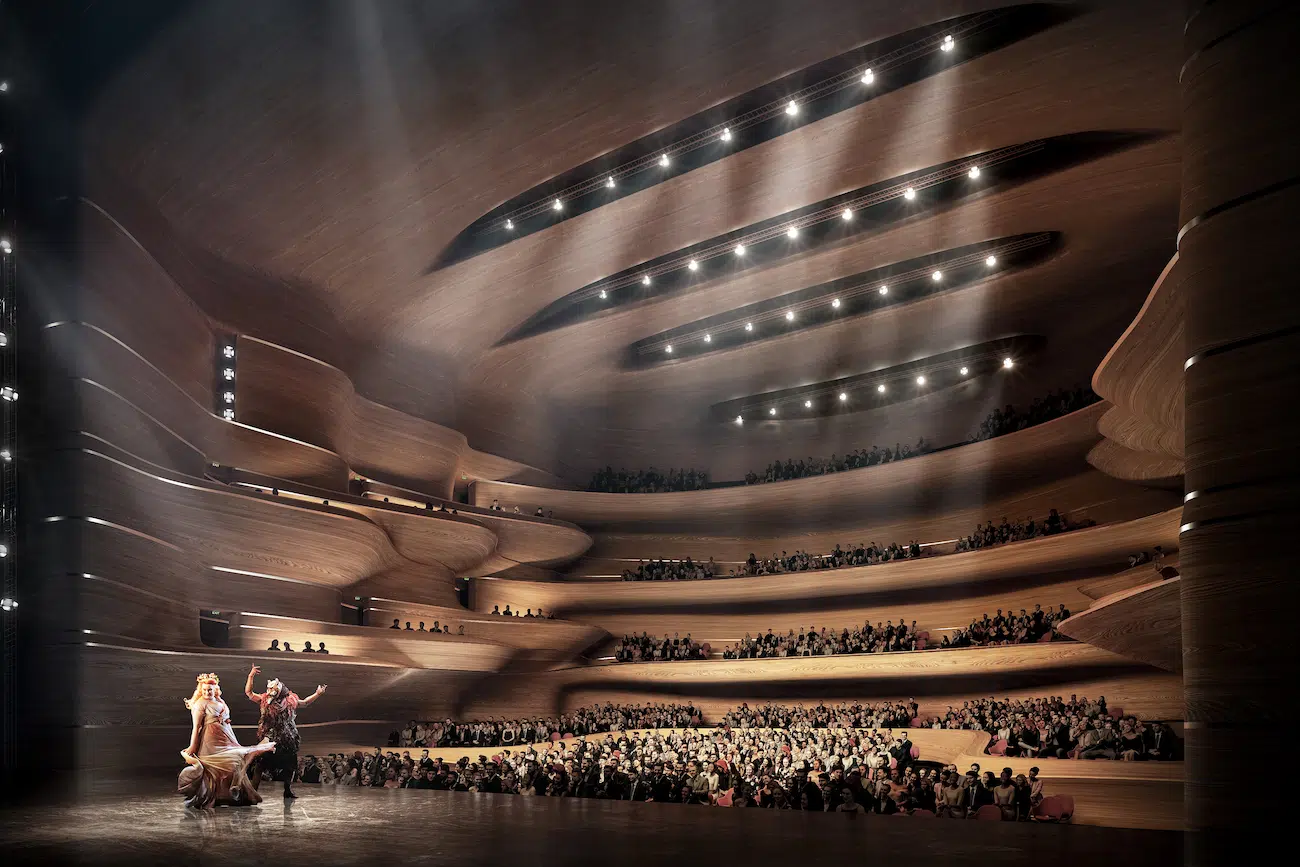
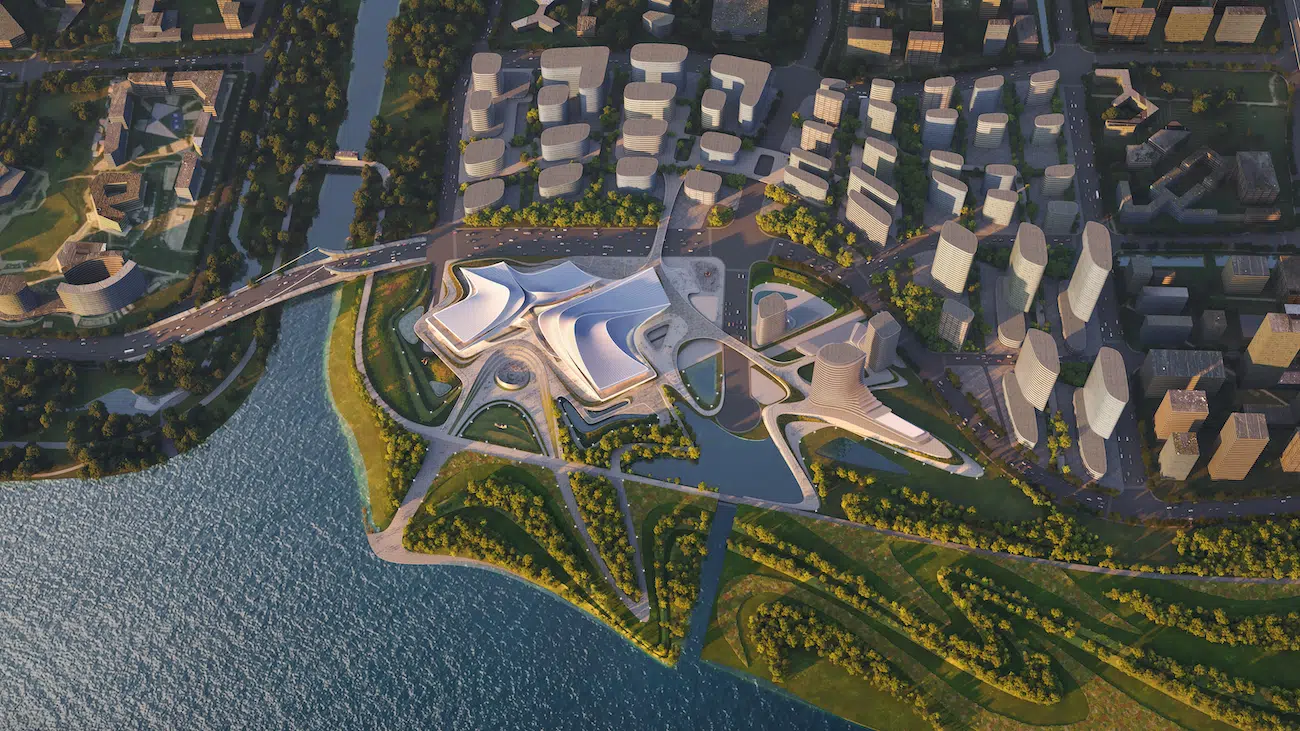
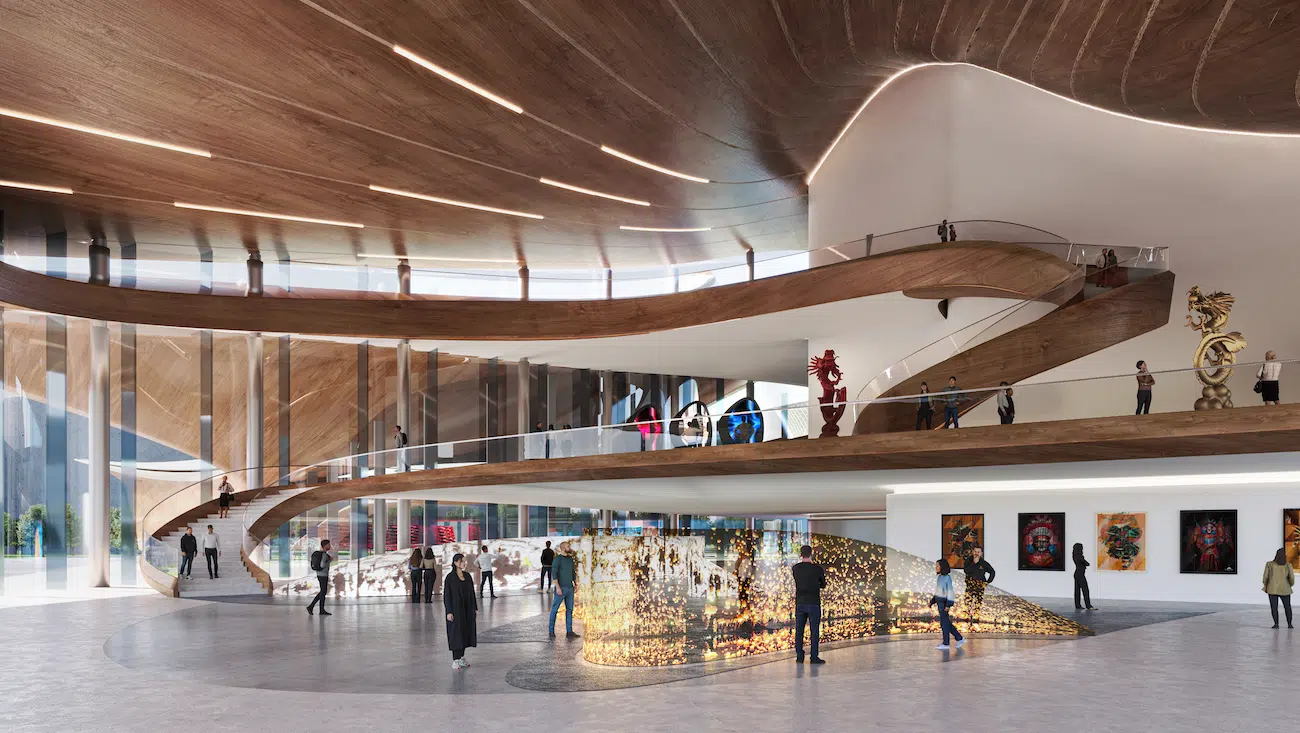
Nestled in the heart of Shaoxing, China, the Zhejiang Shaoxing Shangyu District Cao’e River Culture and Art Center will foreground the city’s newest cultural quarter and is designed to host local and international opera, dance, musical, and drama productions. These performances can unfold across several monumental spaces, whether it be the Center’s 1,400-seat Grand Theater, 500-seat Black-Box Multifunctional Hall, Heritage Museum, Arts and Education Center, or Digital Art Gallery. Judging by these features alone, it’s already clear that cultural expression guides the Shaoxing Culture and Art Center more than anything. That fact only becomes more apparent based on the structure’s architectural elements.

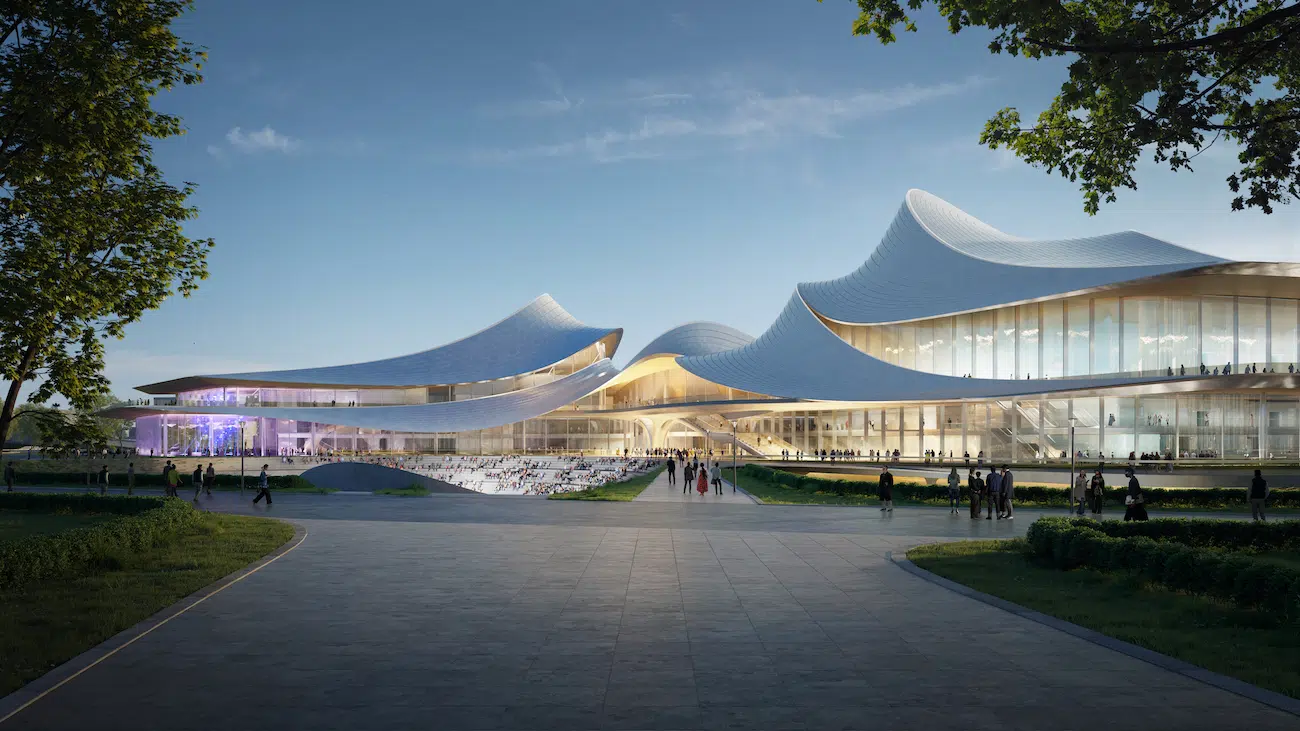
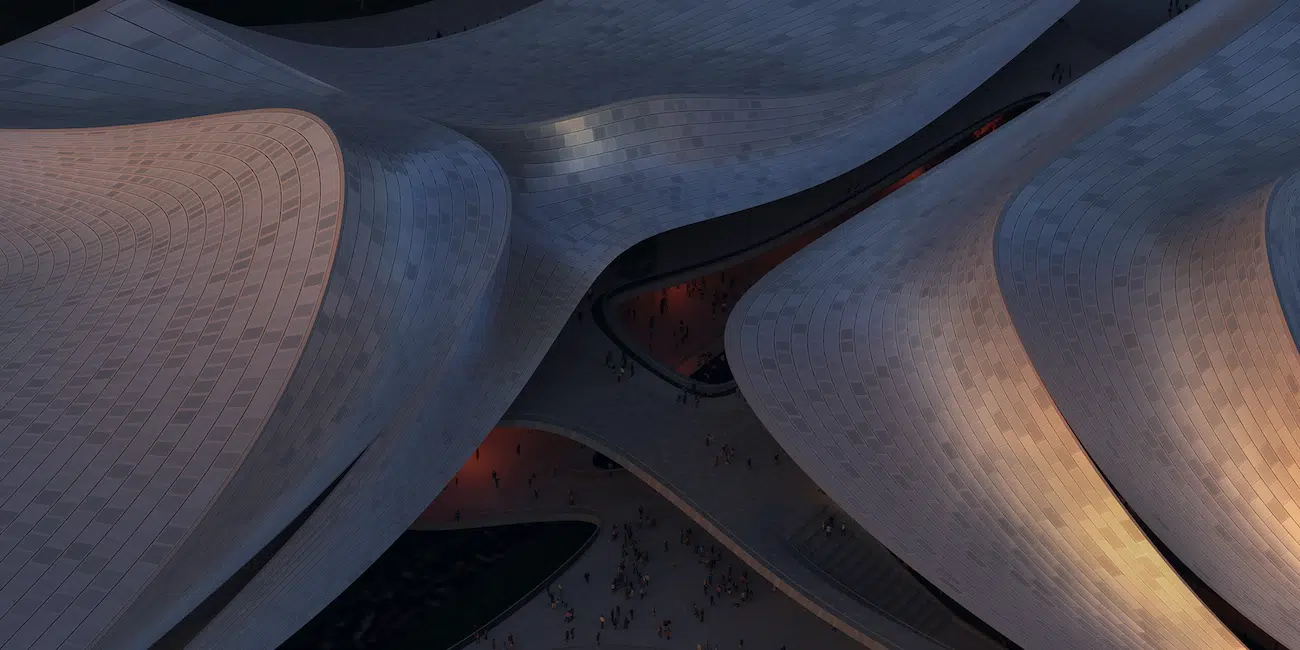
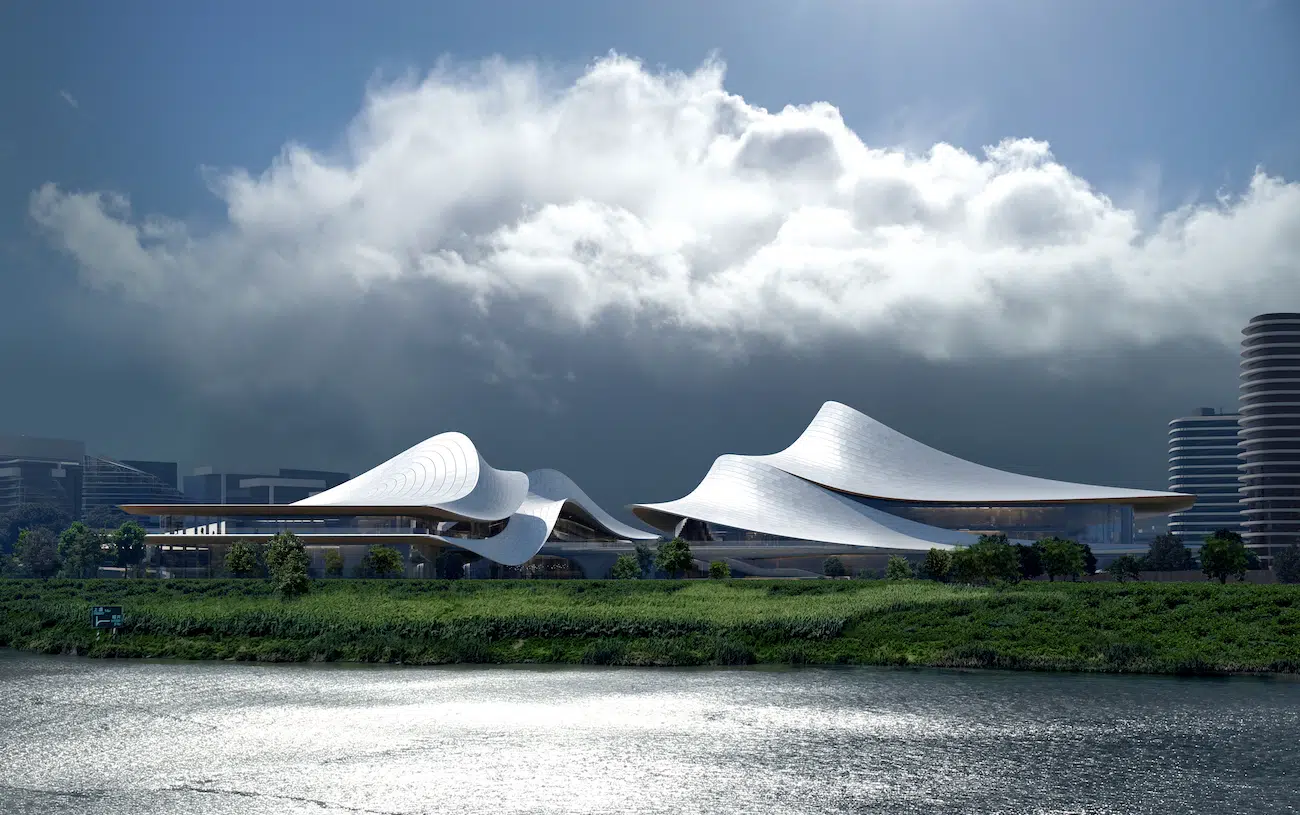
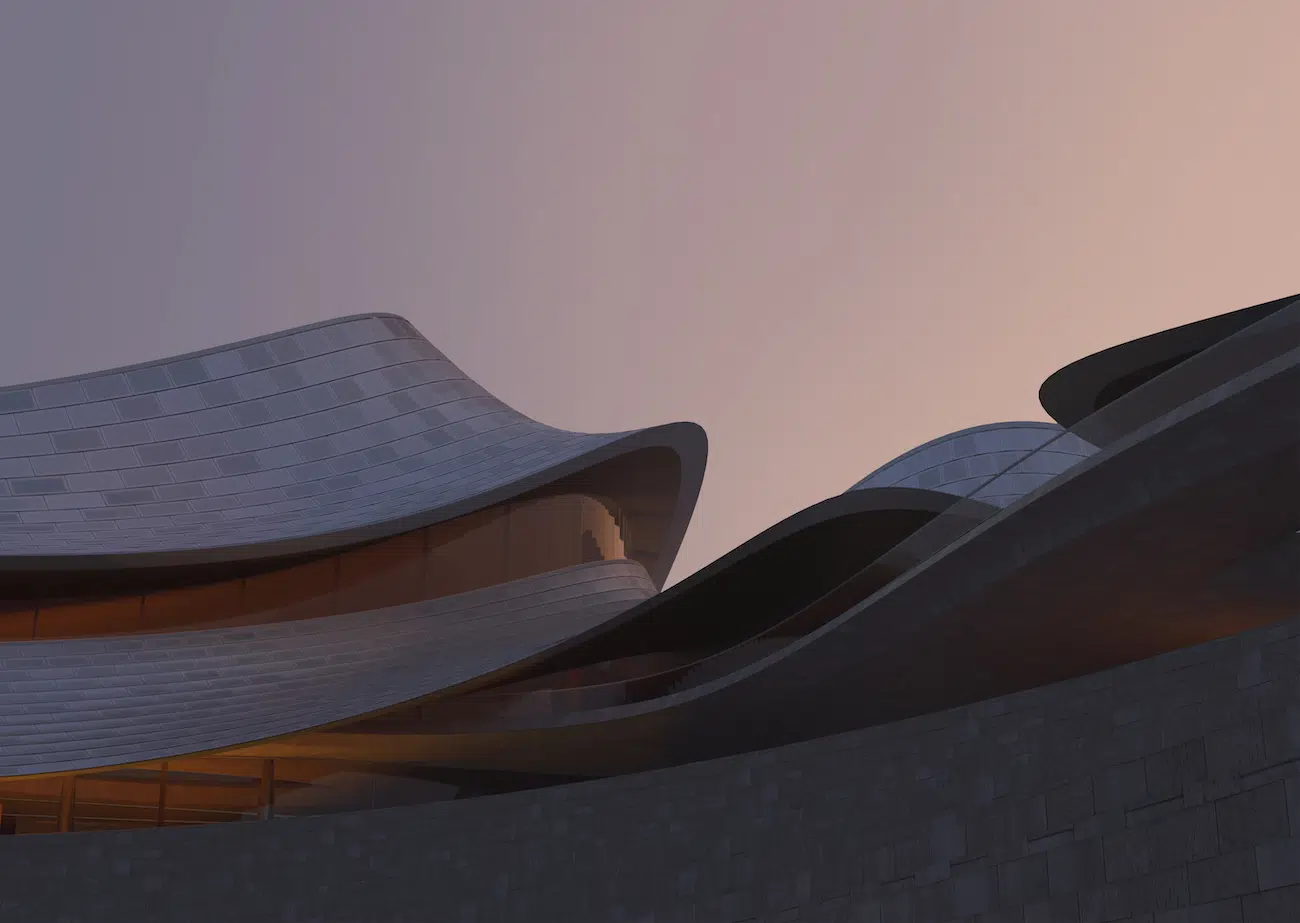
Nothing expresses this better than the center’s roof, which rises and falls in graceful curves just like the surrounding river landscape. Glazed tiles cover the roof, creating an organic sheen that almost resembles a rock weathered and smoothed down by a river’s current. Beyond that, this dramatic silhouette is also designed to recall China’s craft tradition as well as the region’s vernacular architecture, which often incorporates interconnected, pitched roofs. These gestural forms seamlessly complement the Center’s facades that, according to ZHA, are a “contemporary articulation” of jade-green Celadon ceramics.

“[These] ceramics originated locally at the beginning of the Northern Song Dynasty approximately 1,200 years ago,” ZHA explains. “In this way, traditional materials and innovative architecture are integrated coherently, defining a 21st century cultural building with a direct connection to the region’s ancient past.”

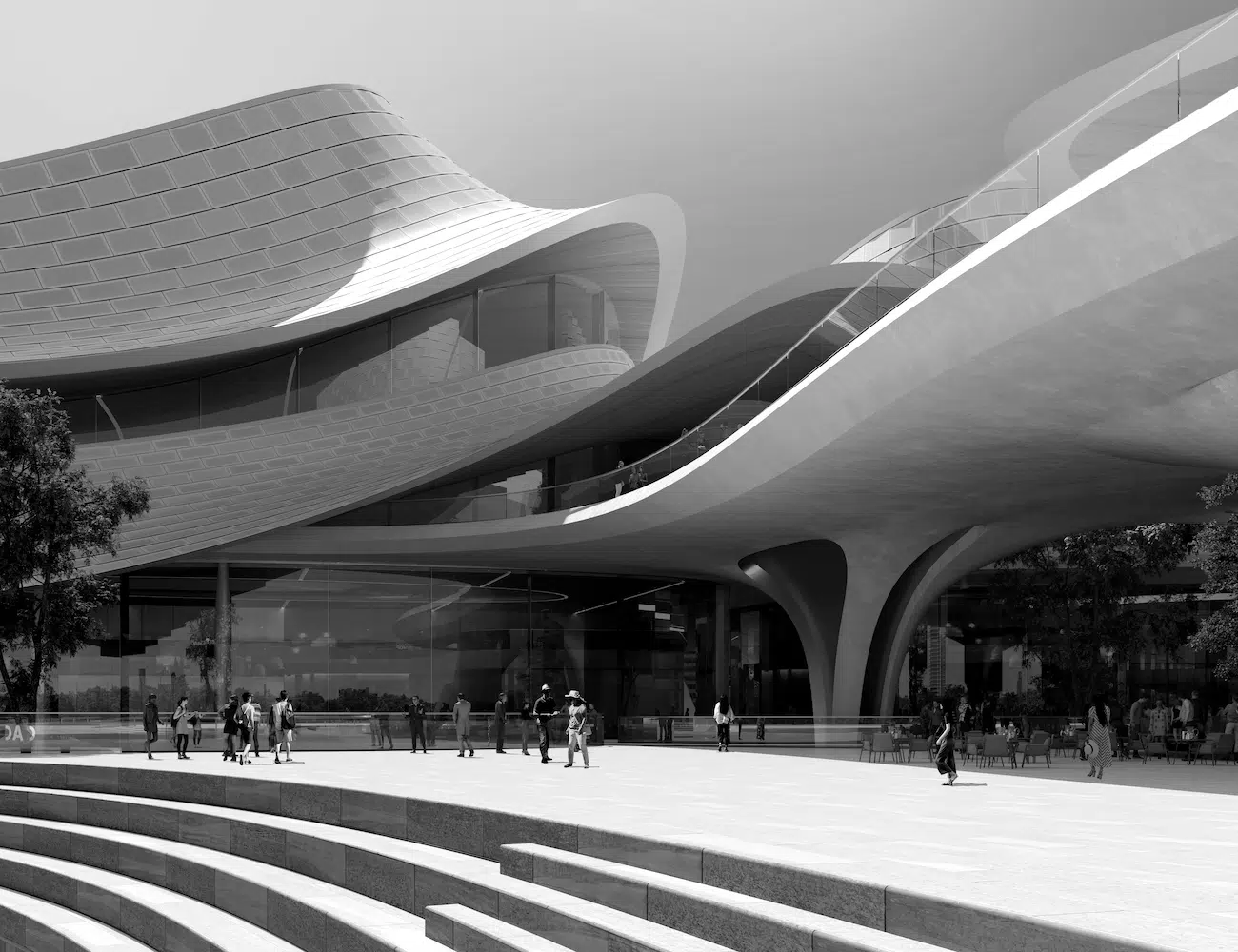
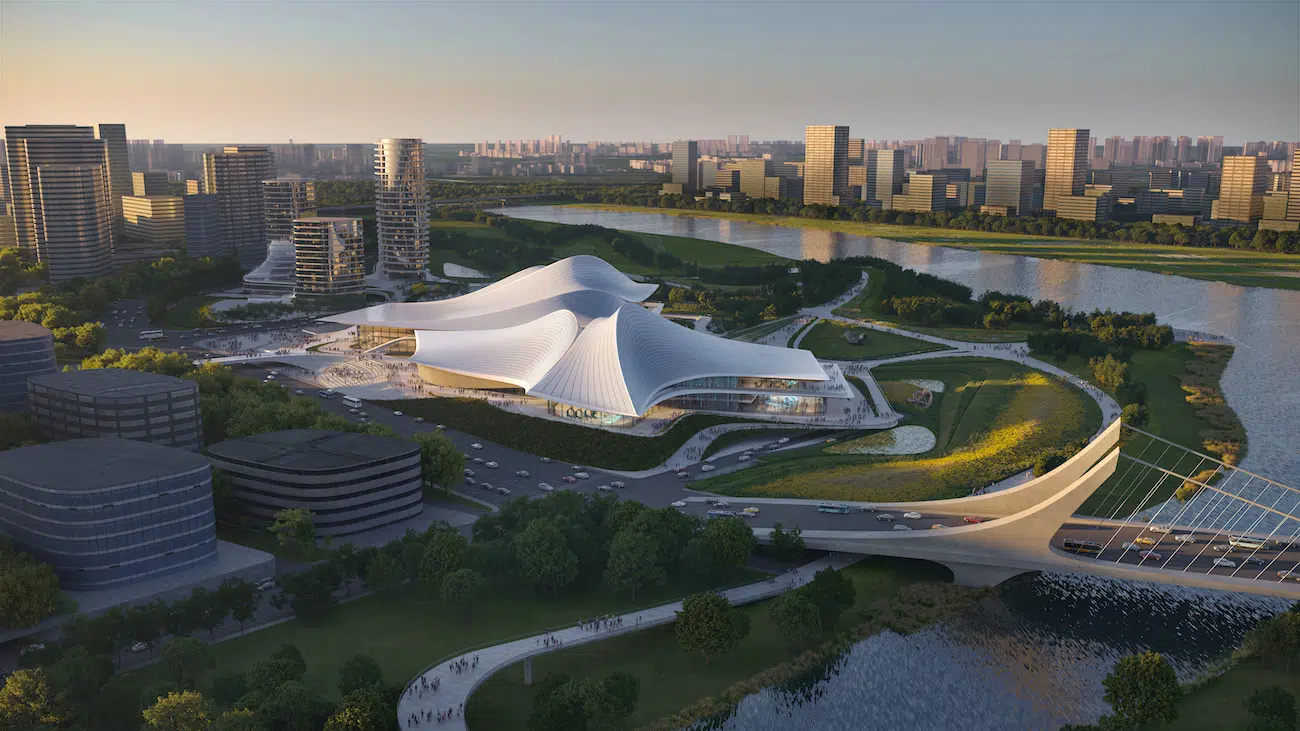
The Shaoxing Culture and Art Center integrates multiple levels of public spaces alongside serene, sheltered courtyards, outdoor gathering spaces, and terraced landscapes. ZHA’s emphasis on greenery is reflected in the Center’s sustainable design, which directly responds to Shaoxing’s subtropical monsoon climate.

“The large sloping roofs incorporate wide overhangs around the perimeter of each venue, providing effective shading for the glass facades,” ZHA continues. “Solar analysis of the site throughout each season has defined the roofs’ geometries to create self-shading zones that effectively reduce solar heat gain within the building and shade the outdoor courtyards in the summer months.”

The project is currently in its “Detailed Design” stage, with ZHA recently releasing renderings of the Center. To learn more about the Shaoxing Culture and Art Center, visit the Zaha Hadid Architects website.

Designed by Zaha Hadid Architects, the Shaoxing Culture and Art Center pays tribute to the nearby Cao’e River, thanks to its gracefully curving roof.
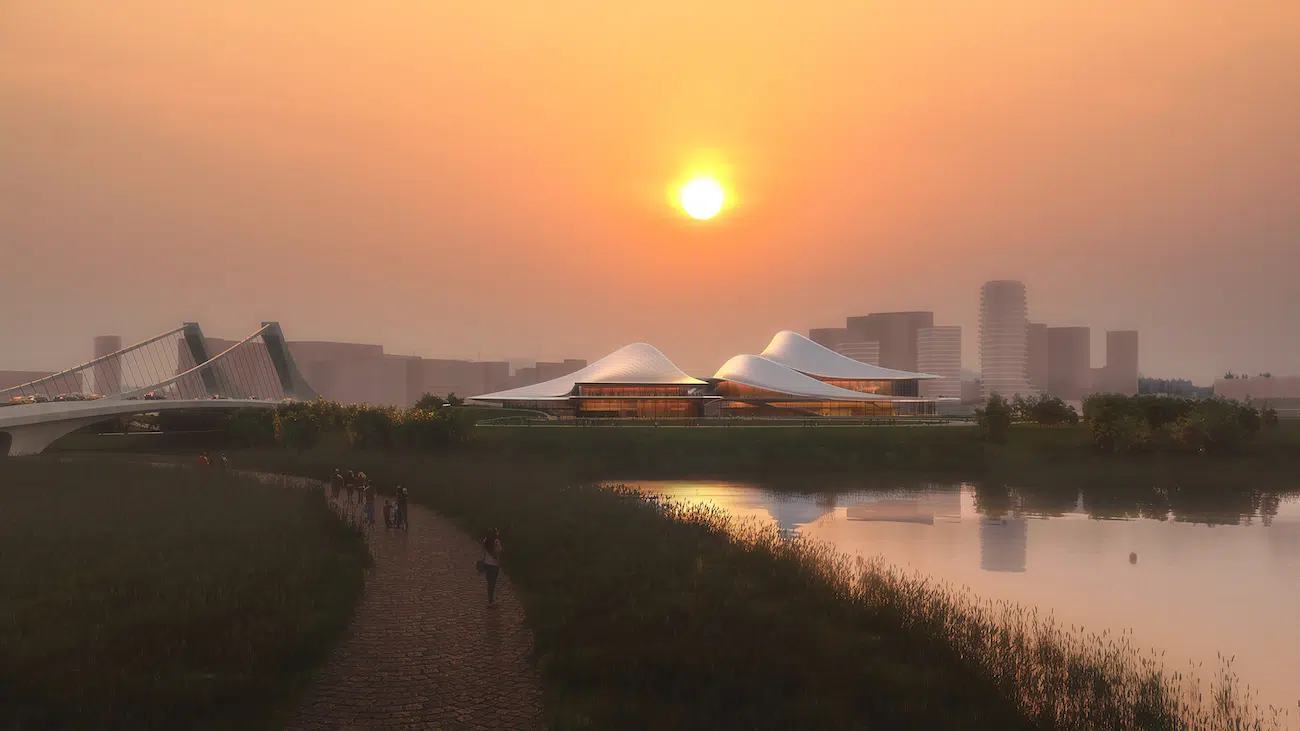
Shaoxing Culture and Art Center by Zaha Hadid Architects at sunsetShaoxing Culture and Art Center by Zaha Hadid Architects at sunset
Close-up of Shaoxing Culture and Art Center by Zaha Hadid Architects at sunsetClose-up of Shaoxing Culture and Art Center by Zaha Hadid Architects at sunset
Exterior view of Shaoxing Culture and Art Center by Zaha Hadid ArchitectsExterior view of Shaoxing Culture and Art Center by Zaha Hadid Architects
Roof of Shaoxing Culture and Art Center by Zaha Hadid ArchitectsRoof of Shaoxing Culture and Art Center by Zaha Hadid Architects
Close-up of Shaoxing Culture and Art Center by Zaha Hadid ArchitectsClose-up of Shaoxing Culture and Art Center by Zaha Hadid Architects

The Center is designed to host local and international opera, dance, musical, and drama productions, while also honoring China’s rich architectural and craft traditions.
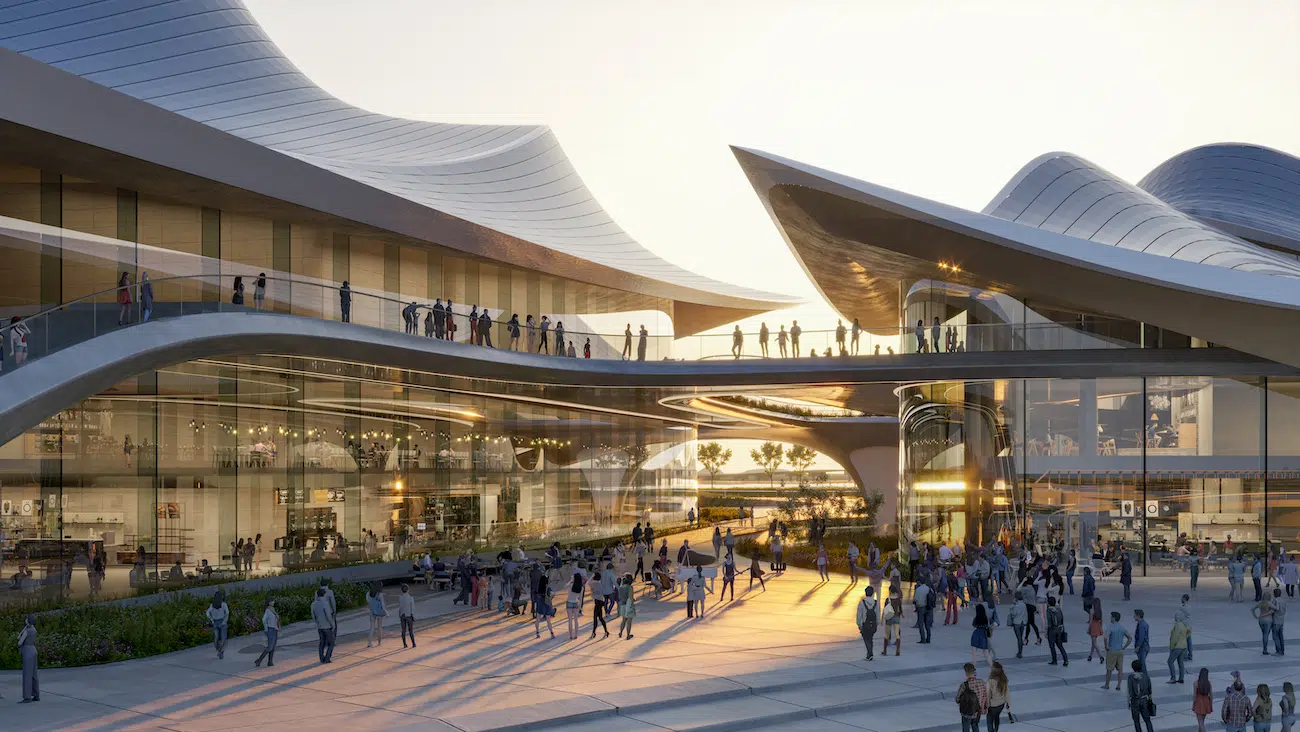
Exterior view of Shaoxing Culture and Art Center by Zaha Hadid ArchitectsExterior view of Shaoxing Culture and Art Center by Zaha Hadid Architects
Interior view of Shaoxing Culture and Art Center by Zaha Hadid ArchitectsInterior view of Shaoxing Culture and Art Center by Zaha Hadid Architects
Interior view of a performance space in Shaoxing Culture and Art Center by Zaha Hadid ArchitectsInterior view of a performance space in Shaoxing Culture and Art Center by Zaha Hadid Architects

The Shaoxing Culture and Art Center is currently in its “Detailed Design” stage, with no set completion date as of this writing.
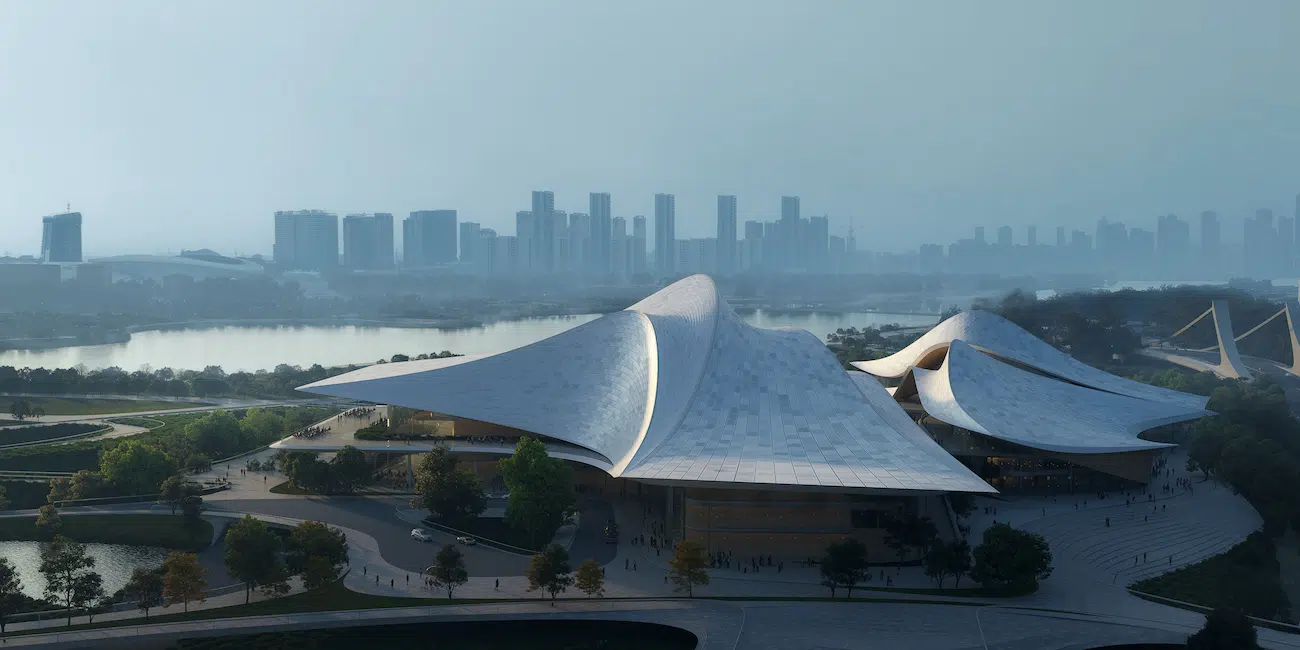
Roof of Shaoxing Culture and Art Center by Zaha Hadid ArchitectsRoof of Shaoxing Culture and Art Center by Zaha Hadid Architects
Aerial shot of Shaoxing Culture and Art Center by Zaha Hadid ArchitectsAerial shot of Shaoxing Culture and Art Center by Zaha Hadid Architects

Zaha Hadid Architects: Website | Facebook

My Modern Met granted permission to feature photos by Zaha Hadid Architects.

Related Articles:

Zaha Hadid Architects Designs a Sweeping Station for the Brand New Riyadh Metro Network

Zaha Hadid Architects Unveils Stunning Plans for the Alisher Navoi Centre in Uzbekistan

Zaha Hadid Architecture Designs 688-Foot-Tall Tower with Cascading Interior Terraces

Similar Posts

  • Villa Kivi

    VILLA KIVI Villa Kivi is a new generation log home on a tiny island in Finnish archipelago designed for himself by Finnish designer Vertti Kivi. Polar Life Haus, a Finnish wooden house manufacturer, was quick to pick it up for their collection. ‘The whole development process of the house was guided by our goal to bring the interior of the house together with the spectacular surroundings. We wanted to be part of sunset, snowstorm and even autumn storm on his tiny island in Finnish archipelago’, tells designer Vertti Kivi, the head of dSign Vertti Kivi & Co. ‘The starting point was a clear glass cube but we ended up creating glass walls reaching from the floor level up to the ceiling only to three sides of the structure. The north side with its separate sleeping rooms and bathroom is constructed of massive black wood beams that are in clear contrast to the glass and create feeling of cosyness and safety. Large terraces in one level create a sense of continuity between inside and outside. The floor plan is defined by Scandinavian clearness. The heart of the villa is the kitchen, located next to the entrance, and from there you can see the entire open interior and the surrounding sea. We like to think the kitchen island is like a DJ’s desk – the atmosphere of the whole interior space is created right there with the remote controlled lighting system. To guarantee the privacy of the bedrooms, they are located in the outermost corners of the villa, separate from each other. They too have one wall completely made of glass. An extra attention is paid on the details of the villa. Not a single molding can be found in the entire building. The doors have a hidden frame and they too reach from the floor to the ceiling. Drama and strong feeling are created by massive wooden surfaces and their color choices – snow white lacquer on the floor creates a contrast to the dark walls. To make the battened external walls coal black, we developed a special technique based on hundreds of years old Japanese traditions. In the evening, the atmosphere changes with different lighting schemes that can be timed to be in sync with nature. The end result is a clean-lined building in Scandinavian style which can be adapted to different needs and locations. It has a strong Finnish presence.