Tips for Planting a Succulent Garden

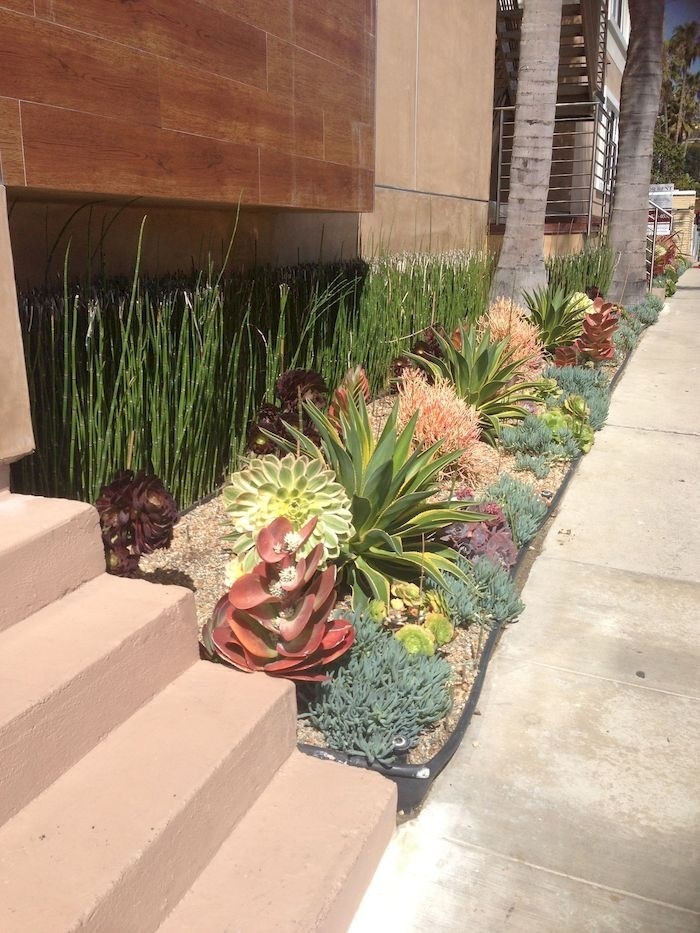
Succulent gardens range from large planters filled with selections such as echeveria, to an area of the yard that showcases your favorite succulent varieties. In fact, there are so many different varieties to browse, the possibilities seem endless. Their thick, shiny, water-filled leaves give them an almost unreal appearance, making them popular with design lovers who are drawn to color and form. [photo from Southwest Boulder & Stone]
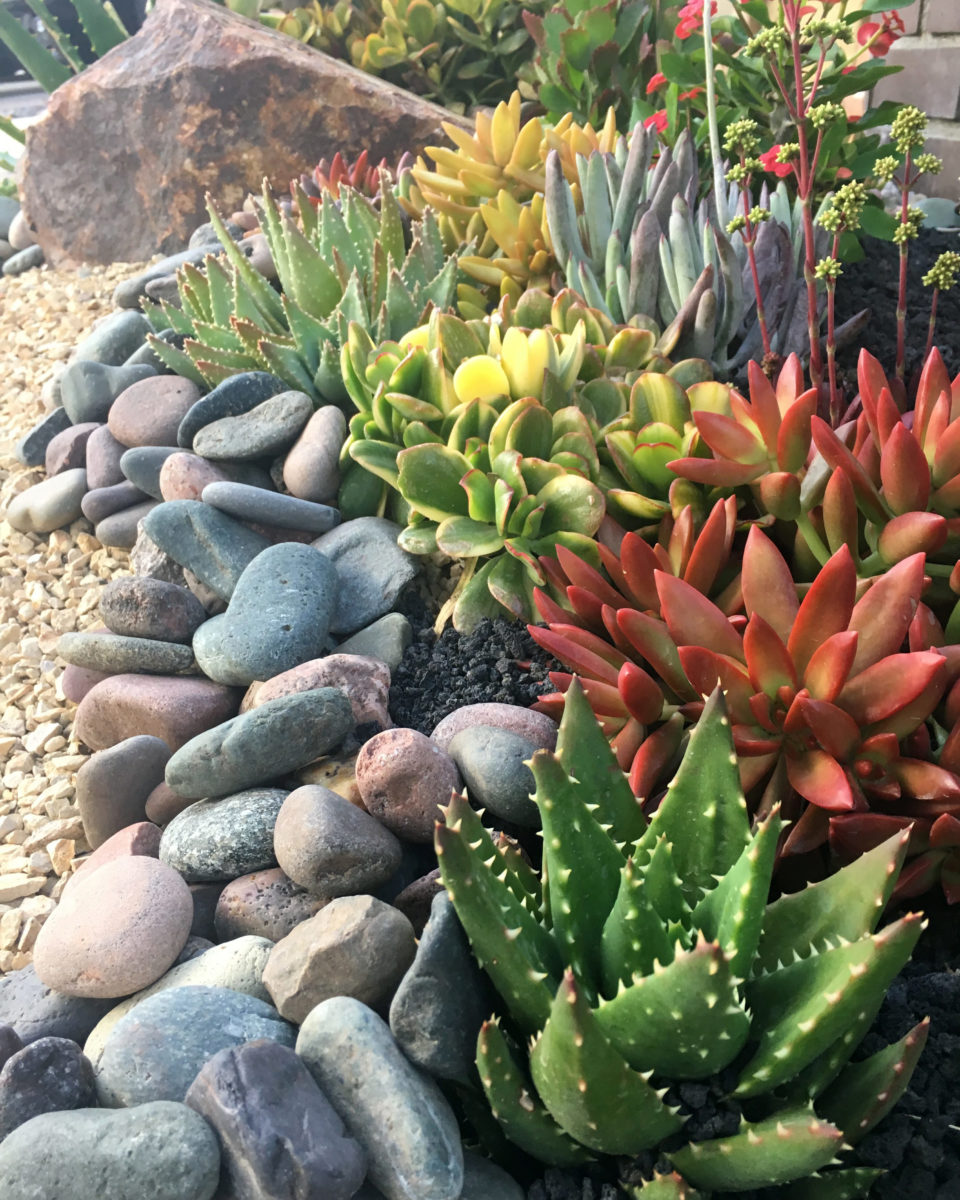
Not to mention, succulents don’t mind sharing the space with others in planters or the soil, so you can curate a beautiful garden featuring many colors and textures, even if your “garden” is nothing more than a large pot. Keep reading for tips as you plan and plant your very own succulent garden. [unless otherwise indicated, original photos are by Kate Simmons for Decoist]
Choosing Your Succulents

Let’s face it: shopping for succulents is fun, fun, fun! It’s easy to rack up a pretty large bill from a cart filled with “little plants”, so choose wisely. While there are no hard-and-fast rules for combining succulents into beautiful arrangements, it’s important to pay attention to a few key factors.
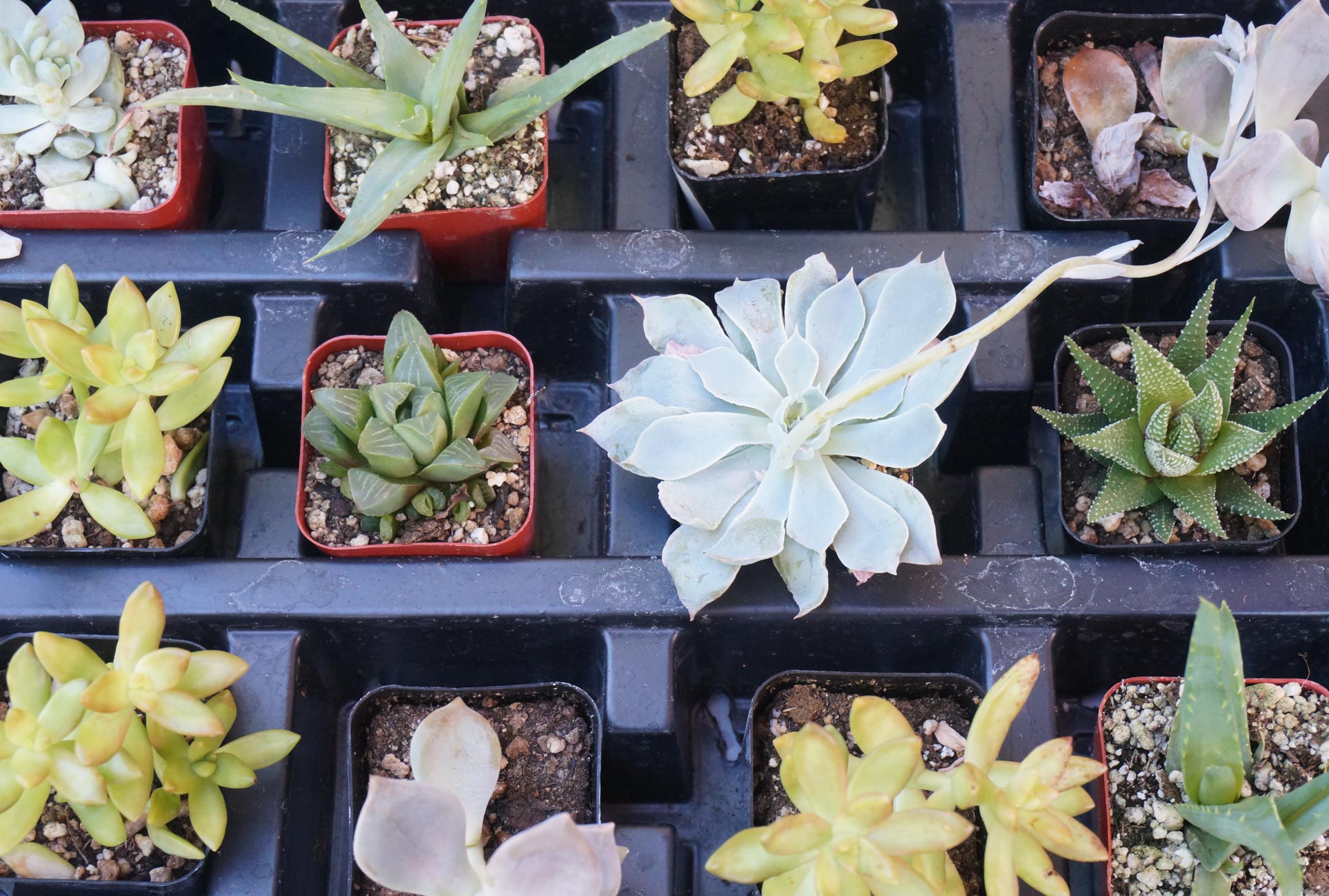
For starters, you will want to note the temperature and level of sun in your garden location. Many succulents do well with a few or more hours of sun per day, but if the temps get very hot, shade will be important (for at least part of the day). Some succulents can get burned from the sun, especially in the heat of summer. In other words, do your research. This can be as simple as speaking with a knowledgeable employee at the nursery when shopping for your succulents.
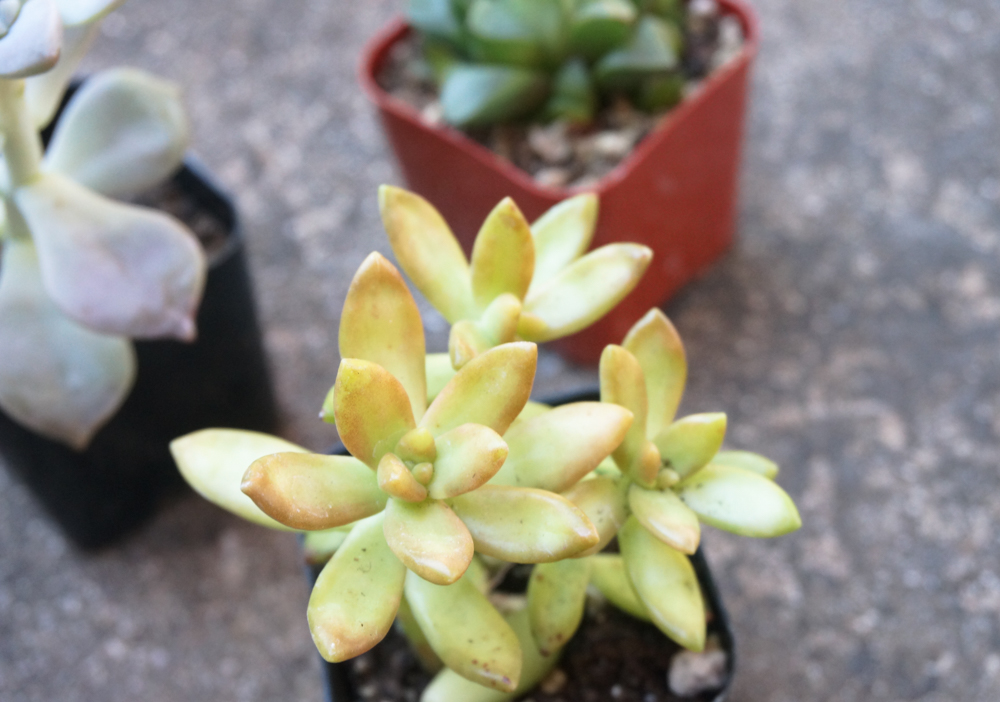
To create interest in your garden, opt for variety. This means choosing an array of colors, textures and heights. While color and texture will be obvious as you shop, you will want to find out if your succulent choices grow upward, outward (ground cover-style), or over the tops of containers. This will help you plan the design of your garden.
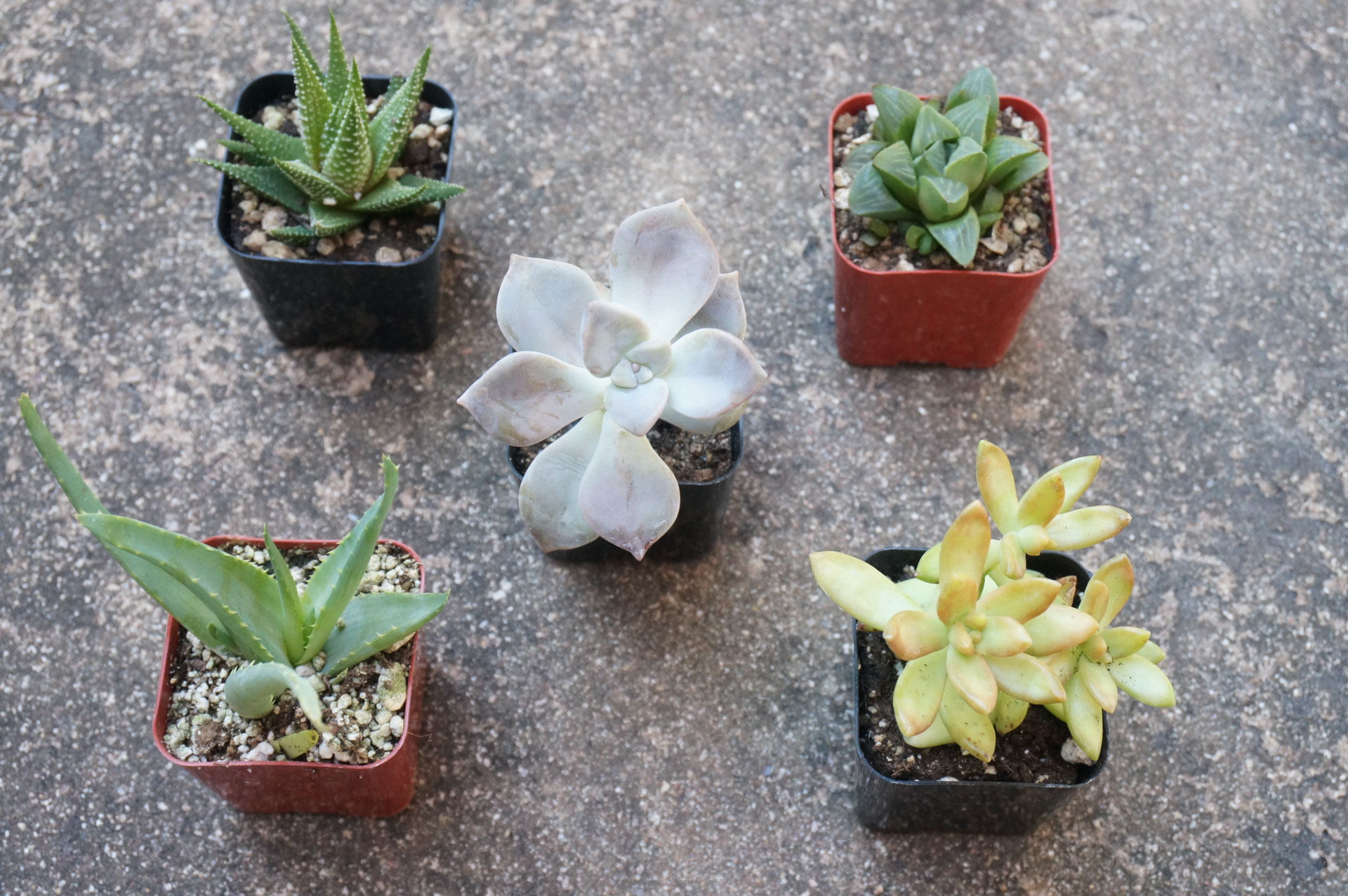
Take a few extra minutes to inspect each plant before you purchase, choosing healthy specimens with good leaf growth.
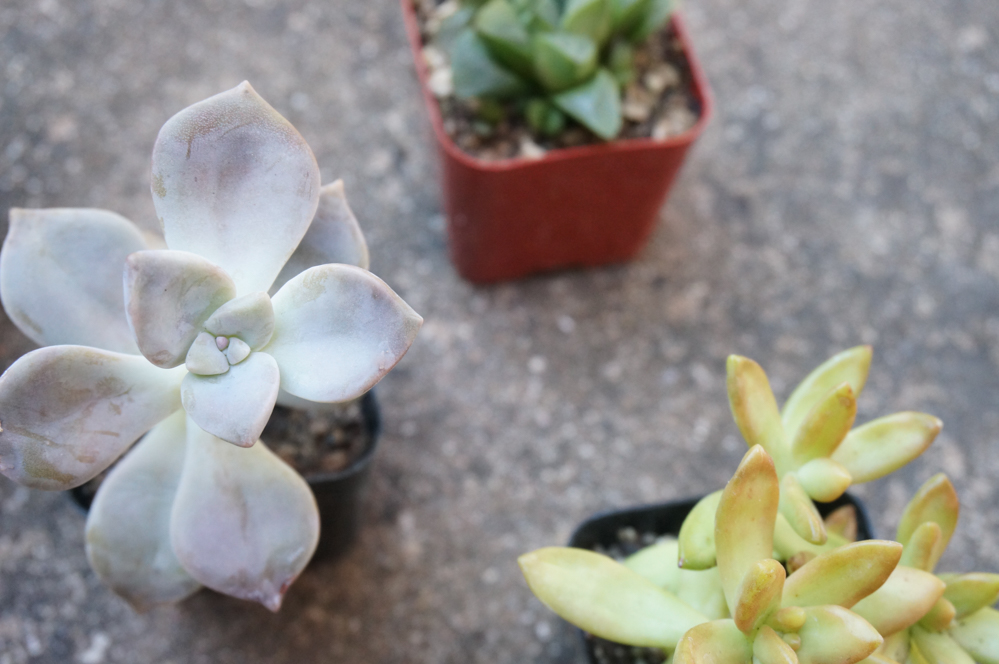
You may also want to pick up some succulent soil, or talk with a nursery employee about ways to make your own soil by adding materials such as coarse sand and pumice to the mix.
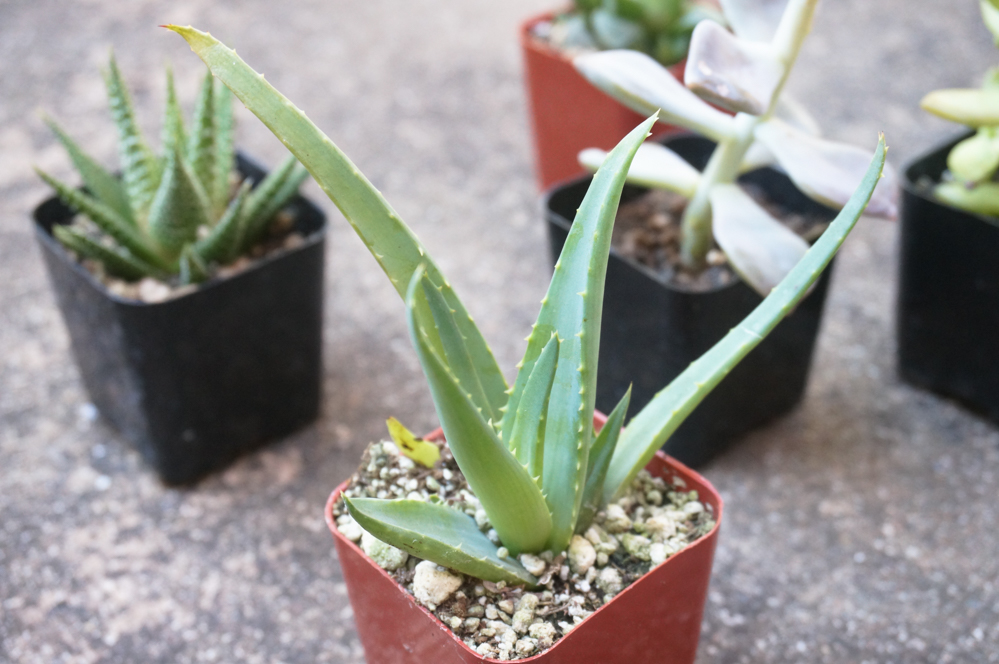
Putting It All Together

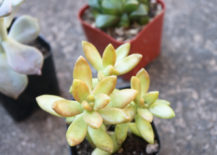
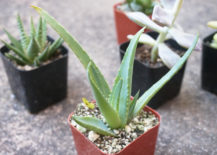
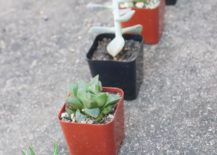
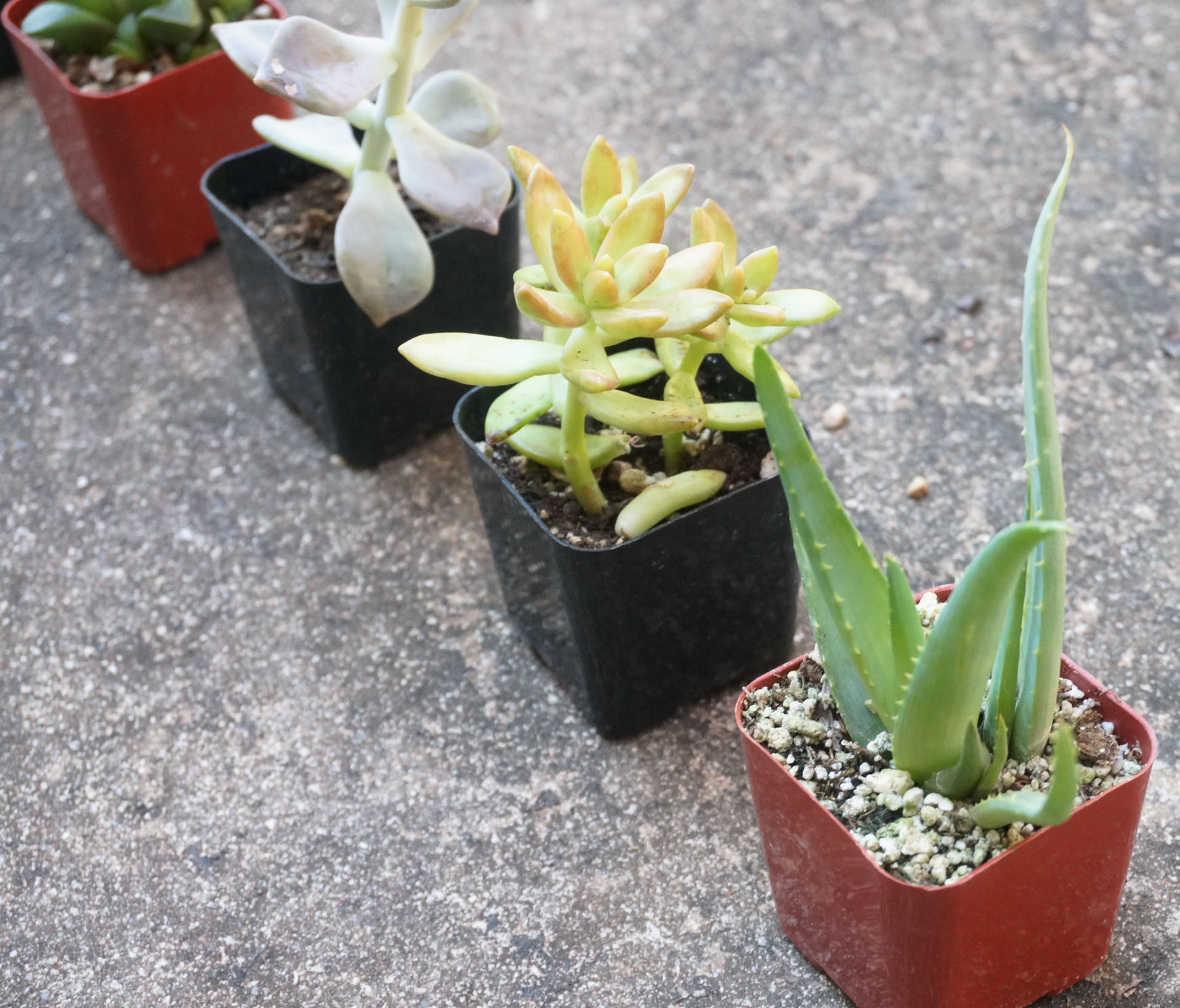
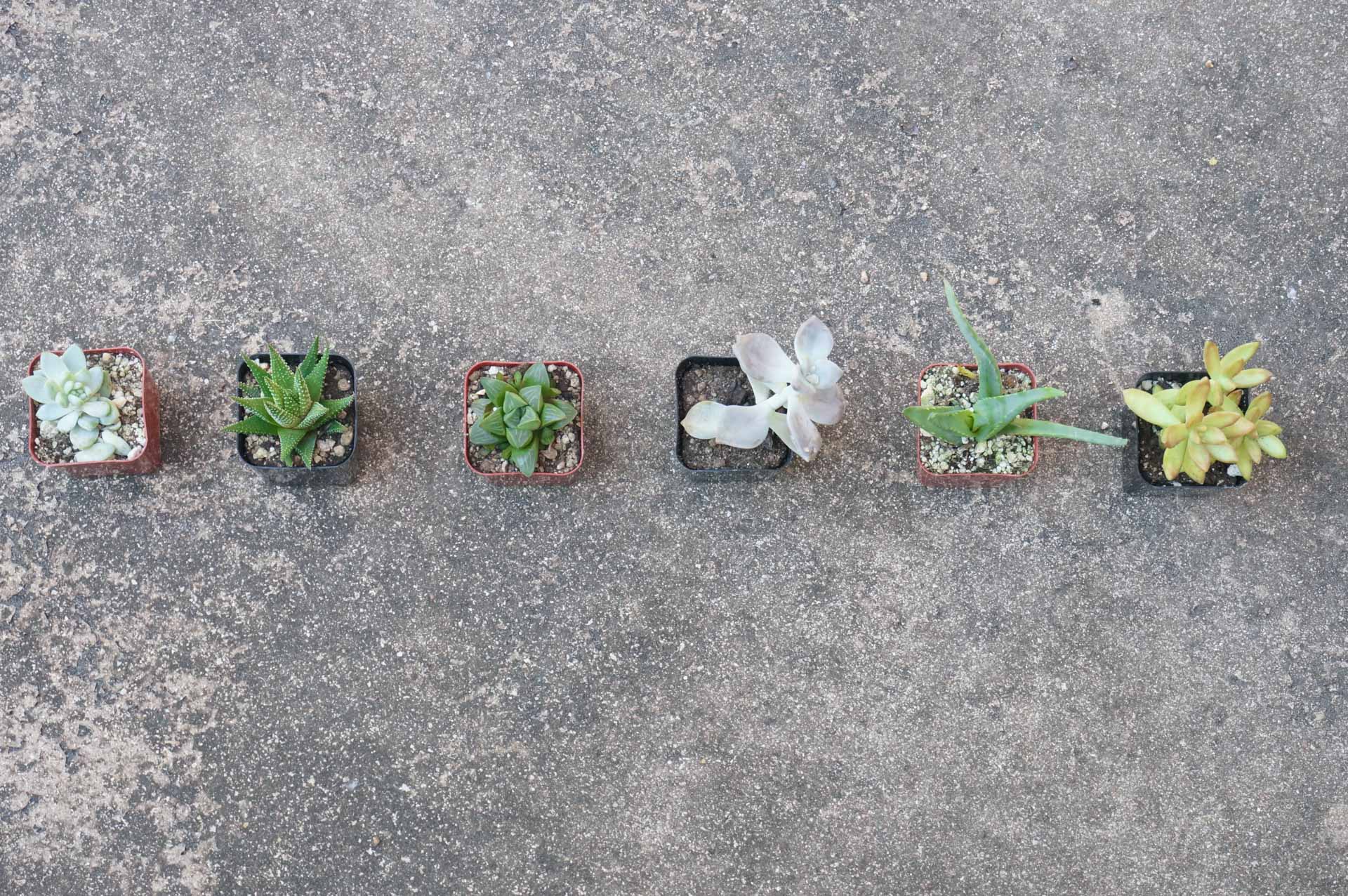
Now it’s time to get planting! How satisfying will it be to go from this…
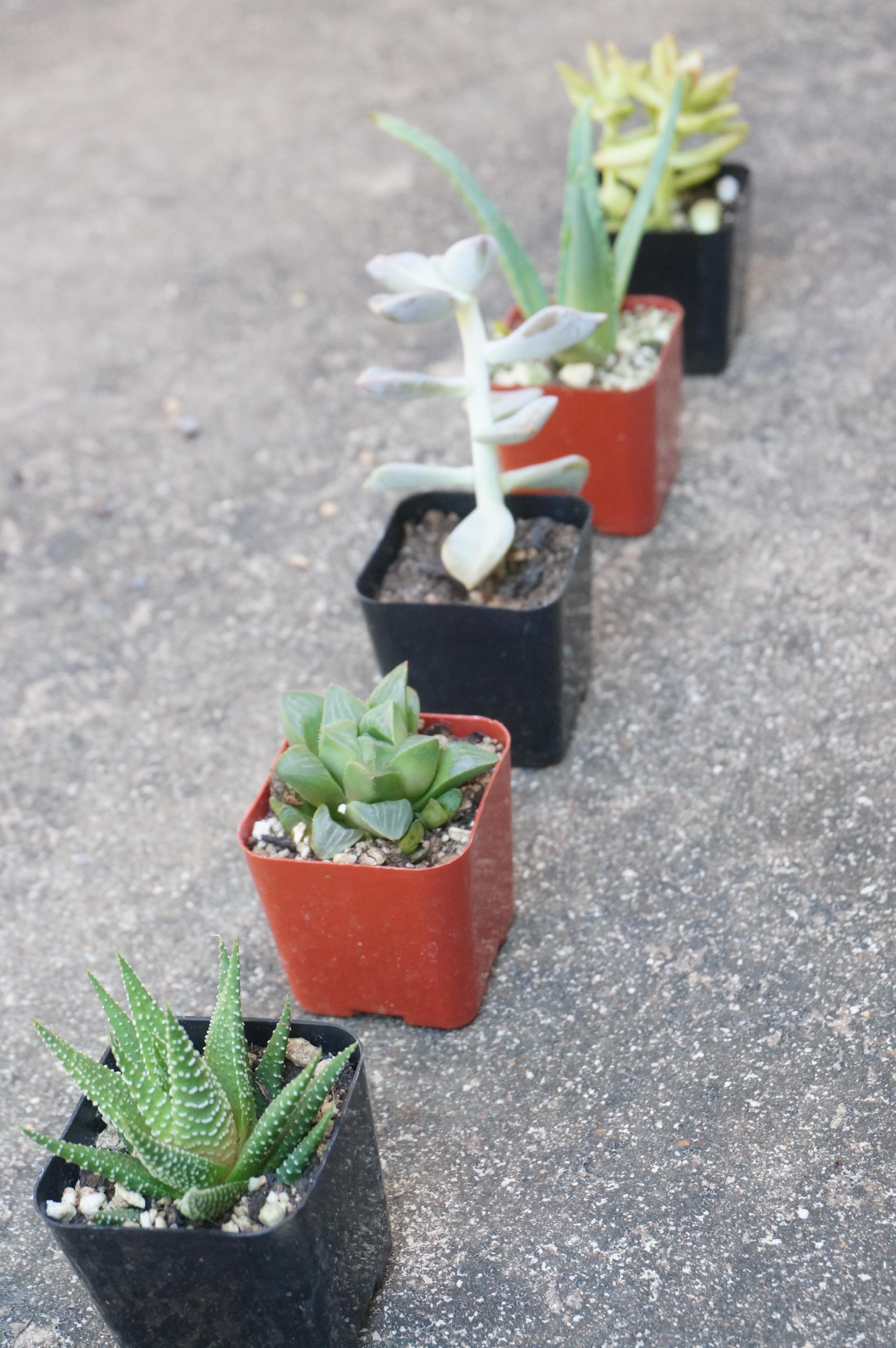
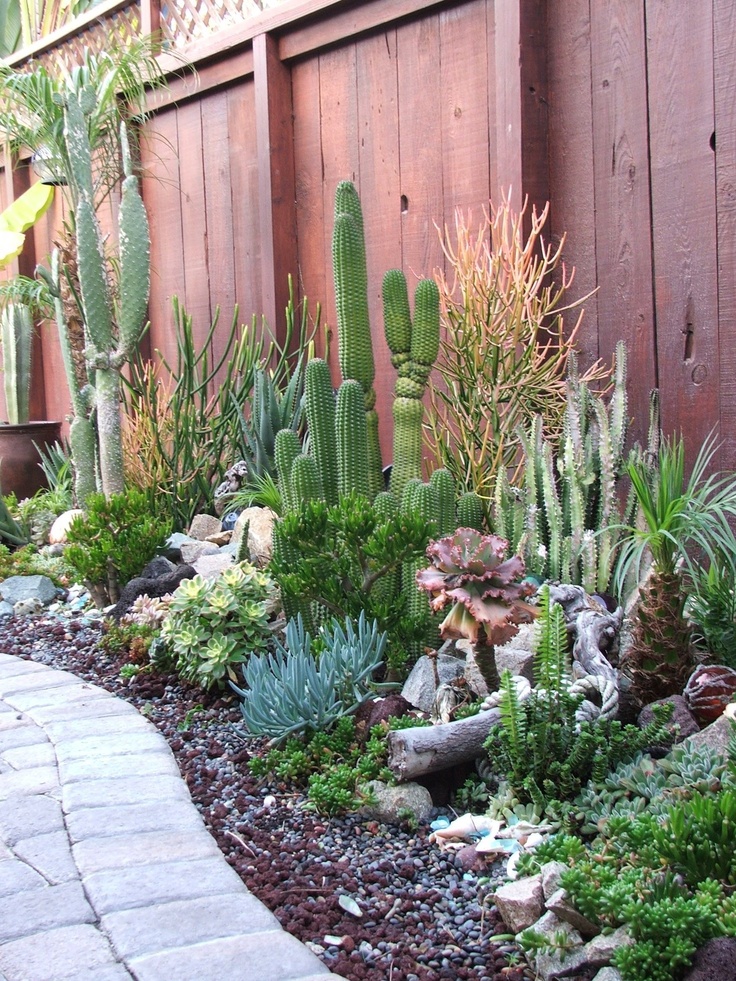
to this… (with a few more cacti at the ready, of course!) [photo from HOMEBNC]
It’s important to remember that good drainage is key, so use porous soil (such as a special soil just for succulents), and make sure that there is good drainage if you plant your succulents in a pot. A drainage hole is extremely helpful in this case.
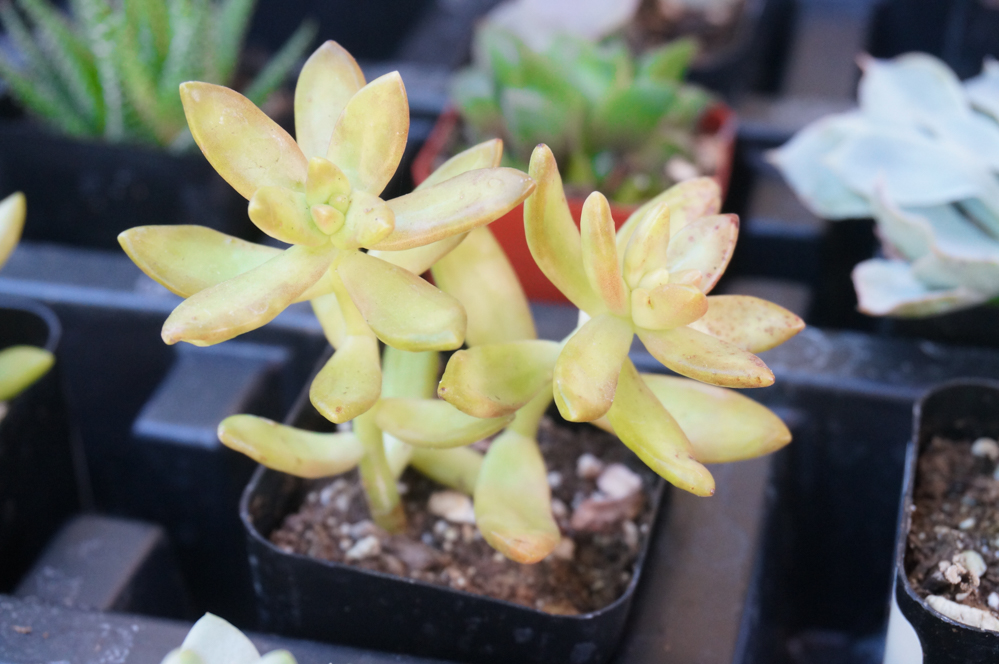
As you create the design of your garden, one strategy is to start with the main focal point, then fill in the rest of the space with your other succulent selections. As mentioned above, a range of colors, textures and heights makes a succulent garden all the more interesting. In addition to choosing succulents that grow upright, consider succulents that spill over the edge of the container (or cascade over the wall/rocks of your garden). [photo from CRUNCHHOME]
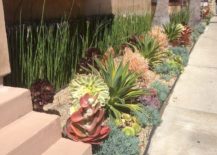
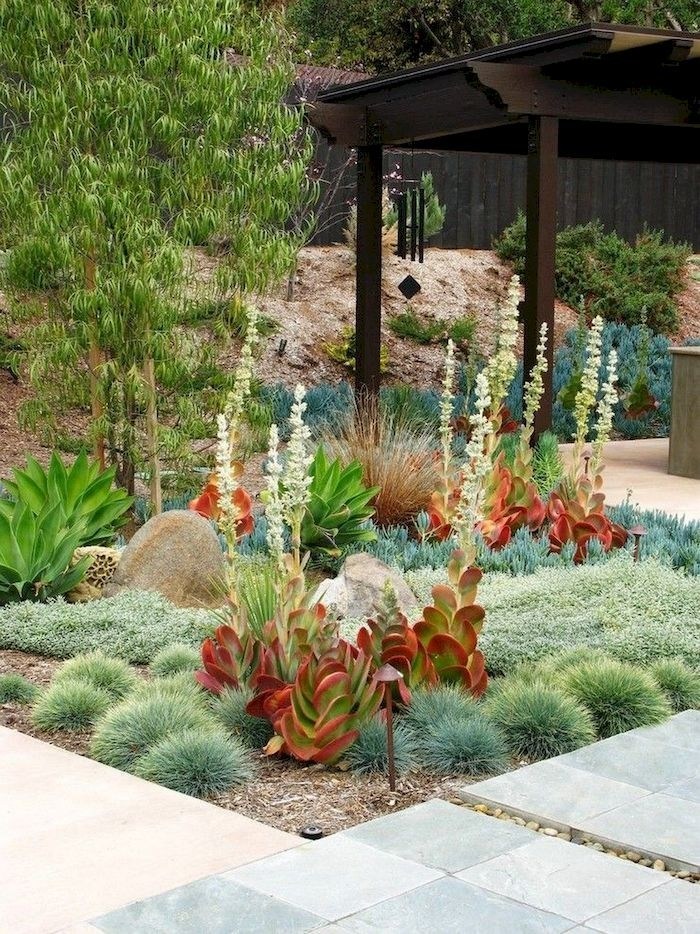
Also consider a “top dressing” such as crushed rock (shown above) for tying everything together. Last but not least don’t over-water your succulent garden. Also pay attention to signs such as shriveled leaves, which can indicate an under-watered plant. How often you water will depend on factors such as the location of your plants and the climate. Do some research, and don’t be afraid of some vigilant trial-and-error watering at first to get it just right. A little bit of time and care will help you get from this…
…to this!… [photo from CRUNCHHOME]
Happy planting!

You’re reading Tips for Planting a Succulent Garden, originally posted on Decoist. If you enjoyed this post, be sure to follow Decoist on Twitter, Facebook and Pinterest.

Similar Posts

  • Brilliant Sunshine Beach House Embraces Sun, Sand and Surf with Coastal Charisma

    Few settings feel as relaxing, charming and energizing at the same time as the famed Sunshine Coast in Queensland, Australia and this is where you find the gorgeous Sunshine Beach House designed by PopovBass. This is a contemporary home that completely embraces the coastal chic appeal of the neighborhood and the white sands along with […]

    You’re reading Brilliant Sunshine Beach House Embraces Sun, Sand and Surf with Coastal Charisma, originally posted on Decoist. If you enjoyed this post, be sure to follow Decoist on Twitter, Facebook and Pinterest.

  • House LV1 (house nanchi 1 y 2)

    CASA LV1 (casa nanchi 1 y 2)
    BRIEF DESCRIPTION OF THE CONSTRUCTION
    The Casa LV1 (casa nanchi 1 and 2), is a multi-familiar conformed by two houses constructed in the same land, the main material used for its construction was white striated concrete.
    DESCRIPTIVE MEMORY
    The Casa LV1 (casa nanchi 1 and 2) is a complex of two houses designed for a family an elderly couple, their young daughter and their granddaughter. Each house has the necessary privacy for each development, with the interrelationship and coexistence of the family; they are located in an irregular diamond-shaped land of approximately 250m2, a gradient over 10% with a view to the southeast.
    The Casa nanchi 1, on its main floor has: living room, dinning room, kitchen, bathroom, main bedroom with closet and its own bathroom, this floor is directly connected with the service area; the lower floor has a hall, two bedrooms with closet and its own bathroom; the upper floor has a roofed recreation room and a garden terrace. All the floors are connected by a stair, and has a parking lot. The total constructed surface is of 160 m2.
    The Casa nanchi 2 has on its main floor: living room, dining room, kitchen, bathroom and service area; on the upper floor it has: main bedroom with closet and its own bathroom, an additional bedroom with closet, a little play room and a bathroom; on the lower floor, where the entrance is, has: two parking lots and an exterior stair which is connected to the other floors. The total constructed surface of the house is 145 m2 excluding parking lots.
    Both houses share main entrance, service yard, green spaces and services.
    The houses are named after the nanchi tree (byrosonimacrassifolia) that is located in that land; it was respected and the project was adapted around it, to make it a natural decoration for the dinning room of the Casa nanchi 1. This house was designed for an elderly couple and it has a terrace in the upper floor, which is a recreational and relaxing space with a view of the surroundings to enjoy with the company of family, friends and guests. It has a double-height space which allows the development of the tree.
    The design of the Casa nanchi 2, which was designed for the daughter and granddaughter of the family, is inspired in the Brno chair, designed by the architect Ludwig Mies van ser Rohe, which not only allows a large volume, but also an efficient and free structural principle because with this solution is obtained an overhang of 4.85 m with a support of 2.85 m, generating a space without any support under the construction.
    The concept of the houses is derogates no only from the connection (interior-familiar, exterior-landscape), but also from the visual freedom that people perceive before entering in the house and also in the interior of them. This is fulfilled by the volumetric integration that defined the spaces of each house, both prisms have specific substractions that allow a formal integration of the two elements; in the Casa nanchi 1 the terrace is subtracted and in the Casa nanchi 2 the parking area is subtracted, transforming both elements without losing its integrity.
    The connection of both houses is so important that is not only achieved materially with the union of the two architectonic objects from the common entrance, connotating the link of the family, but also with the landscape, through the transparency in the facade of the two houses, which creates a visual freedom for the inhabitants. This gives a greater illumination of the spaces, producing a feeling of spaciousness and allows the air circulation due to the large windows that are handled by the users.
    The material, white striated exposed concrete and stone dust of the region, recalls the honesty of the materials, this simplicity benefits the environment, because it doesn’t use coatings in walls, fooors or roofs, contributing the less possible to the pollution. The exposed finishes means less production, transportation and utilization of pollutant materials. As said before, the free circulation of air allows a constant cleaning of the interior air which allows a natural regulation of the temperature, achieving termic comfort for the users and reducing the use of electronic devices that cools artificially the place. Besides, the same large windows avoid the unnecessary use of artificial illumination during the day allowing the entrance of sunlight in the morning.

  • Villa Bunkherr

    Artistic Character The biggest challenge of the project Bunkherr came up at the outset of the collaboration between the client and the architects. The attractive hillside property was located in a former holiday home neighborhood set amidst a picturesque landscape in Hesse, Germany. Due to great dedication, perseverance and a tenacious struggle for the client’s strong desire to build their home in this very attractive place, a construction permit could finally be successfully acquired. The design is based on the idea of a human back, which divides the property into two areas: a public hillside area, which contains the entrance to the house, the garage and a spacious, plaza-like courtyard – an inviting place to share time with friends and neighbors. Even the client’s horse finds room here. And it also has a private valley facing area, which offers a magnificent view of nature. The structure of the building is defined by two building blocks, which are arranged at right angles to one another, the upper floor is cantilevered towards the valley. The private rooms of the parents are accommodated there. Below on the ground floor there is an open kitchen, dining and living area, which is characterized by the room-high glazing. A central design concept was to create spaces for the works of the artistically influenced client. For example, the interior of the house, has sculptures and paintings that add a special personal touch to the timeless, modern style of the house. Only a few materials, such as the white screed, which is not only used on the floor but also on the furniture, and the specially designed wooden boards provide a stylish setting for this.