Beyond Barriers: Contemporary Private Wing with Smart Wheelchair Access

When it comes to design and décor inspiration there are plenty of things that come to our mind before we ever start thinking about homes that have wheelchair access. Most of us tend to take it for granted that the staircase is the only way to move between two different levels of the house. Designed to meet the needs of busy couple in London and to accommodate their son who uses a wheelchair the Beyond Barriers house in Hendon is exactly what its name suggests. It is Amos Goldreich Architecture who designed a new private first floor wing for this 1950’s home while also renovating its lower level living area and adding a smart rear extension.
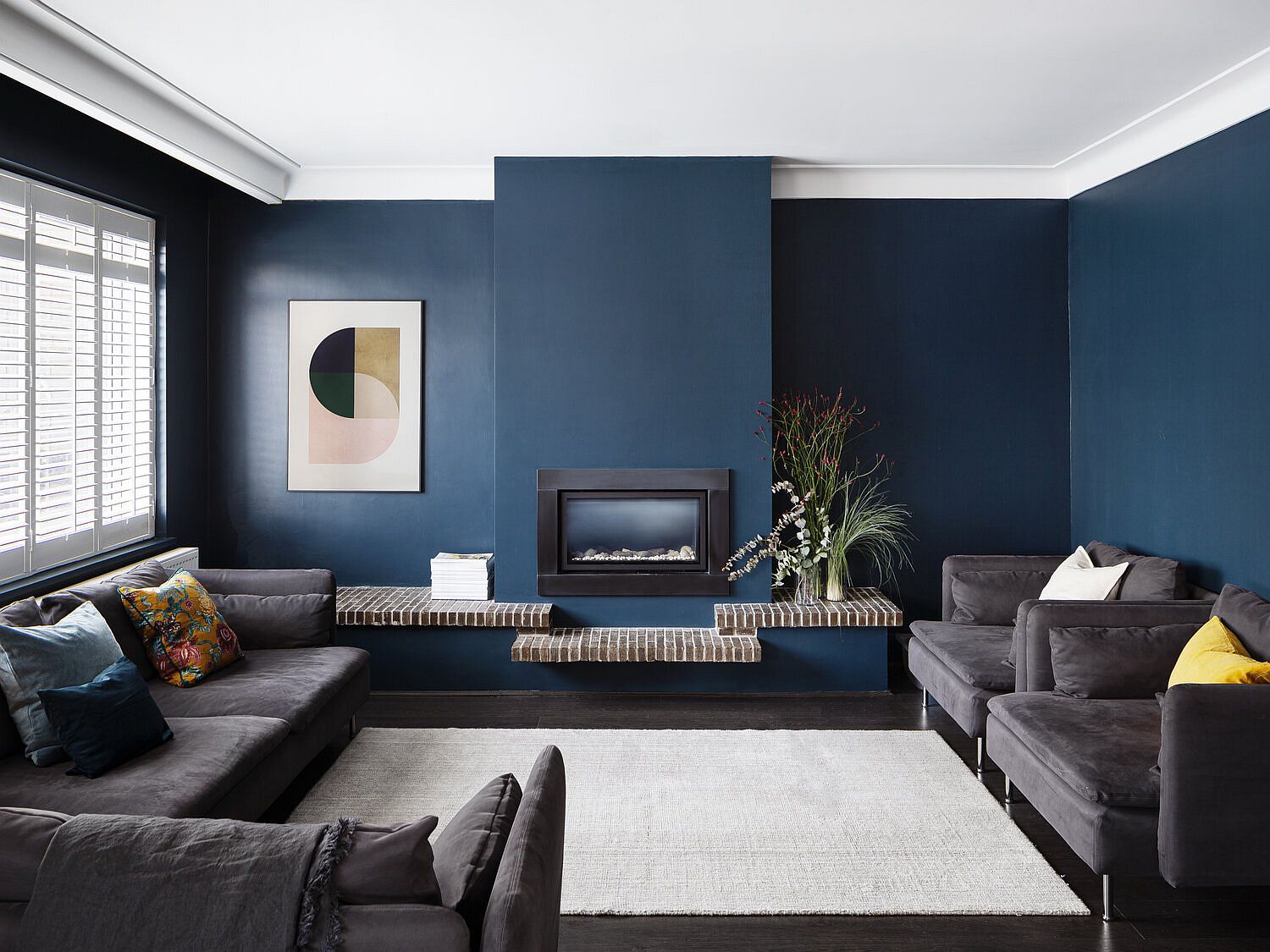
Fabulous dark blue living area with comfortable dark gray sofas and a small fireplace


It I the first floor private level that was the focus of the makeover with the homeowners wanting a secluded and luxurious retreat that included a master bedroom, master en-suite, walk-in closet and a space to rest and relax after a long, hard day. More importantly, a secret door in the wardrobe of the master suite opens to give access to the lift that connects this floor with other levels of the house. This makes for easy wheelchair access – a feature that is consistently maintained even with the other modern makeovers and additions inside this classic British home. It is dark grays and white that shape the bedroom while Bianco venato marble adds luxury to the bathrooms and the custom walk-in wardrobe. [Photography: Ollie Hammick]
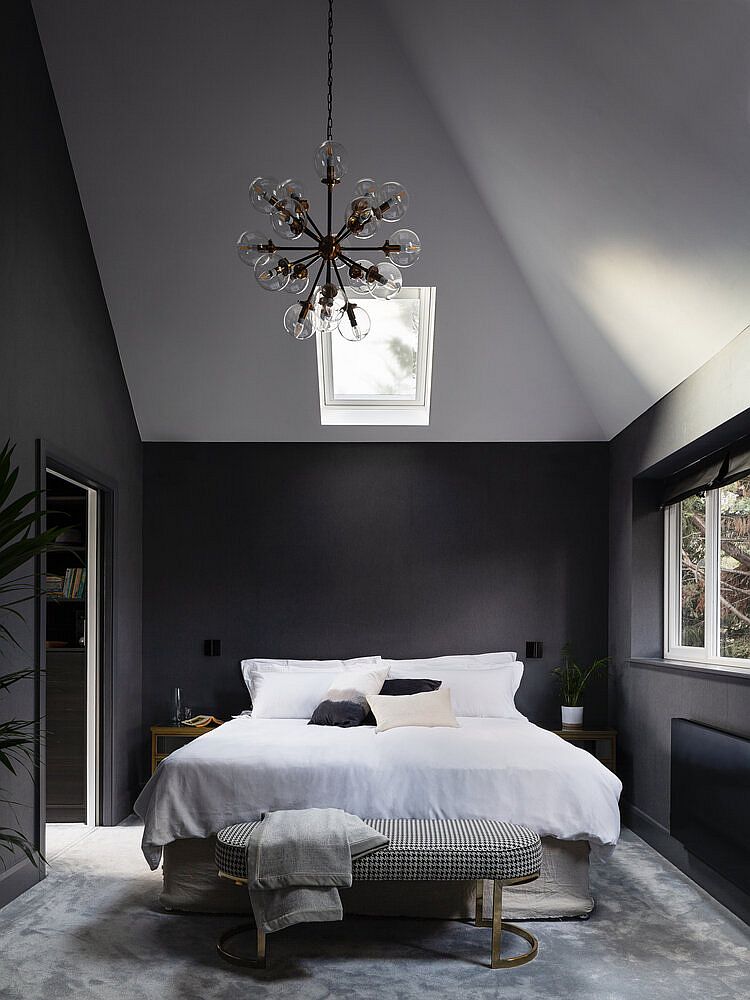
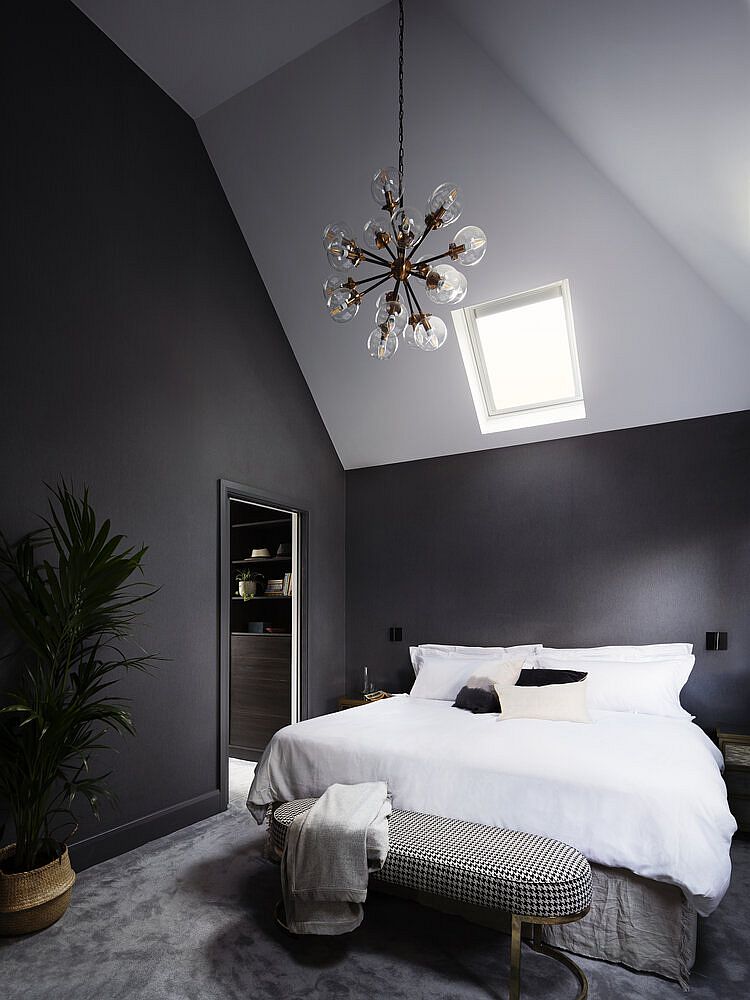
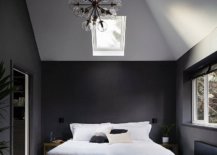
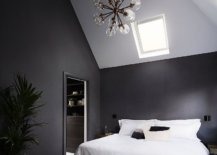
Double-height master bedroom in gray and white with sloped ceiling and skylights
Chandelier adds a sense of dramatic elegance to this spacious master bedroom in gray
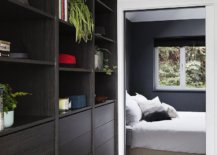
Secret doors in the bedroom cupboards lead way to the lift connecting different levels of the house
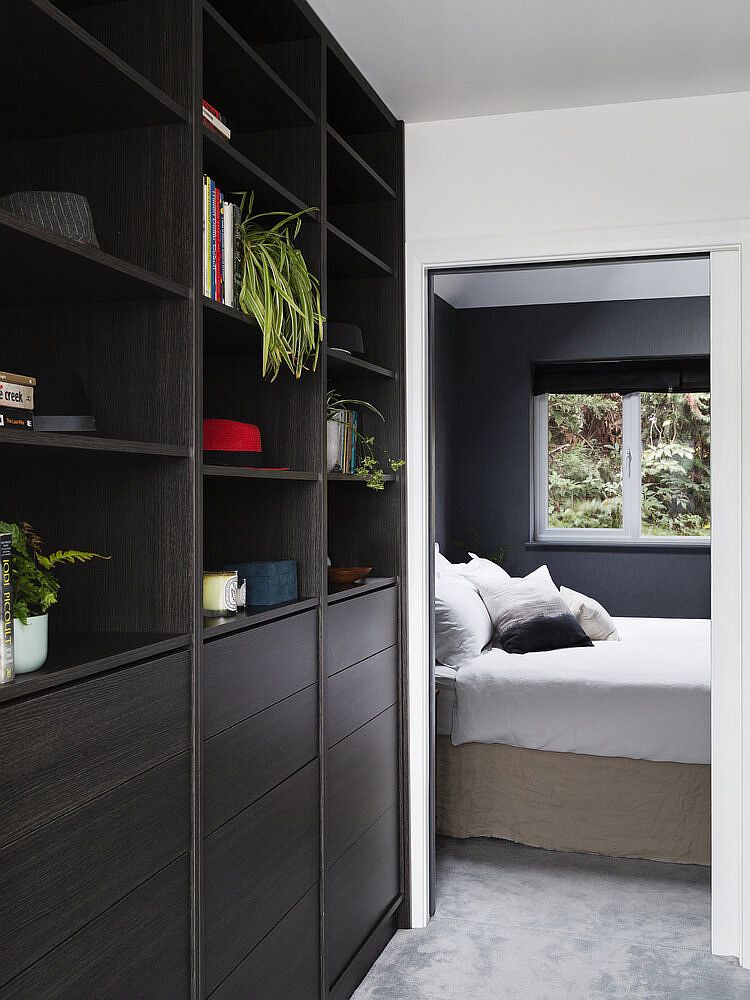
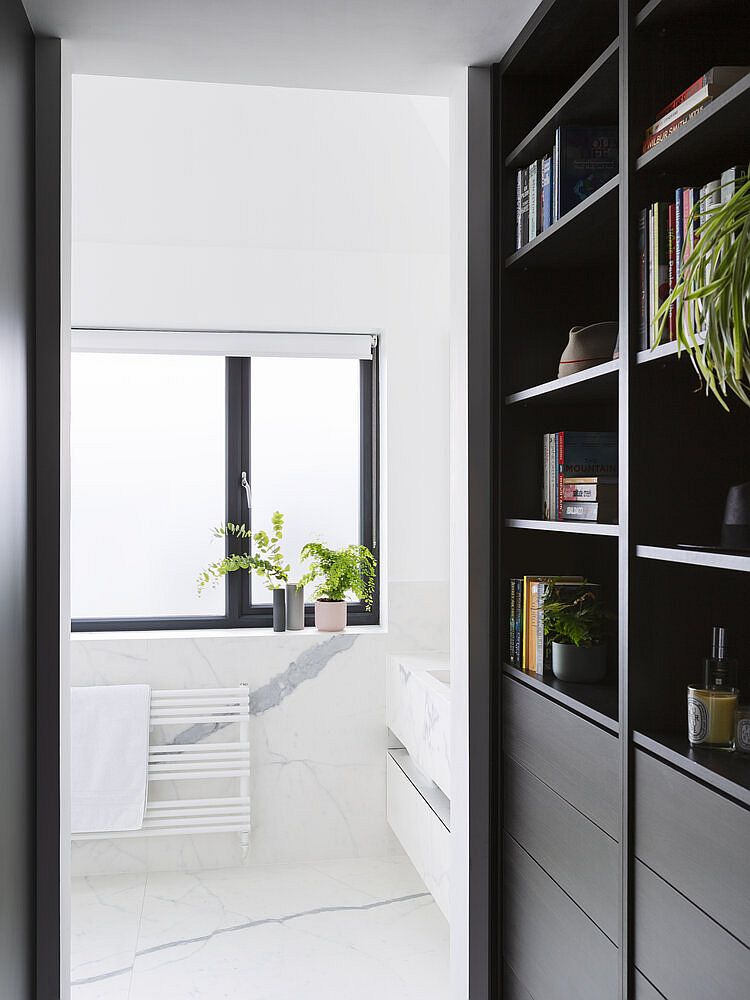
Dark bookshelf and cabinets in wood flank the corridor leading to the bathroom
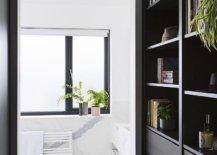
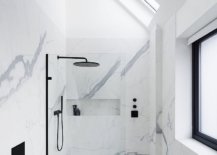
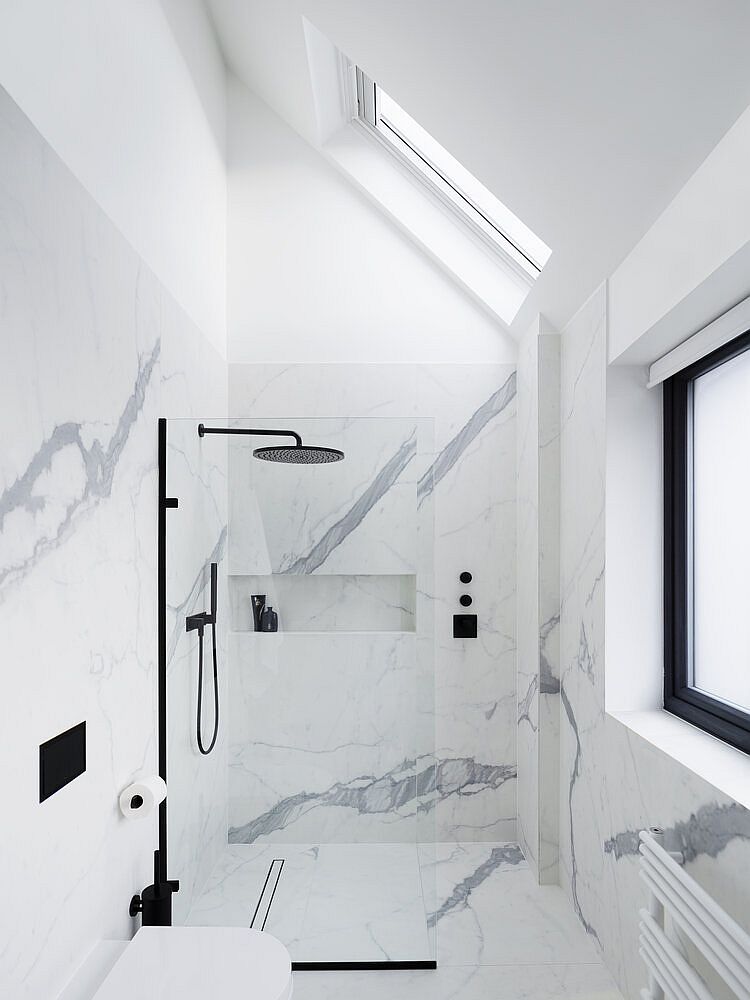
Bianco venato marble brings an air of luxury to the all-white bathroom
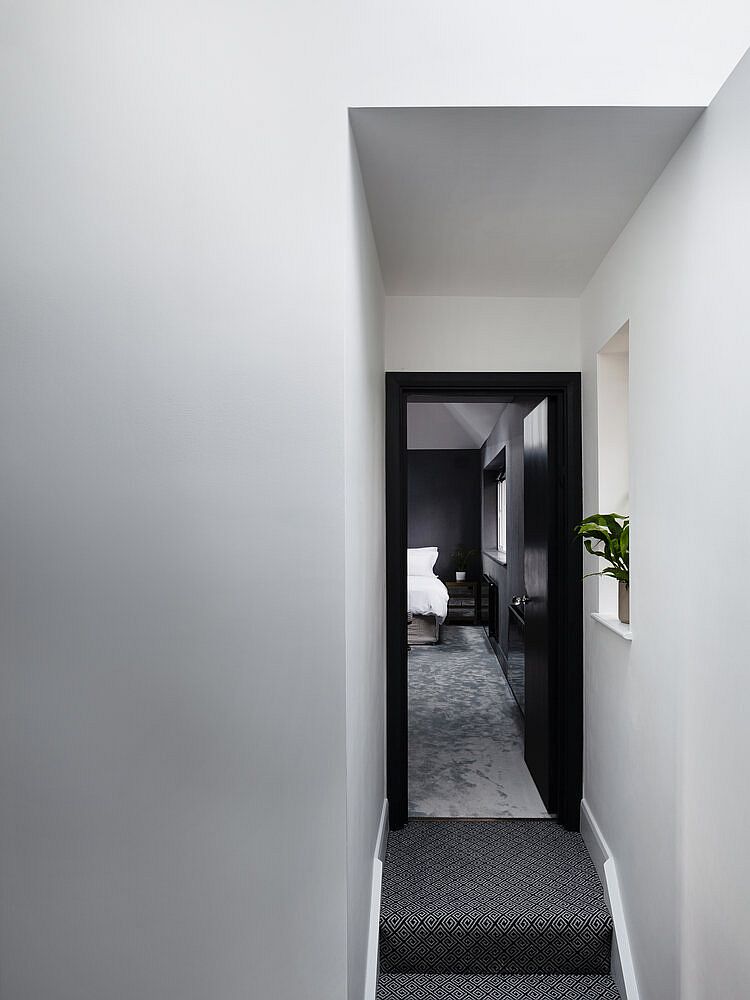
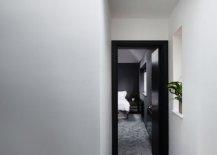
Corridor and staircase leading to the private upper level master suite of the revamped home in London

Elsewhere in the property, the house received a full internal refurbishment including a new office that repurposed an underused living space. Another smaller extension was added to the rear of the property creating a new en-suite for the family’s teenage daughter. The existing ground floor WC was enlarged and made accessible and a new skylight was added that brought much-needed light into the entrance.
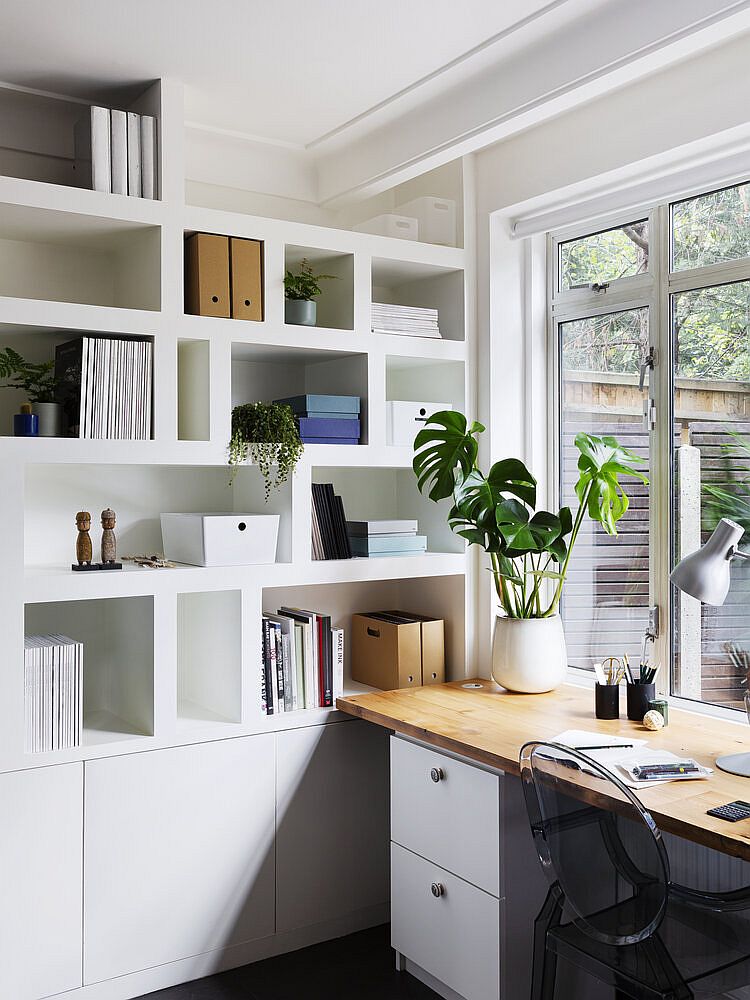
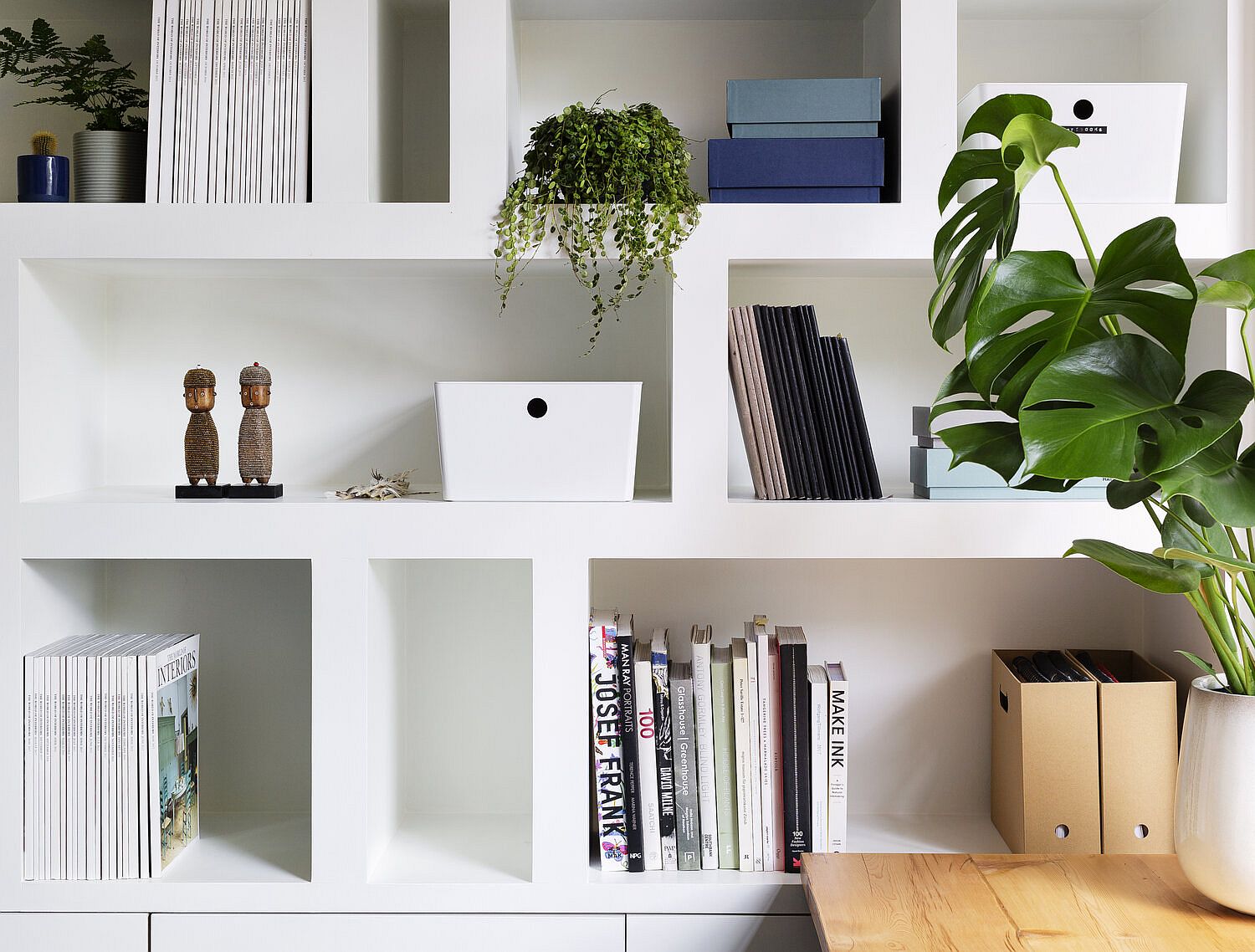
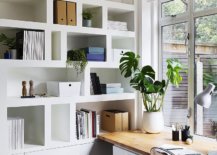
Curated and well-lit modern white home office with smart bookshelf and a wooden desk
Decorating the modern bookshelf in white with books and more!
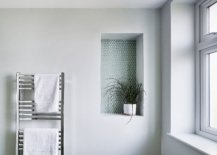
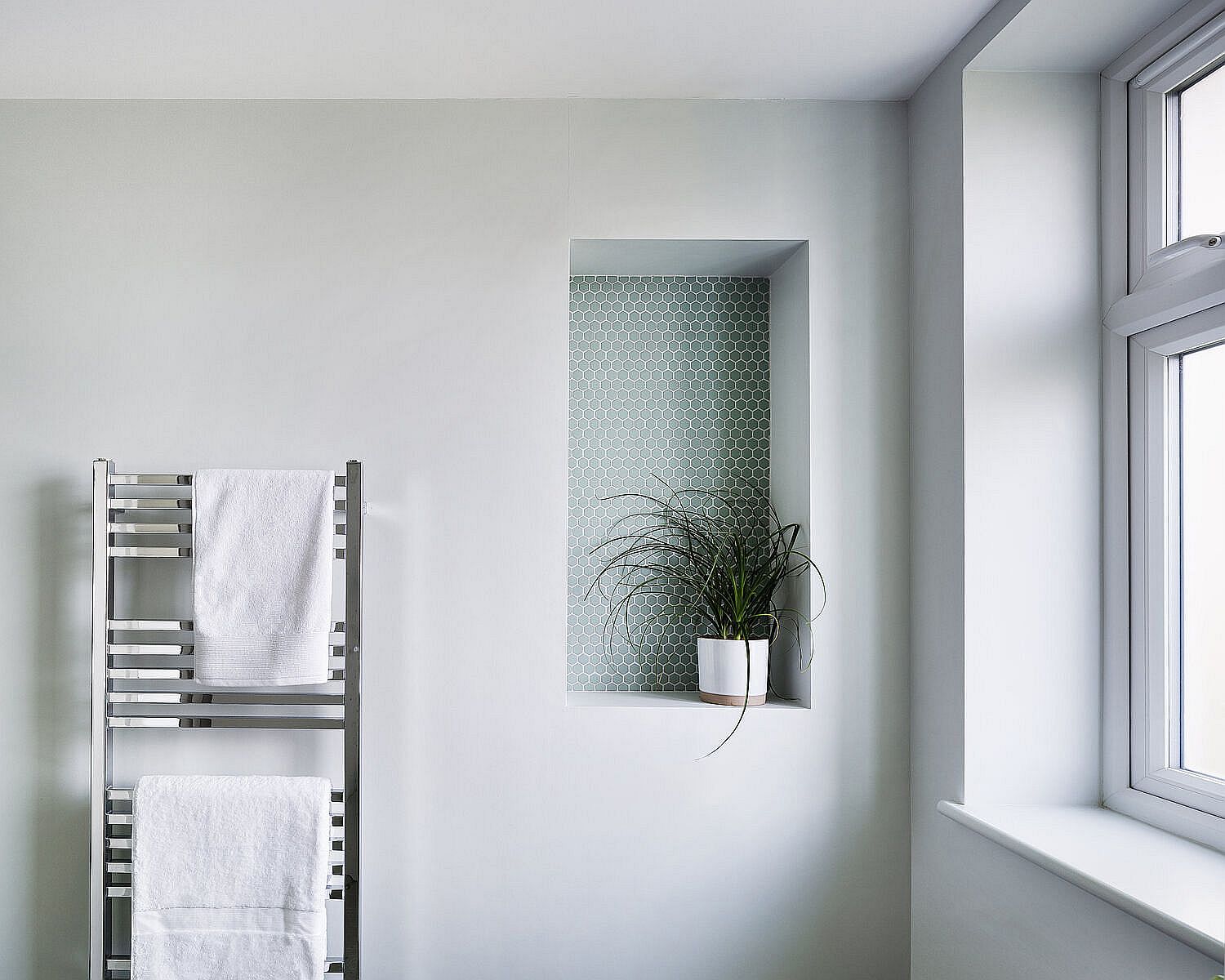
Little accent feature for the white modern bathroom with penny tiles and an indoor plant
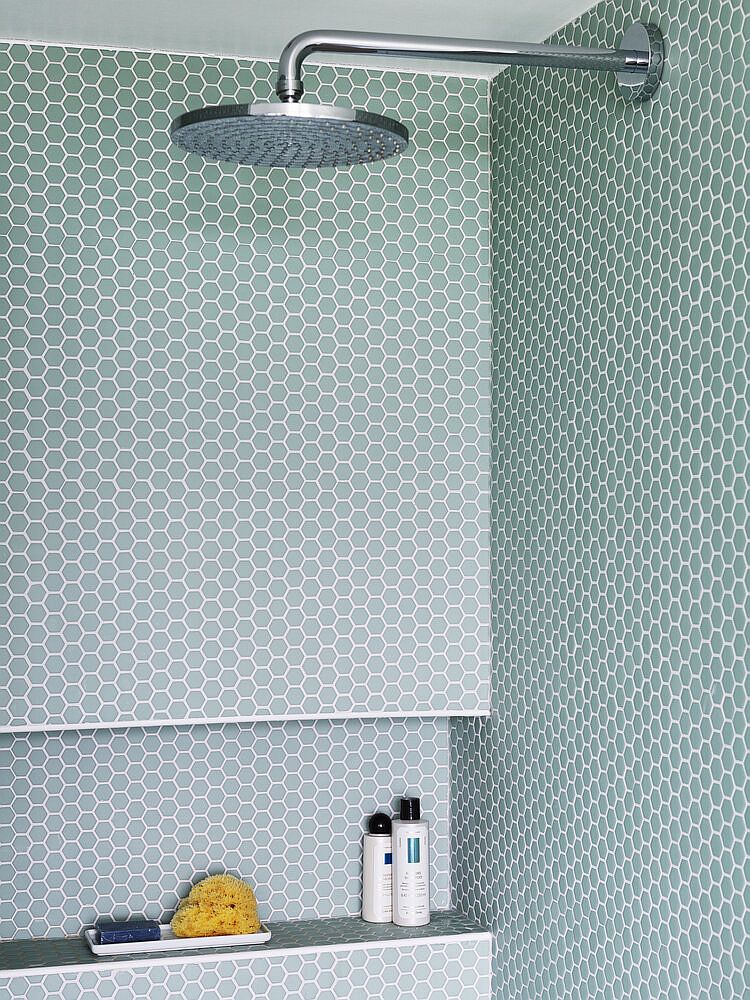
Modern bathroom shower area with penny tiles in pastel green
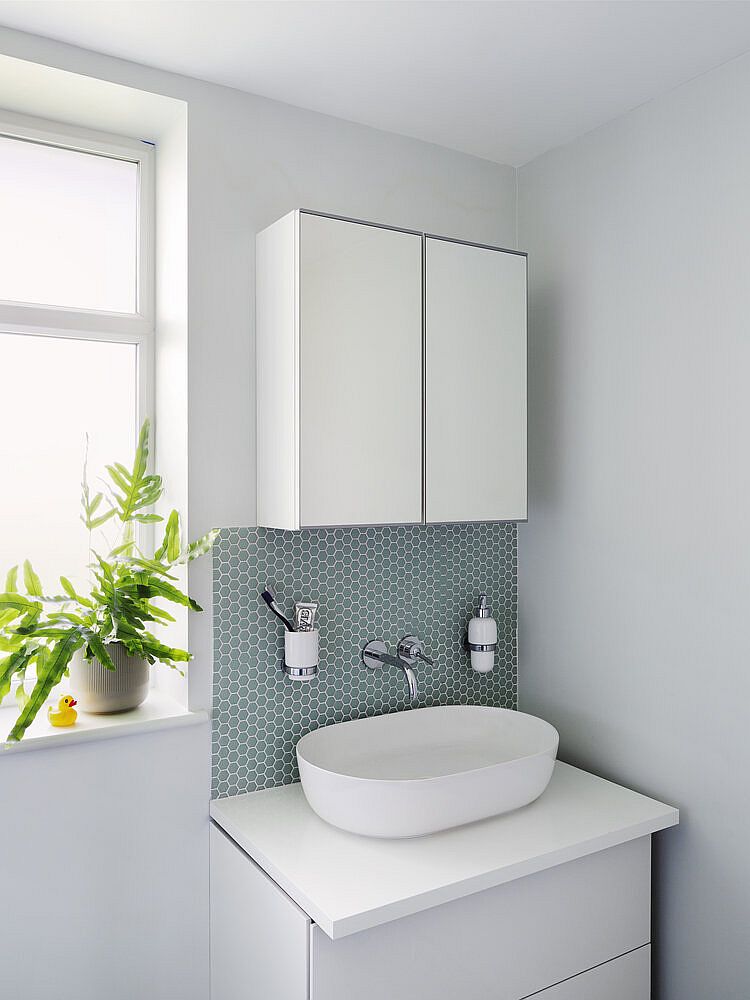
Small vanity in the corner along with medicine cabinet saves space
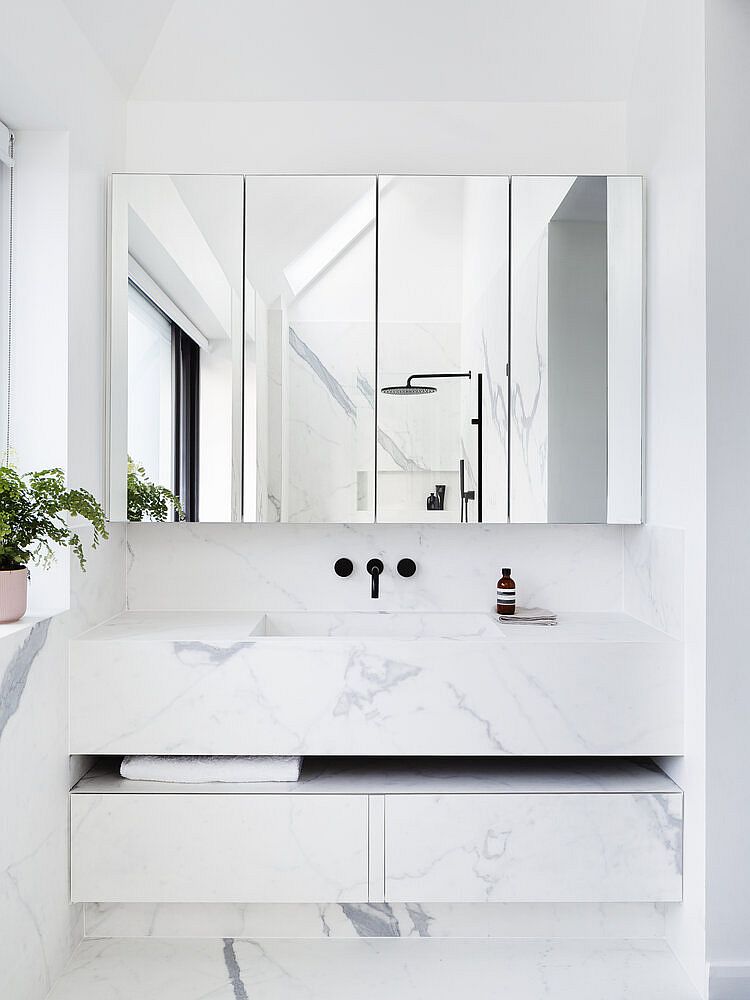
Bespoke vanity in marble with Italian design for the monochromatic contemporary bathroom

You’re reading Beyond Barriers: Contemporary Private Wing with Smart Wheelchair Access, originally posted on Decoist. If you enjoyed this post, be sure to follow Decoist on Twitter, Facebook and Pinterest.

Similar Posts

  • L7 Home

    Architects: Augusto Fernández Mas (K+A Diseño),
    Mauricio Miranda (MM Desarrollos),
    Mariel Esquivel and Cesar Cardoso. Construction: K+A Diseño Main Purveyors: MicMac, Solesdi y Venster. Interior decoration: TAI Arquitectura de Interiores Photography: Onnis Luque The linear black cabin was designed by the collaboration between Augusto Fernández Mas and Mauricio Miranda as a country house for a client with three specific demands: simple layout, low maintenance, and living quarters and public areas in one floor. RA.L7 is located within Rancho Avandaro Country Club in the outskirts of Valle de Bravo, an hour and a halve drive from Mexico City. It is a project that portrays a strong character form the outside but at the same time invites passersby to enter. In the inside, it offers a warm cabin like feeling that through its simplicity and windows facing the golf course, guides the view to the outside. The lower concrete volume ads a sense of solidity and stability to the house, and its layout divided by a garage open on both sides provides an invitation to enter. [
    The project uses the topography of the terrain to its advantage, thus generating two volumes: the upper one which encloses the living and general public areas and the bottom one encompassing the garage, technical and service areas. The outside materials are Japanese style burnt wood (Shou-sugi-ban), Canadian darkened wood, concrete, and ceramic tiles (roof) that in turn evidence the simple lines of the design. The choice of materials demands close to null maintenance.
    The west façade, which faces the street, has dark wood symmetric divisions over the main interior hallway, creating privacy at an angle and almost unrestricted view when perpendicular to them. The purpose is to allow light into the house and permit the views to the equestrian club on the other side of the street while maintaining limited exposure to passersby’s. The east façade faces the golf course, thus there is an honest openness through all glass façade with sliding window doors and complemented with a glass-roofed terrace. In attention to the requested simplicity in the layout, the linear internal distribution has four rooms laid in a sequential manner culminating with living—room, dining-room and kitchen. One dramatic hallways communicates all areas in a straight line, adding to the simplicity of the design layout. With over 650 square meters of inside space, only one internal staircase was employed to communicate with the service areas and garage. There are two accesses to the house without stairs for the owner to comfortably access. In total, the terrain is 2,200 square meters of which ___ square meters were used for the house.
    There is a comforting feeling of warmth inside, but the same time opens up to go and enjoy the outside. It is to be lived inside wanting to be outside and, once outside, feeling invited to be protected inside. The linear and simple geometry of the house is soothed by the layout of the wood beams on the ceiling and the elegant and at the same time rough aspect of the wood floor and wood paneling on the walls. RA.L7 house is one of two recent projects done by the collaboration of Augusto Fernandez and Mauricio Miranda in Rancho Avandaro. Augusto Fernandez, through its K+A Diseño firm, is an active architect and constructor in Valle de Bravo with several country homes competed in the last years. Photography is by Onnis Luque.