Sustainable Modern Home in New Zealand with Gabled Roof and Captivating views

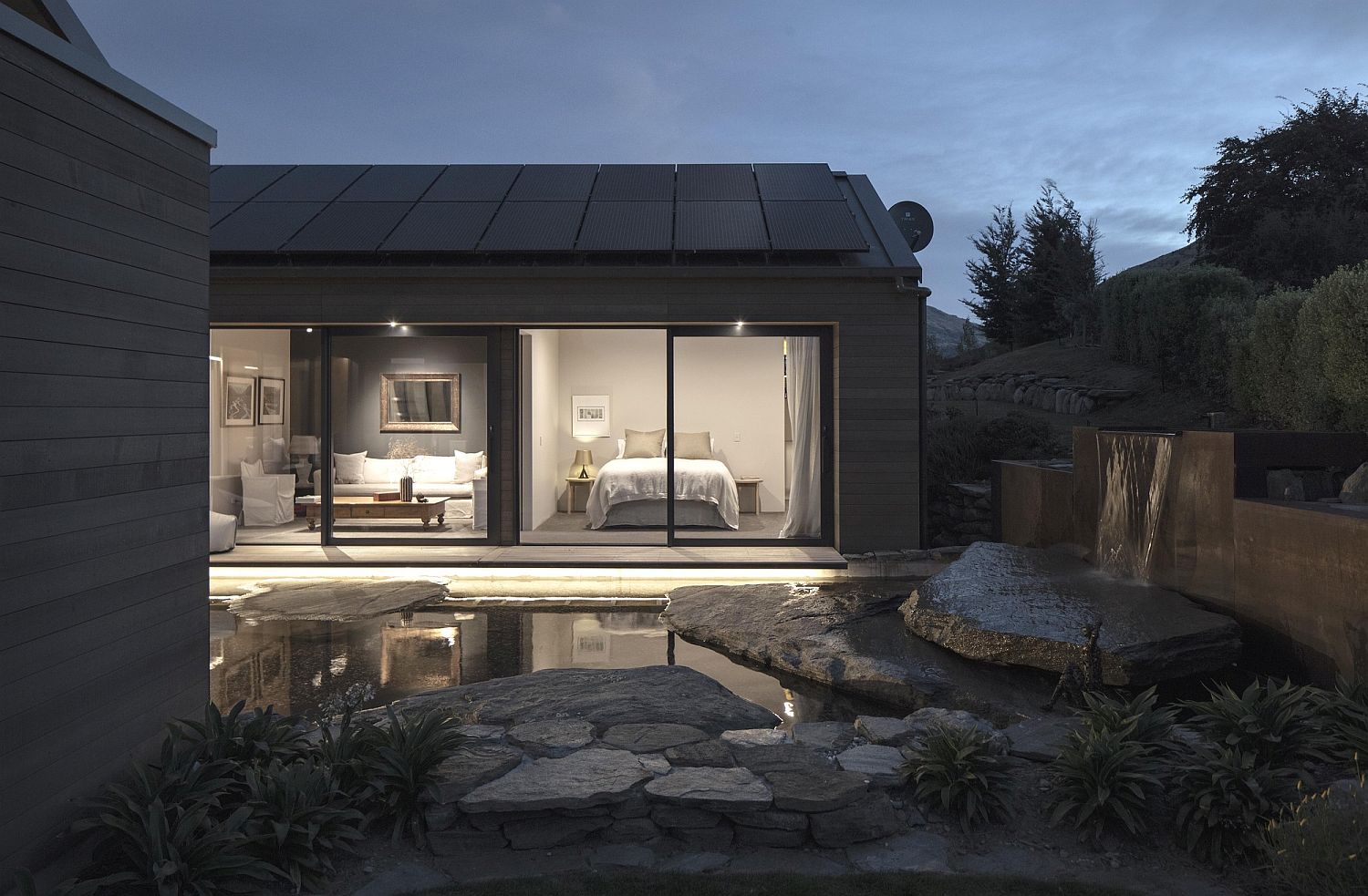
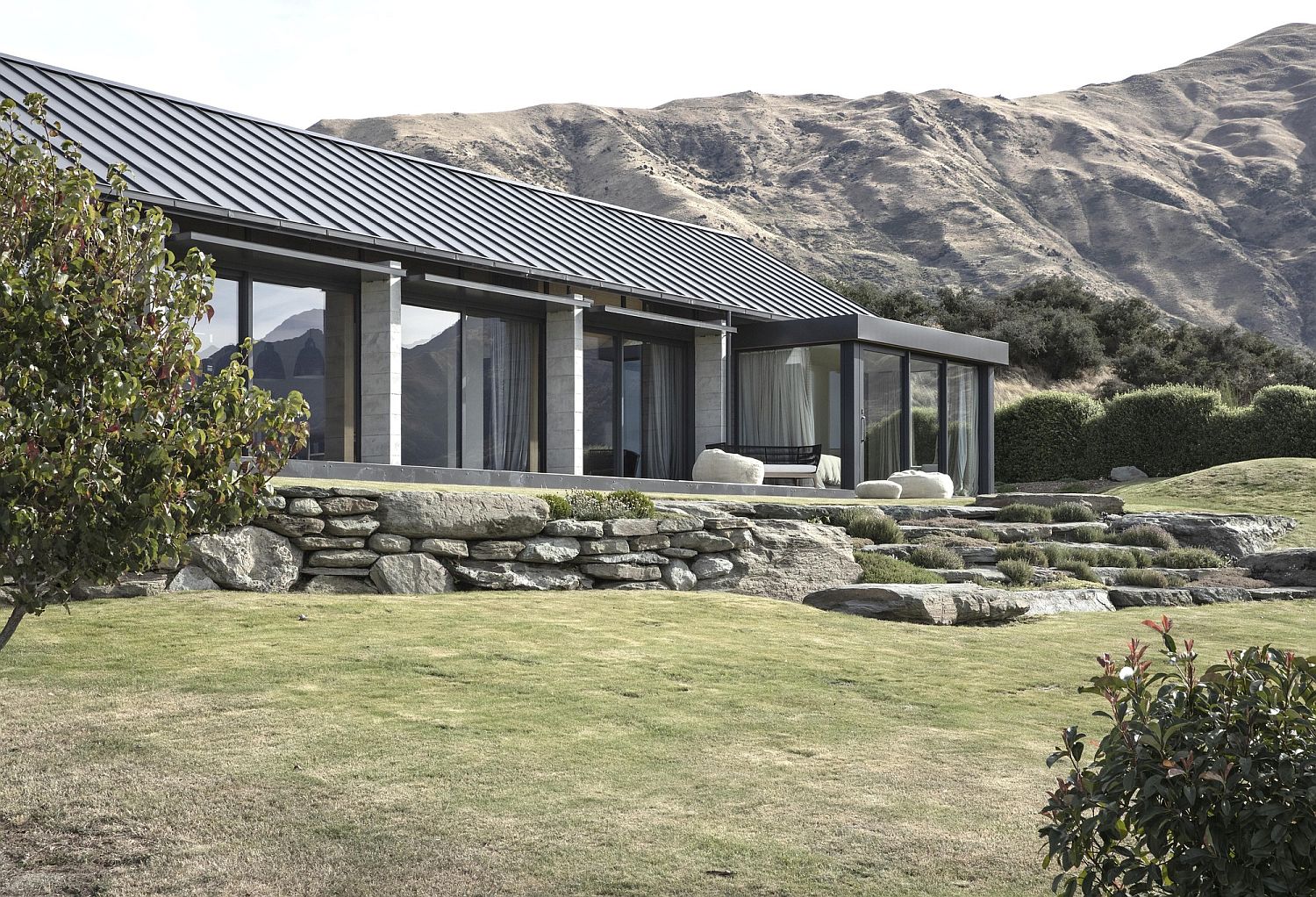
New Zealand is a country where the landscape around the house steals the show more often than not. But the Wanaka House designed by Three Sixty Architectu manages to holds its own with a design that includes a couple of gable roofs and an interior that puts the focus firmly on the view outside. The house is draped in smoked carbon stained timber with corten steel panels making it a unique and elegant structure with durability. Thermomass panels around the house improve insulation and ensure that the interior remains warm even during winter months that are rough in this region of the world.
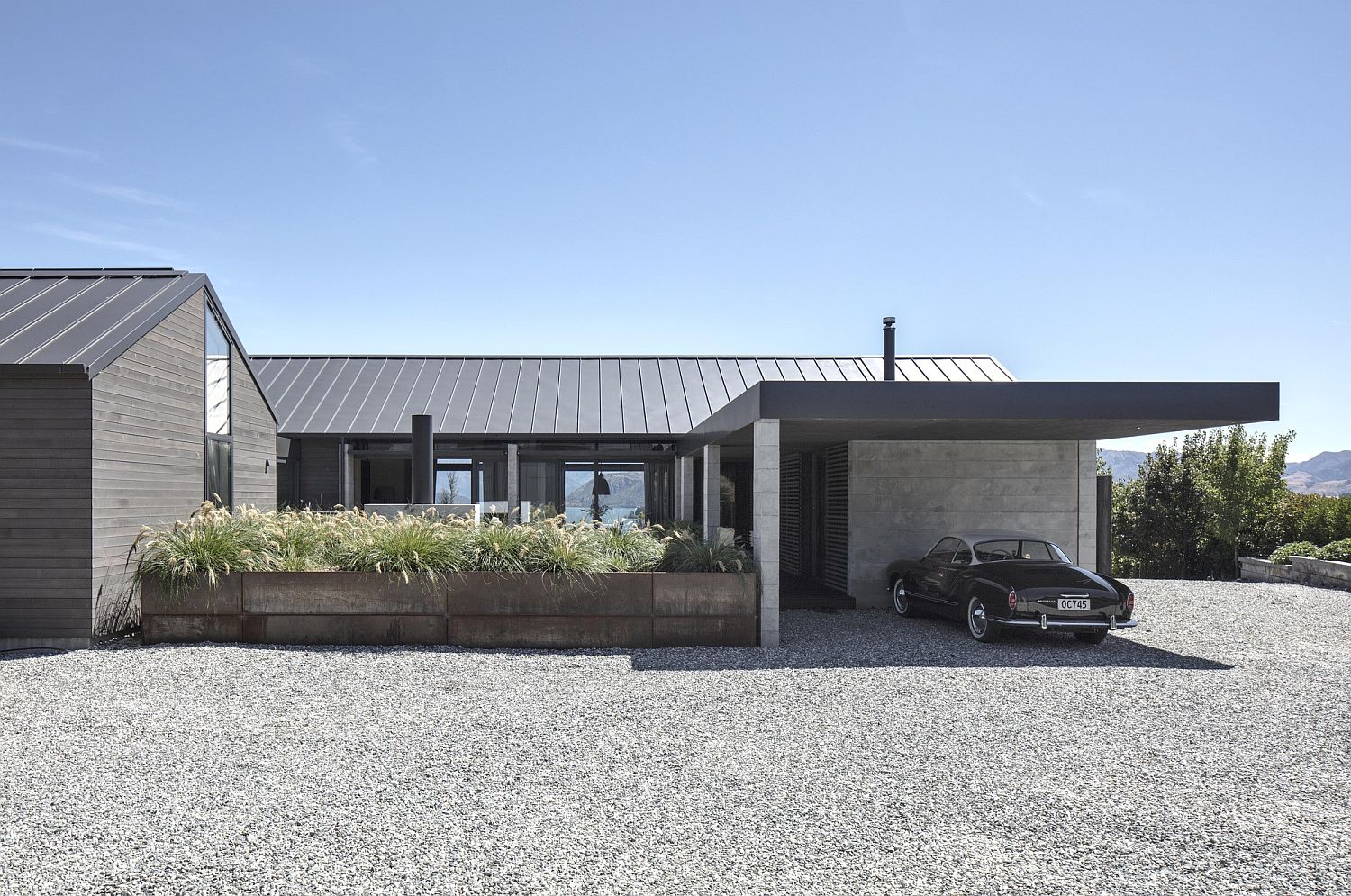
Thermomass panels, Corten steel and smoked carbon stained timber exterior of the New Zealand house


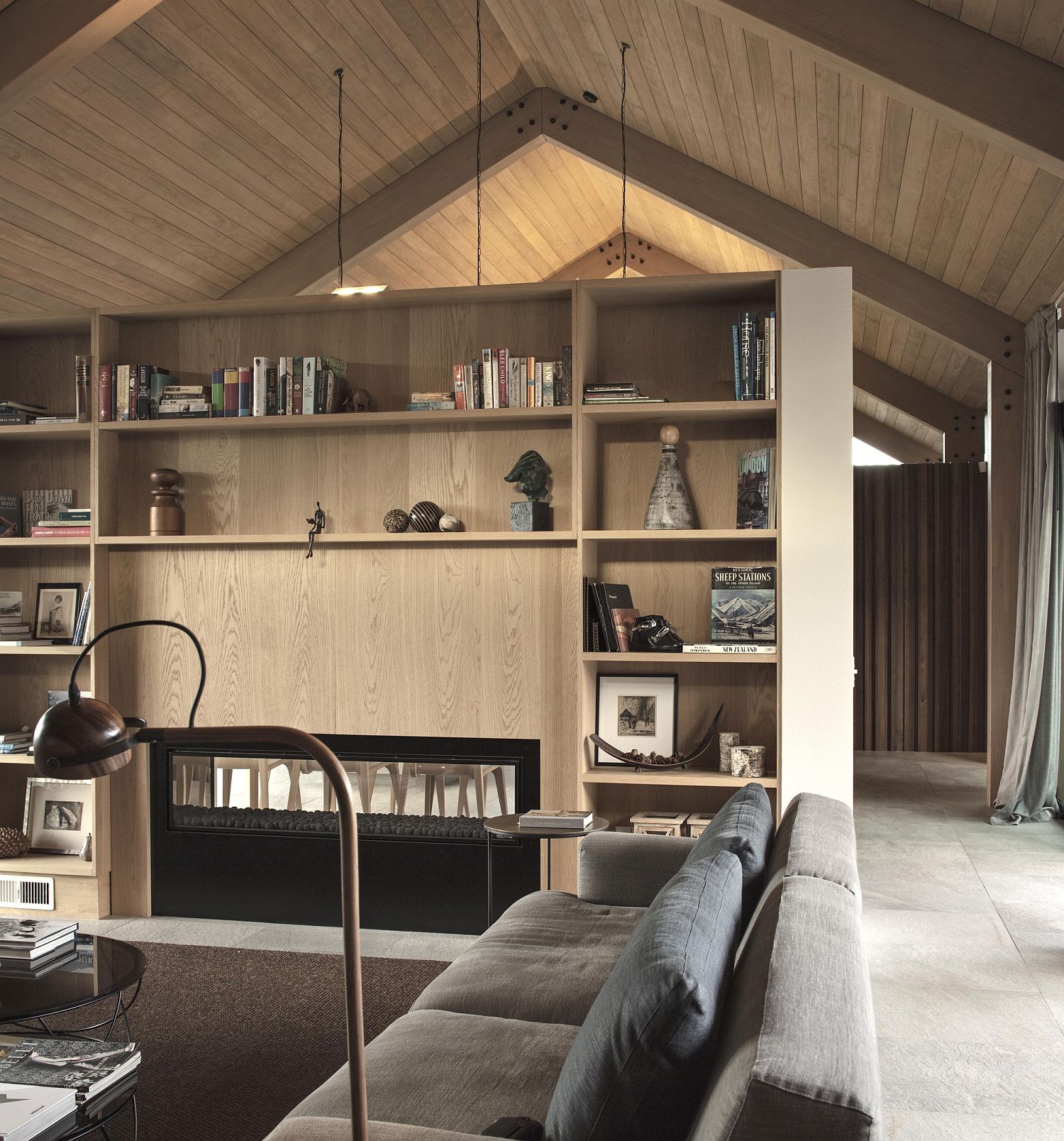
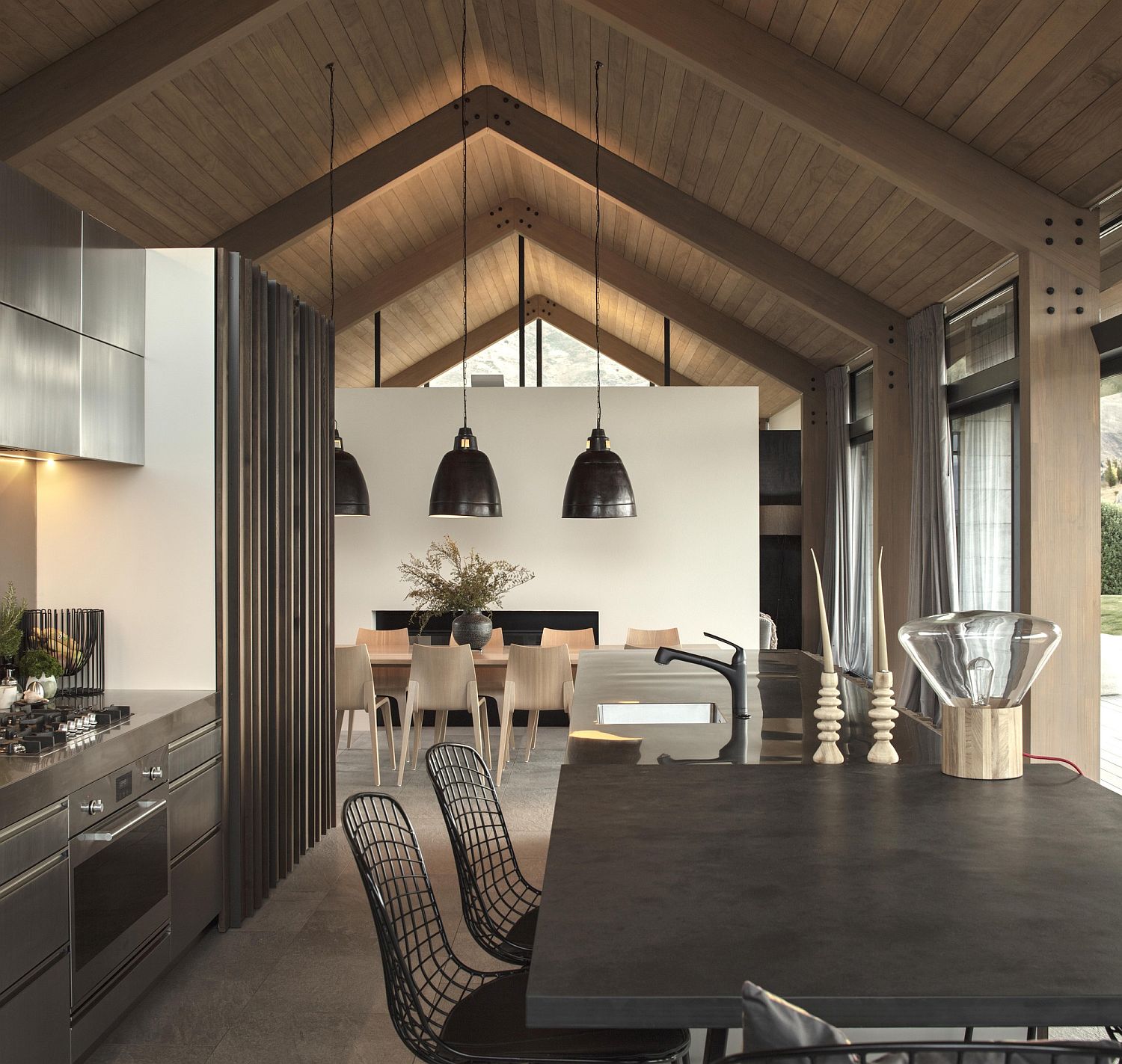
Living and dining areas of the house share a double-sided fireplace while the open plan living area flows into the landscape outside. Décor inside the house is simple and minimal with gray, white and wood shaping almost the entire house. A glass link connects one wing of the house with the other and transition between different spaces is all too seamless. Photovoltaic panels, geothermal energy and other sustainable sources power a home that feels organic, smart and inviting across all seasons. [Photography: Simon Devitt]

RELATED: Mountain Range Home in New Zealand Captivates with Undulating Rooftop
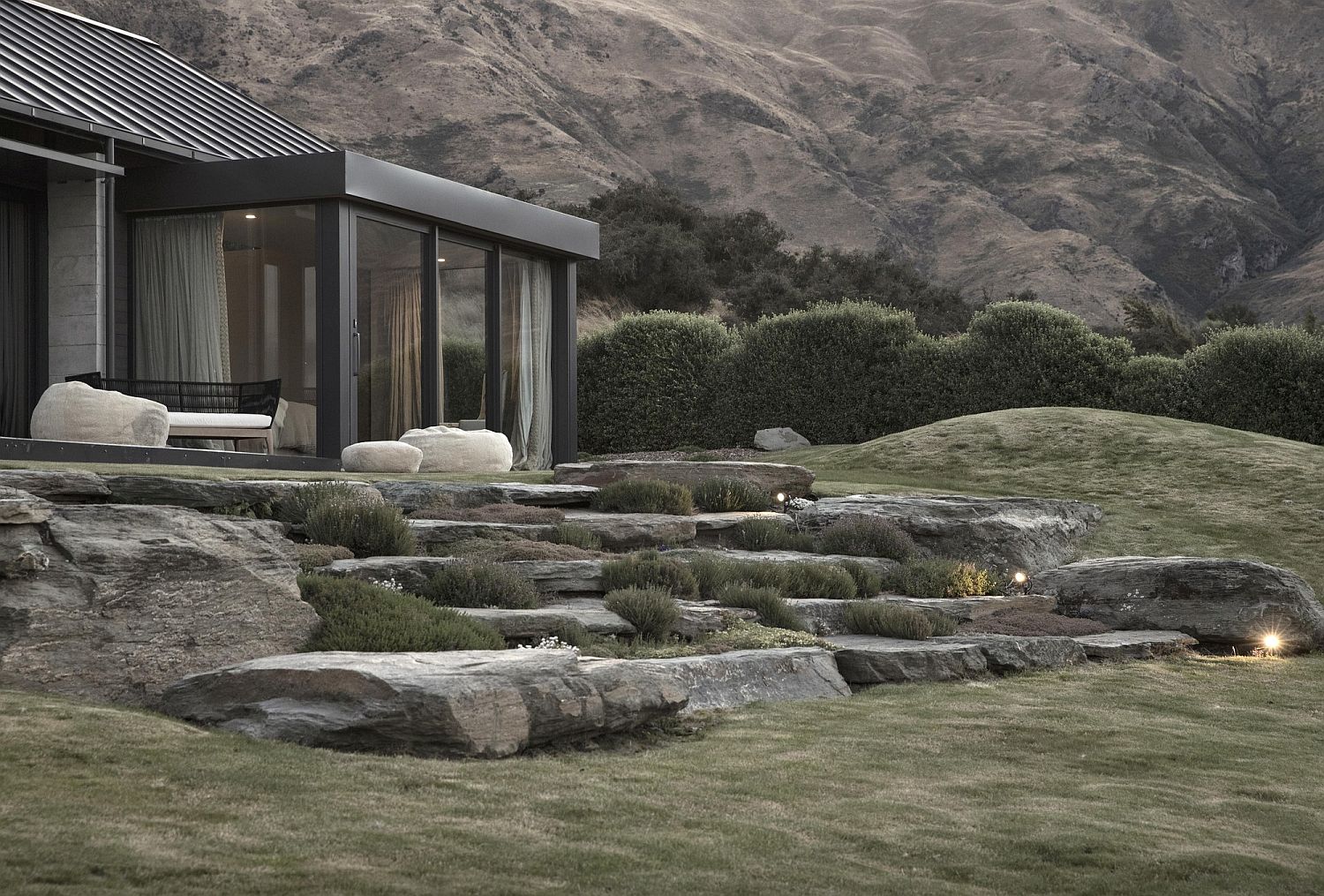
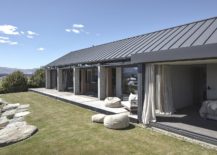
Sustainable house in New Zealand with glass walls and gabled roof
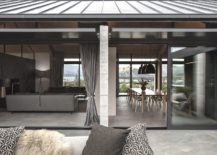
Beautiful landscape outside the home becomes a part of the interior
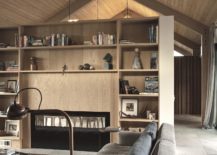
Bookshelves anchor the living room while adding color and accent features
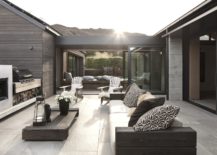
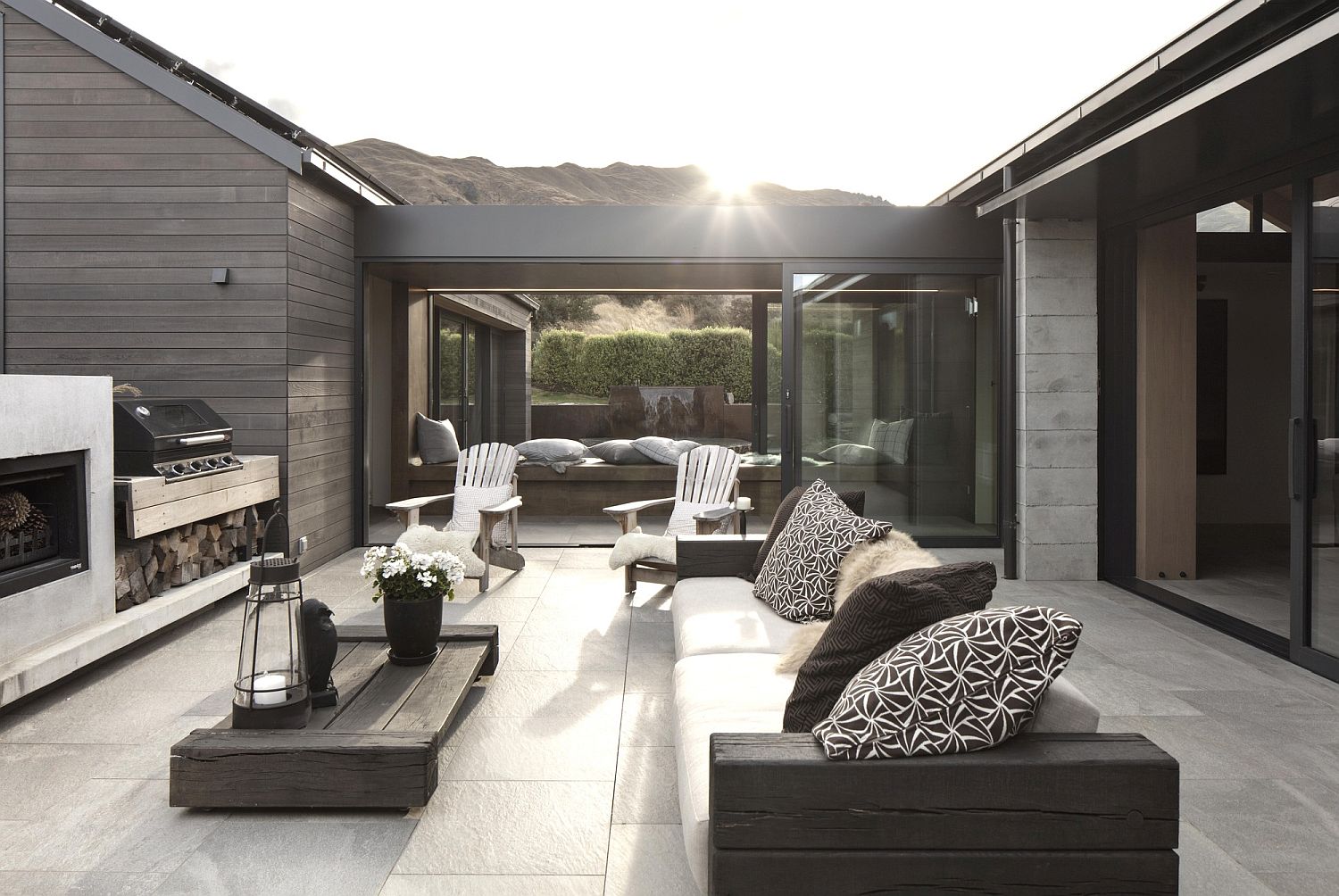
Central courtyard of the house with a comfortable sitting area
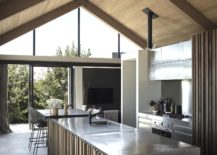
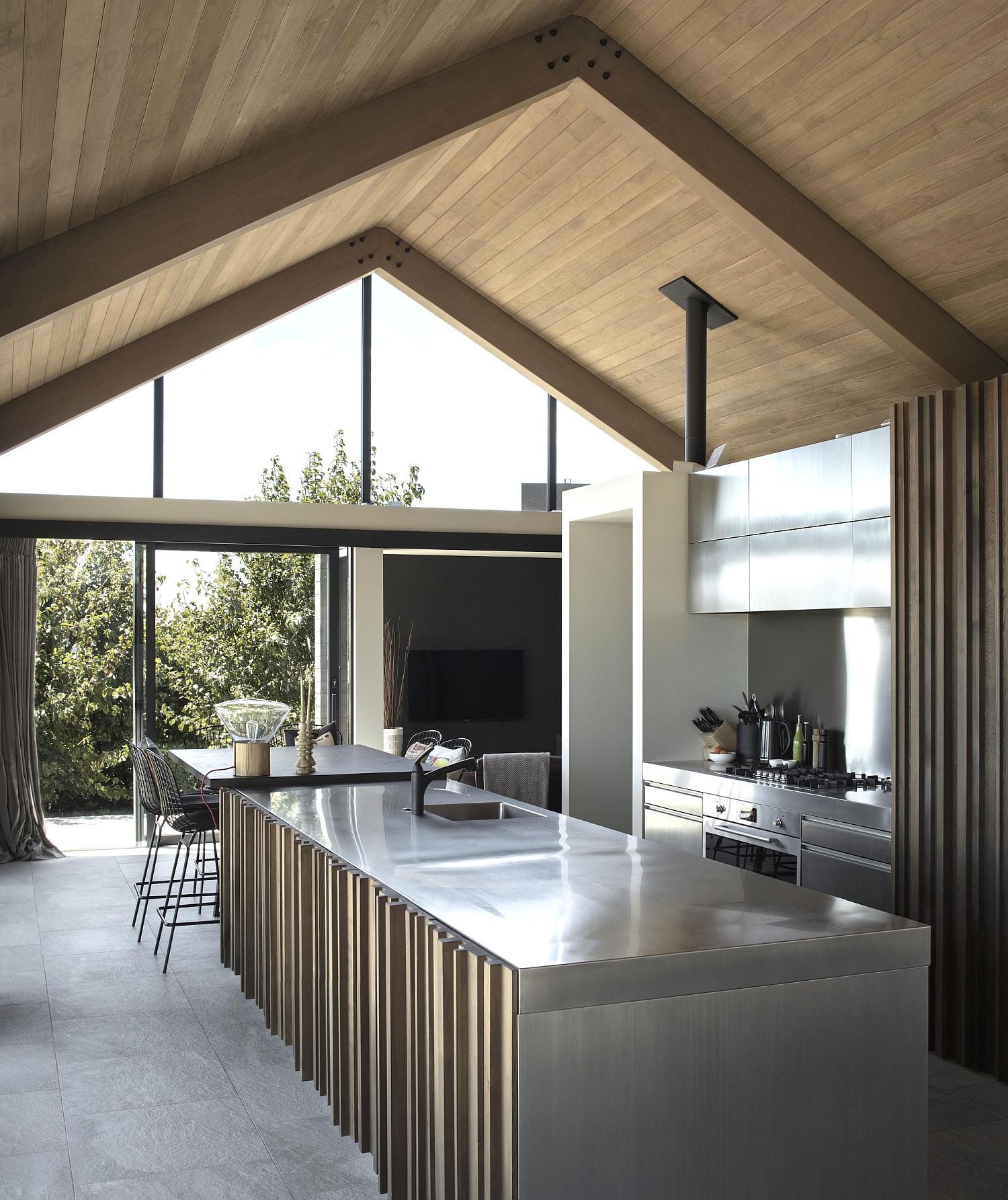
Gray interior of the kitchen with gabled roof and glass walls that bring light inside

A combined inslab heating and hot water heat pump system are powered by 5kWh of discretely placed photovoltaic panels. Appropriate use and positioning of Thermomass concrete, and large glazed openings allow for natural heating and cooling as much as possible, allowing the house to run at a very low cost.

RELATED: House D: Japanese Home with an Eccentric Gabled Roof and Unique Floor Plan
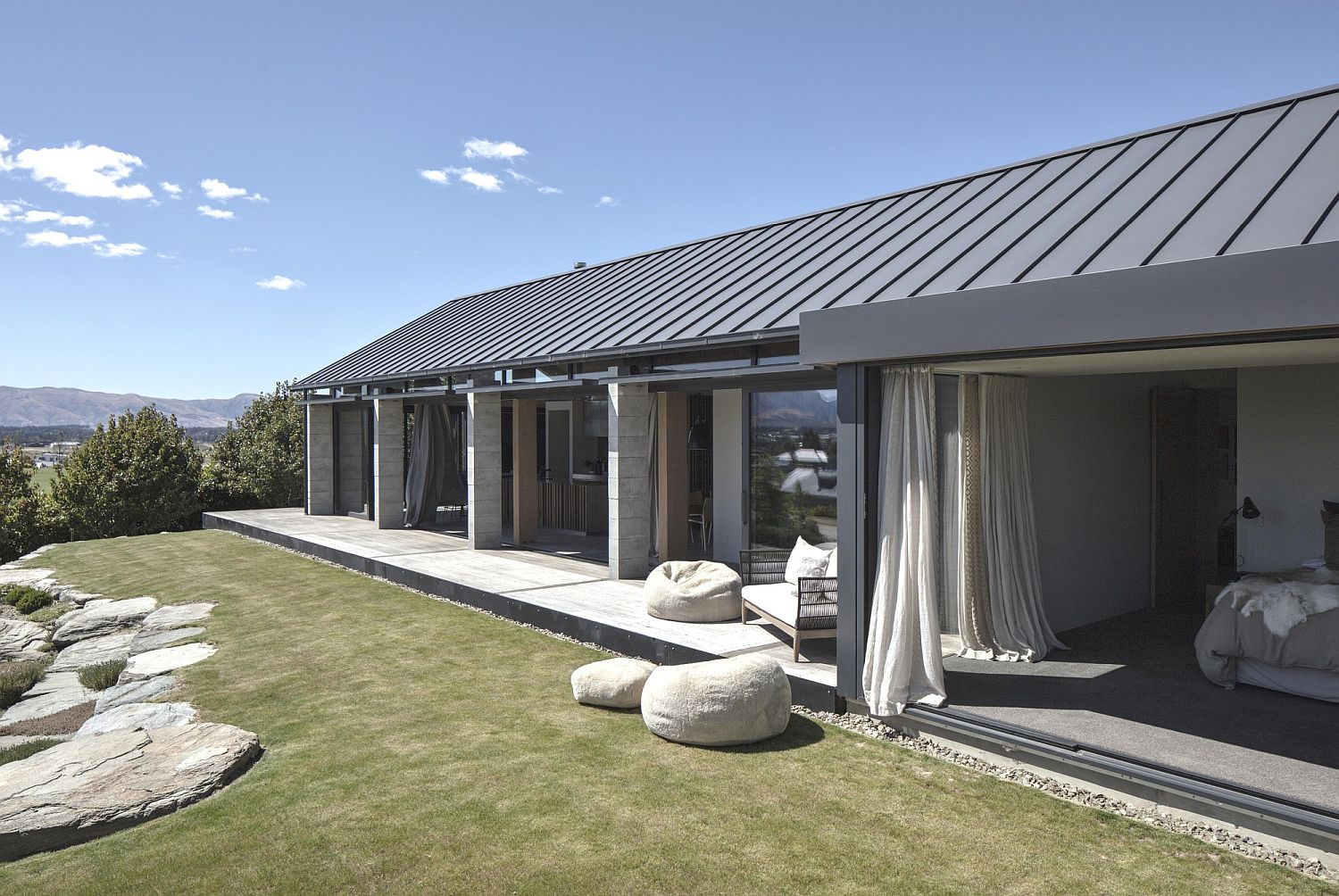
Open design of the house connected to the landscape outside
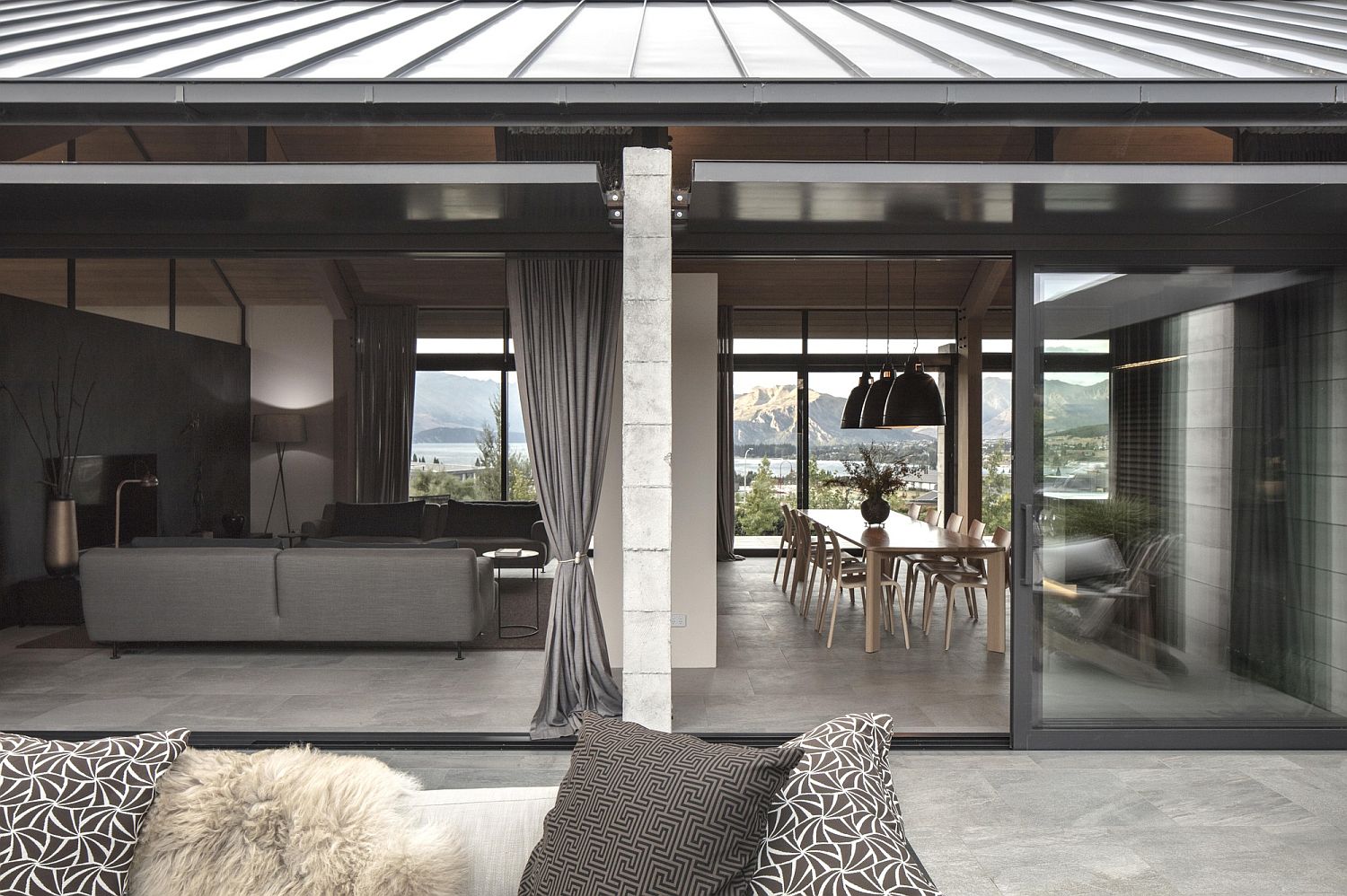
Open plan living area of the house with dining room and kitchen next to it
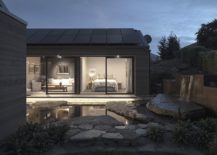
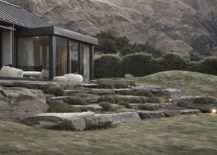
Outdoor spaces around the Wanaka House
Oversized pendants in black accentuate the gabled roof of the house
Series of floor-to-ceiling glass panels connect the interior with the world outside
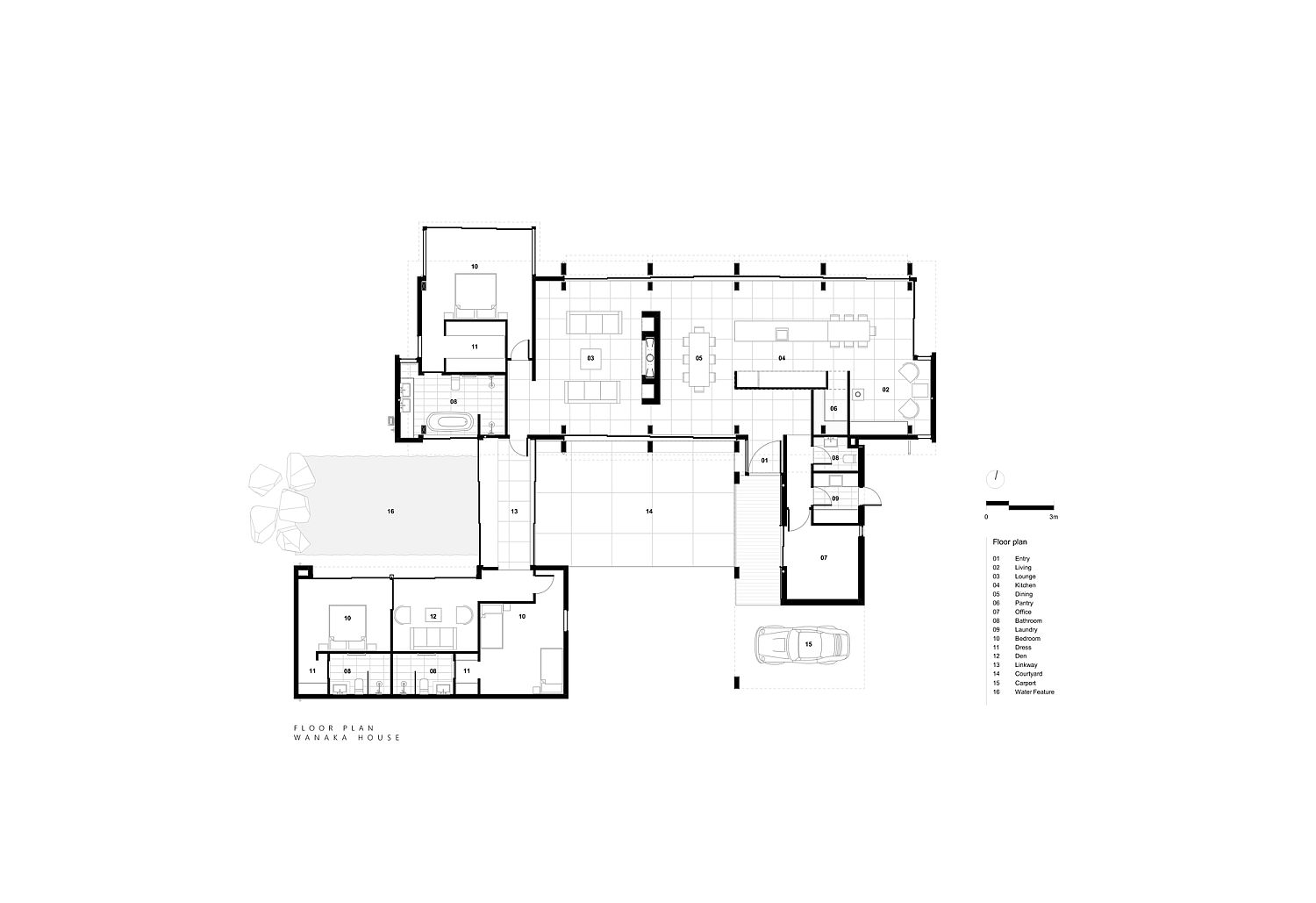
Floor plan of Wanaka House in New Zealand

You’re reading Sustainable Modern Home in New Zealand with Gabled Roof and Captivating views, originally posted on Decoist. If you enjoyed this post, be sure to follow Decoist on Twitter, Facebook and Pinterest.

Similar Posts

  • Miner Road

    The clients are a couple of environmental scientists who, along with their two sons, relocated from the Oakland Hills to the warmer climate of Orinda. Their commitment to sustainability, including a request for net-zero energy performance annually, was evident in their thinking throughout the design process. A three-bedroom program began as a remodel of a 1954 ranch house at the foot of a hill next to a seasonal creek.  After finding the existing structure and soils to be unsuitable, the direction settled on reusing the existing footprint under the shade of a Valley Oak that had grown up close to the original house. The surviving portion of the original house is the fireplace which was wrapped in concrete and utilized for structural support. This made additional grading unnecessary and allowed the new house to maintain the same intimate relation to the old oak.  The family desired an open living layout that connected directly to the landscape. A mezzanine plan evolved with a double height family space nested with a master bedroom and study stacked above the kitchen and nook. A screened pacing deck for long phone calls shades the upper level from afternoon summer sun. Downstairs, secondary bedrooms along an extendable hallway, wrap an outdoor dining area situated between the kitchen and family room.  Construction materials and methods were considered in balance between first and lifecycle costs. The Corten steel rain screen for the exterior skin and interior wood were chosen to take advantage of zero annual maintenance cost and a shotcrete foundation allowed formwork to be repurposed for wood framing.  Single use material selections such as the Corten steel and shotcrete foundation reduced complexity in detailing and labor costs allowing a larger portion of the budget to be reallocated for upgraded mechanical, insulation, and glazing systems. The same attitude for interior finishes produced acoustically insulated, unfinished oak ceilings and walls. The sum total of the limited and landscape-driven materials presents a relaxed and quiet built environment that allows the senses to focus on the natural environment. A haptic connection to the rhythms of our planet is evident.  A 14-gauge Corten rain screen provides a no-maintenance skin. High levels of insulation and glazing efficiency reduce heating and cooling loads. An 8.1kW photovoltaic system provides on-site renewable energy and produced more electrical energy than the house used the first year. Rainwater is collected via a waterfall from the roof at the end of the hallway. Buried tanks store water for use in toilets and laundry. Greywater is collected separately and reused for irrigation. Electronically commutated motors and variable speed heat pumps are used to further limit energy use and control heating and cooling. An energy recovery ventilator is used to provide fresh air.

  • Villa Hulliger

    The Triangle House The characteristic of the narrow, steep hillside plot is its tapering, triangular shape. The view sweeps far and wide over an extensive, natural landscape towards the valley. The layout of the stretched building follows the property line. Surrounded by small residential streets, the building is closed to the hill side, thus forming its back. Here the visitor enters the house on the ground floor, which is the middle level of three, consisting mostly of an airy and spacious area, which is the center of family life. Cooking, eating and living are combined here, zoned only by a freestanding fireplace. This all-round glazed room is sun-drenched all day and opens out to a directly adjacent pool and terrace providing a beautiful view of the surrounding nature. At the tip of the house there is a small workplace, which, like a look-out, opens out to the front of the house. Viewing it from the outside, this narrow side of the building appears like a tower, which proudly stands out as if it is aware of its imposing effect. In contrast, the long side of the house facing the valley is inviting, open and wide. It is remarkable to note how the facade is bent at various points and the building view is accentuated by these carefully folded planes. The basement of the house is accessed from this side. One enters a very generously planned garage, which is tucked away into the ground. A gym is situated towards the west and a family wardrobe towards the east, through which you reach the stairs that take you directly to the ground floor. The private areas, which are located on the first floor, are also completely glazed and offer a spectacular view, bordered by mountains on the horizon. The parents’ bedroom open out onto an exclusive terrace.