Adaptive Series of Canopies Bring Shade to Revamped Victorian Heritage Villa

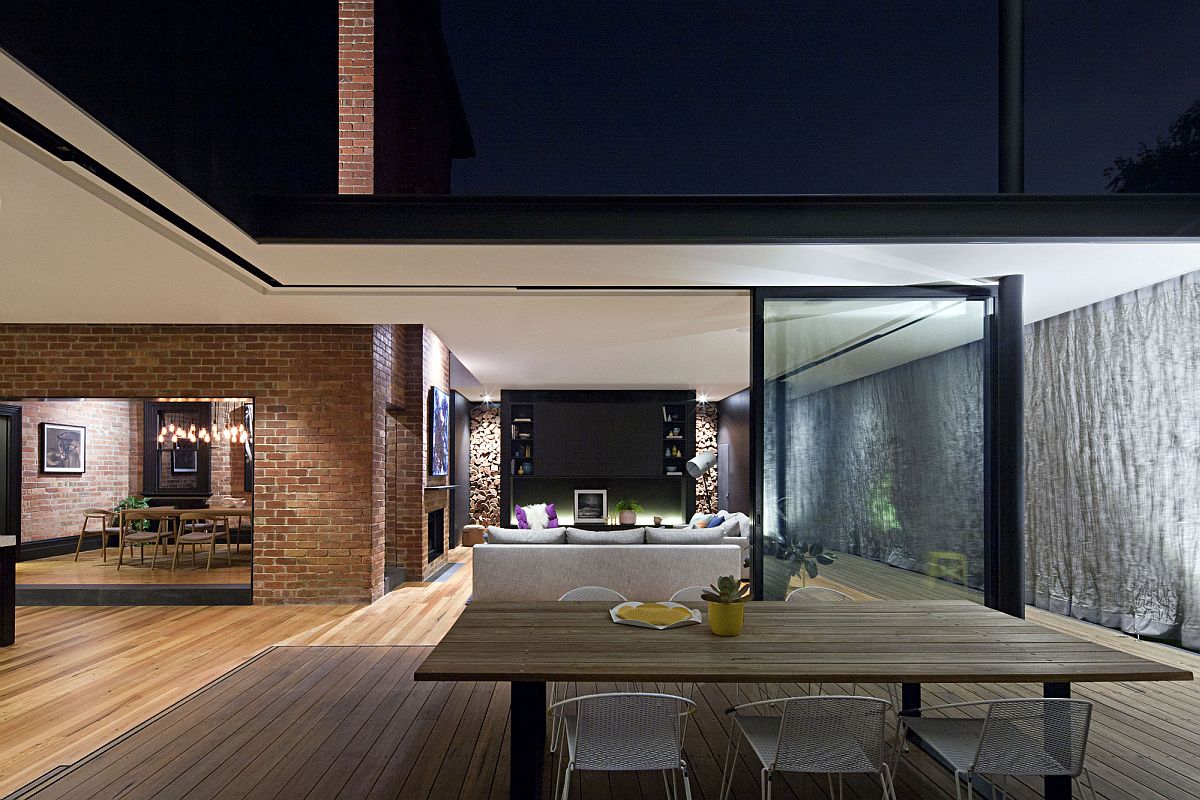
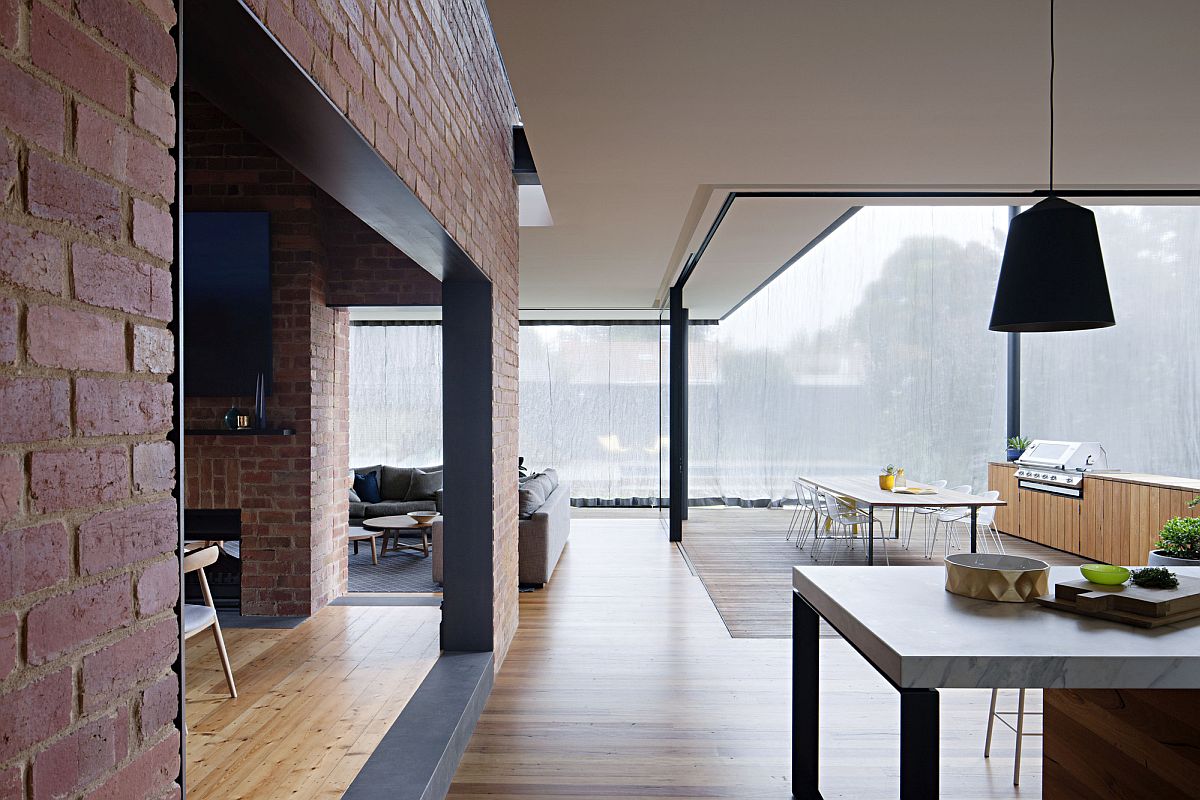
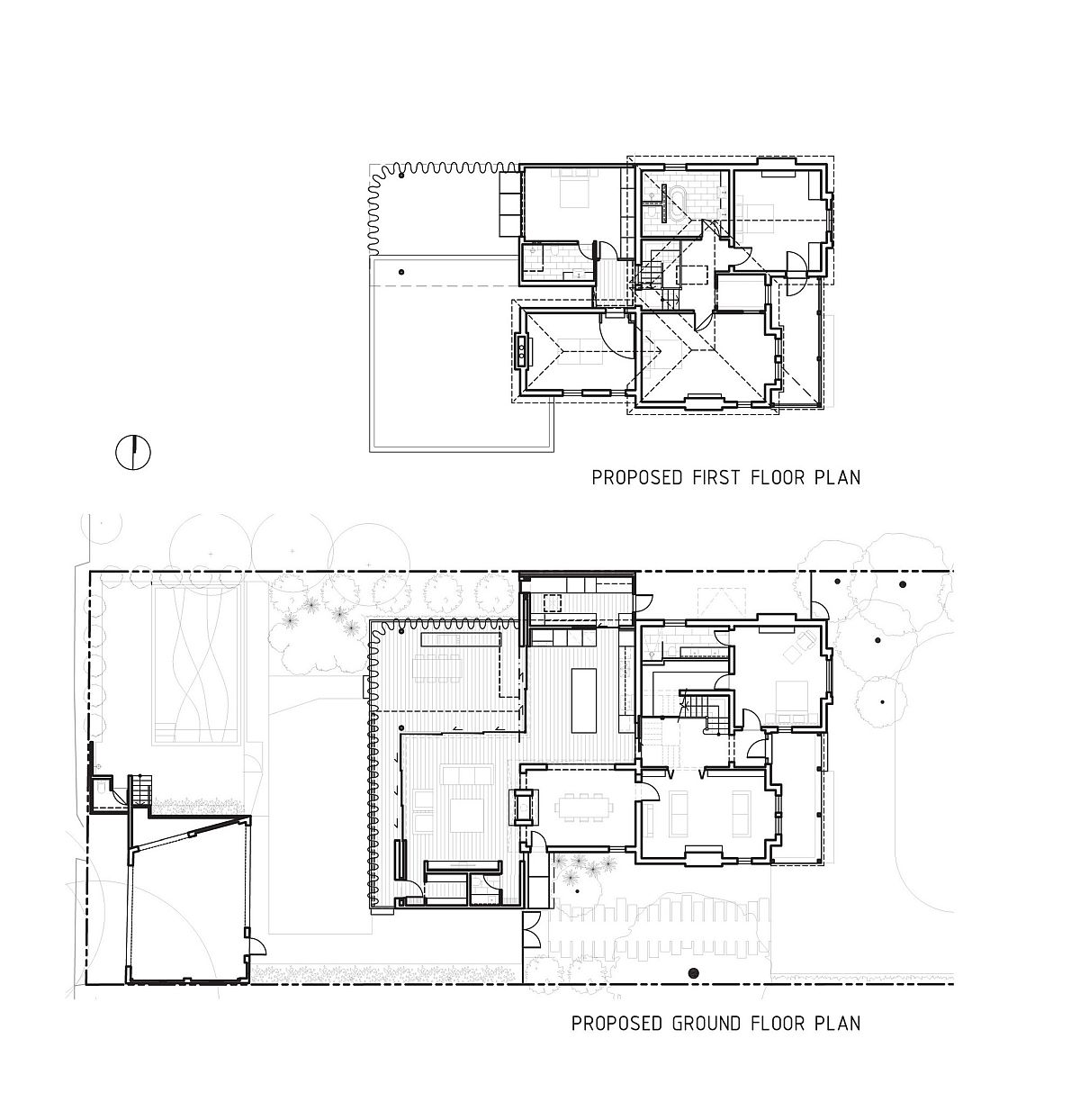
Space is a precious commodity in the inner suburbs of Melbourne and it is this space that is utilized to the hilt with the makeover of this fabulous Victorian heritage villa in Kew. For its makeover, architects from Matt Gibson Architecture + Design borrow from the Japanese design concept of Hiro-En; an idea that provides space for a deep veranda that brings the outdoors inside. Instead of disturbing the old heritage façade of the house, it is the interior that has been altered drastically by removing the poorly planned additions added to it over years. In its new avatar, the open floor plan extends into the covered deck outside and creates a cool indoor-outdoor interplay.
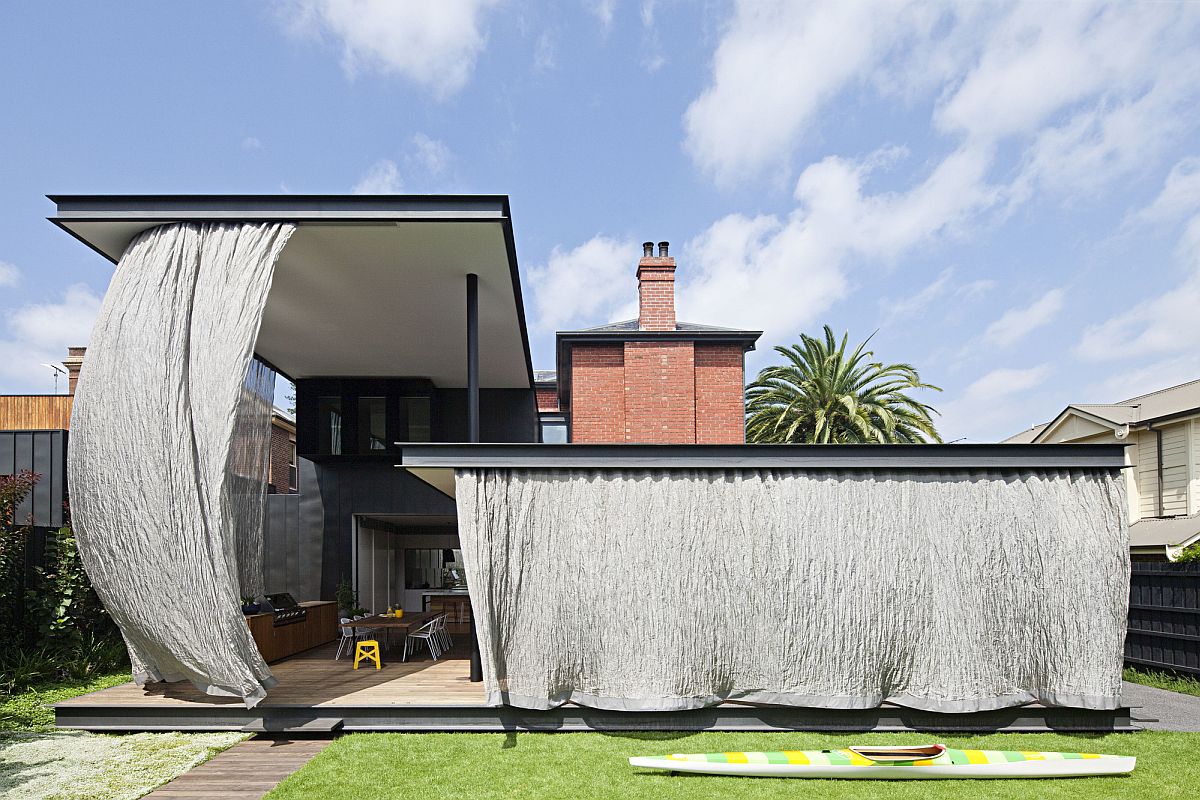
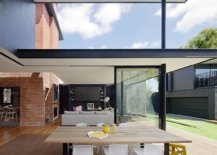
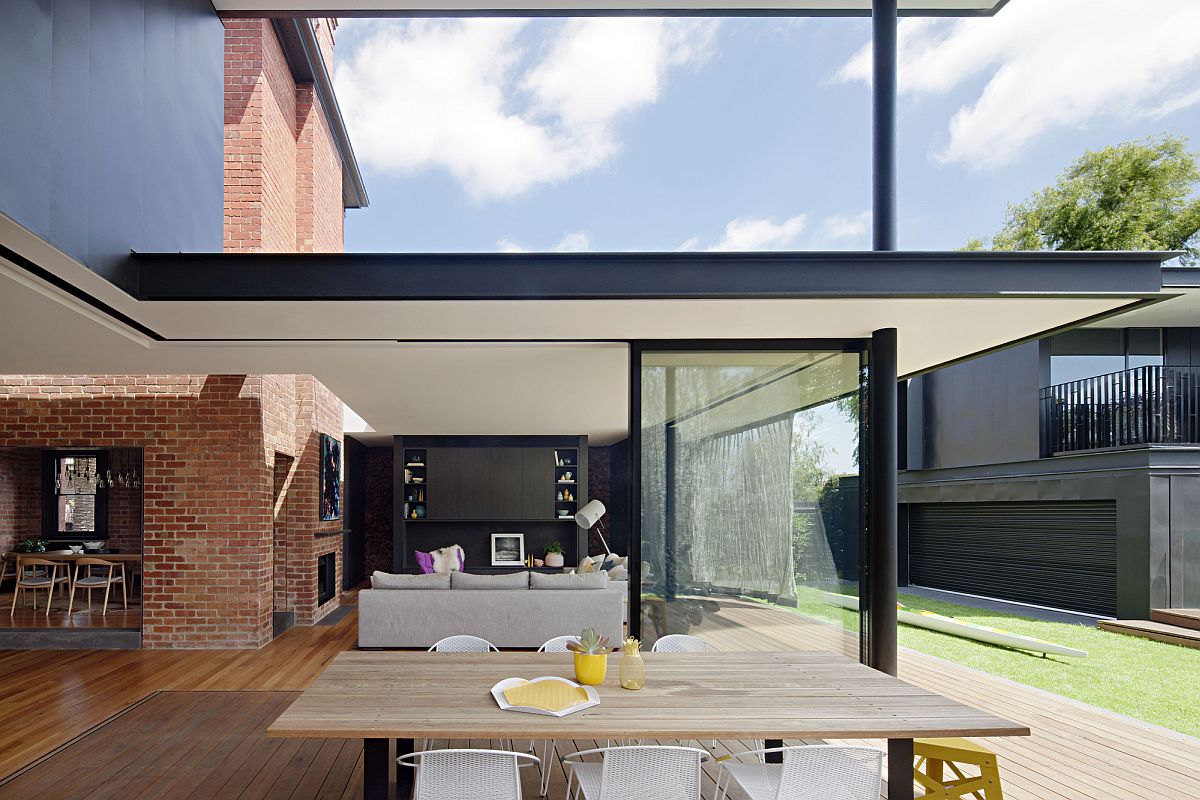
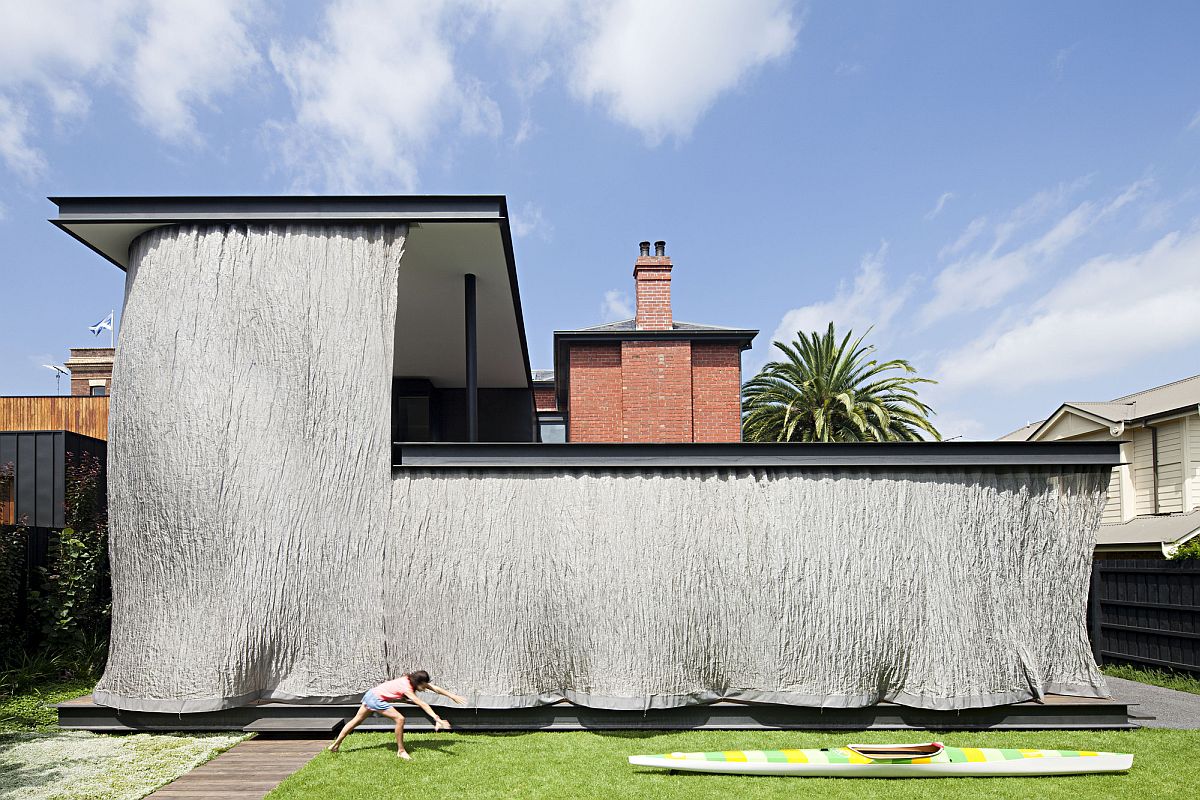
Series of canopies at different heights cover the exterior area of the house


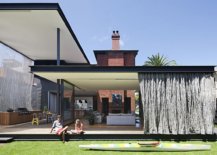
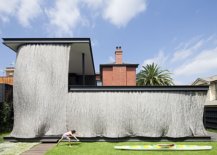
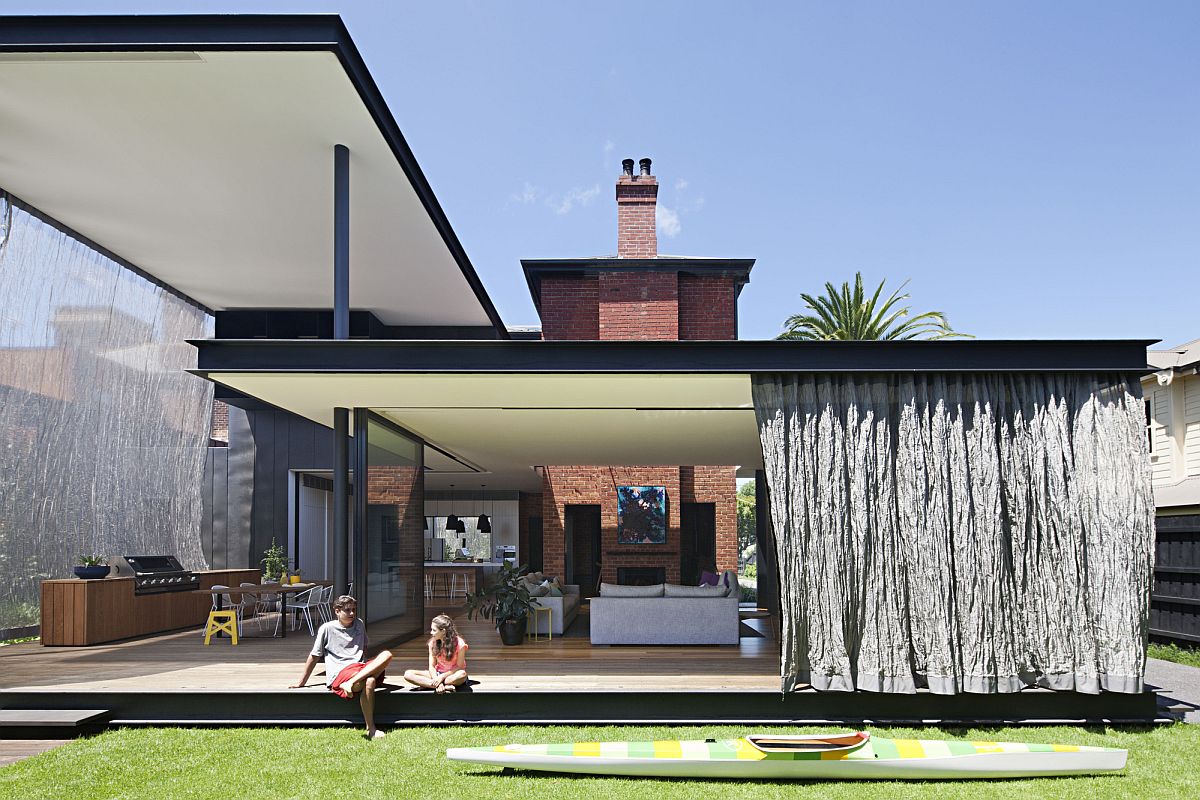
The showstopper inside this new house is a series of canopies that cover the outdoor wooden deck and can be removed whenever the sun is not too harsh. The canopies can be moved around with ease and also provide protection from unexpected showers. Woven stainless steel curtains make the biggest impact here even as glass walls and other smart elements bring in greenery. Smart lighting, modern décor and an idea of ‘reversibility’ complete this fabulous modern Aussie home where life feels breezy and cheerful [Photography: Shannon McGrath]
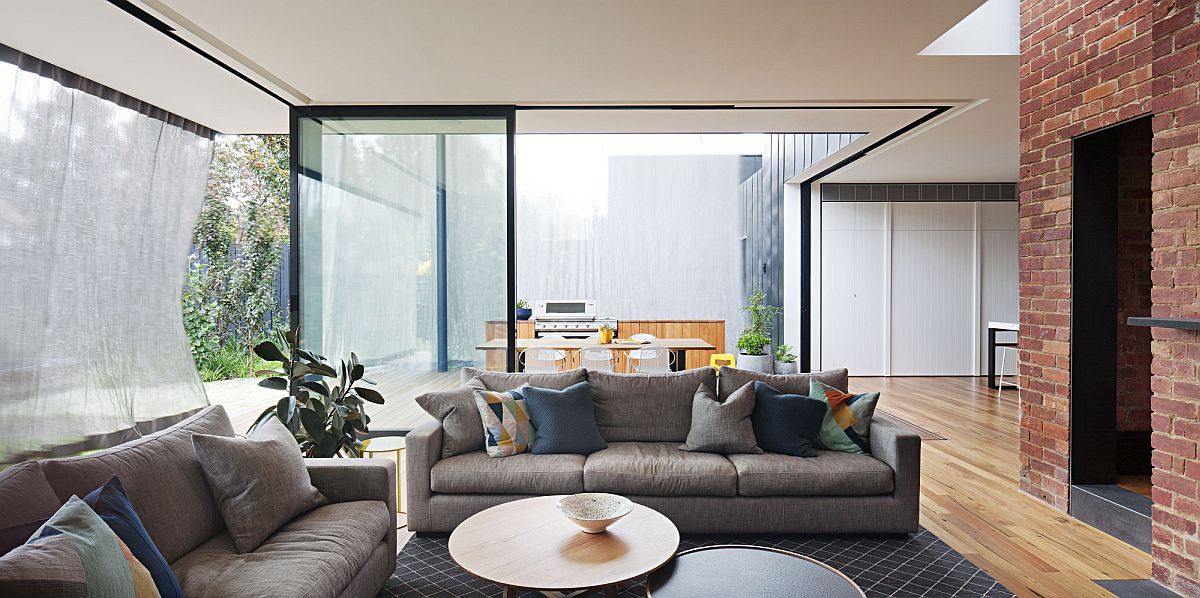
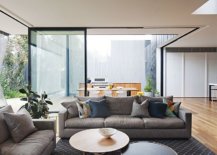
Gray comfy couches for the open living area
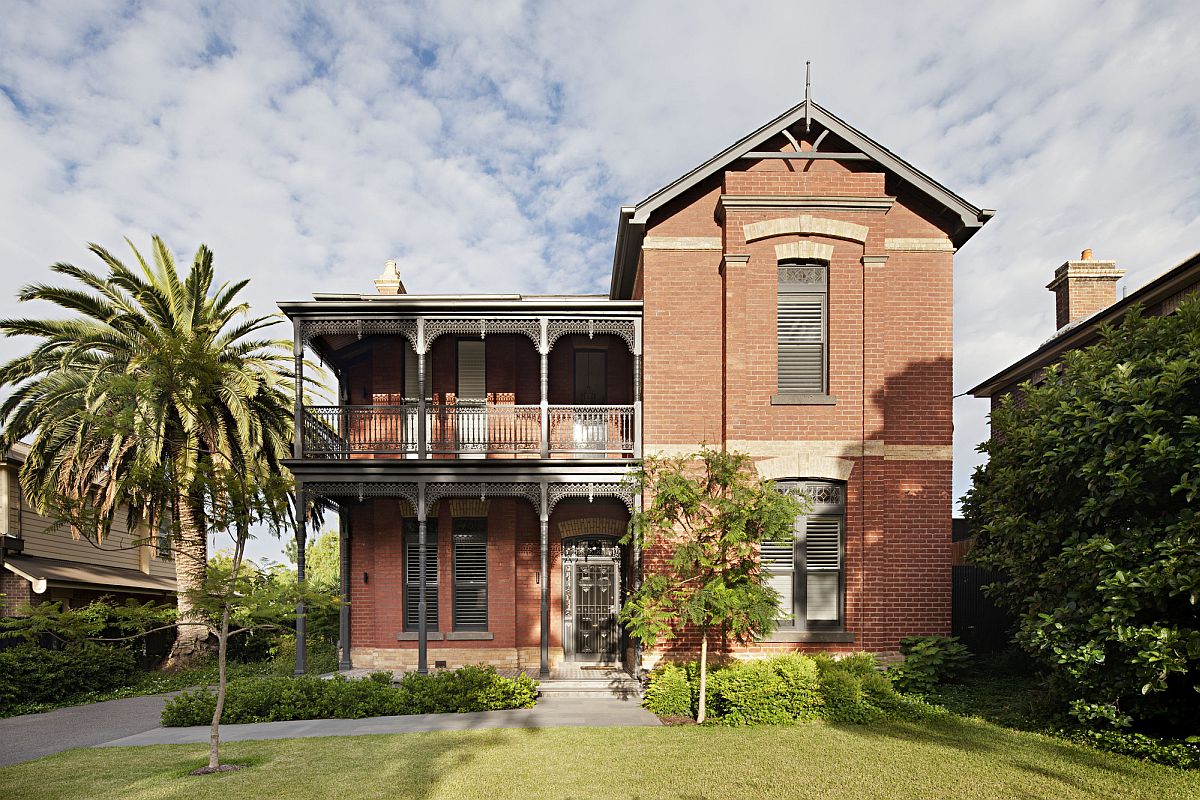
Heritage street facade of classic Victorian era villa in the inner suburb of Melbourne
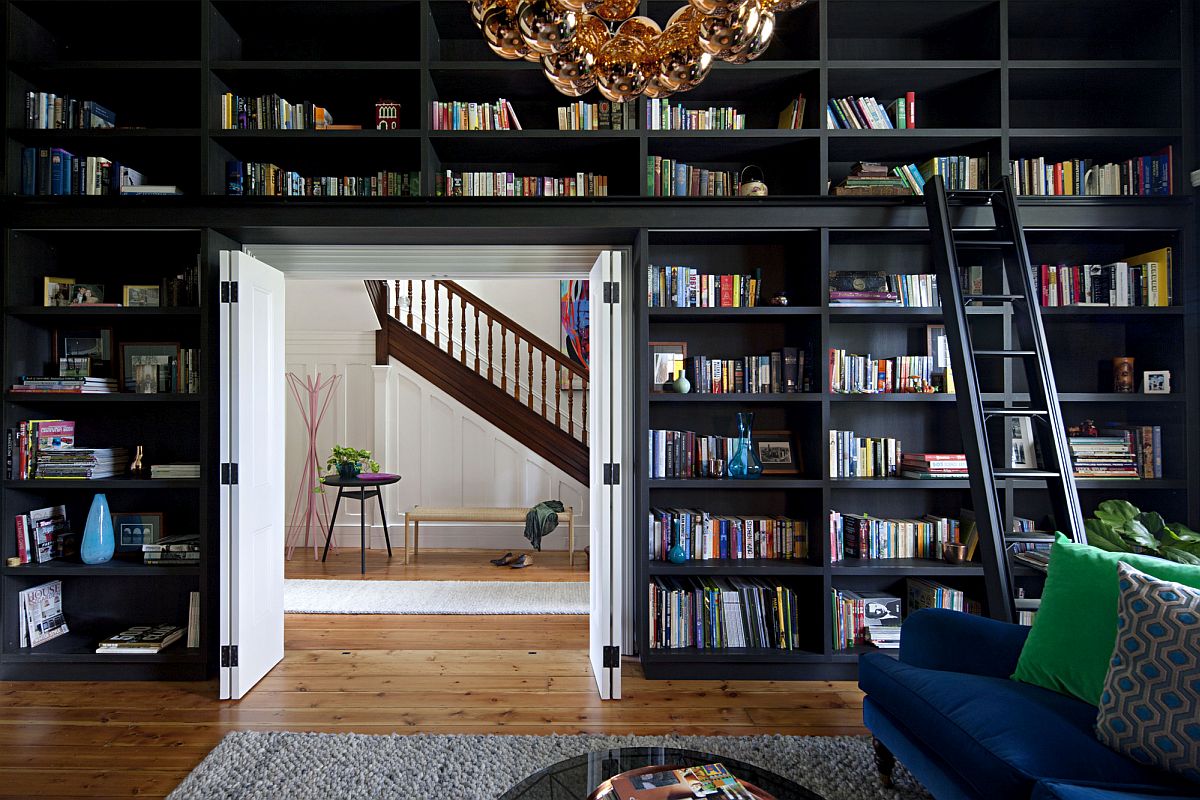
Home library with ample shelf space
Lighting adds elegance to the revamped Melbourne house
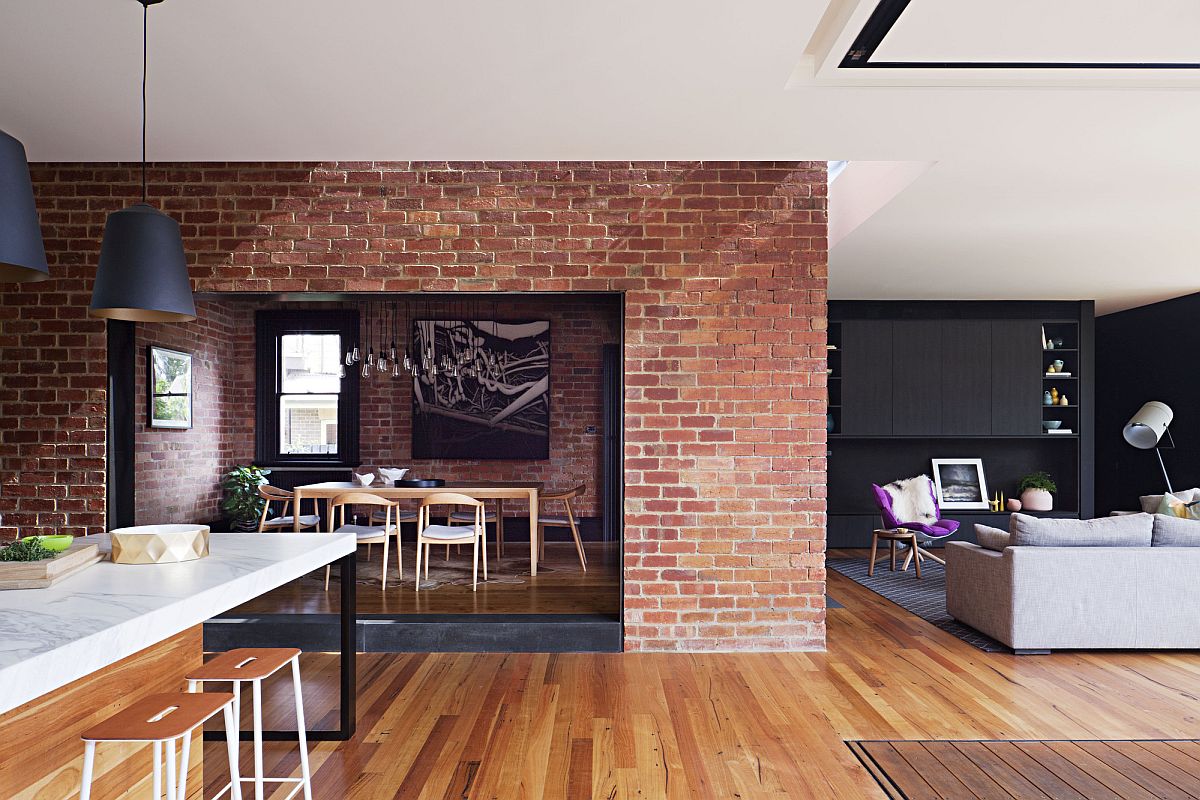
Open plan living area of the house with a revamped floor plan inside heritage Aussie home
Opening up the classic heritage home to the green garden outside

The process of renovation allowed for the act of revealing and exposing the history of the existing building, celebrating the trace of original materials and the history of alterations over time. Rather than covering over the original construction, certain aspects are left intentionally exposed. New fabric is deliberately left free from old so that the new works touch the original structure softly via glazed connections allowing for the principal of ‘reversibility’ whilst bringing light…
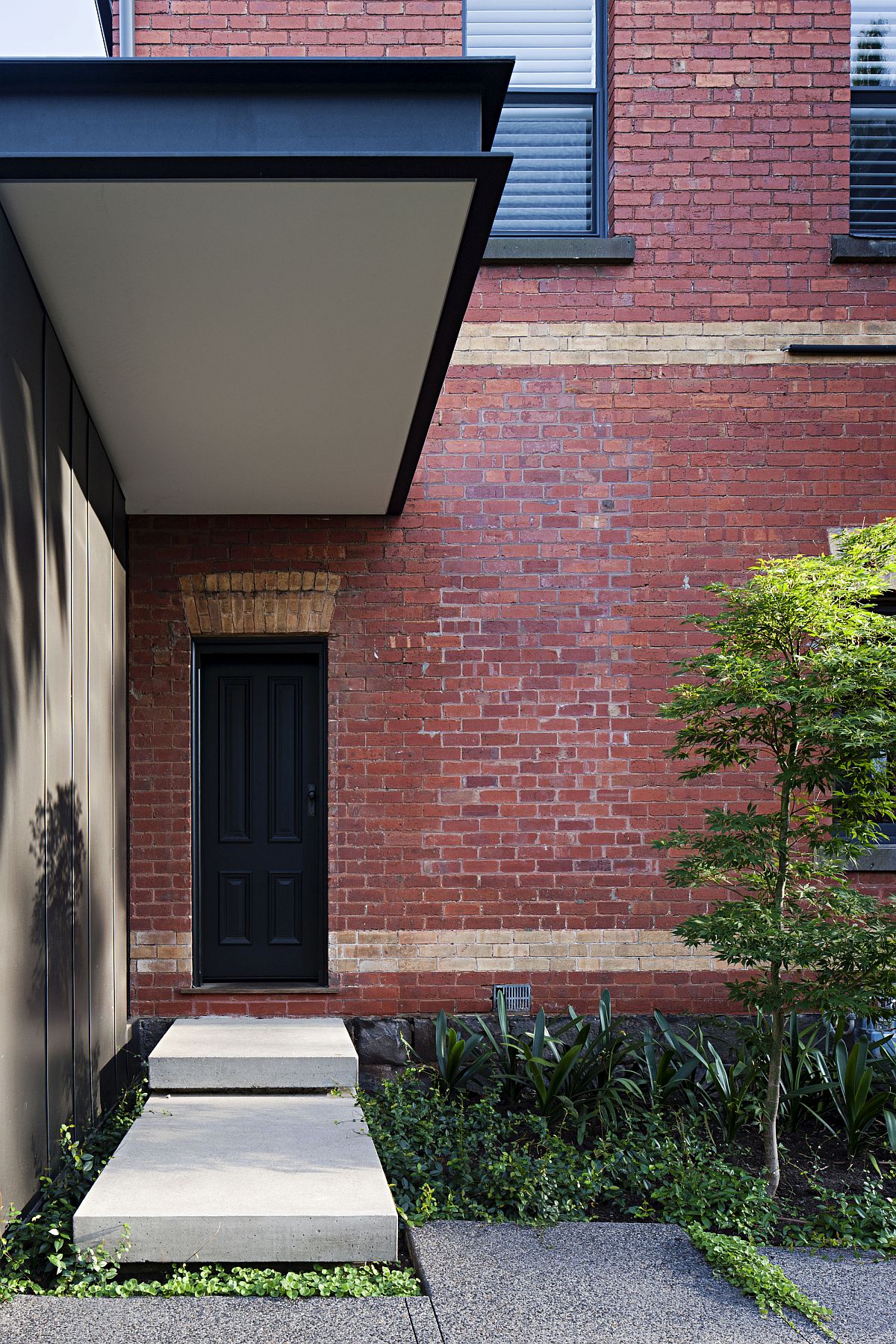
Sheltered street facade of the Melbourne home with brick walls
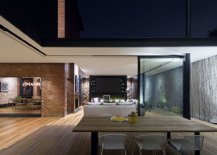
Beautifully designed canopies create a sheltered outdoor space at this Aussie home
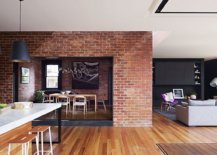
Brick wall sections coupled with wooden flooring inside the heritage Aussie home
Completely covered outdoor space keeps out hot sun at this Melbourne home
Renovation plans of Hiro-En House designed by Matt Gibson Architecture + Design

You’re reading Adaptive Series of Canopies Bring Shade to Revamped Victorian Heritage Villa, originally posted on Decoist. If you enjoyed this post, be sure to follow Decoist on Twitter, Facebook and Pinterest.

Similar Posts

  • House of Shifting Sands

    Sited gently on the lower slope of a dramatic sixty foot high coastal bank and surrounded by miles of undeveloped Cape Cod National Seashore beaches and scrub pines is a warm, modern beach house that is more than just a place to enjoy uninterrupted ocean views and sea breezes. Our clients dreamed of a house that would work equally well as both a year-round family “camp” and also as a “thinking retreat” for collaborating with their colleagues. From the beginning of design it was critically important to us and to our clients – as well as the Town Conservation Commission and National Seashore representatives – that the house fit into its fragile site seamlessly. Our team responded with great care by designing the house to curve and shift softly with the natural topography and also by envisioning the new native and drought resistant landscaping growing back tight to the house as if both had always been there together. The main house is conceived of as a collage of overlapping, cantilevered planes and volumes that culminate in a large living / dining space defined by an asymmetrically arcing copper roof plane. Entry to the house is by way of a long ramp through what will in a few years be a thicket of native pines and bushes, then through curving cedar shingled planes. The inland side of the house is tucked into its shifting, sandy landscape and is comprised of cedar shingled planes that float above the ground and contain bedrooms, bathrooms, and the kitchen, and lower volumes of horizontal tongue and groove cedar boards that enclose bedrooms and a gathering space for teenage sons. On the Cape Cod Bay side, the house opens up through walls of glass to endless water views and heavenly sea breezes. In the middle of the house, just inside the front door, is an architectural “hole” that allows the house to breathe and cool itself naturally most of the year through its floor to ceiling awning windows, and which also provides views of the sky from a shady breezeway on the lower level. Along one wall of the hole is a trellis planted with evergreen and seasonally aromatic flowering vines. On the Cape Cod Bay side, the house opens up through walls of glass to endless water views and heavenly sea breezes. In the middle of the house, just inside the front door, is an architectural “hole” that allows the house to breathe and cool itself naturally most of the year through its floor to ceiling awning windows, and which also provides views of the sky from a shady breezeway on the lower level. Along one wall of the hole is a trellis planted with evergreen and seasonally aromatic flowering vines. Separated from the main house by a screen porch and contiguous deck, is a separate art / yoga / thinking studio that seemingly floats fourteen feet above the ground. Inside is a single large loft space as well as a full bath, and below is an open-air summer art studio and boat / beach toy storage, behind walls of wood slats and matching barn doors.