Japanese Home in Wood and White with Passive Heating and Cooling Techniques

If you like modern minimal homes in wood and white, then you will quickly fall in love with the Mushono House designed by Hearth Architects in Japan. The house has been set considerably deep on the lot because it sits so close to the main road. This gives those inside ample privacy even while drowning out the noise that surrounds the building. Both on the north and south sides of the home one can see modest yards and gardens that further create a layer of privacy. Beyond these natural buffer zones lies the twin-level home with the living area, kitchen and dining room on the lower level and bedrooms and bathrooms on the upper mezzanine floor.
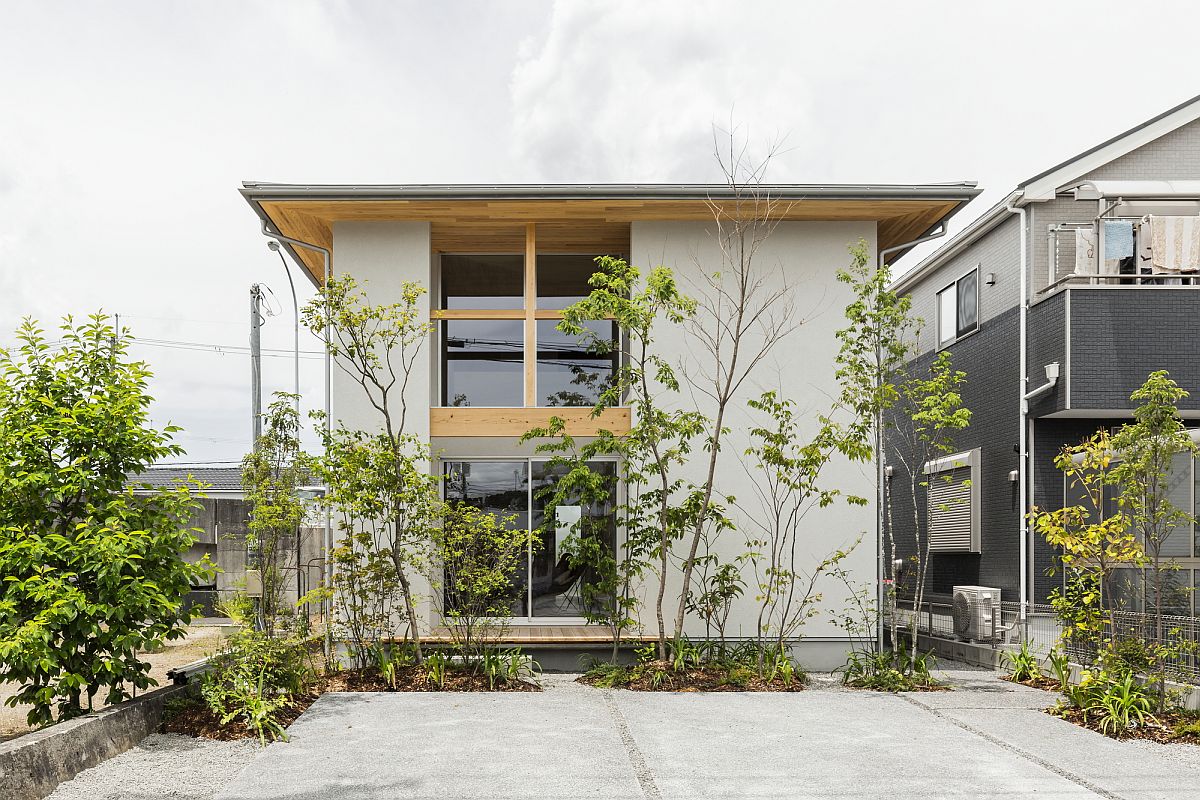
Facade of the house along the road combines privacy with right amount of ventilation


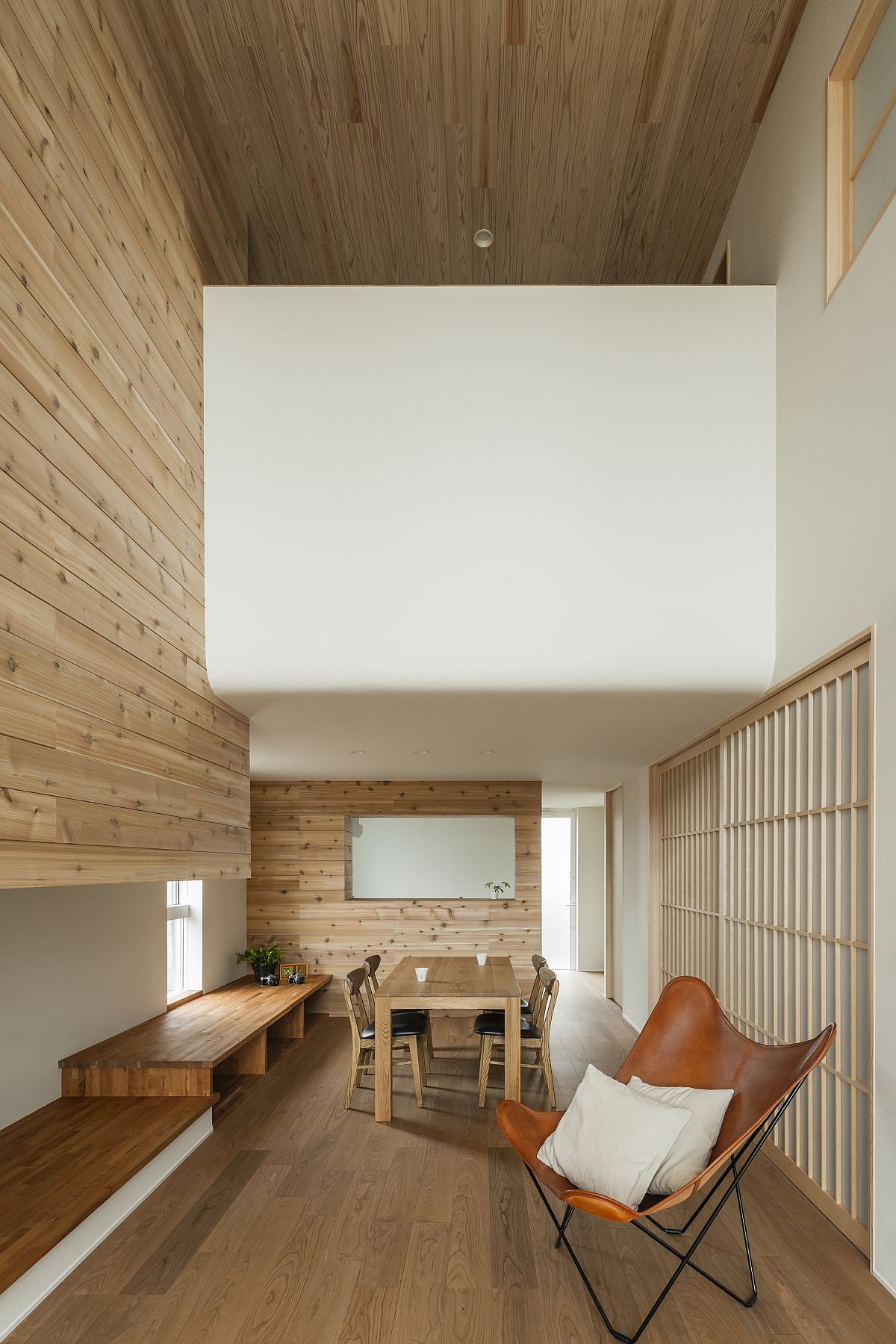
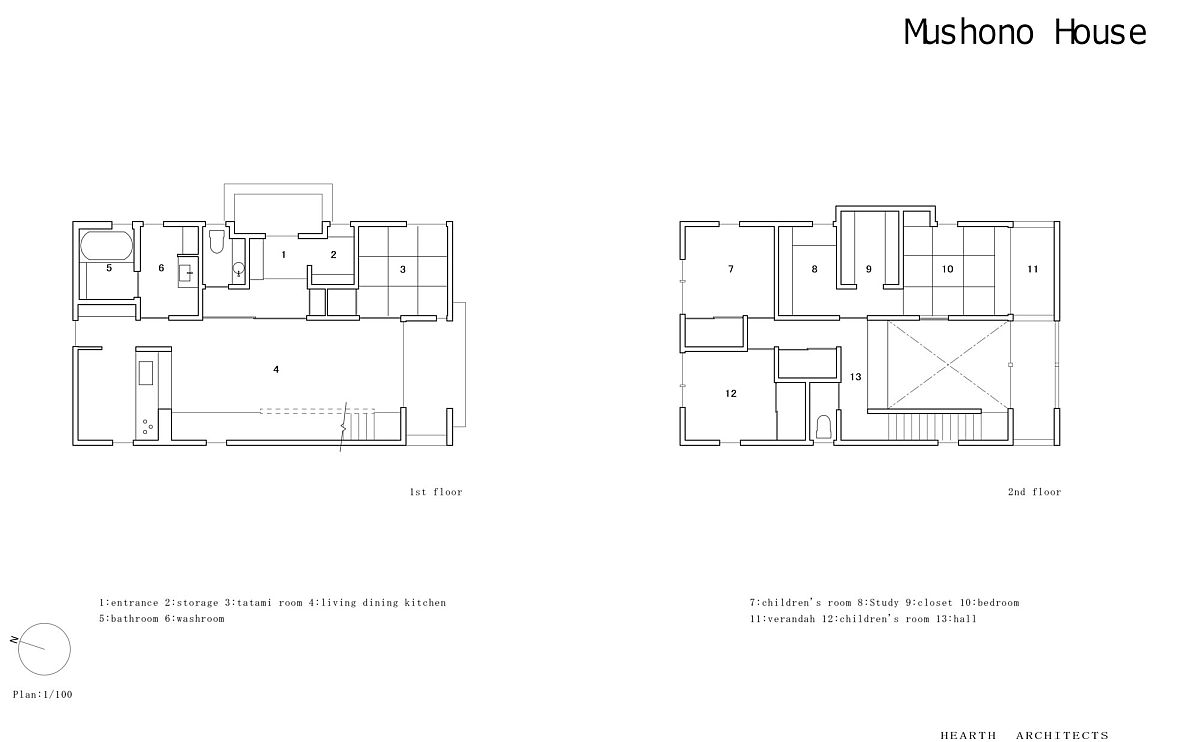
Once you step into the house, the first feature one notices is the beautiful double-height living area with ample natural light. Clerestory windows and sliding glass doors bring all the light one needs while the double-height design of the living spaces turns it into the focal point on the lower floor. Kitchen and dining area sit just below the mezzanine floor with this area also leading to the tatami room. On the upper floor you have the children’s bedroom, a second hall and the master bedroom. Flow of spaces is seamless and stylish with one leading to the next.
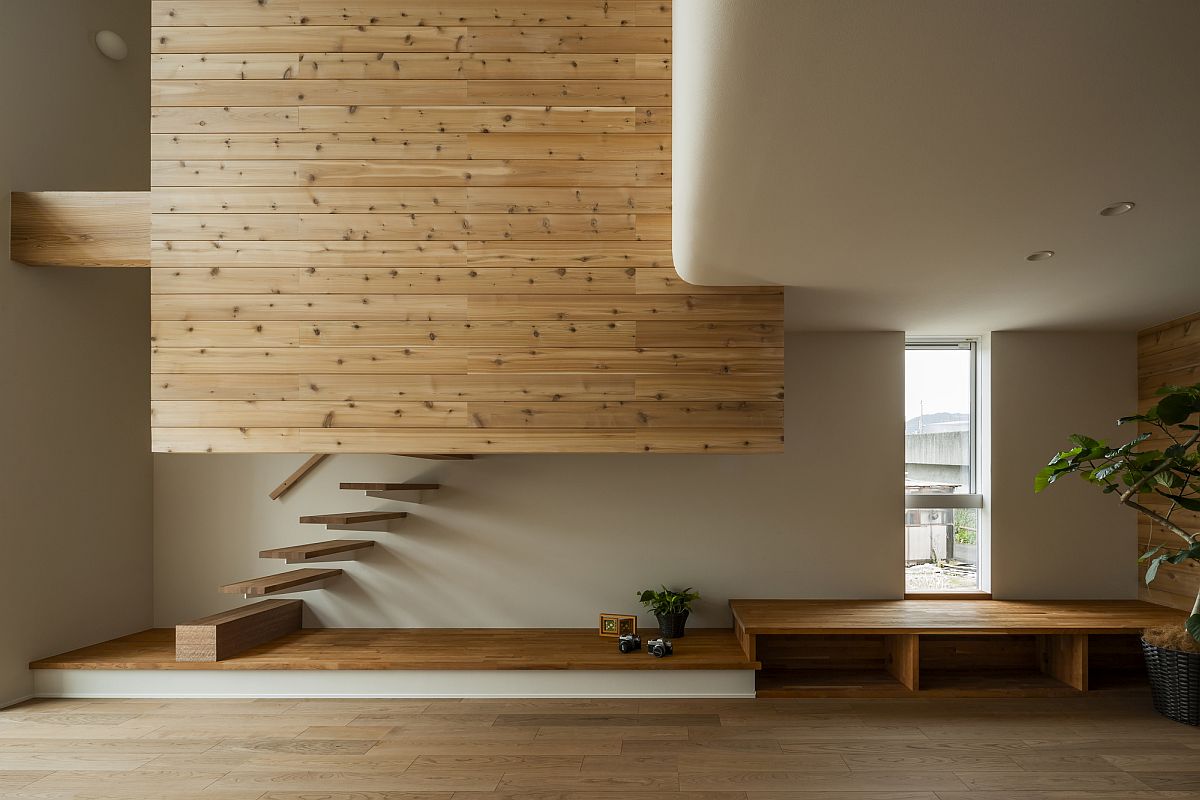
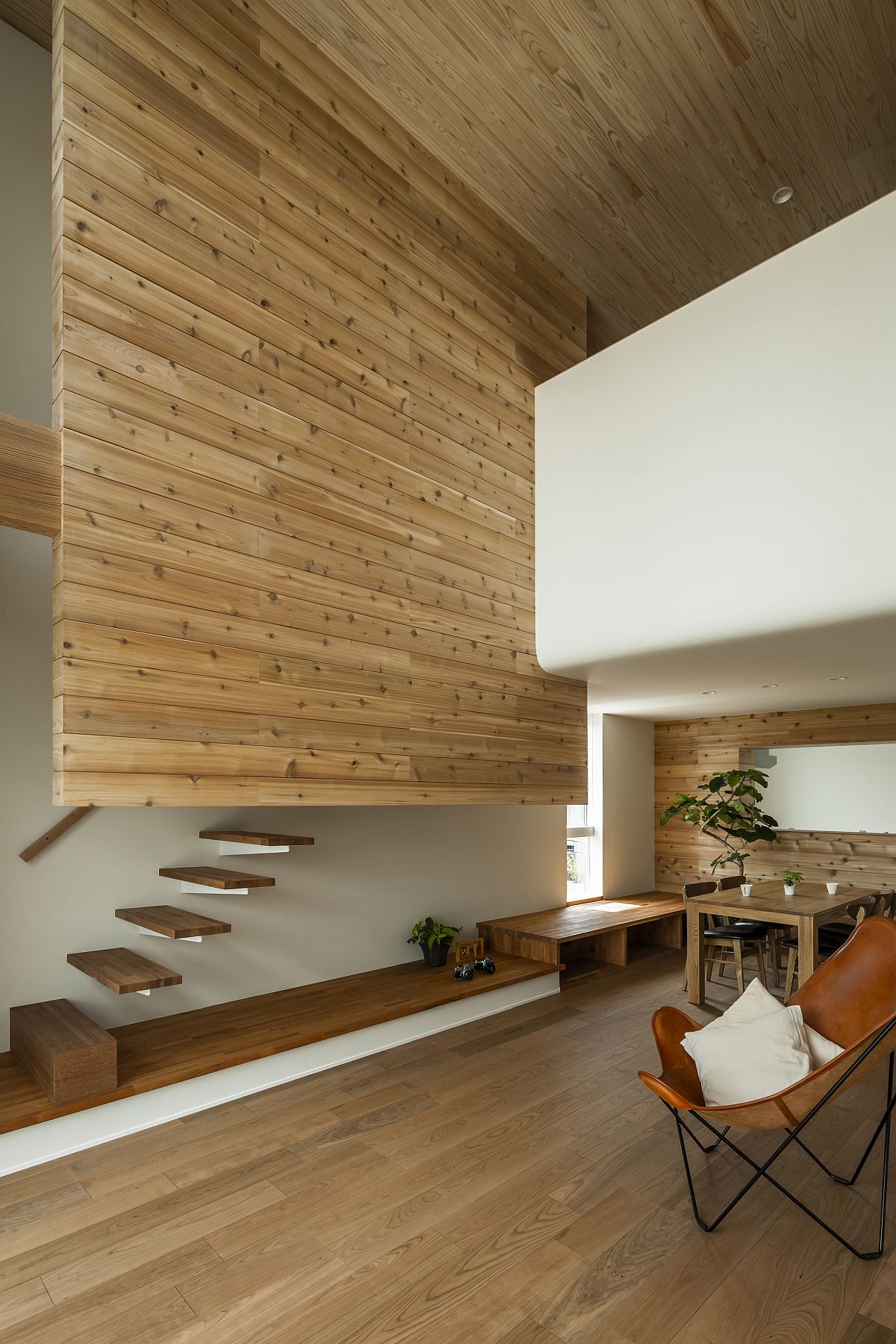
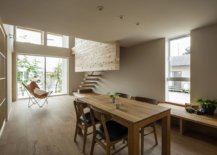
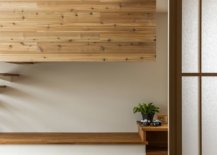
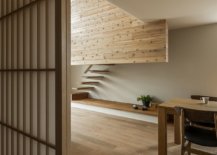
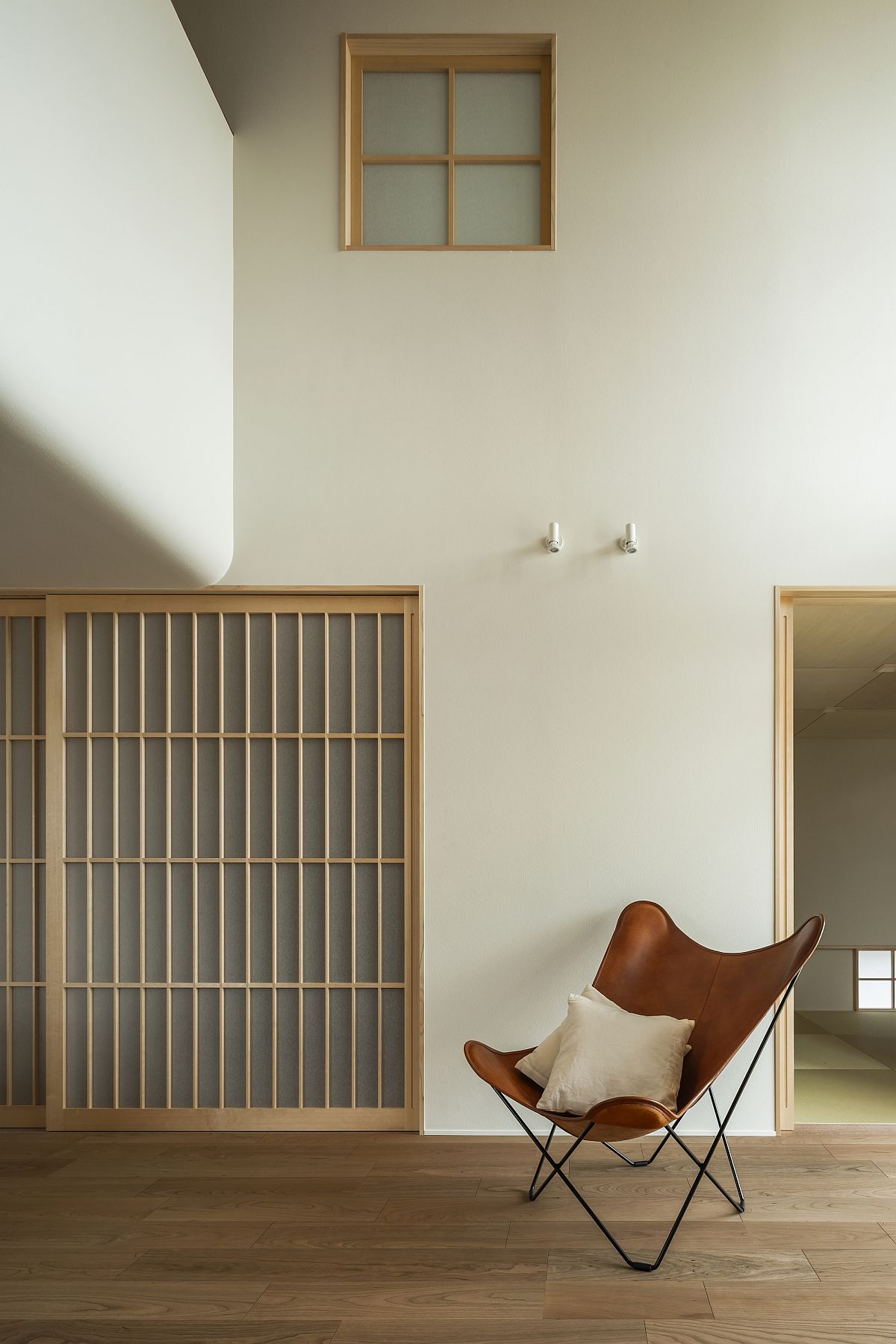
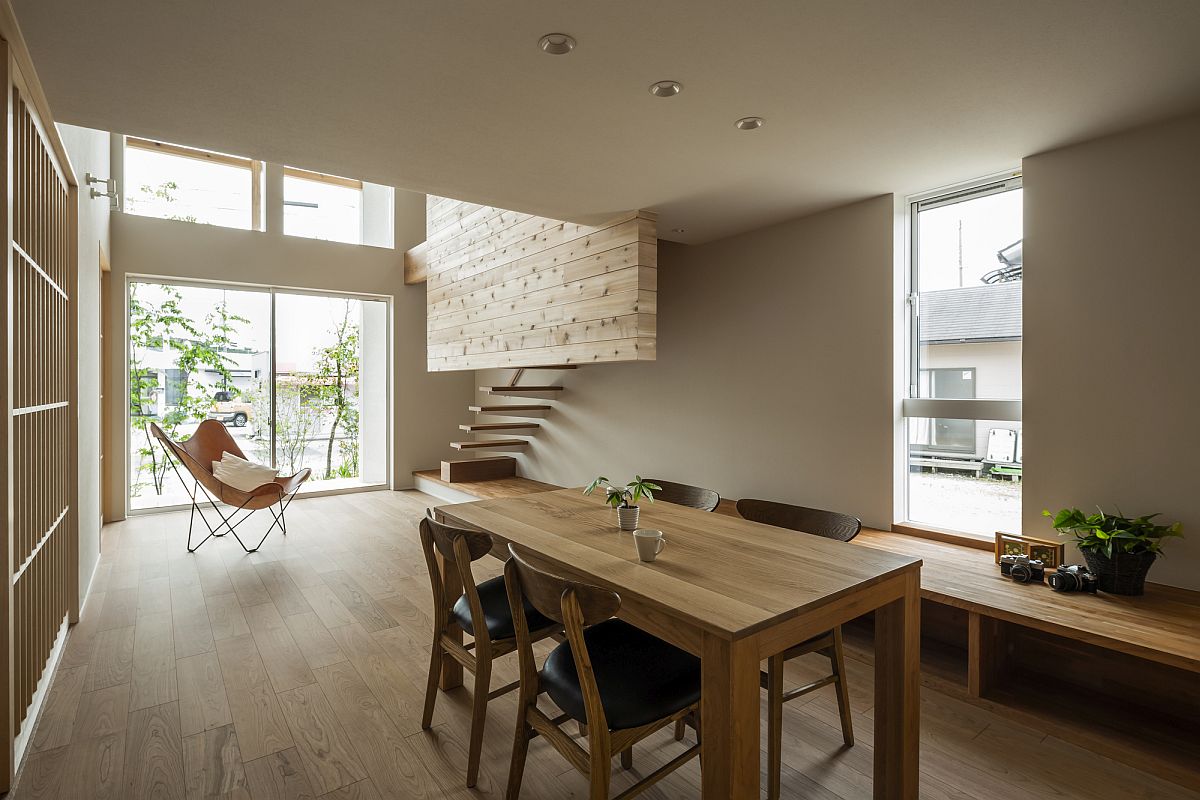
Double-height living area of the Japanese home with floating staircase, wooden walls and ample natural light
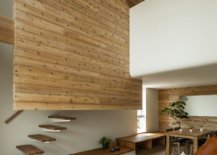
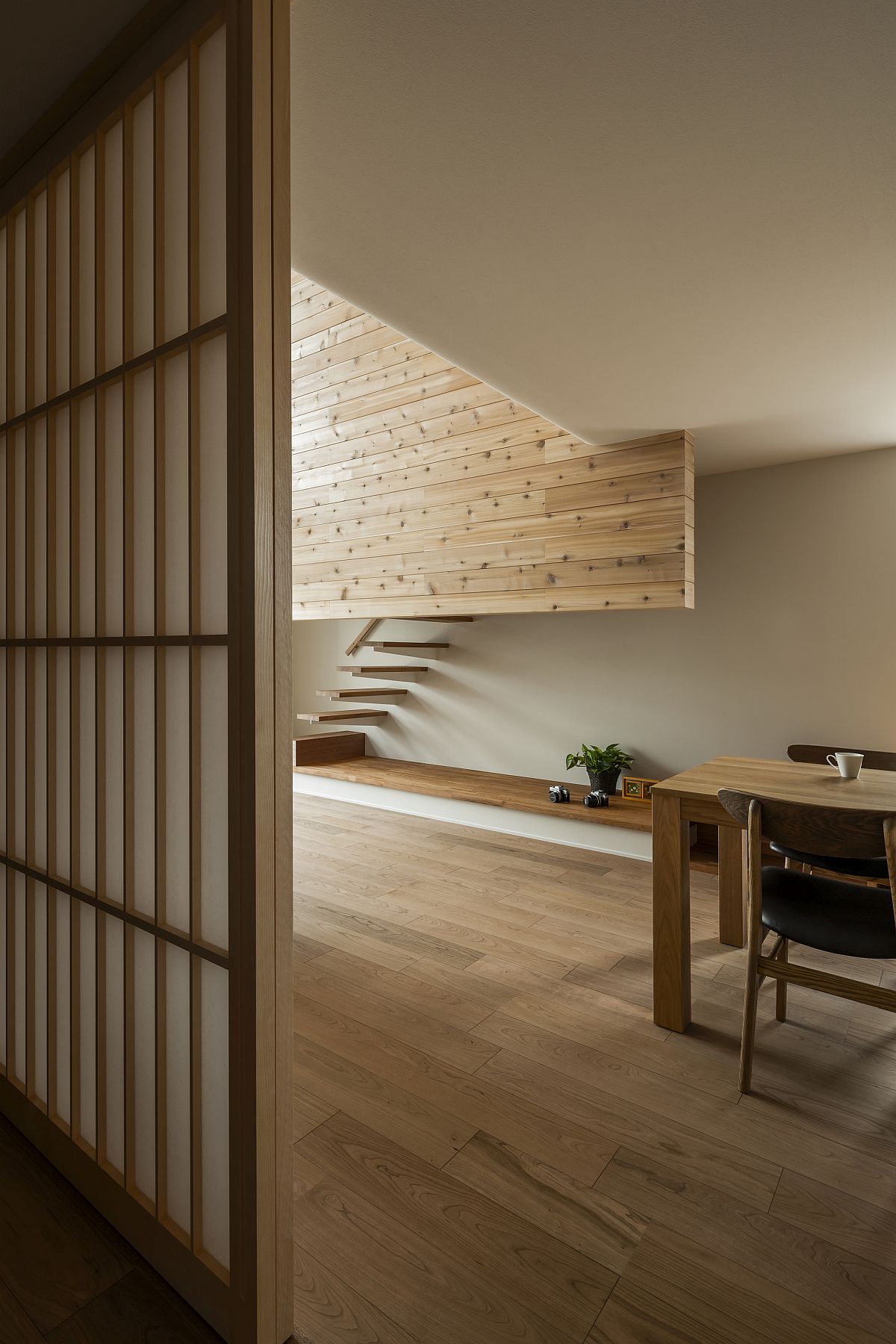
Innovative minimal staircase design inside the modern Japanese home
Mezzanine level of the house overlooks the ground floor
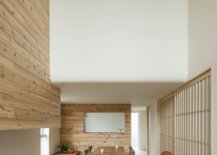
Modern minimal interior of the Japanese home in wood and white feels elegant
Sliding windows bring natural light into the double-height living room

Orientation of the house, nifty use of windows and natural light bring passive heating and cooling to the building. The interior stays considerably cooler than the temperature outside in summer months and slightly warms up during winter months. This naturally makes for a more energy-efficient modern home where wood and white take over! [Photography: Yuta Yamada]
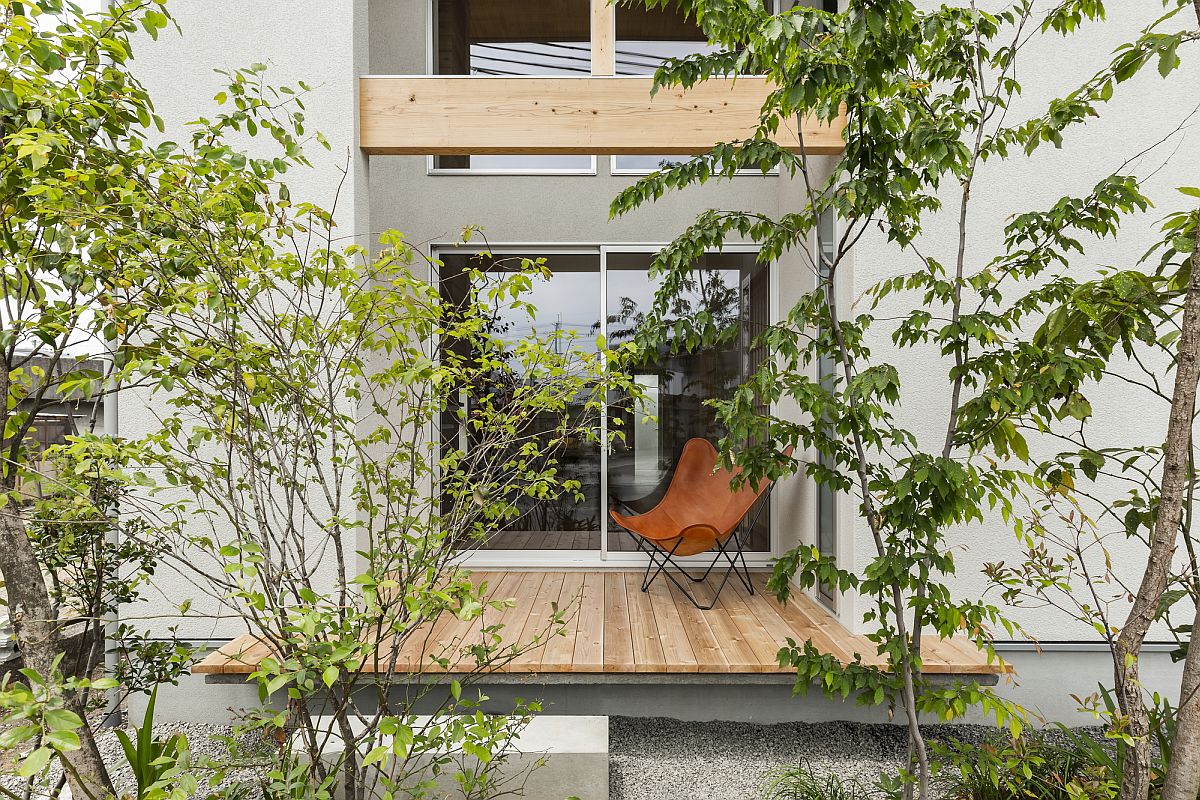
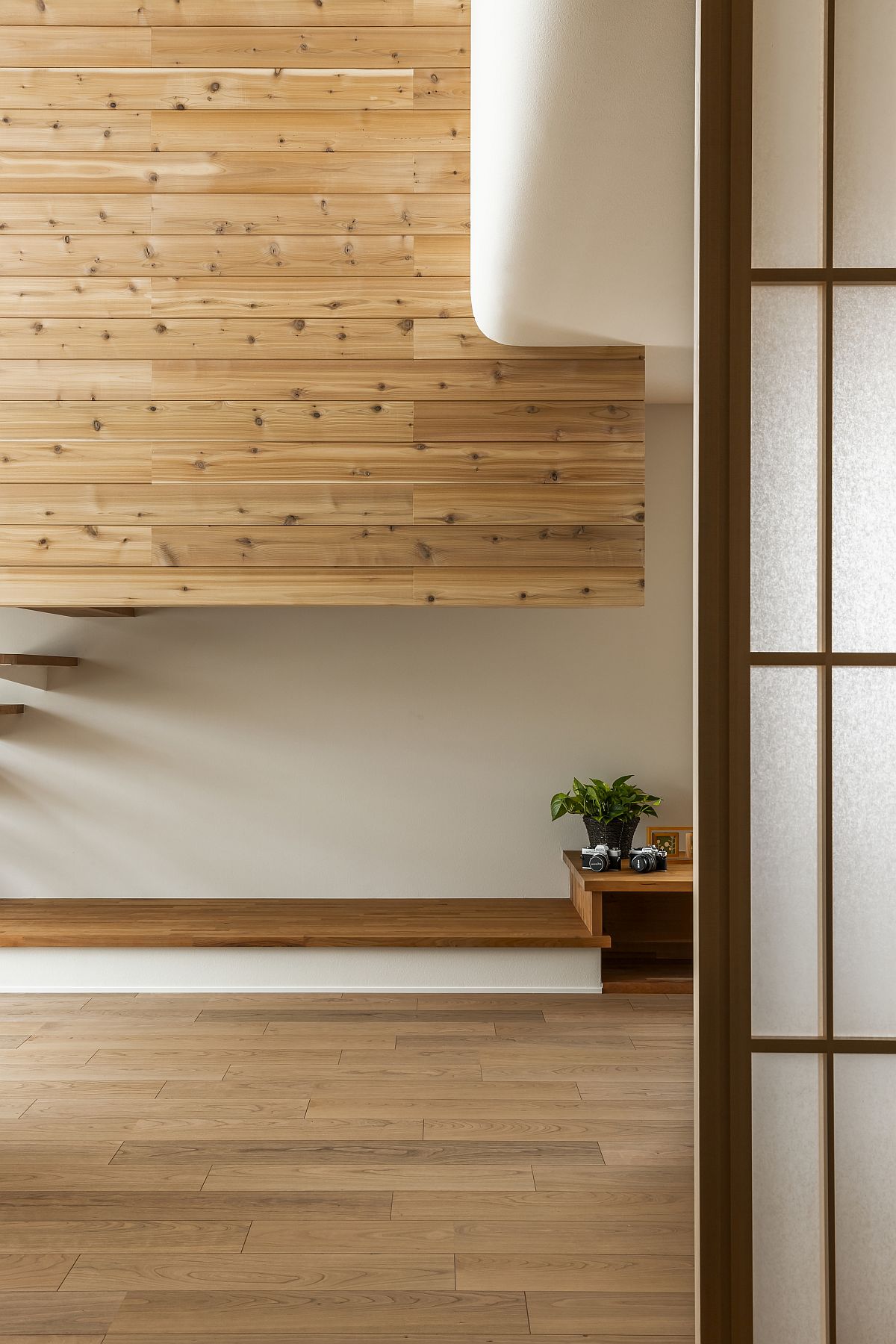
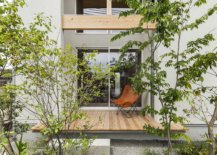
Small wooden deck of the house surrounded by greenery provides a relaxing refuge
Traditional screens and elements of Japanese design are intertwined with modernity inside this home
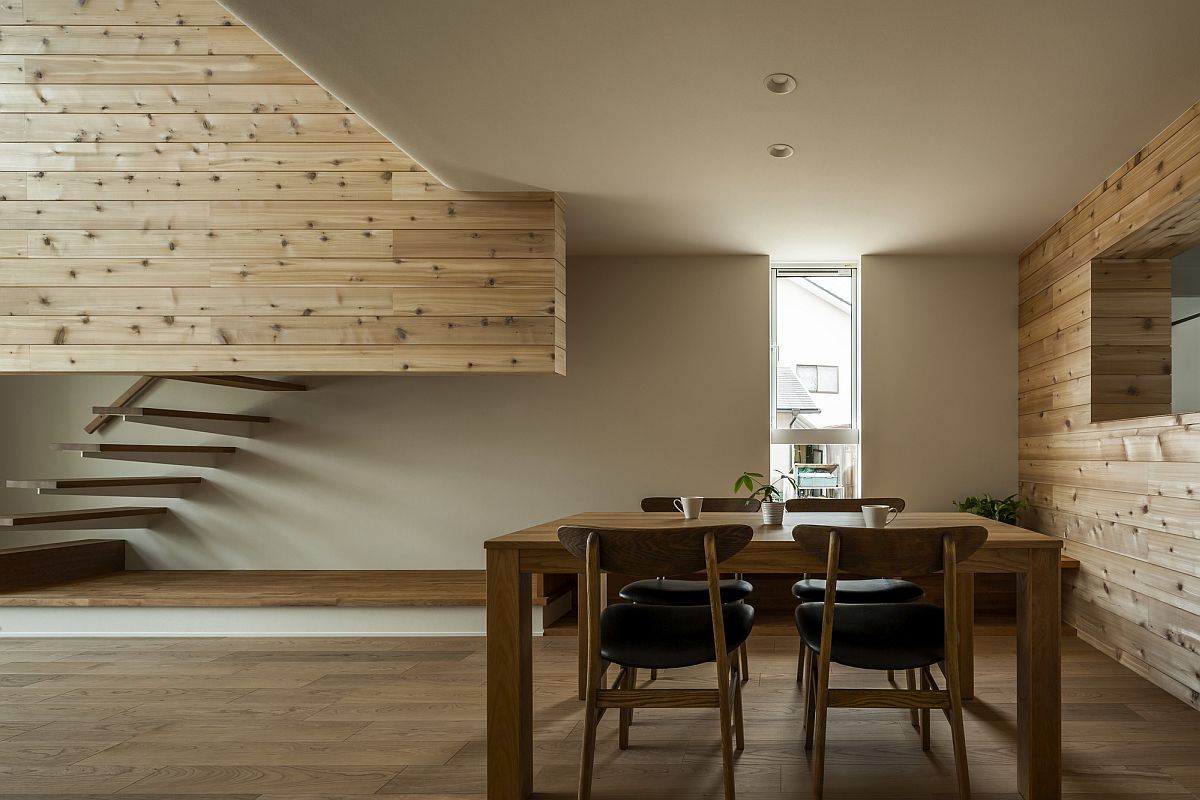
Walls draped in wood are an integral part of this modern Japanese home
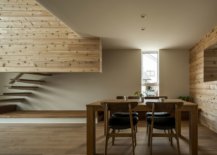
Dining area and kitchen of the house sit under the mezzanine floor above
Floor plan of modern Mushono House in Japan

You’re reading Japanese Home in Wood and White with Passive Heating and Cooling Techniques, originally posted on Decoist. If you enjoyed this post, be sure to follow Decoist on Twitter, Facebook and Pinterest.

Similar Posts

  • Maullin Lodge

    This lodge is a 120m2 house located in a rural scene in a southern region of Chile. The brief was to design a house with two bedrooms and two bathrooms with a main shared space, interpreting an old small traditional southern Chilean dwelling. The challenge of the proposal was to get that traditional southern look, which implies very opaque facades, but with a full translucent side where the landscape and light can get inside the building, creating its own private world. The house is placed between a forest of native trees, giving its back to the main street. So, the house is oriented to the north and west to get the most of sunlight, which this south down is much appreciated. The concept of the design is organized based on 3 contrast between old and new:
    1- Removing non-structural walls and floors: the main structural shape and volume are maintained the same as the old traditional house, but the interior is liberated from any non-structural dividing element, which helped to create a clean and continuous space.
    2- Concentrating the apertures: The main source of light is the north façade, keeping the other free opaque as a traditional southern house would have, so the proportion of void and mass was not lost.
    3- Material contrast: Big floor to ceiling windows in contrast to recycled traditional timber shingles, an evident contrast between old and new. The distribution of the house is developed in an almost square plan, divided into three volumes:
    The main one has the public areas of the house: kitchen, dining room, sitting room and mezzanine.
    The east one, the widest, has sleeping rooms and bathrooms with the main access of the house.
    And the west one is 1.5m wide acting as a corridor and informal dining room adjacent to the public areas of the main volume. The mezzanine is an opportunity to use the roof space, with a lot of light and natural heating, having control over the main space.