archermit Suspends ‘Heavenly Road’ Over Canyon in tibet
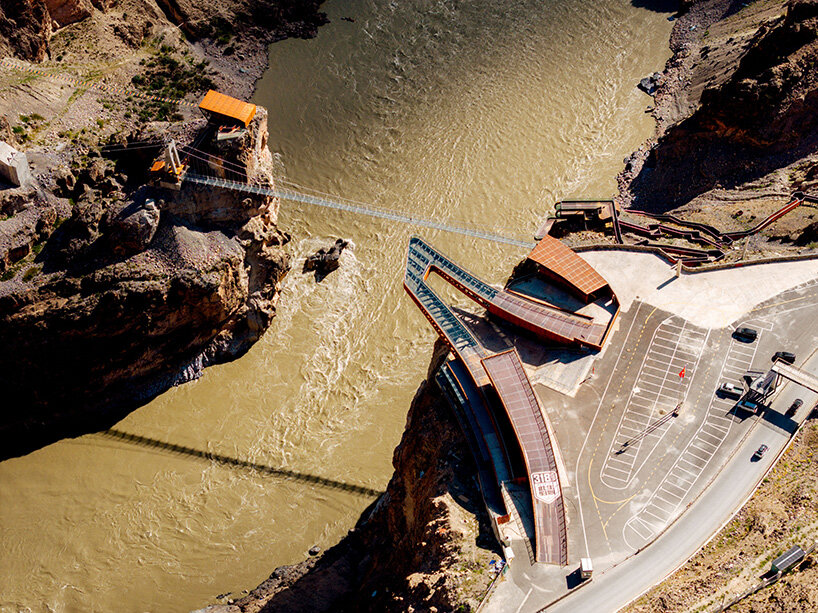
Archermit presents the Nujiang River 72 Turns Canyon Scenic Area in Tibet, an infrastructure that translates the peril and grandeur of the Sichuan–Tibet Highway into a visitor experience. Completed after six years of high-altitude construction, the project is located in Buze Village, Baxoi County, along the G318 Highway. It centers on a dramatic glass viewing platform cantilevered 37 meters from a cliff face above the Nujiang Grand Canyon, echoing the legendary hairpin bends of the ‘devil’s road’, the 72 turns of Nujiang.
The main structure of the project reimagines the infamous road’s serpentine layout as a walkable loop suspended 130 meters over the canyon. Its floor of ultra-clear laminated glass offers views into the abyss, while the red weathering steel cladding references Tibetan cultural colors and mirrors the rugged textures of the landscape. This precarious position transforms the driving ordeal of the 72 turns into a ‘heavenly road’ in the air that demands visitors measure danger with their own bodies.
images by Arch-exist, unless stated otherwise
Channeling the highway’s construction legacy
The Chengdu-based team of Archermit suspends a glass bridge 50 meters above the Nujiang River, recalling the old steel bridge once feared by truck drivers and guarded for single-file crossings. Other installations include a zip line, the ‘thrilling steps’ bridge, and a 666-step ladder carved into the cliffs that reinterpret the methods and hardships of the highway’s builders, who in the 1950s faced landslides, hand-built cableways, and unstable geology with limited tools.
Constructing the site itself became an act of endurance. Perched at 2,800 meters, the canyon offered little flat ground, narrow roads, frequent rockfalls, and relentless valley winds. Machinery longer than 13 meters could not be delivered, forcing the Chinese architects to develop customized drill bits to cut through the canyon’s variable rock layers. Thirty-nine piles for the viewing platform’s foundations were drilled manually, with workers secured by ropes as they chipped away rock 25 meters deep. Steel components were divided into 46 transportable sections and lifted across the river by a system of temporary cableways, echoing the highway’s original construction methods.
The project positions itself as a new waypoint on G318, China’s scenic avenue to Lhasa, adding to nearby landmarks such as Ranwu Lake and Laigu Glacier.
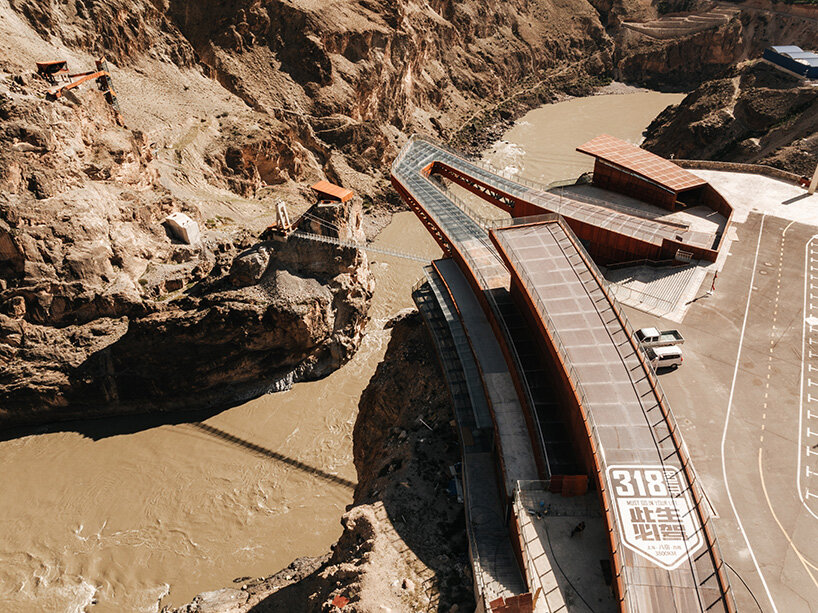
Archermit presents the Nujiang River 72 Turns Canyon Scenic Area in Tibet
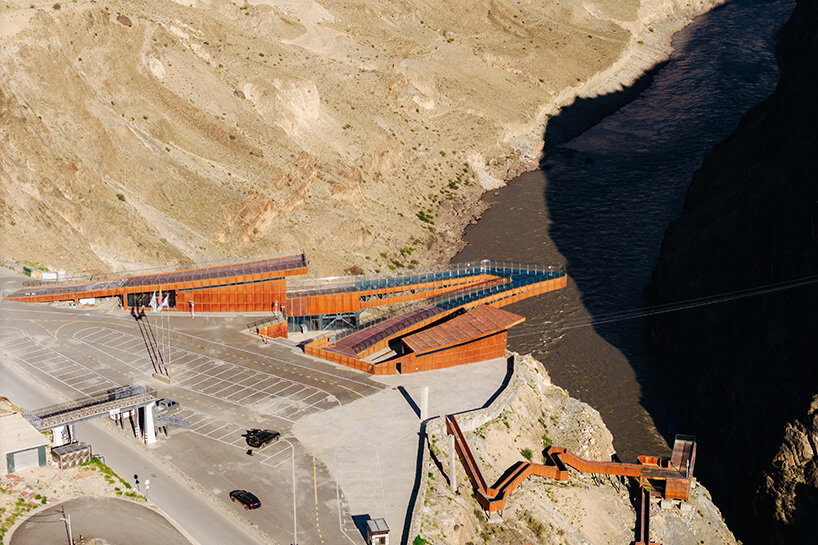
the infrastructure translates the peril and grandeur of the Sichuan–Tibet Highway into a visitor experience
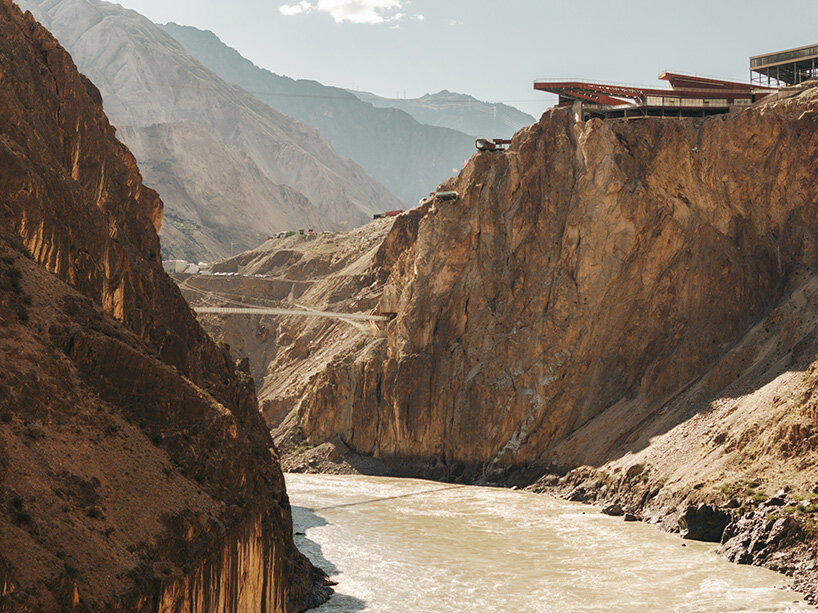
completed after six years of high-altitude construction
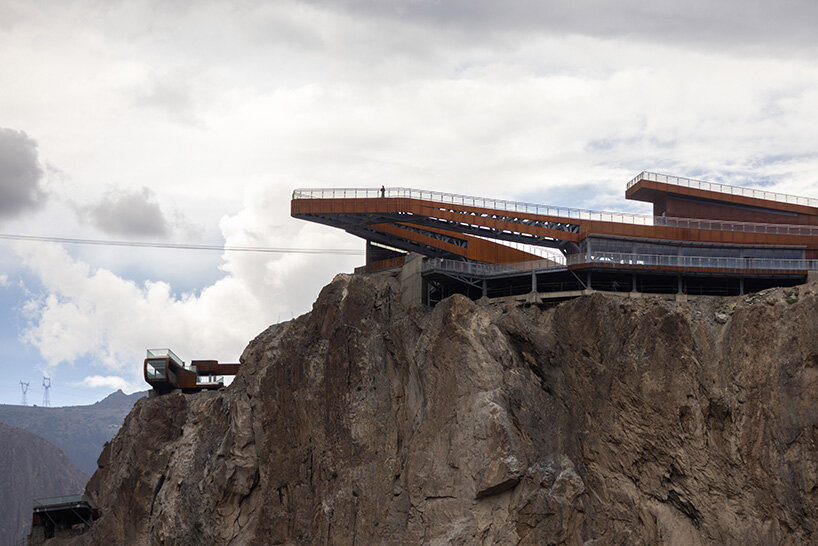
a glass viewing platform cantilevers 37 meters from a cliff face | image by Chill Shine