A Camouflaged Refuge in the Landscape | RR House

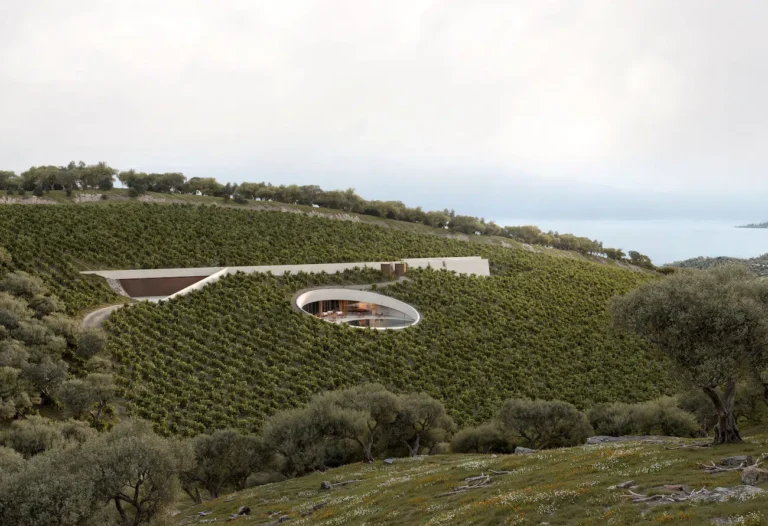
Discover RR House, a breathtaking mountain retreat designed to disappear into the rocky landscape of Brazil’s highlands. Set within a stunning altitude field, this off-grid home merges seamlessly with nature using a low-impact design and three independent volumes — service, social, and private — connected by native gardens and adapted to the terrain’s natural contours.

With panoramic views over the valley, the home offers an immersive experience of quiet contemplation. The rooftop garden on the social block blends into the surroundings, acting as an elevated lookout point. Built with local stone and shaped by the land’s natural topography, RR House eliminates the need for artificial climate control through smart orientation and passive solar design.

Completely energy self-sufficient, it features photovoltaic panels on two blocks and uses recycled site stone for natural retaining walls. RR House is not just a home — it’s a thoughtful response to place, climate, and landscape.

Subscribe for more architecture that redefines how we live with nature.

$MountainHouse #OffGridLiving #SustainableArchitecture #BrazilianArchitecture

Credits:

Architects: Anastasia Arquitetos
Location: Nova Lima, Brazil
Area: 450 m²
Year: 2024
Photography: Jomar Bragança

Similar Posts

  • PDC House

    The design strategy of this house is based on a commitment to artisanal constructive honesty, the respect towards natural context in an urban area, and the constant search for a way of inhabiting where material austerity provides spatial quality. The main body of the house is located in the southern boundary of the land, respecting the 3 preexisting fruit trees on the north side and taking advantage of the best ventilation and natural light possible. The program, which includes 2 bedrooms, social area, a family room and services, is condensed in a monolithic block to reduce its footprint. As a main strategy, the upper roof tilts 21 degrees, prioritizing the northern bedroom spaces and reducing the southern service spaces. The subtraction and rotation of a middle segment generates a shift in between the upper floor bedrooms, allowing cross ventilation, as well as the accommodation of rooftop equipment and the plumbing and electrical ducting. In section, the composition allows the circulation of north-south winds, cooling the kitchen by the hot air escape achieved through height differences. The constructive solution contemplates material honesty in all the elements. The concrete walls on ground floor, pured with recycled formwork, give an imperfect finish consistent with the roof’s austerity, but contrasted with the cleanliness and volumetric continuity of the upper floor finish. To reduce economic impact, ceiling and floor finishings and tilings were completely eliminated using bare concrete floors and, in order to express the constructive and structural performance, the roofs use a system of bare concrete joists in combination with vaulted pieces, designed and manufactured using a mold made with local artisan blacksmithing.