‘PORCH: An Architecture of Generosity’ opens in venice
For the US Pavilion at the 2025 Venice Architecture Biennale, a team of architects explores the American porch. As visitors approach the pavilion, titled PORCH: An Architecture of Generosity, the familiar neoclassical form of the 1930 American Palladian-style building is softened and opened up by timber columns and a welcoming, shaded platform. Inside and out, it unfurls as a spatial metaphor and shared memory, offering visitors a place to linger. designboom witnessed the pavilion firsthand and spoke with Peter MacKeith, co-commissioner and Dean of the Fay University of Arkansas’ Fay Jones School of Architecture and Design, and Susan Chin, founding principal of DesignConnects.
The pavilion centers on the porch as a distinctly American space, at once architectural and social. ‘It’s not just about domesticity,’ MacKeith tells designboom. ‘The porch, as we’ve explored, extends to civic buildings, libraries, grocery stores, public housing. It holds a presence at every scale.’
Co-commissioned by MacKeith, Chin, and Crystal Bridges Museum of American Art‘s Rod Bigelow, and realized with a design team including Marlon Blackwell Architects, Stephen Burks Man Made, D.I.R.T. studio, and TEN x TEN. More than through its form, the project expresses generosity through participation as fifty-four contributors from across the country offer diverse readings of what a porch can be.
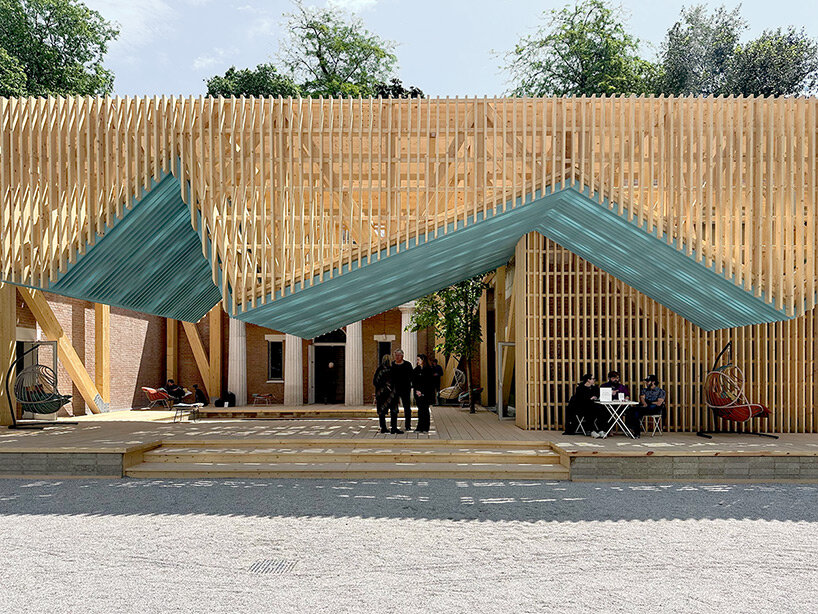
the US Pavilion reimagines the American Porch as a site of civic and cultural generosity | image © designboom
the us pavilion: A Platform for Plural Voices
For the 2025 Venice Architecture Biennale, the US Pavilion’s porch takes shape using rammed earth sourced from Veneto and prefabricated mass timber. These materials are chosen for their regional sensitivity and warmth. ‘We wanted to build something welcoming,’ Chin said, ‘but also grounded in place.’ The result is tactile and open-ended: benches, shading, reading nooks, and a wide platform where passersby can drift inward. At its core, the pavilion becomes a living room for the Biennale, blending public engagement with architectural thought.
PORCH: An Architecture of Generosity amplifies the spectrum of contemporary American practice. ‘There are significant practices represented,’ MacKeith noted, ‘but also very small ones, individuals, artists, landscape architects. The porch is a democratic space, and we wanted the exhibit to reflect that.’ Through an open call, fifty-four participants, including the NYC Department of Transportation and Indigenous community-led projects, contribute ‘porch windows,’ each reframing the typology through personal or regional lenses.
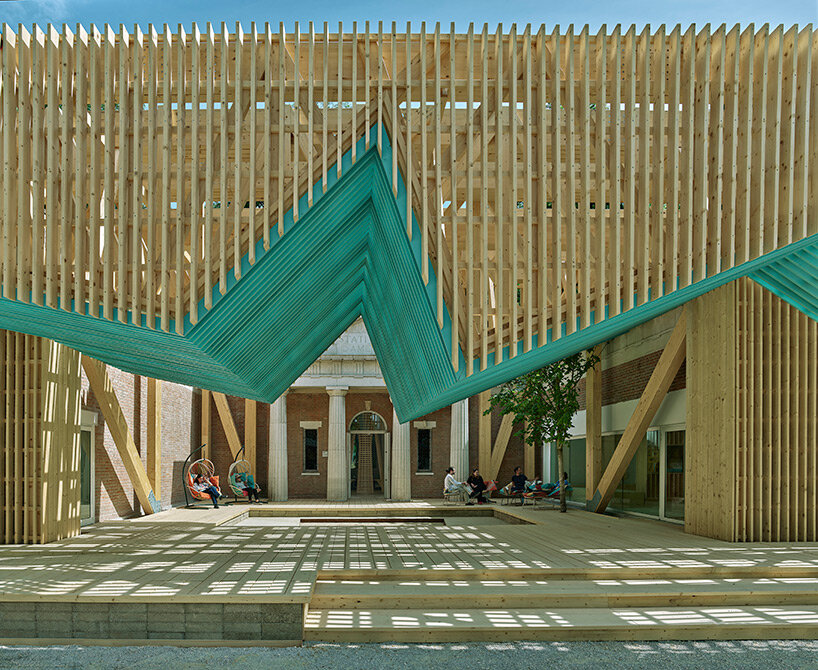
rammed earth and mass timber becomes a shaded platform for gathering | image © Tim Hursley, courtesy PORCH
drawing from an historic typology
The US Pavilion includes a quietly powerful research display that traces the porch’s layered history across domestic, civic, and vernacular landscapes. ‘There’s the portico — its classical lineage,’ MacKeith said, gesturing to the Pavilion’s columns. ‘But our intervention pulls the columns back, removes the entablature, opens the space.’ The result displays the porch as a liminal site, between indoors and out, and between memory and imagination.
Inside, an exhibition titled PORCH: A Library shows a curated collection of texts and cultural references that extend the typology into literature, philosophy, and politics. Chin frames it as a ‘threshold of learning,’ a space where visitors might pull a book from a shelf and, in the middle of the Biennale’s pace, simply read. ‘It’s a moment of pause,’ she said. ‘A way for people to slow down and reflect, together.’
PORCH: An Architecture of Generosity will come alive during PORCH Fest weekends throughout the Biennale, hosting song, storytelling, workshops, and design dialogues. Each event reanimates the space with guests including MacArthur Fellows, AIA Gold Medalists, and community leaders. This activation emphasizes that the porch was never just a static structure. It’s a stage for connection.
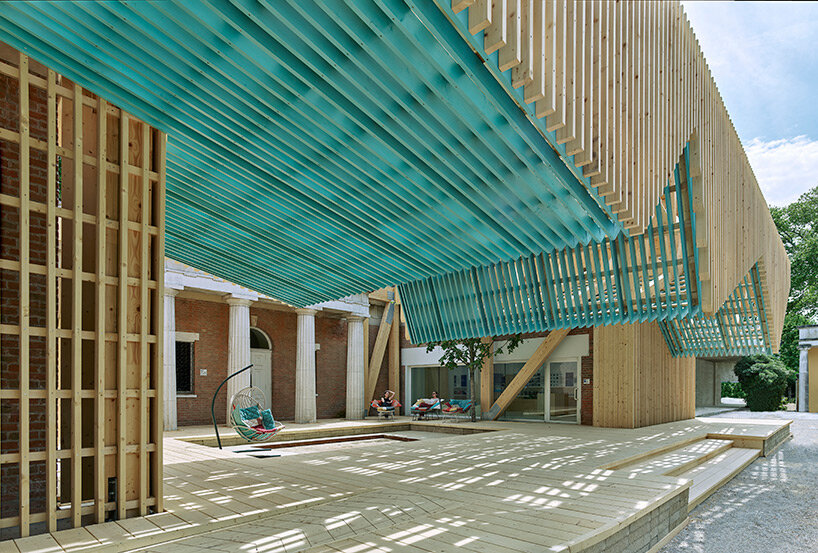
visitors can reflect on the porch as a threshold between private and public | image © Tim Hursley, courtesy PORCH
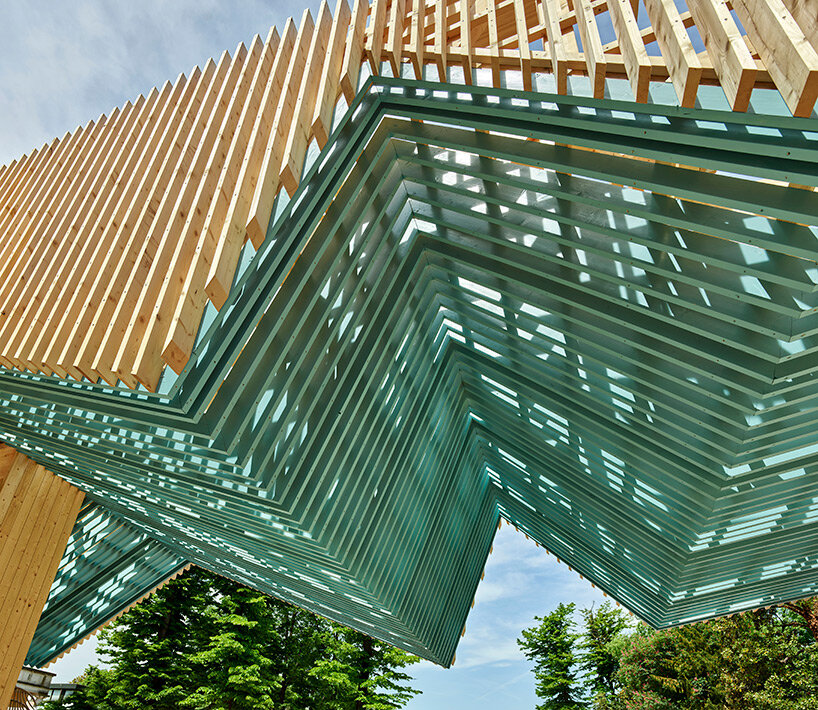
image © Tim Hursley, courtesy PORCH
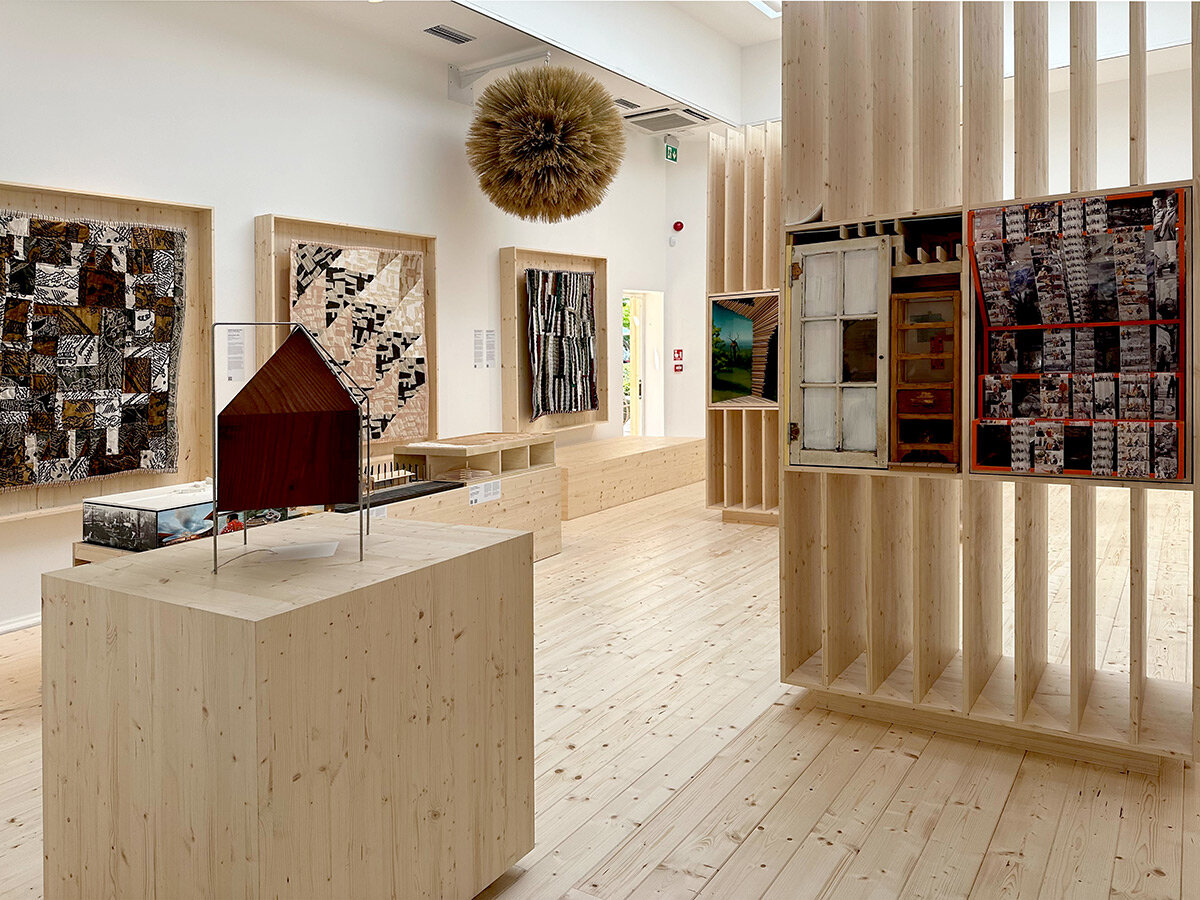
fifty-four participants offer diverse interpretations of the porch as a social space | image © designboom