Budget Aussie Home with Operable Façade is Small and Sustainable

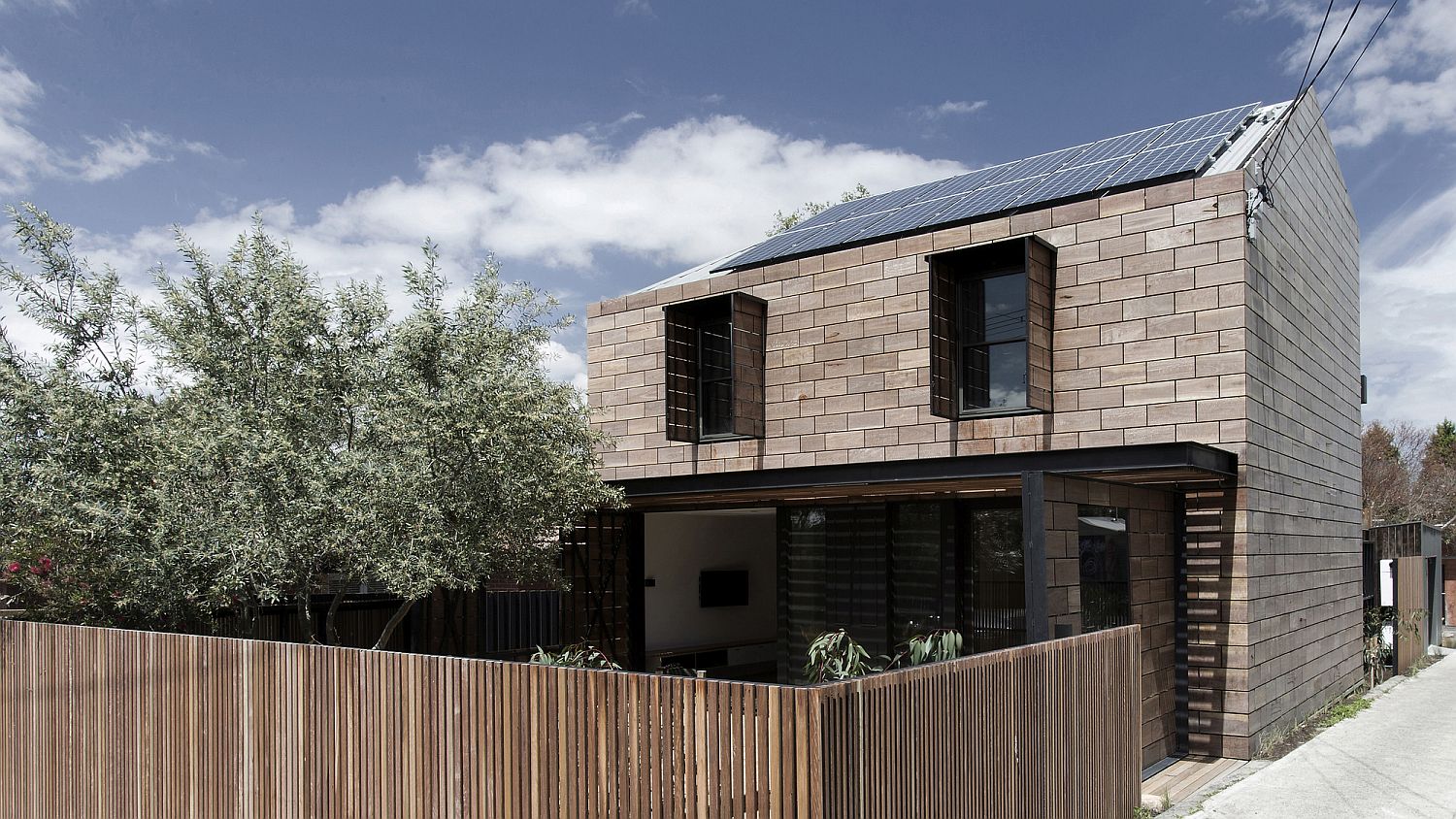
It is easy to be moved by extravagant homes full of luxurious features and contemporary décor. But even more inspiring are smaller homes that make most of space while maximizing both resources and budget. This is just what you get with the dashing Stonewood House designed by Breathe Architecture in Northcote, Melbourne. This is a home that combines complete privacy with an open rear yard and a deck that provides a sense of openness. The façade with its unique operable blinds is the one that makes a big difference here and those inside can control the levels of ventilation with ease.

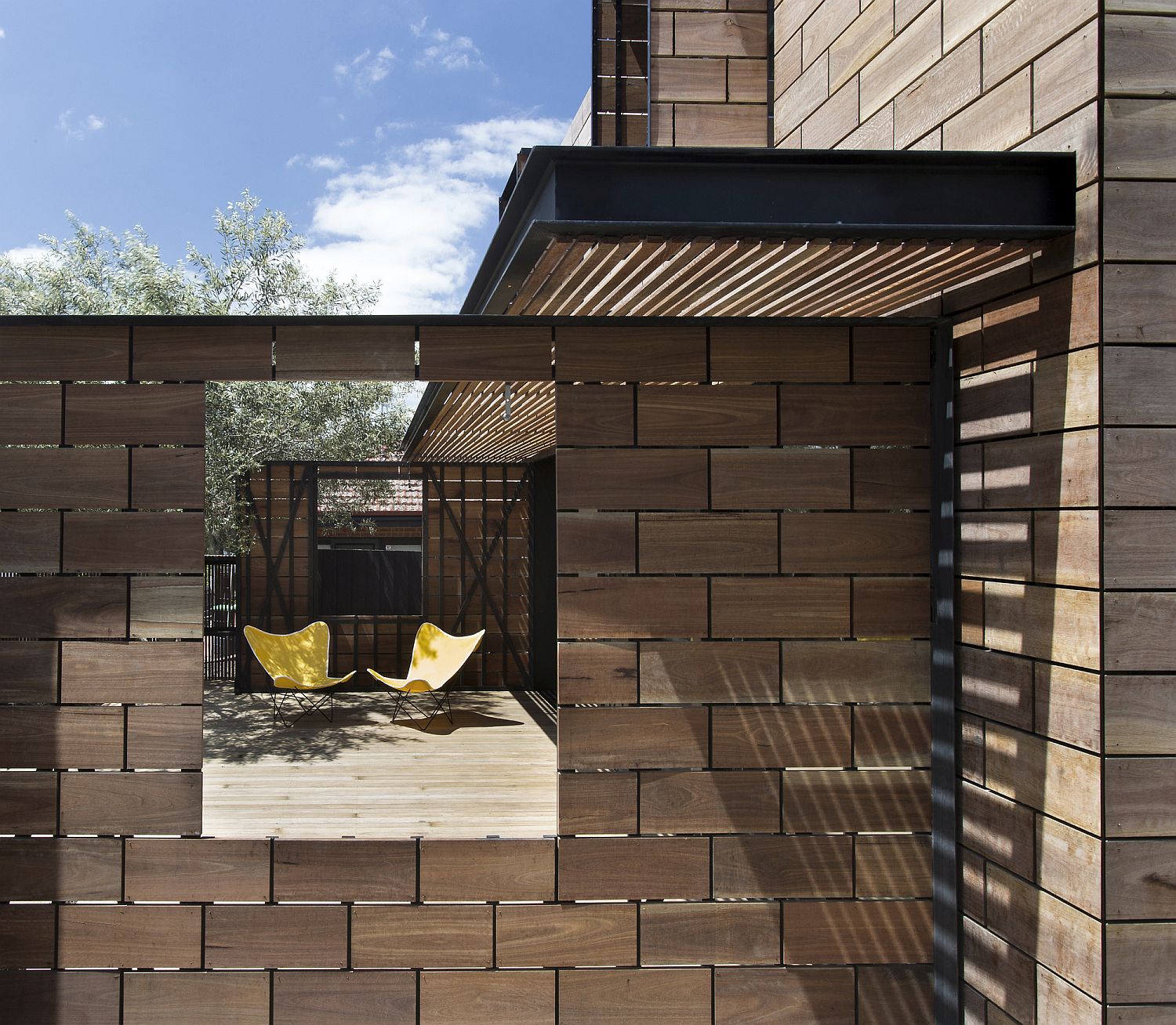
Adaptable street facade of the home with operable blinds

The house is much more than just efficient in terms of resources put into it as an array of green features and sustainable design principles give it an eco-friendly sheen. Passive heating and cooling techniques reduce reliance on energy sources while smart lighting makes sure that the house is always well-lit naturally during daytime. On the inside, one sees a combination of wood and neutral hues shaping both the backdrop and this gives the residence a comforting, modern vibe. [Photography: Andrew Wuttke]

RELATED: Sustainable Architecture and Space-Savvy Design Transform This Small Aussie Home

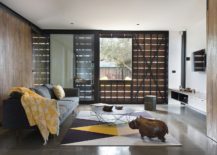
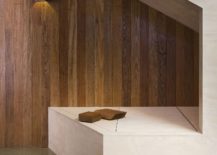
Interior of the small, budget Northcote home with woodsy charm
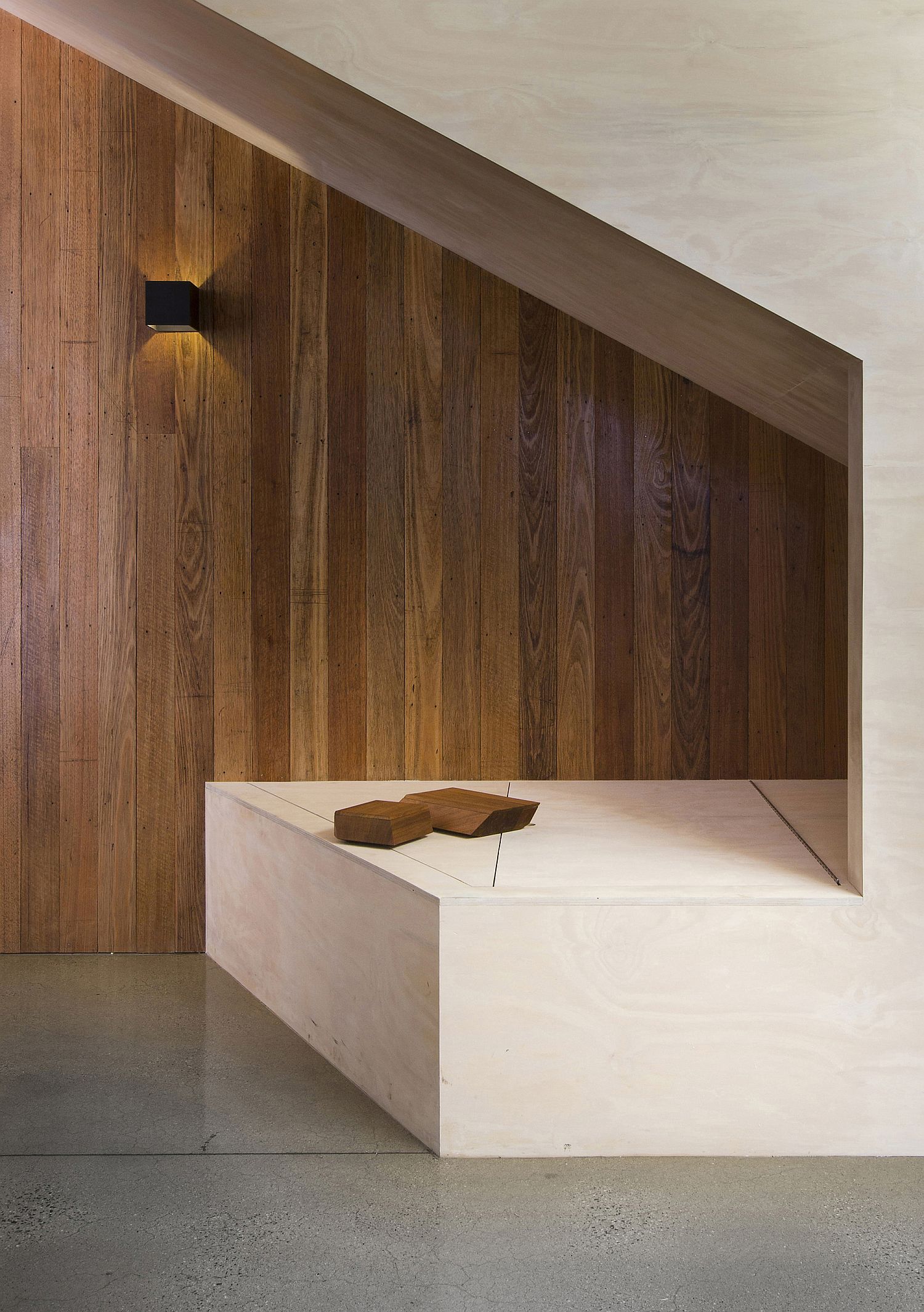
Polished interior of the Stonewood House
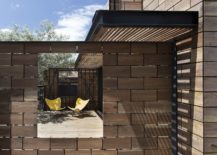
Private rear yard of the house with a lovely deck and smart, bright chairs
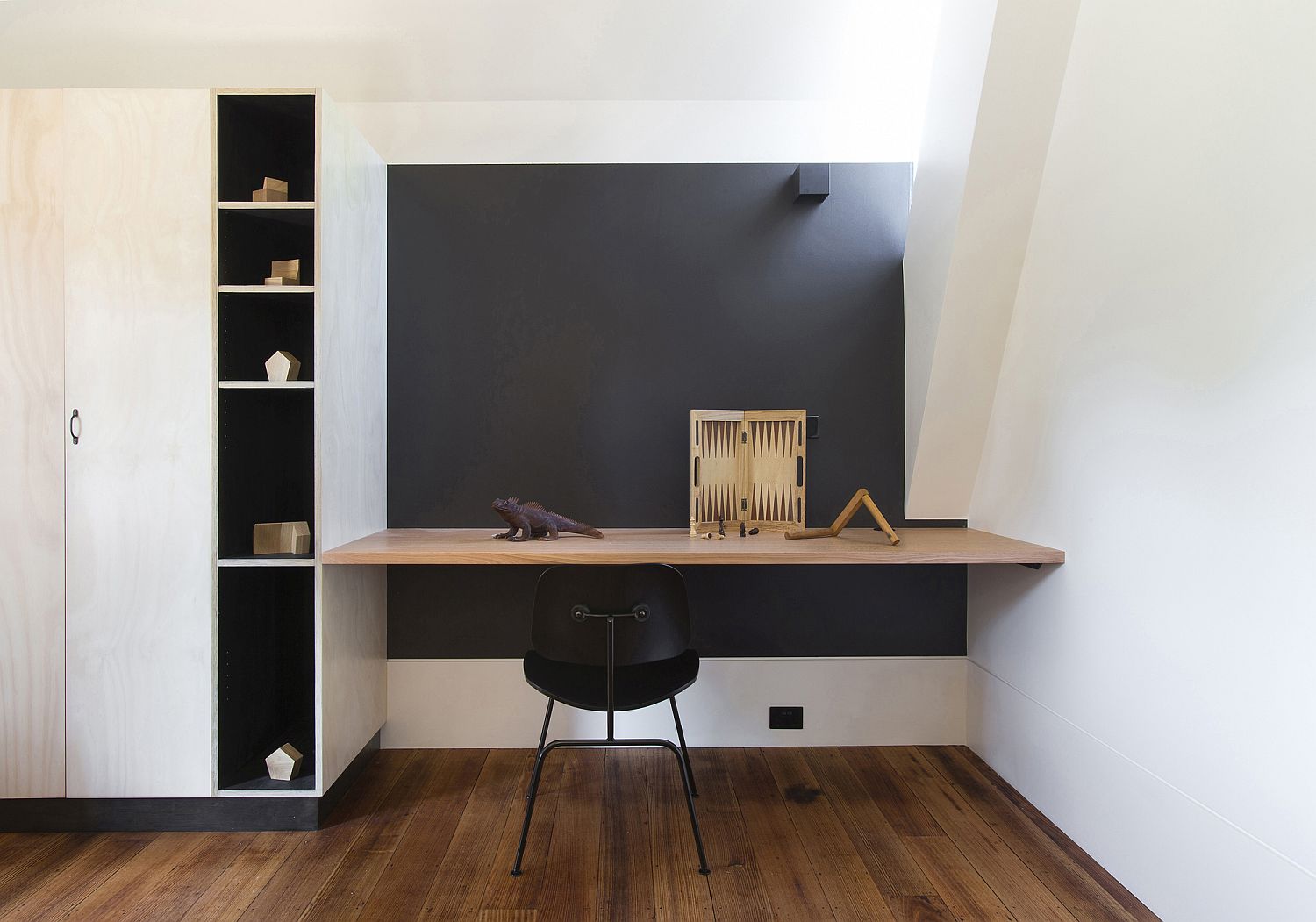
Small and space-savvy home workstation with plenty of natural light
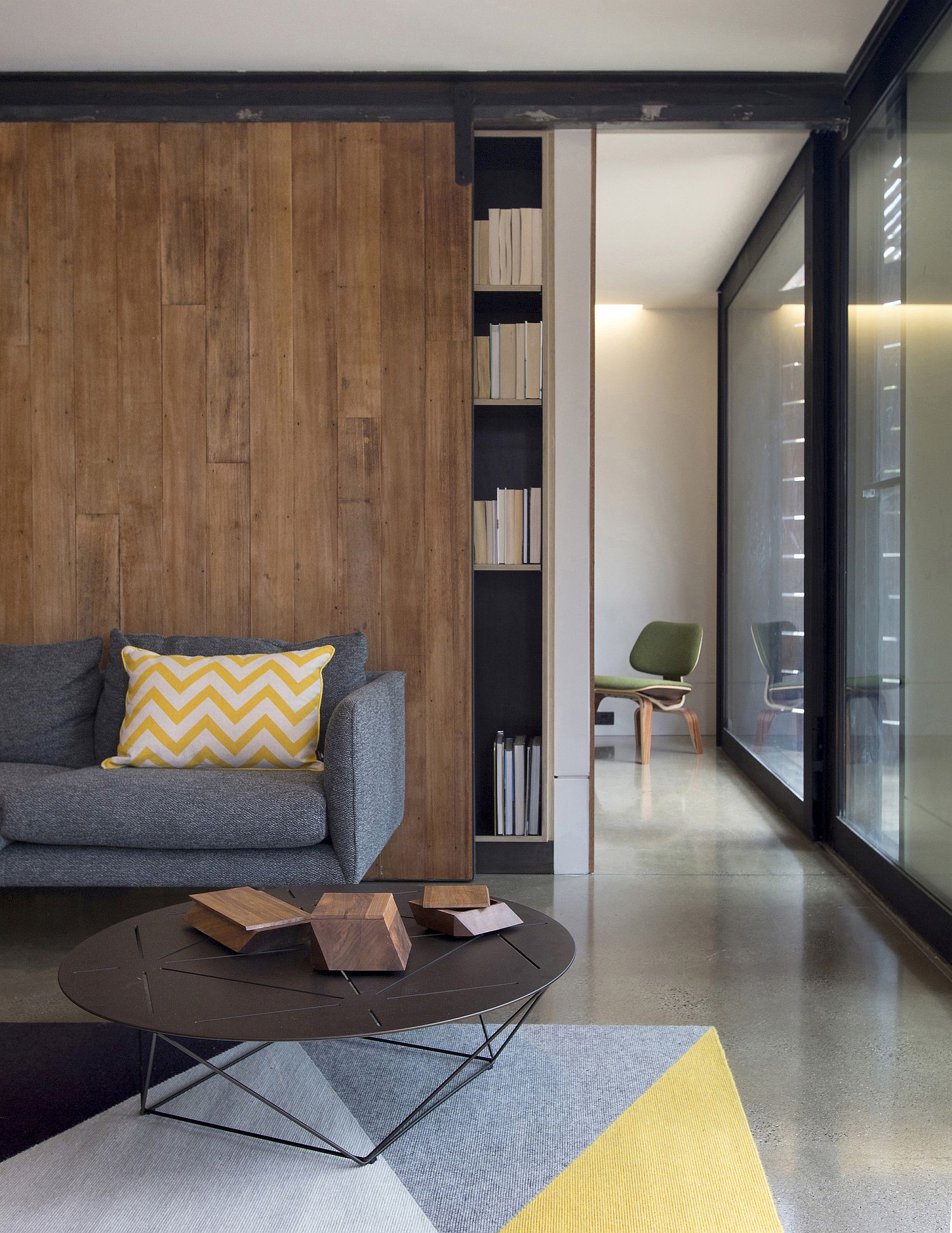
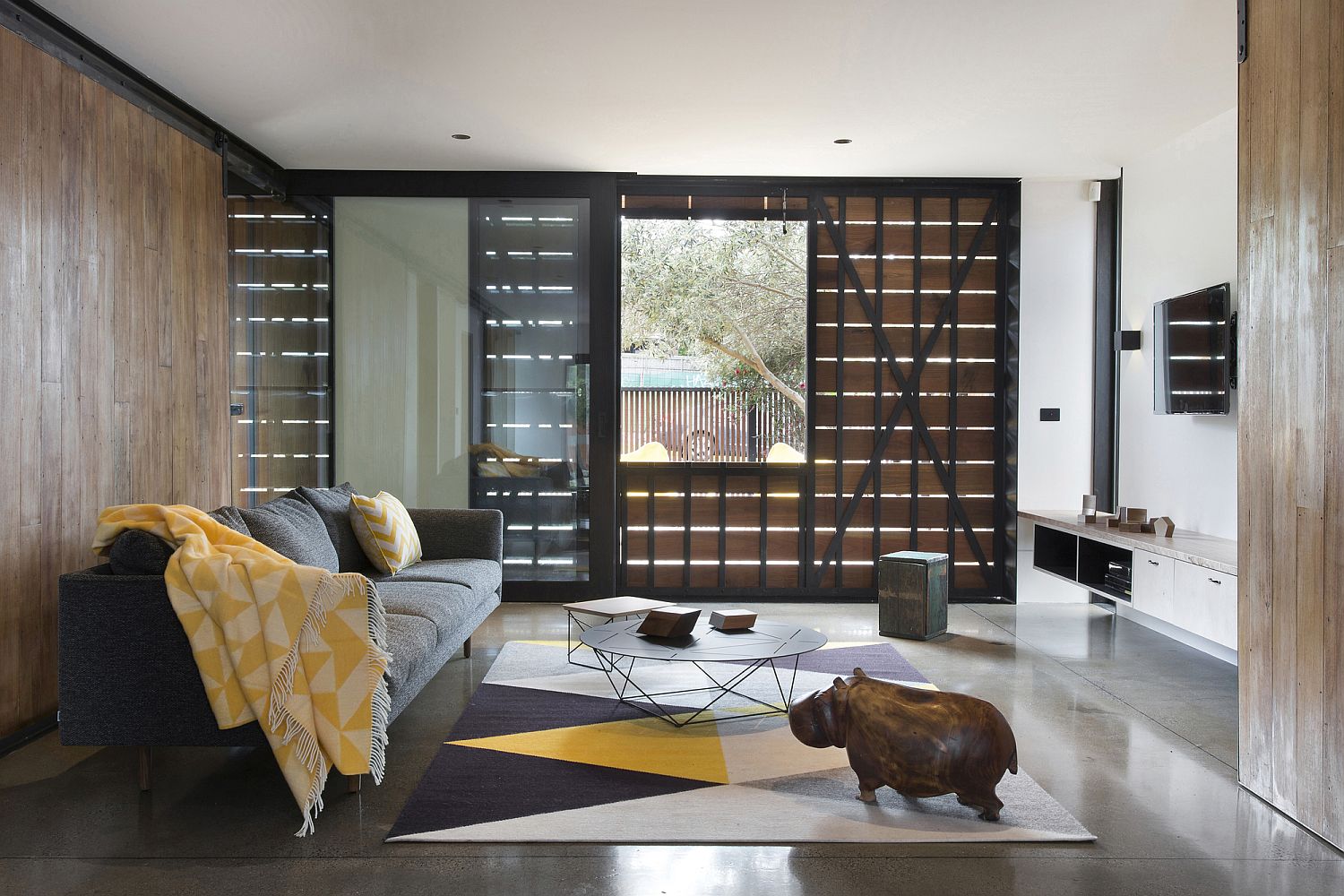
Wood, white and gray living room of the fabulous Aussie home
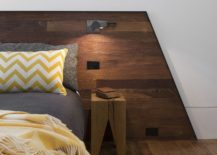
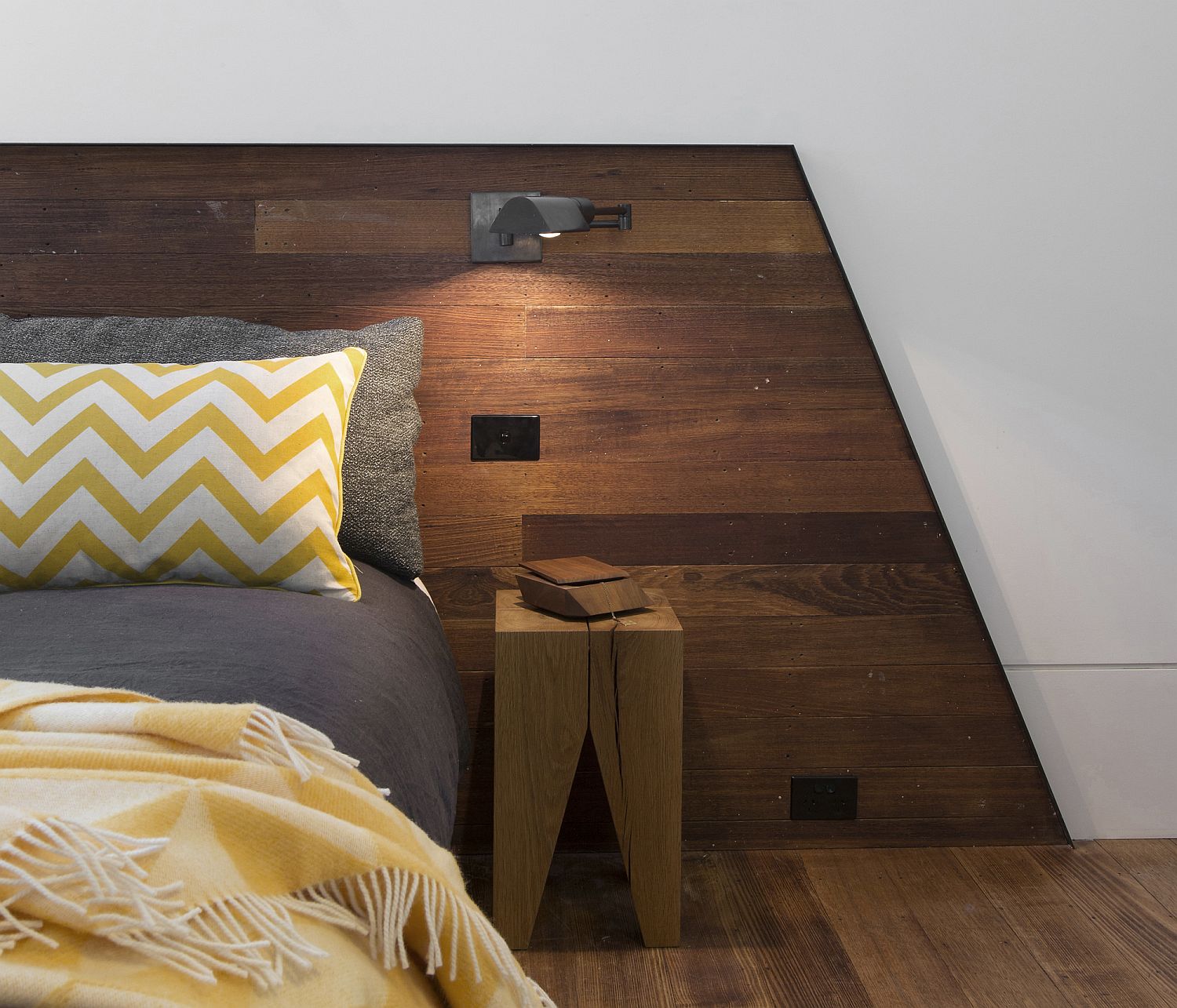
Accent pillow adds a bit of yellow and chevron pattern to the bedroom

Stonewood is efficient: its elegant plan offers flexibility for a humble family. Side-shifting recycled Tasmanian oak panels act as devices to transform as desire or weather dictates; directing views, channelling breezes and transitioning interconnected living spaces into cosy zones for isolated use. Folding/ unfolding according to use, Stonewood reveals a different story in each configuration

RELATED: Picturesque Aussie Home Wraps Itself Around a Relaxing Central Courtyard

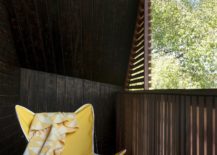
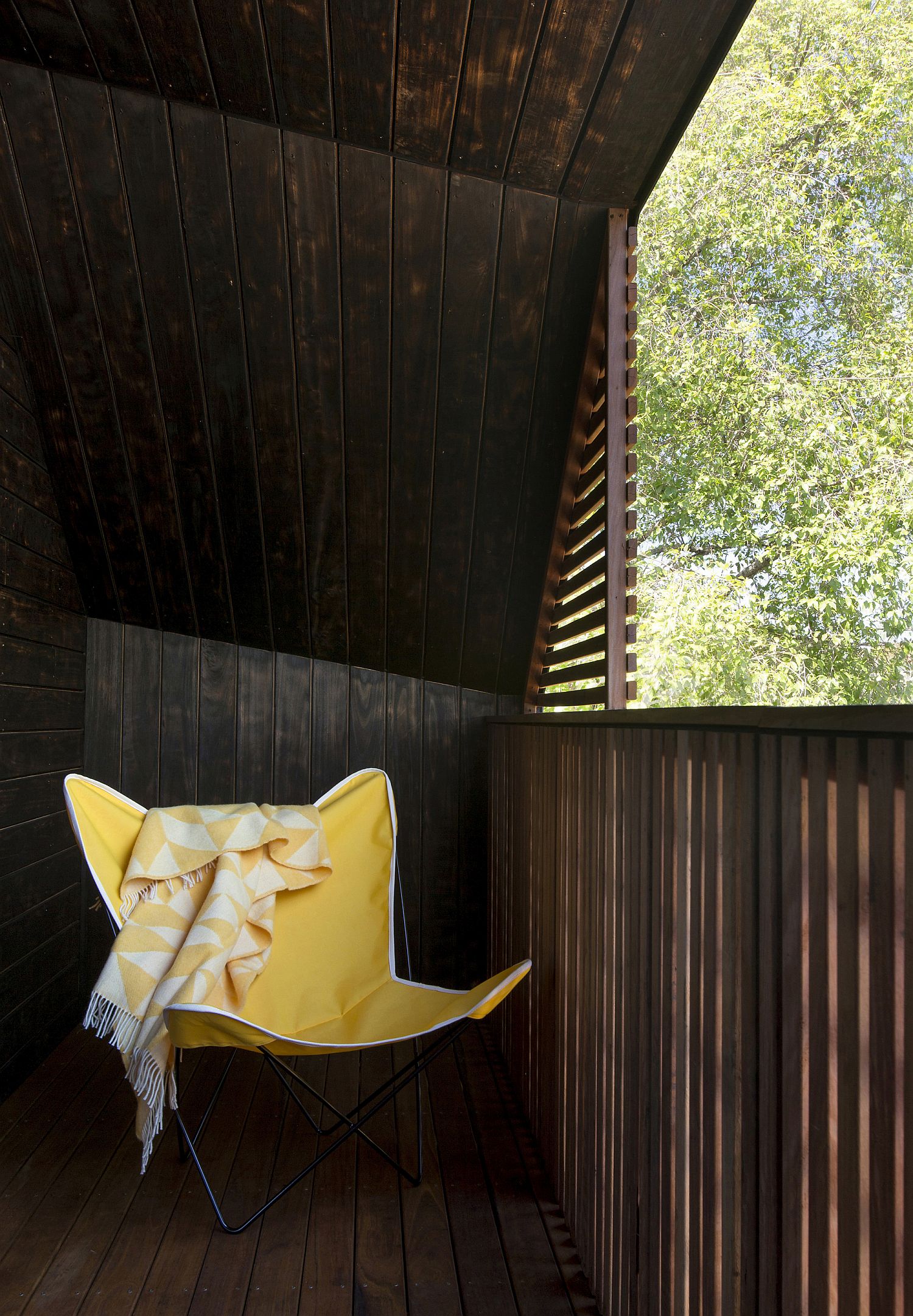
Covered tiny balcony of the modern Melbourne home
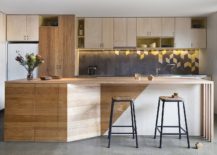
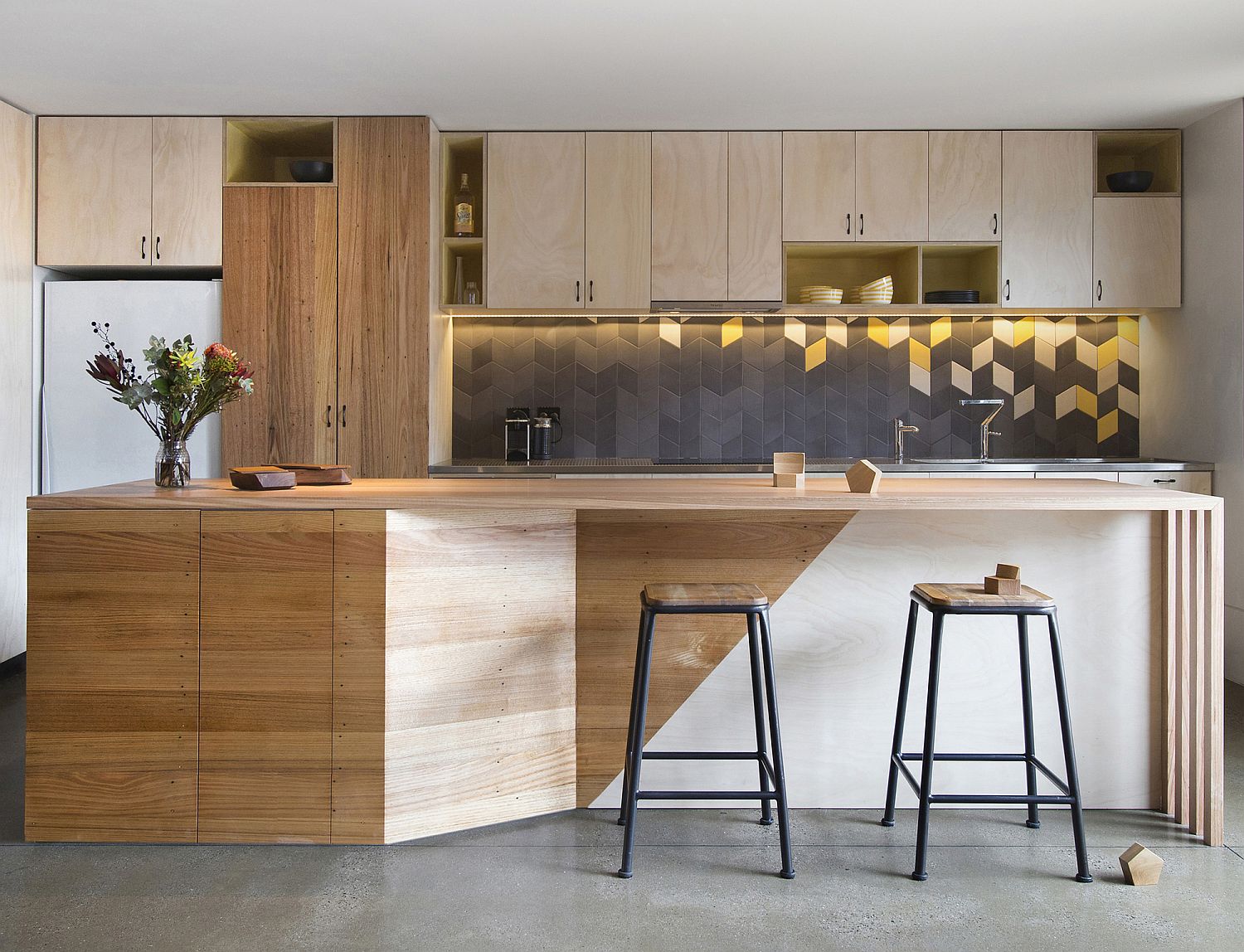
Custom backsplash of the kitchen in gray with pops of yellow and geo style
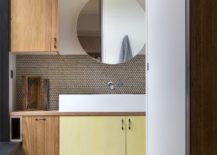
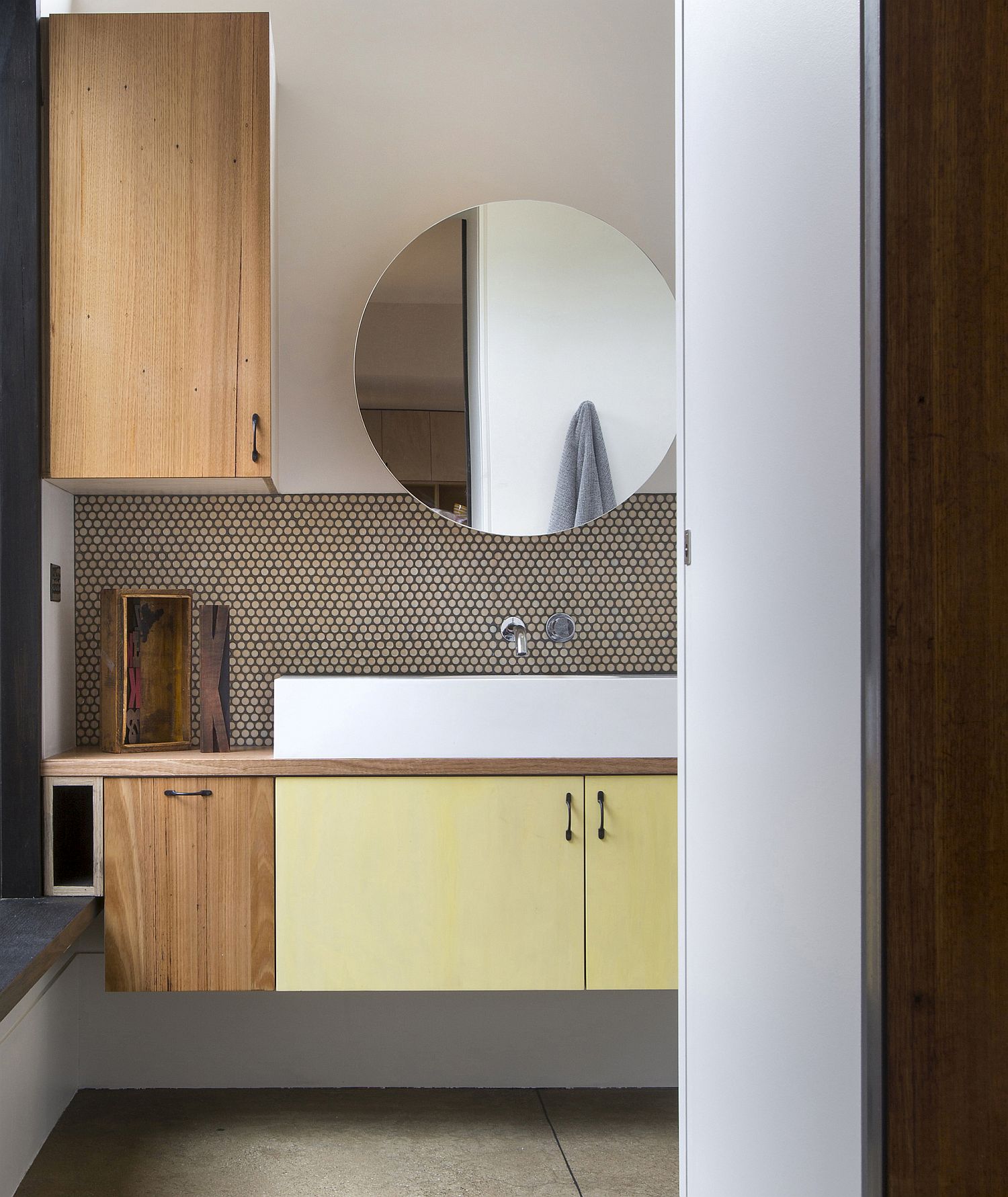
Minimal modern bathroom with round mirror and penny tile backsplash
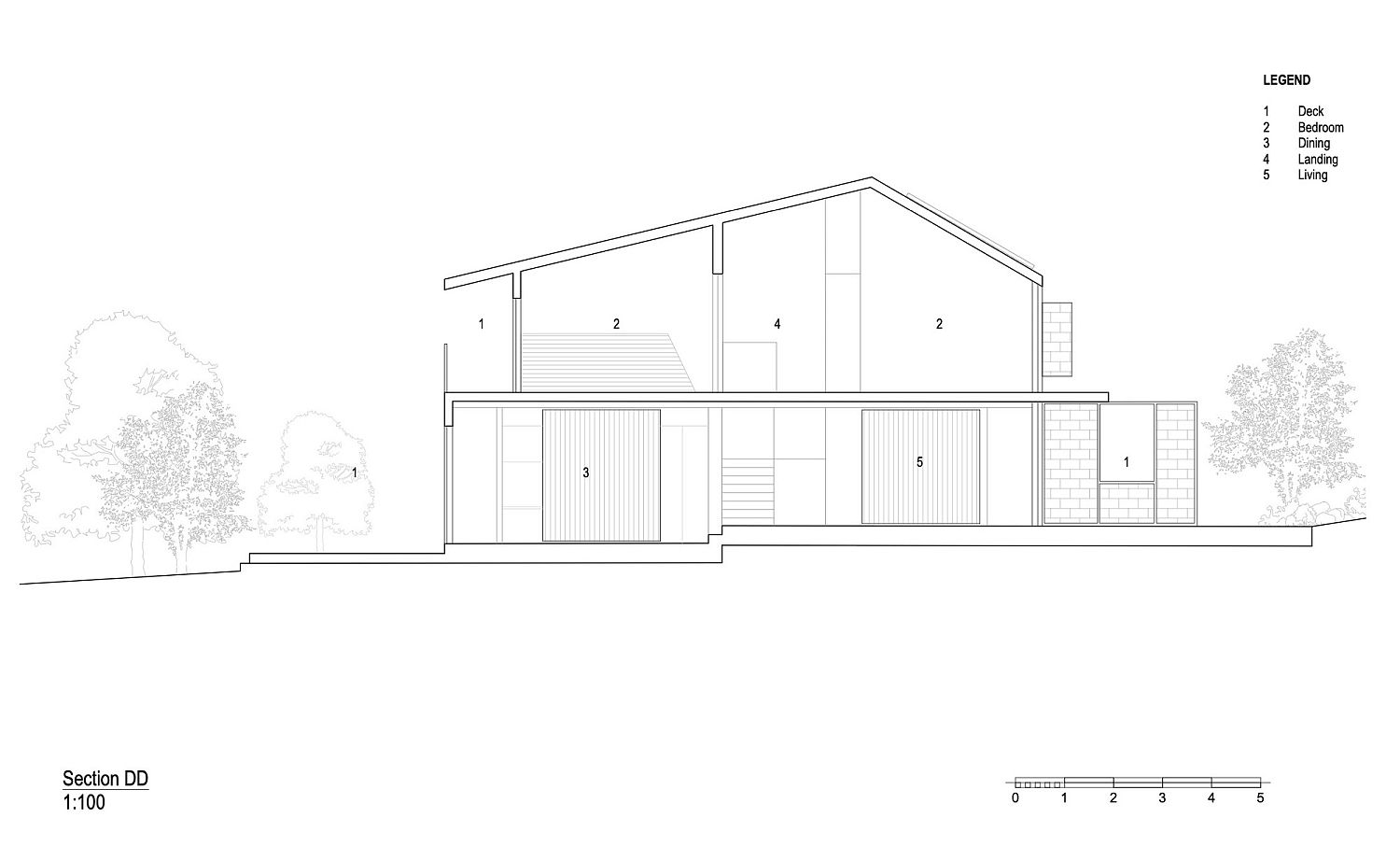
Design plan of the Stonewood house

You’re reading Budget Aussie Home with Operable Façade is Small and Sustainable, originally posted on Decoist. If you enjoyed this post, be sure to follow Decoist on Twitter, Facebook and Pinterest.

Similar Posts

  • Lone Madrone Cabin

    Located on a rocky, wind-swept south facing shoreline; this 1,600sf retreat home nestles into the landscape in order to harmonize with it’s surroundings and minimize exposure to weather. Designed with retractable wall panels to protect from punishing winter storms, the house nevertheless opens up completely to the outdoors when the weather is fair — allowing the owners to fully interact with the landscape and view. The site is within the San Juan Islands National Monument, with extremely sensitive shorelines and marine environment. In order to minimize impacts to natural systems, a garden roof was employed to replace landscape lost to construction, and storm-water flows were engineered to replicate the pre-construction condition. Local materials (primarily douglas fir and western red cedar) and local craftspeople were utilized in all aspects of the project.

  • Hillside Sanctuary

    The owner of this property came to Hoedemaker Pfeiffer looking for a personal retreat inspired by a home lost to fire decades earlier in the hills of Appalachia. The firm’s task was not to recreate that home but rather to give its spirit new form in the Pacific Northwest. Taking inspiration from its remote site in the San Juan Islands, our team envisioned a series of simple stone volumes. From that concept emerged the main house and a guest house, each responding to its own unique location on the site. Together they provide friends and family with comfortable accommodation while offering a sanctuary for the owner at the main home. Taking full advantage of sweeping views of Puget Sound, the main home is sited on a small plateau high on top of a steeply-sloping hillside. With a view on one side and a road on the other, the site suggested a stone plinth and stone wall to form the base and rear of the house. A pair of stone fireplace volumes support the concept, rising together to form the boundaries of a central stone staircase that separates the main level into public and private realms. Atop the low stone base then perches a light-filled wood structure. Its simple shed roof tips low in front to protect from the summer sun while offering space for a photovoltaic array above. Winter light in turn penetrates deep into the main living spaces through a wall of glass running continuously across building’s south elevation. The relative height difference between this wood pavilion and that of the adjacent stone volume also allows consistent north light to flood into the primary living spaces via a series of clerestory windows, which release warm air high on the leeward side of the structure. The site for the guest house came with more significant technical challenges. The concept begins with a stone tower set near the center of the small circular parcel. Rising high above steeply-sloping grade, it acts as a three-dimensional datum through which feature program elements are allowed to puncture. The main entry offers ease of access to the project’s public spaces through a simple, full-height opening cut into the stone volume’s north elevation. The stair, comprised of a concrete base below large casement windows, allows natural light to fill the main stairway as it leads guests toward the bedrooms located at the home’s lower level. Opposite the entry, the view deck extends from the great room, cantilevering far above grade. The dining room, finally, was conceived as a three-sided glass object floating in a forest of trees. Two steel beams carry its entire weight and extend deep into the floor system. To enhance the concept, our team preserved trees only a few feet from the dining room by developing custom retaining walls capable of avoiding critical root zones. Project Team: Hoedemaker Pfeiffer (Architecture) ​Schuchart Dow​ (Contractor ​Randy Allworth, Allworth Design​ (Landscape Architect) ​Malsam Tsang​ (Structural Engineer) ​LPD Engineering​ (Civil Engineer) Nelson Geotechnical Associates, Inc. (Geotechnical Engineer) Island Tree Doctor (Arborist) ​Kevin Scott​ (Photographer)

  • A Village of One’s Own

    Welcome to A Village of One’s Own, a modern masterpiece by Hugh Newell Jacobsen. Described as one of the world’s top 50 architects by Architectural Digest, Jacobsen has been retained by celebrities including Meryl Streep, James Gardner and Jacqueline Kennedy Onassis. Here in Meadowbrook, Mr. Jacobsen was tasked with creating a modern home on a sloping hillside in 1988. Nearly invisible from the road, however the moment you turn down the drive, there is a sense of calm discovery. Three massive chimneys reach for the sky and the entire structure is covered in cedar shingles on the roof. There is a crispness and symmetry to the varying buildings from the 6-dormered Federal-style living room to the glass, pyramidal sky tower that was inspired by an 18th Century lantern house over the entry foyer. Ornamentation is eliminated, with box gutters hiding the downspouts and it is completely void of any fenestration. The forms themselves are the decoration, and it is simply brilliant! From the entry courtyard, the home appears small and simple. The site afforded the architect with the ability to design a reverse plan where the public living spaces occupy the main level. This first floor is high like a treehouse with views out to the canopy of trees that fill the rear yard. The private living quarters occupy the full lower-level with complete connection to the grounds through a series of symmetrical sliding glass doors from every room to the flagstone walkway across the entire rear of the house. With Southern exposure, the way the sunlight plays across the rear of the home is wonderful. No matter what Mother Nature delivers on any given day, from sun, to snow to rain, the experience and connection to the outdoors is magical. The home is grand without being grandiose. There is a quiet elegance that offers multiple experiences. One enters into the 2nd of the pavilions. The bluestone floored foyer is bathed in light from the glass sky tower above and two large windows facing the rear patio and grounds. Centered in the foyer is the powder room with a 16′ ceiling that has a mural painted by Hugh Newell Jacobsen himself! It’s a whimsical interpretation of Michelangelo’s Creation of Adam. The 20′ vaulted living room to the left of the foyer is the first of many surprises. A series of six dormers cut through the soaring ceiling while eight symmetrical 8′ tall floor-to-ceiling windows ground the living room to the outdoors. Centered on the gable wall is the first of five wood burning fireplaces with a hidden wood box tucked to the right and a square window off-centered to the left. Another ingenious design of Jacobsen’s is the placement of interior window shutters to control the flow of light. The third pavilion provides another signature Jacobsen element, the 25′ tall library walls and circular staircase to the private quarters below. This section also houses a massive roof light on the Southern slope of the pavilion. The fourth pavilion houses the dining room and kitchen. Similar to the living room, yet juxtaposed with the gable walls facing the rear and front yards, soaring ceilings in the dining room and large windows provide the perfect backdrop to enjoy the changing seasons with family and friends over great meals. The second wood burning fireplace is centered on one side wall with hidden storage closets. The kitchen is the definition of efficiency, with cabinetry on all four walls and a large central island. Double ovens, a SubZero side-by-side fridge and a series of square windows overlooking the entry court provide the perfect vista to see guests as they arrive. The 5th and smallest of the pavilions houses the mudroom and breakfast room with the third wood burning fireplace. The master suite occupies the entire space under pavilions 4 and 5 and is a refuge of simple, classic forms. It has a dedicated home office, large en-suite bath, a walk through closet and the remaining two fireplaces. For more information, please visit www.avillageofonesown.com or contact listing agent Scott Laughlin at 215-275-1685.