Durable Dutch Loft Scales Up the Prefab Frame with an Exceptional Interior

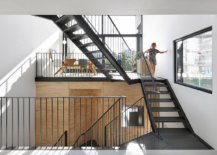
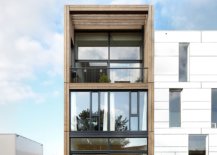
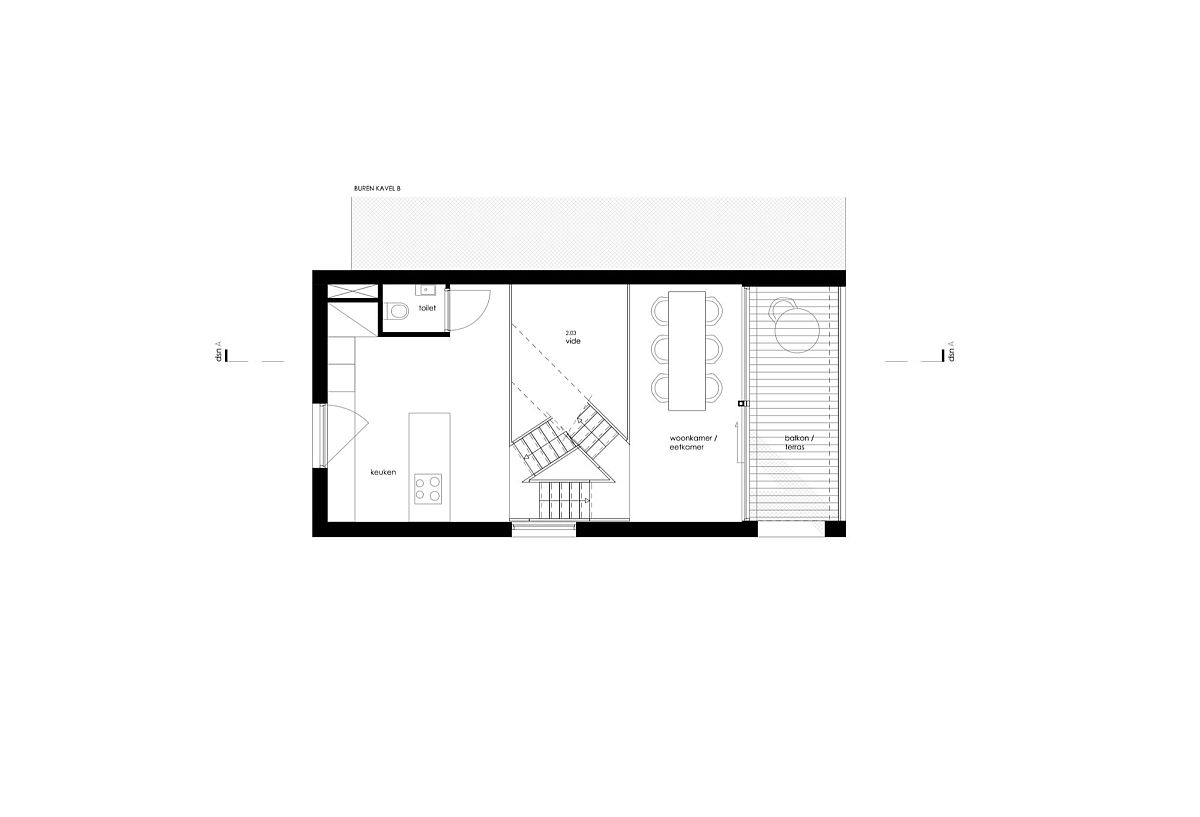
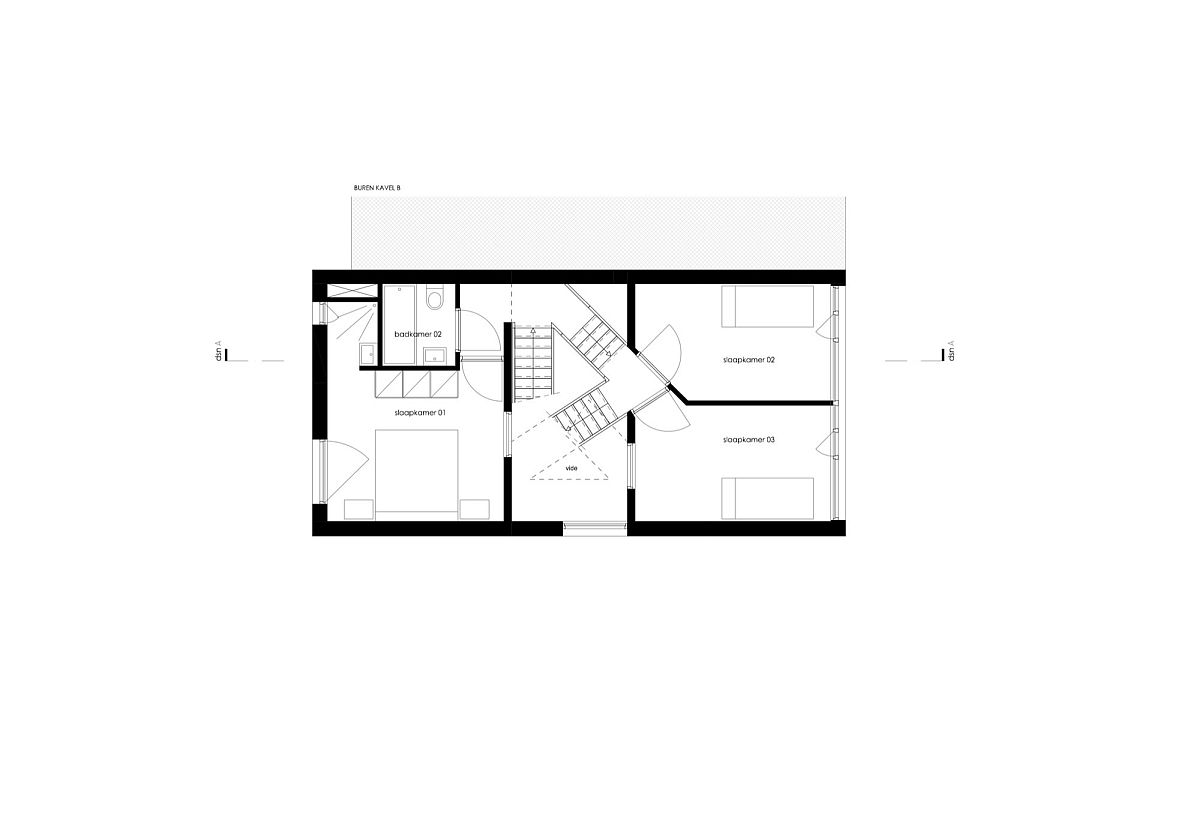
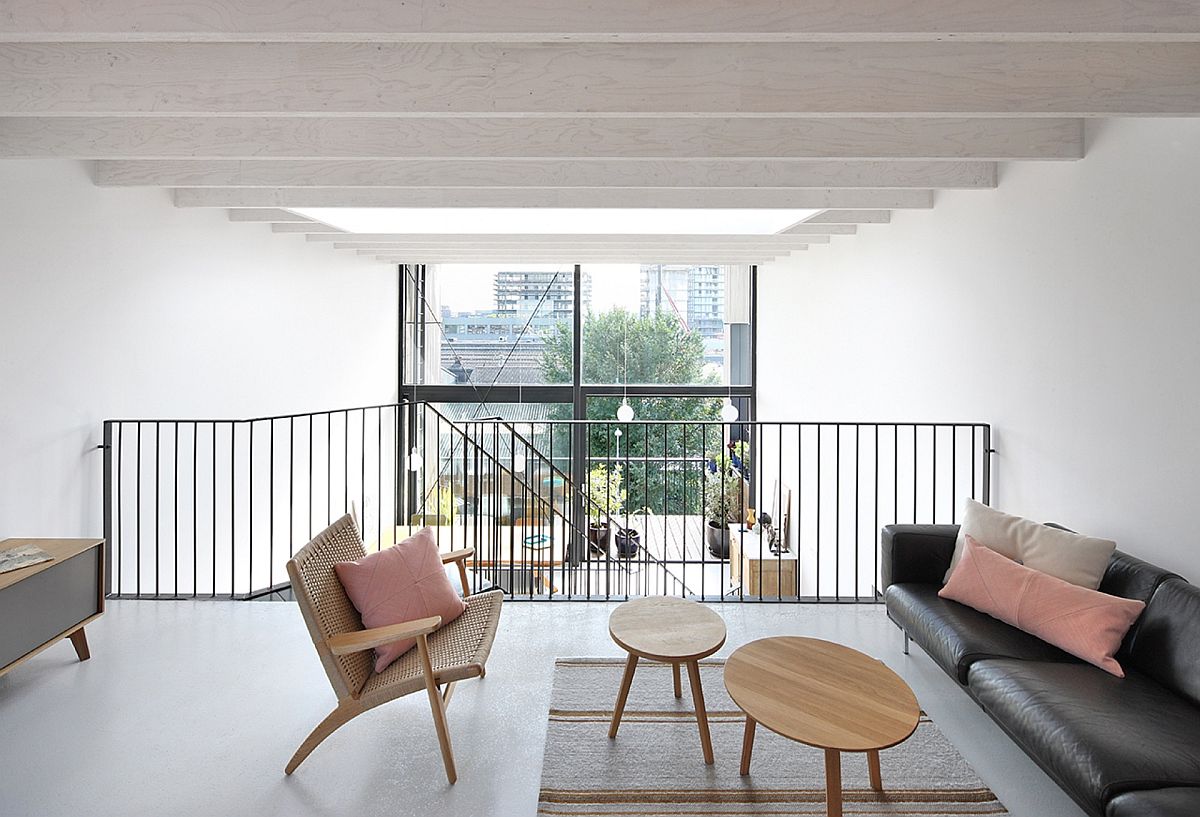
Most homes we come across on a daily basis have a floor plan where it is the living area, kitchen and dining room that occupy the lower levels and the upper floors are dedicated to private areas. Yet, the Lofthouse I designed by Marc Koehler Architects in Amsterdam turns this idea upside down with two bedrooms and bathrooms on the ground floor and the living area and public spaces on the upper levels. This gives the homeowners a chance to enjoy lovely views of the city as they spend most of their time in the living space and kitchen. But the real highlight of this residence with a prefab structural frame is the central atrium-styled stairwell that feels like a walkway in the sky!
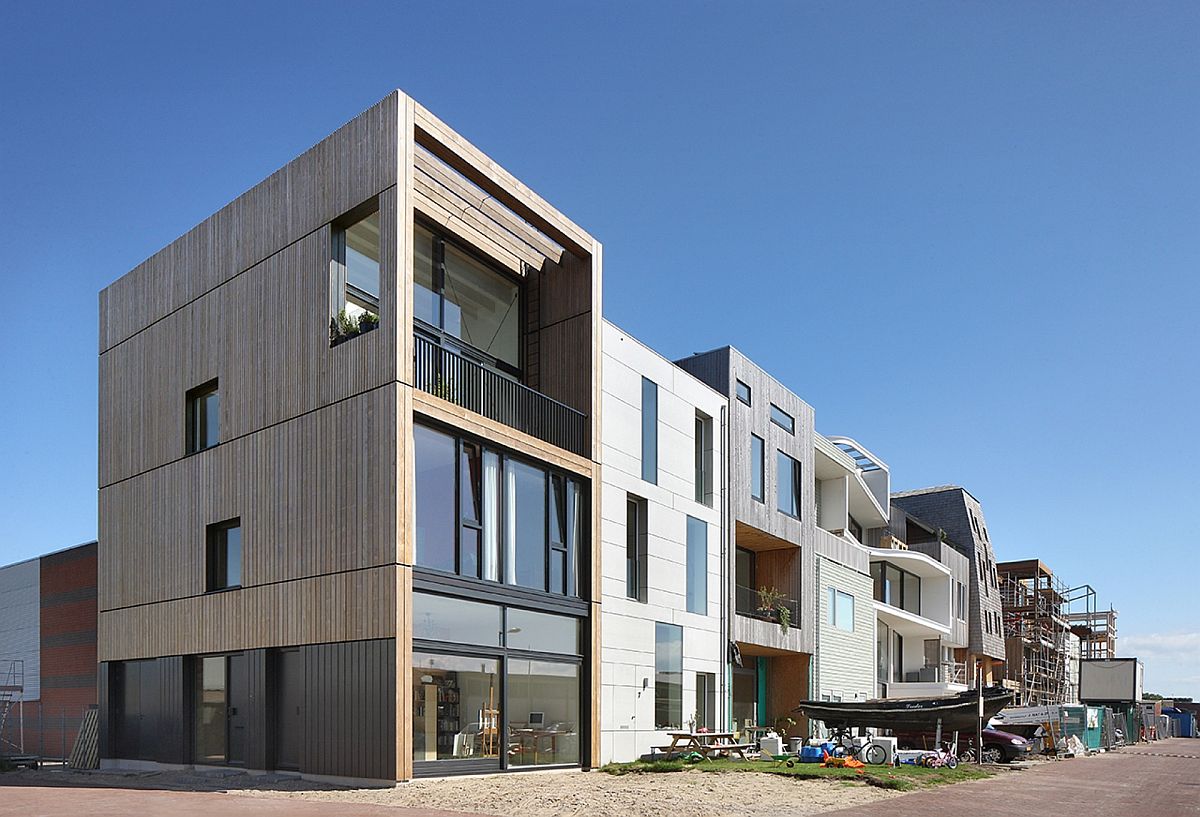
Lofthouse I designed by Marc Koehler Architects in Amsterdam


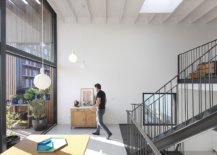
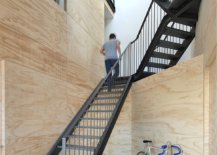
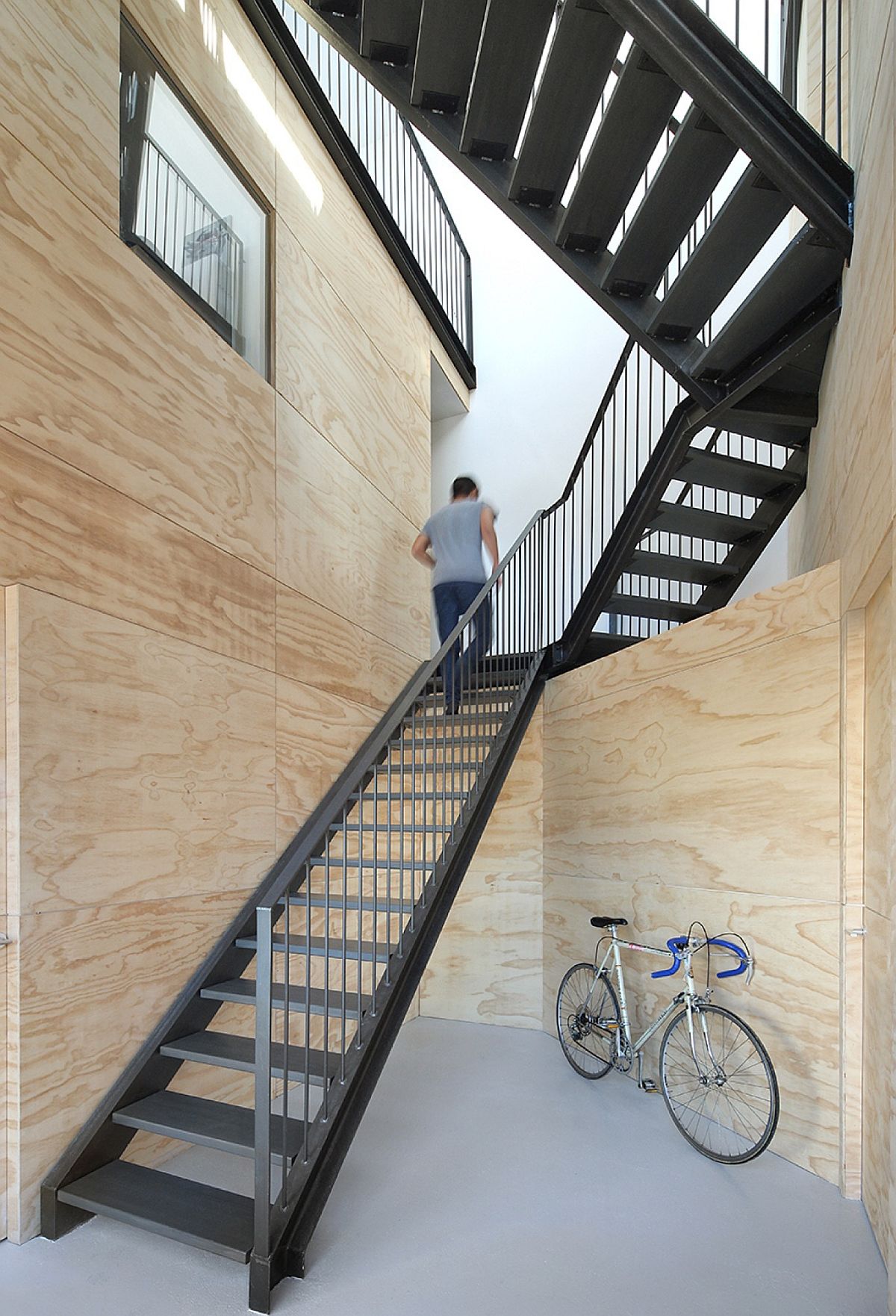
The continuous metallic staircase is absolutely jaw-dropping and feels like sculptural masterpiece even as it seamlessly connects all the levels. The style inside the house is modern-industrial with wood, metal and glass being used in a balanced fashion and ample natural light shaping a cheerful and healthy living environment. The prefab wooden structure used for the loft allows for easy development and evolution of different levels and also reduces construction time as well as costs, making it a cost-effective and planet-friendly home. A beautiful, multi-level residence ideal for urban lifestyle! [Photography: Filip Dujardin]
Inverted floor plan of the house sees the living area on the upper level of the house
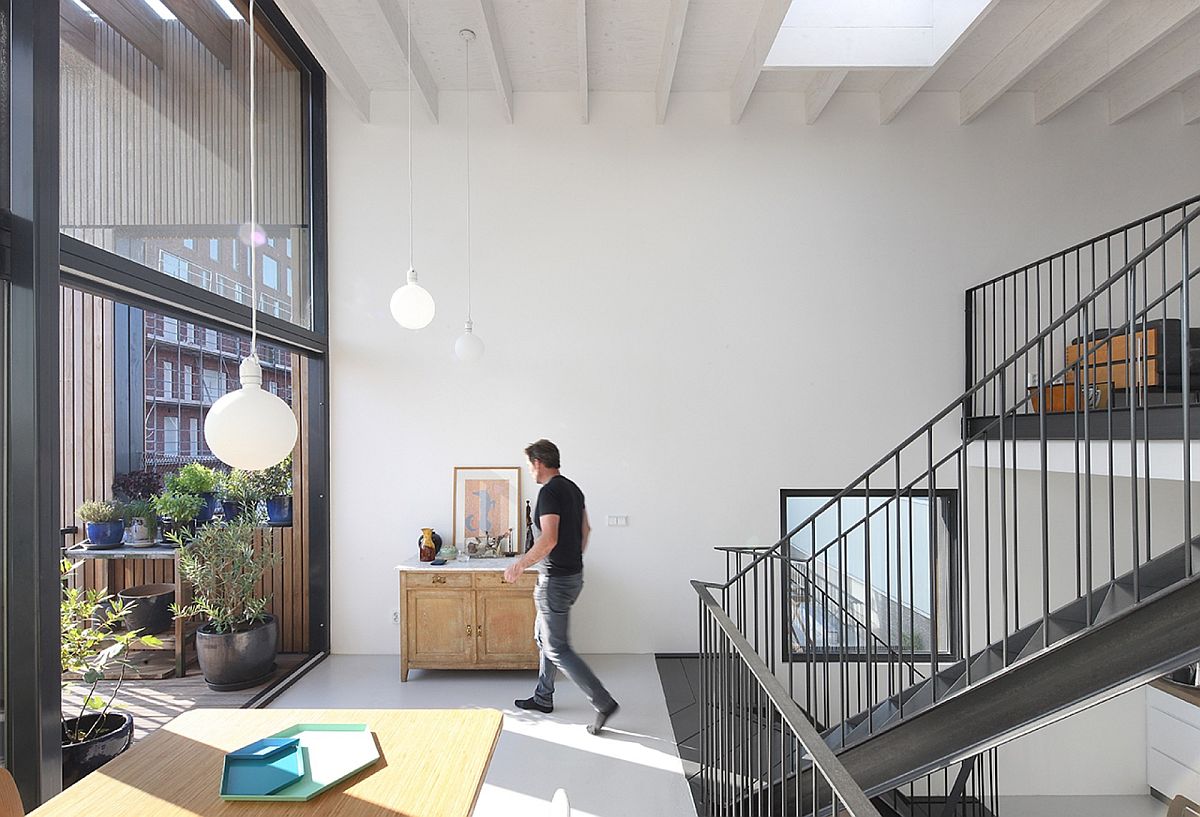
Metallic staircase connects different levels of the house in a seamless and dramatic fashion
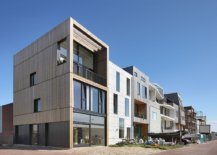
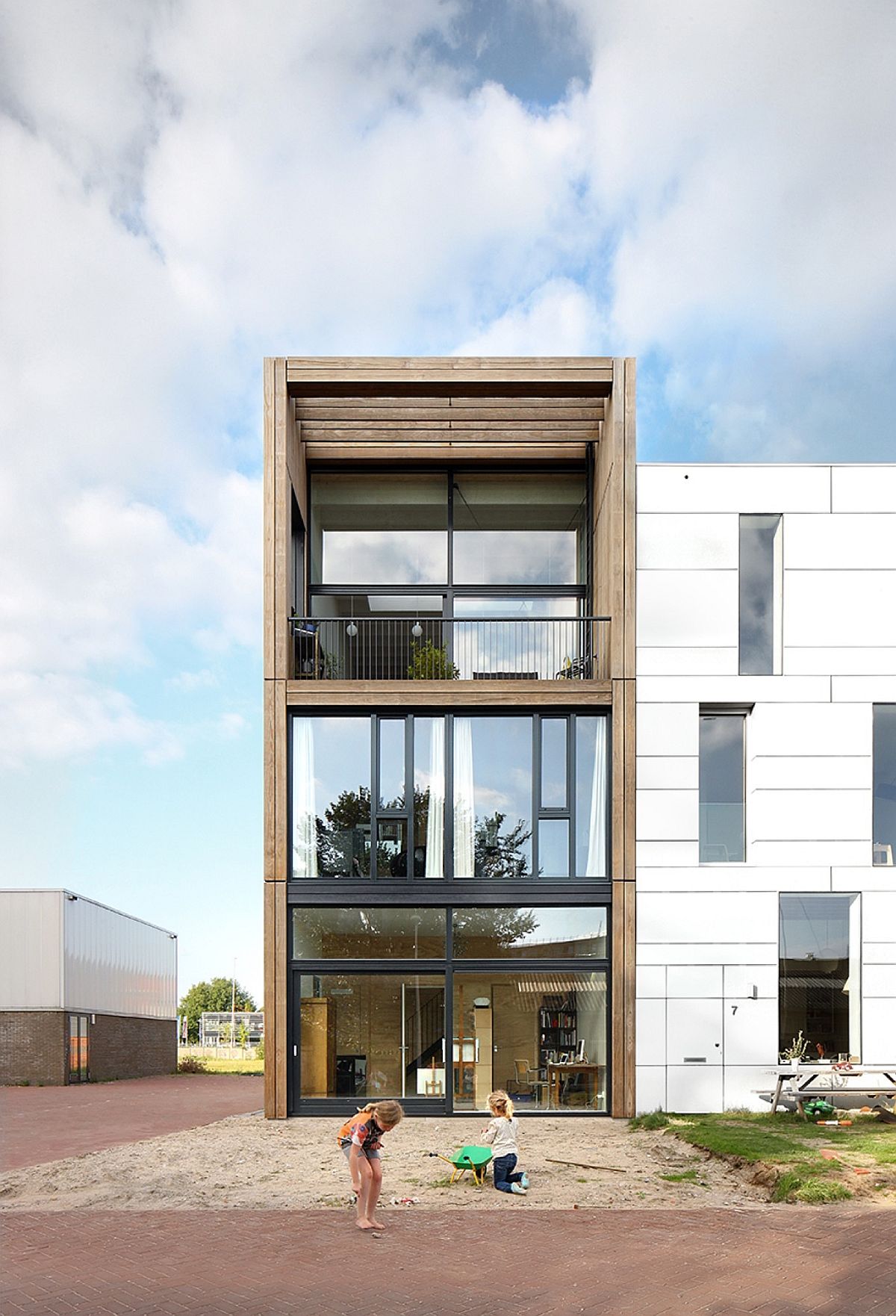
Multi-level loft with prefab frame in Amsterdam with modern wooden exterior
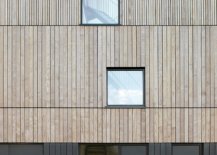
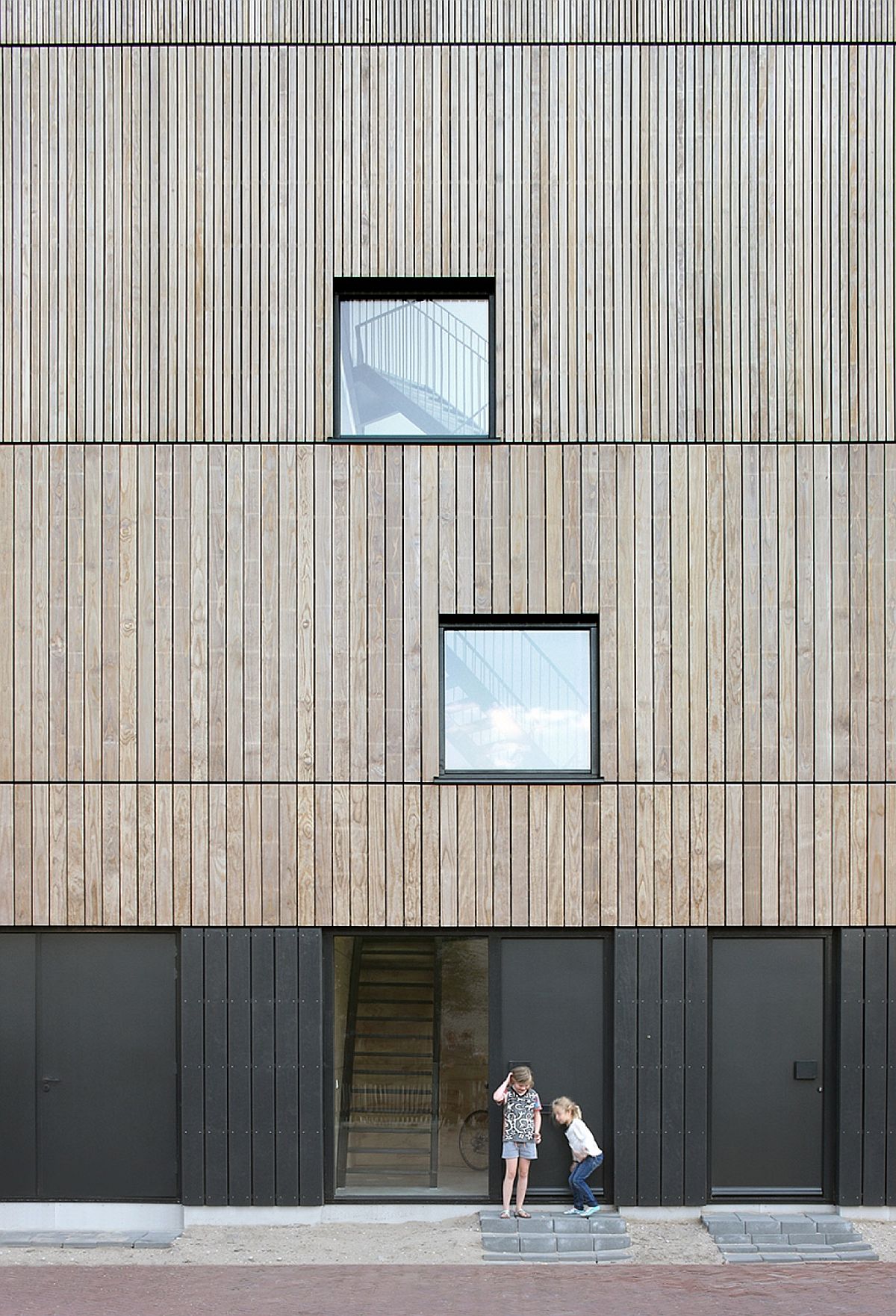
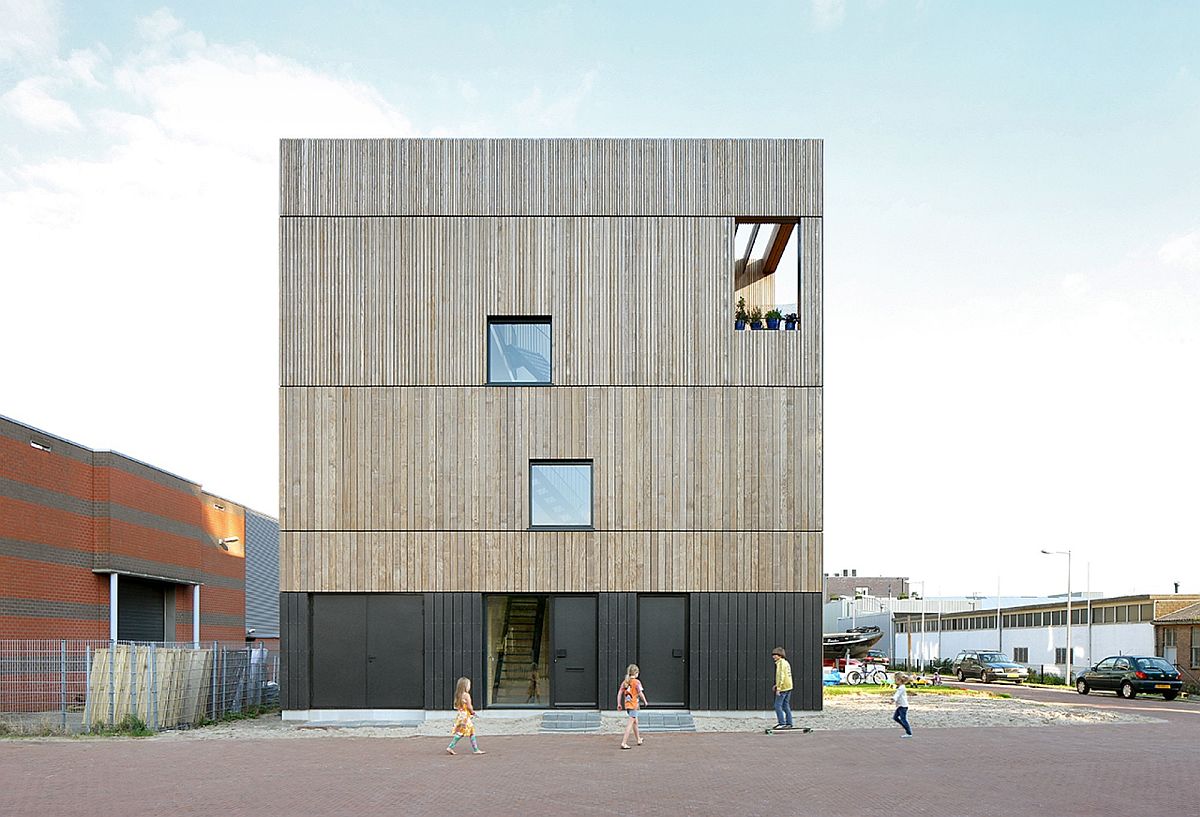
Preserved Radiata Pine softwood shapes the exterior of the home in Amsterdam
Upper levels of the house contain the living area, kitchen and dining space inside the house

This industrial location inspired the architect to design a sturdy framework with large glazed surfaces and black opaque, painted hardwood frames. Besides being sturdy, the house also emanates a serene atmosphere. The house has a refined wooden wall cladding, the transition from coarse to fine resulting in a façade with a layered and surprising appearance. The façade is covered with a preserved Radiata Pine softwood
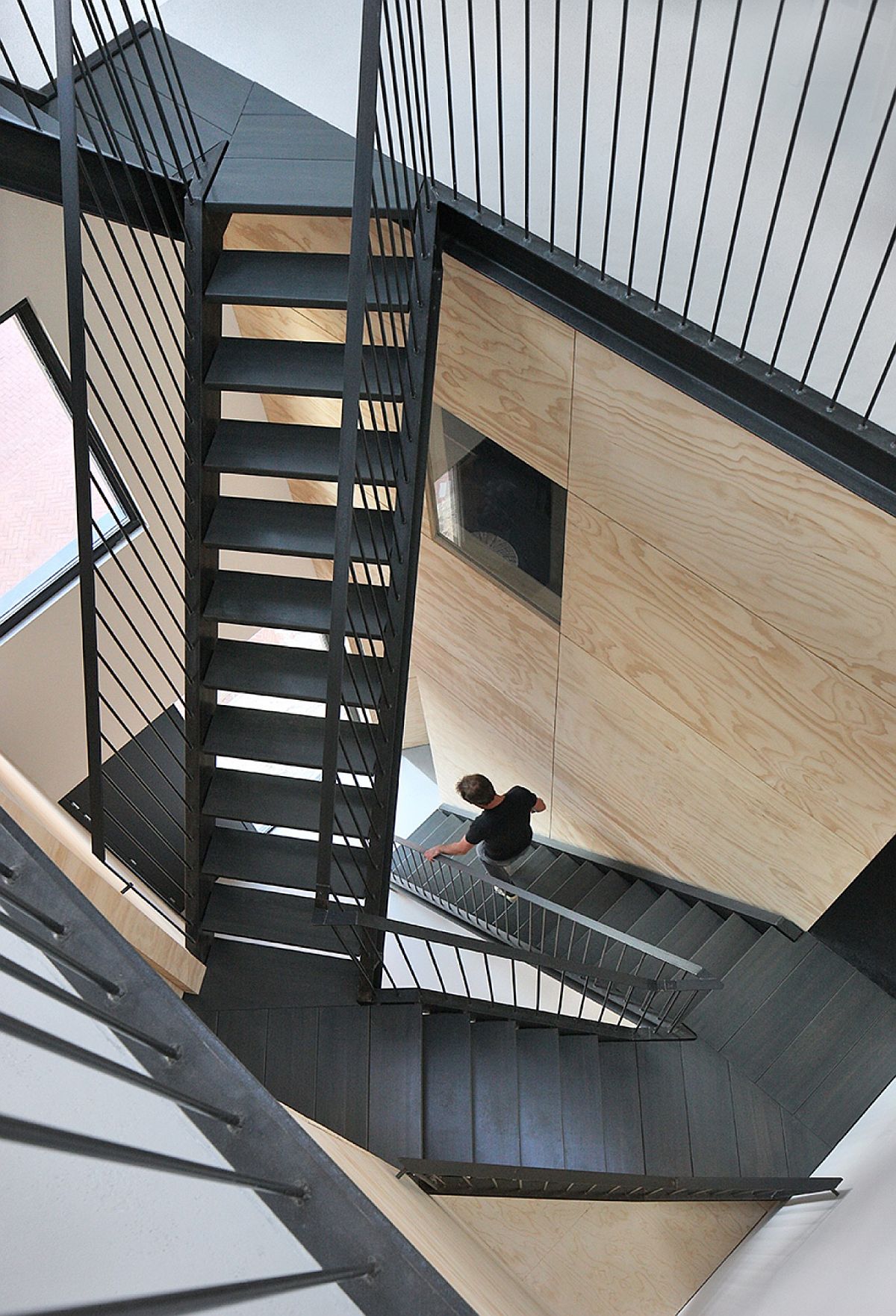
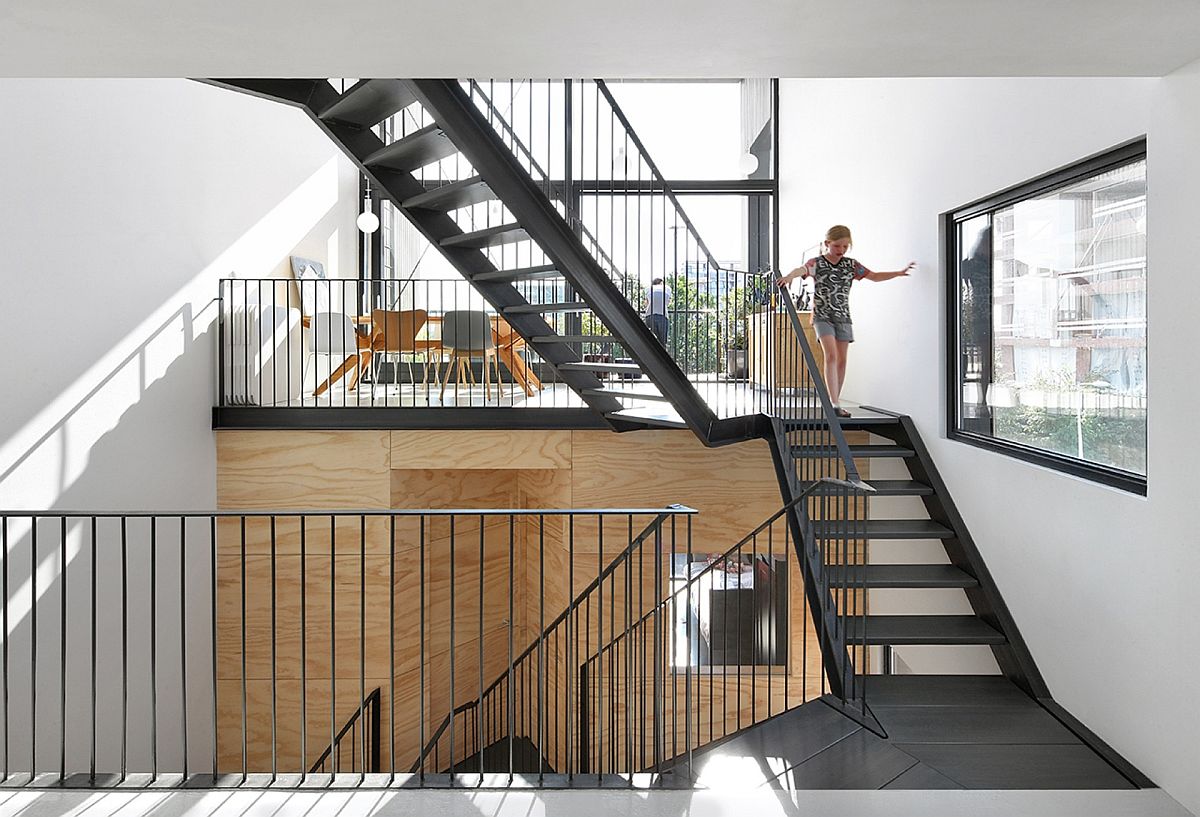
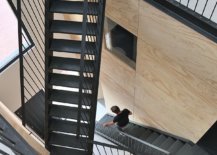
Atrium with vertical walkway styled stairway steals the spotlight inside the Dutch home
Stunning series of stairways connecting different levels of the house also create the central atrium
Series of glass walls and sliding glass doors connect the interior with the view outside
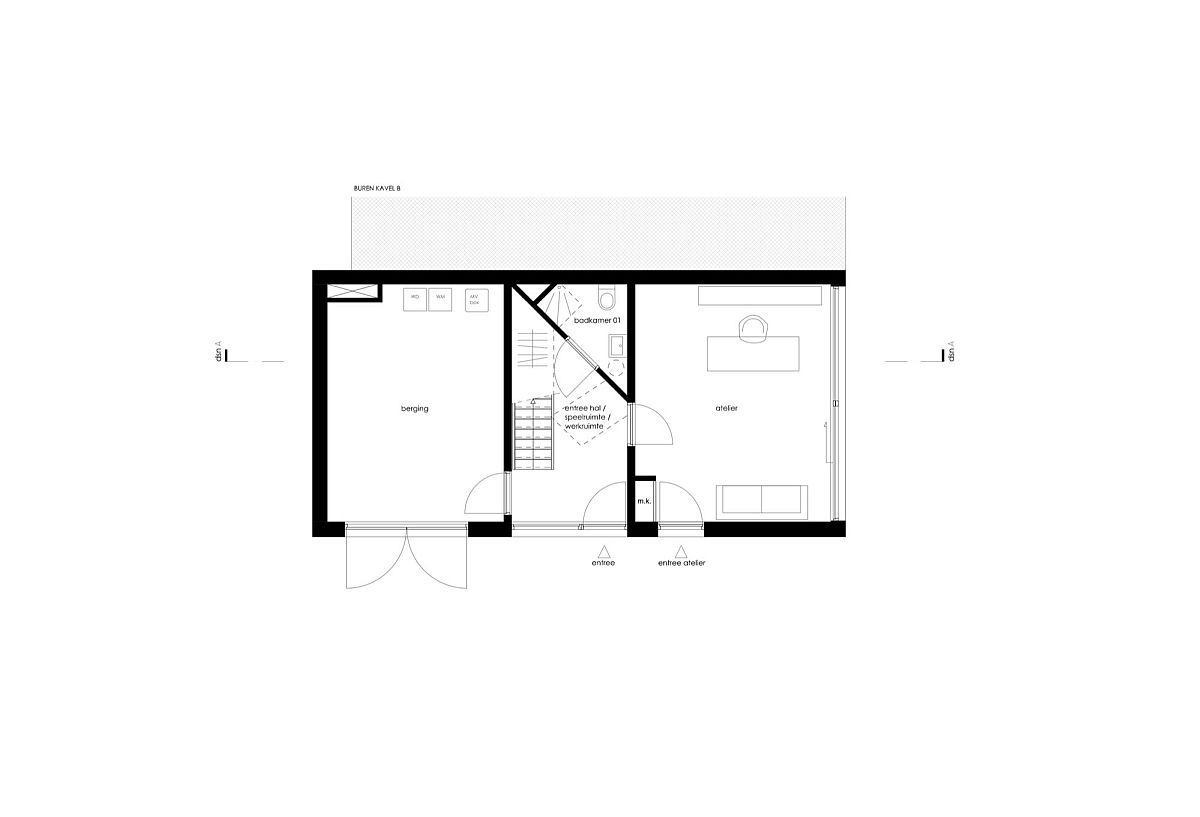
Ground level floor plan of Lofthouse I by Marc Koehler Architects
Second level floor plan of the prefab Dutch home
First level floor plan of the house in Amsterdam

You’re reading Durable Dutch Loft Scales Up the Prefab Frame with an Exceptional Interior, originally posted on Decoist. If you enjoyed this post, be sure to follow Decoist on Twitter, Facebook and Pinterest.

Similar Posts

  • VITR

    This renovation project originates from the intervention of a pre-existent building located in the western area of Mexico City; reshaping it into a studio-house project, with clear conditions and an eye set into the pre-existing circumstances. Our design solution takes on a residential structure from the 20th century and recycles it into a project that integrates itself with its immediate natural environment, shattering the hegemony of the high walls behind which the neighboring houses hide, in order to establish a dialogue that transcends the physical limitations of the project. The variations in the depths of different planes, offer the environment a living façade, where the interior activities are guessed from the visual filters that concede intimacy to the interior spaces. The interior-exterior duality brakes its context’s routine, offering a canvas of textures where the concrete and granite give away to the mildness of the metal and the lightness of plastic fabrics. To the exterior, the housing peeks out without invading; whilst opening in the interior, subtlety exposing itself, balancing the volumes that are inserted in the site. An interplay of planes occurs inside allowing the versatility of spaces by the movement of long-distance sliding screens and wainscots formed by timber that contrast in warmth and complexity with the sobriety of the stone coatings and apparent concrete of the enclosures. A new stairway, based on steel strips, reactivates the space where the old one stood, which gave an opportunity to re-signify the ambiance of the circulations as an experience of sculptural character. The front yard of the house marks the limits of the construction and together with the water mirrors and vegetation orient the route beneath a suspended long cover. The architectural program revolves around the home in the ground floor, leaving the studio in a privileged condition towards the garden. The living spaces in the first level have terraces and views to the exterior between and through a green façade woven of plastic cables (recovering the Acapulco chair technique) that sieve and melt together the thick vegetation of the existing trees. The terraces and windows allows an optimal ventilation, illumination and contextualization between the outside and inside. In the top level, the project offers a view above itself and the wooden horizon from a roof garden that elevates to a higher plane the user’s introspection, belonging and pertinence of itself.