the holy see pavilion proposes listening as a contemplative act
Tucked behind the walls of Venice’s Giardino Mistico dei Carmelitani Scalzi, the Holy See Pavilion at the 61st International Art Exhibition of La Biennale di Venezia invites visitors into a quiet, deeply contemplative experience shaped through sound, nature, and attentive listening. Curated by Hans Ulrich Obrist and Ben Vickers, The Ear is the Eye of the Soul responds directly to the late Koyo Kouoh’s curatorial framework, In Minor Keys, transforming listening into an act of contemplation, care, and spiritual attention.
At the Giardino Mistico location, the experience starts by receiving a pair of headphones and a map identifying the locations of each sound work hidden throughout the garden. As the listeners move slowly through the space, the sonic landscape, composed by artists including Brian Eno, FKA Twigs, Devonté Hynes, Patti Smith, and others, continuously shifts, with individual compositions emerging and fading according to their position within the grounds. In certain areas, works briefly overlap, creating delicate transitions between voices, chants, ambient frequencies, and sounds of birds. The experience unfolds through wandering and listening, allowing visitors to spend up to an hour moving freely among the garden’s pathways, greenery, medicinal plants, and shaded corners while gradually attuning themselves to the contemplative rhythm of the pavilion.
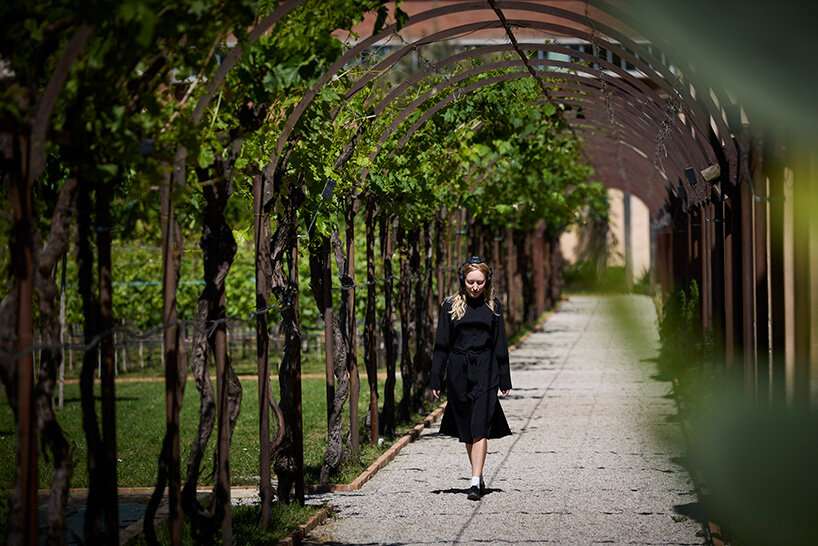
all images by David Levene, unless stated otherwise
shaping a meditative sonic environment
Across two sites in Venice, the pavilion draws from the writings and chants of Hildegard of Bingen to create a deeply meditative encounter grounded in sound, silence, and the living rhythms of the natural world. Inside the hidden Carmelite garden in Cannaregio, the experience begins with an almost immediate slowing down of perception. Removed from Venice’s crowded pathways and constant movement, the space encourages visitors to attune themselves to subtler frequencies and focus on the sounds of wind passing through leaves, insects moving through the soil, distant bells, footsteps softening against gravel.
Here, works by artists including Brian Eno, FKA Twigs, Devonté Hynes, Patti Smith, Suzanne Ciani, and Terry Riley emerge through headphones as fragments of prayer, ambient compositions, spoken word, and near-silence.
Central to the pavilion’s sonic architecture is the work of Soundwalk Collective, whose custom-built listening instrument translates the hidden biological activity of the garden into an evolving sound composition. Bioelectrical impulses from plants, the movement of water, insects, wood, and electromagnetic rhythms become part of the exhibition’s living score, treating nature as a collaborator and asking visitors not simply to hear, but to listen differently.
This attentiveness extends directly from Hildegard’s worldview. For the 12th-century mystic, music and healing were inseparable from the body’s relationship to the cosmos, and the pavilion channels this philosophy through an exhibition language rooted in restraint rather than excess. In a Biennale often dominated by visual overload and relentless stimulation, The Ear is the Eye of the Soul feels radically quiet. Yet within that quietness lies its emotional force. The pavilion creates rare space for stillness, for reflection, and for reconnecting with the sensory dimensions of being that contemporary life continuously pushes aside.
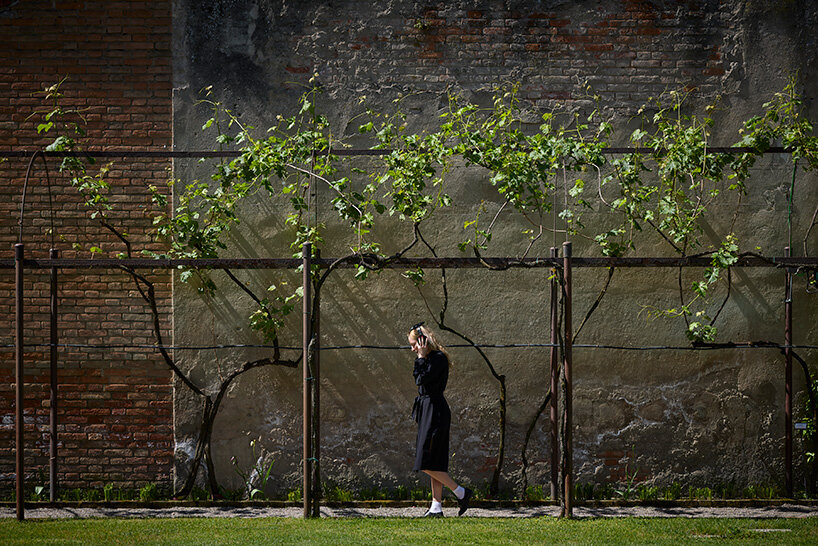
visitors pause beneath the garden’s trees and vineyards
embracing silence, stillness, and frequencies of the minor keys
Across the city in Castello, the second venue at the Complesso di Santa Maria Ausiliatrice expands this atmosphere into a contemporary scriptorium and living archive. Continuing the Holy See’s long-term restoration project initiated during the 2025 Architecture Biennale, the site brings together Hildegardian texts, artist books by Ilda David’, architectural interventions by Tatiana Bilbao alongside MAIO and DOGMA, and the final work of Alexander Kluge, completed shortly before his death earlier this year. Spanning twelve stations across the partially restored building, Kluge’s installation lends the pavilion its title, reinforcing the broader proposition of the exhibition that listening itself can become a form of seeing.
What ultimately lingers after leaving the Holy See Pavilion is a recalibration of attention. By choosing the garden as its central site and constructing the exhibition around acts of listening, slowness, and collective contemplation, the pavilion fully inhabits Kouoh’s invitation to tune into the minor keys. It suggests that amid contemporary exhaustion and accelerating noise, the most urgent gestures may no longer be the loudest ones, but the quiet practices that reconnect us to one another, to the earth, and to the fragile emotional frequencies that still make healing possible.
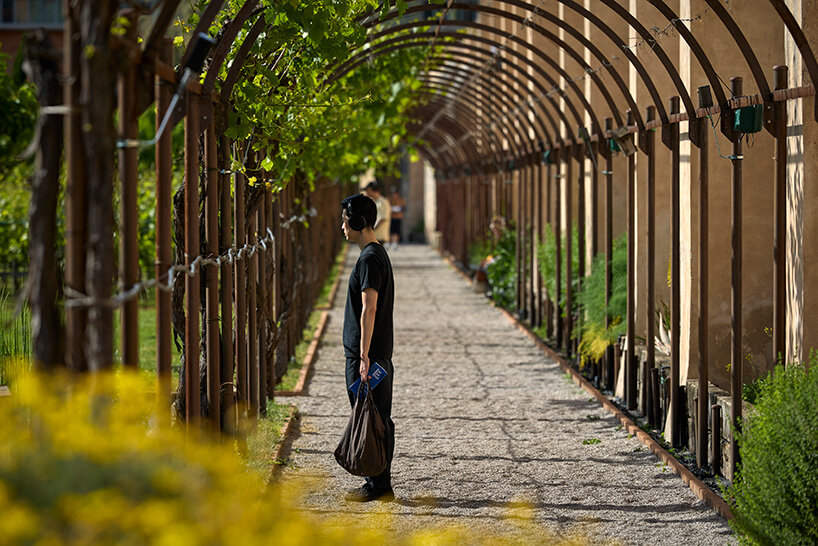
immersive sound works unfold through headphones
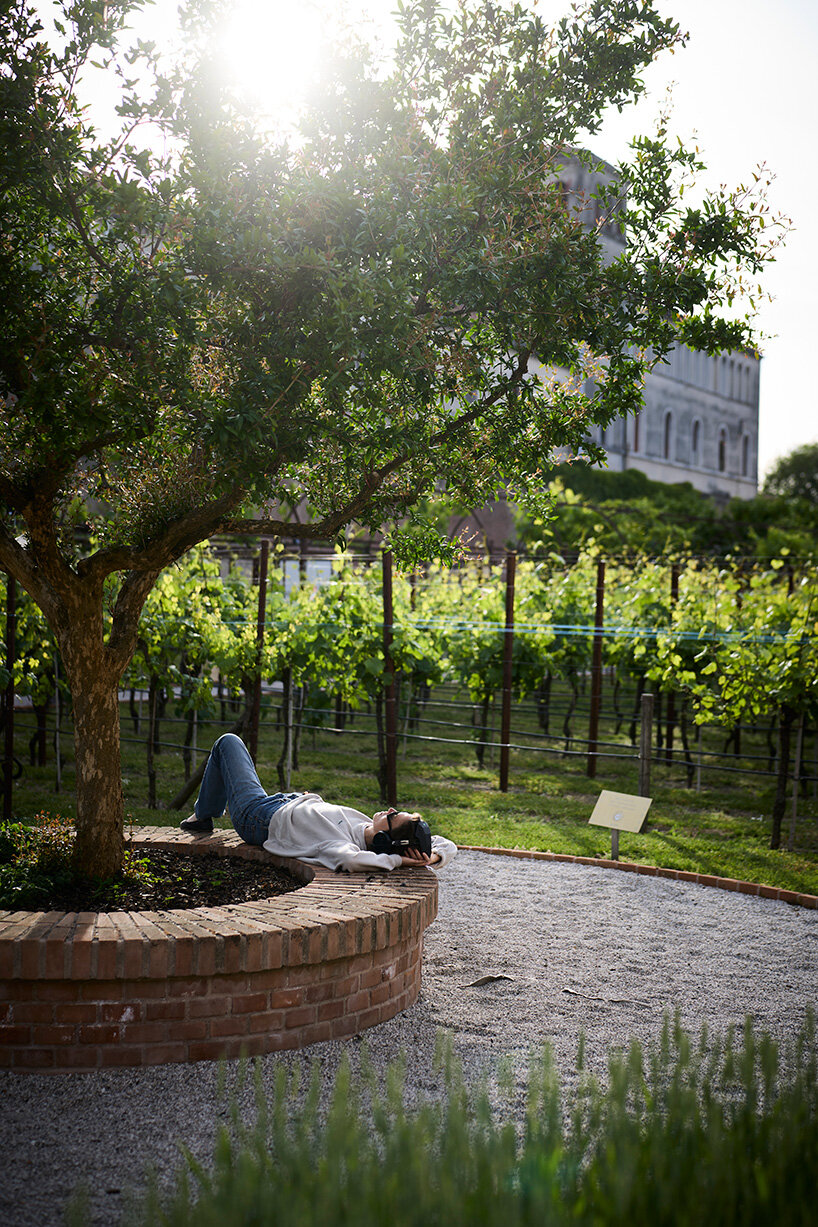
olive trees and historic vegetation shape the contemplative landscape
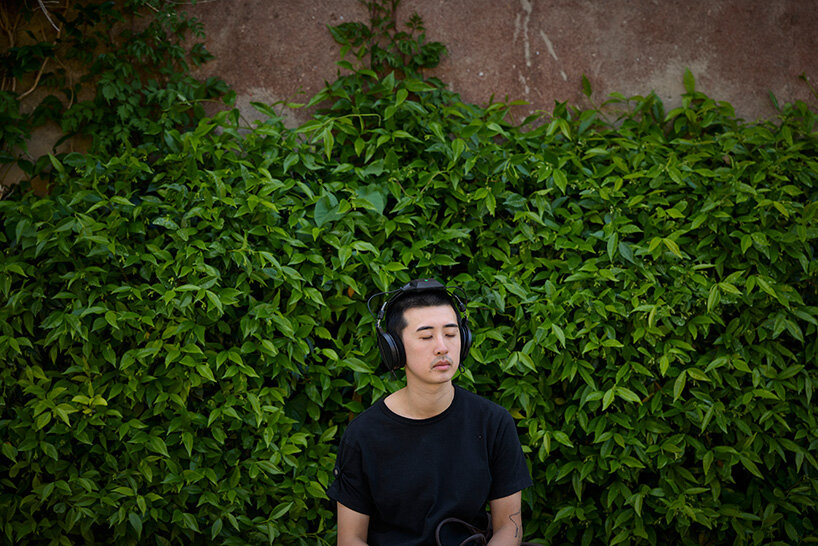
headphones activate shifting sound works across the garden
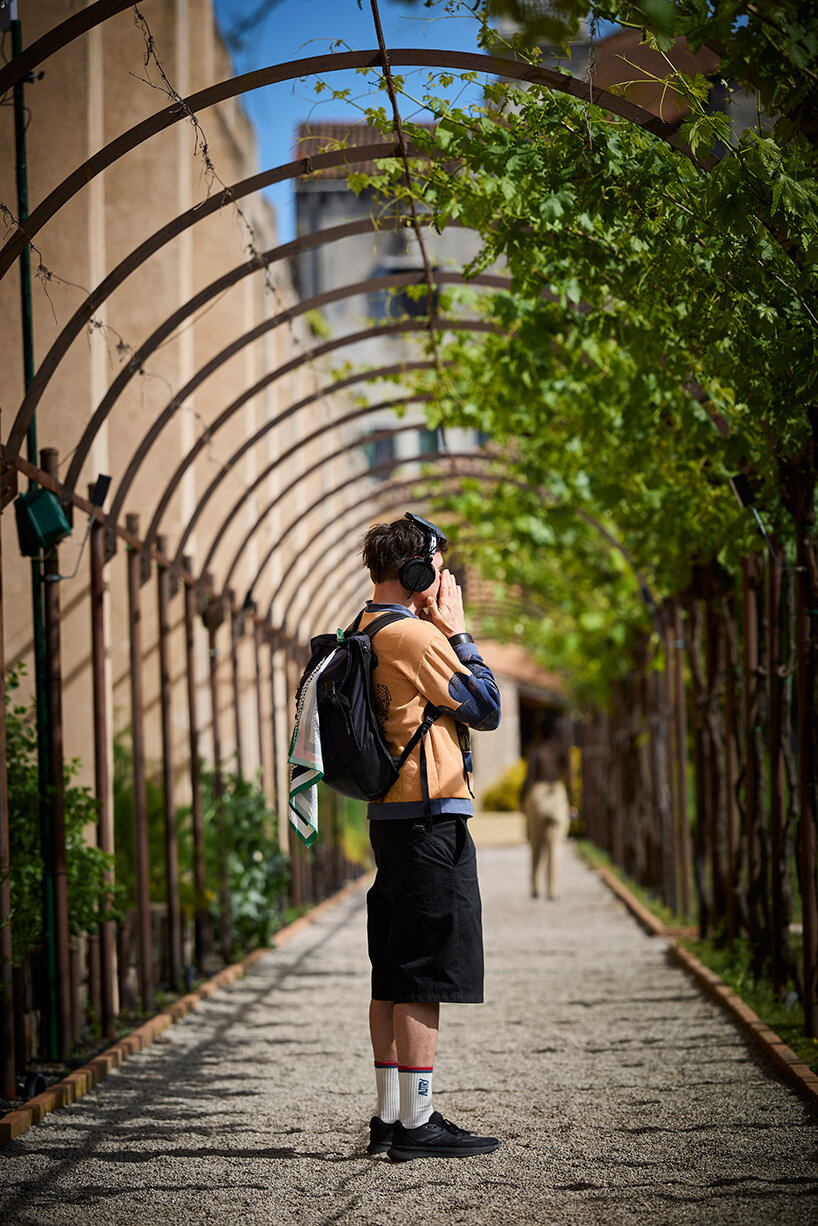
visitors attune themselves to the pavilion’s quieter frequencies
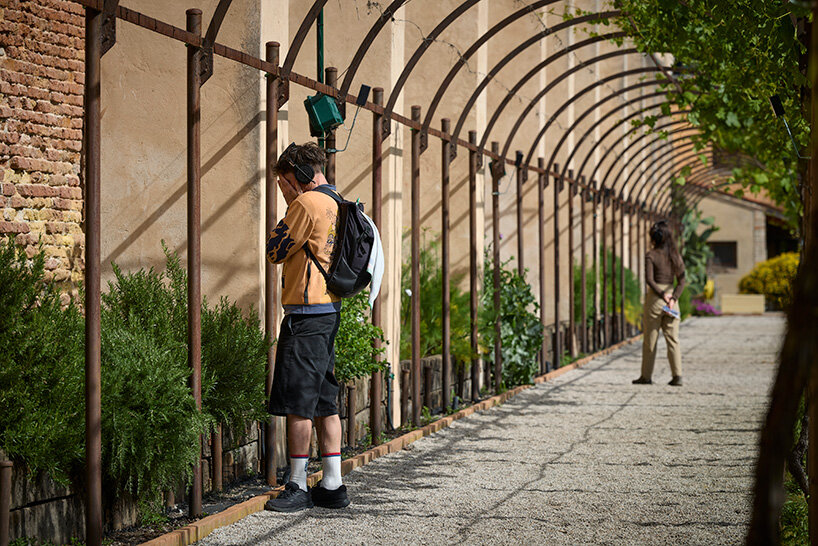
moving through the Giardino Mistico
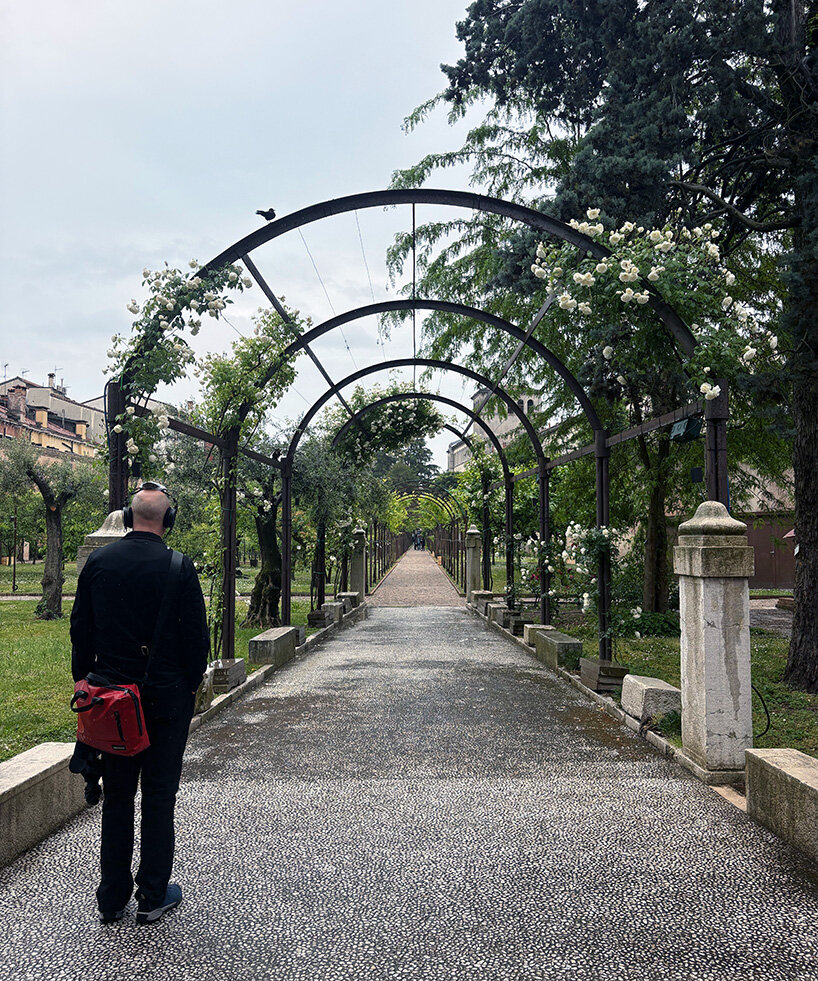
the Holy See Pavilion invites moments of stillness and attentive listening | image ©designboom
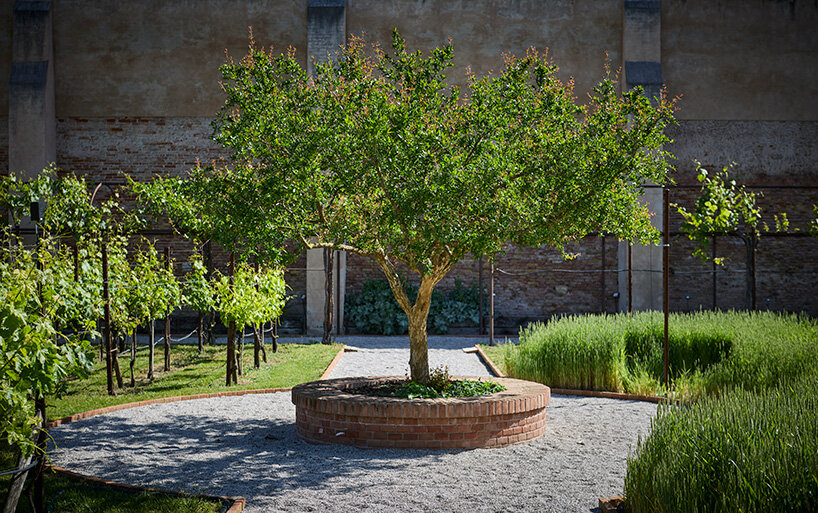
the restored carmelite garden becomes a living landscape for sound, contemplation, and wandering