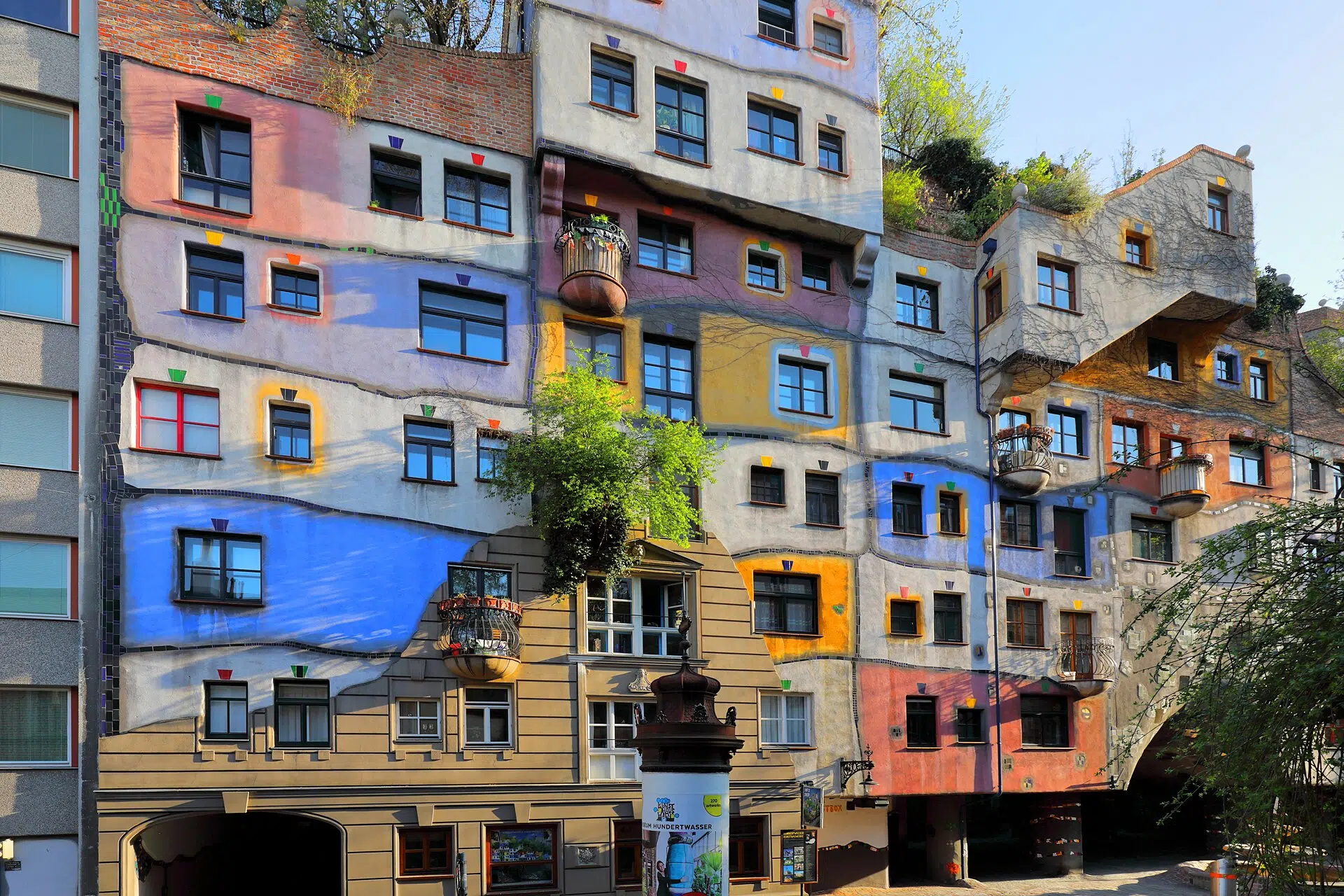
The facade of the Hundertwasserhaus in Vienna, 2020. (Photo: C. Stadler/Bwag via Wikimedia Commons, CC 4.0)
In Friedensreich Hundertwasser’s mind, there was nothing worse than a straight line. “[It’s] godless and immoral,” the Austrian-born artist wrote in a 1958 manifesto. “In it there live not God and human spirit, but a mass created, brainless ant addicted to comfort.” That distaste is evident in his architecture, which explodes with unexpected curves, bold colors, and fantastical silhouettes.
Born in 1928, Hundertwasser carved his reputation as a painter first, known for his organic, spiral-like forms, bright palettes, and ecological undertones. It was only in the 1970s that he began experimenting with and building architectural models, incorporating everything from forested roofs to spontaneous vegetation. Breaking with Brutalism’s rigid and at times impersonal geometry, Hundertwasser preferred irregularity, a quality that he saw mirrored in the natural world. This ethos largely stemmed from his deep dissatisfaction with contemporary architecture, which he condemned as sterile, mass-produced, and contradictory to the rhythms of human life.
“In our modern functional architecture, allegedly constructed for the human being, man’s soul is perishing, oppressed,” Hundertwasser once remarked. “Functional architecture has proved to be the wrong road to take, similar to painting with a straight-edged ruler. With giant steps, we are approaching impractical, unusable, and ultimately uninhabitable architecture.”
By the early 1980s, Hundertwasser had taken matters into his own hands, becoming an “architecture doctor” who “treated” buildings that “visually polluted” their surroundings. In 1986, for instance, he completed the Hundertwasserhaus in Vienna, an enormous apartment block with undulating floors, a roof covered with earth and grass, and large trees growing throughout its rooms. The building’s facade is as unexpected as its interior, boasting multicolored fragments, varying materials, and distorted shapes. Notably, Hundertwasser designed the building pro bono, claiming that his work was worth the investment to “prevent something ugly from going up in its place.”
The Waldspirale in Darmstadt, Germany, echoes many of these same principles. Built in the 1990s and finally completed in 2000, the U-shaped complex features a green roof blooming with grass, shrubs, flowers, and trees, while earthy lines cut across its exterior, resembling a slice of layered dirt. Two gilded domes crown the structure, recalling those that appear throughout churches in Russia, Ukraine, and Bavaria. What might distinguish Waldspirale the most, though, is its unique windows. All 1,000 windows in the complex are unique, as are the door handles in each apartment.
As one of Hundertwasser’s final projects, the Maishima Incineration Plant in Tokyo, Japan, stands as a sort of creative culmination, resurfacing several motifs that guided the artist’s practice. The tower stands at about 394 feet (120 meters) high and, like the Waldspirale, is completed by a golden onion dome chimney. The tower’s facade is clad in turquoise tiles and red, vein-like stripes, while the main structure bears an exuberant checkered pattern. Overall, the building incorporates more than 500 windows, although only 130 of these are actually real. The Maishima Incineration Plant was completed in 2001, a year after the architect died in 2000 aboard the Queen Elizabeth II en route from his New Zealand farm to Europe.
Throughout his life, Hundertwasser completed more than 40 architectural projects around the world, each of which strained against the limits of architectural convention. Whether it be through their lush roofs, irregular windows, or innovative structures, these buildings are undoubtedly a testament to the architect’s imaginative and boundless vision.
Throughout his architectural career, Friedensreich Hundertwasser created some of the world’s most unexpected, innovative, and bizarre buildings, featuring green roofs, uneven floors, and irregular facades.
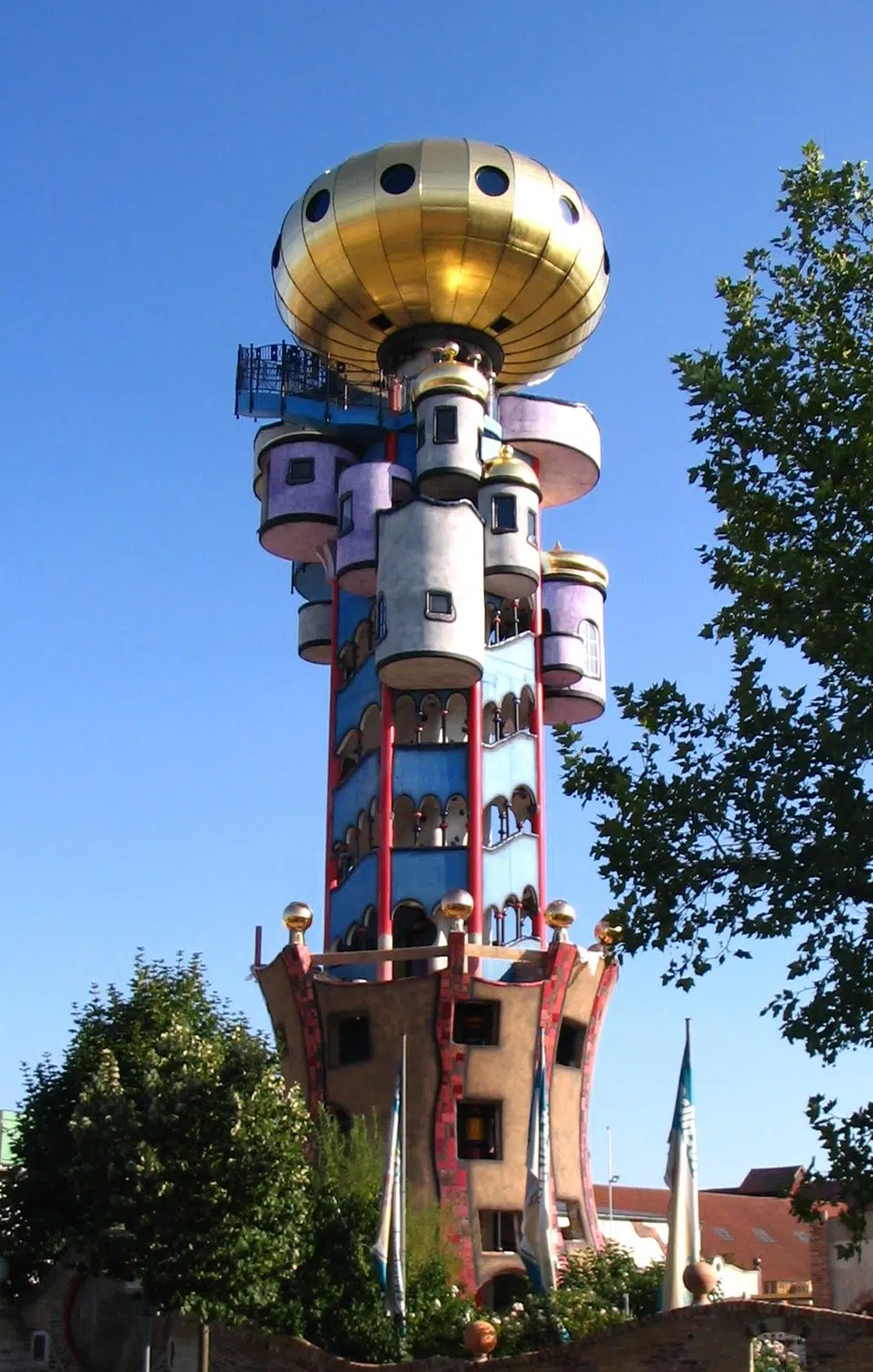
The Abensberg Kuchlbauer observation tower in Abensberg, Germany, 2009. (Photo: Dede2 via Wikimedia Commons, Public domain)

The Waldspirale in Darmstadt, Germany, 2011. (Photo: Guido Radig via Wikimedia Commons, CC 3.0)
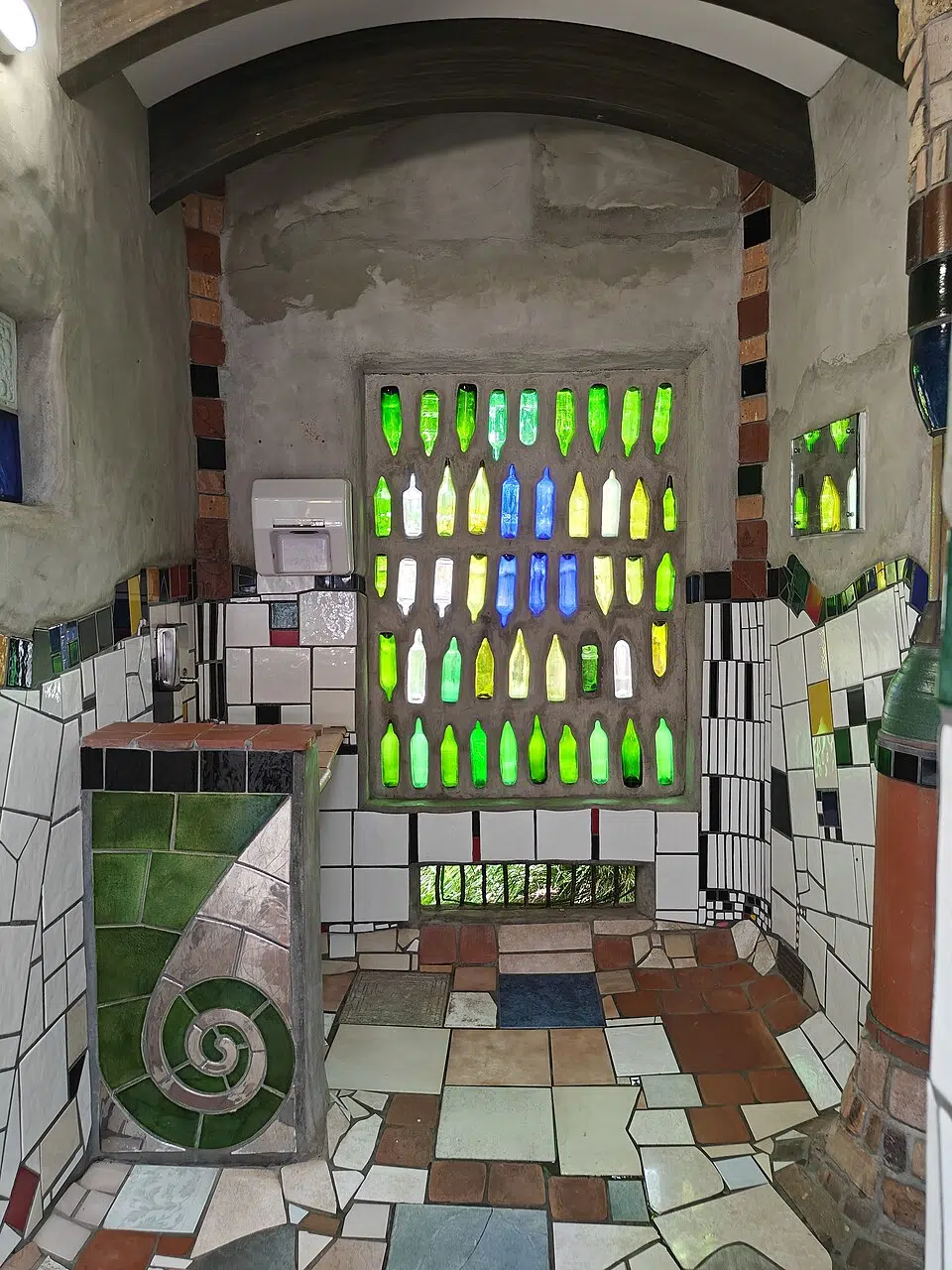
The back wall of Hundertwasser-designed public toilets in Kawakawa, a small town in New Zealand’s Northland region. (Photo: Saycheeselouise via Wikimedia Commons, CC 4.0)
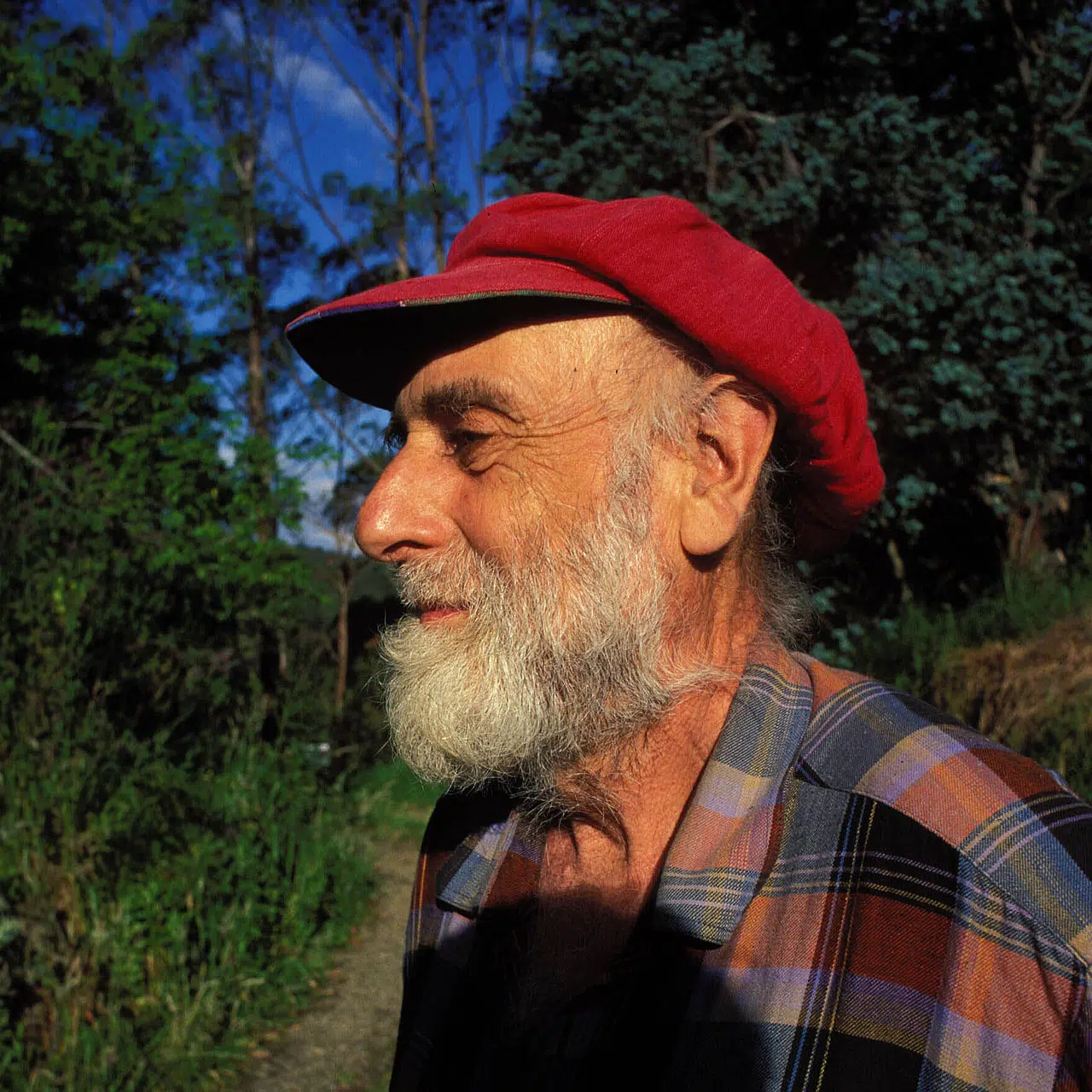
Friedensreich Hundertwasser in New Zealand, 1998. (Photo: Hannes Grobe via Wikimedia Commons, CC BY-SA 4.0)
Hundertwasser is perhaps best known for the Hundertwasserhaus in Vienna, which he completed in 1986.
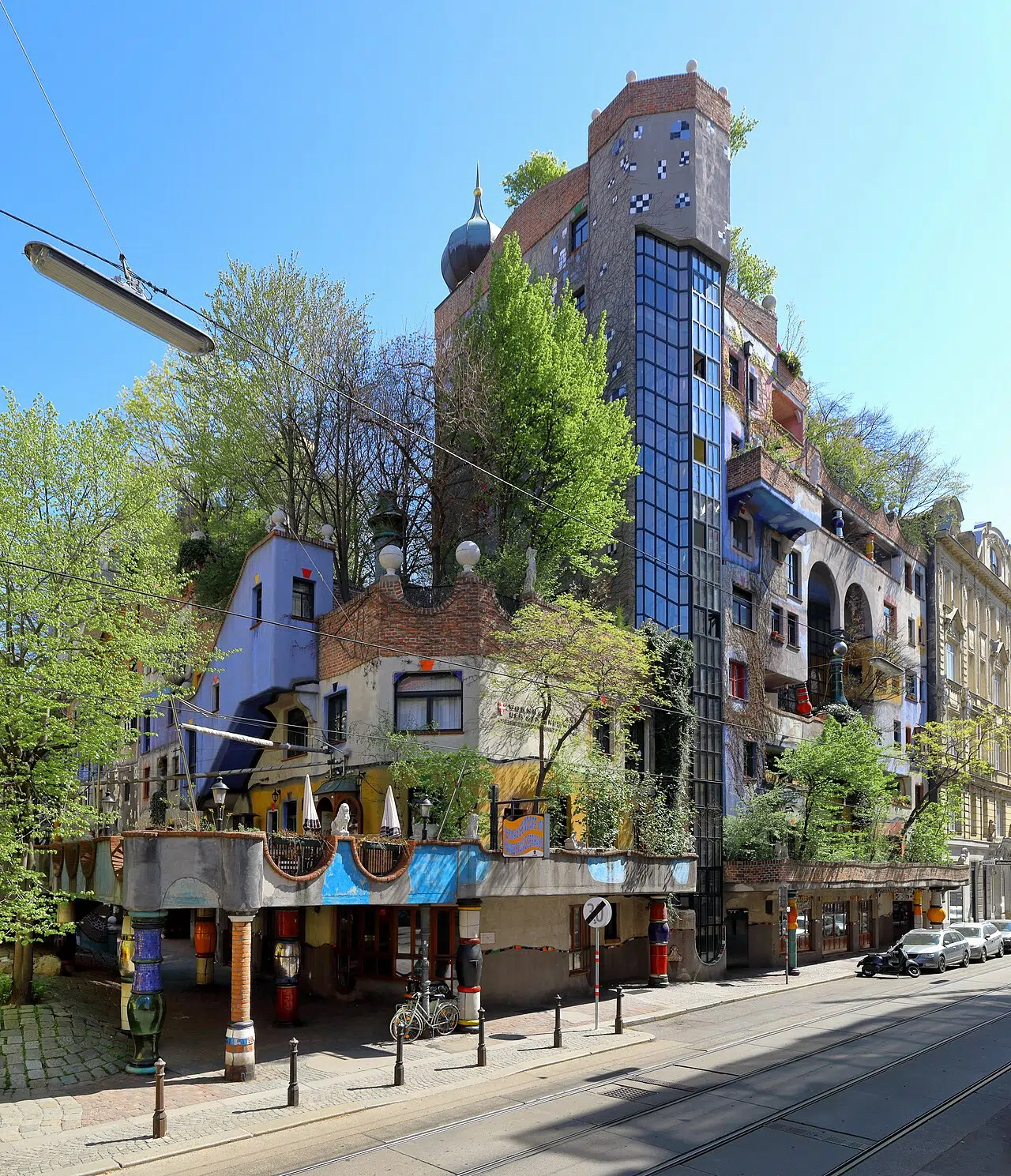
The facade of the Hundertwasserhaus in Vienna, 2020. (Photo: C. Stadler/Bwag via Wikimedia Commons, CC 4.0)
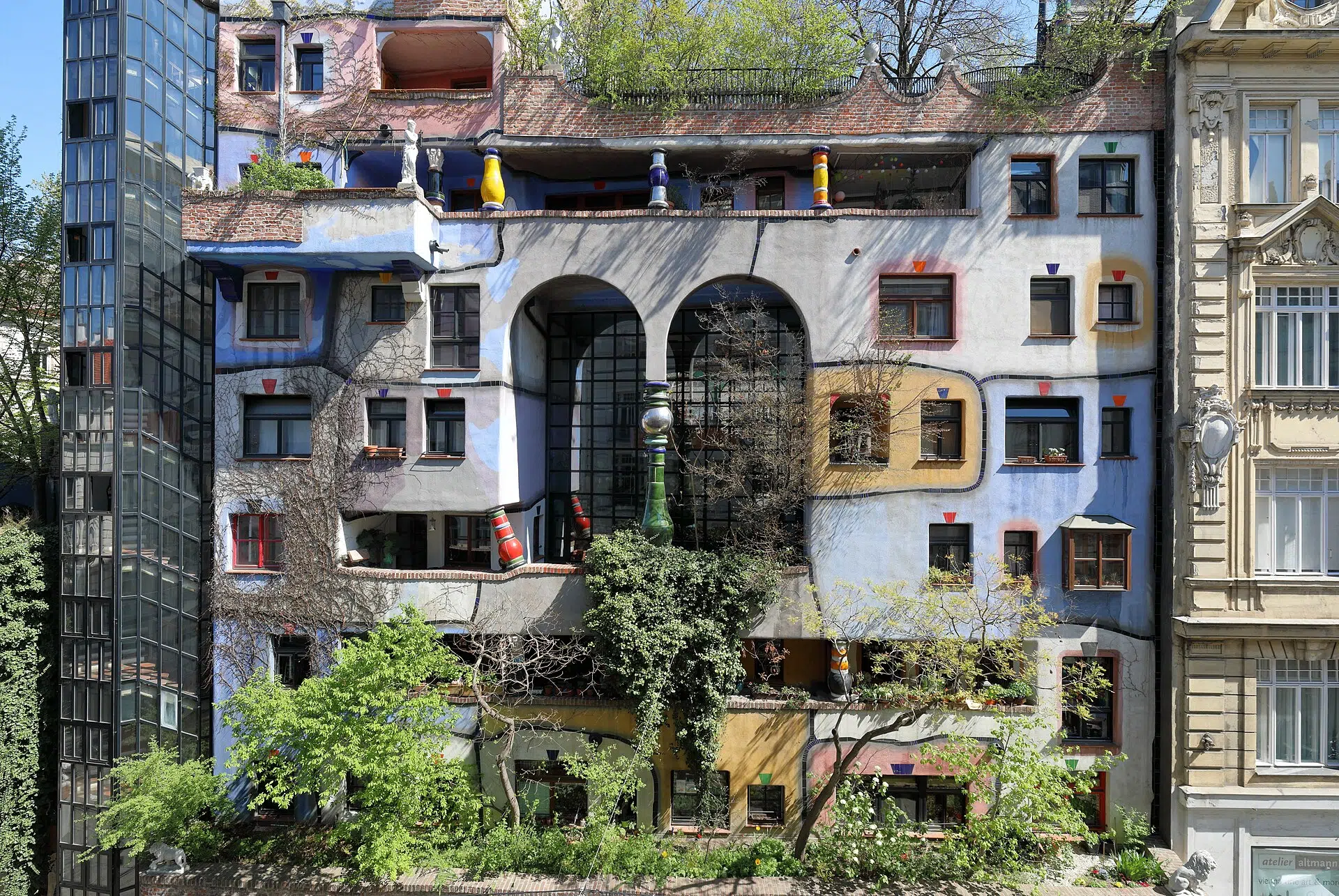
The facade of the Hundertwasserhaus in Vienna, 2020. (Photo: C. Stadler/Bwag via Wikimedia Commons, CC 4.0)
Sources: Hundertwasser: Architecture; Explore The Inventive Architecture of Friedensreich Hundertwasser; Friedensreich Hundertwasser: Biography; Friedensreich Hundertwasser: Obituary
Related Articles:
Tokyo Exhibition Celebrates the “Primitive Future” Architecture of Sou Fujimoto
New Book Explores the Fascinating Role of Optical Illusions in Architecture and Design
Soaring Bookstore Is a Multilayered Temple Devoted to the Written Word