Refurbished Attic of Single-Family Home Functions as an Independent Apartment!

When we think of attics, the first image that comes to mind is of a dark, dingy and dusty place that we climb up to, in order to dig out those Christmas lights that we boxed away last year. That is a perception which is bound to change once you take a look at this gorgeous refurbished and revamped attic in Poznań. Part of a single-family house that was originally built in the 30’s, Atelier Starzak Strebicki completely changed the attic and its overall persona with a transformation that relies on space-savvy design, smart color palette and plenty of natural light.
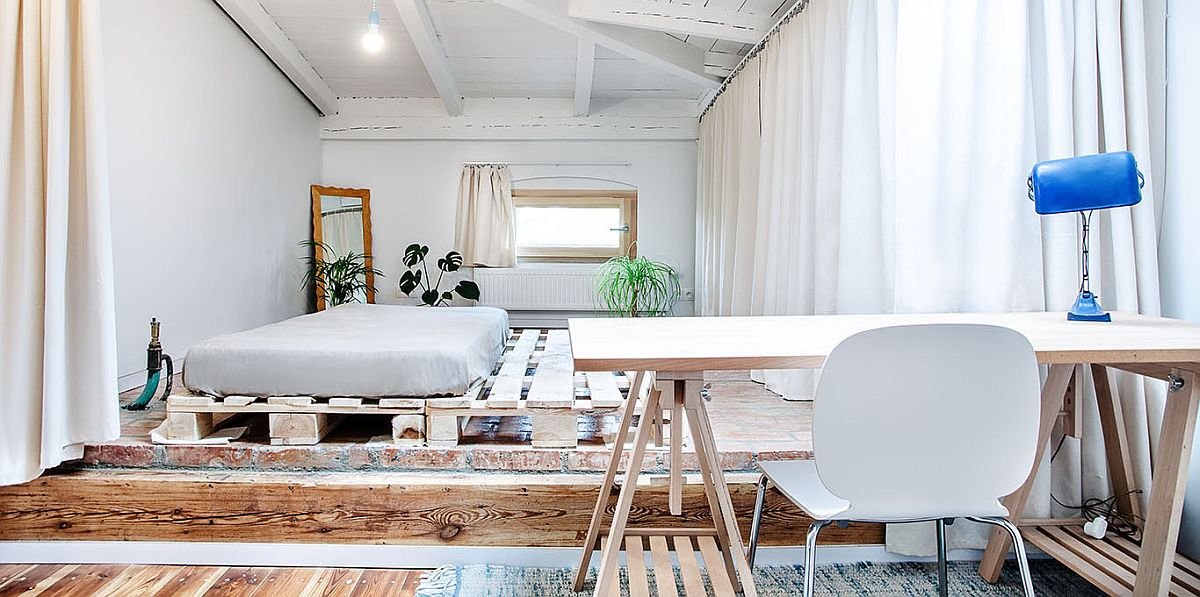
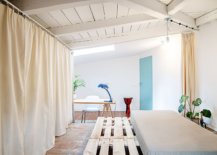
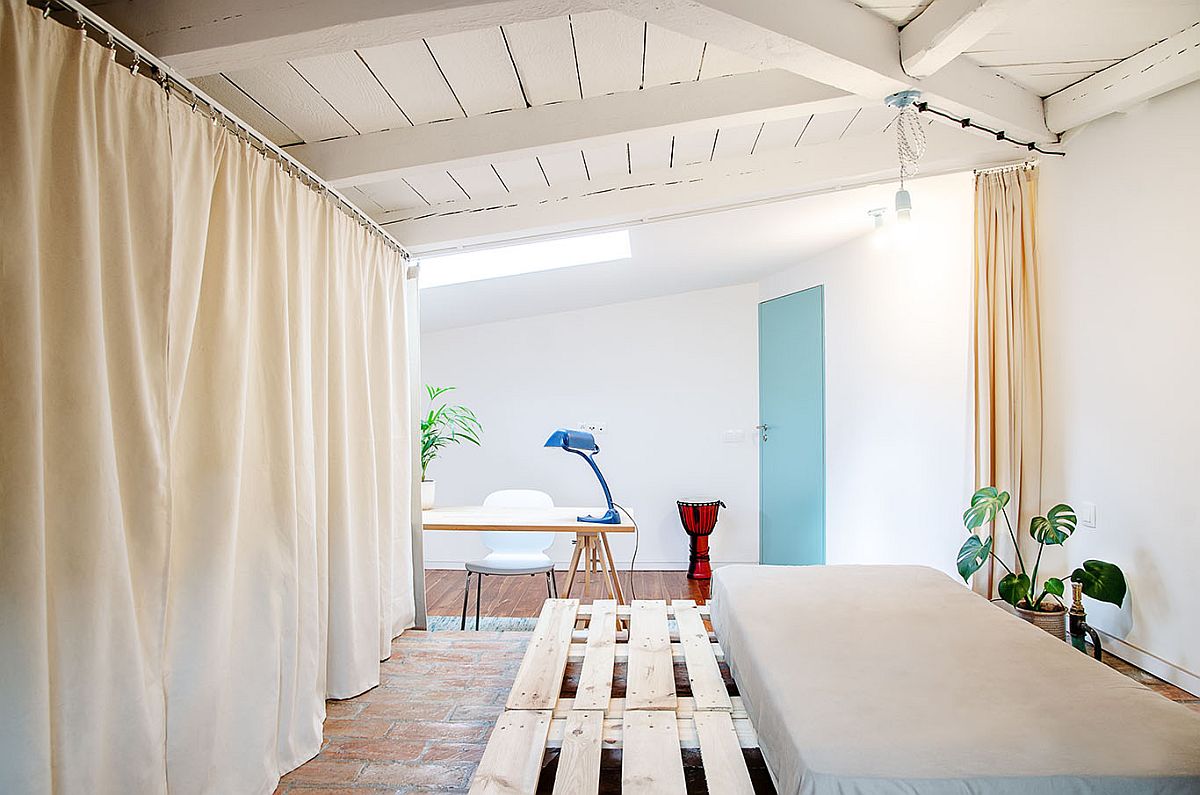
Minimal platform bed is perfect for the low ceiling of the attic bedroom with a modern style


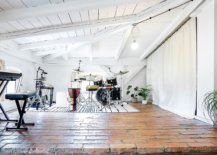
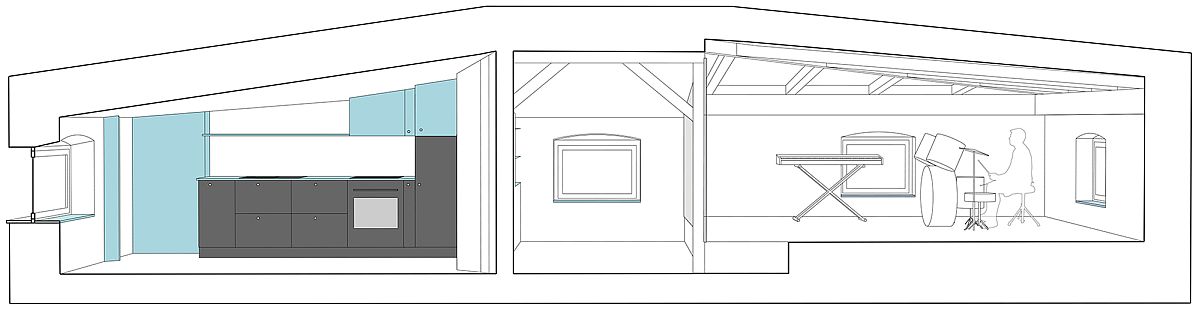
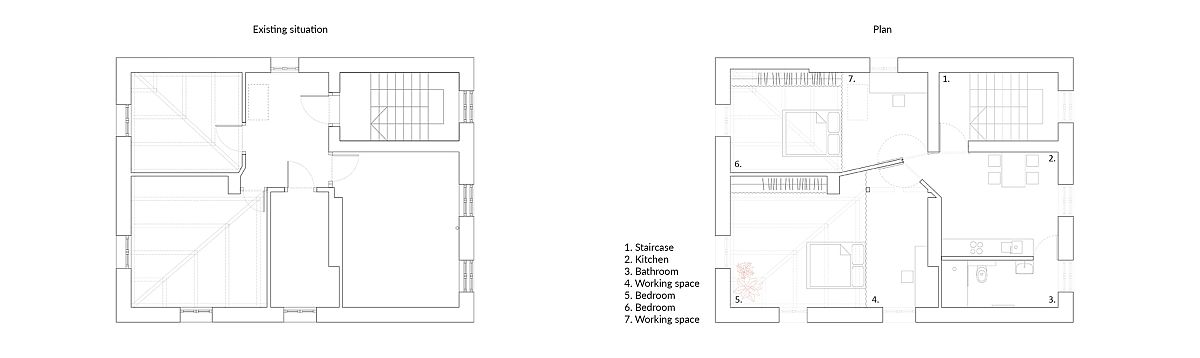
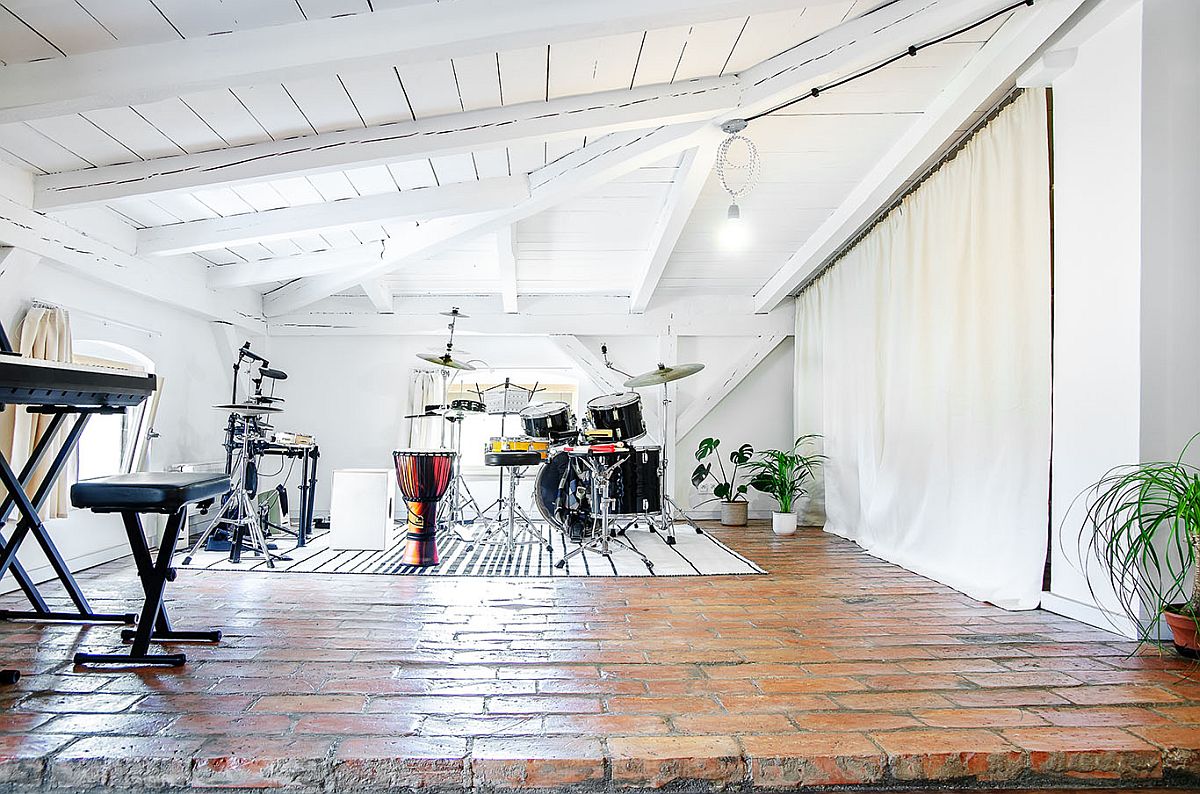
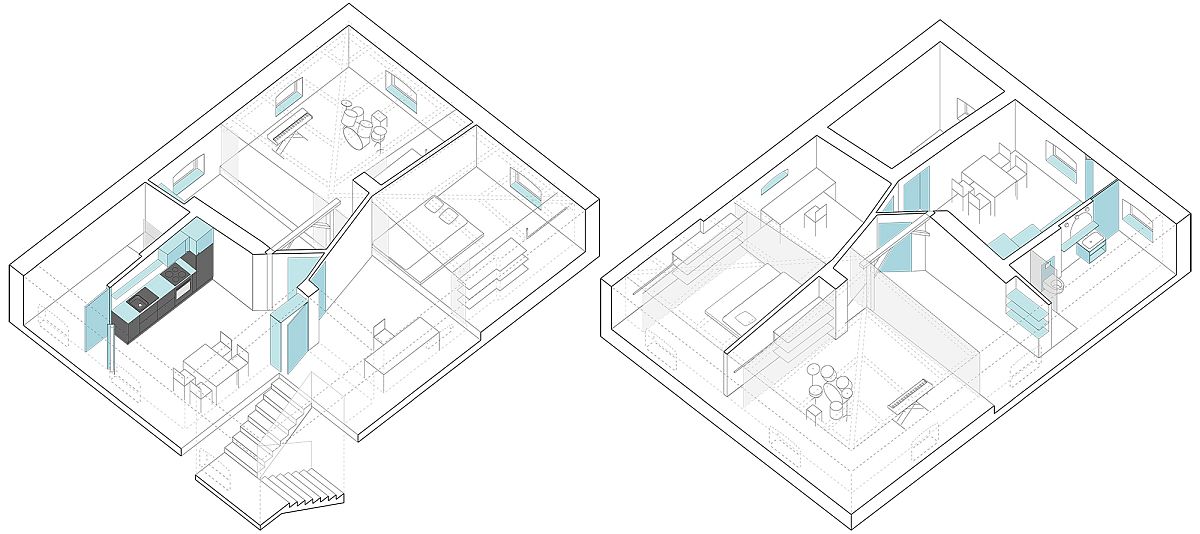
What is instantly noticeable in here is the way in which many of the original surfaces of the attic have been preserved to ensure it retains its uniqueness. The platform bed in the bedroom sits on a brick floor section while exposed ceiling beams and wooden floor in the workspaces provides even more textural contrast. In the areas where the ceiling drops down, the architects opted to insert the bedrooms while the space with relatively higher ceiling has been turned into music studio, home workspace, kitchen and bathroom. In fact, the attic flat and studio can function as an independent apartment unit efficiently and a large part of this is thanks to the clever new floor plan. [Photography: Mateusz Bieniaszczyk]
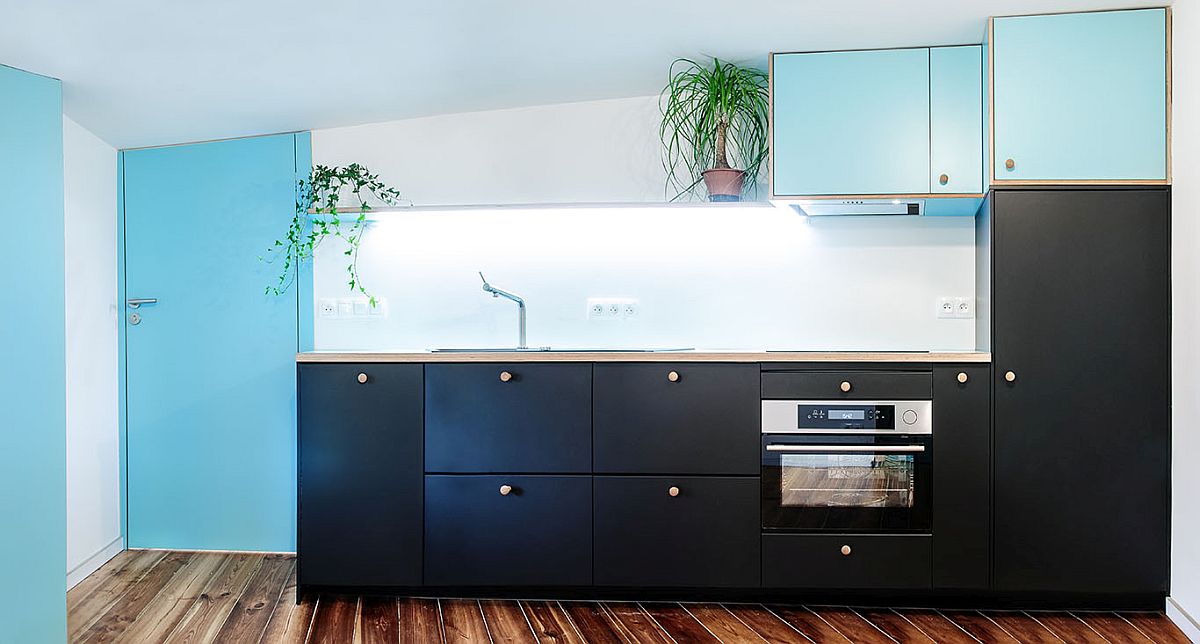
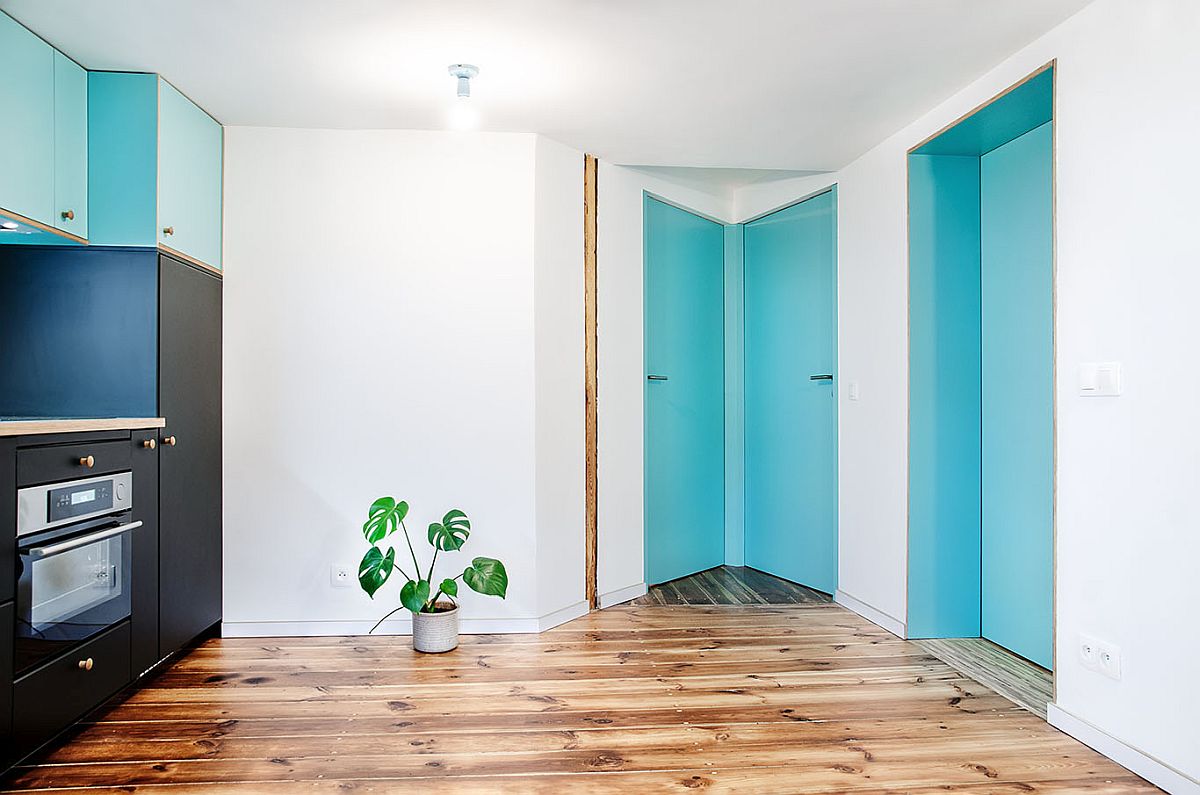
Kitchen with dark cabinets and splashes of blue is perfect for the modest attic flat and studio
Music studio in the attic is a perfect addition that keeps out noise from rest of the house
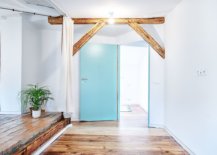
Original wooden ceiling of the attic has been preserved and enhanced to add textural contrast to the space
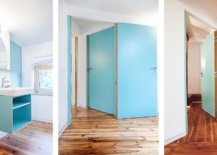
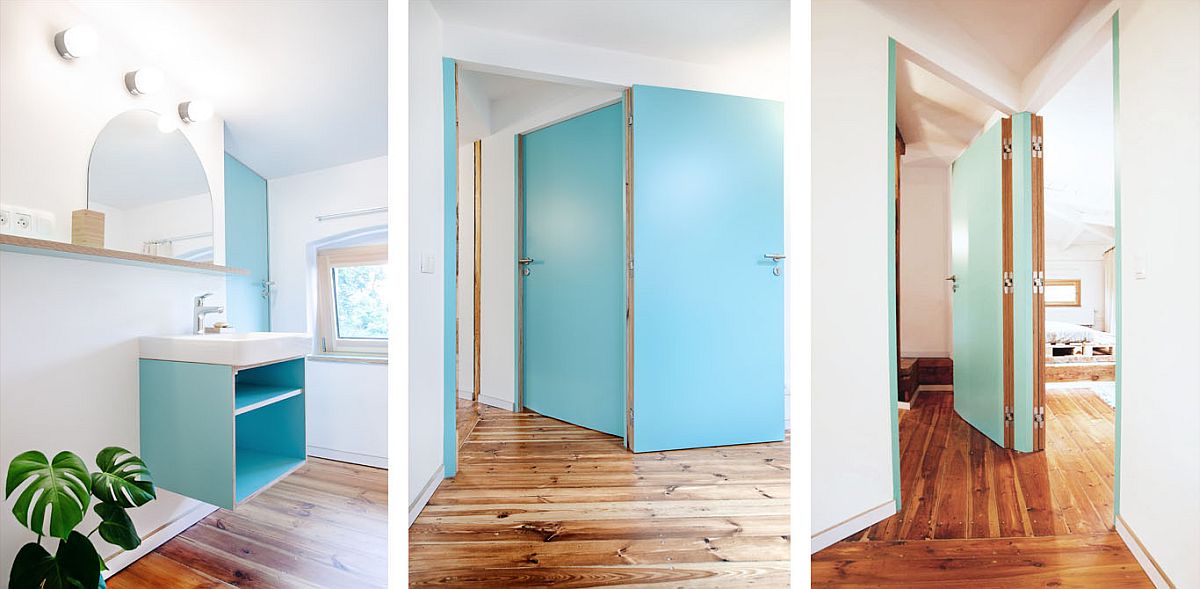
Custom-doors and space-savvy features transform the attic of old, single-family home in Poznan
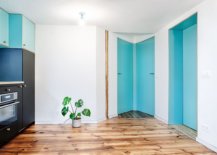
Doors and a couple of kitchen cabinet add blue to the attic apartment in white and wood

In order to give more freedom to the user in organizing and dividing different spaces, there is a set of different curtains allowing to split the rooms into smaller units or hide some functions like for example: storage or sleeping area. Organizing the rooms in a much better and useful way led to greater functionality of the whole attic’s space and created new spatial value of this unused part of the house.
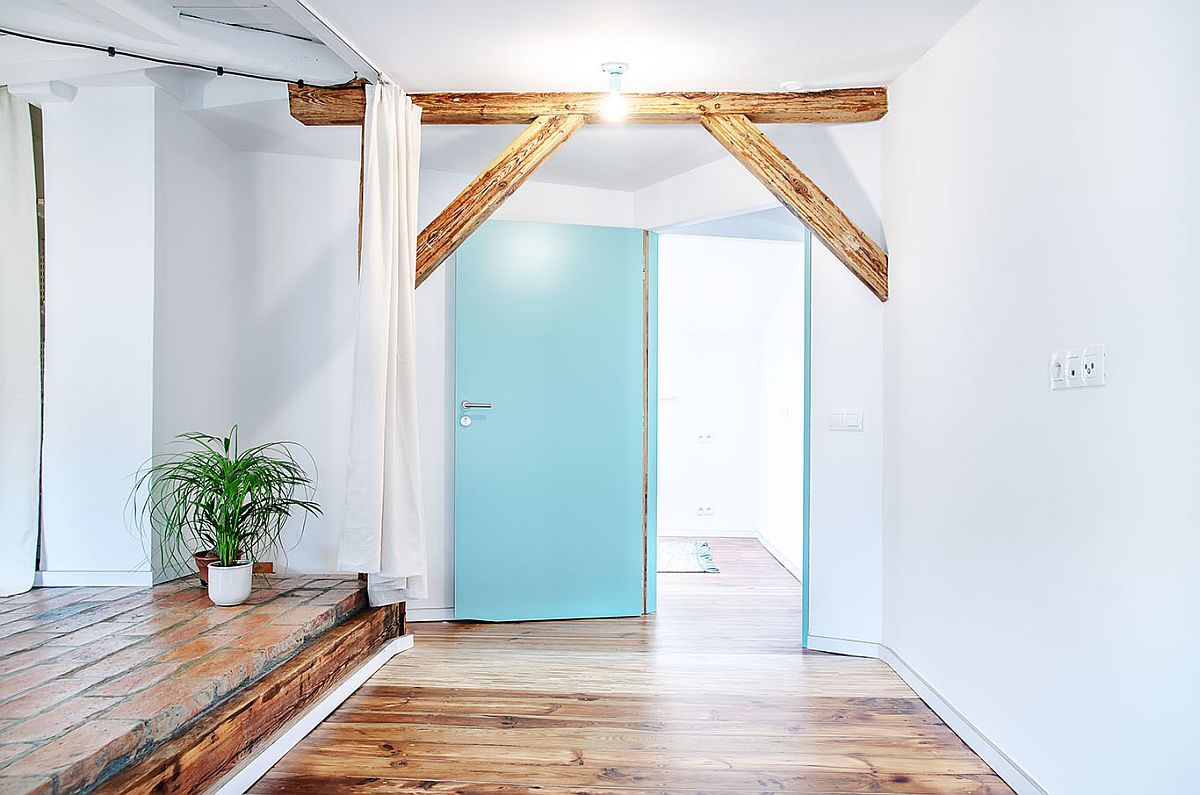
Gorgeous attic flat with original wooden floor and ceiling
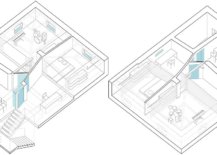
Design plan of modern attic apartment in Poznan
Sectional plan of small and space-savvy attic apartment in Poznan
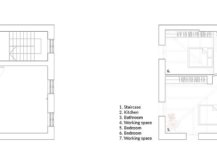
Floor plan of modern attic apartment in Poznan with a smart design

You’re reading Refurbished Attic of Single-Family Home Functions as an Independent Apartment!, originally posted on Decoist. If you enjoyed this post, be sure to follow Decoist on Twitter, Facebook and Pinterest.

Similar Posts

  • Hillside Sanctuary

    The owner of this property came to Hoedemaker Pfeiffer looking for a personal retreat inspired by a home lost to fire decades earlier in the hills of Appalachia. The firm’s task was not to recreate that home but rather to give its spirit new form in the Pacific Northwest. Taking inspiration from its remote site in the San Juan Islands, our team envisioned a series of simple stone volumes. From that concept emerged the main house and a guest house, each responding to its own unique location on the site. Together they provide friends and family with comfortable accommodation while offering a sanctuary for the owner at the main home. Taking full advantage of sweeping views of Puget Sound, the main home is sited on a small plateau high on top of a steeply-sloping hillside. With a view on one side and a road on the other, the site suggested a stone plinth and stone wall to form the base and rear of the house. A pair of stone fireplace volumes support the concept, rising together to form the boundaries of a central stone staircase that separates the main level into public and private realms. Atop the low stone base then perches a light-filled wood structure. Its simple shed roof tips low in front to protect from the summer sun while offering space for a photovoltaic array above. Winter light in turn penetrates deep into the main living spaces through a wall of glass running continuously across building’s south elevation. The relative height difference between this wood pavilion and that of the adjacent stone volume also allows consistent north light to flood into the primary living spaces via a series of clerestory windows, which release warm air high on the leeward side of the structure. The site for the guest house came with more significant technical challenges. The concept begins with a stone tower set near the center of the small circular parcel. Rising high above steeply-sloping grade, it acts as a three-dimensional datum through which feature program elements are allowed to puncture. The main entry offers ease of access to the project’s public spaces through a simple, full-height opening cut into the stone volume’s north elevation. The stair, comprised of a concrete base below large casement windows, allows natural light to fill the main stairway as it leads guests toward the bedrooms located at the home’s lower level. Opposite the entry, the view deck extends from the great room, cantilevering far above grade. The dining room, finally, was conceived as a three-sided glass object floating in a forest of trees. Two steel beams carry its entire weight and extend deep into the floor system. To enhance the concept, our team preserved trees only a few feet from the dining room by developing custom retaining walls capable of avoiding critical root zones. Project Team: Hoedemaker Pfeiffer (Architecture) ​Schuchart Dow​ (Contractor ​Randy Allworth, Allworth Design​ (Landscape Architect) ​Malsam Tsang​ (Structural Engineer) ​LPD Engineering​ (Civil Engineer) Nelson Geotechnical Associates, Inc. (Geotechnical Engineer) Island Tree Doctor (Arborist) ​Kevin Scott​ (Photographer)