Sustainable Modern Home in New Zealand with Gabled Roof and Captivating views

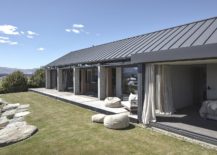
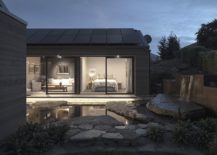
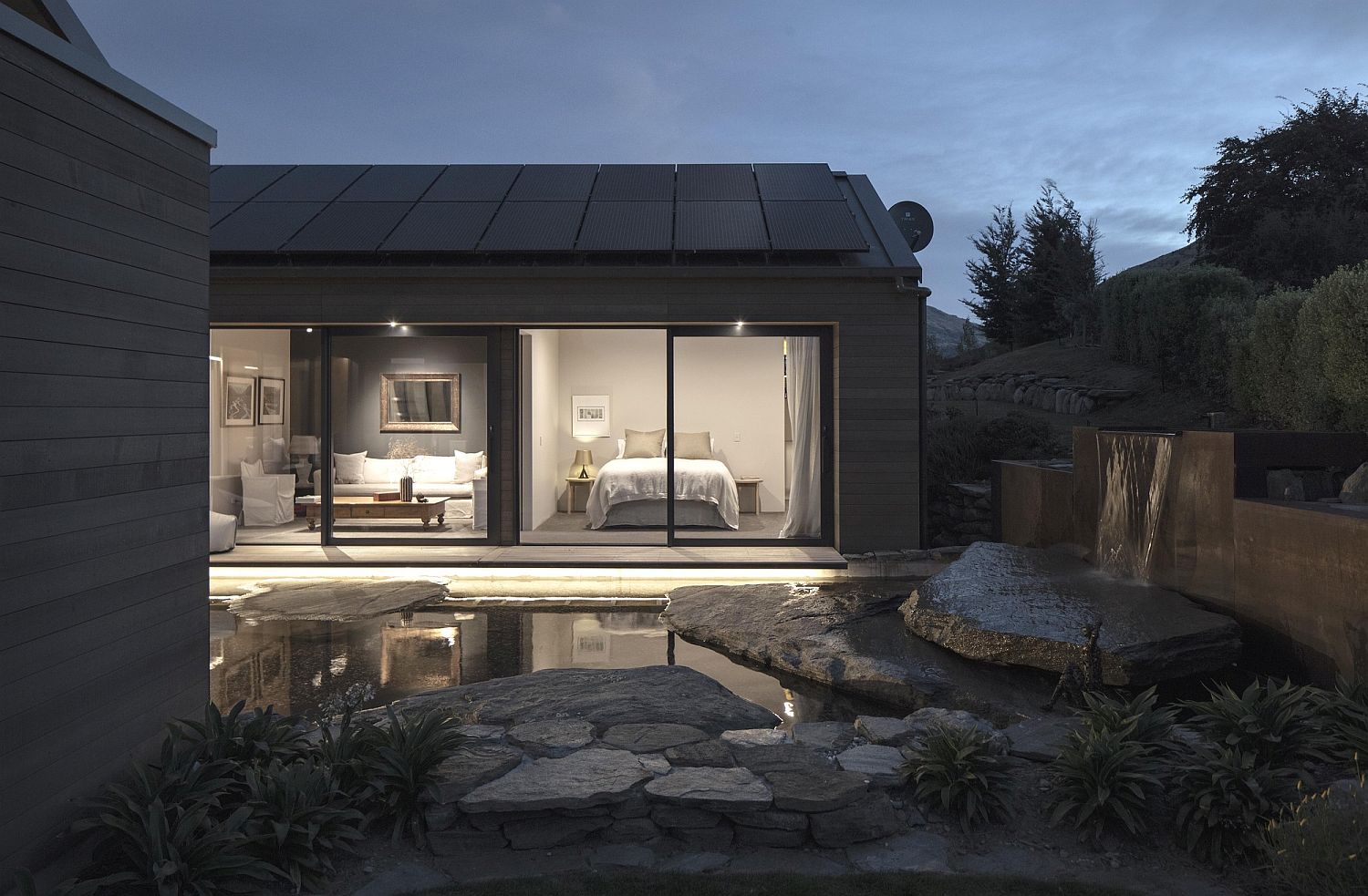
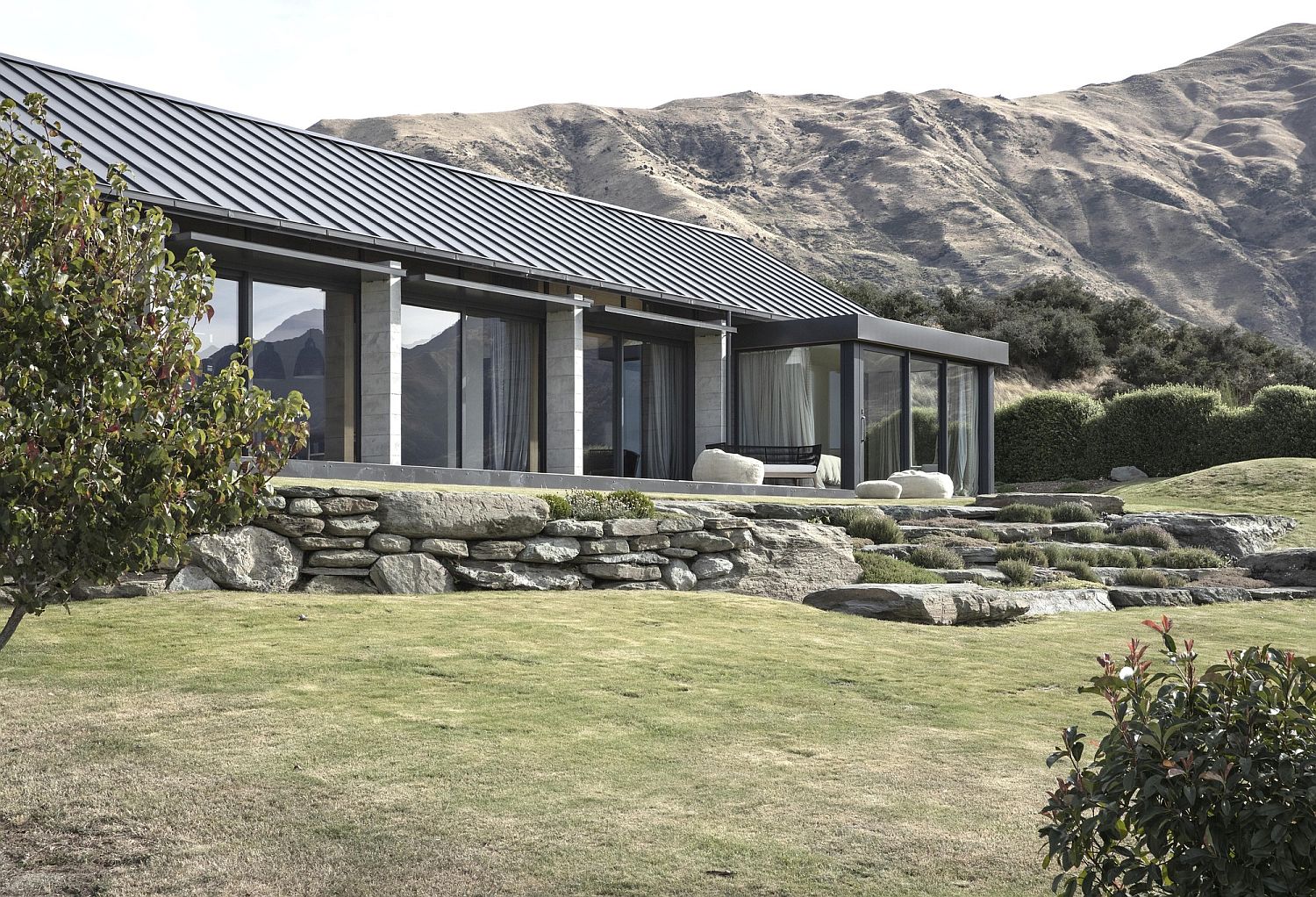
New Zealand is a country where the landscape around the house steals the show more often than not. But the Wanaka House designed by Three Sixty Architectu manages to holds its own with a design that includes a couple of gable roofs and an interior that puts the focus firmly on the view outside. The house is draped in smoked carbon stained timber with corten steel panels making it a unique and elegant structure with durability. Thermomass panels around the house improve insulation and ensure that the interior remains warm even during winter months that are rough in this region of the world.
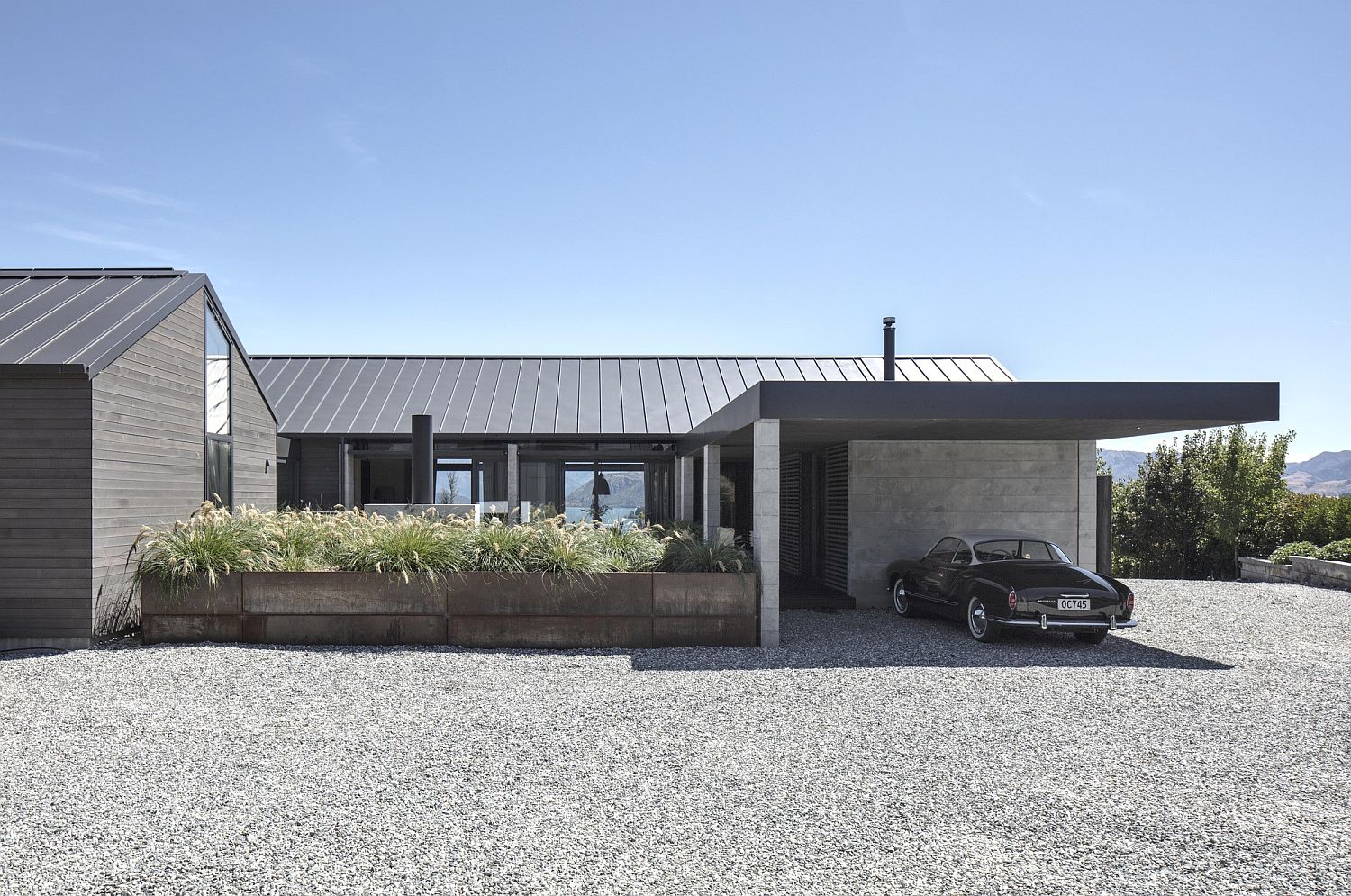
Thermomass panels, Corten steel and smoked carbon stained timber exterior of the New Zealand house


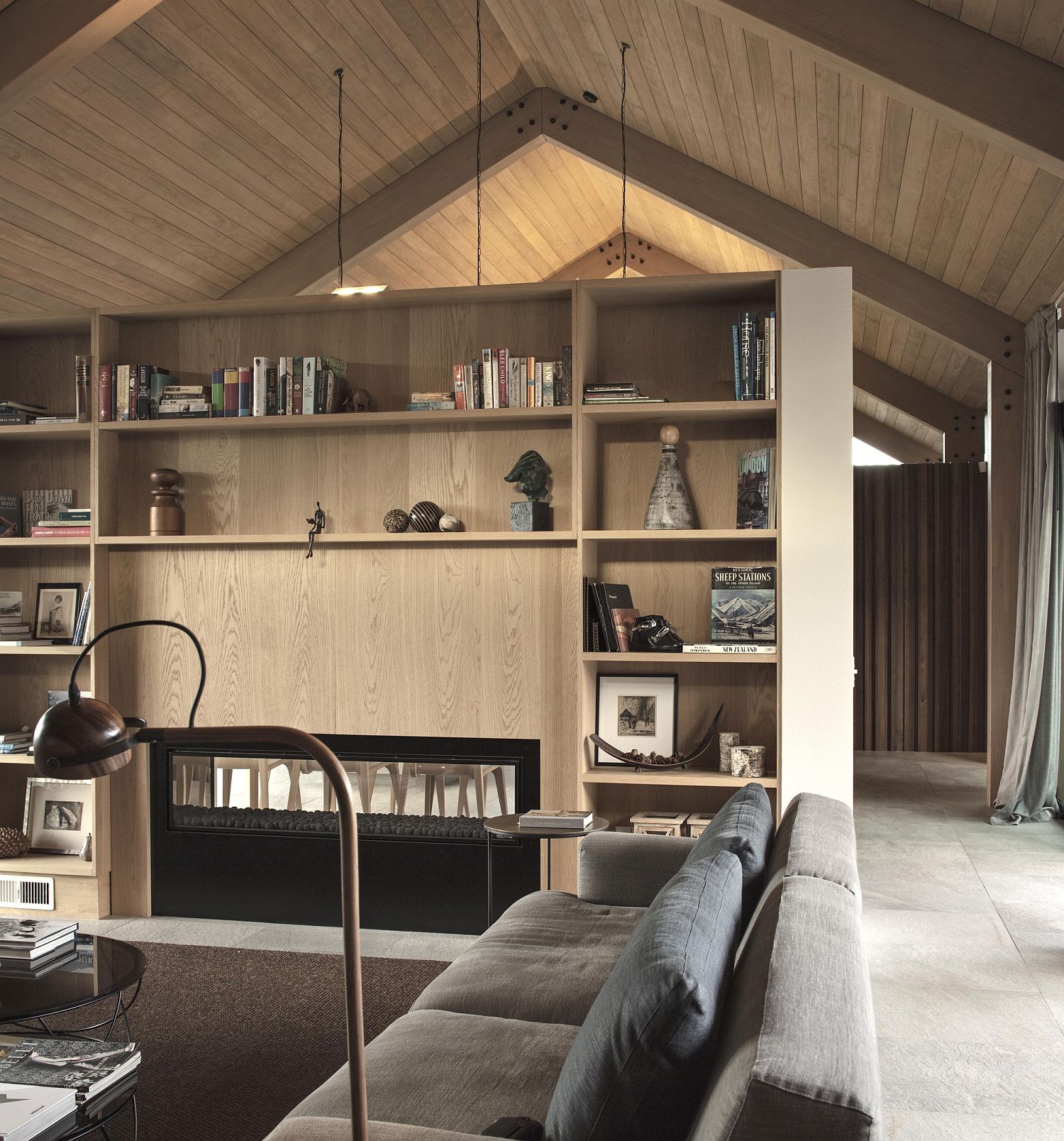
Living and dining areas of the house share a double-sided fireplace while the open plan living area flows into the landscape outside. Décor inside the house is simple and minimal with gray, white and wood shaping almost the entire house. A glass link connects one wing of the house with the other and transition between different spaces is all too seamless. Photovoltaic panels, geothermal energy and other sustainable sources power a home that feels organic, smart and inviting across all seasons. [Photography: Simon Devitt]

RELATED: Mountain Range Home in New Zealand Captivates with Undulating Rooftop
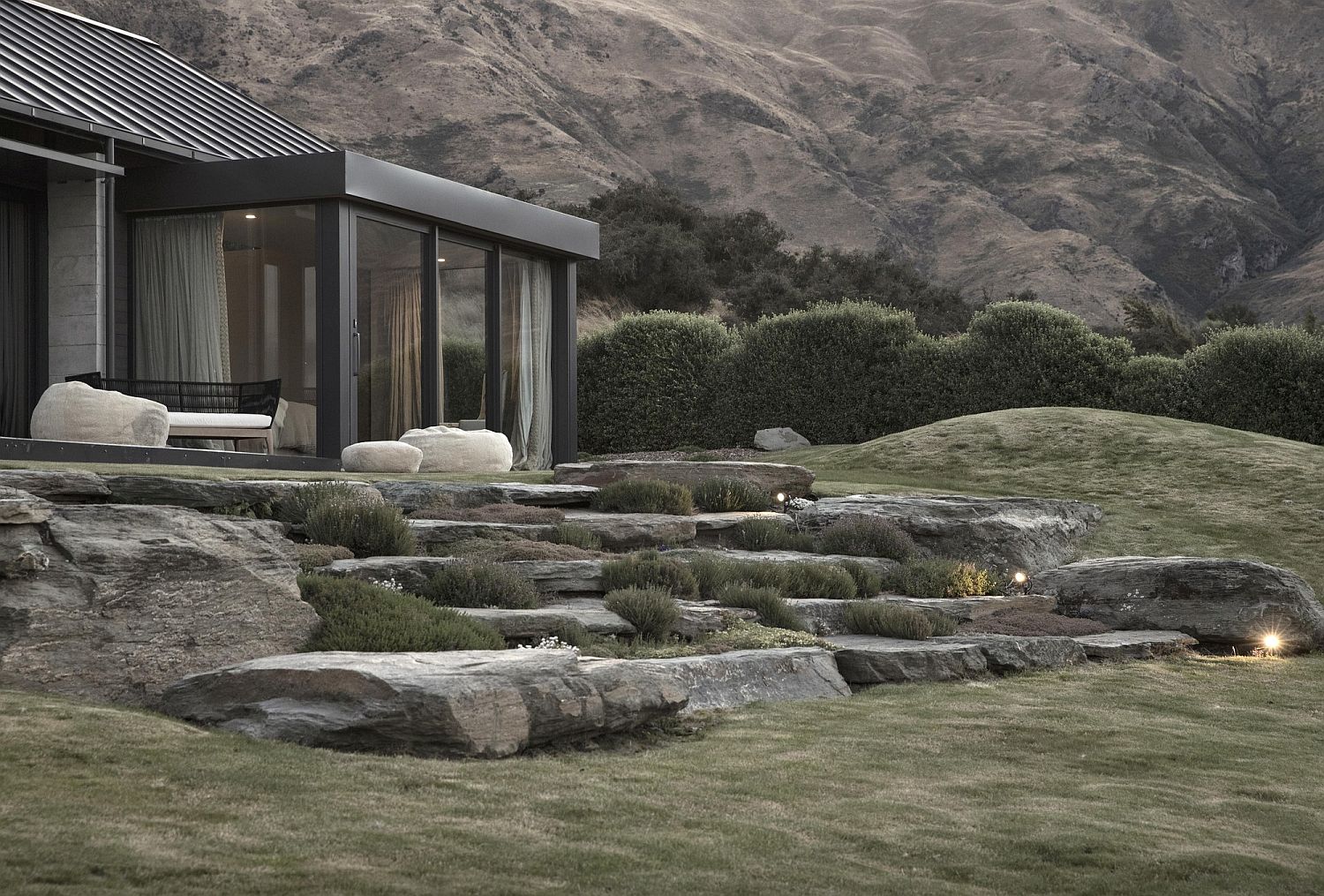
Sustainable house in New Zealand with glass walls and gabled roof
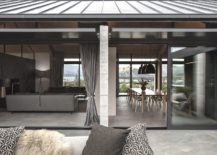
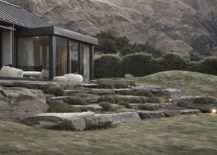
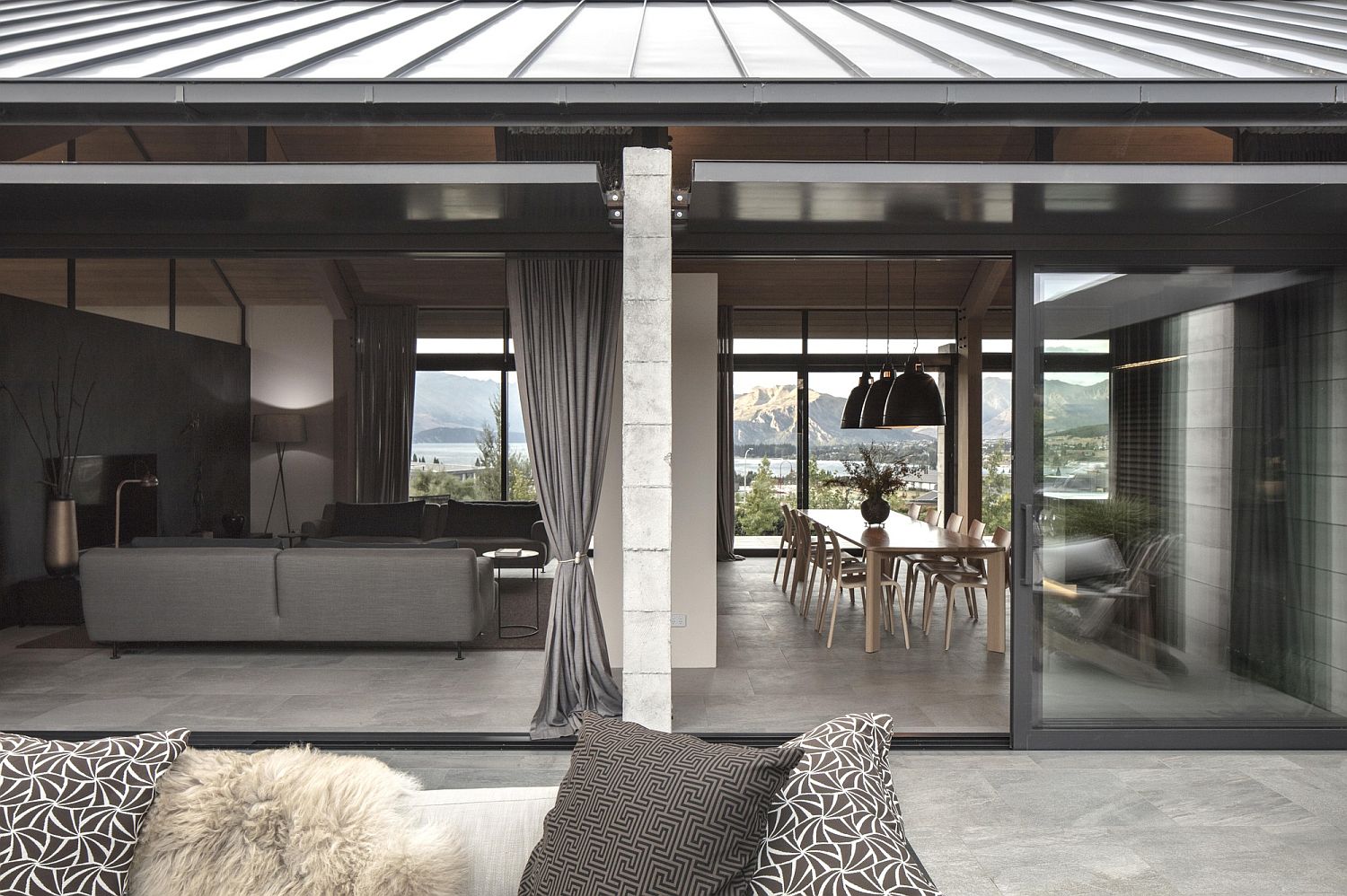
Beautiful landscape outside the home becomes a part of the interior
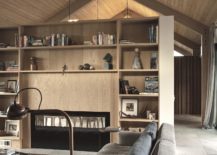
Bookshelves anchor the living room while adding color and accent features
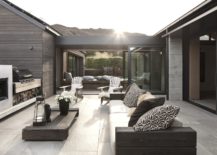
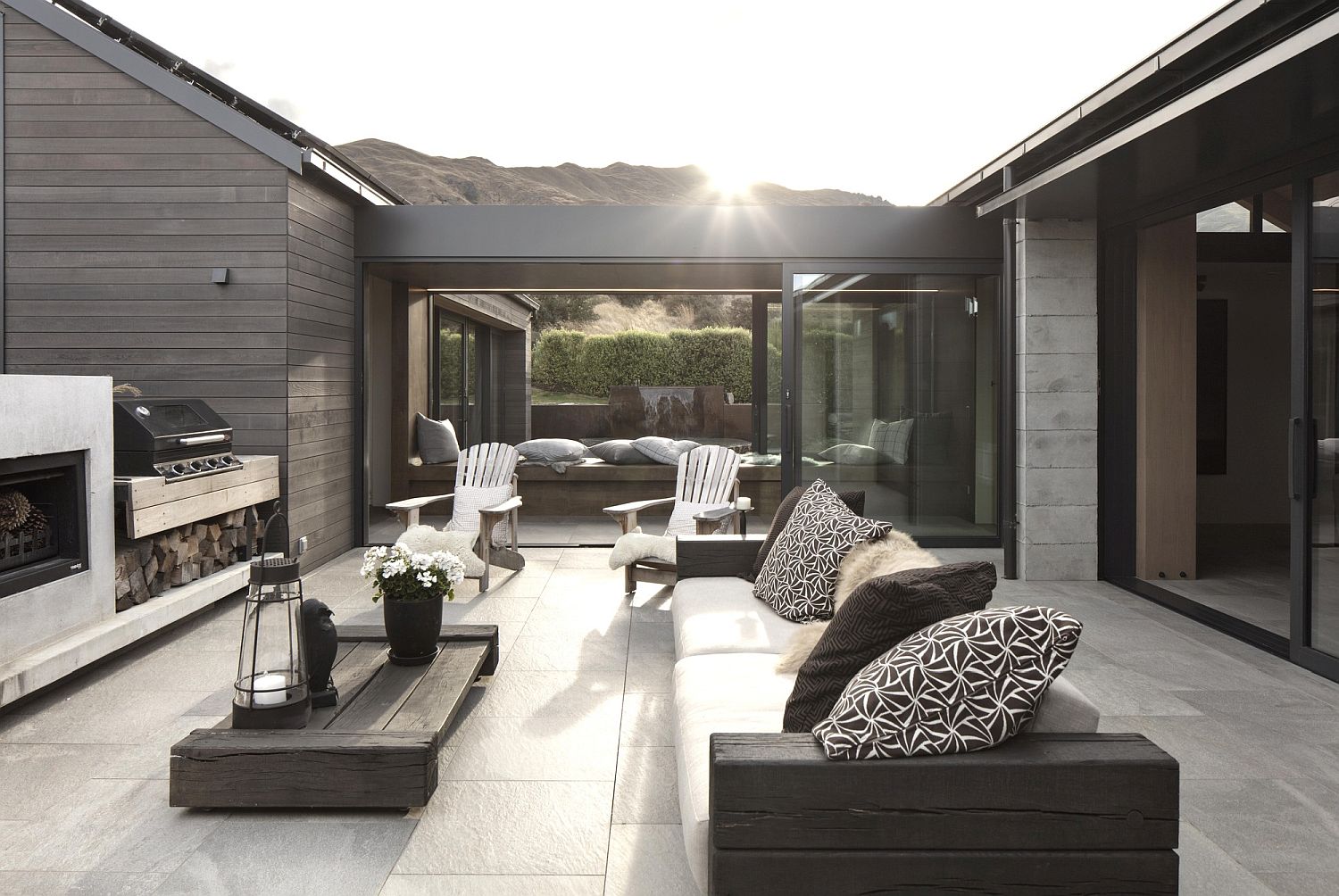
Central courtyard of the house with a comfortable sitting area
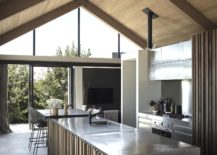
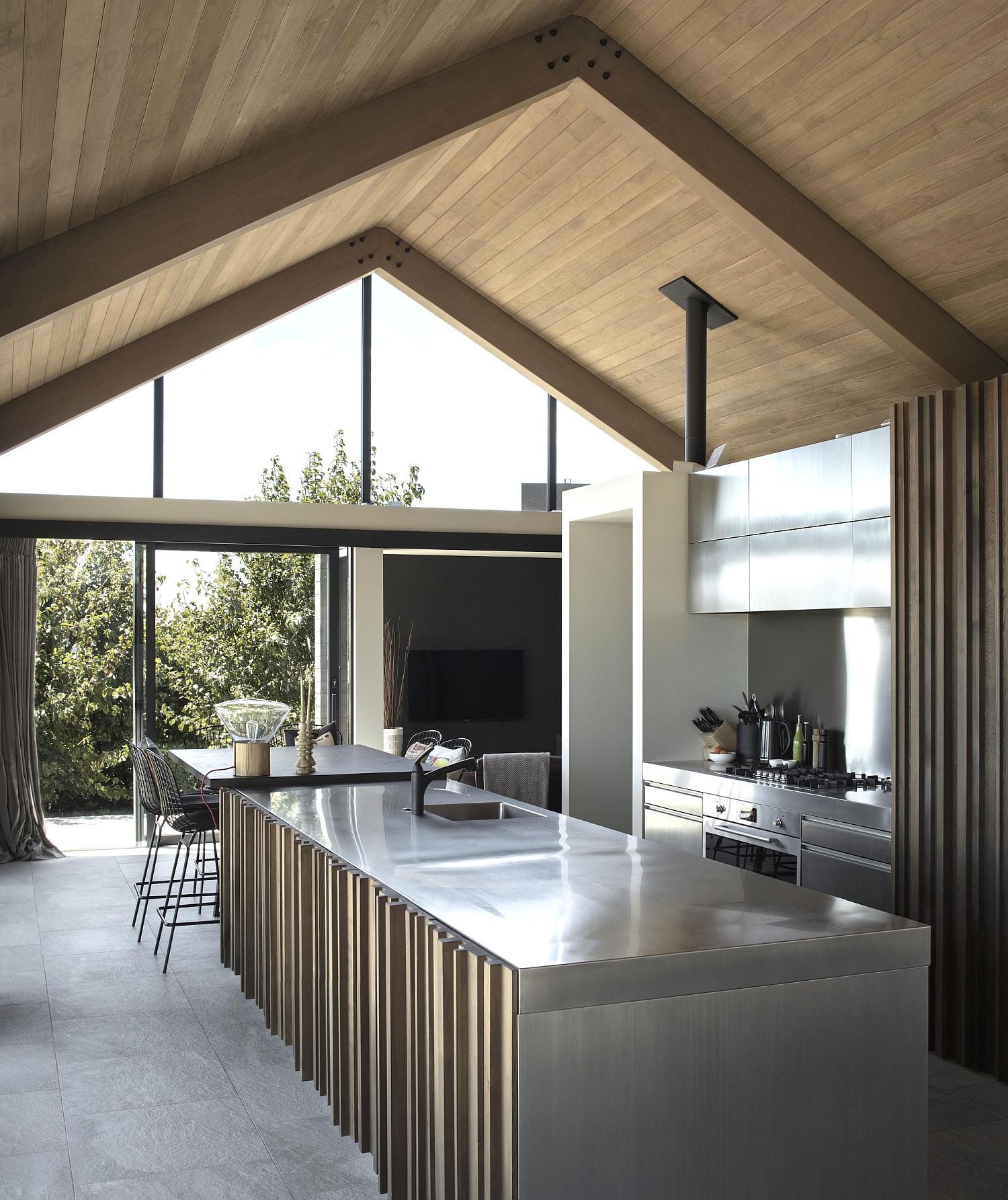
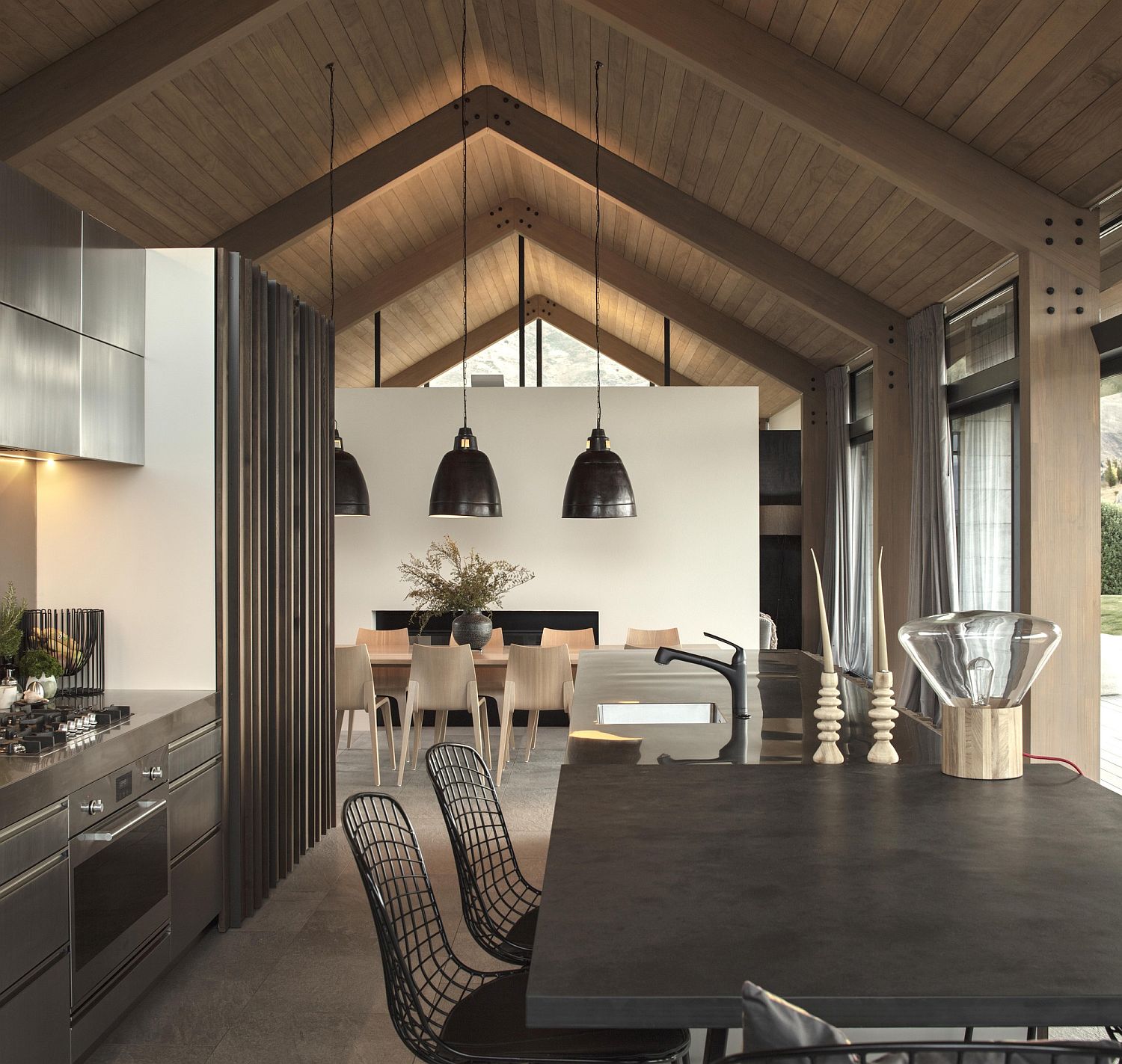
Gray interior of the kitchen with gabled roof and glass walls that bring light inside

A combined inslab heating and hot water heat pump system are powered by 5kWh of discretely placed photovoltaic panels. Appropriate use and positioning of Thermomass concrete, and large glazed openings allow for natural heating and cooling as much as possible, allowing the house to run at a very low cost.

RELATED: House D: Japanese Home with an Eccentric Gabled Roof and Unique Floor Plan
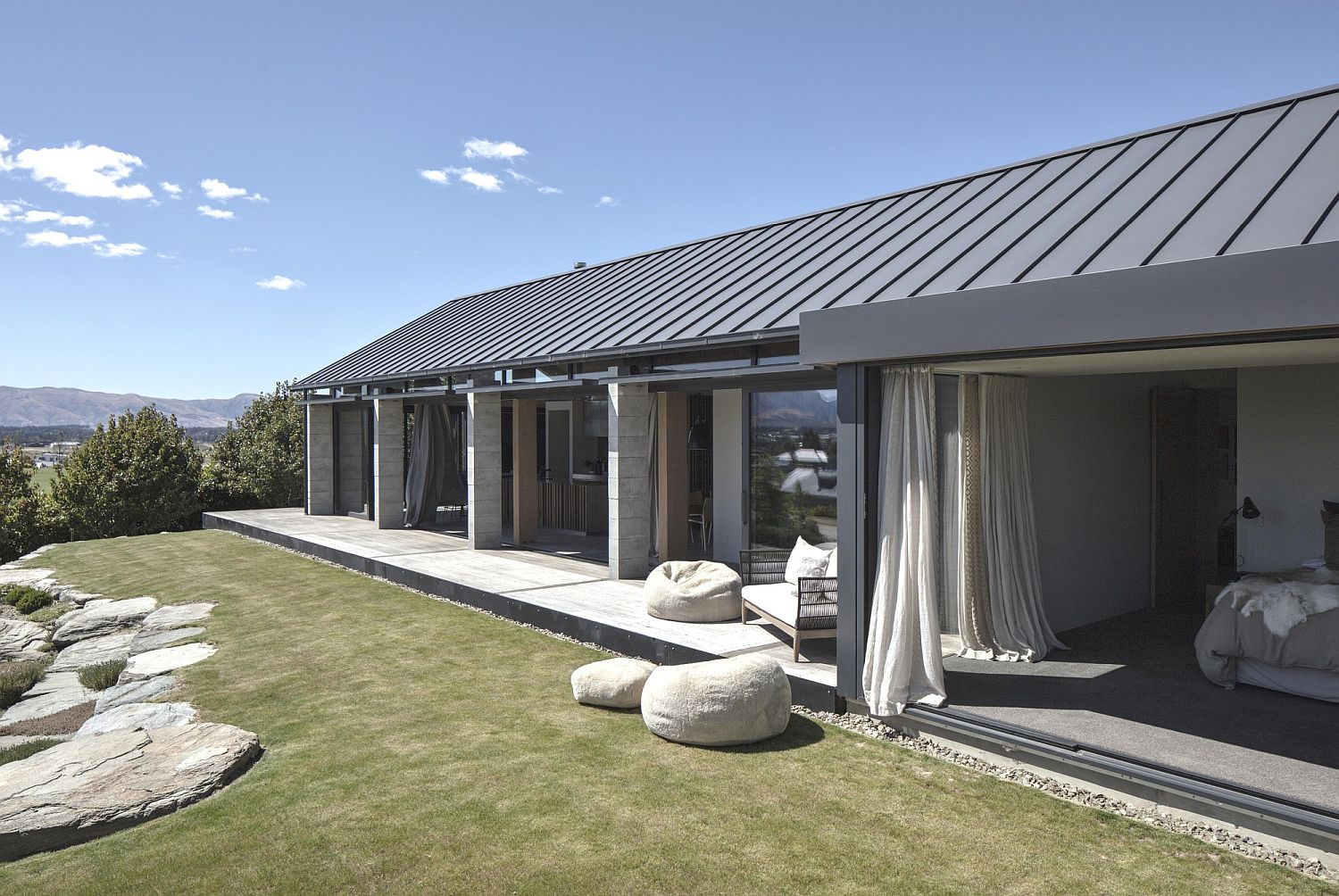
Open design of the house connected to the landscape outside
Open plan living area of the house with dining room and kitchen next to it
Outdoor spaces around the Wanaka House
Oversized pendants in black accentuate the gabled roof of the house
Series of floor-to-ceiling glass panels connect the interior with the world outside
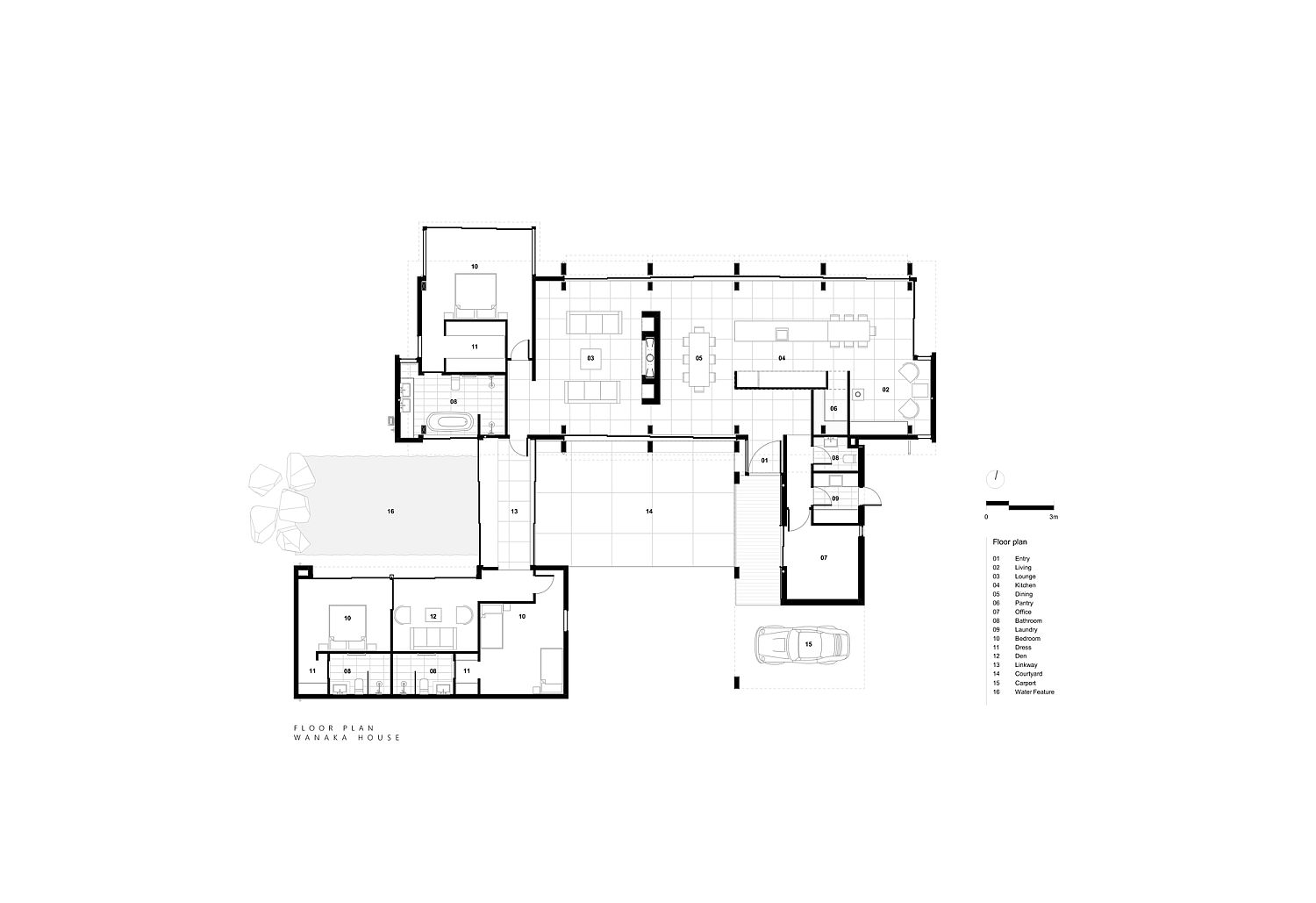
Floor plan of Wanaka House in New Zealand

You’re reading Sustainable Modern Home in New Zealand with Gabled Roof and Captivating views, originally posted on Decoist. If you enjoyed this post, be sure to follow Decoist on Twitter, Facebook and Pinterest.

Similar Posts

  • Collingwood Residence

    Situated on Bowen Island’s West Coast, the Collingwood Residence is located on a private 10 acre lot surrounded by forest. The home is divided into three buildings, connected by the glass breezeways, as an intentional separation of public and private spaces. The breezeways which separate the buildings afford views to the ocean as you approach the house. Social experiences are centered around the open kitchen, dining, and living space located in the central building, while the master and guest suites are located in the buildings to either side. Floor to ceiling sliding glass doors in the kitchen and dining spaces can be opened to extend the living space outdoors to the covered patio with views to the ocean. The local material selection is reflective of the home’s west coast setting: cedar shingles clad the exterior, while the natural stone grounds the home firmly on its site. The large cantilevered dual-pitch roofs with cedar soffits and exposed structure, reflect the traditional forms of the remote cabin, while they are given a contemporary feel with crisply detailed zinc fascias. The building is highly insulated and airtight to limit the need for energy usage throughout the year. Appliances were carefully selected for energy efficiency and low water consumption. Large low-e coated windows and overhangs are sited to maximize solar gain in the winter months whilst preventing overheating in the summer.