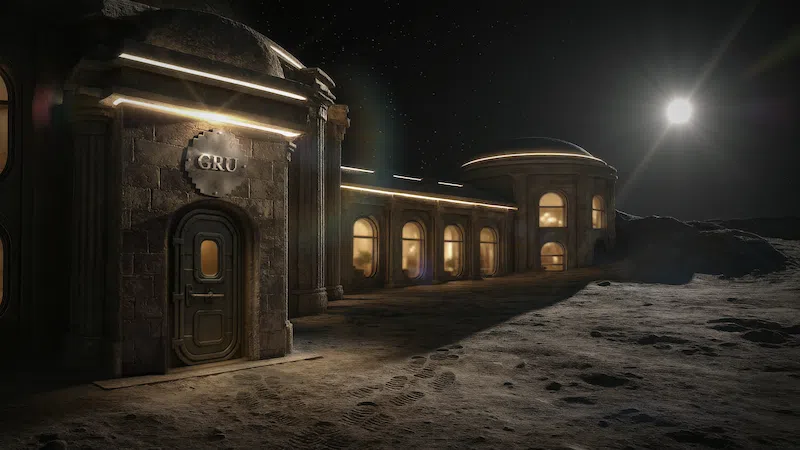
Photo: Galactic Resource Utilization Space, Inc. (GRU Space)
In a bold leap that reads like science fiction come to life, Galactic Resource Utilization Space (GRU Space) is developing what could become the first hotel on the moon. The ambitious project, targeted for deployment as early as 2032, reframes space travel as a frontier of imagination and luxury, where Earthrise views, low-gravity excursions, and lunar walks could soon feel within reach for the world’s most adventurous travelers.
The lunar hotel doesn’t resemble a rugged survival outpost or a stripped-down space station. Instead, it presents the moon as a destination worthy of comfort and design. GRU Space’s proposal combines inflatable habitat modules with a protective exterior built from lunar materials. Engineers would transport the inflatable living units from Earth and deploy them on the moon’s surface, where they would expand into pressurized space designed for extended stays.
To protect guests from radiation, extreme temperatures, and micrometeorites, the hotel would rely on in-situ resource utilization, a process that transforms lunar regolith into sturdy construction bricks. Robotic systems would shape these bricks into thick outer shells that encase the habitats, turning moon dust into architecture. The approach reduces reliance on Earth-supplied materials while anchoring the hotel directly to its extraterrestrial environment.
GRU Space has already opened reservations for the lunar hotel, signaling confidence in the project’s long-term trajectory. Interested travelers can apply with a $1,000 fee, followed by refundable deposits ranging from $250,000 to $1 million for priority placement. While final pricing remains unconfirmed, the company estimates that a complete lunar journey, including launch, transport, and accommodation, could exceed $10 million per guest.
The first operation phase would host up to four guest at a time for multi-day stays. Future expansions could increase capacity to around 10 visitors. Guests could explore the moon’s surface in pressurized suits, drive rovers across the regolith, and experience familiar activities in dramatically reduced gravity. The hotel frames these experiences not as scientific trials but as curated moments of discovery.
The hotel’s design turns lunar constraints into creative opportunities. Inside, the inflatable modules would offer warm, human-scaled interiors with panoramic views of the moon’s stark terrain and the distant Earth. Outside, regolith-based bricks would form ribbed protective shells and structural supports, creating a visual language that reflects both function and place.
Rather than replicating luxury resorts on Earth, the project embraces a new architectural identity rooted in its surroundings. Every design choice responds to survival, efficiency, and wonder. The result feels less like a novelty destination and more like a prototype for future off-world living.
Gru Space plans a series of test missions beginning in 2029 and 2031 to validate habitat deployment, robotic construction, and resource processing on the moon. These missions aim to prove that the hotel’s core systems can operate reliably in one of the harshest environments humans have ever attempted to inhabit.
Founder Skyler Chan positions the hotel as more than an exclusive experience. He views tourism as a catalyst for building permanent lunar infrastructure. This hotel could lay the groundwork for scientific research, industrial activity, and even long-term presence beyond Earth.
As private companies increasingly shape the future of space exploration, GRU Space’s lunar hotel stands out for its focus on experience and place. The project imagines the moon not as a distant research site but as a destination where humans can pause, reflect, and look back at Earth as an entirely new perspective.
Whether it becomes the world’s most exclusive hotel or a stepping stone toward sustained lunar habitation, GRU Space’s vision brings the idea of living on the moon closer to reality. For now, it invites us to imagine checking into a hotel where the night sky never changes, gravity feels unfamiliar, and home appears as a glowing blue sphere in the distance.
The Galactic Resource Utilization Space (GRU Space) is proposing the first lunar hotel by combining inflatable habitats with structures built from bricks made of moon dust.

Photo: Galactic Resource Utilization Space, Inc. (GRU Space)
With deposits already open and plans for multi-day stays, the project positions space tourism as a high-end experience shaped by design, technology, and extreme environment.
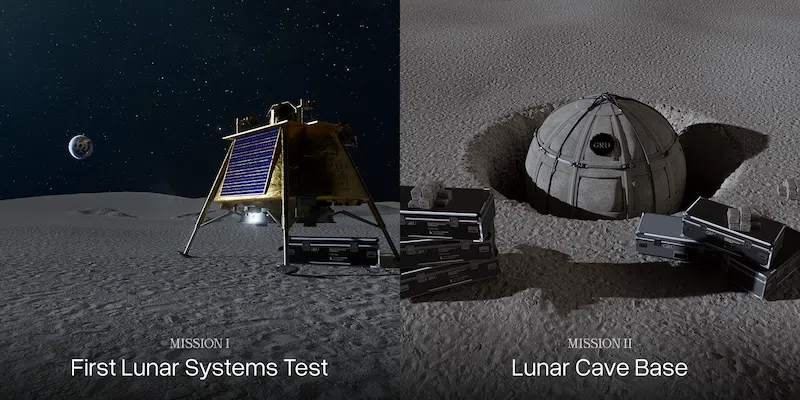
Photo: Galactic Resource Utilization Space, Inc. (GRU Space)
More than a novelty, the hotel aims to establish the infrastructure needed for long-term lunar habitation and a future where humans don’t just visit space, they stay.
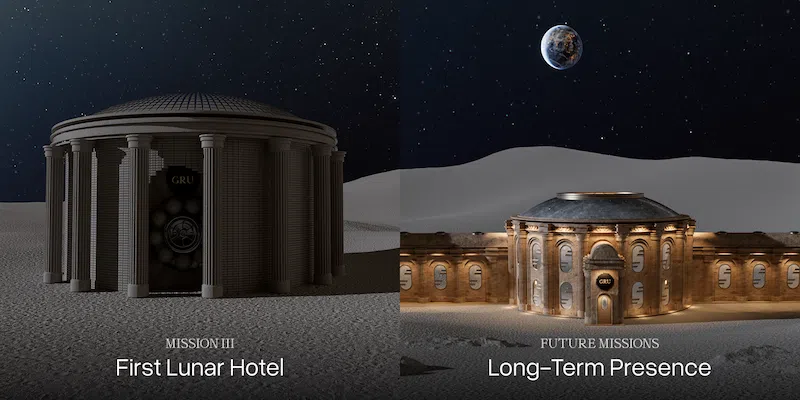
Photo: Galactic Resource Utilization Space, Inc. (GRU Space)
GRU Space: Website | Instagram
My Modern Met granted permission to feature photos by GRU.
Related Articles:
Astronaut Debuts a New Geometrical Shape That Can Only Be Achieved in Space
Astronaut Jonny Kim Returns to Earth After 245 Days Aboard the International Space Station
Earth Now Has “Two Moons” Until 2083, NASA Confirms
Artemis II Astronauts Preparing for the Moon Say They’re “Ready for Every Scenario”