The ‘Bow Window House’: An Interior Redesign Project In The Heart Of Rome

Located in the center of Rome, the “Bow Window House” is a flat located on the fifth floor of a residential block. The building was constructed in the 1970s and was built using reinforced concrete. The flat’s interior was recently reimagined by the team at Laboratrio di Architettura e Design.
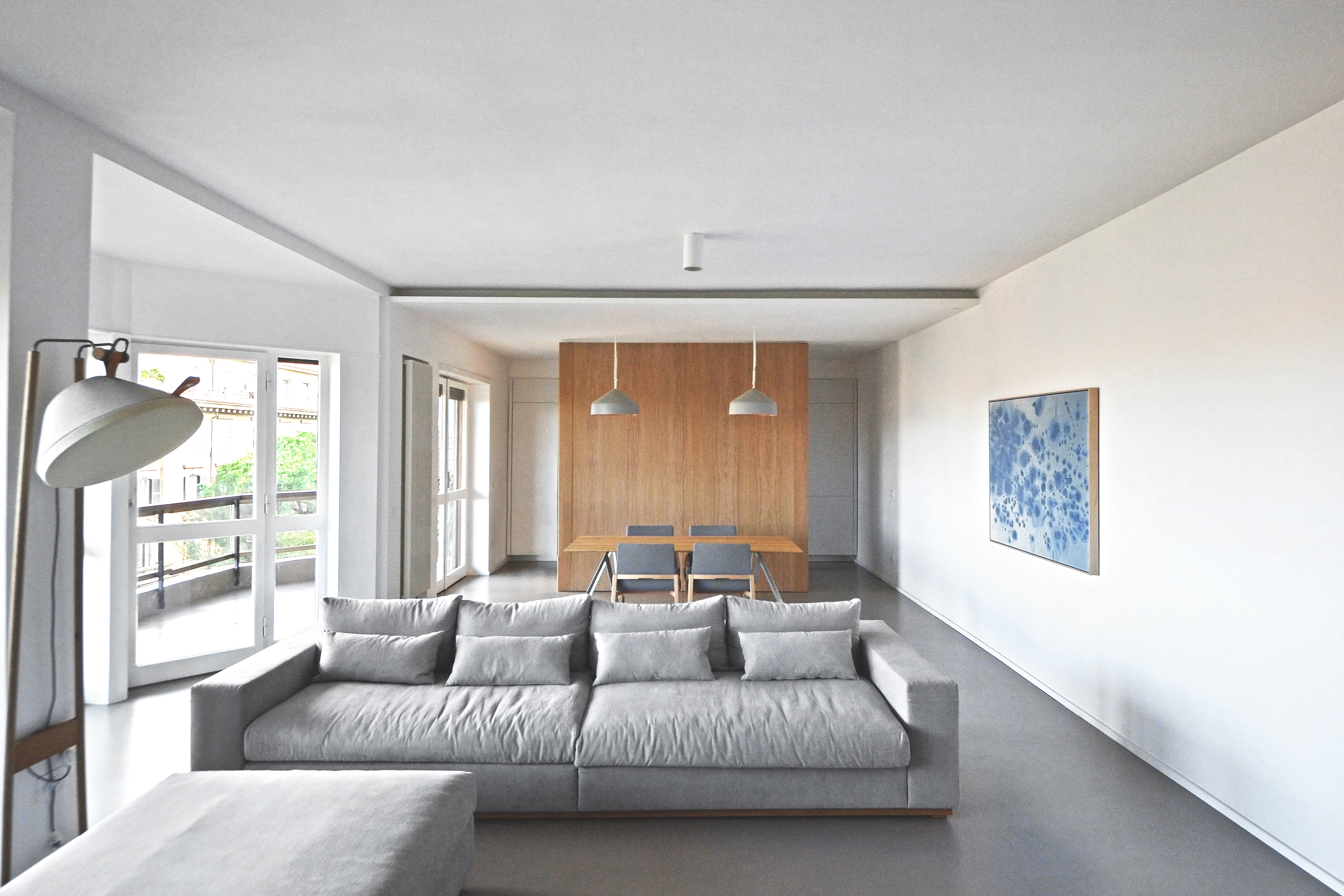
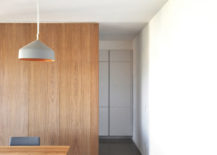
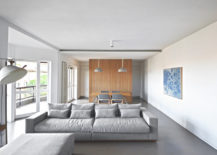
The Bow Window House is located in the middle of Rome and utilizes natural lighting for a stunning look. [Photo Credit: LAD]


The main living quarters in the home features high ceilings and a large bow window that provides a nice view while flooding the room with natural light.

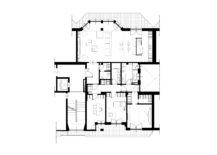
In taking on the project, LAD focused on completely changing the layout of the flat, working from a concept that joins the living space in a single large area that focuses on open concept living.

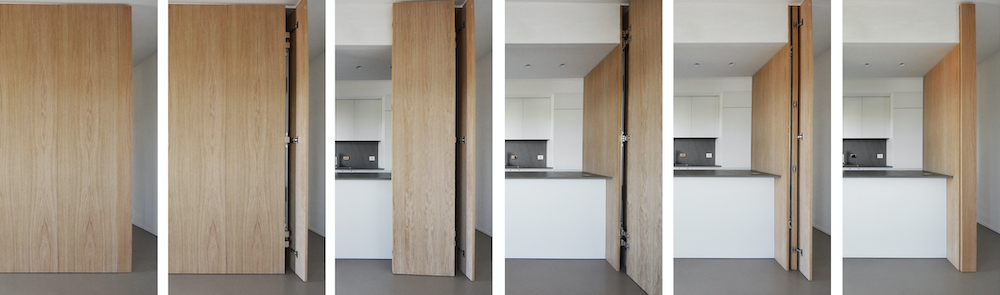
In designing the space, LAD was asked to create a cooking space that would allow the home’s host to openly communicate with guests. To accomplish this goal the interior utilizes a kitchen space that is only separated by a monolithic wooden element that hides the gas stove but can be opened, allowing communication between spaces.
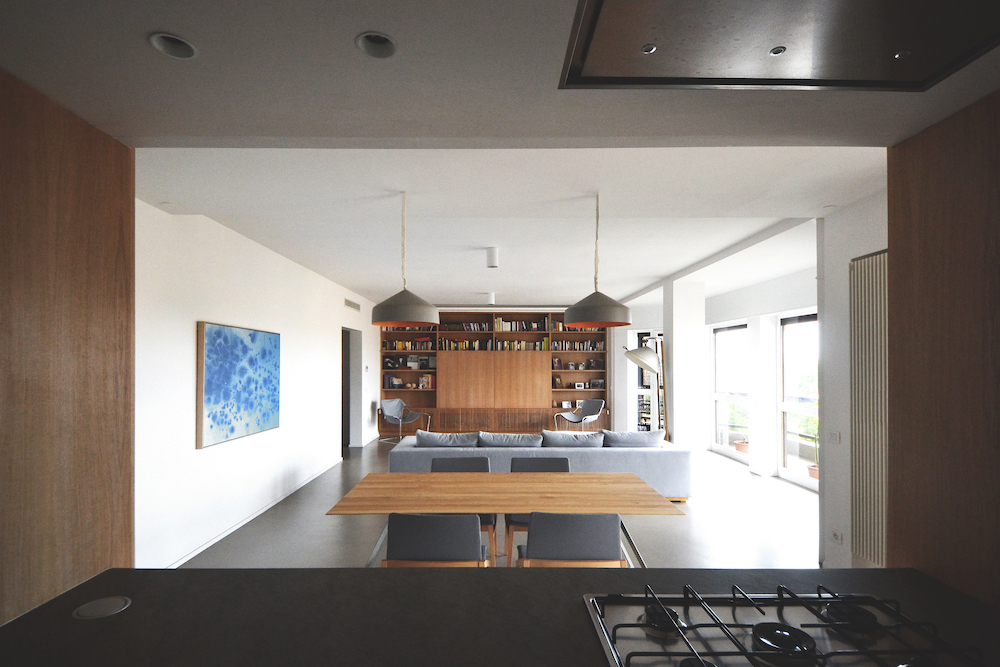
Separation meets open concept in this beautifully crafted home. [Photo Credit: LAD]
Hiding the kitchen from the main living space is a breeze. [Photo Credit: LAD]

The kitchens interior was designed to allow for plenty of storage space without sacrificing square footage from the flat’s open hosting area. The kitchen space also provides a stark contrast from the rest of the home with its black countertops and backsplash along with black appliances.
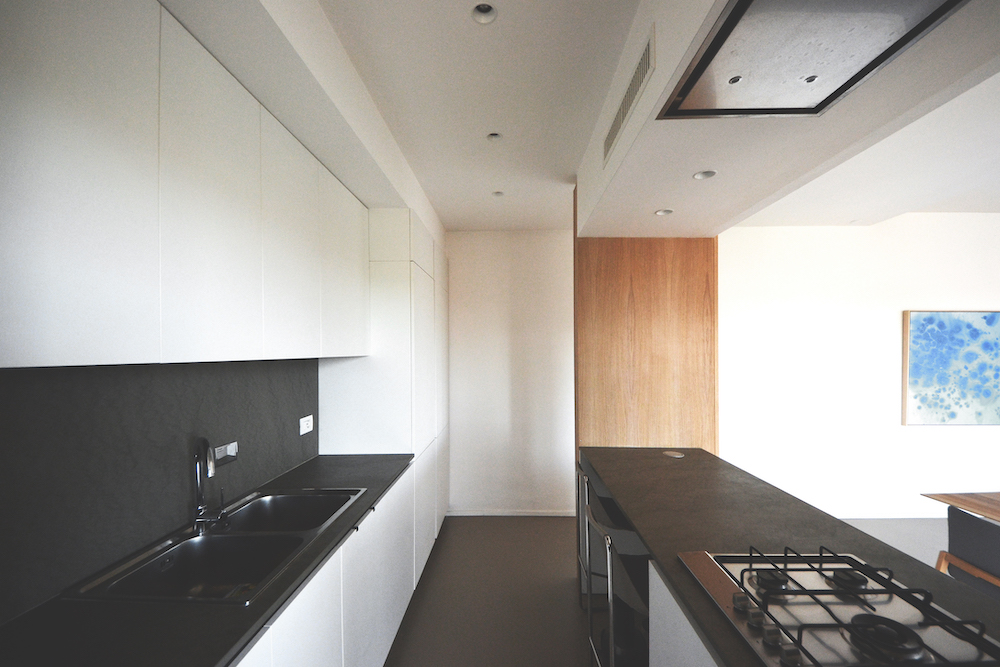
The kitchens stark black countertops and backsplash add contrast [Photo Credit: LAD]

The flat’s library also features a similar design to the kitchen, allowing the library’s wooden centerpiece to be opened, revealing a TV.
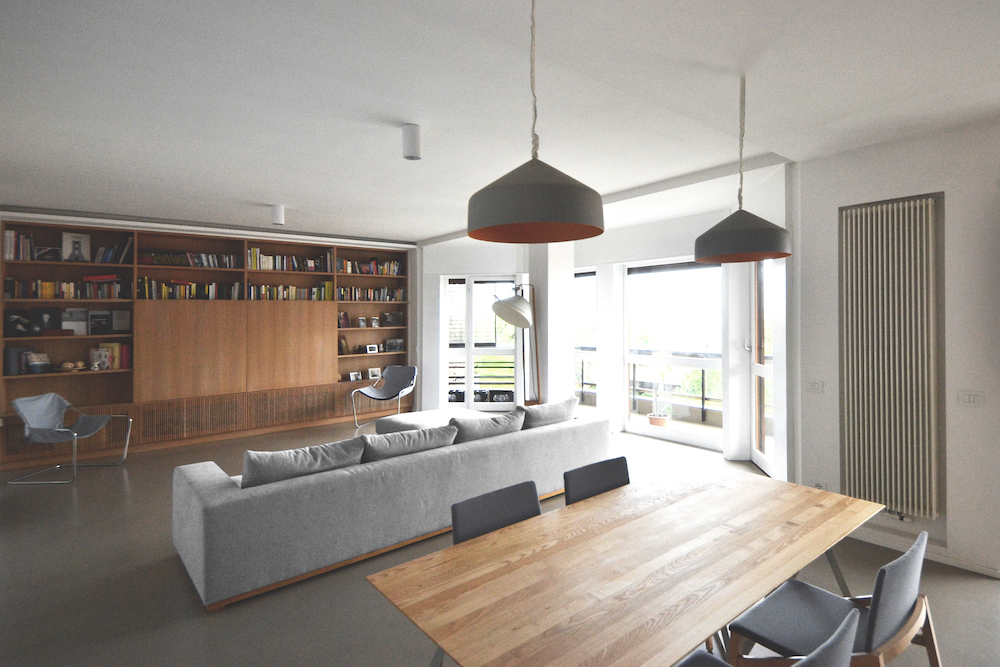
A TV is located in a hidden area that provides a focal point for the home’s library. [Photo Credit: LAD]

The flat’s bathrooms are located centrally in the home, providing easy access when hosting events while separating the flat’s bedrooms from the main living quarters.
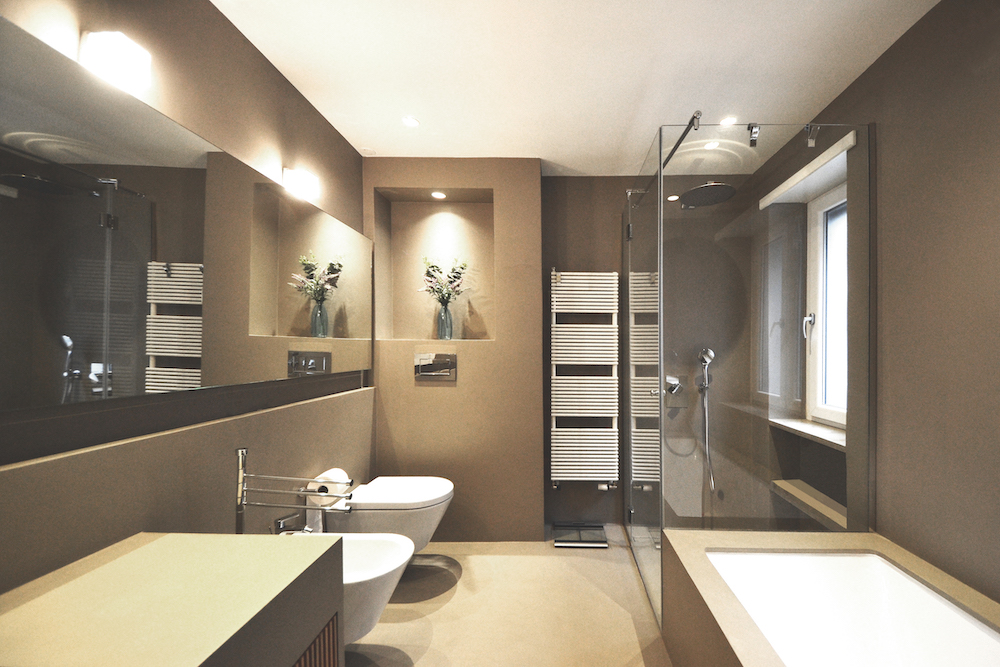
The home’s bathrooms are located in a central space within the flat [Photo Credit: LAD]

According to LAD, “Great classics of international design are mixed with contemporary pieces, designed by young European designers.”

Among the home’s timeless pieces are “Stand Steel,” by Sebastian Sherer, produced by Neo / Craft; Capita 510t, by Fiorenzo Dorigo produced by Capdell; A floor lamp by “Faro” designed and produced by Kngb; Armchairs by “Paulistano,” by Paulo Mendes da Rocha, produced by Objekto, and suspension lamps from “Cyrcus Cemento,” and produced by In-es.Art Design.

All of the flat’s joineries were custom made for the project and floors and bathrooms walls were made in “Cementoresina” by Kerakoll.

The team at LAD have shown with the Bow Window House that you don’t have to sacrifice open concept living while still creating a space that is free from distractions at a moments notice.

You’re reading The ‘Bow Window House’: An Interior Redesign Project In The Heart Of Rome, originally posted on Decoist. If you enjoyed this post, be sure to follow Decoist on Twitter, Facebook and Pinterest.

Similar Posts

  • Lirio 7

    Located in a quiet street in one of the most emblematic neighborhoods in Mexico City, this project is an intervention that has its roots on the understanding of the urban and social dynamics in Mexico City. Lirio 7 has an interesting history; as an Art Déco building, originally housed public baths during the 30s, then in the 50s became a sanatorium, and before its abandonment, it was the headquarters of a security company. Considering this conditions, we took advantage from an abandoned building without any recognized heritage value by local authorities, to restore it and offer a specific model of housing that recovers the historical value of Santa María La Ribera neighborhood. The design process is based on the concept of a central patio and its perimeter circulation, which was adapted into a new layout to create 12 new apartments where the main corridor becomes part of the home. In this type of buildings, this circulation is a public place and the challenge on making it private leads to define an enclosure that plays with the visuals. The dwellings are arranged around the patio, orienting their view to it, which is considered as a place of introspection, not so much as circulation. Concrete elements of different heights acts as planters, dampen the sound of the water from the recovered fountain and support the discourse of circulations, interposing themselves to the visuals, again to guide and give privacy to the user. Each of the houses therefore has ventilation and daylight entrance. The first and second floors have a greater free height, typical of the original construction moment, allowing a greater volume of use of spaces. The third level, from the 50s as well as the new structures implemented on deck, maintain a standard height more like that the required by current construction regulations. A perforated concrete prism, outstands from the patio’s façade, creating a visual contrast without stealing it protagonism. With a different materiality and density from the rest of the project, this volume patches the view from the outside, creating a light and shadows game towards the last apartment, and allows the user to enjoy the views.